Alek Wek did not enter fashion as the industry’s first successful Black model. Iman, Naomi Campbell, Grace Jones, and Beverly Johnson had already challenged exclusion at the highest levels of modelling. What Wek changed was more specific. In the mid-1990s, her deep skin tone, closely cropped hair, and distinctly South Sudanese features appeared in a fashion industry that still treated European beauty as its default. She did not fit the limited image system that had long dominated magazine covers, advertising campaigns, and elite runways. Instead of changing herself to fit it, she helped force fashion to expand its idea of who could be seen as beautiful.
The African fashion market is worth 31 billion dollars. Alek Wek’s contribution to the visual economy of that market is not quantifiable in sales figures. It is measurable in the images that became possible after her career established that a model did not need to approximate Eurocentric beauty standards to be seen as high fashion. As the National Portrait Gallery’s documentation of Wek’s career confirms, she became the first African model to appear on the cover of American Elle. She was named MTV’s Model of the Year in 1997. Those milestones are the data. The argument they carried is the legacy.
Alek Wek was not the first Black model in fashion. She was the one who made it impossible to keep pretending a South Sudanese face had no place at its centre.
Alek Wek’s Runway Legacy: From Wau to London to New York
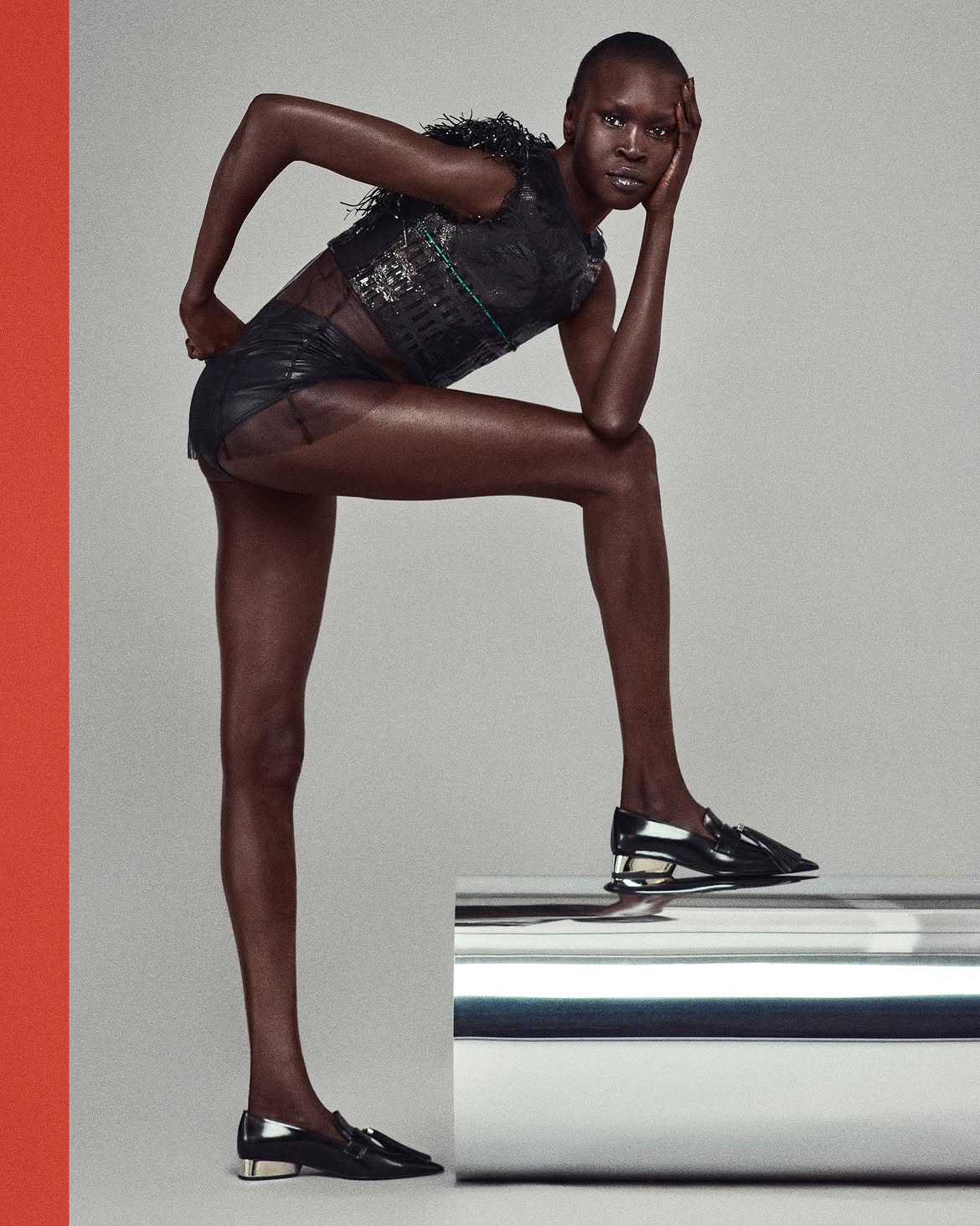
Alek Wek was born in Wau in 1977, when the city was part of Sudan; it is now located in South Sudan. Civil war displaced her family when she was a teenager. Wek and one of her sisters fled first to Khartoum before travelling to London in 1991. In London, she attended art and design school. In 1995, at 18, she was spotted by a scout from Models 1 while spending time in Crystal Palace. Her entry into fashion was swift. That year, she appeared in Tina Turner’s “GoldenEye” video. In 1996, she signed with Ford Models and appeared in Janet Jackson’s Got ‘Til It’s Gone video.
These early appearances gave Wek visibility beyond the runway before the runway had fully understood what it had found. She was not positioned as a curio or an exotic departure. She was cast in commercial music videos as a presence whose visual power the directors understood even when the fashion system had not yet organised its response. The Crystal Palace scout recognised something the industry would take another year to fully acknowledge: that what Wek carried in her face and carriage was not a problem to be accommodated but a commercial proposition that the existing image system had simply failed to imagine.
Wek’s 1997 Elle cover presented her without attempting to soften, lighten, or Europeanise the features that made her recognisably South Sudanese. For many viewers, that was not a fashion image. It was a permission structure. A published, widely circulated record that this face, at this depth of darkness, with this hair, could occupy the centre of a mainstream beauty image without apology.
The Runway Rise: Ralph Lauren to Chanel
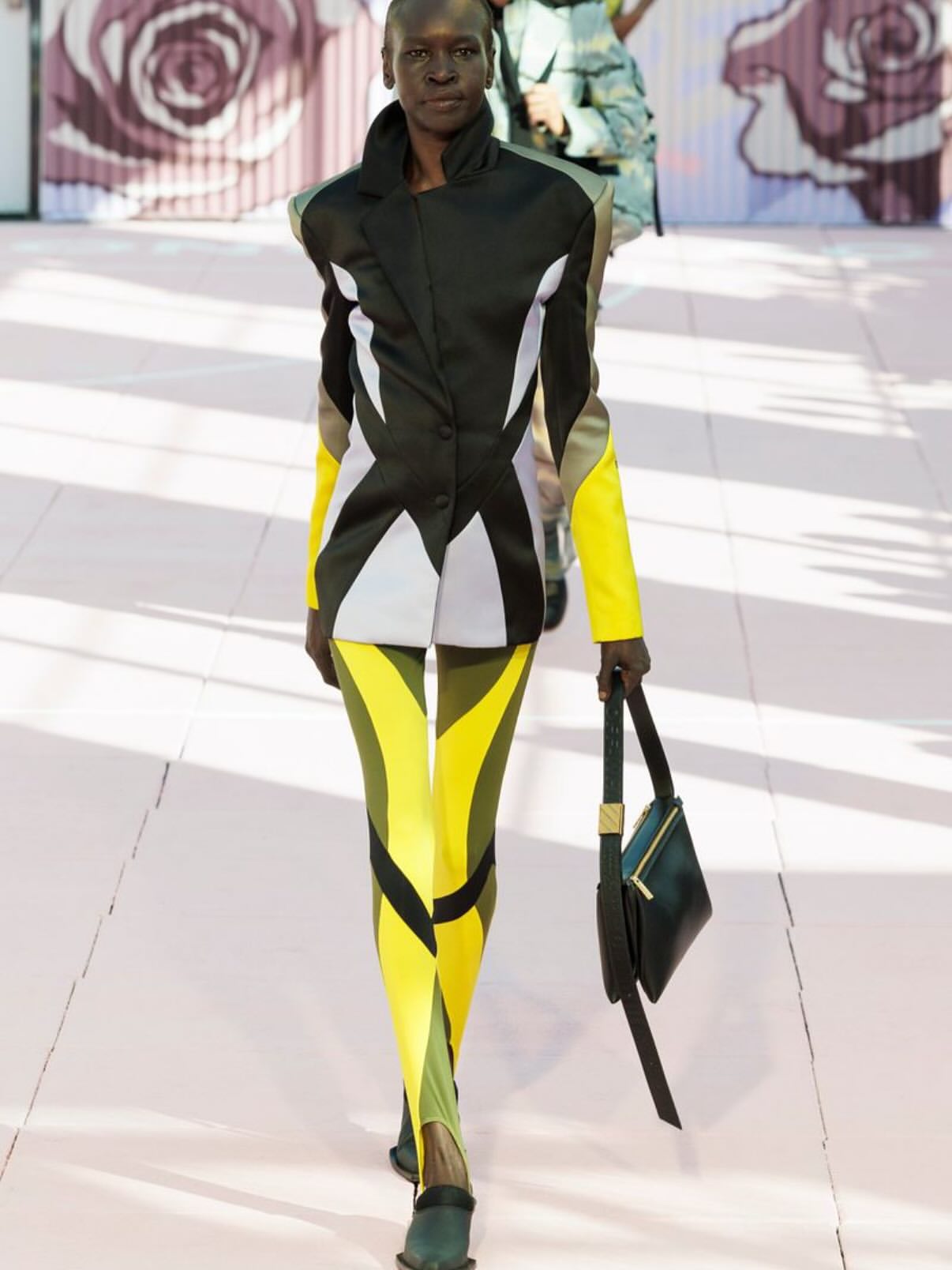
After arriving in New York, Wek’s runway career opened at the top. As the Guardian’s documentation of her early career confirms, Ralph Lauren booked her to open and close a show: two of the most prominent positions in a runway lineup, usually given to the most established names in the industry. Calvin Klein, Isaac Mizrahi, Todd Oldham, and Anna Sui followed. Within a short period, she had moved from newly discovered to one of the industry’s most recognisable new faces.
In 1997 she was named MTV’s Model of the Year and became the first African model to appear on the cover of American Elle. The November 1997 Elle cover became a defining image of her career. It placed Wek at the centre of one of fashion’s most influential magazines at a moment when very dark-skinned Black women were rarely presented as the standard of editorial beauty. For many readers, the response was personal rather than critical. They not only saw a successful model. They saw an image of beauty that had previously been withheld from them.
Her runway and editorial work continued across New York, Paris, and Milan. She worked with photographers including Steven Meisel and Herb Ritts and appeared for major fashion houses including Chanel, Calvin Klein, Alexander McQueen, and John Galliano. As Encyclopedia.com’s documentation of her career confirms, her success was not built as a one-season novelty. She built a career across runway, magazine editorial, campaigns, music videos, and couture over a period that established her as a working model whose longevity was the argument, not only her debut.
The Chanel Bride: 2004
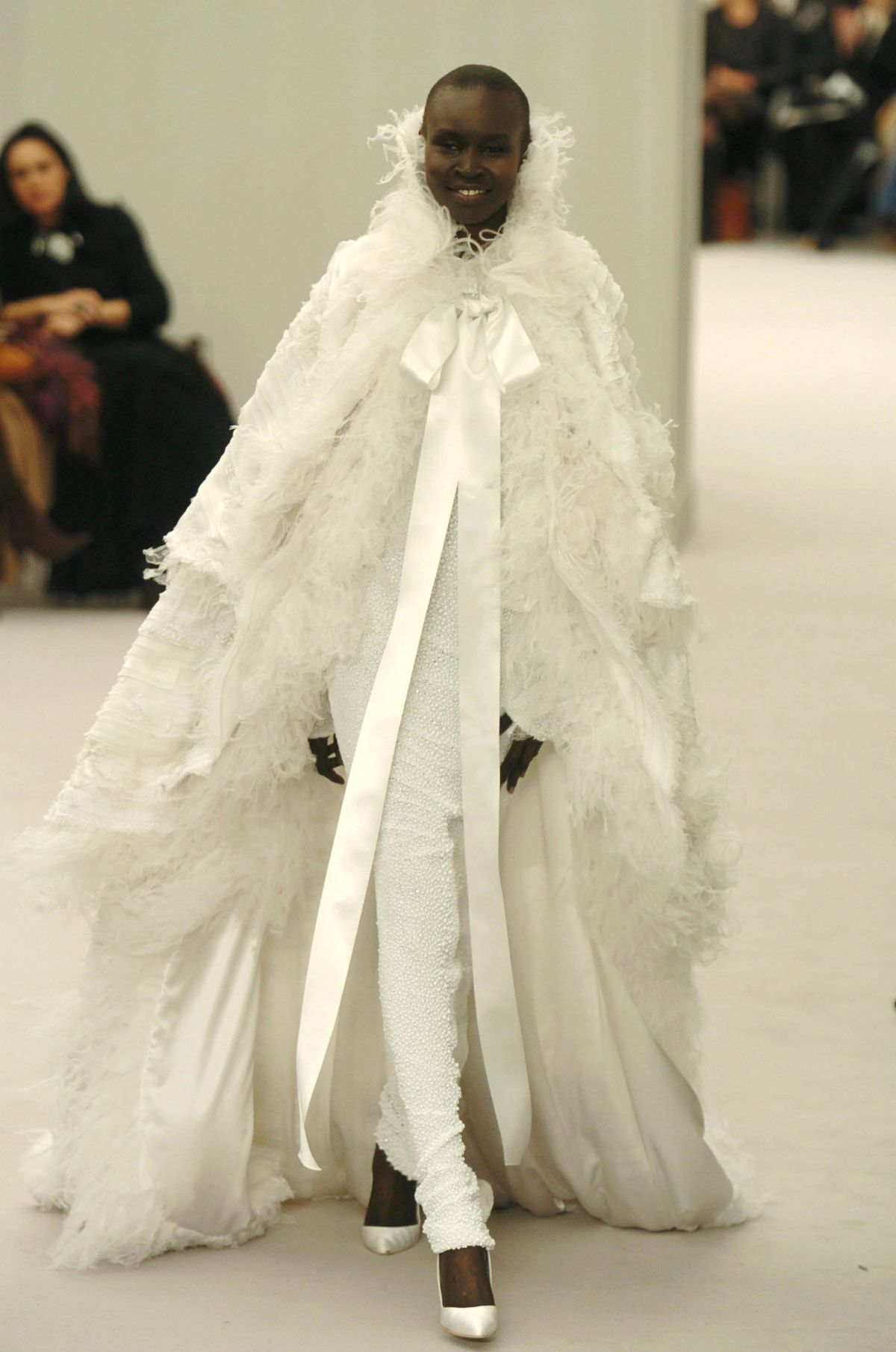
The most concentrated single moment of Wek’s runway career came in 2004. At Chanel’s autumn/winter haute couture show designed by Karl Lagerfeld, she closed the collection as the bride. As Global Fashion Report’s documentation of the moment confirms, Wek became the first Black woman to close a Chanel haute couture show as the bride. She wore a beaded gown and a dramatic feathered cape. Lagerfeld showed her the sketch and confirmed he wanted her face uncovered. He did not want to hide her behind a veil or headpiece. Wek recalled becoming emotional during the fitting because she understood what the image could mean beyond the runway.
In couture, the bridal finale is one of the most symbolically loaded moments in a collection. The bride closes the show and carries its final message: the image the house wants the press and buyers to take away as the season’s defining statement. A Black woman with Wek’s complexion and features in that position was not merely included in Chanel couture. She was placed at the centre of its most ceremonial fashion moment. The industry could not look at that image and argue that the old beauty hierarchy was a universal standard rather than a structural choice.
Why the Representation Mattered
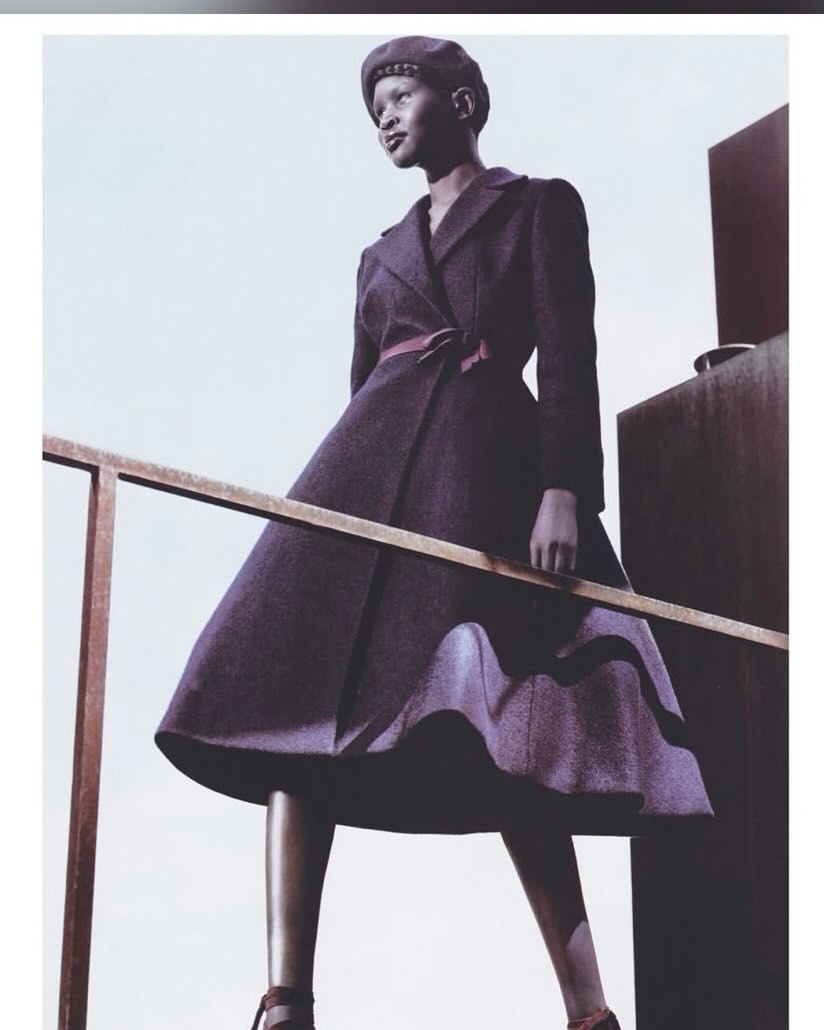
Wek’s impact was not only about the number of shows she walked. It was about the conditions in which she was seen. Her 1997 Elle cover was presented without attempting to soften, lighten, or Europeanise the features that made her recognisably South Sudanese. As the New York Times’s November 1997 documentation of her Elle cover moment confirms, the cover placed a face that had been systematically excluded from fashion’s mainstream beauty definition at its centre, in one of the industry’s most widely distributed publications, without framing that face as an exotic exception or a diversity gesture.
Lupita Nyong’o has spoken about seeing Alek Wek in fashion magazines when she was younger and recognising a woman who resembled her being celebrated as beautiful. Nyong’o has described that visibility as helping her build a different relationship with her own dark skin. This is what representation can do when it is meaningful. It can give people a new reference point for beauty. It can challenge internalised standards about who deserves to be seen. It can make someone who has been made to feel invisible recognise themselves in the centre of an image that the dominant culture had previously reserved for someone else.
Wek did not invent Black beauty. She did not instil confidence in the women who saw themselves in her. In the diaspora, African identity in fashion can become performance in the conscious sense: an assertion of visibility that requires deliberate effort to maintain against systems built around a different default. Wek’s career was exactly that assertion, practised at the highest level of the industry, with enough consistency and duration to change what the industry’s image system understood as possible.
A Legacy, Not a Solitary Revolution
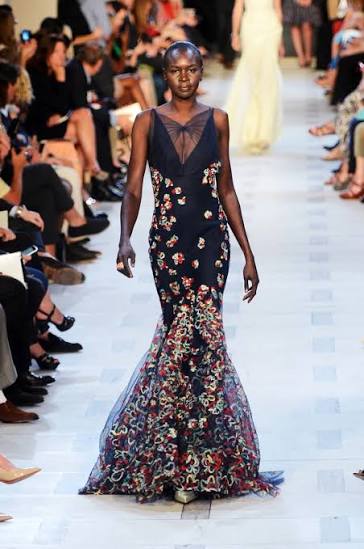
It would be inaccurate to say that Alek Wek transformed fashion alone. She followed in the footsteps of generations of Black models, artists, photographers, stylists, and designers who had already challenged the industry’s exclusions. Iman, Naomi Campbell, Grace Jones, and Beverly Johnson had each expanded fashion’s visual language in different ways. We entered a larger struggle, and it did not end with her career.
Fashion has continued to reproduce colourism, tokenism, and racial inequality. A more diverse runway does not automatically mean fairer casting, equal pay, better backstage conditions, or long-term support for Black creatives. The shift towards African creatives controlling how African faces and bodies appear in fashion imagery is still in progress: African photographers are putting African subjects front and centre, not as exotic extras but as the primary visual argument. Wek’s runway career was the most visible early demonstration that this shift was possible at the industry’s highest institutional level.
Her career shifted the boundaries that followed. Her visibility proved that a model did not need to approximate Eurocentric beauty standards to be seen as high fashion. She could have tightly cropped hair. She could have blue-black skin. She could be visibly African. She could still open and close major shows, lead editorials, front campaigns, and become a couture bride. That possibility mattered for every model who came after her with a similar face, a similar body type, a similar cultural origin, and no precedent to point to before Wek gave them one.
Beyond the Runway
Wek’s influence has never been limited to modelling. In 2001, she launched Wek 1933, an accessories line inspired in part by her father’s brass-clasp briefcase and named for his birth year. She has used her public platform to speak about refugee rights, displacement, and South Sudan. Her 2007 memoir, Alek: From Sudanese Refugee to International Supermodel, connected her fashion career to the history of migration and civil war that shaped her life. As NPR’s documentation of the memoir confirms, these parts of Wek’s career establish that her public identity has always been larger than fashion image-making. She has been a model, a designer, an author, an advocate, and a public figure whose story has given visibility to refugees and South Sudanese communities that the fashion industry’s normal operations do not address.
The Omiren Argument
Alek Wek’s legacy should not be reduced to a list of firsts: the first African model on the cover of American Elle, MTV Model of the Year, the first Black Chanel haute couture bride. Those milestones are important. But their deeper significance lies in what they made structurally imaginable for everyone who encountered them. The African fashion market is worth 31 billion dollars. The image economy of that market was, and continues to be, shaped by who gets placed at the centre of the industry’s most authoritative visual productions: the runway finales, the magazine covers, the couture collections. Wek’s career demonstrated that a model with South Sudanese features, close-cropped hair, and deep skin could occupy those central positions not as a gesture of inclusion but as the primary subject of a major fashion production. That demonstration had consequences that extended far beyond the number of shows she walked. It changed what audiences understood as possible within the industry’s image system. It gave Lupita Nyong’o a new reference point for her own skin. It changed what the models who followed Wek had to argue about their own eligibility for high fashion. Omiren Styles documents Wek’s runway legacy here not as biography but as fashion industry argument: the argument that beauty has never had one dominant look, that the industry’s old hierarchy was a structural choice rather than a natural standard, and that the choice to expand it, made by Lagerfeld at the 2004 Chanel couture finale, made by the Elle cover art director in 1997, made by Ralph Lauren when he booked Wek to open and close his show, was available all along and was simply not being made.
Also Read:
- Déborah David: The Garífuna Model Who Made Latin America Look
- The Geometry of Heritage: Why Shweshwe Still Defines South African Fashion
- Swahili Futurism: How Dar es Salaam Is Rewriting Fashion’s Relationship With Time
- Kinshasa Rising: How Congolese Women Are Claiming Fashion Authorship
Frequently Asked Questions
Who is Alek Wek?
Alek Wek, born in Wau in 1977 in what is now South Sudan, is a South Sudanese British model, accessories designer, author, and refugee rights advocate. Displaced by civil war as a teenager, she arrived in London in 1991 and was discovered by a Models 1 scout in Crystal Palace in 1995. She went on to become one of the most recognised faces of late 1990s and 2000s fashion, working with Calvin Klein, Chanel, Alexander McQueen, John Galliano, and photographers including Steven Meisel and Herb Ritts. She was the first African model to appear on the cover of American Elle and the first Black woman to close a Chanel haute couture show as the bride.
What was Alek Wek’s impact on fashion?
Alek Wek’s impact was the demonstration that a model with South Sudanese features, deep skin, and closely cropped hair could occupy the central positions of high fashion without approximating Eurocentric beauty standards. Her 1997 American Elle cover, her casting by Ralph Lauren to open and close a show, and her 2004 position as the Chanel couture bride collectively shifted what the fashion industry’s image system understood as possible. Her career gave younger Black women a visible reference point for beauty that had been systematically withheld, a consequence that Lupita Nyong’o has publicly described in relation to her own relationship with her dark skin.
Why is the Alek Wek Elle cover significant?
The November 1997 issue of American Elle featuring Alek Wek on the cover was significant because it placed a very dark-skinned Black woman with closely cropped natural hair at the centre of one of fashion’s most widely distributed publications, at a moment when such a placement was neither common nor expected. The cover did not attempt to Europeanise or soften Wek’s features. It presented her as the primary subject of a mainstream beauty image on her own terms. For many readers, the cover functioned as a public record that their features and skin tone could be located at the centre of a major fashion image rather than at its periphery.
What did Alek Wek do at Chanel?
In 2004, Alek Wek closed Karl Lagerfeld’s autumn/winter haute couture collection for Chanel as the bridal finale. She wore a beaded gown and a dramatic feathered cape, and Lagerfeld specifically requested that her face remain uncovered rather than obscured by a veil or headpiece. Wek recalled becoming emotional during the fitting because she understood what the image would communicate. She was the first Black woman to close a Chanel haute couture show in the bridal position, which is the most symbolically significant role in a couture finale and the image the house most wants the press and buyers to remember.
Why does Alek Wek matter to Black representation in fashion?
Alek Wek matters because her career proved, at the highest institutional levels of the fashion industry and across a sustained period rather than a single season, that the industry’s historic exclusion of dark-skinned Black women from its central image positions was a structural choice rather than a natural standard. She did not achieve this by softening her appearance to fit the existing image system. She achieved it by occupying the industry’s most authoritative visual positions, from major runway finales to magazine covers to couture bridal roles, with a South Sudanese face that the industry had previously refused to put there.
Explore More
Read the full Fashion > Designer Profiles section for Omiren Styles’ documentation of African and diaspora models, designers, and creative practitioners who have changed what the fashion industry understands as possible.