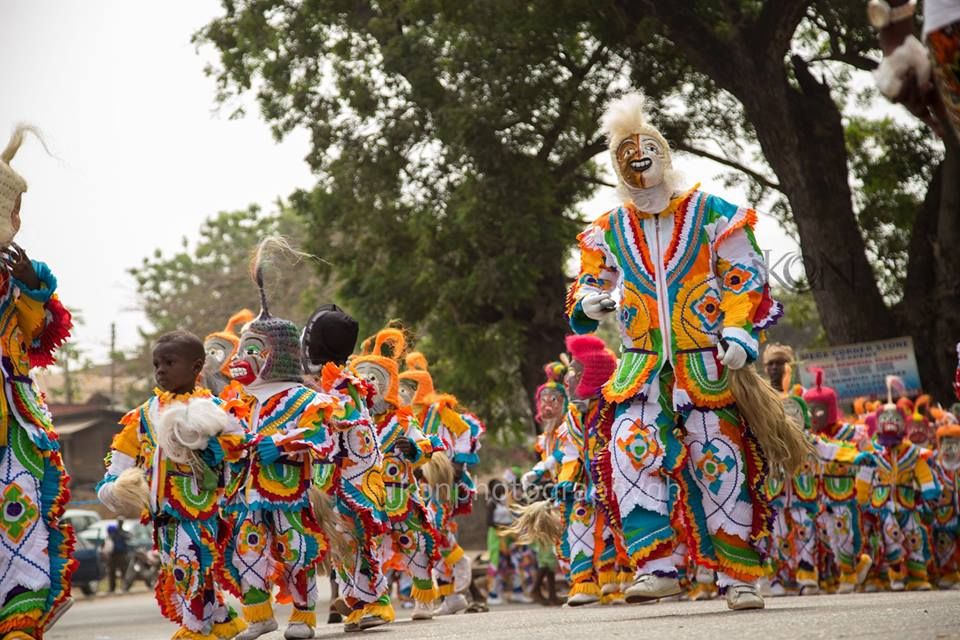
Afro-Guyanese dress is not a single national costume. It is a layered wardrobe shaped by African memory, Caribbean adaptation, plantation history, religious life, family ceremony, and modern Guyanese identity. Its most visible public expression appears during Mashramani, Guyana’s Republic Day festival, when feathers, beads, sequins, flags, bodywear, headpieces, and elaborate floats transform Georgetown’s streets into a moving archive of national belonging. The challenge is that this wardrobe is often reduced to headwraps, bright fabrics, and carnival feathers. That reduction overlooks the histories of labour, survival, religious gathering, respectability, beauty, performance, and public belonging embedded in Afro-Guyanese clothing.
The African fashion market is worth 31 billion dollars. Afro-Guyanese dress is an everyday system of identity. Mashramani turns it into spectacle. As the Guyana Department of Public Information’s documentation of Mashramani’s founding confirms, the first Mashramani celebration on 23 February 1970 was a three-day event in Linden, filling the streets with folk dancers, stilt walkers, and families in vibrant costumes, displaying the diversity of Guyanese culture. The visual language of that first celebration, diverse, colourful, community-assembled, and built for the street, has remained the template for every Mashramani since.
Afro-Guyanese dress begins before Mashramani and lasts beyond it. Here is what the wardrobe carries and what the Republic Day parade says that everyday dress cannot.
The Founding Argument: Cuffy, the 1763 Rebellion, and February 23
Mashramani began on the date it did for a reason that is neither incidental nor merely administrative. As 592Hub’s documentation on Cuffy and the 1763 Berbice Rebellion confirms, February 23 was deliberately chosen as Guyana’s Republic Day in 1970 to mark the anniversary of the rebellion. Cuffy (also known as Kofi or Coffij), a Coromantin man enslaved on the Lilienburg plantation in the Dutch colony of Berbice, led the first major slave revolt in South America. He declared himself Governor of Berbice and negotiated directly with the Dutch colonial government to partition the colony. He is Guyana’s national hero, commemorated in a large bronze monument in Georgetown’s Square of the Revolution.
By tying Republic Day to Cuffy’s uprising, Guyana’s founders declared that the nation’s identity was rooted in the struggle against bondage rather than in the moment of constitutional independence from Britain. That is the argument encoded in the date. When Mashramani costumes fill Georgetown’s streets on February 23, they are not decorating a government holiday. They are occupying the date that the republic chose to honour the people who refused enslavement, 207 years before the parade began. The festival’s wardrobe inherits that claim. The feathers, sequins, and flags are worn on a date that carries the weight of the Berbice Rebellion.
February 23 was chosen as Republic Day not only because of what happened in 1970, but also because of what happened on that date in 1763. The 1763 Berbice Rebellion, led by Cuffy, the first major slave revolt in South America, is the historical argument encoded in the date. When Mashramani costumes fill Georgetown’s streets on February 23, they are not decorating a government holiday. They are occupying the date that the republic chose to mark its commitment to the people who refused bondage.
The Festival’s Origins: Linden, the Jaycees, and Georgetown
Mashramani began not in Georgetown but in the mining town of Linden, organised by the Jaycees of Greater Mackenzie. As Explore Guyana’s documentation of Mashramani’s history confirms, the first celebration in 1970 was designed to commemorate Guyana’s new republican status with a distinctly Guyanese identity. After witnessing the massive crowds and the level of community participation, government official David Singh held discussions with the Jaycees committee about bringing the event to Georgetown. President Forbes Burnham approved, and Mashramani was declared a national event. The name itself was contributed by Allan Fiedtkou of Linden, drawn from the Indigenous Arawak concept meaning celebration after cooperative work.
The move from Linden to Georgetown was a significant institutional decision. Linden’s Mashramani was a local community celebration. Georgetown’s Mashramani became a national event, bringing Guyana’s diverse ethnic communities, government ministries, private companies, schools, and community groups together in the same public space. The costume band competition remained in Georgetown, while activities were rotated across Linden, Berbice, and Georgetown. The festival’s visual culture, rooted in Linden’s working-class community, entered the national capital and became the official aesthetic of the republic.
Afro-Guyanese Dress: The Everyday Wardrobe
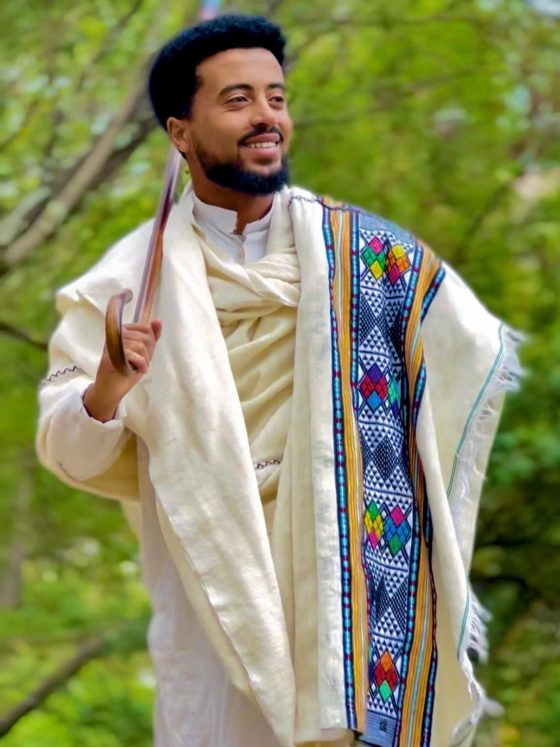
The costumes that appear in Mashramani’s parade are the theatrical form of a dress culture that operates every day of the year. Afro-Guyanese dress developed within a society shaped by African ancestry, colonial rule, plantation history, Caribbean migration, Christianity, Islam, Creole culture, and modern national identity. It cannot be reduced to a direct copy of one West African clothing tradition because the wardrobe emerged through adaptation: African references filtered through Caribbean conditions, colonial restrictions, religious life, family ceremony, and the specific aesthetic of Guyanese community belonging.
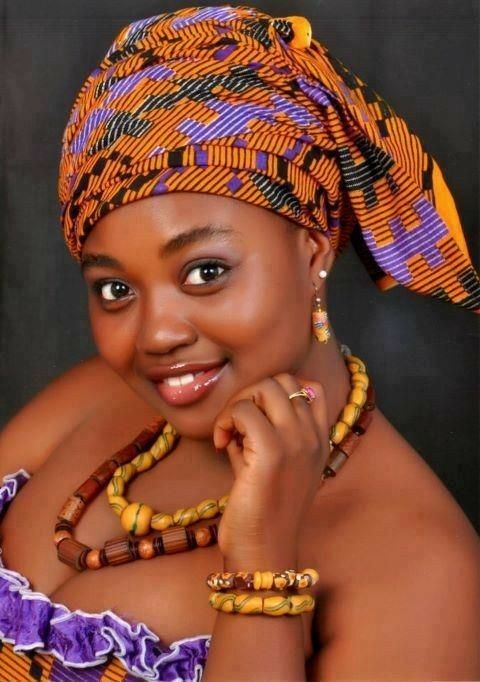
Headwraps are one of the most recognisable elements of Afro-Guyanese women’s dress. Tied in many forms, from simple everyday wraps to elaborate arrangements for church services, weddings, and national events, the headwrap’s significance is not only visual. It frames the face and alters the wearer’s posture. A carefully tied wrap can communicate confidence, maturity, modesty, elegance, or authority. It can also mark an occasion: the same woman may wear a practical wrap at home and a sculptural headpiece at a wedding. Across the African diaspora, headwraps have also carried the history of hair politics, protecting natural hair and allowing women to control how their heads are seen in public.
Bright printed fabrics, beadwork, jewellery, tunics, and skirts form the wider vocabulary of Afro-Guyanese dress. As Omiren Styles’ documentation of Gullah Geechee women’s headwrap traditions confirms, headwrap traditions across the African diaspora in the Americas were not simply preserved unchanged from West African practice. They were transformed within Caribbean and American societies, adapted to new conditions while maintaining their function as tools of dignity and self-presentation. Afro-Guyanese headwraps belong to this wider diasporic history of adaptation and cultural retention.
Mashramani’s Costume Economy: Design, Labour, and the Street
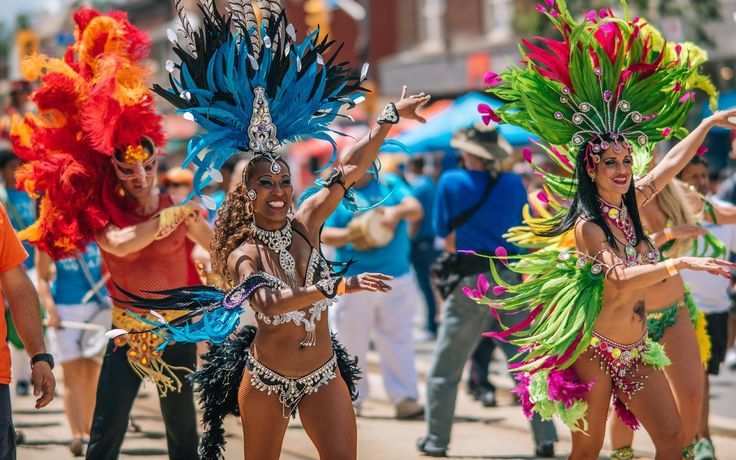
Mashramani’s visual world depends on a complete production chain: costume designers, sewists, wire workers, feather technicians, jewellers, makeup artists, dancers, coaches, prop builders, float builders, organisers, and band leaders. The designer’s name may be printed in the programme, but the finished costume is produced through a much wider network of labour whose members rarely receive the same public credit.
Nelsion Nurse is one of the most visible names in recent Mashramani costume reporting, with documented work for government ministry bands, individual costumes, floats, and fashion designs, including work with the Ministry of Education. His band offered revellers costumes through its mas camp, creating an access model in which people not only watch the band but pay to join its visual world. Olympia Small-Sonaram represents another dimension of Guyana’s costume history: long careers that cross pageants, float design, national costume production, and fashion, building the institutional memory of Mashramani design across multiple decades.
The practical demands of Mashramani costume design are more engineering than decoration. A costume must remain attached during dancing, allow movement through crowds, survive heat and sweat, be light enough to carry for hours, be visible from a distance, be adjustable for different bodies, and be repairable quickly in the field when wire bends, feathers fall, or a strap breaks. Designers work with foam, wire, fabric, feathers, sequins, glue, thread, netting, cardboard, plastic, and recycled materials. Weight distribution, ventilation, and the relationship between the costume and the choreography are as important as the visual concept.
The Politics of Costume: What Mash Represents
Mashramani has always been more than a party. Because it emerged around Guyana’s transition to republican status, the festival became a way for the state and the public to imagine what a postcolonial nation should look like. The themes selected by ministries, companies, schools, and bands communicate ideas about national development, diversity, history, labour, and belonging. As Omiren Styles’ documentation of the African origins of carnival costume confirms, the carnival form across the African diaspora in the Americas carries the political function of transforming public space and claiming collective visibility in communities whose public presence was historically restricted or controlled. Mashramani’s costume parade is in this tradition.
The Guyana Department of Public Information has documented the push for more locally inspired content in Mashramani costumes, with designers like Anthony Paul arguing that the festival should draw more explicitly on Guyana’s birds, rivers, forests, Indigenous communities, African heritage, and national symbols rather than defaulting to international carnival forms. That debate is itself evidence of the festival’s political character: what a Mashramani costume represents is not settled. It is actively negotiated between designers, government, communities, and tradition.
Afro-Guyanese influence is nevertheless central to the festival’s energy. Masquerade, drumming, dance, call-and-response, costume movement, and communal procession all belong to a wider African diasporic performance vocabulary. The parade enables people to occupy public space collectively, transform the street into a stage, and represent national belonging through movement. The costume is a way of claiming presence in a public national narrative.
The Omiren Argument
Afro-Guyanese dress is not a costume category. It is a wardrobe of continuity shaped by African memory, Caribbean adaptation, religious life, family ceremony, and national belonging. The African fashion market is worth 31 billion dollars. Mashramani turns that wardrobe into public spectacle, but the spectacle does not begin on the parade route. It begins with the headwrap tied before church, the printed dress chosen for a family gathering, the beads placed around the neck, the fabric cut in a local workshop, the feathers sorted on a worktable, and the band theme debated before the first costume is built. February 23 was chosen as Republic Day because Cuffy’s 1763 Berbice Rebellion began on that date: the first major slave revolt in South America, carried by a man who declared himself Governor of Berbice and demanded freedom as a political right rather than a gift. When Nelson Nurse’s band fills Georgetown’s streets on that date in feathers and sequins, and when Olympia Small-Sonaram’s decades of costume design continue through new designers who learned from her, the wardrobe is not celebrating a government anniversary. It continues an argument about what Guyanese identity is and who gets to occupy the public space where it is made visible.
Also Read:
- Palo de Mayo Bluefields Nicaragua: Creole and Garifuna Costume, Festival History, and What’s Documented
- Gaga, Palos, and Festival Dress: How Afro-Dominican Cultural Arts Build Identity Through Cloth
Frequently Asked Questions
What is Afro-Guyanese dress?
Afro-Guyanese dress refers to clothing and styling practices shaped by the African-descended communities of Guyana. It includes headwraps, printed dresses, tunics, skirts, scarves, beaded jewellery, turbans, and other forms of dress used for everyday life, religious gatherings, family ceremonies, cultural events, and national celebrations. It is not a single, fixed uniform: Afro-Guyanese communities have adapted African references through Caribbean, Creole, colonial, religious, and contemporary influences, producing a wardrobe that moves between church, market, family events, and national celebrations while maintaining specific African-descended visual languages.
What is the Mashramani festival in Guyana?
Mashramani, commonly called Mash, is Guyana’s annual Republic Day festival held on 23 February. It celebrates Guyana becoming a cooperative republic in 1970. It is associated with the 1763 Berbice Rebellion, led by national hero Cuffy, the first major slave revolt in South America. The festival began in the mining town of Linden, organised by the Jaycees of Greater Mackenzie. It was expanded to Georgetown as a national event following its first successful three-day celebration. Its name comes from an Indigenous Arawak word meaning celebration after cooperative work. The festival includes costume bands, floats, music, dancing, masquerade, food, and cultural activities.
Who is Cuffy and why is he connected to Republic Day?
Cuffy (also known as Kofi or Coffij) was a Coromantin man enslaved on the Lilienburg plantation in the Dutch colony of Berbice who led the 1763 Berbice Rebellion, the first major slave revolt in South America. He declared himself Governor of Berbice and negotiated directly with the Dutch colonial government to partition the colony. When Guyana became a republic on 23 February 1970, the date was deliberately chosen to mark the anniversary of the Berbice Rebellion, linking the republic’s birth to the legacy of Cuffy’s resistance. He is Guyana’s national hero, commemorated in a bronze monument in Georgetown’s Square of the Revolution.
How does Afro-Guyanese dress influence Mashramani?
Afro-Guyanese dress influences Mashramani through vibrant fabrics, head adornment, body decoration, jewellery, rhythmic movement, and communal styling. The festival draws on broader African diasporic performance traditions in which clothing is designed to move with music and help performers occupy public space collectively. Mashramani costumes are more theatrical than everyday Afro-Guyanese clothing. Still, they share the same principles: colour communicates identity, accessories create emphasis, and dress becomes a way to participate in community life. The festival’s wardrobe combines African, Indigenous, Caribbean, Creole, and national references rather than representing a single heritage.
Who designs Mashramani costumes?
Mashramani costumes are designed and produced by professional costume designers, sewists, wire workers, feather technicians, prop builders, makeup artists, and band organisers. Nelsion Nurse is one of the most recognised contemporary designers, with documented work for government ministry bands, individual costumes, floats, and fashion design. Olympia Small-Sonaram has been recognised for a long career in float and costume design spanning pageants and national costume production. The designer’s name may receive public credit, but each finished costume depends on a production team responsible for cutting, sewing, wiring, embellishing, fitting, repairing, and transporting each piece.
Explore More
Read the full Culture > Heritage & Identity section for Omiren Styles’ documentation of Afro-Caribbean dress traditions, diaspora wardrobe histories, and the community production systems that make festival dress more than spectacle.
Discover travel and heritage intelligence across South America and the Caribbean at Rex Clarke Adventures.