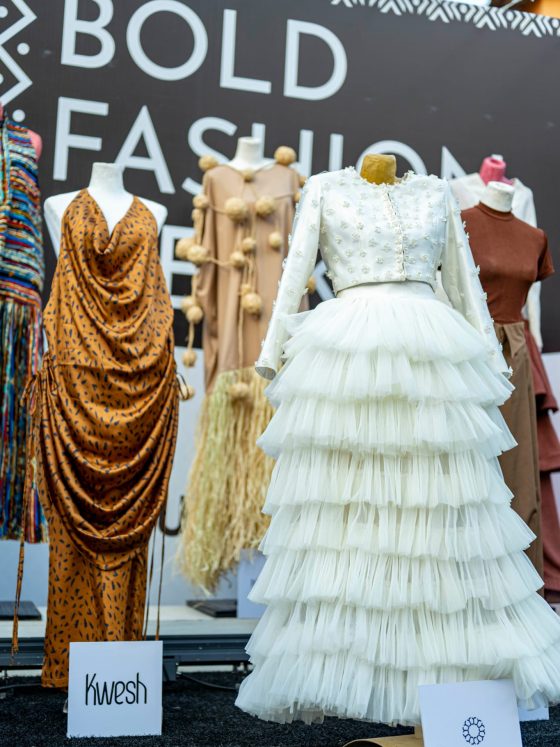
African designers are not waiting to be discovered.
They are already building collections, studios, retail relationships, production networks and audiences across Lagos, Accra, Dakar, Nairobi, Johannesburg, Casablanca, Kigali, London, Paris and New York. They are dressing international clients, shaping visual culture, sustaining local craft economies and using direct-to-consumer channels to reach customers far beyond their home markets.
The problem is not a shortage of talent, visibility or cultural relevance.
The problem is that the UK fashion market still too often offers African and diaspora designers a moment of visibility without the infrastructure required to turn that moment into durable commercial participation.
A runway appearance can create press. A pop-up can create footfall. A cultural programme can create connections. A buyer meeting can create interest. But none of those outcomes automatically creates a purchase order, a repeat stockist, reliable payment, sales representation, working capital, warehousing, returns management or a commercially viable route into UK retail.
That distinction is central to Omiren’s reporting. In Runway Visibility Is Not Distribution: Which African Designers Have Verifiable Global Retail Access?, we separated international recognition from publicly verifiable retail access. A designer can appear at a major event, win an award or dress a celebrity without holding a confirmed, continuing wholesale relationship outside their home market.
Visibility matters. But visibility is the beginning of the commercial conversation, not its conclusion.
African designers are increasingly visible in the UK, but visibility alone does not create retail access. Omiren examines the gaps in buyers, wholesale, logistics, finance and long-term distribution.
The Gap Between Being Seen and Being Stocked

Fashion often treats “discovery” as the primary challenge facing African designers. The language is flattering on the surface but limiting in practice.
To be discovered suggests that the work was previously absent. It was not.
African fashion systems have long existed across ateliers, local retail networks, tailors, fabric markets, craft communities, fashion schools, family businesses, occasionwear economies and independent labels. The more relevant issue is whether global fashion institutions are prepared to recognise those systems as commercially serious, and whether they will build equitable routes into retail, finance and distribution.
The UK already has a layered African fashion ecosystem. Omiren’s mapping of African fashion in London identifies institutional designers, diaspora boutiques, occasionwear businesses, fabric traders, stylists, salons, community networks and cultural organisations operating across the city. This is not a single scene. It is a fashion economy with different levels of visibility, capital and access.
At the institutional level, African-heritage designers have made significant gains in London’s fashion industry. At the commercial level, boutiques, concept stores and independent platforms connect designers to customers. At the community level, tailors, fabric traders, churches, salons, ceremony networks and diaspora events sustain everyday demand and cultural knowledge.
The gap appears between these levels.
A label can gain institutional visibility without gaining meaningful access to the retail and finance systems that allow it to scale. A community-based fashion economy can generate consistent demand without receiving the same press, buyer attention or investment as runway-facing brands. A designer can be widely celebrated while still carrying the full burden of production, shipping, customer service and cash flow alone.
That is an infrastructure problem.
The UK’s Structural Challenge

It would be inaccurate to suggest that commercial barriers are unique to African designers. Independent British labels also struggle with access to finance, production capacity, wholesale pressure, retail uncertainty and rising operating costs.
The UK government’s 2026 report on creative-industry business growth and access to finance notes that growing creative businesses can encounter fragmented investment pathways, limited relevant information and inconsistent processes when attempting to secure finance.
The British Fashion Council’s BFC 2030: Access, Creativity, Growth strategy treats fashion growth as a connected system involving creativity, skills, funding, workspace, partnerships, consumer access and global market development. That framing is important because it recognises a truth fashion media often avoids: creative excellence does not automatically produce a viable business.
For African and diaspora brands, the same structural pressures can be intensified by cross-border trade. A label may need to coordinate production across countries, manage currency risk, pay for international freight, navigate customs requirements, meet retailer compliance expectations, arrange UK returns and build local relationships with buyers or sales agents, all before the brand has access to predictable cash flow.
A small business may be asked to look retail-ready while navigating conditions that make achieving retail readiness expensive.
The Buyer Meeting Is Only the Beginning

A buyer meeting is not a retail relationship.
It is an opening conversation. For that meeting to become an order, and for that order to become a sustainable business relationship, a designer may need to demonstrate reliable sizing and quality control; clear line sheets, product descriptions and imagery; a workable wholesale price and margin; production capacity for the requested order quantity; realistic delivery windows; packaging, labelling and compliance documentation; freight, customs and insurance arrangements; a plan for returns, exchanges and customer service; and enough cash to finance production before payment is received.
These expectations are not automatically unfair. Retailers have a duty to their customers and businesses to ensure stock is delivered on time and at the expected standard.
But the central question is who carries the risk when a small, independent, cross-border label enters the system.
A designer can be expected to purchase materials, pay makers, secure production, package goods and arrange freight weeks or months before receiving payment from a retailer. If the retailer also expects high margins, low order minimums, delayed payment, strict delivery requirements or exposure to returns and markdowns, the label may take on a level of risk that makes the relationship unworkable.
That is not evidence of a lack of ambition or professionalism. It may be evidence that the commercial terms were built for larger, better-capitalised businesses.
The problem is particularly visible when fashion institutions describe an event, a buyer introduction or a pop-up as market access without tracking the commercial result. A conversation is not a contract. A stockist listing is not necessarily a repeat order. An order is not the same as a paid invoice.
The Infrastructure After the Fashion Event

Platforms such as Africa Fashion Week London can create vital visibility. They convene designers, buyers, stylists, journalists, investors and customers who might not otherwise meet. They create public stages and can give brands an important basis for credibility.
But fashion events should be judged by what happens after the runway.
Omiren’s reporting on African designers in London and the infrastructure test for fashion power identifies the gap between a visibility moment and the systems required for durable business: sales representation, production finance, logistics, retail terms, buyer access and continuing stockist relationships.
A serious post-event assessment should ask: how many participating brands met buyers with purchasing authority? How many meetings became follow-up appointments? How many led to sample requests, purchase orders or retail listings? How many of those listings resulted in repeat orders? Did brands receive feedback on pricing, merchandising, production capacity or delivery? Were designers supported with logistics, compliance, warehousing or sales representation? Were commercial outcomes measured and reported transparently?
These questions do not diminish the work of fashion platforms. They raise the standard by which the industry measures its value.
The shift should be from event visibility to commercial continuity.
Logistics Determines Who Can Trade
The least visible part of the fashion system can be the most decisive.
A garment must be produced, packed, classified, insured, shipped, cleared, delivered, sold and sometimes returned. For a label working across borders, each of those stages can affect pricing, delivery, and margin.
Small designers often face the greatest exposure. A delayed shipment can miss a seasonal retail window. A customs error can hold goods at the border. High freight costs can make the wholesale margin impossible to maintain. A lack of UK warehousing can complicate returns. A retailer may expect delivery on a schedule that does not account for the realities of international production or material sourcing.
These are not back-office details. They determine whether a brand can reliably trade.
The industry’s instinct to praise resilience can also become a problem. African designers are frequently celebrated for being resourceful, self-funded and able to build under difficult conditions. That resilience is real and should be respected.
But resilience should not become a substitute for infrastructure. A designer should not have to depend indefinitely on personal savings, unpaid family labour, informal shipping, temporary retail activations and exceptional personal effort to enter a market that says it wants global creativity.
Beyond the Diversity Activation
The UK fashion sector should also distinguish between cultural visibility and commercial commitment.
A retailer may host a Black History Month pop-up. A department store may include African designers in a curated display. A cultural institution may programme a panel. A major brand may create a short collaboration. These initiatives can have value. They can introduce new audiences to designers, create meaningful cultural recognition and open professional conversations.
But the question is what remains when the campaign ends.
Did the retailer continue to buy from the designers? Did the label receive data about sales and customer demand? Did the designer retain fair ownership and credit? Were payment terms workable? Did the brand gain a permanent stockist, a sales agent or a route into regular buying cycles? Did the initiative create new production, logistics or finance support?
If the answer is no, the project may still be culturally important. But it should not automatically be presented as a commercial-access solution.
The better model is a long-term relationship: a retailer that buys across seasons; a showroom that creates accountable buyer introductions; an event platform that tracks post-show outcomes; a logistics partner that helps small labels manage fulfilment; an institution that offers commercial support as well as public programming.
What Meaningful UK Access Looks Like

A practical UK-access system for African and diaspora designers would include several specific elements.
Buyer access with accountability means that introductions should lead to structured feedback, follow-up meetings, and a clear pathway to an order, where appropriate. Commercially workable retail terms mean that deposits, payment schedules, margins, delivery windows, and return policies must reflect the realities of smaller independent producers. Sales and showroom representation means designers need intermediaries who can translate creative value into buyer relationships, seasonal planning and market knowledge.
Shared logistics solutions mean warehousing, consolidated shipping, customs expertise and returns management can reduce the cost of entering the UK market. Production and merchandising support means practical help with pricing, line sheets, sizing, packaging, compliance and delivery planning is often more valuable than another publicity opportunity. Transparent post-event reporting means platforms should distinguish attendance, press, buyer meetings, sample requests, orders, stockist agreements, repeat orders and paid outcomes.
Long-term retail commitment means retailers should develop categories, not merely campaigns, buy over seasons, share performance insights, and invest in customer education.
Some labels already demonstrate international infrastructure through selective stockists, direct customer relationships, production discipline, and carefully chosen platforms. Omiren’s 2026 Index of African ready-to-wear labels building international fashion infrastructure offers examples of brands using different models, from multi-stockist access to selective, production-appropriate distribution.
The lesson is not that every designer should pursue the same retail route. A craft-led label may be better served by limited distribution and direct clients. A made-to-order studio may need a different model from a ready-to-wear business. A strong local market may be commercially more important than international stockists.
The essential point is choice. Designers should be able to choose a growth route based on the realities of their work, rather than being forced into a visibility economy because durable infrastructure is inaccessible.
Omiren’s Role: Document the Whole System
This is why the Omiren Style Index must become more than a list of designers.
A complete fashion record includes designers and labels; boutiques and retailers; showrooms and platforms; textile suppliers and production partners; stylists, photographers, casting directors and creative teams; fashion weeks, trade events and cultural institutions; material systems, dress codes, visual languages and lexicon terms; and the trade routes and diaspora networks through which products, people and ideas move.
That record has commercial as well as cultural value. It makes the system easier to see, research and enter. It also corrects the false impression that African fashion begins only when a global fashion institution notices it.
As Omiren has argued in Why Fashion Needs Critics, and What Happens When It Doesn’t, criticism is not opposition for its own sake. It is how the industry builds standards, assigns accountability and keeps a more accurate record.
From Exposure to Participation
African designers are not waiting for the UK market to recognise that their work matters. Their work already carries cultural authority, commercial intelligence, skilled labour, customer knowledge and creative ambition.
The question is whether the UK fashion market can offer more than exposure.
Can buyers turn interest into fair orders? Can retailers build relationships across seasons rather than campaigns? Can institutions report outcomes, not only attendance? Can logistics, finance and sales support become part of market access? Can the fashion industry stop asking independent labels to absorb all of the risk of entering its system?
The UK has the fashion infrastructure, institutional reach and commercial influence to help create more durable pathways. Its own industry strategy acknowledges that access, creativity and growth are connected. The BFC 2030 strategy makes that argument explicitly. The next step is to make that principle real in the ordinary mechanics of trade: stockist relationships, deposits, payment schedules, freight, returns, production support, buyer continuity and shared value.
African designers are not waiting to be discovered.
They are waiting for visibility to become participation.
ALSO READ
- Runway Visibility Is Not Distribution: Which African Designers Have Verifiable Global Retail Access?
- African Designers in London: The Infrastructure Test for Fashion Power
- African Fashion in London: Mapping UK-Based Designers, Boutiques and Cultural Hubs
- The Omiren Index 2026: 10 African Ready-to-Wear Labels Building International Infrastructure
- Why Fashion Needs Critics, and What Happens When It Doesn’t
Frequently Asked Questions
Why is visibility not enough for African designers in the UK?
Visibility can create awareness, press coverage, customer interest and introductions. It does not guarantee wholesale orders, repeat stockists, working capital, reliable delivery, fair payment terms, sales representation or cross-border logistics. A designer can be highly visible while lacking the commercial infrastructure needed to trade sustainably in the UK.
What infrastructure do African designers need to sell in the UK?
The requirements vary by business model but may include buyer relationships, sales representation, production planning, viable pricing, working capital, logistics, customs knowledge, warehousing, returns management, compliance support, product information, reliable sizing, and customer service capacity. The most useful support connects these systems rather than treating a fashion event or press feature as the outcome.
What is the difference between a fashion showcase and retail access?
A showcase allows a designer to present work to an audience. Retail access involves an ongoing commercial relationship: a buyer places an order, stock is delivered, products are sold, payments are made, and the relationship can continue across future seasons. A showcase may lead to retail access, but it does not prove it.
How can retailers better support African and diaspora fashion labels?
Retailers can offer clearer buyer feedback, realistic delivery expectations, fairer terms for smaller producers, deposits or prompt payment where appropriate, customer education, merchandising support, multi-season buying commitments and better communication around sales performance. They can also work with logistics and sales partners to reduce cross-border barriers.
Does every African fashion brand need UK stockists to succeed?
No. International stockists are one route to market, not the only measure of success. Some labels are better served by direct-to-consumer sales, local or regional retail, private clients, made-to-order production, selective platforms or diaspora customer networks. The issue is not that every brand should follow one route; it is that designers should have genuine, informed choices.
Methodology
This article is an industry analysis informed by Omiren’s existing reporting on African designers’ retail access, UK fashion infrastructure, and London’s African fashion ecosystem, as well as public UK policy and British Fashion Council materials. It does not claim that every African designer or UK retailer shares the same experience. Before publication, any final version that names specific retailers, buyers, fashion events, payment terms, sales figures, retail outcomes or commercial failures should include direct reporting, relevant documents where available, and a right of reply for organisations subject to significant criticism. See Runway Visibility Is Not Distribution for Omiren’s sourcing standards on retail access reporting.
EXPLORE MORE
Read the full Industry section at Omiren Styles for ongoing analysis of African fashion infrastructure, UK market access and the structural conditions that determine whether African and diaspora designers can scale commercially on their own terms. Discover travel and heritage intelligence across Africa at Rex Clarke Adventures.