The Kantamanto market in Accra, Ghana, receives approximately 1,500 tonnes of secondhand clothing every single week. A 2024 report by Greenpeace Africa and Greenpeace Germany found that up to 500,000 items of clothing waste from that market end up in open spaces and informal dumpsites each week. Of the clothing waste sampled, 89% contained synthetic fibres, primarily polyester, nylon, and acrylic, breaking down into microplastics in soil and water. Air samples from public washhouses in the adjacent Old Fadama settlement, where textile waste is burned to heat water, showed benzene levels exceeding European indoor air quality guideline values by almost 200-fold. The brands whose products most frequently appeared in this waste stream, including Zara, H&M, and Next, each publish annual sustainability reports, supply chain transparency disclosures, and climate commitment frameworks assessed by global indices. Ghana does not appear as an actor in any of those frameworks. It appears only as a destination. This is the sustainability data problem. It is not a marginal issue of incomplete data. It is a structural condition of how global fashion sustainability reporting is built, who it is built to assess, what it is built to measure, and whose environmental practices it has never been designed to see.
The global sustainability reporting frameworks that shape fashion’s environmental narrative exclude African and Caribbean brands by design. This article examines the data problem and the cost it exacts on the industry’s credibility.
What the Global Reporting Frameworks Actually Measure

The three most-cited sustainability reporting frameworks in global fashion are the Fashion Transparency Index, published annually by Fashion Revolution; Remake’s Fashion Accountability Report; and the Fossil Free Fashion Scorecard, published by Stand. earth. Each of these frameworks produces data that is widely referenced, credibly sourced, and commercially influential. Each is designed exclusively around major Western brands. The Fashion Transparency Index ranks 250 of the world’s largest fashion brands and retailers. Remake’s 2024 Fashion Accountability Report assessed 52 brands, all of which earn at least $100 million in annual revenue. The Fossil Free Fashion Scorecard reviewed 42 brands and analysed their emissions-reduction and fossil-fuel phase-out commitments. None of these thresholds or selection criteria is designed to include artisanal producers, independent designers, small brands, or fashion businesses operating at the scale at which most African and Caribbean fashion operates.
The data these frameworks produce is significant. The Fashion Transparency Index 2023 edition found that 94% of major fashion brands do not disclose what fuel is used in the manufacture of their clothes, that 99% do not disclose the number of workers in their supply chains being paid a living wage, and that no major brand has yet achieved full supply chain traceability. According to the European Commission’s Green Claims Directive, 59% of sustainability claims made by fashion brands in 2024 were vague, misleading, or unverifiable. The global sustainable fashion market was valued at approximately $7.9 billion in 2024 and is projected to grow to between $22 billion and $58 billion by the early 2030s. Europe holds 30 to 36% of that market, and North America holds 28 to 40%. The Middle East and Africa combined hold 2% of the market, valued at approximately $158 million in 2024, according to Cognitive Market Research. These proportions are not simply a reflection of market size. They reflect which regions have the financial infrastructure, access to certification, relationships with third-party verifiers, and regulatory environment that the sustainable fashion market’s definition of sustainability requires.
This is the specific character of the data problem. It is not that African and Caribbean fashion has no environmental credentials. It is that the credentials it holds do not map to the measurement systems used by global reporting frameworks, and those frameworks were never designed with any obligation to extend their architecture to include them. The result is a body of global sustainability data that presents itself as representing fashion’s environmental performance while excluding the geographies where the most structurally sustainable fashion production has been practised for the longest period.
The Practices That Are Not Being Counted
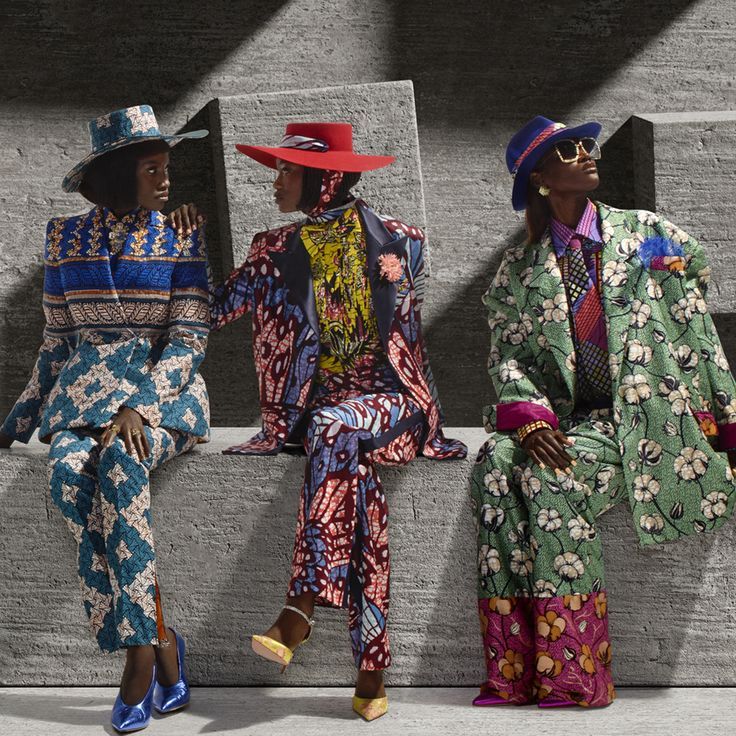
African traditional fashion production is, by its structural character, what the global sustainable fashion conversation is trying to build towards. Kente cloth from Ghana is handwoven on narrow-band looms using cotton or silk thread, a production process requiring no industrial machinery, no synthetic fibre inputs, and no chemical dyeing in its traditional form. The aso-oke textile of the Yoruba, woven on similar narrow-band strip looms across south-western Nigeria, has been produced in the same intergenerational transmission model for centuries. Ethiopia’s handloom sector, including the white cotton shemma cloth woven by artisans supplying the national Habesha Kemis tradition, uses cotton grown, ginned, spun, and woven within a short local supply chain with minimal transport emissions. The barkcloth of Uganda, produced from the Mutuba fig tree and recognised by UNESCO as Intangible Cultural Heritage, requires no chemical processing and generates no synthetic waste.
These are not craft curiosities. They are production systems with an environmental profile that the sustainable fashion industry’s most ambitious targets aim to reach. The Circularity Gap Report for Textiles, published in 2024, found that only 0.3% of the 3.25 billion tonnes of resources used annually by the global textile industry comes from recycled sources. Less than 1% of material used to produce clothing is recycled into new clothing, resulting in over $100 billion in material value loss according to the Ellen MacArthur Foundation. The UNESCO 2023 report on the African fashion sector noted that Africa’s production of organic cotton rose 90% between 2019 and 2020 and now accounts for 7.3% of global organic cotton production. That same report identified that Africa has significant potential to become a key player in global sustainable and organic cotton production, while noting that environmental standards for the sector need to be established. What it did not note, because it falls outside the scope of the report’s mandate, is that the environmental practices already embedded in Africa’s traditional textile production have no equivalent measurement framework, and that without one, they cannot enter the global sustainability data conversation.
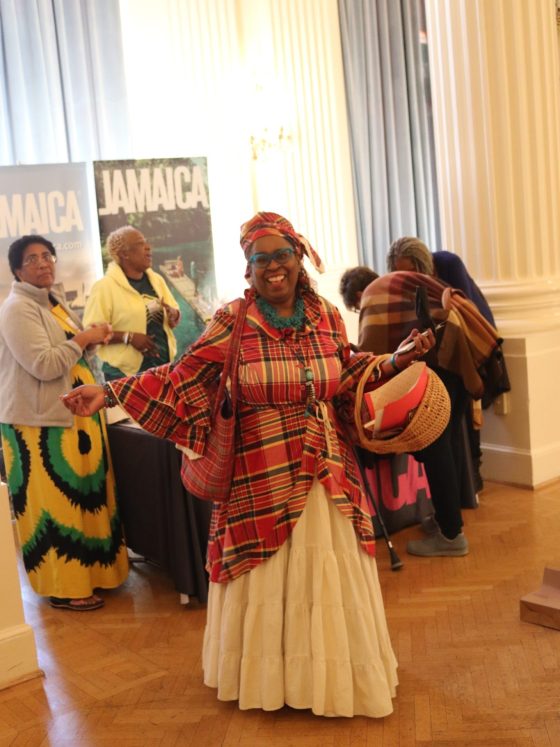
The Caribbean presents a parallel structural condition. Carnival costume construction in Trinidad and Tobago, Barbados, and Jamaica involves hand-finishing, appliqué, wire-bending, and featherwork by independent mas camps and individual craftspeople. It is a seasonal, skilled, community-embedded production model. It produces garments worn for one to two days of high cultural intensity and then either stored for future use, repurposed into display pieces, or decomposed because the materials are natural. It generates no factory waste stream, no bulk chemical dyeing, no container shipping, and no overproduction surplus. None of these environmental characteristics appears in any global fashion sustainability index, because none of those indices has a methodology for measuring them. The practices exist. The measurement does not.
Waste Colonialism and the Asymmetric Data Story
There is a second dimension to the sustainability data problem that runs counter to the invisibility of African and Caribbean sustainable practices. African geography appears extensively in global fashion sustainability reporting, but almost exclusively as the site where the environmental damage caused by Western fast-fashion overproduction arrives. The Kantamanto case is the most documented, but it is not the only one. The Break Free From Plastic coalition’s 2025 factsheet on textile waste in Africa documents that textile waste has severely polluted Ghana’s Korle Lagoon and Kenya’s Nairobi River. MIT research identifies Kenya as Africa’s largest consumer of used clothing. Kenya imported $218.2 million worth of secondhand clothing in the year ending March 2024, a 14.5% year-on-year increase. Ghana receives approximately 15 million items of clothing per week, nearly half of which are unsellable, made from synthetic fibres with no resale value and no viable local recycling pathway.
The asymmetry in the data is structurally significant. The brands that produce this waste are assessed and ranked within global sustainability frameworks. The communities receiving it are documented only as victims of an environmental crisis created elsewhere. Ghana, Kenya, and other African nations are not measured as participants in the global fashion industry’s sustainability conversation. They are measured as destinations of their externalities. This is not an editorial omission. It is the logical consequence of a reporting architecture designed entirely around the producers of the problem rather than the communities that absorb its environmental cost.
Greenpeace Africa’s investigations manager, Sam Quashie-Idun, co-author of the 2024 Fast Fashion, Slow Poison report, stated the conclusion directly: brands and regulators in the Global North must be held accountable, and the solutions must include developing a model of sustainable fashion rooted in African values, one that supports local creativity and economy. That model would need to begin with a data architecture that can see African fashion as a producer of environmental value, not only as a geography absorbing environmental harm. No such architecture currently exists in any of the major global fashion sustainability frameworks.
Also Read:
- The State of African Fashion 2026: A Data Portrait Across Investment, Manufacturing, Retail, and Export
- What the Numbers Say About Lagos, Accra, and Nairobi as Fashion Business Cities
- Africa’s Cotton Economy: The Raw Material the World Buys and the Value Africa Never Keeps
- Slow Fashion Was Not a Trend Here: What African Artisanal Production Teaches the Global Industry
Why the Certification System Fails Small Producers
The most commercially significant sustainability certification frameworks available to fashion brands are the Global Organic Textile Standard, OEKO-TEX certification, the Fairtrade Textile Standard, and GOTS certification. Each of these requires formal application, fees, third-party auditing, documentary evidence of supply chain practices, and ongoing compliance reporting. They are designed for companies with the administrative capacity, financial resources, and regulatory familiarity to navigate the certification bureaucracies of Europe and North America. The minimum cost of GOTS certification for a small producer is several thousand dollars per year, before audit costs. The processing timeline is measured in months. The documentary requirements assume a level of supply chain formalisation that does not describe how most African or Caribbean artisanal fashion production is structured.
The consequence is not that African and Caribbean fashion cannot be sustainable. It is that sustainable African and Caribbean fashion cannot become certified sustainable by the frameworks that grant commercial recognition to sustainability claims. A Ghanaian kente weaver operating in a workshop in Kumasi, using natural thread sourced from a local cooperative, is producing fabric with a carbon footprint that is a fraction of that of factory-produced textiles. That weaver has no pathway to GOTS certification that does not require resources and administrative capacity they do not have. A Caribbean mas camp that makes carnival costumes from natural materials, drawing on intergenerational craft knowledge, is producing fashion with near-zero synthetic waste. That camp has no entry point into any global sustainability reporting framework. Their environmental credentials are real. They are simply unmeasured, and therefore commercially invisible.
The global sustainable fashion market, valued at $7.9 billion in 2024 and projected to exceed $50 billion by the early 2030s, is being built almost entirely on the certified sustainable credentials of large Western brands. The academic literature published in Discover Sustainability in 2024 identifies this as a structural gap: a fair and equitable transition towards a sustainable and circular fashion industry will require bridging the links between the Global North and Global South in ways that current frameworks do not address. The Springer review does not specify what that bridge should look like. It identifies its absence.
The Omiren Argument
The sustainability data problem in African and Caribbean fashion is, in the most literal sense, a data problem. The practices exist. The environmental credentials are real, verifiable, and in many cases far older than the concept of sustainable fashion itself. Ethiopia’s handloom textile traditions predate the synthetic fibre industry by millennia. Kente cloth was produced sustainably before the word sustainable existed in the fashion lexicon. The Mutuba barkcloth of Buganda has been produced without chemical inputs for as long as the Buganda Kingdom has existed. These are not emerging sustainable practices being built in response to climate anxiety. They are ancient production systems that the global fashion industry has spent the past century replacing with industrialised alternatives and is now, belatedly, trying to approximate with certificates and scorecards. The data problem is not that these practices have no environmental value. It is that the value has never been measured, because the measurement systems were built by and for the industry that displaced them.
This is the argument Omiren Styles makes by covering African and Caribbean fashion sustainability as a reporting failure rather than as a story of emerging potential. The sustainable fashion market is projected to grow to over $50 billion. That growth will be driven by consumer demand, regulatory pressure, and investment in verified environmental credentials. None of the current growth projections accounts for the African and Caribbean fashion economy as a participant in that market on environmental grounds, because the measurement infrastructure to establish those grounds has not yet been built. The editorial work that would matter most in this space is not feature coverage of individual sustainable brands. It is the systematic documentation of how traditional African and Caribbean production practices affect a garment’s environmental footprint, measured against the metrics used by global certification systems, and published as data that the sustainability industry cannot ignore. That documentation does not currently exist. Building it is a task for the platform that covers this geography, one that deserves the seriousness it requires.
Frequently Asked Questions
Why are African and Caribbean fashion brands absent from global sustainability indices?
The major global fashion sustainability frameworks, including the Fashion Transparency Index, Remake’s Fashion Accountability Report, and the Fossil Free Fashion Scorecard, are designed exclusively for large brands, typically those earning $100 million or more in annual revenue. The Fashion Transparency Index assesses 250 of the world’s largest fashion brands and retailers. Remake’s 2024 report assessed 52 brands, all with annual revenues above $100 million. These revenue and scale thresholds structurally exclude the African and Caribbean fashion industries, where the majority of brands operate at artisanal, small, or medium scale. The indices are not designed to accommodate their production models, and no equivalent framework has been built.
What is the environmental profile of traditional African textile production?
Traditional African textile production systems are, by their very nature, among the lowest-carbon garment production methods. Kente cloth, woven on narrow-band strip looms from cotton or silk, requires no industrial machinery or synthetic inputs. Nigeria’s aso-oke is produced through the same intergenerational handloom transmission model. Ethiopia’s handloom sector produces cotton fabric within local supply chains with minimal transport emissions. Uganda’s barkcloth, recognised by UNESCO as Intangible Cultural Heritage, requires no chemical processing. Africa’s production of organic cotton rose 90% between 2019 and 2020 and now accounts for 7.3% of global organic cotton production, according to UNESCO. These practices have no equivalent measurement in global sustainability reporting, because the certification frameworks that grant commercial recognition to sustainable production are inaccessible to small artisanal producers.
How does Ghana’s Kantamanto crisis relate to sustainability data in global fashion?
The Kantamanto market in Accra receives approximately 1,500 tonnes of secondhand clothing per week, according to the 2024 Greenpeace Africa and Greenpeace Germany report Fast Fashion, Slow Poison. Up to 500,000 items of clothing waste from this market end up in open spaces and informal dumpsites weekly. Of the sampled clothing waste, 89% contained synthetic fibres. Air samples from public washhouses where textile waste is burnt showed benzene levels almost 200 times above European indoor air quality guide values. The brands most frequently identified in the waste stream, including Zara, H&M, and Next, all publish sustainability reports and appear in global sustainability indices. Ghana and Kenya, which bear the direct environmental cost of this waste, appear in those indices only as receiving locations, not as participants in the sustainability conversation. This asymmetry is the core of the data problem.
What would it take to build a sustainability data framework that includes African and Caribbean fashion?
A credible sustainability measurement framework for African and Caribbean fashion would need to address four structural gaps. First, it would need metrics calibrated to artisanal and small-scale production, covering the handloom carbon footprint, the chemical impact of natural dyes, the length of the local supply chain, and intergenerational craft transmission as a circular-economy mechanism. Second, it would need a certification pathway accessible to small producers without the financial and administrative overhead of existing standards such as GOTS or OEKO-TEX. Third, it would need to be built with input from African and Caribbean fashion practitioners, not imported from European regulatory frameworks and applied to production systems it was never designed to assess. Fourth, it would need to account for the cost that fast fashion’s waste flows impose on African communities, measuring the damage of those flows against the environmental value of local artisanal production as a counterfactual. No such framework currently exists. The academic literature, including the 2024 Discover Sustainability review, identifies this absence as a structural equity gap in the global fashion sustainability conversation.