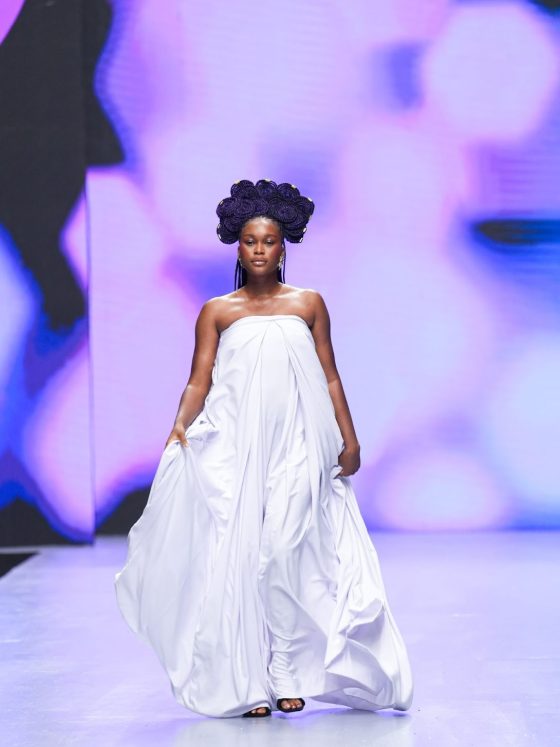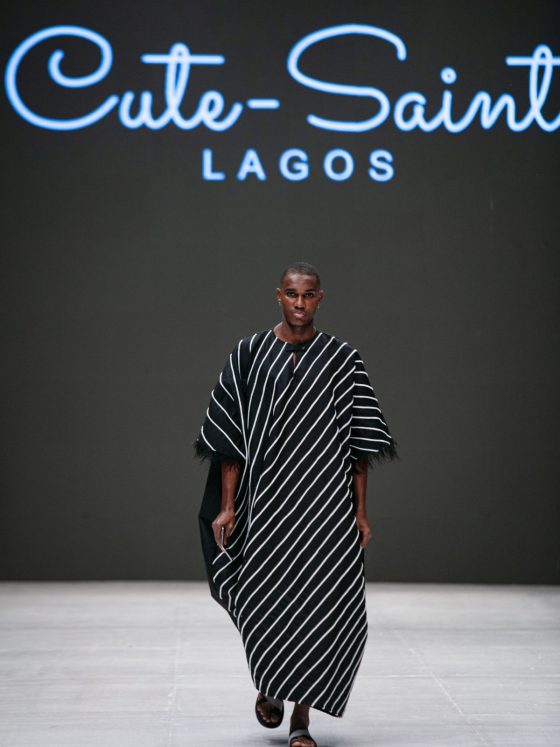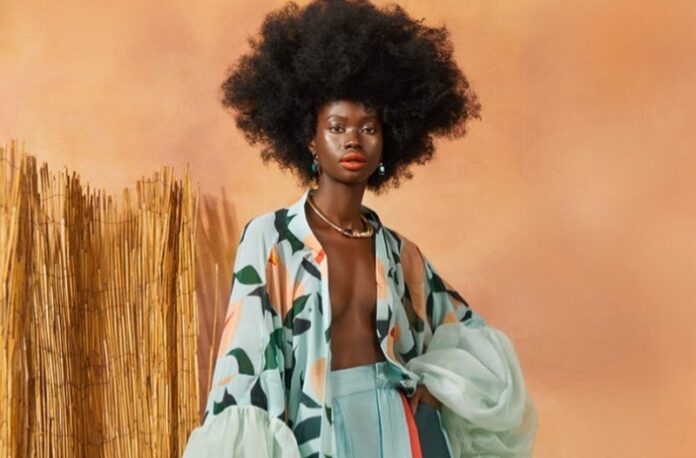
In November 2024, a Jamaican-born designer stood at a podium in New York City and became the first Black woman to win the Council of Fashion Designers of America’s Women’s Wear Designer of the Year award. Her name was Rachel Scott. Her brand, Diotima, had been building since 2021 from a single, specific obsession: the crochet tradition passed down through Jamaican grandmothers and aunties, a craft that Scott describes as the most intimate form of fashion because every piece is made by hand. She accepted the award by naming her mother and the women in Jamaica who make the crochet. “They are the heart and soul of the brand,” she said.
What Scott was describing was not Caribbean fashion inspired by African craft. It was an African craft, still alive in the Caribbean after four centuries of displacement, surfacing at the highest level of American fashion awards, dressed in luxury tailoring and worn on red carpets by Sabrina Dhowre Elba and Paloma Elsesser. The thread between the Jamaican grandmother’s crochet hook and a Bergdorf Goodman showcase is not a metaphor. It is a direct line.
That line is what a generation of Afro-Caribbean and Afro-Latino designers is now making visible on the runway. Not as heritage references. Not as cultural inspiration. As the thing itself.
From a Jamaican crochet tradition to Haitian beadwork in Paris couture, these designers are making the Atlantic crossing visible on the runway.
The Atlantic Was Not a Border. It Was a Forced Transit.
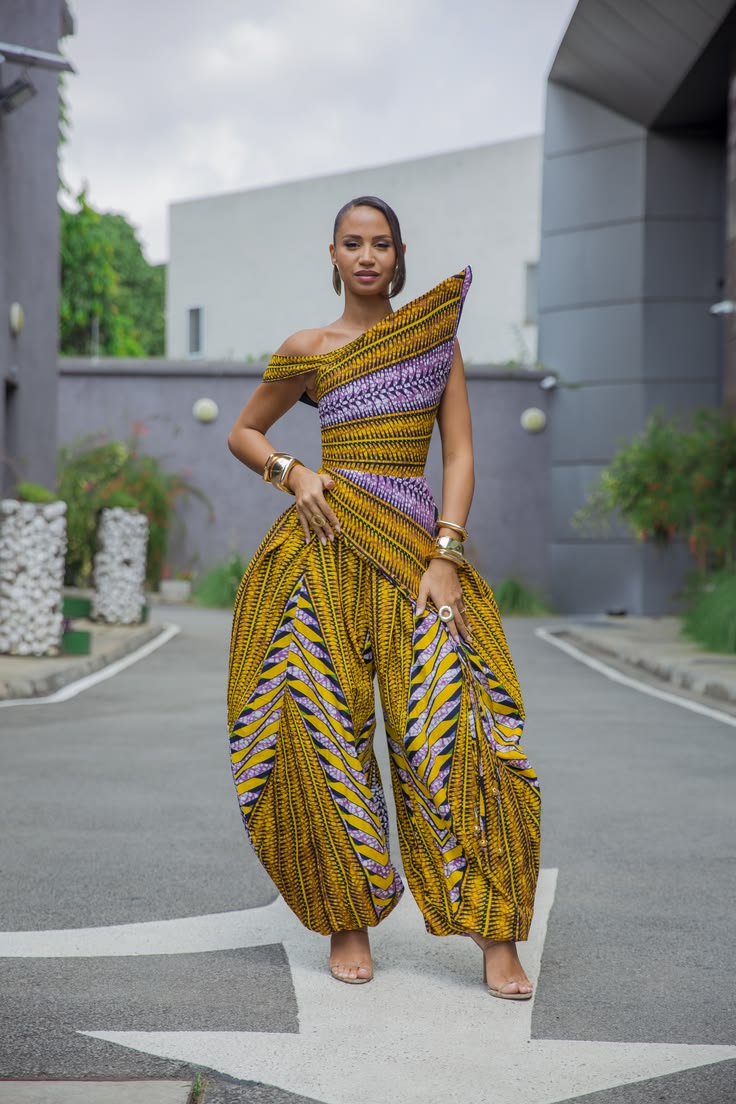
The connection between West African craft traditions and Caribbean dress is not a recent creative collaboration. It is the direct consequence of the transatlantic slave trade, which moved millions of Africans and their embodied knowledge of weaving, dyeing, beadwork, and textile production across the Atlantic into Caribbean and Latin American communities. Yoruba crochet techniques survived in Jamaica. Haitian beading traditions carry direct lineage from West African beadwork practices. The indigo-dyeing knowledge that produces West Africa’s distinctive textiles also survived in Caribbean communities that maintained the skill through generations of enforced separation from the continent.
The 2024 exhibition “Africa’s Fashion Diaspora” at the Museum at the Fashion Institute of Technology in New York documented this continuity directly, featuring 60 ensembles from Black designers across Africa, the Caribbean, and the Americas. The exhibition framed its argument in nine thematic sections. One, titled “Tun Yuh Han Mek Fashan” (a Jamaican patois phrase meaning to create beauty from meagre resources), specifically mapped the Caribbean tradition of craft-as-resistance: the making of extraordinary things from what the colonial economy refused to provide. Another section, “Monumental Cloth”, documented how designers from Cote d’Ivoire to Nigeria to the United States work with communities of weavers and dyers to produce contemporary fabrics with unbroken roots in historical practices. The designers profiled in this article sit at the intersection of both arguments.
“The crochet tradition was passed down from grandmothers and aunties to daughters. I started my career in Italy, where there is a real respect for craft, and it left a lasting mark on me. “Rachel Scott, Diotima
The Designers
Rachel Scott, Diotima (Jamaica / New York)
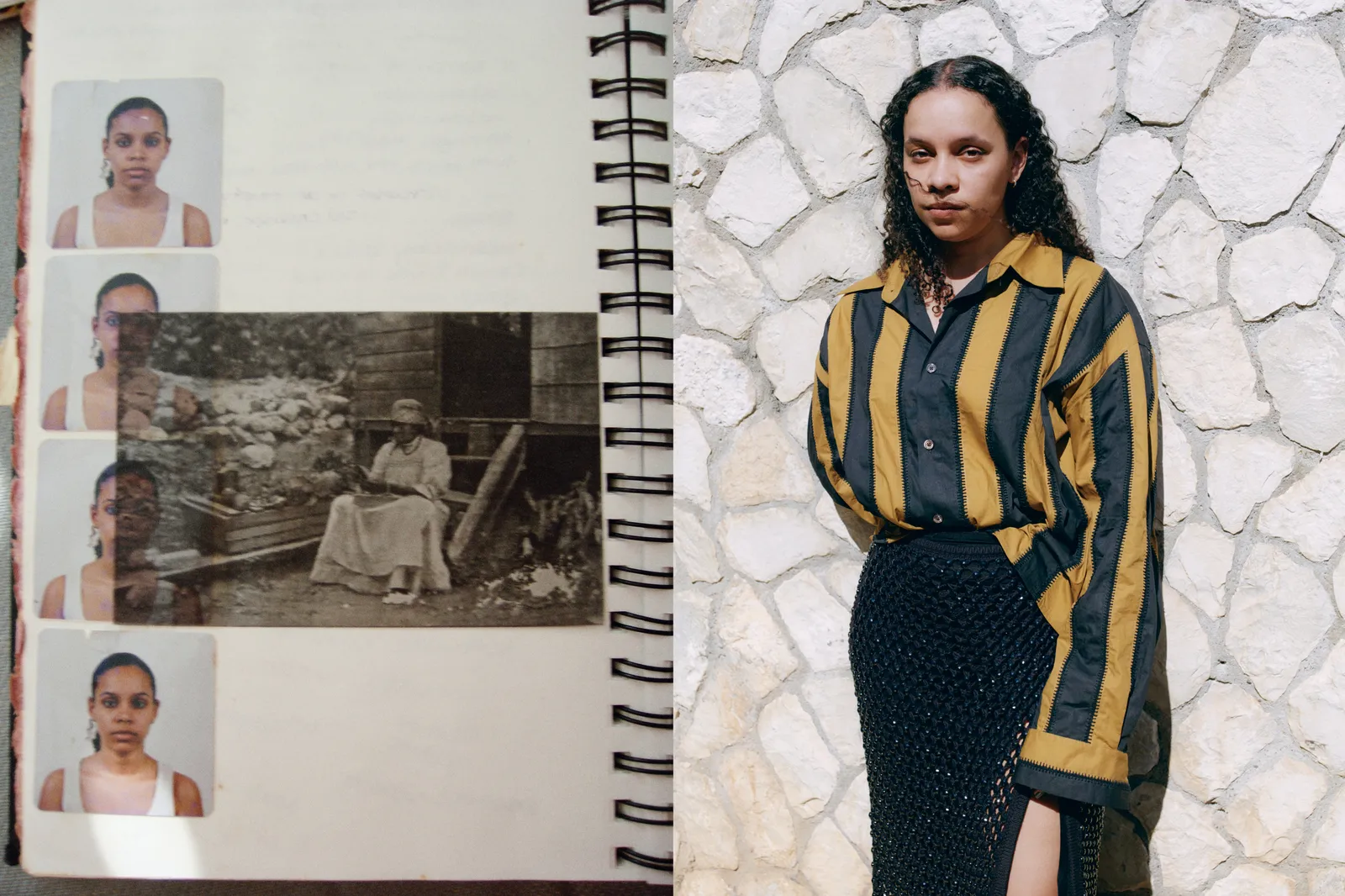
Rachel Scott founded Diotima in 2021 between Jamaica and New York City, building the brand on a single textile argument: that the crochet tradition of Jamaican craftswomen is a luxury craft of the same order as anything produced in European ateliers. “Luxury is actually the knowledge of how to make something incredibly, with knowledge that is centuries old,” Scott told TIME magazine in February 2025. “That exists in Europe, but not exclusively.”
In 2024, Scott became the first Black woman to win the CFDA American Women’s Wear Designer of the Year award. In 2025, she was named creative director of Proenza Schouler, taking over from the founders who had been appointed to Loewe. Her AW25 collection at NYFW examined historical representations of Black women through the lens of syncretic religious practices observed by rivers in Jamaica, translating the visual language of those rituals into tailored garments with crystal mesh and river-emulating intarsias.
The West African lineage of Jamaican crochet is not speculative. The craft techniques that Scott works with descend from the same family of West African textile and fibre knowledge that produced the beaded and woven traditions of Yoruba, Akan, and Fon cultures. Scott does not position the work as African-inspired. She positions it as Caribbean luxury in full knowledge that Caribbean craft is, in part, African craft that survived the Middle Passage intact.
Kerby Jean-Raymond, Pyer Moss (Haiti / Brooklyn)

Kerby Jean-Raymond was born in Brooklyn to a Haitian family who watched relatives deported to Haiti throughout his childhood. He founded Pyer Moss in 2013, describing it as “an art project that operates in the fashion space”. In 2021, he became the first Black American designer invited to show at Paris Haute Couture Week, presenting his collection “Wat U Iz” at the historic Villa Lewaro estate in Irvington, New York, the home of Madam C.J. Walker, America’s first self-made female millionaire.
The Pyer Moss couture collection celebrated overlooked Black American inventors through wearable soft sculpture: garments referencing peanut butter jars, traffic lights, hair rollers, and refrigerators in a direct argument that Black innovation has been systematically erased from the record of American ingenuity. The show was staged before a predominantly Black and Brown audience, with performances by Brooklyn rapper 22Gz and a live string orchestra.
Jean-Raymond’s Haitian heritage runs through the political architecture of everything Pyer Moss produces. Haiti was the site of the only successful slave revolution in the Western Hemisphere. The 1804 revolution that established Haitian independence was also the event that made France and its allies determined to strangle the country economically for two centuries. Jean-Raymond designs from inside that history, using the runway to make visible what the official record chose to omit. The Haitian beading tradition that the FIT exhibition documented in Fabrice Simon’s 1980s work, carrying West African motifs into New York-based design, is the same lineage Jean-Raymond extends in contemporary form.
Robert Young, The Cloth (Trinidad and Tobago)
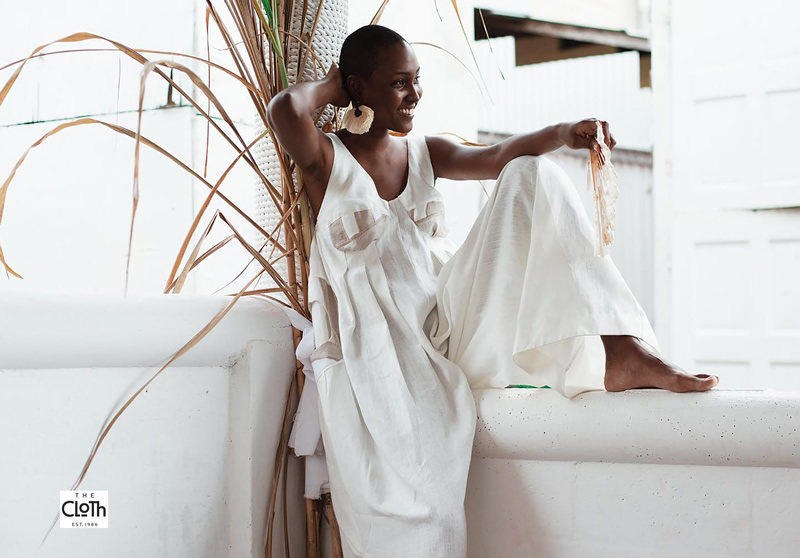
Robert Young founded The Cloth in Trinidad in 1986, building what has become the most influential fashion label from the Caribbean over nearly four decades. His work is grounded in Trinidad’s folk traditions, the applique techniques that carry African ancestral visual language into Caribbean contemporary form, and the activist principle that clothing can be the vehicle for social and political storytelling.
Two pieces from The Cloth were featured in FIT Africa’s Fashion Diaspora exhibition alongside designers from across Africa and the Black diaspora, including indigo-dyed cotton ensembles that place Young’s Caribbean practice directly in conversation with West African indigo-dyeing traditions. The Cloth has shown at Paris Fashion Week and Lisbon Fashion Week, and Young continues to produce from the brand’s atelier in Belmont, Trinidad.
The Cloth’s most recent work extends this Atlantic dialogue into new territory: an autumn-winter collection that incorporates knitwear produced in collaboration with South American artisans and reinterprets Haitian Vodou veve symbols into a distinctly Caribbean knitwear language. The collection is explicit in its framing: Trinidad and Tobago is a geological fragment that broke off from the South American mainland, positioning the label at the exact crossroads of African, Caribbean, and South American creative genealogies.
Melissa Simon-Hartman (Trinidad and Tobago)
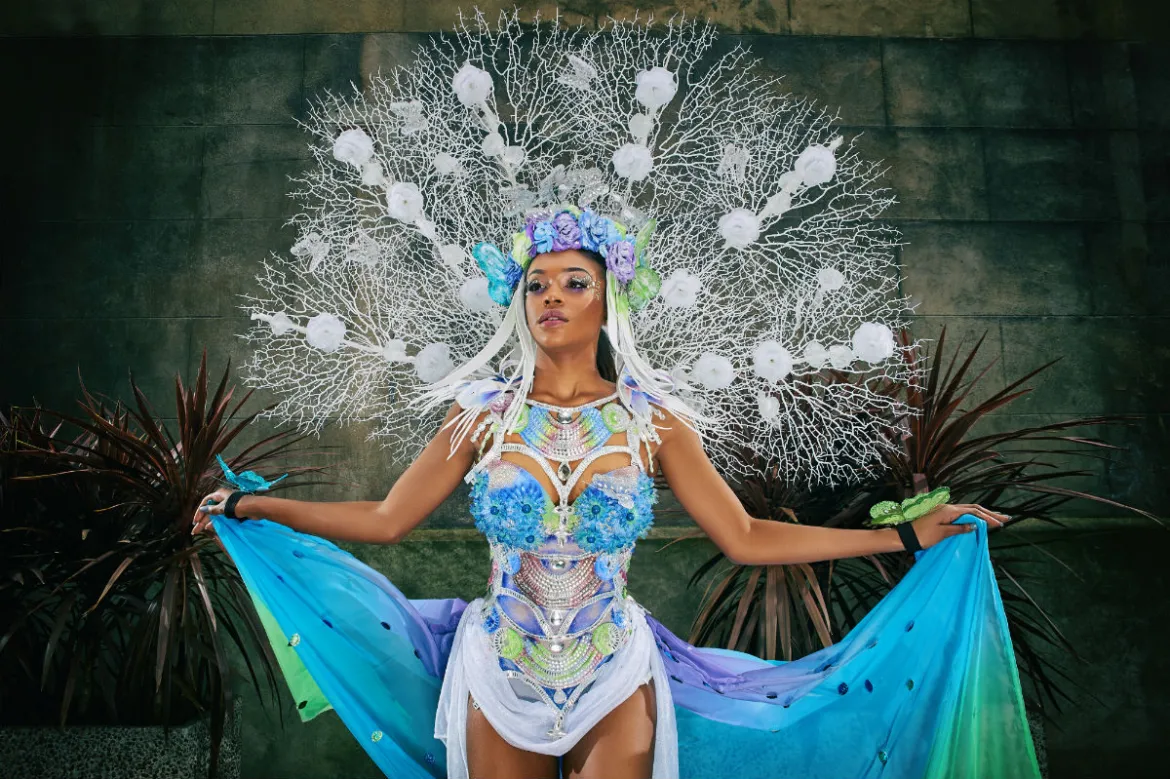
Melissa Simon-Hartman is a Trinidad and Tobago-based designer whose work Beyoncé selected for her Black Is King film and the Renaissance tour: two of the most significant celebrations of Black creative heritage in mainstream culture in the last decade. Simon-Hartman describes her practice as wearable art, a formulation that places the garment in the same relationship to cultural memory as a painting or a sculpture.
Her creative position, making work in Trinidad for one of the world’s most visible global stages, is a specific argument about where fashion is actually produced. The assumption that global fashion leadership requires physical presence in New York, Paris, or London is exactly what designers like Simon-Hartman, Young, and Scott are dismantling from their respective positions in the Caribbean.
The Afro Carib Fashion Show (UK)

In London, Natalee Pryce from Jamaica and Floise Njeri from Kenya co-founded the Afro Carib Fashion Show, an event explicitly designed to bring West African and Caribbean fashion aesthetics onto the same runway. Pryce leads Anj Fashion Inspired, a Caribbean fashion label; Njeri leads Africa’s Closet, a design practice that collaborates with fashion houses across the continent. Their collaboration is both a creative event and an institutional argument: that these two traditions belong in the same room, on the same runway, in direct conversation.
Also Read:
- The African Designer Gift Guide: 10 Brands Worth Giving
- How to Shop African Fashion: The Complete Guide for the Culturally Literate Consumer
- The Online Marketplace Problem: Why African Fashion Disappears in the Algorithm
- Diaspora Connects: African Fashion Across the Global Diaspora
What the Runway Is Arguing
The work these designers produce carries a consistent editorial position that Omiren Styles identifies as the defining argument of Afrocentric Caribbean fashion in this moment: the separation of West African and Caribbean craft traditions is artificial. It was imposed by the Atlantic slave trade and maintained by cultural and institutional systems that treated the African origins of Caribbean creative practice as either irrelevant or as something to be recovered rather than something that had always been present.
Rachel Scott does not say she is reconnecting with Jamaican crochet’s African origins. She says crochet is a luxury because the knowledge behind it is centuries old, which is true. Robert Young does not say he is bringing African aesthetics into Caribbean fashion. He says Trinidad’s folk traditions carry African, indigenous, and Indian creative lineages simultaneously, which is also simply true. Kerby Jean-Raymond does not present Haitian history as a source of inspiration. He presents it as the actual record of what happened, which the rest of the world chose to forget.
The institutional recognition is arriving. The FIT exhibition in 2024, Rachel Scott’s CFDA award, and the V&A’s Africa Fashion exhibition touring to Brooklyn, Portland, Melbourne, Chicago, and Montreal: these are the moments when the museum and fashion establishment catch up with what designers had been arguing from their studios for years.
THE OMIREN ARGUMENT
The designers working across the Black Atlantic are not fusing two traditions. They are working from a single tradition that was forcibly divided by the Middle Passage and is now being reassembled on the runway. Rachel Scott’s Jamaican crochet is not Caribbean fashion influenced by African craft. It is an African craft that survived in Jamaica across four centuries of forced separation from the continent, and it is now on the CFDA podium. Robert Young’s indigo work is not Caribbean fashion in conversation with West African dyeing tradition. It is a West African dyeing tradition, carried by enslaved Africans to Trinidad in the 17th century and maintained through generations in the soil of Belmont. Kerby Jean-Raymond’s Haitian-American practice is not Black American fashion drawing on Caribbean heritage, but rather a fusion of both. It is the complete record of Black Atlantic history, making its claim on the stage of Paris haute couture from the lawn of an estate that Black genius built.
The context is the Middle Passage itself: the forced movement of millions of Africans across the Atlantic that was also, despite everything, the movement of centuries of craft knowledge, textile tradition, religious practice, and aesthetic intelligence. The beaders, weavers, dyers, and crochet workers who survived the crossing did not leave their knowledge behind. They carried it. Their descendants, making fashion in Jamaica, Trinidad, Brooklyn, and London, are evidence of its survival.
The disruption is simple: the runway is now the site where that survival becomes visible to an audience that had been told the African origins of Caribbean and Afro-Latino creative practice were either lost, minor, or historically distant. There are none of those things. They are present, specific, technically sophisticated, and commercially serious enough to win the most prestigious award in American womenswear, show at Paris Haute Couture, and dress Beyonce on one of the world’s most watched cultural stages. Omiren Styles argues that this is not a moment of cultural discovery. It is a moment of long-overdue recognition.
Frequently Asked Questions
What is Afro-Caribbean fashion?
Afro-Caribbean fashion is fashion produced by designers of African descent from Caribbean nations, drawing on the textile, craft, and dress traditions that African communities brought to the Caribbean through the transatlantic slave trade and maintained across generations. It includes crochet traditions in Jamaica, beadwork traditions in Haiti, indigo-dyeing practices in Trinidad, and a broader range of African-derived visual and material culture that survived the Middle Passage and developed in distinctive Caribbean contexts. Designers, including Rachel Scott of Diotima, Robert Young of The Cloth, Kerby Jean-Raymond of Pyer Moss, and Melissa Simon-Hartman, are among its leading contemporary practitioners.
Who is Rachel Scott of Diotima, and why is she significant?
Rachel Scott is a Jamaican-born designer who founded Diotima in 2021 between Jamaica and New York City. Her label is built on the Jamaican crochet tradition, which Scott traces to knowledge passed through generations of Jamaican women from grandmothers and aunties. In 2024, Scott became the first Black woman to win the Council of Fashion Designers of America’s American Women’s Wear Designer of the Year award. In September 2025, she was appointed creative director of Proenza Schouler. Her work positions Jamaican craft as luxury fashion, in the same category as European haute couture, because the knowledge behind it is of comparable age and complexity.
What is Kerby Jean-Raymond’s connection to the Caribbean?
Kerby Jean-Raymond was born in Brooklyn to a Haitian family. He grew up watching relatives deported to Haiti and channelled his early desire to be an immigration attorney into fashion advocacy. His label, Pyer Moss, founded in 2013, uses collections and runway shows as vehicles for political and historical storytelling about the Black experience in the Americas. In 2021, he became the first Black American designer invited to show at Paris Haute Couture Week, presenting at the Villa Lewaro estate in New York. His Haitian heritage is inseparable from the political architecture of his design practice.
What is The Cloth, and who founded it?
The Cloth is a Caribbean luxury fashion label founded by Robert Young in Trinidad and Tobago in 1986. It is widely considered the most influential fashion brand from the Caribbean. Young’s practice is rooted in Caribbean folk traditions, African ancestral appliqué techniques, and activist principles. Two pieces from The Cloth were featured in the FIT Museum’s Africa’s Fashion Diaspora exhibition in New York in 2024, placing Young’s work directly alongside designers from across Africa and the Black diaspora. The cloth has been shown at Paris Fashion Week and Lisbon Fashion Week.
What was Africa’s fashion diaspora at FIT?
Africa’s Fashion Diaspora was an exhibition at the Fashion Institute of Technology Museum in New York, running from September to December 2024. It featured 60 ensembles and accessories by Black designers from Africa, Europe, the Americas, and the Caribbean, mapping the connections between African fashion traditions and the creative practices of the Black diaspora globally. The exhibition was organised around nine thematic sections, including “Reaching for Africa”, “Mothers and Motherlands”, “A Black Atlantic”, “Monumental Cloth”, and “Tun Yuh Han Mek Fashan”, a Jamaican patois phrase describing Caribbean craft ingenuity. Designers featured included Robert Young of The Cloth, Fabrice Simon of Haiti, Thebe Magugu of South Africa, and Emmanuel Okoro of Nigeria.
Follow the Thread
Omiren Styles documents African fashion and culture across all 54 nations, the Caribbean, and the global diaspora. The Diaspora Connects series maps the creative continuities that the Atlantic crossing did not sever. Subscribe for editorial intelligence that takes the long view.