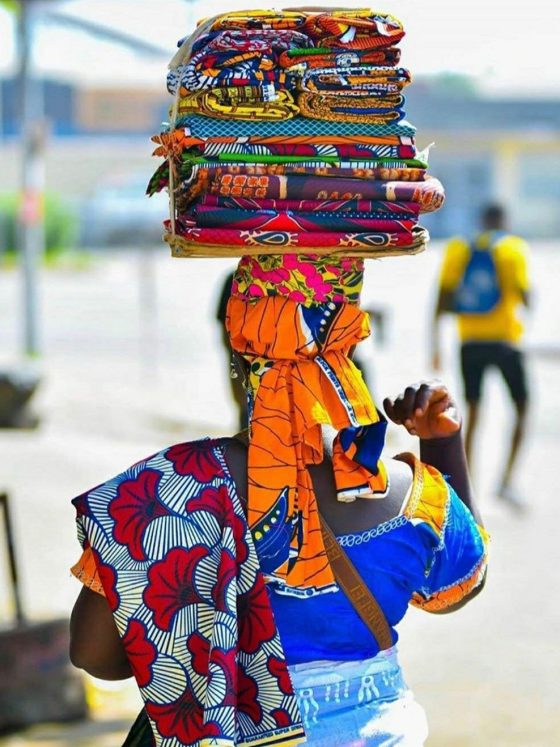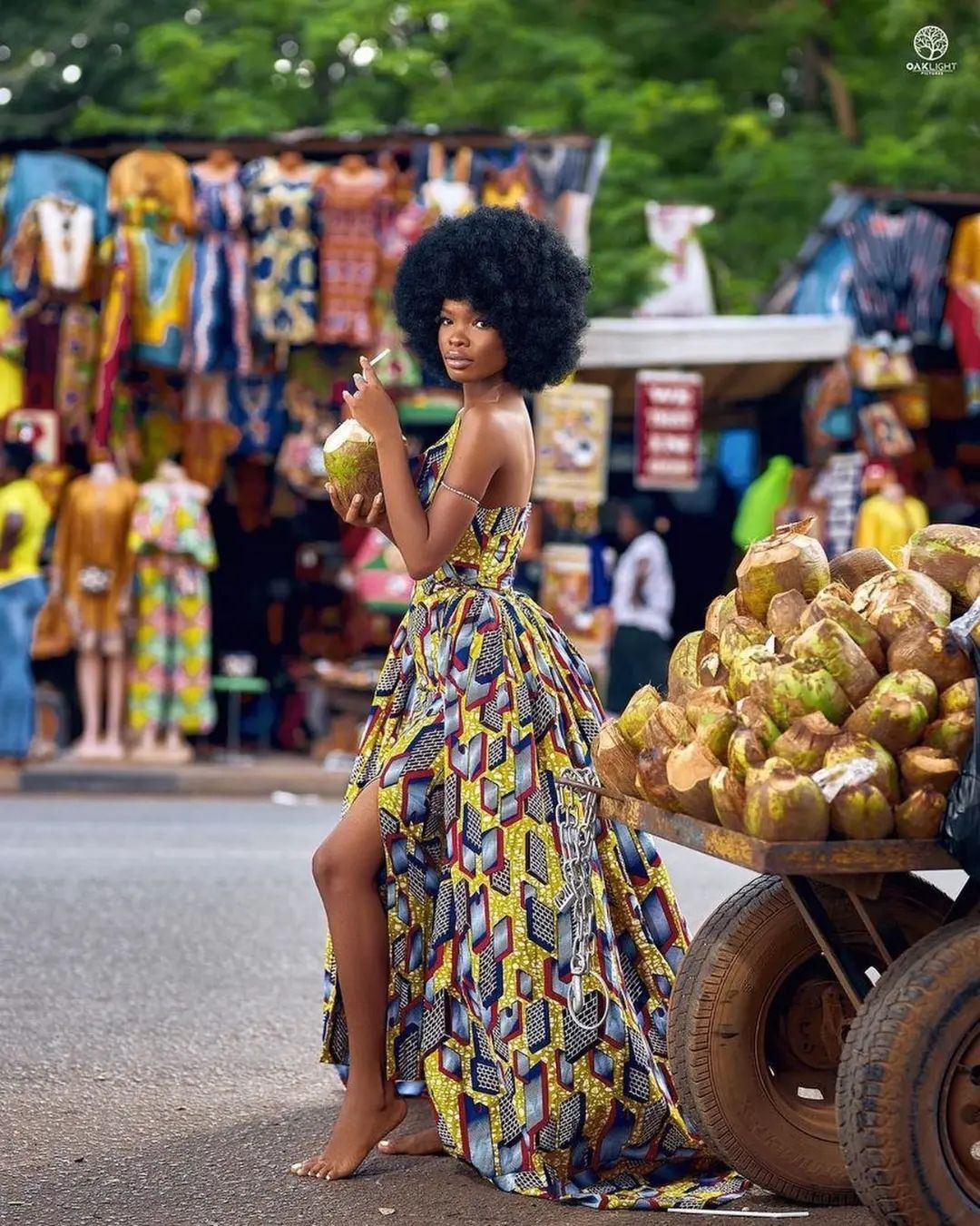
Walk into any room where African diaspora women have gathered with intention, and you will find Ankara. At the ceremony, at the conference, at the gallery opening, at the protest. It announces before the wearer speaks. It carries a city of origin, a lineage of trade, a century of cultural negotiation, and a very specific refusal to disappear into a room without being counted. The remarkable thing about Ankara is not simply that it travelled the world. The remarkable thing is how far it had already travelled before West Africa ever touched it.
Ankara did not begin in West Africa. That fact, for many who wear it, comes as a genuine surprise. The fabric that is now inseparable from Yoruba weddings, Ghanaian funerals, Nigerian asoebi culture, and diaspora celebrations from London to Atlanta has its technical origins in Indonesia, its industrial manufacture in the Netherlands, and its cultural identity entirely and irreversibly in West Africa. The story of how that transformation happened is one of the most instructive stories in the history of global fashion.
Ankara was rejected by Indonesia, repurposed by Dutch merchants, and claimed in its entirety by West Africa. Today, it is worn in London offices, New York boardrooms, and Paris runways. This is the story of how a continent turned someone else’s industrial mistake into the world’s most recognisable fashion language.
The Long Route from Java to the Gold Coast
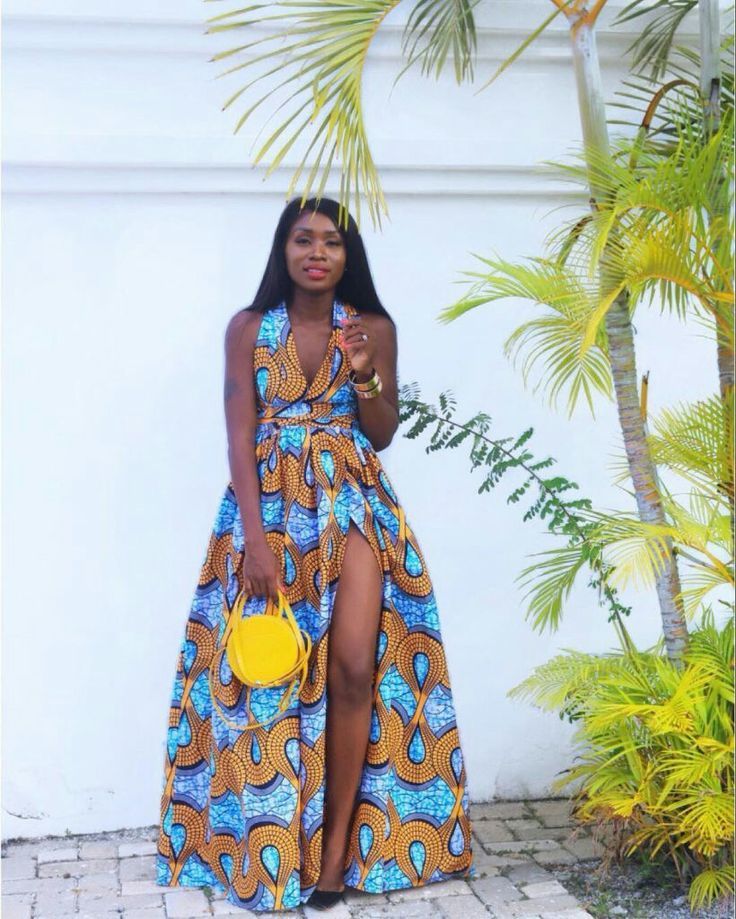
In the Dutch East Indies, now Indonesia, artisans had for centuries practised batik: a hand-applied wax-resist dyeing technique on cloth, creating intricate patterned textiles laden with cultural meaning. In the mid-19th century, Dutch manufacturers saw an industrial opportunity. In 1846, Dutch entrepreneur Pieter Fentener van Vlissingen mechanised the batik process, enabling mass production of printed cloth at a fraction of the cost of the handmade original. The result was technically imperfect. The machine could not replicate the precision of the hand-applied wax, and the fabric carried a distinctive crackling effect where the resin had crinkled before dyeing.
Indonesian consumers rejected it. They knew what authentic batik looked like, and the imperfection read as inferior. The Dutch, left with a product and no market, turned their trading vessels towards West Africa. What happened next determined the cultural trajectory of a fabric for the next 150 years. West African buyers, particularly in Ghana and Nigeria, did not perceive it as an inferior copy. They saw something bold, vibrant, and compatible with existing local aesthetics. The crackling that signified a flaw to an Indonesian weaver became, in West African contexts, a texture. A character. A feature worth having.
There is an earlier thread that connects the two worlds. Between 1831 and 1872, the Dutch recruited West African men, known as the Belanda Hitam, from the Gold Coast to serve in their colonial army in Indonesia. Many retired to Elmina in modern Ghana, bringing with them a familiarity with batik textiles. When Dutch trading vessels began arriving at West African ports in the 1880s, carrying the machine-printed cloth, some of the earliest demand may have come from communities already acquainted with the aesthetic. What started as a commercial accident became, within decades, a cultural institution.
West Africa names it, claims it, and transforms it.
The most significant thing West Africa did with Ankara was not simply to adopt it. It renamed it, re-storied it, and made the prints speak in languages unrelated to their Dutch origins. Across Nigeria and Ghana, prints were given names rooted in Yoruba proverbs, Akan sayings, and social commentary. A design depicting birds in flight became a statement about the fleeting nature of money. A print celebrating Ghanaian highlife music became a cultural marker worn to events where that music was played. The fabric did not come with these meanings. West Africans put them there.
By the mid-20th century, as African nations moved through and beyond independence, Ankara had become formal wear for leaders, diplomats, and public figures. It was no longer a foreign commodity with a local audience. It was a cultural product with a West African identity. African textile manufacturers began establishing their own production operations. Ghana Textiles Printing Company, Akosombo Textiles Limited, Woodin, and Univax developed as significant manufacturers. The prints being produced were no longer adapting Indonesian batik aesthetics. They were reflecting West African life.
The asoebi tradition in Nigeria gave Ankara a social architecture that cemented its cultural ownership. At Yoruba weddings, naming ceremonies, burials, and anniversaries, guests arrive wearing a single chosen print as a collective statement of belonging. The print is not chosen for aesthetics alone. It is chosen for meaning. The practice turned Ankara from a commodity into a social language, one spoken collectively and understood across generations.
Also Read:
- Afrocentric Style and the New Professional Authority
- How the Diaspora Is Styling Yoruba Cloth for Everyday Life
- Fashion, Professionalism, and the Politics of the Dress Code
The Diaspora Carries It Abroad
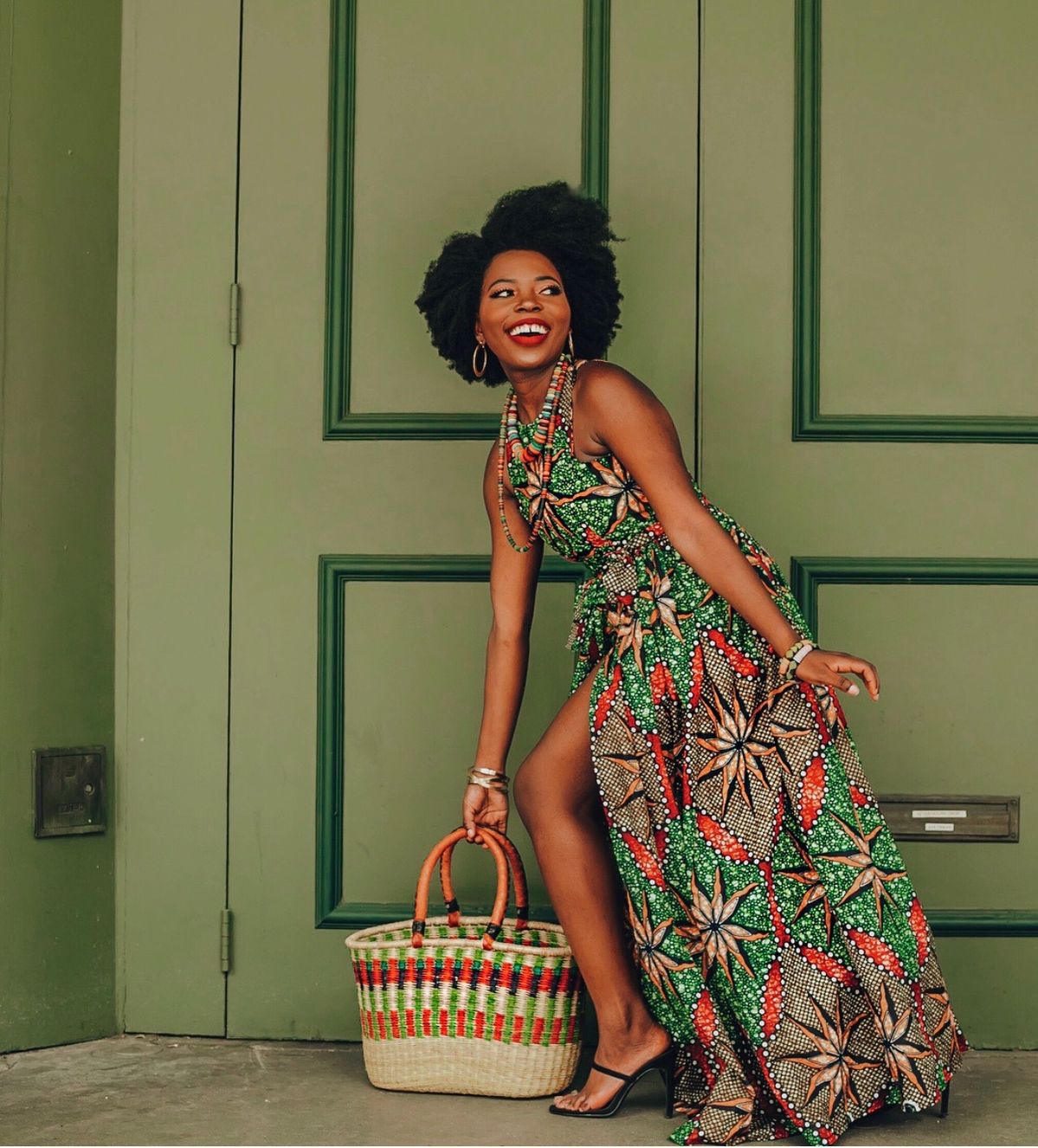
When West Africans began migrating in larger numbers to London, New York, Paris, and beyond from the 1960s onwards, they carried Ankara with them. It arrived not as a fashion statement but as a continuity of home. Fabric was ordered, shipped, and taken to tailors who had also migrated. Communities recreated the asoebi tradition in church halls in Peckham, community centres in the Bronx, and family gatherings in Lyon. For second-generation Africans born in diaspora cities, Ankara was often the most visible, tactile connection to a heritage experienced at a distance.
That emotional charge is now a commercial force. The global Ankara fashion market was valued at $1.8 billion in 2024 and is projected to reach $4.2 billion by 2033, growing at a compound annual rate of 9.7% according to market research published by Market Intelo. The Middle East and Africa region holds the largest share at 38% of the global market, while North America and Europe are recording surging demand driven by diaspora communities and mainstream interest in Afrocentric fashion. One Nigerian designer, speaking to This Day Live, noted that his company shipped over 400 Ankara outfits abroad in 22 months, with prom dresses making up the bulk of international orders. The client brief, he said, was consistent: make it African.
From the Street to the Runway
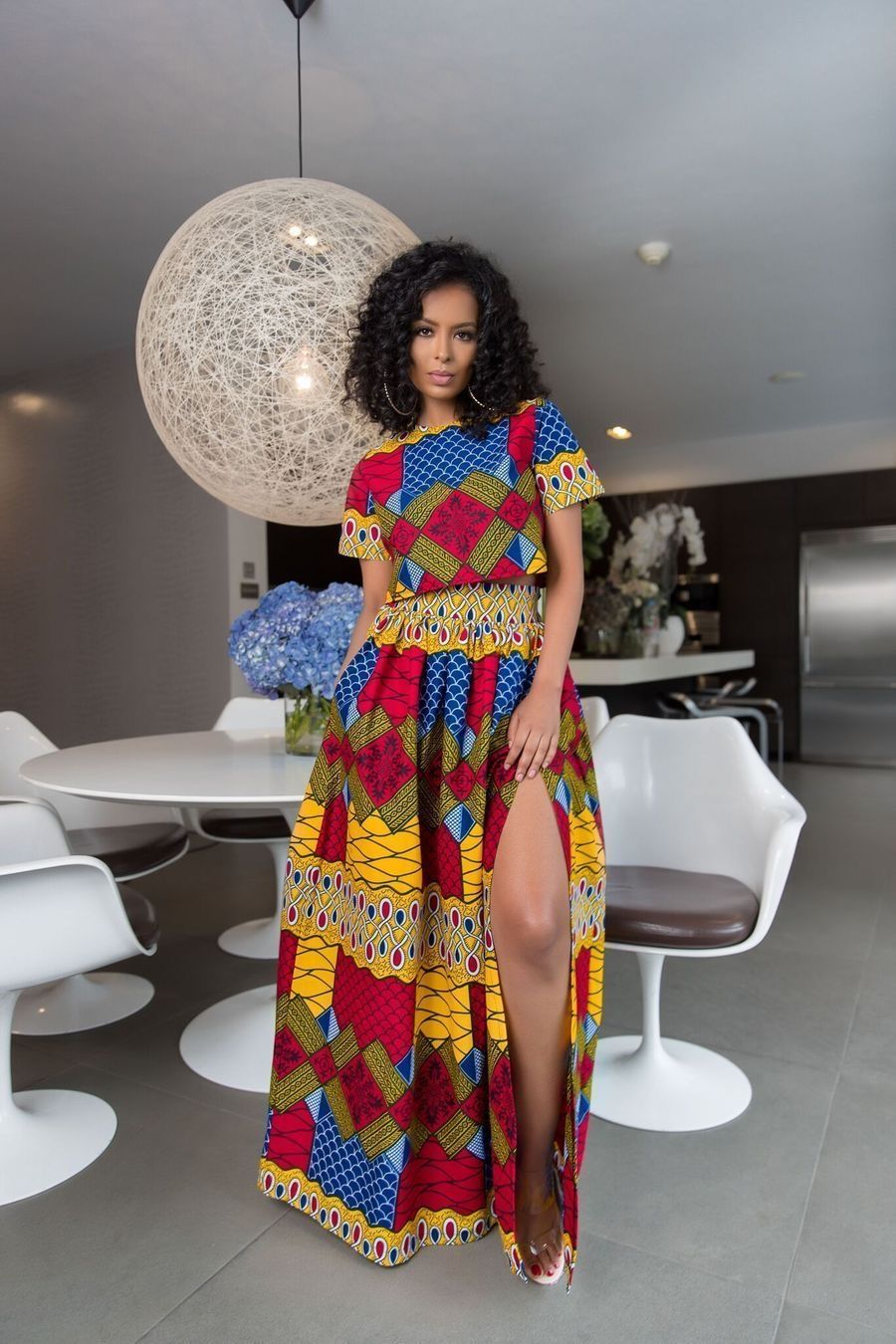
Ankara moved onto the global fashion stage through the hands of West African designers who refused to treat it as a lesser fabric. Lisa Folawiyo, whose brand Jewel by Lisa is featured in Vogue and Elle and has shown in Paris and Milan, transformed Ankara into a high-fashion textile by adding intricate beadwork and embellishments that elevated the print into something approaching couture. Ituen Basi, featured in Vogue Italia and Marie Claire, pioneered layered Ankara prints with asymmetrical cuts, pushing the fabric into contemporary international silhouettes. Both argued that Ankara did not need to be simplified or made more palatable for travel. It needed to be treated with the seriousness it had always deserved.
Western luxury houses noticed. Dior’s Cruise 2020 collection incorporated wax prints throughout. Stella McCartney used five solid Ankara-inspired print designs in her SS18 collection. These appearances generated admiration in some quarters and significant criticism in others. The objection was not that Western designers had found African textiles beautiful. The objection was that Ankara arrived in Paris collections without the West African designers, tailors, and cultural custodians who had built its global meaning. The fabric was welcomed. The people were not in the room.
Ankara is not African because it originated in Africa. It is African because African women decided it was, and then spent 150 years proving they were right. Ownership in fashion is not determined by manufacture or origin. It is determined by who builds the meaning, who carries the social grammar, who names the prints, who assigns the proverbs, who wears the cloth to funerals and weddings and independence ceremonies and boardrooms until the cloth becomes inseparable from the culture it serves. The Mama Benz traders, the independent designers, the diaspora women who packed their wax prints for the journey abroad, and the contemporary tailors remaking it in Lagos and Accra did not inherit a fabric. They authored one. What the fashion industry calls African print is not the product of a Dutch factory. It is the product of Afrocentric cultural intelligence applied to a foreign object until that object becomes something entirely different from what it was. That process has a name. It is not appropriate. It is not adoption. It is civilisational authorship.
Ankara is now worn on every continent. It appears in London offices and New York galleries; on Lagos red carpets and Paris runways; in Caribbean carnival processions and Brazilian festival dress. None of that movement was arranged by the Dutch companies, which first sold it south. It was arranged by the people who understood what the fabric could carry and carried it with them everywhere they went.
Frequently Asked Questions
Where does Ankara fabric originally come from?
Ankara did not originate in West Africa. Dutch manufacturers developed it in the 19th century as a mechanised version of Indonesian batik. When the fabric failed to find a market in Indonesia, Dutch traders introduced it to West Africa, where it was widely adopted, culturally transformed, and given a name. Today, it is understood globally as a West African textile because West Africa gave it its identity, its meanings, and its social functions.
Why is Ankara so important in West African culture?
Ankara carries cultural and social weight that goes well beyond aesthetics. In Nigeria and Ghana, prints are named after proverbs, historical events, and community values. The asoebi tradition, in which guests at a ceremony wear a single chosen print as a statement of collective belonging, gives Ankara a social architecture unique to West African life. Wearing Ankara is a way of participating in a shared cultural memory, not simply a fashion choice.
How has Ankara become a global fashion trend?
Ankara’s global reach was driven primarily by the African diaspora. As West Africans migrated to cities across Europe and North America from the 1960s onwards, they brought Ankara with them. Designers, including Lisa Folawiyo and Ituen Basi, elevated it onto international runways, while the fabric’s appearance in Dior and Stella McCartney collections confirmed its mainstream visibility. The global Ankara fashion market was valued at $1.8 billion in 2024 and is projected to reach $4.2 billion by 2033.
Is Ankara the same as Dutch wax prints?
‘Ankara’ and ‘Dutch wax print’ refer to the same category of industrially produced wax-resist printed cotton fabric. The term ‘Dutch wax print’ references the fabric’s manufacturing origins in the Netherlands. The term ‘Ankara’ is used across Nigeria and much of West Africa and is believed to derive from the Hausa name for Accra, the Ghanaian capital, reflecting an early trade route for the fabric. Despite a significant proportion of production still occurring in the Netherlands and China, the fabric’s cultural identity belongs entirely to West Africa.