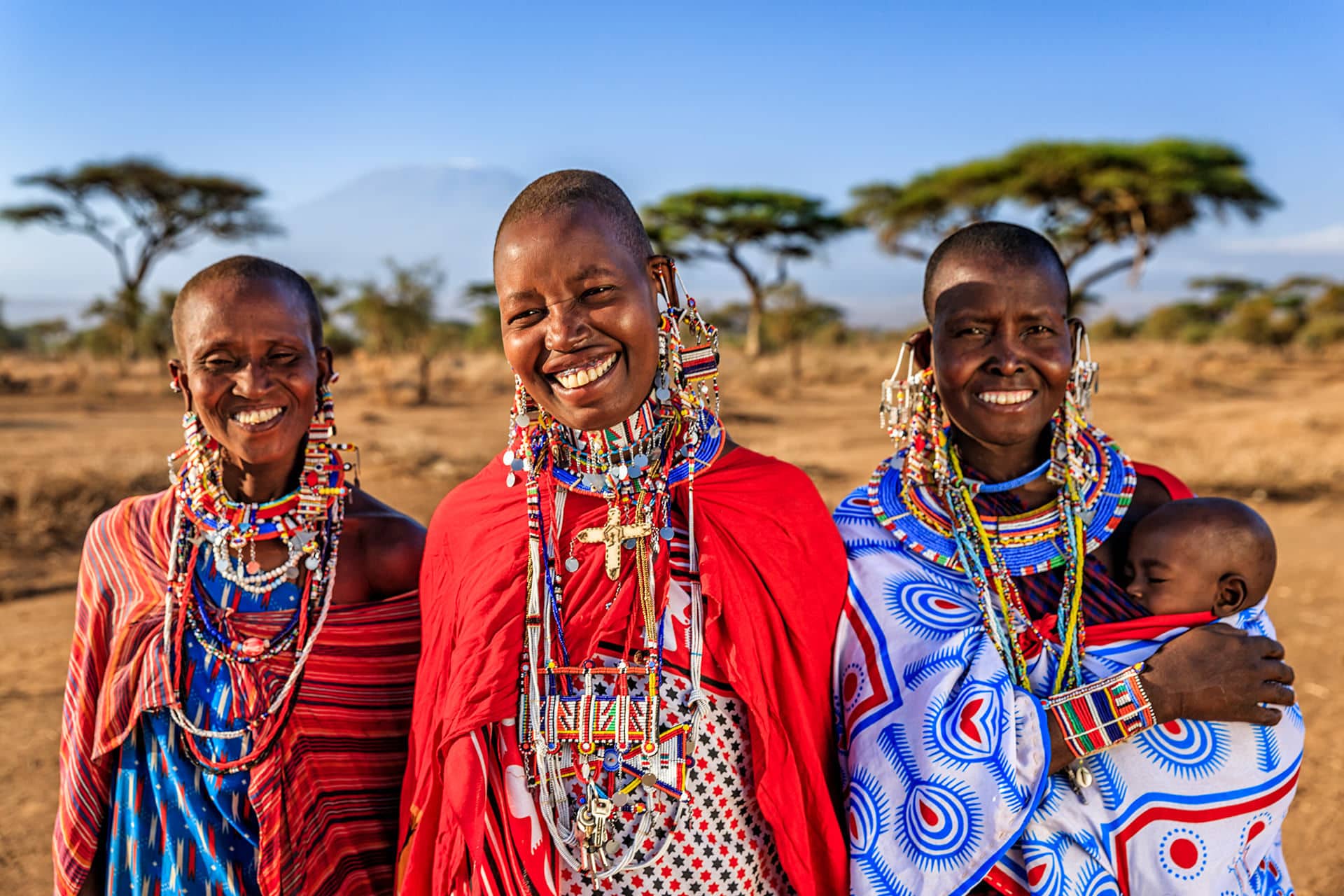
You know it the moment you see it. That bolt of red moving across open land. Shuka styles for Maasai women are among the most visually powerful expressions of cultural identity in East Africa, yet they remain among the most misread garments on the continent. Outside Kenya and Tanzania, the Maasai Shuka cloth is reduced to a red blanket, a backdrop, and a pattern borrowed by luxury houses and automotive brands without credit, without return, and without acknowledgement of the culture that produced it. This is not that. This is the cloth as it actually functions: as language, as ceremony, as the thing a woman puts on when she needs the room to understand exactly who she is.
From naming ceremonies to the Adumu, discover the top 5 Shuka styles for Maasai women in 2026. History, colour meanings, and an occasion guide rooted in Maasai cultural life.
What the Shuka Carries
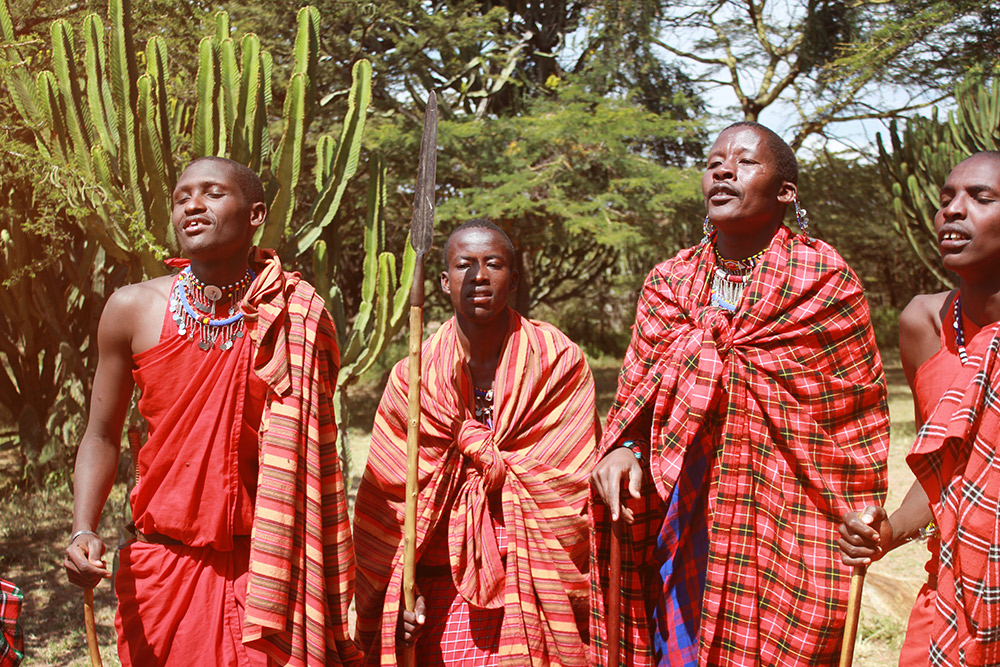
The word ‘Shuka‘ comes from the Maa language and means ‘body wrappings’. That is the most honest description of what it has always been. A rectangular cloth worn in layers, adapted to weather, terrain, occasion, and the season of life the wearer is moving through. Before the 1960s, the Maasai wore garments made from animal hide, calfskin and sheepskin softened with fat and stained with red ochre. The patterns that now define the cotton shuka, the bold checks and colour fields that have ended up on European runways and in car campaigns, were already present in that leather. They were painted across ceremony spaces and boma walls. The Maasai did not discover their visual language when cotton arrived. They were already speaking it.
The shift to woven cloth occurred through contact with Scottish missionaries operating around the Kilimanjaro region and through East African trade networks that simultaneously carried red-and-blue checked textiles from multiple directions. What the community did with that cloth is the part that the history books understate. They took a foreign material and transferred their entire visual grammar onto it. That is not assimilation. That is a community so certain of its own identity that it can absorb outside material and make it unrecognisable as anything other than its own.
Today, most Shukas are manufactured in Dar es Salaam or imported, an irony the Maasai community has not missed. Louis Vuitton placed the Shuka check on the Spring/Summer 2012 runway. Jaguar Land Rover built campaigns on Maasai imagery. Fashion publications have run the red cloth as a backdrop and prop for decades. Through all of it, the financial and cultural return to the community has been negligible. The Maasai Intellectual Property Initiative Trust is working with legal teams to change that, insisting that brands built on Maasai visual culture must account for it. Wearing traditional Maasai dress in 2026 is as much a position as it is a style decision. The two things are not separate.
For readers who want to explore the Shuka beyond its appearance, we’ve selected a small number of East African-inspired textiles and handmade pieces. Explore selected Shuka and East African textiles
The patterns were already theirs. The cotton was just a better canvas.
The Colour Code
Before you choose your style, understand the palette. The Maasai colour meaning is not decoration. It is a system of communication that predates the cotton cloth and runs through every ceremonial and daily context in which the Shuka appears.
Red: Bravery, strength, and unity. The dominant tone of Maasai fashion is the one most associated with collective identity and believed to deter wild animals—the colour of cattle blood, which holds sacred significance in pastoral Maasai life.
Blue: Sky and rain. The colour of married women, of provision and continuity. A wedding tone.
Green: Land, health, nourishment. Worn by young women approaching womanhood, often combined with blue.
White: Purity, milk, new life. Present at naming ceremonies and births.
Orange: Warmth, hospitality, friendship.
The colour conversation of your clothes opens is part of the style. When a woman chooses her shuka for an occasion, she is not selecting an aesthetic. She is making a statement that everyone in the room who knows the language will read immediately.
1. The Shoulder Drape with Beaded Belt
The foundational Shuka style is the one most deeply rooted in Maasai women’s daily dress. A full-length cloth in red or red-and-black check is folded lengthwise and draped across one shoulder, pulled across the body, and anchored at the waist with a wide beaded belt. The silhouette moves with the wearer. It is practical in the highlands and commanding in any room. The quality of the beadwork at the waist speaks as loudly as the fabric itself, because in Maasai women’s dressing, no element is incidental.
In Nairobi and across the East African diaspora, this style is being worn with traditional ochre-red Shukas paired with contemporary wide beaded belts in white, red, and blue bead patterns. Simple leather sandals – nothing is competing with the cloth. It is the look that needs no explanation because the cloth, the beads, and the way they are worn together constitute the explanation in full.
For readers interested in the beadwork that accompanies East African dress, we’ve also selected a small collection of handmade beaded accessories inspired by the region’s long jewellery traditions.
Explore selected Maasai-inspired beadwork and accessories
2. The Double-Layer Wrap Skirt
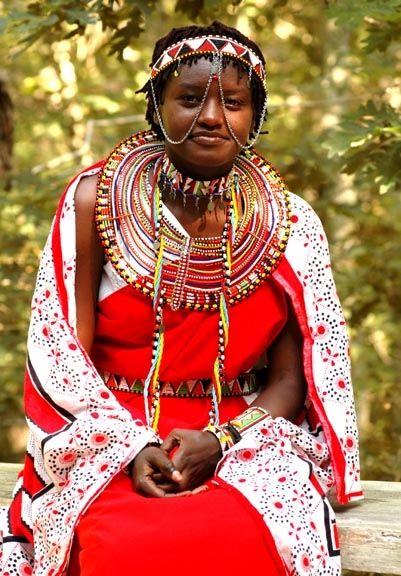
Two shukas, one red and one blue or green, layered as a wrap skirt below the waist. The upper body is covered with a fitted top, a beaded chest piece, or a third piece of cloth draped across the shoulders. The combination produces colour depth that a single piece of Maasai Shuka cloth cannot achieve on its own. It also produces something more important: the visual record of a woman who understands how the cloth has always been used.
The double-layer draws from a long tradition of Maasai women using multiple cloths simultaneously, each serving a distinct practical and ceremonial function. A nursing mother uses one cloth to carry her child and another to cover herself. A woman attending a significant ceremony layers her finest pieces to mark the occasion’s weight. East African designers working today are taking this tradition into new contexts, pairing traditional Shukas with tailored modern tops for graduations, gallery openings, and formal dinners. The double-layer wrap is the style that moves most fluidly between the ceremonial and the contemporary without sacrificing either.
3. The Shuka Co-ord Set
A fitted top and wide skirt or tailored trousers cut from the same Shuka cloth. Several East African labels have moved seriously in this direction over the past three years, and the results are among the strongest fashion statements coming out of the continent’s design circuit. The check is the design. The pattern carries the entire visual weight of the look, and it does so without effort, because it was always this bold, long before anyone called it fashion.
The co-ord announces the cloth as fashion without apology and without explanation. It is the style worn by Maasai women in urban centres who want to carry traditional Maasai dress into professional and social settings without concession or compromise. The monochrome iteration, all red or all blue, cut into a clean matching silhouette with substantial beadwork at the neck, is the strongest version for 2026.
4. The Shuka Head Wrap and Dress Combination
A contrasting shuka folded into a structured headwrap, worn above a shuka-cloth dress or a solid dress in red, black, or ochre. The head is not an afterthought in this combination. The whole body is in deliberate conversation with itself, each element chosen in relation to the others. This is the style that most clearly demonstrates the difference between wearing a cloth and dressing in one.
It carries particular ceremonial weight and travels best across cultural contexts. A woman arriving at a wedding or naming ceremony with her Shuka wrapped around her crown and draped across her body communicates the care she brought to the moment before she has said a single word. In the diaspora, the headwrap-and-dress combination brings the full visual grammar of Maasai fashion into rooms in the UK, the US, and across Europe with complete clarity, requiring no programme notes and no intermediary.
5. The Full Red Ceremonial Drape
This is not a fashion style. It is a cultural record. The full red ceremonial drape worn by Maasai women of elder status is the most powerful thing on this list precisely because it is not attempting to be anything other than what it is. No tailoring, no co-ordination, no concession to contemporary styling logic. A woman in a full red shuka, layered beaded necklaces in white and blue, ear ornaments earned over decades, and her cloth draped with the ease of someone who has worn it through every season of a long life.
It is included here because younger Maasai women and women in the diaspora cite it consistently as the style they are working toward. Not the trend. The arrival. The moment when the cloth and the woman wearing it have been through enough together that the room understands without being told. The beads are substantial. The drape carries weight rather than chasing volume. Everything about it communicates a woman who has nothing left to prove to the fabric because the fabric already knows her.
RECOMMENDED:
- The Silent Dialogue: Zulu Beadwork as an Archive of Intent
- Top 5 Ewe Kente Styles for Ewe Women in 2026
- Akwete, Kuba Cloth, Barkcloth, and Kete: The Sacred Textiles the World Is Finally Discovering
When the Cloth Speaks: Shuka Across Maasai Ceremonies
The Shuka does not stay the same across occasions. Each ceremony has its own colour requirement, its own way of being worn, and its own weight. Understanding how Maasai women dress for the significant moments of life is as important as understanding the styles themselves.
The Naming Ceremony
White and white-red combinations. The cloth of new life and the memory of survival are held in the same piece of fabric. The mother arrives in her finest, surrounded by the community’s women whose coordinated Shukas constitute the collective welcome of a new person into the world.
The Emuratare: Coming of Age
As young women approach this threshold, cloth shifts to blue and green, peace and fertility held together in the colour choice. The beadwork given and received at this ceremony is worn for years. This is the moment when Maasai Shuka cloth begins its serious cultural work on a woman’s body, marking who she is becoming in a language the whole community can read.
The Traditional Wedding
Blue and red for the bride. Blue for the rain that will sustain her household, red for the courage required to build a life. The wedding necklace, the enkarewa, carries colours of fertility and harmony. Cloth and beads function here as a single unified system of meaning, each element in conversation with the others, nothing decorative for its own sake.
The Eunoto: Warrior Graduation
One of the most significant ceremonies in Maasai life. The warrior’s mother shaves his long ochre-coated hair in a deeply charged act of transition. She attends in her finest red Shuka and most elaborate beadwork, wearing the full ceremonial weight of what she is witnessing. The community assembles in red and ochre. The women carry the gravity of the occasion in their clothes.
The Adumu
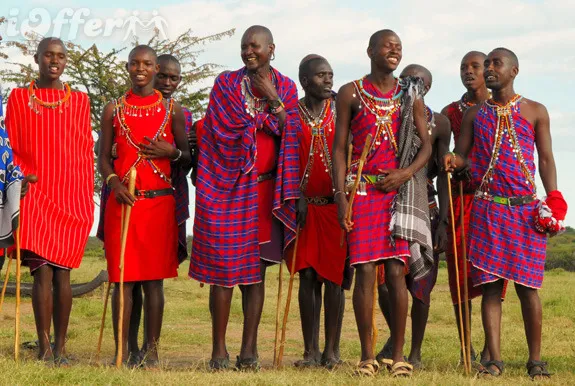
The jumping ceremony. The most expressive and exuberant occasion in Maasai ceremonial life, where Maasai fashion operates at full volume. Checked multi-coloured Shukas and layered beads; nothing was held back. This is the cloth worn to be seen, worn to celebrate, and worn as the full declaration of cultural vitality.
Funerals
Subdued combinations replace the ceremony palette. The cloth is worn with respect rather than display. Elder women carry the weight of the occasion in how they dress, the quiet authority of muted Shukas communicating solemnity to everyone assembled without a word being spoken.
In Maasai life, you do not simply put on a cloth. You arrive in it.
Shuka Colour Guide by Occasion
Naming Ceremony: White, white and red
Coming of Age: Blue and green
Traditional Wedding: Blue, red, and gold beadwork
Eunoto: Red and ochre
Adumu: Full colour, all combinations
Community Gathering: Red as the default anchor
Mourning: Subdued tones, muted combinations
The Omiren Argument
The shuka is one of the most globally recognised African garments. It has been on the runway. It has been in car campaigns. It has been photographed on models who have never stood on Kenyan soil and worn as a prop in editorials that never once credited the culture that produced it. Through all of this, the Maasai community has received very little of the financial and cultural recognition that is rightfully theirs.
Wearing your Shuka in 2026 is a position. It says, ‘I know where this cloth comes from.’ I know what it has carried across generations of ceremony, survival, and cultural authority. And I am choosing to wear it forward with the full weight of that history, not as a trend borrowed from a mood board, but as a truth that has never required anyone’s permission.
Frequently Asked Questions
1. What is Maasai Shuka cloth made from?
The traditional shuka is made from thick cotton or wool. Before the 1960s, Maasai garments were made from animal hides, calfskin, and sheepskin, softened with fat and ochre. The shift to cotton happened through missionary contact around Kilimanjaro and through East African trade routes. Artisan-made shukas, made with locally grown cotton and natural dyes, are still produced within Maasai communities today.
2. What do the colours on a Maasai shuka mean?
Red represents bravery, strength, and unity. Blue symbolises sky and rain. Green represents land and health. White signifies purity and new life. Orange signals warmth and hospitality. Colour in ceremonial contexts is a deliberate communicative act, not a decorative choice.
3. Is it appropriate to wear a Maasai shuka if you are not Maasai?
Wearing it with a genuine understanding of its history and meaning, sourced from Maasai artisans or ethical East African labels, is encouraged. Wearing it as a costume or reducing the pattern to decoration without acknowledgement of the community it belongs to is not. The distinction is not complicated. It is a matter of whether you have done the work of knowing what you are wearing.
4. Where can I buy an authentic Maasai shuka?
Authentic Shukas are available at Maasai markets in Kenya and Tanzania. East African labels working directly with Maasai artisans are the best source for diaspora buyers. Look for cloth that credits its origin, names its makers where possible, and returns something to the community financially.
Further Reading: Maasai Culture, Fashion and East African Identity
The Shuka is only one part of a much larger story about Maasai identity, dress, beadwork, ceremony, and cultural change.
For readers who want to go beyond the visual language of the Shuka, we’ve selected books that explore Maasai culture, East African history, African fashion, and the relationship between clothing and identity.
Explore books on Maasai culture, African fashion and East African history
This article contains affiliate links. Omiren Styles may earn a small commission from qualifying purchases made through these links, at no additional cost to you.