Luxury loves mythology. Parisian ateliers passed through generations of the same family. Italian leather houses with century-old archives. European craftsmanship is positioned as the origin point of taste itself, as though the capacity for precision and intention in making began somewhere along the Seine and spread outward from there.
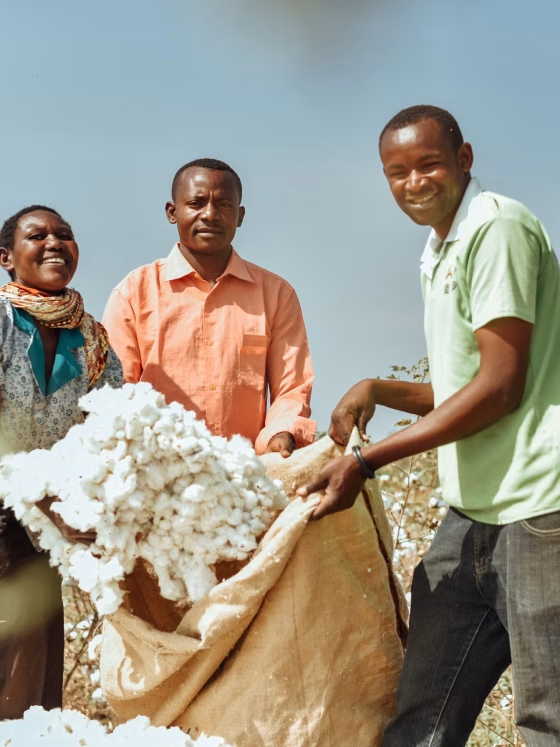
Long before luxury became a branding strategy, women in Burkina Faso were spinning cotton into thread, dyeing it with plant-based pigments, and handing it to weavers—traditionally griot men, keepers of community history, who worked narrow wooden looms in measured rhythm, producing vertical strips that would be stitched together into something the fashion industry is only now learning to read correctly.
That cloth is Faso Dan Fani. It was never designed for fashion week. It was designed for sovereignty.
The loom, in Burkina Faso, was always a political infrastructure. The question was never whether fashion could be ideological. It was whether Europe would ever acknowledge that ideology had existed here long before it arrived.
A Fabric Born of Nationhood
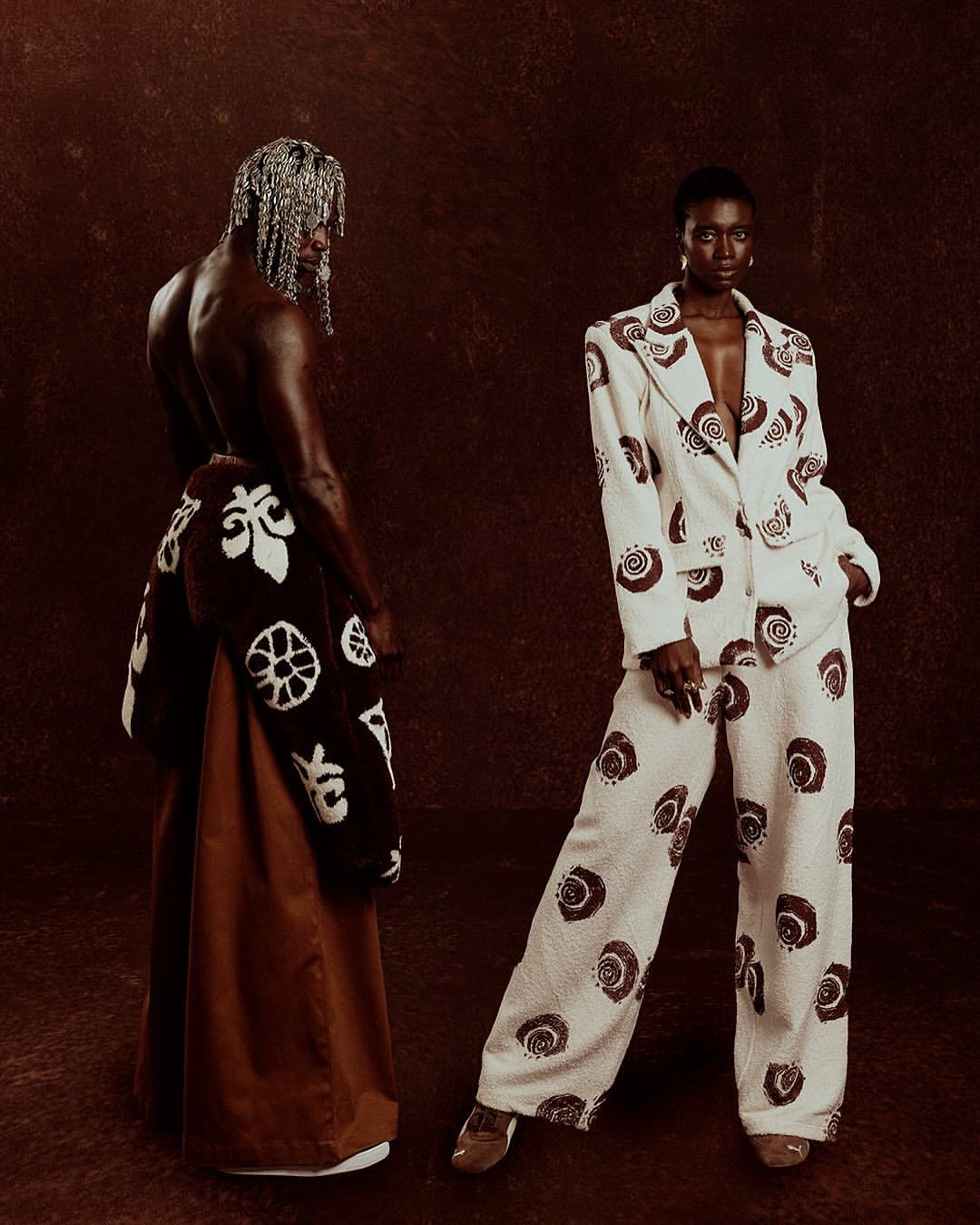
Faso Dan Fani translates to “woven cloth of the homeland.”
Faso Dan Fani translates from Dioula as “woven cloth of the homeland”. The words are precise: ‘Faso’ means ‘homeland’, ‘Dan’ means ‘woven’, and ‘Fani’ means ‘cloth’. The name arrived with the country’s own renaming. On 4 August 1984, Thomas Sankara—military captain, Marxist revolutionary, and president of what had been Upper Volta—renamed the country Burkina Faso, drawing from three of its principal languages: “Burkina” from Mòoré, meaning “men of integrity”; “Faso” from Dioula, meaning “fatherland”; and “bé” from Fulfuldé, meaning “people”. The national cloth took its name from the new country’s name. Identity and fabric became the same declaration.
The weaving tradition itself predates the revolutionary era significantly. Faso Dan Fani’s history dates to the 19th century, with Mossi communities involved in cotton cultivation, spinning, and weaving spazio + spadoni, the fabric mentioned in the writings of anthropologists and explorers of that period. Traditionally, women were responsible for growing, ginning, spinning, and dyeing the cotton; men, specifically griot weavers whose role placed them at the intersection of cloth production and community memory, handled the loom. The griot weaver was not simply a craftsman. He was a historian working in thread, and the knowledge embedded in the cloth’s patterns was continuous with the knowledge he carried as an oral tradition keeper.
What Sankara did in 1986 was not invent a textile tradition. He elevated one that colonial economics had nearly destroyed. By the early 1980s, the practice of weaving Faso Dan Fani had been all but eradicated as people bought more imported fabrics, and the cotton produced in the region became almost entirely exported. International Journal of Child, Youth and Family Studies Sankara’s decree mandating that all civil servants and government officials wear Faso Dan Fani was an act of economic policy as much as a cultural assertion. He wore it himself at the United Nations to make the argument on the most visible global platform available: that self-reliance was not poverty but dignity, and that the cloth of the homeland was equal to any fabric that luxury houses around the world could produce.
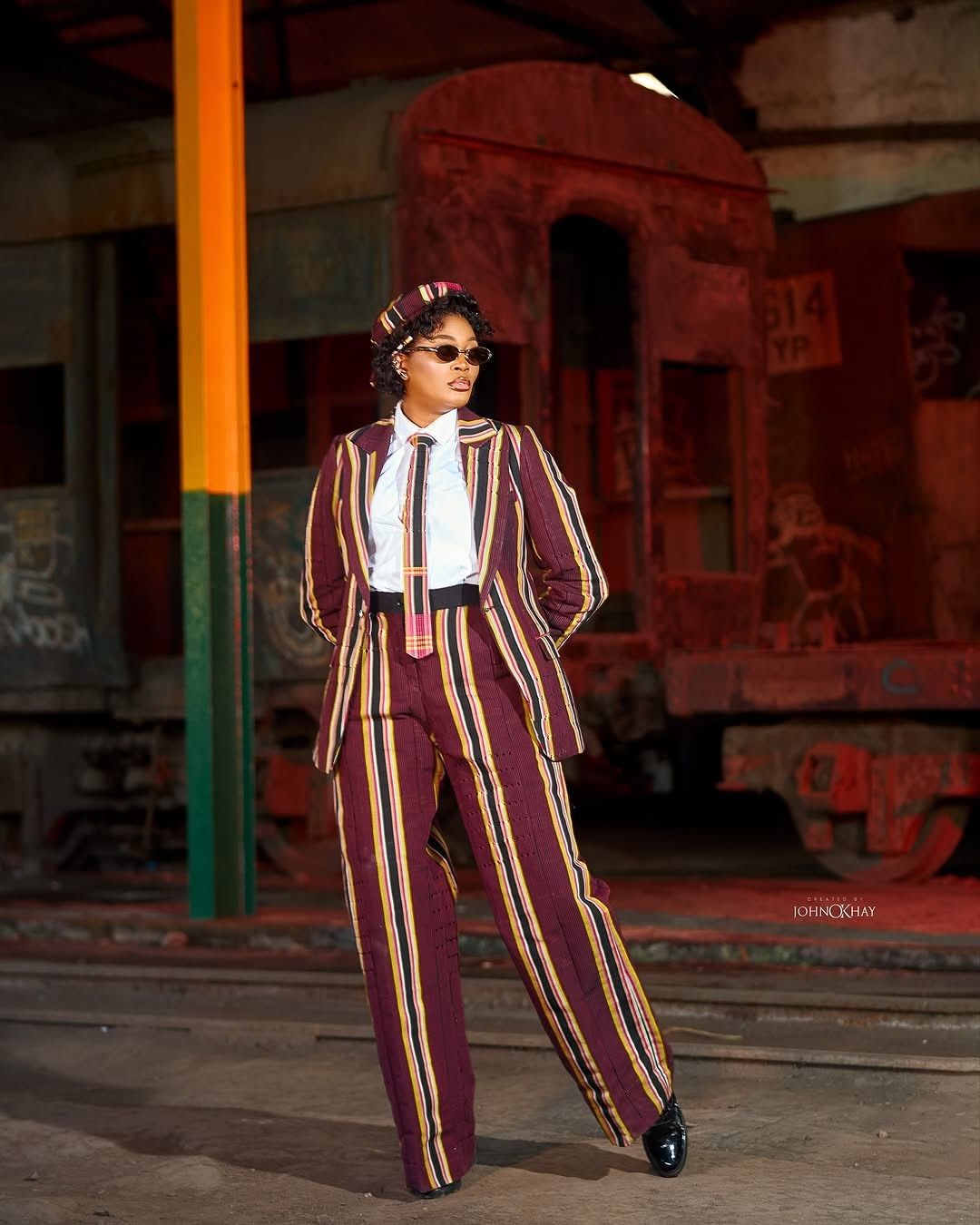
The fabric’s structure carries that seriousness in its material properties. Handwoven in narrow strips of 15 to 30 centimetres on a horizontal loom, the cotton is structured, firm, and rhythmically striped. The palette is disciplined: deep indigo, cream, burnt rust, charcoal. Nothing excessive. Nothing ornamental without intention. Each motif is a woven story, and the weavers who produce it work within a design grammar accumulated across generations. It is a fabric that stands upright. The craftsmanship is not decorative. It is declarative.
The Architecture of Restraint
Where many global audiences associate African textiles with bold surface prints, Faso Dan Fani operates differently.
It works in line.
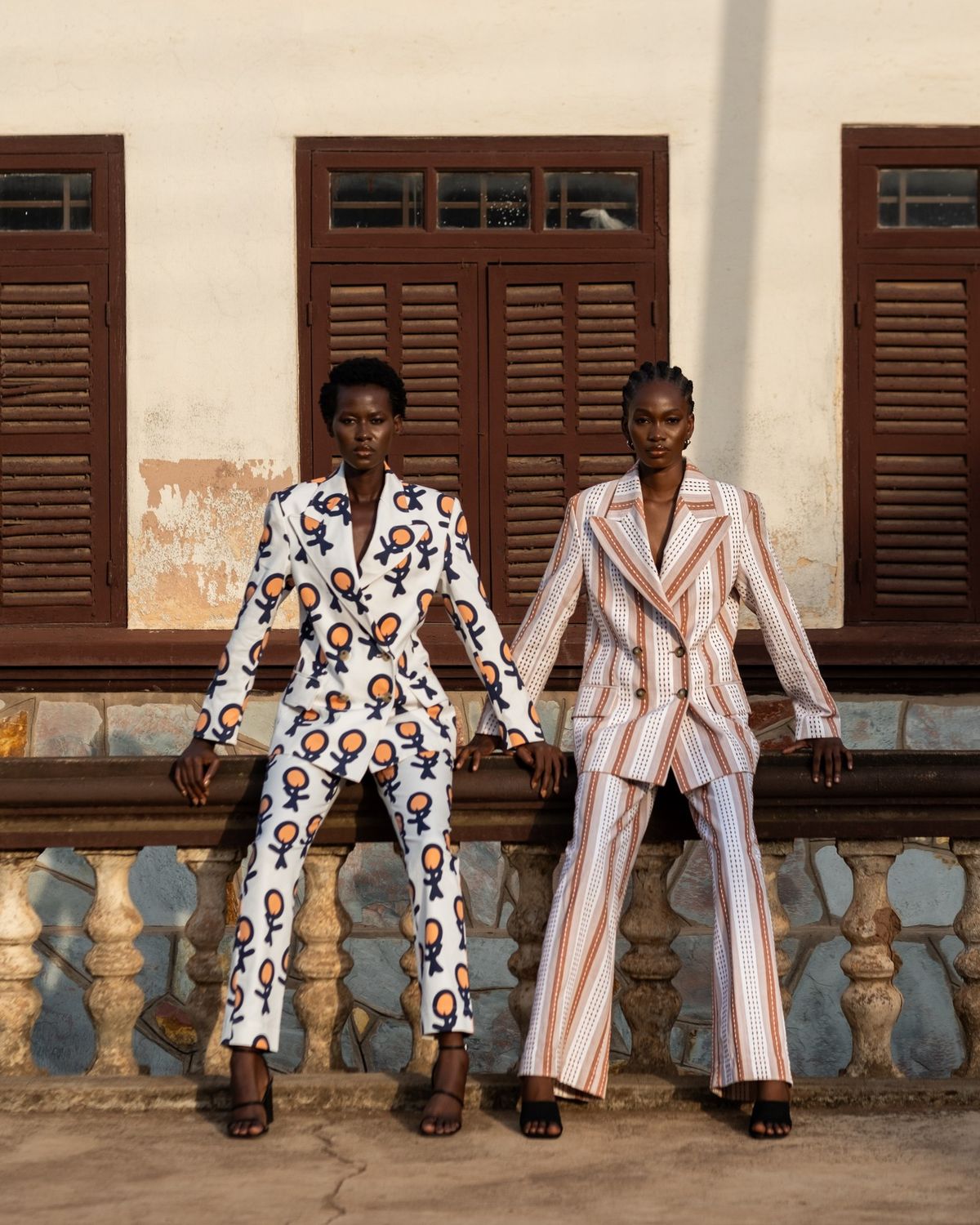
The vertical striping elongates the body. It creates visual strength before tailoring even begins. When the woven panels are stitched together, the seams remain subtly visible — a reminder of process rather than a flaw to conceal.
This is not maximalism.
It is architecture.
And that architectural logic is precisely why haute couture has begun to pay attention.
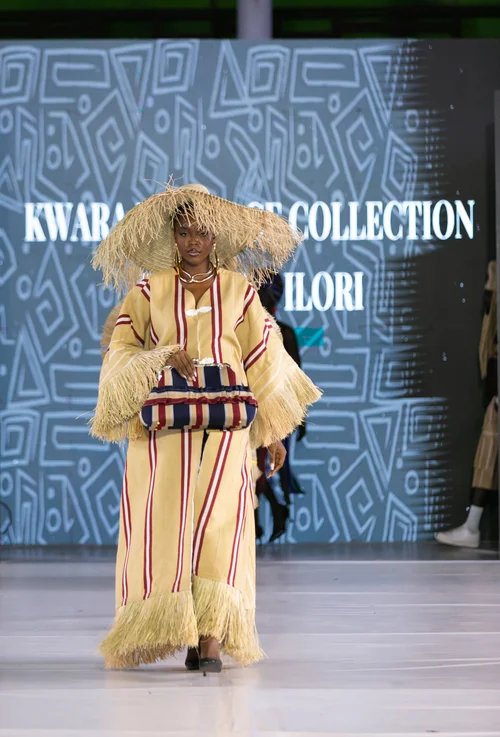
In a sharply structured coat, the stripes behave like internal scaffolding. In a column dress, they produce gravity. In tailored trousers, they sharpen posture.
The cloth does not need embellishment.
It carries its own geometry.
Quiet Luxury Before the Term Existed
The fashion industry has recently embraced what it calls “quiet luxury,” such as muted tones, sharp construction, and material over logo.
But Faso Dan Fani has embodied that philosophy for decades.
Its power lies in repetition. In-hand tension. In the subtle irregularities that prove human presence. It is minimal without being sterile. Structured without being rigid.
What European maisons now frame as understated refinement has long existed in West African weaving traditions — without the marketing vocabulary.
The difference?
One was globalised. The other remained local.
Until now.
From Village Loom to Global Runway
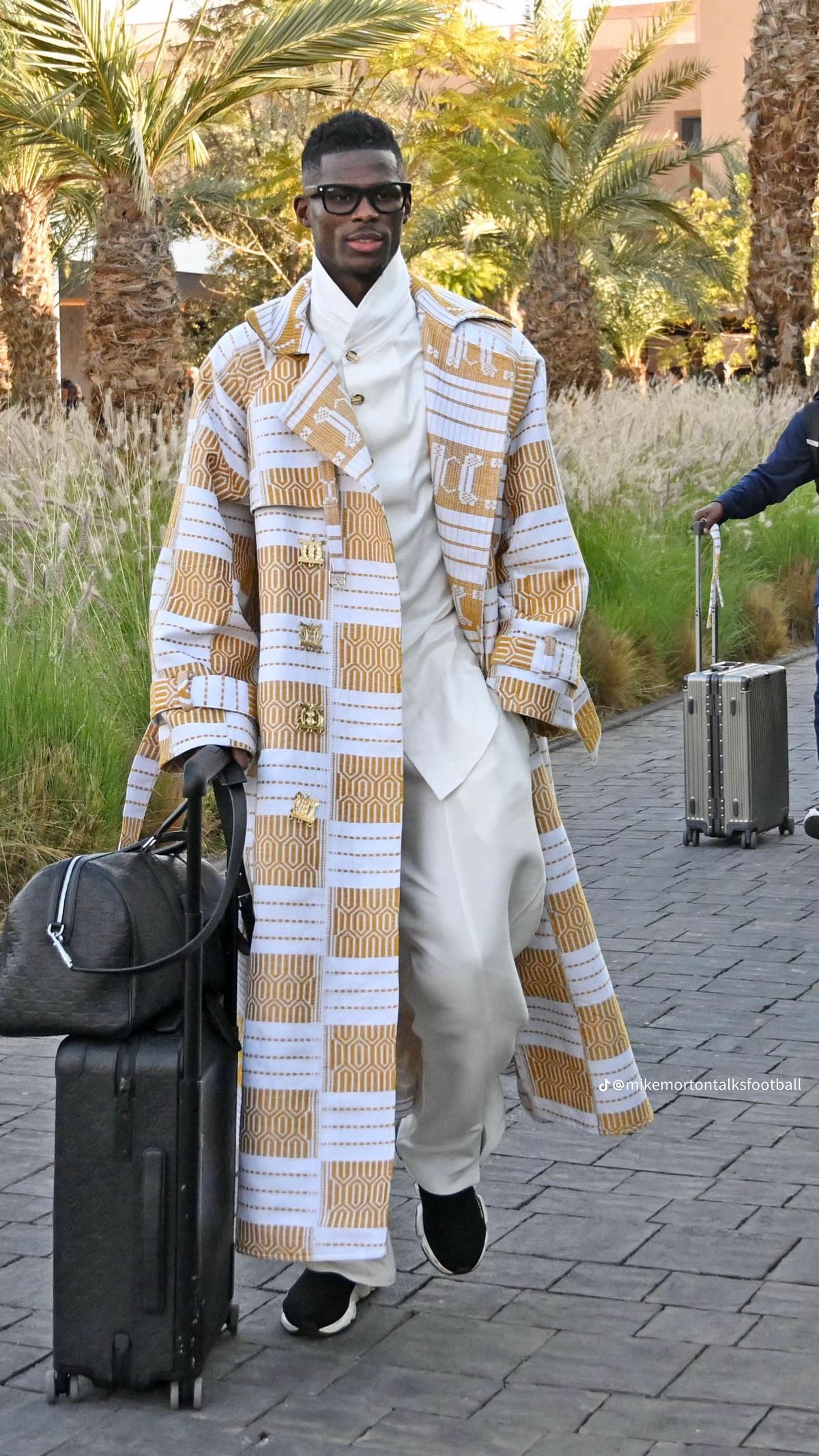
The rise of Faso Dan Fani in international fashion spaces is not happening through mass production. It is happening through careful collaboration.
Designers interested in textiles are forced to respect its limitations. The loom width remains narrow. The strips must be joined. Production remains slow. Scaling is complex.
And that friction is the point.
In an era dominated by industrial duplication, Faso Dan Fani resists acceleration. It cannot be digitally printed with convincing authenticity. It cannot be manufactured in anonymous bulk without losing structural integrity.
Time becomes non-negotiable.
And in luxury, time is currency.
Economic Recalibration
The global fashion system has historically extracted inspiration from Africa while centralising profit elsewhere.
Faso Dan Fani presents a different possibility if handled responsibly.
When designers collaborate directly with weaving cooperatives in Burkina Faso, the economic chain shifts. Revenue circulates locally. Skills remain valued. Younger generations see weaving not as relic labour but as a viable craft economy.
This matters profoundly.
Because textiles do not survive on admiration alone, they survive on infrastructure — fair pricing, sustained demand, and intergenerational transfer of skill.
If haute couture engages authentically, Faso Dan Fani’s presence on the global stage can reinforce, rather than drain, its local ecosystem.
But the balance is delicate.
Luxury must resist the urge to dilute production standards in pursuit of scale.
The Politics of Visibility
There is something powerful about seeing Faso Dan Fani appear in spaces historically dominated by European textile narratives.
Not as exotic trim.
Not as a token insert.
But as a foundation fabric.
When full garments like coats, gowns, and structured suiting are built entirely from the textile, the hierarchy shifts. Africa is no longer a decorative reference. It becomes a structural authority.
And that shift is psychological as much as aesthetic.
For the African diaspora, the visibility of such textiles in global arenas signals validation — but more importantly, continuity.
Continuity of craftsmanship. Continuity of dignity.
Sustainability Beyond Trend
Fashion conversations about sustainability often revolve around recycled synthetics or carbon-neutral pledges.
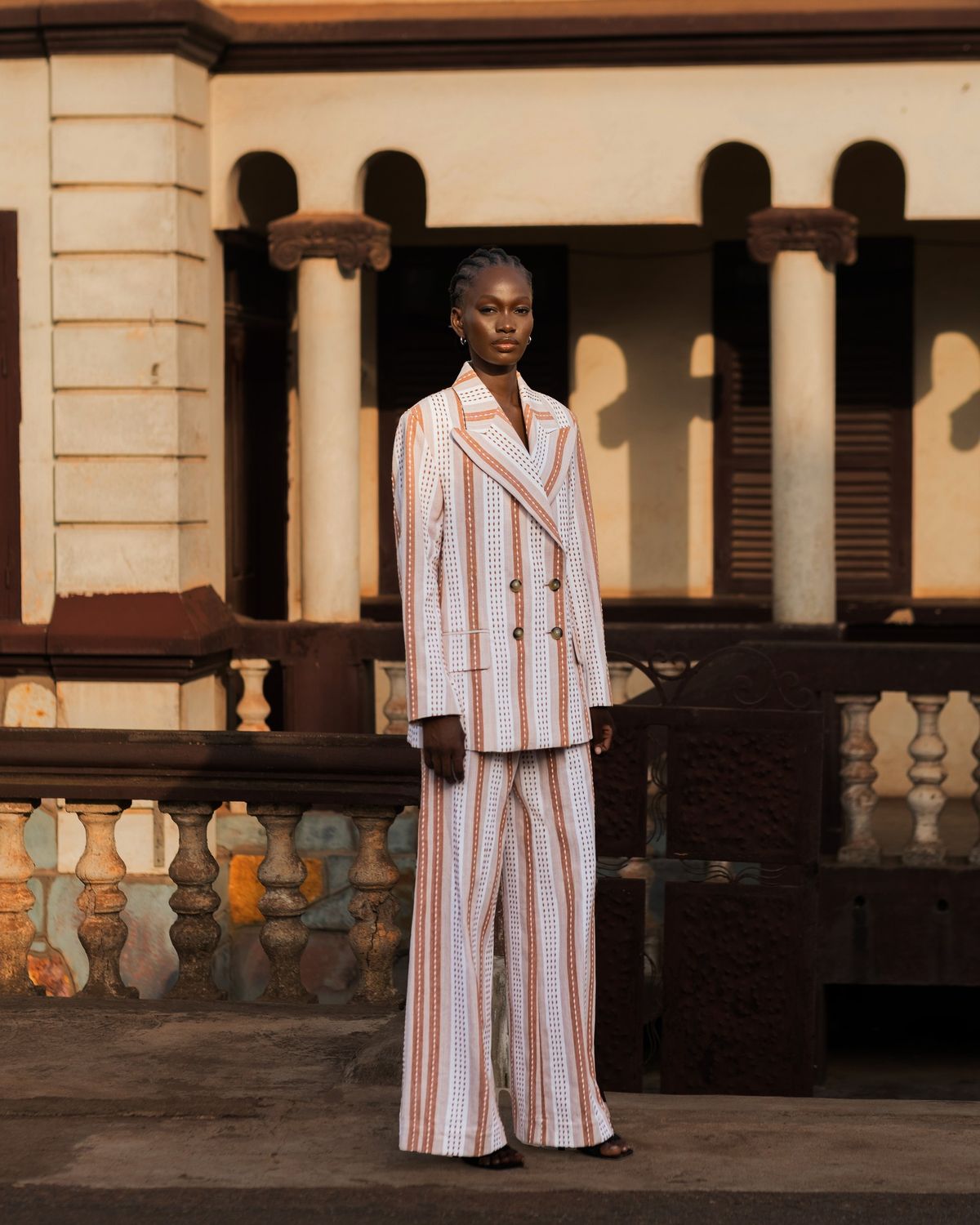
But handwoven textiles like Faso Dan Fani embody a slower, inherently sustainable model. Cotton is sourced regionally. Production carried out without industrial machinery. Minimal waste due to measured weaving.
It is not marketed as eco-luxury.
It simply is.
And as climate consciousness reshapes consumer expectations, textiles rooted in locality and measured output feel less like niche heritage and more like a blueprint for the future.
The Risk of Trendification
There is, however, a caution embedded in this ascent.
Global fashion has a history of discovering, celebrating, and rapidly exhausting cultural materials. When something becomes a trend cycle rather than a long-term commitment, its local ecosystem suffers.
Faso Dan Fani’s strength lies in its scarcity and discipline. Overexposure could erode both.
The responsibility falls not only on designers but on media narratives. The textile must be framed not as a “discovery” but as an enduring system that is finally receiving broader recognition.
It was never waiting to be found.
It was waiting to be respected.
READ ALSO:
- The Caribbean Is Not a Mood Board: How Diaspora Designers Are Reclaiming the Runway
- The Invisible Thread: How African Oral Tradition Shapes Fashion and Heritage Textiles
A New Definition of Origin
Luxury has long relied on geographic myth — Made in Italy, Made in France — as shorthand for quality.
Faso Dan Fani complicates that map.
Origin does not belong exclusively to European ateliers. Origin lives in West African villages where cotton threads are tensioned by hand, where rhythm dictates pattern, where weaving is both skill and inheritance.
When such an origin enters couture without apology, it expands the definition of where luxury can begin.
Not in marble studios.
But on wooden looms under the open air.
The Future of the Stripe
What makes Faso Dan Fani enduring is not nostalgia.
It is adaptable.
The vertical stripe is so central to its identity that it can move seamlessly between traditional garments and contemporary silhouettes. It can support oversized tailoring, minimalist dresses, and even experimental draping.
Its geometry does not date itself.
That timelessness ensures it will outlive fashion cycles.
Closing Frame
Some fabrics chase relevance.
Others refuse to fade.
Faso Dan Fani was woven for nationhood, not trend. For economic autonomy, not runway applause. Its stripes carry decades of resilience — quiet, steady, unbroken.
Now, as it enters haute couture conversations, it does not arrive as a novelty.
It arrives as an equal.
Not asking to be included.
But reminding the world that it was always there — structured, sovereign, and waiting for fashion to catch up.
FAQS
- What is Faso Dan Fani?
Faso Dan Fani is a handwoven cotton textile from Burkina Faso, traditionally woven in narrow strips and stitched into panels. Its name means “woven cloth of the homeland.”
- Why is Faso Dan Fani politically significant?
It became a symbol of economic independence in the 1980s, encouraging Burkinabè citizens to wear locally produced cloth instead of imported European fabrics.
- How is Faso Dan Fani different from printed African fabrics?
Unlike wax prints, Faso Dan Fani is structurally woven, not printed. Its vertical striping and hand tension create architectural form rather than surface decoration.
- Why is haute couture interested in Faso Dan Fani now?
Its disciplined stripe construction, slow production process, and understated strength align with the global shift toward quiet luxury and material authenticity.
- Is Faso Dan Fani sustainable?
Yes. It is produced in small quantities using handlooms and locally sourced cotton, making it inherently slow, low-waste, and craft-driven.