She picks up both pieces, holds them against her body in the mirror of the Biashara Street market stall, reads the Swahili proverb printed along the border, and puts them back down. The message is not right for today. She reaches for another pair. This is how a Kikuyu woman shops for a kanga. Not for the pattern alone. For what the cloth says.
The kanga is the most misread garment in East Africa. Outside the region, it is described as a wrap. A beach cover. A colourful piece of cotton worn loosely and interchangeably. That description belongs to a tourist brochure, not to the women who have carried this fabric through birth ceremonies, marriages, initiations, and funerals for more than a century. For Kikuyu women, the kanga is a communication system dressed as clothing. Choosing one is a deliberate act. Wearing it is a statement.
The Kikuyu are Kenya’s largest ethnic group, numbering 8,148,668 people according to the 2019 Kenya Population and Housing Census, approximately 17 per cent of the country’s total population. Native to the fertile central highlands around Mount Kenya, which the Gikuyu call Kirinyaga, the Mountain of Whiteness, they have shaped Kenyan political, economic, and cultural life since independence. Their traditional dress, rooted in animal-skin tanning and elaborate beadwork, predates contact with Swahili Coast textile culture by centuries. The kanga, by contrast, is a coastal fabric. It originated along the Swahili Coast, most credibly in Zanzibar and Mombasa, in the 1870s, when Muslim women began stitching together six printed cotton handkerchiefs to create a single wearable wrap. What began as coastal ingenuity became, over the following century, the most travelled textile in East Africa, moving inland to the central highlands, the Rift Valley, and the Great Lakes region.
The kanga’s three-part structure is the foundation of its authority: the pindo, a decorative border along all four sides; the mji, the central motif; and the jina, a Swahili proverb or saying printed along the lower border. Kaderdina Hajee Essak, a Mombasa trader working out of the historic Biashara Street premises his family had occupied since 1887, is widely credited with introducing printed text onto kanga cloths in the early 1900s, transforming a decorative fabric into a medium of communication. His descendants continued that tradition, and it was Hajee Essak Abdulkaderdina who popularised the proverb-printed kanga in the 1930s. The messages are frequently layered: a kanga can be worn to congratulate, to criticise, to warn, to declare love, to express grief, all without a word being spoken aloud. Kenyan writer Ndinda Kioko, in a 2016 essay, described the kanga as postcards from the grave, centuries of women’s stories compressed into printed cotton.
Kikuyu women adopted the kanga and made it their own. Their styling, the occasions on which they wear it, the way they layer it with their community’s beadwork traditions, and the messages they choose to carry, constitute a distinct Kikuyu relationship with a fabric that is not, by origin, theirs. That appropriation is not a dilution of the kanga. It is proof of the fabric’s power. A cloth that can travel from the Swahili Coast to the central highlands of Kenya and find a new cultural purpose without losing its original grammar is not a regional curiosity. It is a continent’s garment.
Discover the top 5 kanga styles Kikuyu women are wearing in 2026, from the double-wrap ceremony set to the tailored kanga dress rooted in Swahili Coast textile authority.
The Omiren Argument
The kanga does not belong to a single community, but Kikuyu women have built one of East Africa’s most deliberate relationships with it, turning a Swahili Coast textile into a highland cultural practice by pairing coastal communication with Kikuyu ceremony, beadwork, and an uncompromising eye for what the cloth says.
In 2026, Kikuyu women from Nairobi’s Westlands to the market towns of Murang’a, Nyeri, and Kirinyaga County are wearing the kanga in five distinct styles. Each has a specific social function, a set of conventions governing how the fabric is folded, tied, and layered, and a relationship with the jina that determines whether the garment is appropriate for the occasion. These are not fashion options. They are cultural positions.
1. The Double-Wrap Ceremony Set: The Kanga as Full Cultural Presence
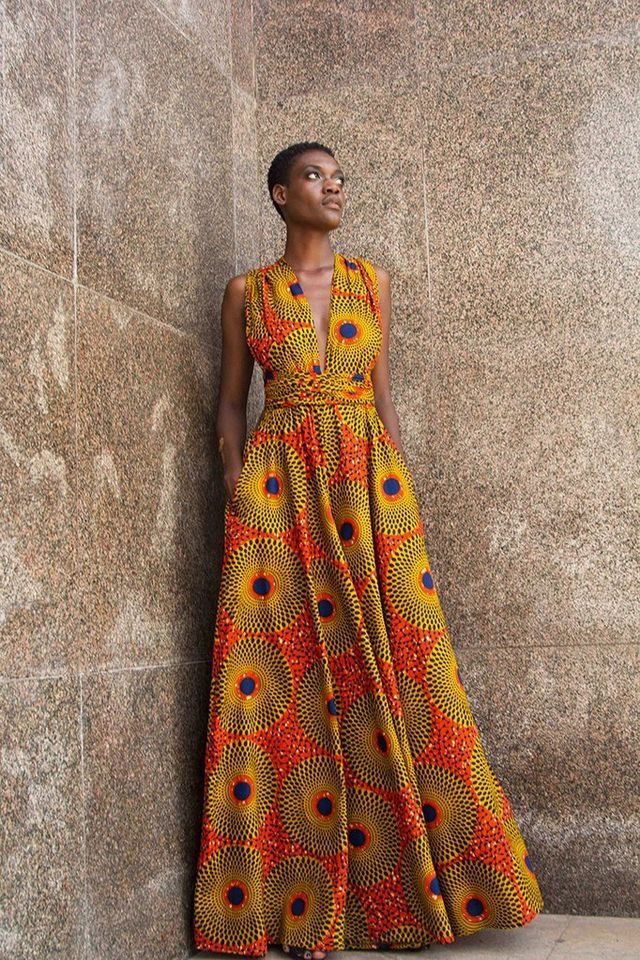
The double-wrap is the most complete and authoritative form of kanga dressing in the Kikuyu context. Two full kanga pieces, sold as a pair and measuring approximately 1.5 metres by 1 metre each, are worn simultaneously: one wrapped around the waist and secured at the hip, falling to the ankle; the second draped over the shoulders, chest, and head, tied at the front or draped loosely so the jina is visible at the lower edge. The headwrap, in its flat, forward-facing fold, is the element that signals ceremony. Without it, the kanga reads as everyday dress. With it, it reads as a Kikuyu woman who has dressed for the occasion she is entering.
The double-wrap is the governing silhouette at Ruracio, the Kikuyu dowry negotiation ceremony, and Ngurario, the traditional wedding. At these events, the kanga’s jina carries specific social weight. A woman choosing a kanga with a proverb about unity, family, or the obligations of marriage is not making a decorative choice. She is contributing to the ceremony’s semantic fabric. Older Kikuyu women attend these occasions in double-wraps in the deep ochre, burnt sienna, and forest green that connect the fabric’s colour register to the beadwork traditions of the central highlands: colours of the land, not the coast.
Styling conventions for the double-wrap ceremony set are specific. The two pieces must be from the same pair, sharing the identical pindo border and mji motif. Mixing non-matching pieces is visible and legible to other women in the room as a breach of the rules of ceremonial dress. Gold and brass jewellery, earrings, and a single bead necklace bridge the coastal textile with the highland adornment tradition. The headpiece is tied so the full jina remains readable, because at a ceremony, the cloth must speak.
In 2026, contemporary Nairobi tailors working in the Gikomba and Westlands markets are producing double-wrap ceremony sets in premium cotton kanga from Rivatex East Africa, the Eldoret-based textile manufacturer that has produced kanga fabric in Kenya since the 1970s and remains one of the country’s primary domestic kanga producers. The choice of locally manufactured fabric over imported Chinese kanga carries its own social signal: quality, investment, and the cultural seriousness of a woman who dresses from the inside out.
2. The Kanga Skirt and Blouse: The Everyday Authority of a Dressed Woman
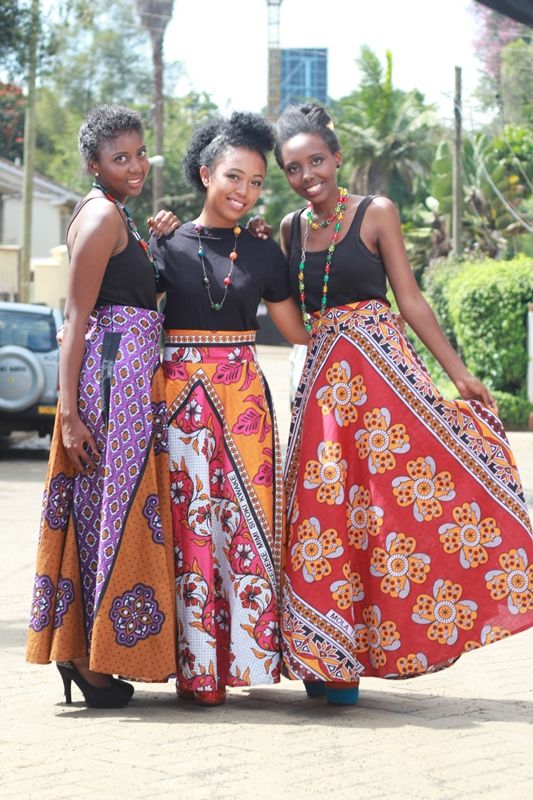
The kanga skirt and blouse are not casual. Calling it casual misreads the entire Kikuyu relationship with daily dress. A Kikuyu woman who wraps a kanga as a floor-length skirt and pairs it with a fitted cotton blouse in a complementary colour is not underdressed. She is practising the form of dress that signals a woman at ease within her own cultural authority. It is the silhouette of the market, the compound, the community gathering, and the church. It is a dress that works.
The skirt wrap begins at the natural waist, folded once and secured by tucking the upper edge in on itself or knotting at the side hip. The full length of the kanga falls straight or in a slight A-line, depending on the fold, and the jina runs along the lower hem so it is visible to anyone walking behind her. The blouse, typically a fitted top in solid cotton or a subtle tone-on-tone pattern, allows the kanga’s mji to dominate the silhouette. A headscarf in the same fabric, tied in a simple turban or a flat crown knot, completes the set.
The kanga skirt and blouse is the style that Kikuyu women across generations converge on for the medium-register occasions that constitute most of community life: visiting neighbours, attending markets, sitting with elders, participating in local church services, and the endless round of family events that mark life in the central highlands. It is not a secondary silhouette. It is the bedrock of how Kikuyu women occupy public space.
In 2026, Kikuyu women in Nairobi’s Eastlands and Kibera, as well as in the county towns of Nyeri and Thika, are pairing the kanga skirt with contemporary fitted blouses in structured jersey and stretch cotton, modernising the silhouette without abandoning its logic. The jina remains visible. The headscarf remains present. The social signal, a woman who knows how to dress for where she is, remains legible.
3. The Tailored Kanga Dress: The Urban Kikuyu Woman’s Signature
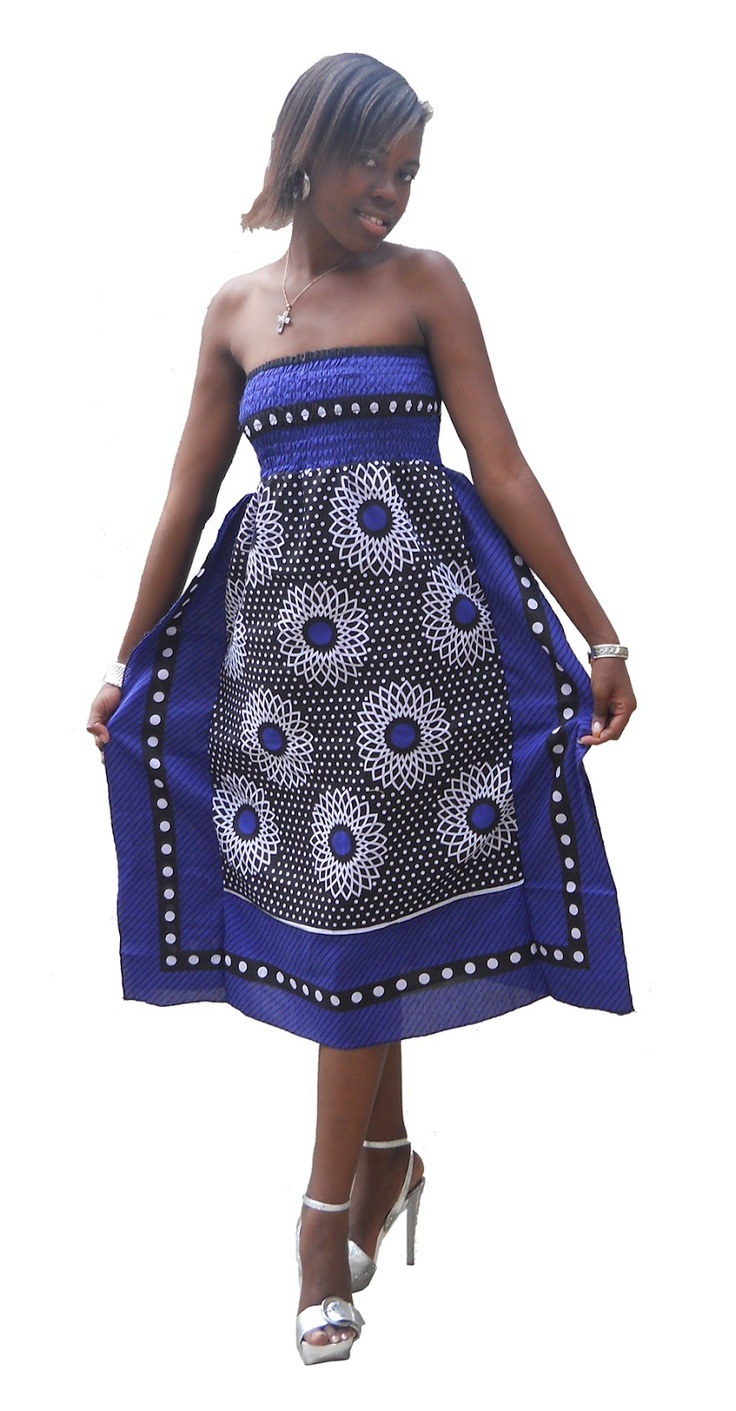
Nairobi has one of East Africa’s most dynamic fashion cultures. Kikuyu women who work in the city’s banking sector, civil service, and creative industries have developed a kanga style that translates the fabric’s cultural authority directly into professional and social contexts: the tailored kanga dress. A single kanga piece, or two pieces seamed together for additional length, is cut by a skilled tailor into a structured dress with a defined bodice, fitted waist, and a hem that falls at the knee or just below it. The pindo border of the kanga becomes a deliberate design element, running along the neckline, the hem, or the sleeve cuff, so the fabric’s origin is visible in the construction.
What separates the tailored kanga dress from generic African print fashion is the decision-making around the jina. An experienced Nairobi tailor working with a client on a kanga dress will ensure the jina is positioned so it is legible on the finished garment. A kanga dress with a hidden or cut-off jina is a garment that has lost its reason for existing. The fabric’s message is not a footnote. It is the point. Tailors at Nairobi’s Gikomba market and the boutique ateliers of Westlands and Karen understand this, and their clients, Kikuyu women who have grown up with the fabric, expect it.
In 2026, the tailored kanga dress is the dominant style at Kikuyu professional women’s events: the corporate gala, the Nairobi networking evening, and the university graduation reception. The fabric choices lean toward the structured, higher-thread-count kangas produced by Rivatex East Africa and Thika Cloth Mills, Kenya’s two primary domestic cotton textile manufacturers, both of which supply the domestic kanga market alongside imported fabric from India and, increasingly, China. Kenya’s domestic textile manufacturers employed over 70,000 micro and small firms as of 2024 according to Trailblazers Kenya, and kanga production remains a central pillar of that sector. A Kikuyu woman choosing a Rivatex-produced kanga for her tailored dress is making a Buy Kenya, Build Kenya statement as well as a cultural one.
The tailored kanga dress is most effective when the border detail is celebrated rather than concealed. Tailors who run the pindo border along the full hem of a midi-length dress create a silhouette that is unmistakably kanga while reading as formal. A matching headwrap in the same fabric, folded into a structured turban and tied at the crown, marks the complete look. Without the headwrap, the tailored kanga dress reads as contemporary East African fashion. With it, it reads as Kikuyu.
ALSO READ:
- Top 5 Traditional Styles for Fulani Women
- Top 5 Wax Print Styles for Baoulé Women in 2026
- Mixing Prints Like a Pro: The 2026 Guide to Afrocentric Luxury Style
- Why Culture Is the Foundation of Style in African and Global Fashion
4. The Kanga Shoulder Drape with Beadwork: The Kikuyu Reading of the Coastal Fabric
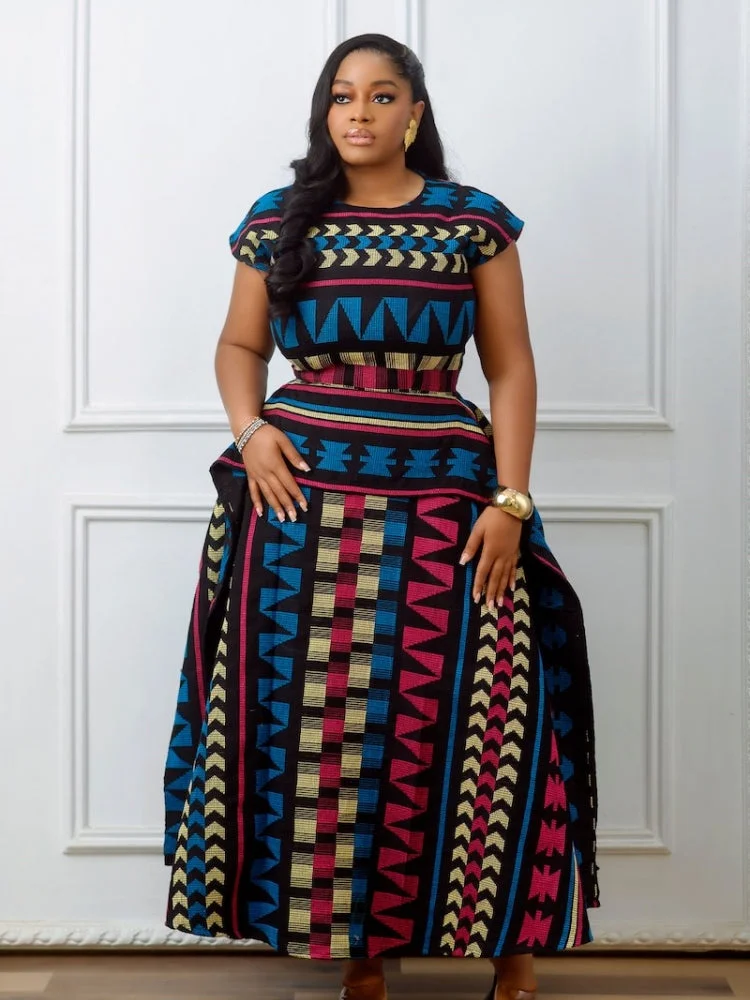
This is the style that is most distinctly Kikuyu in its construction, because it is the one that brings the coastal fabric into direct conversation with the highland adornment tradition. A single kanga piece is draped over one shoulder and across the body, pinned or knotted at the opposite hip, worn over a fitted dress or a wide skirt in a contrasting fabric. The kanga functions here as a ceremonial outer layer rather than as a foundational garment, and the Kikuyu beadwork at the neck, wrists, and ears becomes the visual anchor of the complete look.
Beadwork is central to the aesthetic authority of Kikuyu women’s dress. Multi-coloured bead necklaces, bracelets, and anklets have been worn since pre-colonial times to communicate social status, age, and marital standing. The beadwork traditions of the central highlands differ from those of the Maasai in colour grammar and construction, but they share the same governing principle: adornment is a language, and a woman who wears it correctly is demonstrating cultural knowledge, not just personal style. When Kikuyu beadwork is worn with a kanga shoulder drape, the two traditions operate in parallel: the coastal textile’s jina speaks in Swahili, and the highland beads speak in colour and form. Together, they constitute the most culturally layered of the five kanga styles.
The shoulder drape kanga is worn at mixed-heritage cultural events in Nairobi, at Kenya national celebrations such as Jamhuri Day and Madaraka Day, and at Kikuyu community gatherings where women represent their community’s full cultural identity to a broader audience. The jina of the chosen kanga, in these contexts, is selected with particular care. A proverb about strength, unity, or community is preferred over a romantic or personal message. The cloth speaks to the gathering, not to a single recipient.
In 2026, younger Kikuyu women in Nairobi’s creative communities are styling the kanga shoulder drape over tailored trousers and structured, fitted tops, creating a contemporary silhouette that carries the fabric into urban fashion contexts while preserving its cultural logic. The beadwork remains. The jina remains visible. The Kikuyu identity remains legible even when the surrounding garment is entirely contemporary.
5. The Kanga Baby-Carrier Wrap and Accompanying Dress: The Complete Kikuyu Mother
This is the style that carries the most social weight in Kikuyu community life, because it is the one that declares a specific identity: a mother who dresses for her child and for her community simultaneously. A kanga baby-carrier wrap involves securing an infant to the mother’s back using one full kanga piece, tied across the chest and secured at the front, leaving the mother’s hands free. The second kanga piece of the pair is worn as a hip wrap or full skirt, and the jina of both pieces, being from the same pair, carries the same message, doubling the cloth’s communication.
The kanga as a baby carrier is one of the fabric’s oldest functions in East Africa and one that the National Museums of Kenya’s documentation of kanga culture identifies as among its most culturally significant uses across the full range of communities that wear it. For Kikuyu mothers, this function extends beyond the practical. The first kanga a mother wraps her newborn in is typically chosen for its jina: a proverb about protection, love, or the obligations of parenthood. The choice is made deliberately, often by an elder female relative who selects the cloth and presents it as a gift at the naming ceremony. The kanga thus becomes the child’s first textile encounter with the culture’s language.
The accompanying dress worn with a baby-carrier kanga is typically a simple A-line or straight cut in the matching kanga pair piece, or a complementary solid-cotton dress that allows the pindo border of the carrier kanga to be visible across the mother’s back. In Kikuyu communities in Murang’a, Nyeri, and the central highlands, the mother’s dress and carrier kanga are the most socially scrutinised elements of her appearance at a naming ceremony, ndugata ya mwana. Other women in the room will read the jina, assess the quality of the fabric, and form opinions about the mother’s preparedness for the social responsibility she is entering. Dressing correctly is not vanity. It is community participation.
In 2026, Kikuyu mothers in both rural highland communities and Nairobi’s residential estates continue this practice, adapting the carrier technique for urban contexts with ergonomic fabric adjustments while preserving the fundamental grammar of the look. The jina remains the governing choice. The pair must match. The beadwork on the mother’s wrists and neck remains present. The message the cloth carries into the naming ceremony is always chosen, never accidental.
A Kikuyu woman does not buy a kanga for its colour alone. She reads what it says, decides if that is what she wants to carry into the room, and then chooses.
Frequently Asked Questions
1. What is a kanga, and where does it come from?
The kanga is a rectangular printed cotton cloth, approximately 1.5 metres by 1 metre, with a decorative border known as the pindo, a central motif called the mji, and a printed Swahili proverb or saying called the jina. It originated along the Swahili Coast in the 1870s, most credibly in Zanzibar and Mombasa, where fashionable women stitched together six printed handkerchiefs to create a single wearable wrap. The Mombasa trading family Kaderdina Hajee Essak, whose shop on Biashara Street dates to 1887, is credited with popularising proverb-printed kanga in the early 20th century. The fabric is sold in pairs, known as gora, and is worn across East Africa, the Great Lakes region, and the African diaspora worldwide.
2. Do Kikuyu women traditionally wear the kanga?
The kanga is not indigenous to the Kikuyu, whose traditional dress is rooted in animal-skin garments and elaborate beadwork. However, Kikuyu women adopted the kanga as it spread inland from the Swahili Coast, and over generations, they have developed a specific, distinctive relationship with the fabric. They wear it at the full range of cultural ceremonies, including Ruracio dowry negotiations, Ngurario traditional weddings, and ndugata ya mwana naming ceremonies, and they pair it with the beadwork traditions of the central highlands in ways that constitute a recognisably Kikuyu aesthetic. The kanga’s spread inland is documented in the National Museums of Kenya’s cultural record of the fabric.
3. Who makes Kanga fabric in Kenya?
Kanga fabric is produced in Kenya by several domestic textile manufacturers, with Rivatex East Africa Limited in Eldoret and Thika Cloth Mills among the most significant. Rivatex has produced Kanga fabric since the 1970s and remains a major domestic supplier. Kanga is also imported from India, China, and other East African countries. Kenya’s textile sector comprises over 70,000 micro and small firms, according to a 2024 industry analysis by Trailblazers Kenya, with kanga production representing a central pillar of the domestic fabric market.
4. What does the jina, or proverb, on a kanga mean, and how do Kikuyu women choose it?
The jina is the Swahili proverb, saying, or message printed along the lower border of every kanga. It is often the primary factor in a woman’s decision to purchase a particular kanga. Messages range from romantic to political, from celebratory to cautionary. Kikuyu women select jina according to occasion: a kanga for a naming ceremony carries a proverb about parenthood or protection; a kanga for a traditional wedding carries a proverb about unity or family obligation; a kanga for a national celebration carries a proverb about community or strength. The ambiguity of kanga proverbs allows women to communicate layered messages within cultural norms, without requiring direct speech.