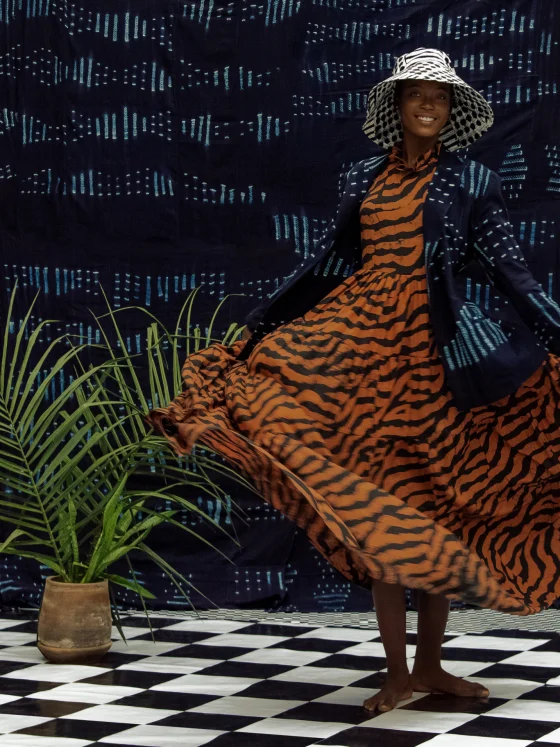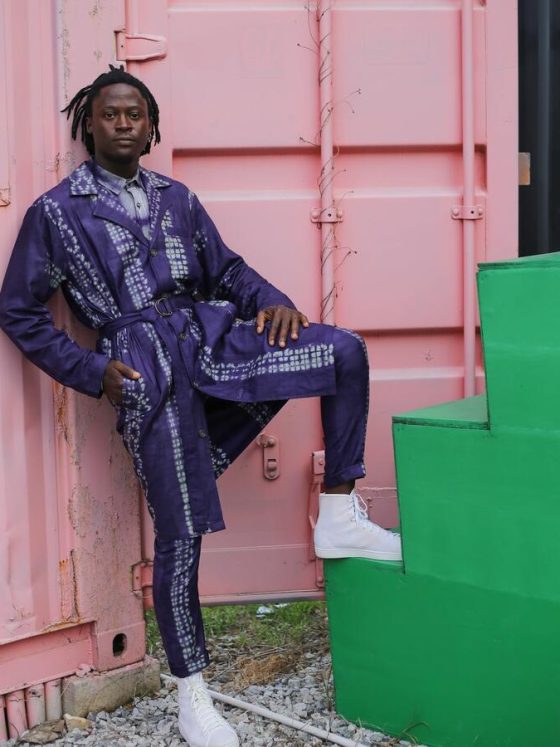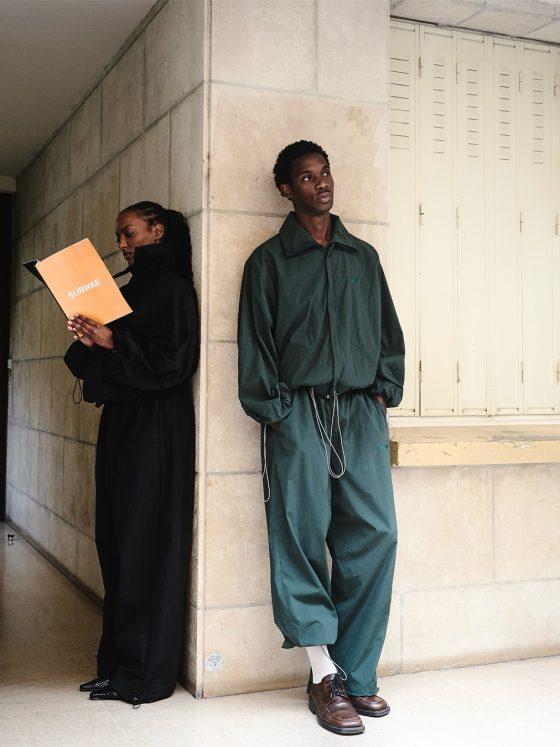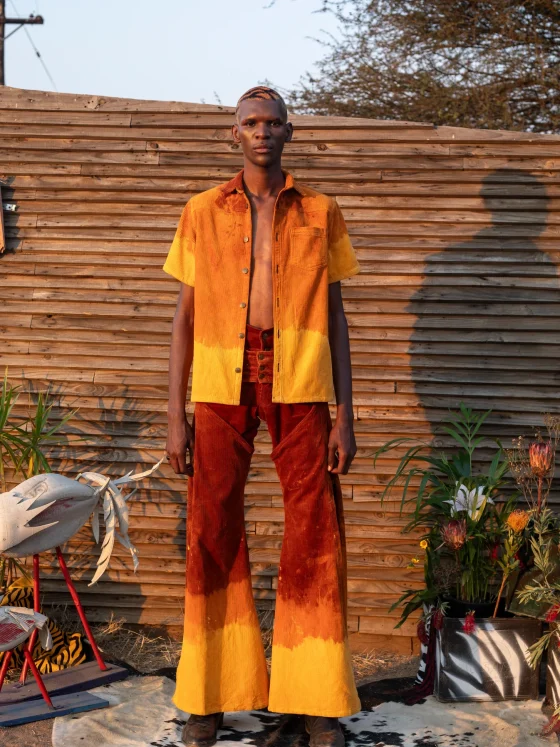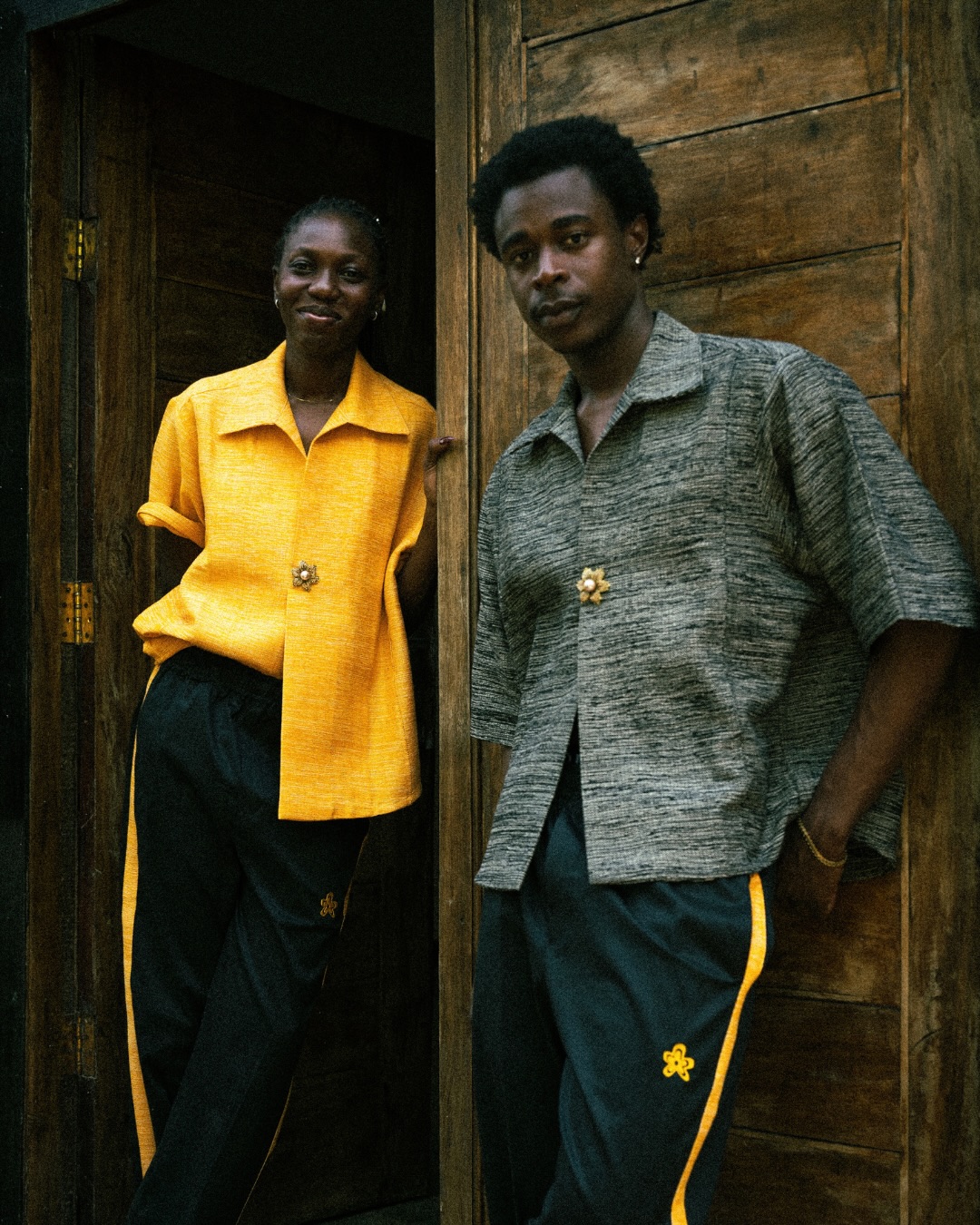
AJABENG did not begin looking at women’s dress when it was founded by Maame Yaa. Three years earlier, the Ghanaian label had described a collection informed by post-independence Ghanaian womenswear. In 2023, the focus shifted: women became the explicit subject and intended audience of an entire collection. Founder and creative director Travis Obeng-Casper approached that brief through photographic research while retaining what he identified as AJABENG’s clean cuts and preference for solid colours. That distinction makes Maame Yaa more interesting than a straightforward story of a unisex label entering womenswear. Its published history shows a designer building on an existing interest. The collection’s references included wrapped cloth, historical photographs and named women, but its identity also depended on what Obeng-Casper chose not to discard. Reading his interviews alongside earlier collection notes reveals a negotiation between a new brief and an established practice, not a clean break between two unrelated ways of designing.
Explore how AJABENG’s Maame Yaa collection developed an existing interest in women’s dress through photographic research, silhouette and solid colour.
A Conversation Became a Collection
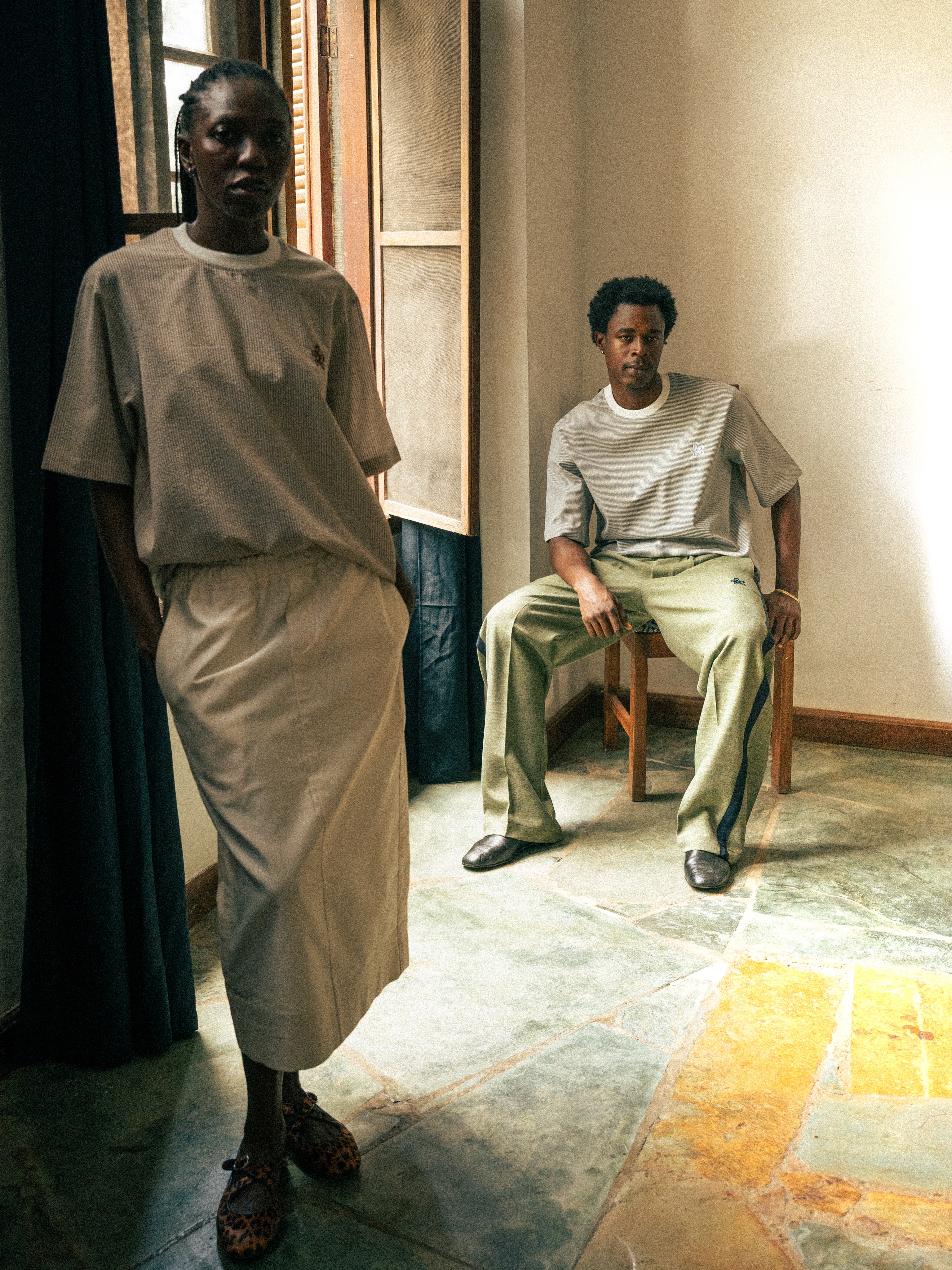
The immediate prompt came from Obeng-Casper’s sister-in-law, Maame Yaa. Statement article. In a July 2023 article for Statement, she casually challenged him to make a women’s collection. Research led him to Catherine E. McKinley’s The African Lookbook. When he encountered the name Maame Yaa in the book, the title appeared to resolve itself: the person who had prompted the project and the material informing it now shared a name. The book supplied a broader field of reference than one relative’s wardrobe. In an April 2023 interview published by Bôhten, Obeng-Casper described drawing from different fashion eras across a century. He said he redesigned some garments in a contemporary way while retaining the originals’ qualities. His explanation suggests selection rather than wholesale reproduction: historical dress provided decisions to work with, not a complete wardrobe to copy. Bôhten announced April 29, 2023, as the collection’s launch date.
The photographs matter here as records of women’s appearance and self-presentation. But the published interviews do not connect every finished garment to a particular image. The strongest account therefore stays with what Obeng-Casper identifies: the book as a research source, a range of periods rather than one era, and a deliberate effort to develop older clothing references within AJABENG’s existing language.
Before Maame Yaa, There Was Feiz Two
AJABENG’s spring/summer 2021 Feiz Two collection provides an important precedent. In a brand statement published by BellaNaija Style in November 2020, the label described it as a sequel to Feiz One, retaining the earlier collection’s silhouettes while introducing feminine design elements informed by Ghanaian womenswear after independence. The statement framed those references within the tension between established dress conventions and the social possibilities of the 1960s highlife scene. These were the brand’s interpretations of its historical references, not independent findings about all women’s dress in that period. More concretely, the statement identified covered buttons and oversized pockets as recurring AJABENG features. It also described a slight expansion of the previous collection’s colours. Continuity was already part of the label’s explanation of development: retain some devices, adjust others and let a new reference change their emphasis.
By 2023, women’s fashion history was no longer unfamiliar territory. Maame Yaa made that relationship the organising brief of a dedicated collection. This also exposes the limits of treating “unisex” and “feminine” as opposites. AJABENG could address an audience through unisex clothing while drawing from women’s wardrobes. Its first all-womenswear collection marked a shift in direction, but it did not mark the beginning of that influence.
Wrapped Cloth as a Design Reference
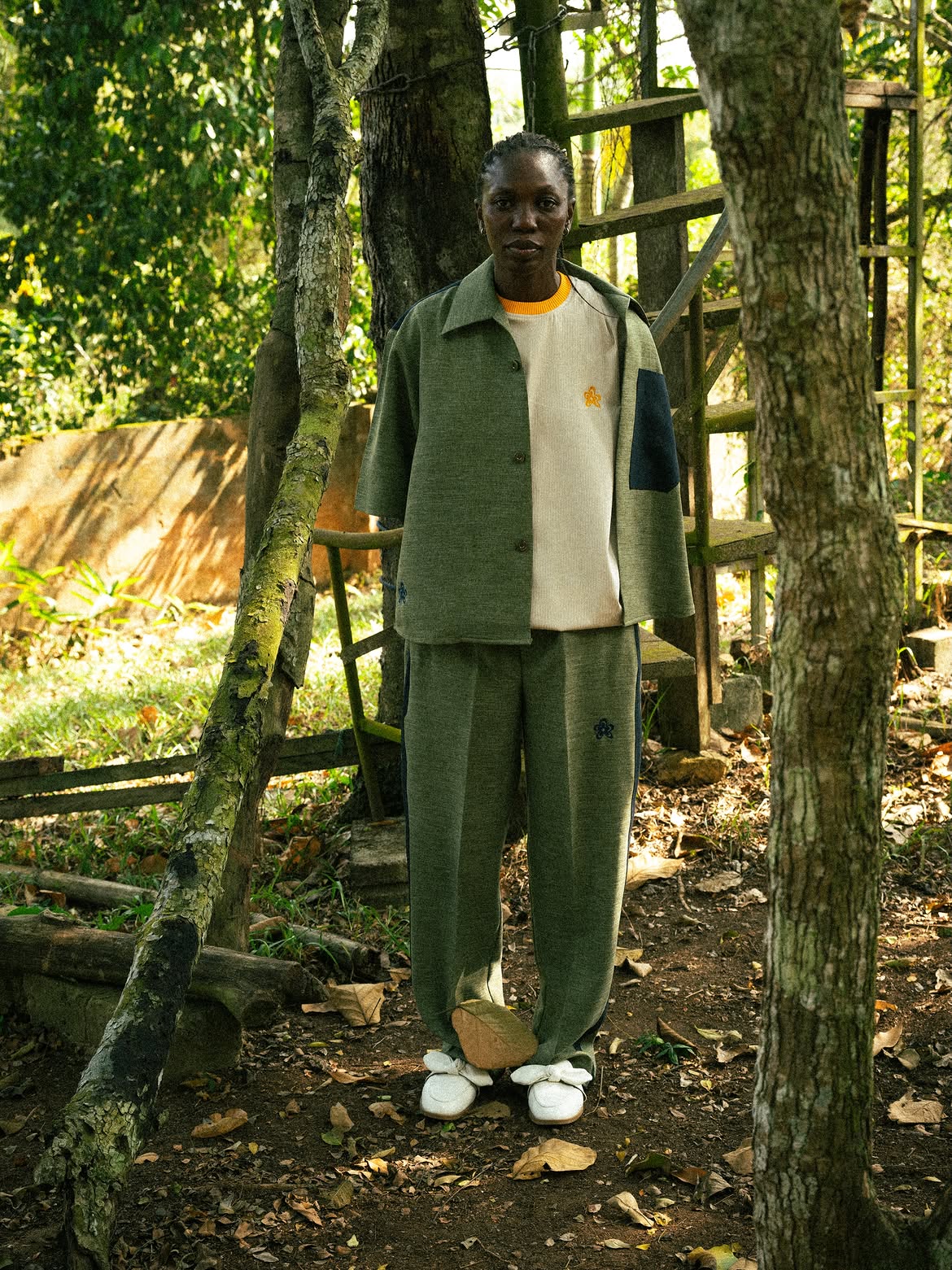
Rafael’s review identifies two particularly useful examples of how historical references entered Maame Yaa: a beige drawstring skirt and an off-the-shoulder dress with ruffle bands. She connects both to the wrapper, describing the bands on the dress as recalling creases and draped cloth. These are her reported readings of the collection, rather than a documented image-to-garment account supplied by the designer. Nevertheless, the distinction between the two descriptions is revealing. The skirt is discussed through silhouette, while the dress is discussed through the appearance of folds. They suggest different ways of developing a reference: working with the overall arrangement of cloth around the body, or turning a quality of draping into a repeated detail. The interest lies in those particular decisions rather than a broad assertion that the collection combines tradition and modernity.
“Wrapper” should not become a substitute for cultural specificity. The review does not identify a particular regional garment or wrapping practice behind each piece. Its interpretation is most useful at the scale it can support: a connection between wrapped cloth and selected features of the collection. It is not evidence that different forms of women’s dresses across the continent share a single origin or construction. Other descriptions in Rafael’s account locate change within familiar clothing types. Tank tops receive cowl necklines; shirts gain half-back details; shirt dresses feature pronounced back belts. These interventions matter because they place the collection’s development inside garments, not only inside its accompanying story. A new brief becomes more convincing when it produces identifiable choices about neckline, fastening, exposure and proportion.
Solid Colour Was a Constant
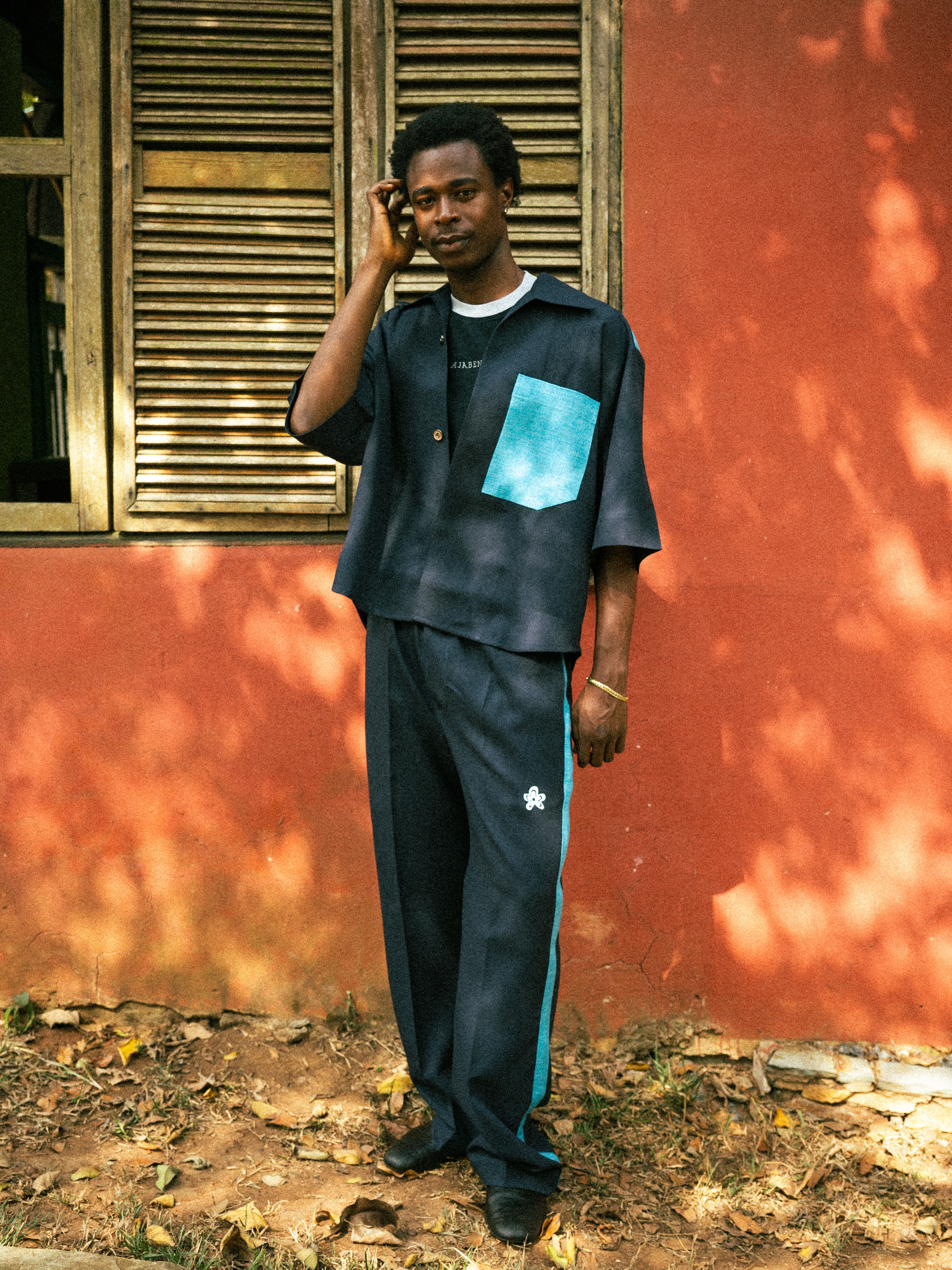
Asked how Maame Yaa differed from earlier work, Obeng-Casper acknowledged its more feminine looks but stressed that it “maintained AJABENG’s clean cuts while adhering to the brand’s preference for solid colours.” That statement provides a useful test of continuity. The designer did not define the label’s restraint as an obligation to avoid emphatic colour. He located it in the cut and the way colour was used. Rafael’s account names watermelon pink, off-white, cream and dark coffee. Her description of a “colourful minimalist palette” is consistent with the designer’s explanation, even though the article’s subheading announces a departure from minimalism. The more informative reading is not that colour displaced restraint, but that both remained available to the label. A collection can widen its palette without abandoning its other organising principles.
That is also why “Afro-minimalism” cannot do the critical work on its own. The term is useful only when attached to describable decisions. In AJABENG’s published accounts, those include recurring garment details, clean cuts, solid colours and selective changes to established forms. The label’s continuity rests on those choices, not on an expectation that Ghanaian design must be either exuberant or restrained.
Which Women Does the Collection Imagine?
The collection’s naming makes some references feel personal. Rafael identifies the Abban off-the-shoulder dress as a tribute to Ghanaian photographer Felicia Abban. Naming the photographer gives readers a person to recognise rather than leaving the reference at the level of anonymous inspiration. It does not, by itself, establish a direct quotation from one of her photographs, but it makes an acknowledgement explicit. Obeng-Casper’s description of his imagined wearer raises a different question. In the Bôhten interview, he said Maame Yaa was designed for “every African Woman,” then described a loving, caring woman who “prioritises the needs of others over her own.” The language of endurance and care is appreciative, but the expectation of self-sacrifice narrows an otherwise expansive statement of address.
That tension deserves to remain visible. A collection of drawings from women across different periods need not resolve them into one ideal personality. Nor does the designer’s description determine how someone must behave to wear the clothes. It belongs to the collection’s framing, where it can be examined alongside the wider range of lives suggested by its photographic research. Celebrating women is more persuasive when it leaves room for difference, including lives not organised around service to others.
The Omiren Argument
A collection category tells us whom a label is addressing; it does not explain its design language. Maame Yaa made women the explicit focus of AJABENG’s collection, while earlier work had already drawn on Ghanaian womenswear. The significant question is therefore how that dedicated brief developed existing interests through photographic research, garment details and colour, not whether the designer crossed a simple boundary between unisex and feminine dress.
The collection’s framing also deserves the same attention as its references. Naming women and acknowledging their images can bring individuals into view; describing them through one ideal of care can narrow that recognition again. Read together, those choices make Maame Yaa a useful case in how a designer addresses women, not only by developing clothes for them, but by deciding which histories, names and expectations accompany those clothes.
Explore AJABENG.
Visit AJABENG’s official website for the label’s current presentation. Its 2023 launch interview directed readers to @ajabeng.gh on Instagram. This feature examines an archival collection and does not indicate current product availability.
Also Read:
- The Omiren Woman: Dressing with Intention in a World Built for Distraction
- Ghanaian Designers in Europe Are Not Seeking Validation. They Are Holding Two Worlds Together
- Five Kente Styles Fante Women Wear and the Living Grammar Behind Each One
- Ghana’s Golden Women: The Music Queens of the 70s, 80s, and 90s
Frequently Asked Questions
Who designed AJABENG’s Maame Yaa collection?
Travis Obeng-Casper, AJABENG’s founder and creative director. Contemporary coverage presented Maame Yaa as the Ghanaian label’s first all-women’s wear collection. Bôhten’s April 24, 2023, interview announced April 29, 2023, as the collection’s launch date, and Obeng-Casper described it as designed for “every African Woman.”
What inspired its name?
Obeng-Casper said his sister-in-law, Maame Yaa, challenged him to design a women’s collection. He subsequently encountered the same name while researching Catherine E. McKinley’s The African Lookbook. The article notes that the person who prompted the project and the material informing it now share a name.
Did AJABENG abandon its minimalist approach?
The designer said the collection retained AJABENG’s clean cuts and preference for solid colours. Its womenswear focus changed the brief without requiring a complete rejection of those principles. Rafael’s review describes a “colourful minimalist palette” that includes watermelon pink, off-white, cream and dark coffee.
Had AJABENG referenced women’s clothing before?
Yes. The label’s published statement for its spring/summer 2021 Feiz Two collections identified post-independence Ghanaian womenswear as an influence and described feminine elements within its existing silhouettes. The statement said it would retain the earlier collection’s silhouettes and recurring features such as covered buttons and oversized pockets.