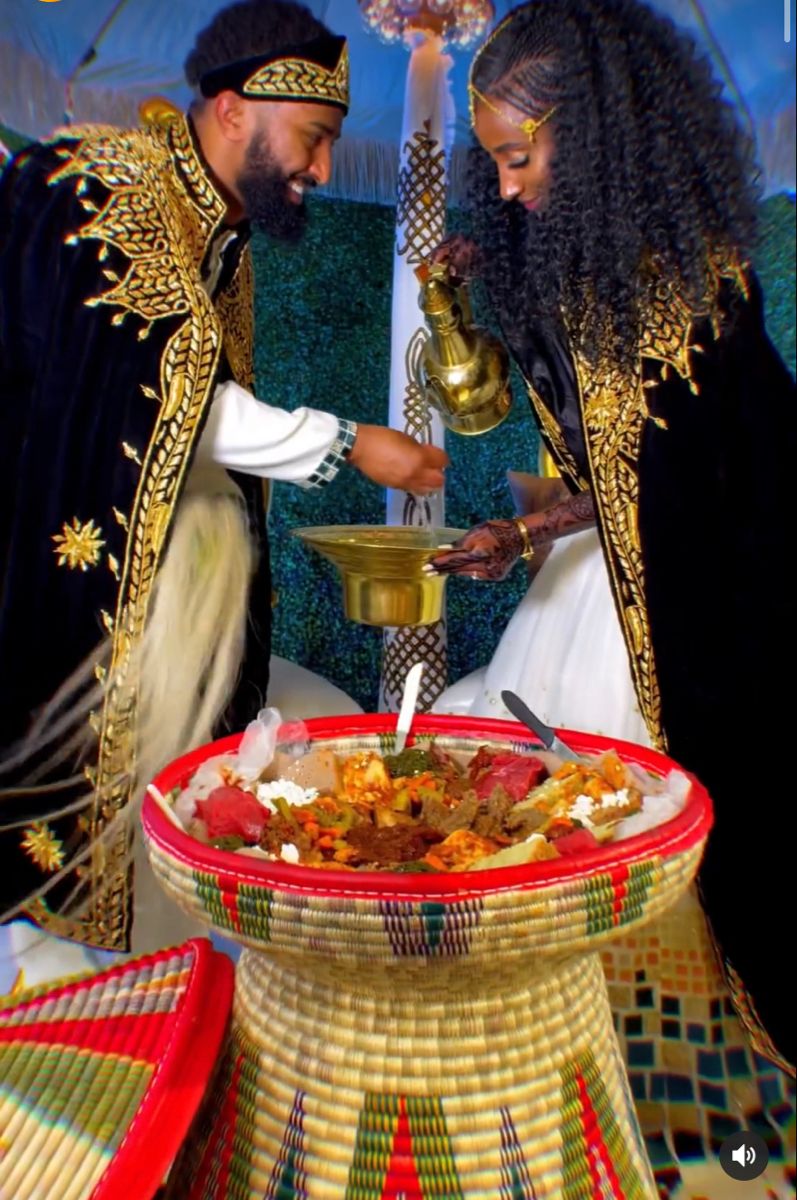
Walk into any Ethiopian restaurant, from a bustling street-side eatery in Addis Ababa to a family-run dining room in London, Washington D.C., or Dubai, and the centrepiece of the meal will arrive on a large, round woven basket called a mesob (መሶብ). Injera spreads across the platter like a pale, honeycomb-textured cloth. Before a single fork is lifted- indeed, no forks are needed- you are looking at the foundation of Ethiopian dining. You are also looking at the culinary legacy of the Amhara highlands. To understand Ethiopian food, a traveller needs to look north to the cool, mountainous plateau of Amhara, specifically to the historic royal cities of Gondar and Shewa. Here, centuries ago, the building blocks of what the world now knows as Ethiopian cuisine were perfected, refined, and spread across the country.
Discover how injera, doro wot, niter kibbeh, and tej originated in the Amhara highlands to become the heart of Ethiopian dining across the world
From Famine Crop to Royal Staple
At its simplest, authentic injera is made from just two ingredients: teff flour and water. Teff is a tiny, hardy cereal grain, no larger than a poppy seed, native to the Ethiopian highlands. Its cultivation stretches back thousands of years, well before the rise of the ancient Aksumite Empire in the first millennium AD.
Yet, for most of its long history, teff was not the preferred daily staple it is today. Across the ancient Aksumite era and the centuries that followed, highland farmers cultivated wheat, barley, and sorghum as their primary grains, with wheat in particular being prized for daily bread. Because it matured quickly, resisted pests, and survived poor rains, teff served mainly as a reliable fallback crop. People grew it as a supplement to wheat and sorghum and relied on it heavily during food shortages and famines when main harvests failed. Furthermore, injera as we know it today did not exist during those early eras. Early highland breads were unfermented, dense, and baked quickly on both sides over open fires, much like a thick pancake or modern kita (ቂጣ).
The true turning point in the region’s culinary history did not arrive until the seventeenth century during the Gondar period. Gondar, nestled in the northwestern Amhara highlands, served as Ethiopia’s imperial capital. Within its stone castles and bustling royal courts, cooking evolved from simple sustenance into a refined craft. During this era in Gondar, teff moved from a backup grain to the table’s premier staple, and cooks transformed it into modern injera by mastering a multi-day fermentation process. They mixed teff flour with water and a natural starter called ersho (እርሾ), leaving the batter to ferment for two to three days until it bubbled with wild yeast and lactic acid.
Instead of flipping the dough on a clay griddle, known as a mitad (ምጣድ), Gondarine cooks poured the thin, fermented batter in a wide spiral, covered it with a dome-like lid called an ‘akambalo’ (አክንባሎ), and let the trapped steam cook it from the bottom up. The result was modern injera, a spongy, tangy, one-sided flatbread covered in thousands of tiny air pockets, known as “eyes.” Early European travellers who visited the royal banquets of Gondar in the 1600s and 1700s wrote with fascination about these vast, sour teff rounds piled high with rich meats and sauces. Injera served a dual purpose. It was both the plate upon which the food was laid and the utensil used to scoop it up, torn with the right hand in a communal ritual of sharing.
Niter Kibbeh
As injera became the prized staple of the Gondarine table, the sauces and stews served atop it required an equally rich base. Enter niter kibbeh (ንጥር ቅቤ), the golden, spiced clarified butter that forms the soul of Amhara cooking. Originating in highland traditions where cattle herding thrived alongside grain farming, nitre kibbeh was born of both necessity and luxury. In an era without refrigeration, simmering raw butter to remove water and milk solids preserved it for months. Yet highland cooks went a step further, infusing the simmering butter with a fragrant blend of local aromatics and spices.
To make authentic nitre kibbeh, slowly melt unsalted butter over a low flame with crushed garlic, fresh ginger, and chopped red onions. Add the warming spices: green cardamom pods (ኮረሪማ), fenugreek seeds, cumin, turmeric, cinnamon, and sacred basil (በሶብላ), an herb with hints of clove and anise. Once the solids settle and the spices release their oils, strain the clear, golden liquid through a fine cloth. The resulting butter is deeply aromatic, nutty, and rich, lending an unmistakable warmth to almost every savoury dish in the Amhara repertoire.
The Royal Table Under King Sahle Selassie
As the political centre of gravity shifted southwards in the eighteenth and early nineteenth centuries toward Shewa, another major region of the Amhara highlands, this rich culinary tradition moved with it. In the royal courts of Shewa, particularly under King Sahle Selassie in the early nineteenth century, Amhara cuisine reached a grand, formal scale.
King Sahle Selassie was renowned for his elaborate court hospitality and lavish royal banquets, known as geber (ግብር), hosted at his palaces in Ankober and Angolalla. European envoys visiting his court in the 1840s documented vast halls where hundreds of nobles, soldiers, and guests sat together dining on piles of fresh injera and an array of rich meat dishes. It was during Sahle Selassie’s reign in Shewa that the repertoire of wot (ወጥ), rich, slow-cooked stews and raw or lightly warmed beef delicacies, became codified as the gold standard of celebratory dining.
The Art of the Wot
In the Amhara kitchen, a wot is not a quick meal; it is a labour of patience. The process begins by dry-cooking a mountain of finely diced red onions in a heavy pot until the moisture evaporates and they caramelise, then adding generous spoonfuls of nitre kibbeh and berbere, a fiery, complex spice paste made from sun-dried red chillies, garlic, ginger, basil, rue, and korarima.
Doro Wot (ዶሮ ወጥ): Widely considered the national dish of Amharas, doro wot (chicken stew) holds the highest place of honour in Amhara culture. Traditionally prepared for major religious festivals like Easter (Fasika) and Christmas (Genna), the dish starts with a chicken meticulously cleaned with lemon juice and divided into twelve symbolic parts. These pieces simmer in a deep red, velvety berbere and nitre kibbeh sauce until the meat falls off the bone. Add hard-boiled eggs, pricked with a fork so they absorb the rich gravy, near the end. Serving a well-made doro wot was historically seen as a mark of hospitality and skill in an Amhara household.
Beg Wot (በግ ወጥ): Lamb and mutton are staples of the highland diet, and beg wot (lamb stew) is a beloved regular at family gatherings. The lamb simmers in the same deeply spiced berbere and nitre kibbeh base, letting the meat’s rich fat meld with the fiery gravy. For those who prefer a milder profile without red chillies, beg alicha wot swaps out the berbere for turmeric, ginger, and green chillies, resulting in a bright yellow, fragrant stew.
Raw and Warmed Beef Delicacies
Alongside slow-cooked stews, the Amhara highlands developed a distinct tradition of eating fresh, raw, or barely warmed beef.This practice often surprises first-time visitors but is deeply rooted in Ethiopian history.
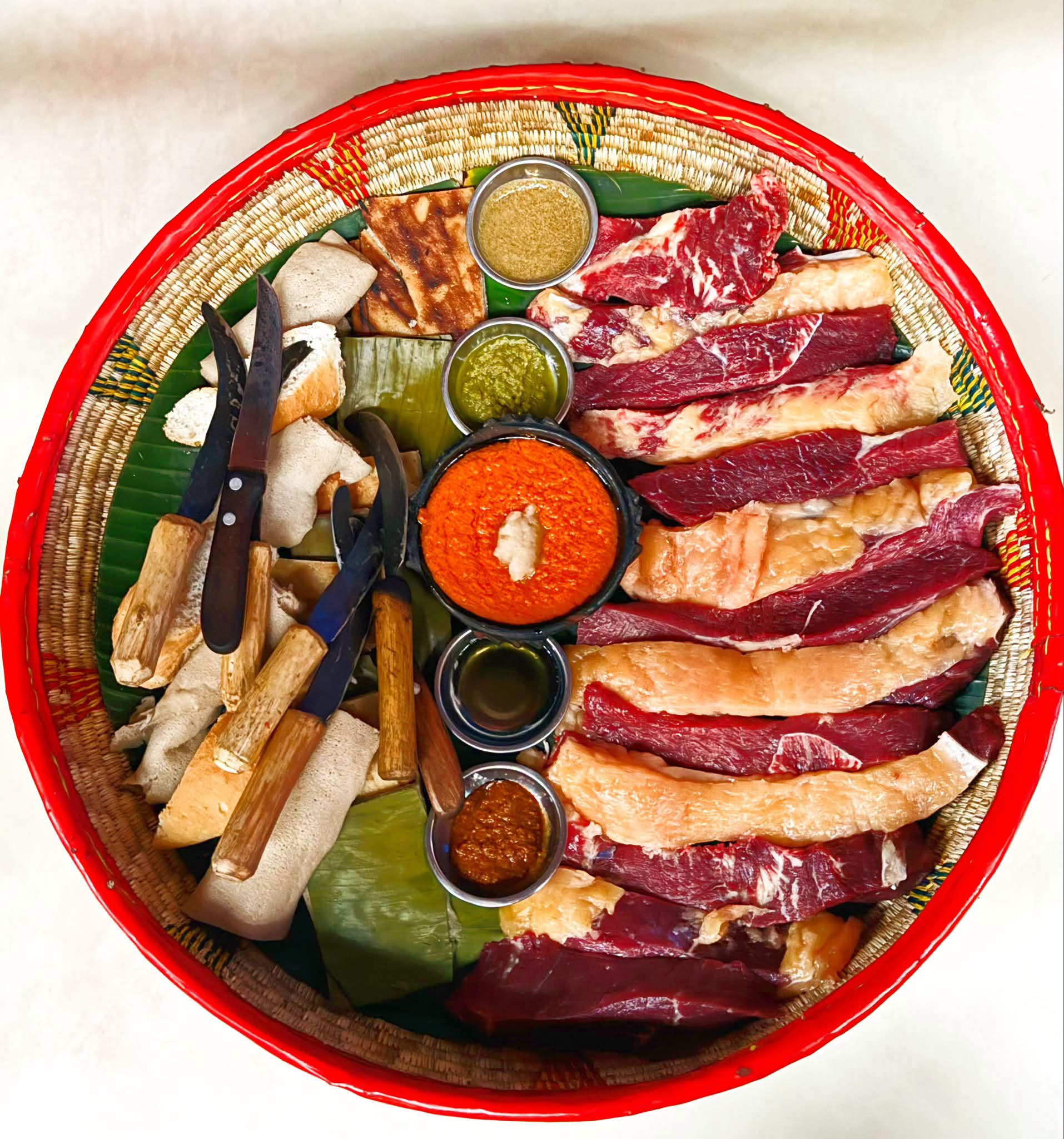
Tire Siga and Kurt (ጥሬ ሥጋ እና ቁርጥ): Tire siga means raw meat, and when prime cuts of beef are served in chunks to be sliced at the table, it is called kurt. Historically, soldiers on long campaigns across the rugged highlands could not always light cooking fires, as smoke would betray their position to enemies. Eating fresh raw beef directly from a freshly slaughtered animal became a practical necessity that eventually evolved into a prized delicacy. Today, kurt is a celebratory dish. Diners use a sharp knife to slice bite-sized pieces from a hanging strip of prime tenderloin, dipping each piece into mitmita (an intense, fiery blend of bird’s-eye chillies, cardamom, cloves, and salt) or awaze (a pungent paste made from berbere and honey wine), before wrapping it in a piece of injera.
Gored Gored (ጎረድ ጎረድ): Sharing similar roots is gored gored. Unlike kurt, where the meat is sliced at the table, gored gored consists of prime, lean beef already cut into neat cubes. The raw beef cubes are tossed directly in warm, melted niter kibbeh and coated with mitmita or awaze. The gentle warmth of the spiced butter coats the cool, tender meat without cooking it, creating a rich, spicy, velvety dish eaten immediately with fresh injera.
Minchet Tibs: Another prized beef dish from the Amhara kitchen is minchet tibs. Made from finely minced raw prime beef, it is gently warmed in melted niter kibbeh and seasoned with fiery mitmita. Traditionally served with fresh injera and often accompanied by mild cottage cheese (ayib), it highlights the central role of nitre kibbeh in highland meat dishes.
Fasting Food
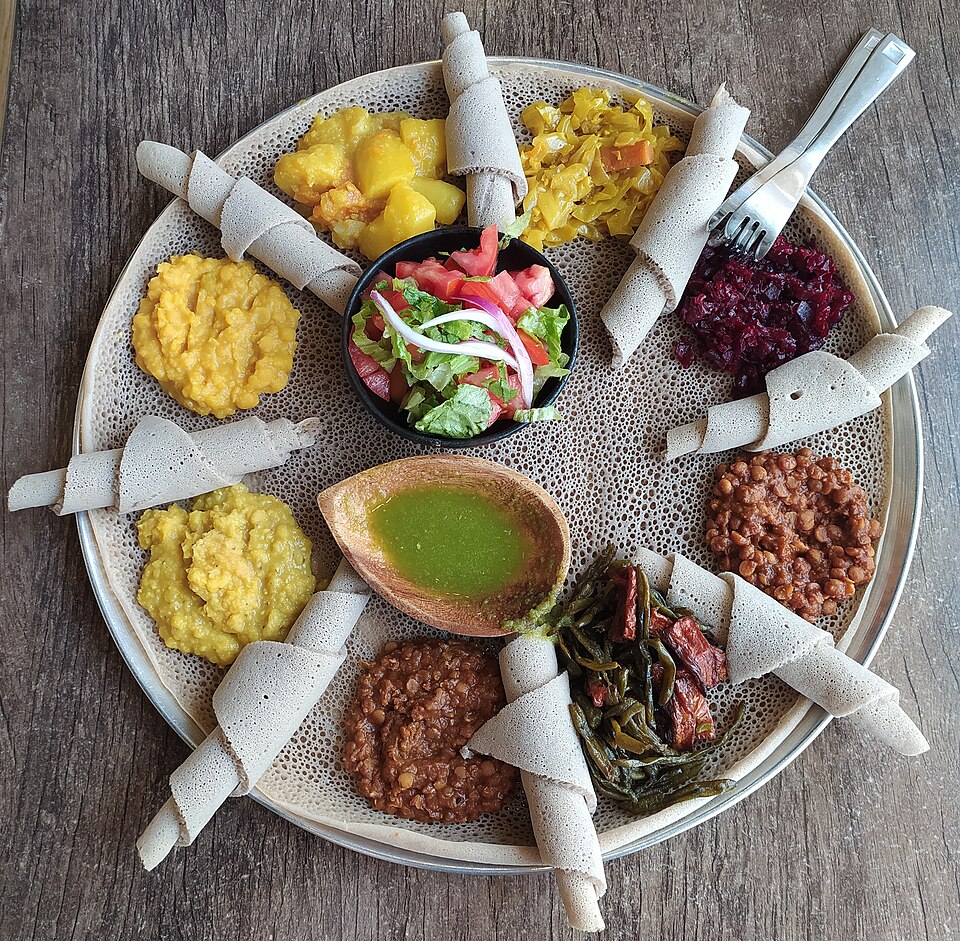
While meat and spiced butter define feast days, the Ethiopian Orthodox Christian calendar requires devout followers to fast for more than half the year, including every Wednesday and Friday, as well as the fifty-five days of Lent (Hudade). During these fasting seasons, devout followers strictly avoid all animal products, including meat, eggs, dairy, and nitre kibbeh. From this religious devotion, one of the world’s richest plant-based culinary traditions emerged, known collectively as yetsom beyaynetu (a colourful assortment of fasting dishes arranged over injera).
Shiro Wot (ሽሮ ወጥ): Perhaps Ethiopia’s most beloved everyday dish, shiro wot is a smooth, velvety stew made from roasted, ground chickpeas or broad beans seasoned with garlic, ginger, and berbere. Simmered with oil and water until it bubbles into a thick, savoury porridge, shiro is comforting, deeply flavourful, and found on nearly every fasting platter.
Misir Wot (ምስር ወጥ): Red split lentils form the heart of misir wot, a fiery, rich stew cooked down with caramelised onions, garlic, berbere, and vegetable oil. Without a drop of butter, the lentils break down into a hearty, spiced sauce that rivals any meat wot in depth of flavour.
Kik Alicha (ክክ አልጫ): Kik alicha provides a gentle contrast to spicy berbere dishes: a mild yellow split-pea stew. The peas are simmered with onions, garlic, fresh ginger, and turmeric, yielding a soothing, golden dish that balances the heat of the surrounding sauces.
Dinich Wot and Alicha (ድንች ወጥ): Potatoes (dinich) are staples of the fasting table, prepared either as a spicy red dinich wot simmered in berbere sauce or as a mild dinich alicha cooked with turmeric, carrots, cabbage, and green chillies.
Gomen and Azifa (ጎመን እና አዚፋ): Rounding out the platter are leafy greens (gomen), typically collard greens sautéed slowly with garlic, ginger, and spiced oil, alongside azifa, a refreshing cold salad made from whole brown lentils dressed with mustard, lemon juice, finely chopped red onions, and green chillies.
An Amhara Contribution to the Nation
As trade routes expanded, administrators travelled, and the modern Ethiopian state took shape in the late nineteenth and twentieth centuries, Amhara culinary traditions spread across the Ethiopian Empire. Addis Ababa, founded in the Shewan highlands, became a melting pot where people from every corner of the country converged.
Injera, doro wot, nitre kibbeh, kurt, and kitfo ceased to be merely regional specialities of the Amhara people; they became the nation’s culinary language. While other groups across Ethiopia maintained their own distinct food traditions, such as the Gurage people’s kocho (a fermented flatbread made from the ensete, or false banana plant), injera and the rich dishes of the Amhara highlands became the universal anchor of Ethiopian hospitality. Whether in the northern mountains, the eastern plains, or the southern valleys, offering a guest injera topped with spicy wot or seasoned meat became the ultimate gesture of welcome.
From the Highlands to the World
In the latter half of the twentieth century, political changes and global migration carried the flavours of the Amhara highlands far beyond East Africa’s borders. Today, injera and its accompanying dishes are celebrated worldwide.
The United States: Nowhere is the diaspora’s culinary footprint more visible than in the United States, particularly in Washington D.C., Silver Spring, Los Angeles, and Minneapolis. In D.C., often called “Little Ethiopia,” dozens of restaurants serve traditional platters of doro wot and gored gored. Moreover, teff has caught the attention of American health enthusiasts and bakers because it is naturally gluten-free and packed with iron, protein, and fibre, leading to teff farms springing up in states like Idaho to supply local injera bakeries.
Europe: Across major European cities, including London, Paris, Stockholm, and Frankfurt, Ethiopian restaurants have become mainstays of the urban dining scene. In London, neighbourhoods like Brixton, Camden, and Shepherd’s Bush boast long-standing family restaurants where diners gather around the mesob to share platters of lamb wot and spicy beef.
The Middle East: Just across the Red Sea, cities such as Dubai, Riyadh, Beirut, and Doha have large Ethiopian expatriate communities. In these bustling Gulf hubs, small neighbourhood kitchens and upscale restaurants alike prepare daily batches of fresh injera and simmer pots of nitre kibbeh, keeping the tastes of Gondar and Shewa alive for workers, travellers, and curious locals.
Traditional Drinks of the Highland Table
No traditional meal in the Amhara highlands is complete without the drinks brewed to accompany injera and wot. Originating in the same home kitchens and royal courts, these beverages are crafted from local grains, wild honey, and gesho (ጌሾ), a native buckthorn shrub whose leaves and stems act much like hops in brewing.
Tej (ጠጅ): Historically the drink of royalty and nobility, tej is a golden, sweet-and-tangy honey wine. Brewed from wild highland honey, water, and dried gesho leaves, it is fermented in large clay pots until it develops a smooth, floral richness that cools the heat of fiery berbere stews. Tej is served in distinctive, round-bottomed glass flasks called berele (ብርሌ), which diners hold by the narrow neck.
Tela (ጠላ): Known as the everyday drink of the highland household, tela is a traditional, mildly alcoholic home-brewed beer. Women brew it in large batches for weddings, religious holidays, and family gatherings using roasted and ground barley, sorghum, or teff, fermented with gesho and toasted flatbread (kita) for depth and colour. Dark, smoky, and lightly sparkling, tela is served in metal cups or horns known as wancha (ዋንጫ) alongside platters of injera.
Areke (አረቄ): For those seeking something stronger after a rich meal of kurt or doro wot, areke is the traditional distilled spirit of the highlands. Made by distilling a fermented mash of grains (such as barley, wheat, or sorghum) and gesho, this clear, potent liquor is sipped in tiny glasses at the end of a feast to aid digestion and warm the chest against the cool mountain air.
Experiencing the Tradition Today
For a traveller visiting Ethiopia, tracing the path of injera is one of the best ways to understand the country’s history. You can start in the historic city of Gondar, watching bakers pour fermented teff batter onto glowing clay griddles just as their ancestors did in the shadow of Fasilides’ castles. From there, travelling south through the historic Shewan highlands of Ankober and on to Addis Ababa reveals how those royal recipes became the nation’s heartbeat. Whether you are tearing off a piece of tangy injera to scoop up a rich, butter-laden doro wot in an Addis Ababa tej bet (honey wine house), or sharing a platter with friends in a London café, you are taking part in a culinary story that began high in the Amhara mountains, a tradition built on patience, spice, and the simple joy of sharing food from the same plate.
Also Read:
- Addis Ababa Street Style: How Ethiopia’s Capital Is Wearing Its Cultural Confidence
- Kaba, The Royal Cloak of Ethiopia
- How Cotton Farms Cultivate Gondar Amhara Fashion
- The Gojjam Amhara Fetel Dress
Frequently Asked Questions
What is injera made from?
Authentic injera is made from just two ingredients: teff flour and water. Teff is a tiny, hardy cereal grain native to the Ethiopian highlands. Cooks mix the flour with water and a natural starter called ersho, then leave the batter to ferment for two to three days until it bubbles with wild yeast and lactic acid.
When did injera become Ethiopia’s premier staple?
The turning point came in the seventeenth century, during the Gondar period. Before then, highland farmers grew wheat, barley and sorghum as their primary grains, with teff as a fallback crop. In imperial Gondar, teff moved from a backup grain to the premier staple, and cooks mastered the multi-day fermentation that produces modern injera.
What is niter kibbeh?
Niter kibbeh is a golden, spiced clarified butter. Unsalted butter is melted slowly with garlic, ginger and red onions, then warming spices such as cardamom, fenugreek, cumin, turmeric, cinnamon and sacred basil are added. The clear liquid is strained through a fine cloth, and the result lends warmth to almost every savoury dish in the Amhara repertoire.
Why are there so many plant-based dishes in Ethiopian cuisine?
The Ethiopian Orthodox Christian calendar requires devout followers to fast for more than half the year, including every Wednesday and Friday and the fifty-five days of Lent. During fasts, all animal products, including meat, eggs, dairy and niter kibbeh, are avoided. This produced yetsom beyaynetu, an assortment of fasting dishes arranged over injera.