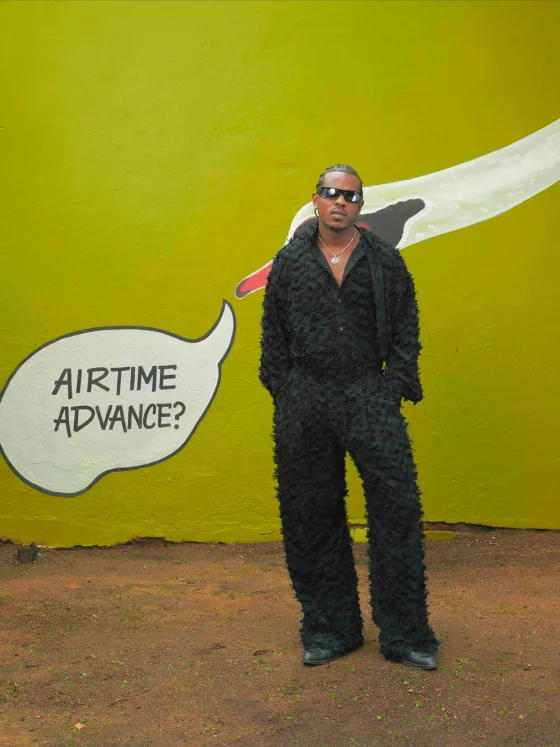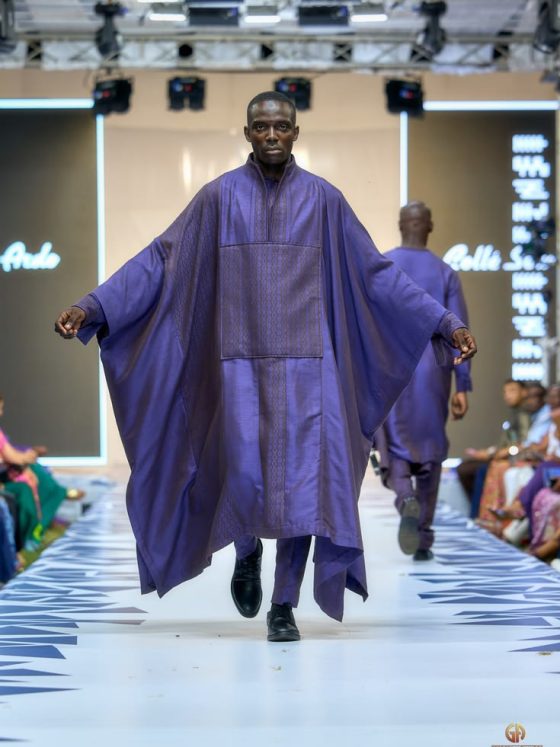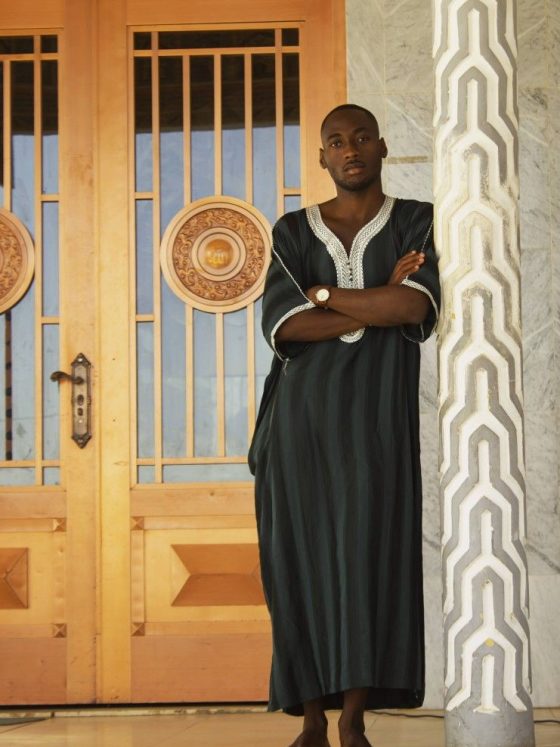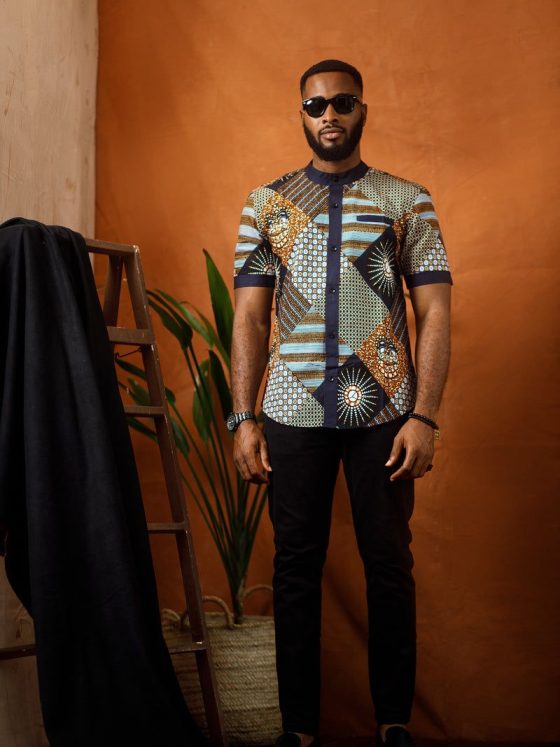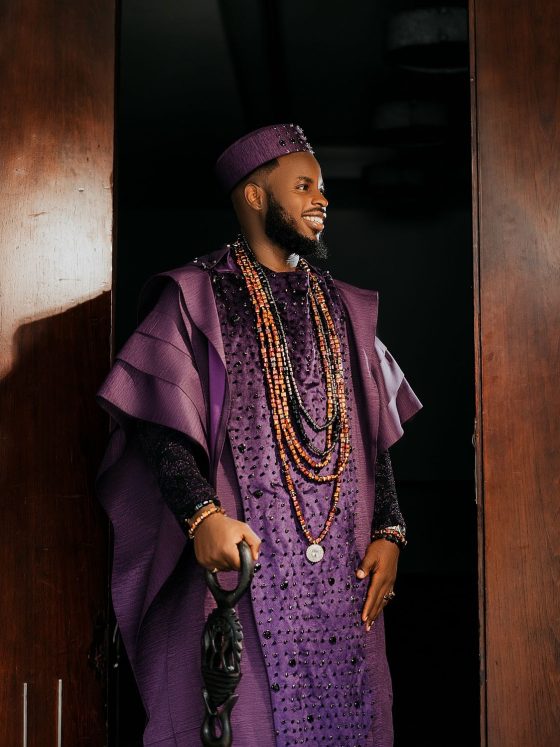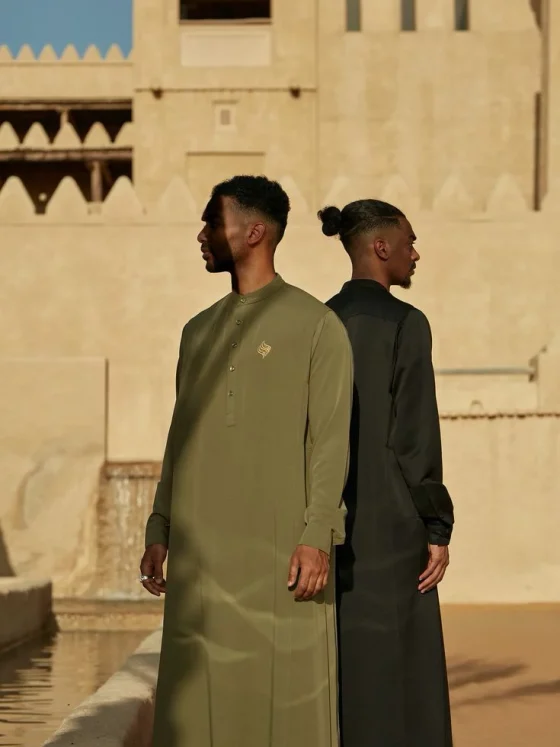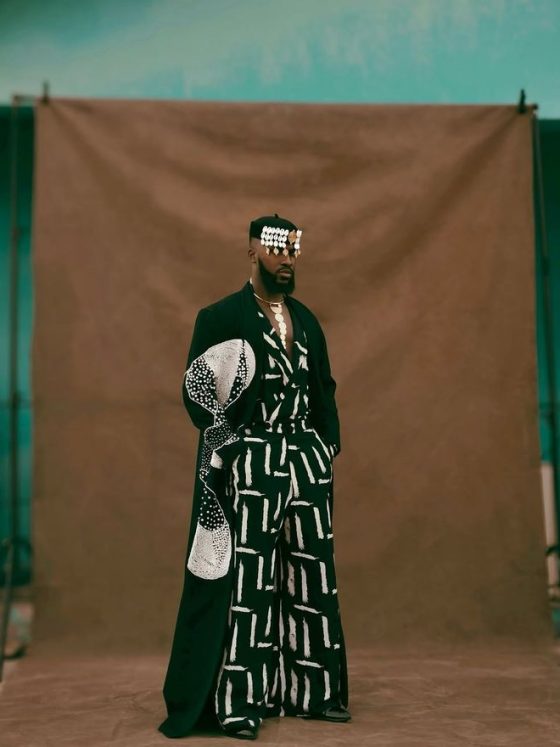
MMUSOMAXWELL’s account of Obhuti Abatsha makes an important distinction between a cultural reference and its literal reproduction. Asked about the collection in a February 2026 interview, the designers describe brotherhood, identity and transformation as its concerns. They explain that memories of initiation rites and family narratives entered the work “not literally, but through structure, layering, and emotional depth.” That is the collection’s clearest published proposition: meaning should influence how clothing is organised, rather than appear only as an image applied to its surface. The distinction is more informative than the familiar claim that a collection combines heritage and modernity. It identifies the level at which MMUSOMAXWELL wants its references to operate. Structure and layering are decisions about garments; brotherhood and transformation are the ideas those decisions are intended to explore. Whether the clothes communicate those ideas remains a separate critical question.
Obhuti Abatsha was already being discussed as the label’s debut menswear collection in June 2025. The later interview provides a retrospective explanation, not an announcement of a new November 2026 launch. Read together, the sources document the move into menswear and the designers’ account of what that move meant.
MMUSOMAXWELL’s debut menswear collection connects brotherhood and cultural memory with structure and layering. What does its published account establish?
A New Category, Not an Entirely New Language
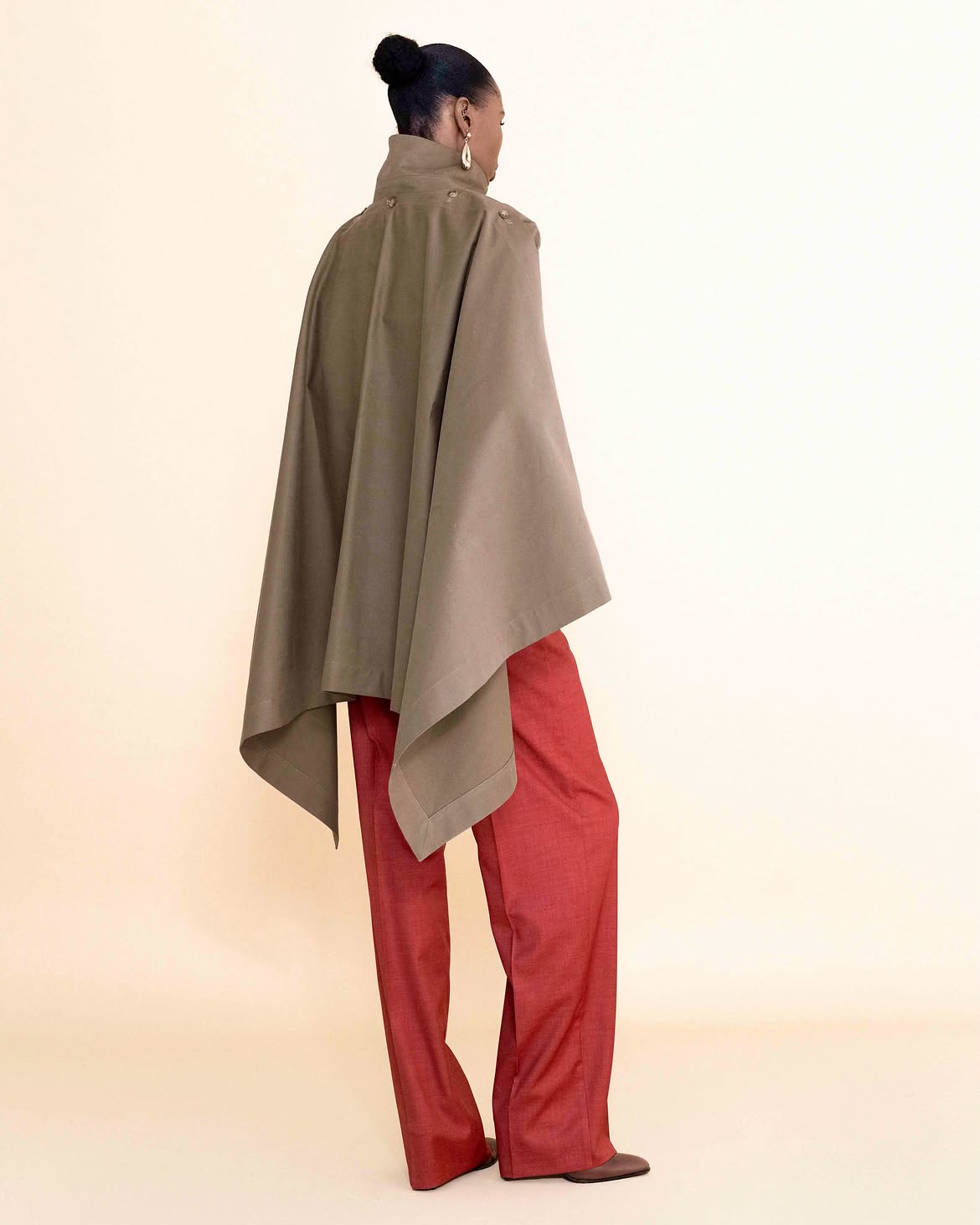
The most useful context for Obhuti Abatsha is the way MMUSOMAXWELL describes its evolving practice. In the February interview, the designers say their early work concentrated on establishing a voice. They describe its later work as more confident and restrained, with cleaner silhouettes, more intentional construction, and more layered storytelling. These are their assessments of the work, but they identify continuity rather than a complete reinvention. Tailoring remains central to that account. The designers also emphasise fluidity in cutting and layering, alongside attention to pocket placement, stitching and fabric weight. Their description resists a simple opposition between disciplined construction and expressive clothing. They present both as parts of the same design language.
The move into menswear can therefore be understood as a change in where that language is being applied. It need not be framed as a sudden discovery of tailoring or as proof that the label has overturned an entire category. The more precise enquiry is how an established set of priorities (proportion, construction and considered detail) responds to the collection’s stated concerns.
Cultural Memory Without Literal Reproduction
The designers’ reference to initiation rites and family narratives requires careful attribution. It explains what informed their thinking; it does not identify every tradition involved or establish a universal account of South African masculinity. Their statement is particular to this collection and their interpretation of it. The decision not to reproduce those references literally matters. It leaves room for clothing to develop its own formal relationships rather than becoming an illustrated explanation of a source. In the designers’ account, structure and layering carry the interpretation. That places responsibility on the garments themselves: the reference should inform design decisions, not merely provide language for a collection introduction.
It also limits what a writer can responsibly assign to an individual detail. An opening cannot automatically be called a symbol of transformation, and a layer cannot be labelled an expression of brotherhood without a documented connection. The collection’s explanation supplies a framework for examination, not a ready-made meaning for every seam.
A Shirt Gives the Discussion a Concrete Starting Point
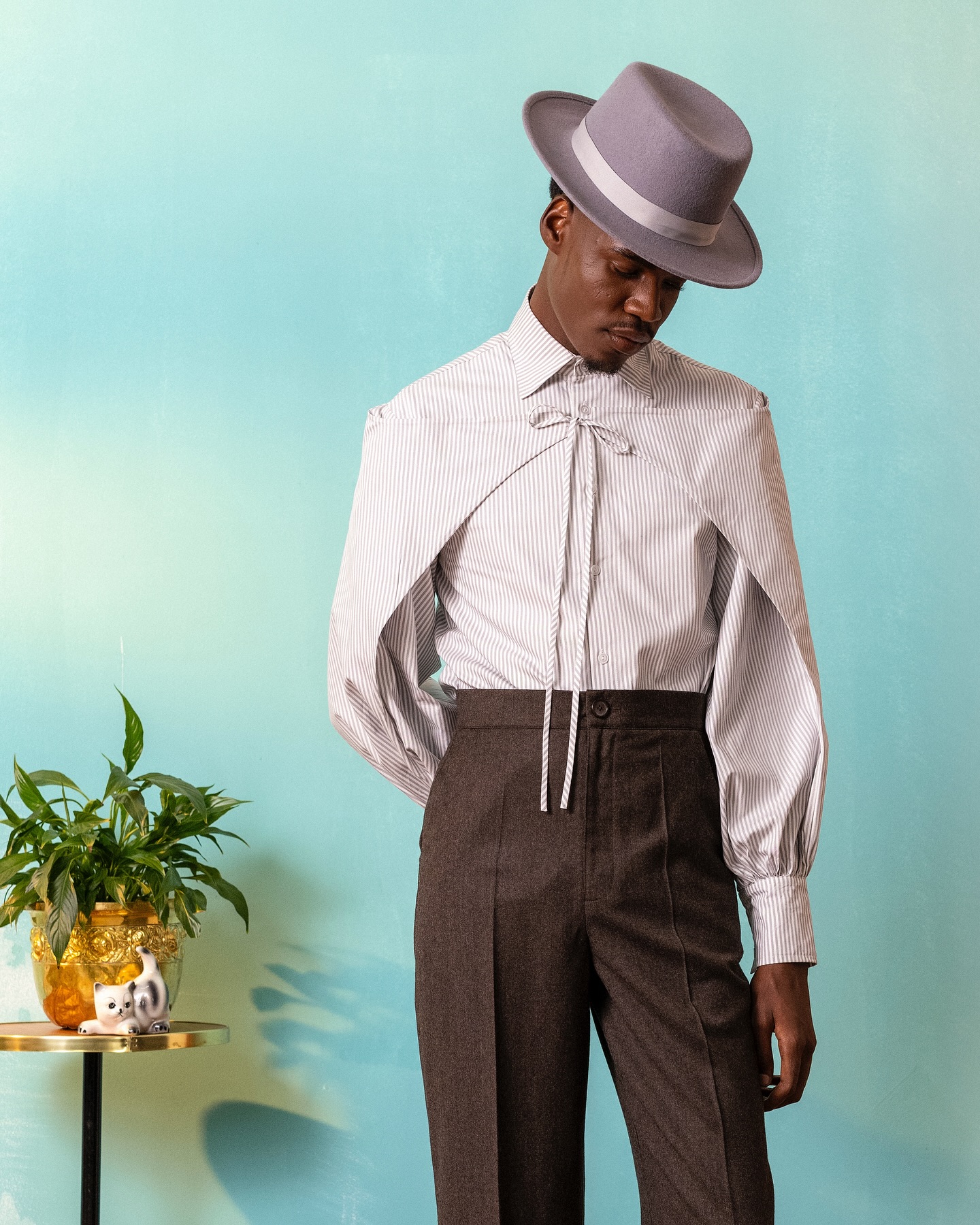
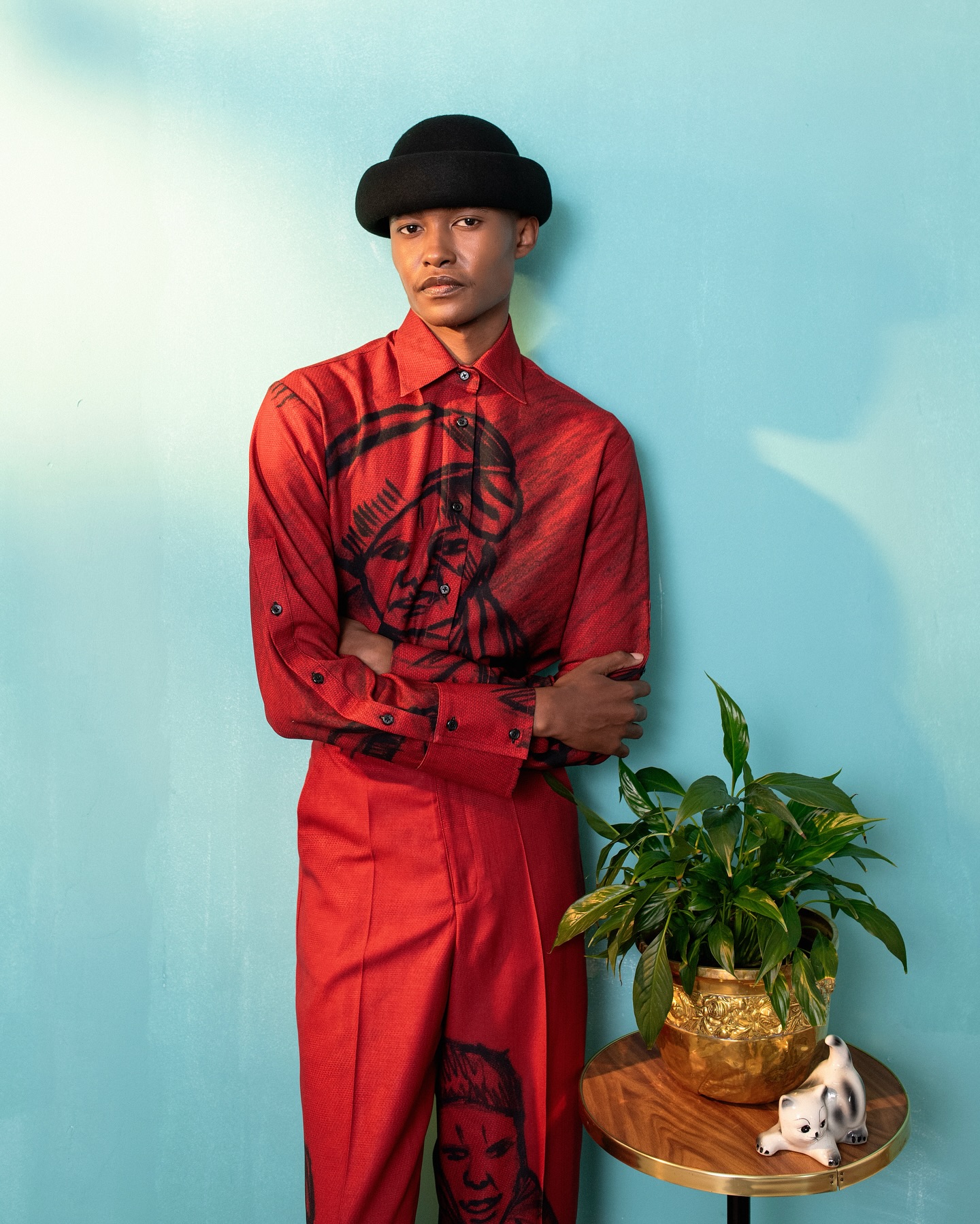
The official listing for the Obhuti Abatsha Shirt identifies an elongated placket detail and an exposed button stand. It records the colour as red and black and states that the garment is made in South Africa. These are item-specific details, more concrete than a general account of emotional intention. The elongated placket is particularly relevant because it places a design decision within a familiar shirt component. Rather than requiring a wholly unfamiliar garment category, the description identifies an adjustment to the front’s organisation. The button stand is also explicitly described as exposed. The listing therefore highlights a functional area of the garment as part of its design.
That is enough to establish a subject for closer examination, but not enough to reconstruct the complete silhouette. The product description does not explain every aspect of cut or identify the fibre composition. Its “made in South Africa” statement establishes a declared manufacturing location, not the origin of every material. The strongest reading remains tied to what the garment record actually provides.
The Trousers Establish Another Register
The Obhuti Abatsha Tailored Pants are described separately as straight-cut, with a zip fly. Their listing also records red and black as the colour and states that they are made in South Africa. This provides a second identifiable product within the named range. The contrast between the descriptions is useful. The shirt listing foregrounds an altered placket and exposed button stand; the trousers are introduced through a comparatively straightforward account of cut and closure. That does not prove how the two pieces balance when worn together, but it prevents the collection from being discussed as though every component must contain an equally conspicuous intervention.
Nor should a straight cut be confused with a universal fit proposition. It does not establish the amount of ease through the hip or thigh, the precise hem width or how the trousers behave in movement. Those relationships need garment measurements and adequate views. The published wording identifies a category of shape, not its complete execution.
Tailoring Beyond One Dominant Cut
The designers’ wider account of suiting helps explain why menswear offers room for different treatments. Asked how the category has changed, they describe a movement away from one dominant silhouette towards a field in which oversized, fitted, structured and fluid clothes can all feel contemporary. They say that freedom has enabled silhouettes more authentic to their vision. This should remain an attributed perspective rather than an industry-wide finding presented without qualification. Its relevance is to MMUSOMAXWELL’s own practice: the designers do not describe tailoring as a fixed template from which expressive choices are departures. They describe a vocabulary with several possible directions.
Their answer to another question is more concise. The three elements of a successful suit, they say, are proportion, fabric and fit. That offers a useful counterweight to the collection’s conceptual language. Whatever a garment intends to communicate, its relationship with the body and material still matters. A compelling explanation cannot settle those questions in advance.
Material Preference Is Not a Garment Specification
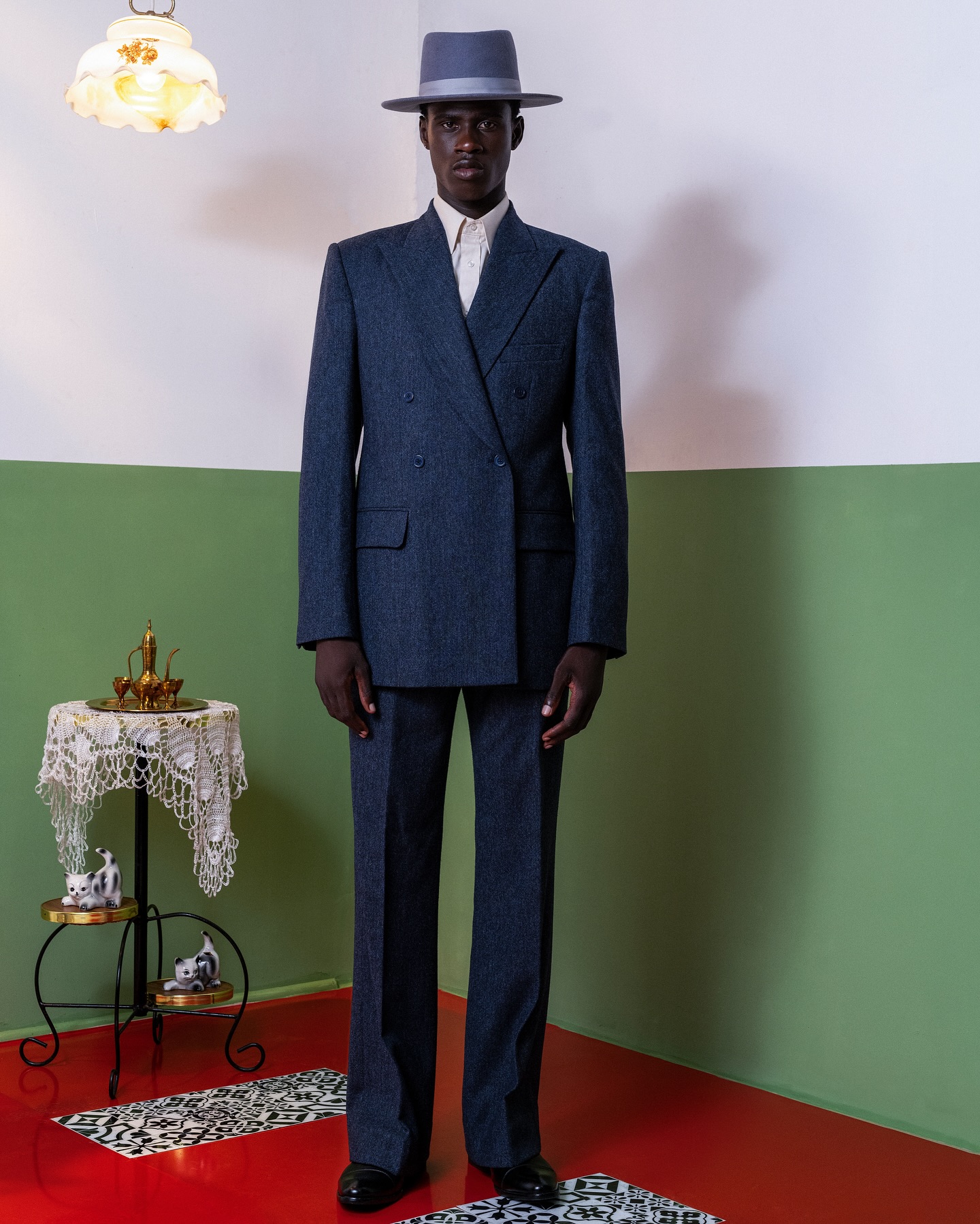
South African Merino wool remains a favourite material in the designers’ published account. They describe its versatility and connection to origin and care, while also expressing interest in cottons and natural blends that hold shape while allowing movement. These comments explain preferences within the practice. They should not be transferred automatically to the named shirt or trousers. The product information discussed here does not establish that either is made from Merino wool. Similarly, a general interest in material that permits movement does not test comfort or performance in a particular garment.
The distinction gives material a more serious role. Instead of using “natural” or “wool” as shorthand for quality, an assessment should ask what the selected fabric contributes to the specific cut. This aligns with the designers’ emphasis on proportion, fabric, and fit, while keeping their stated priorities separate from independently established results.
What the Published Account Achieves
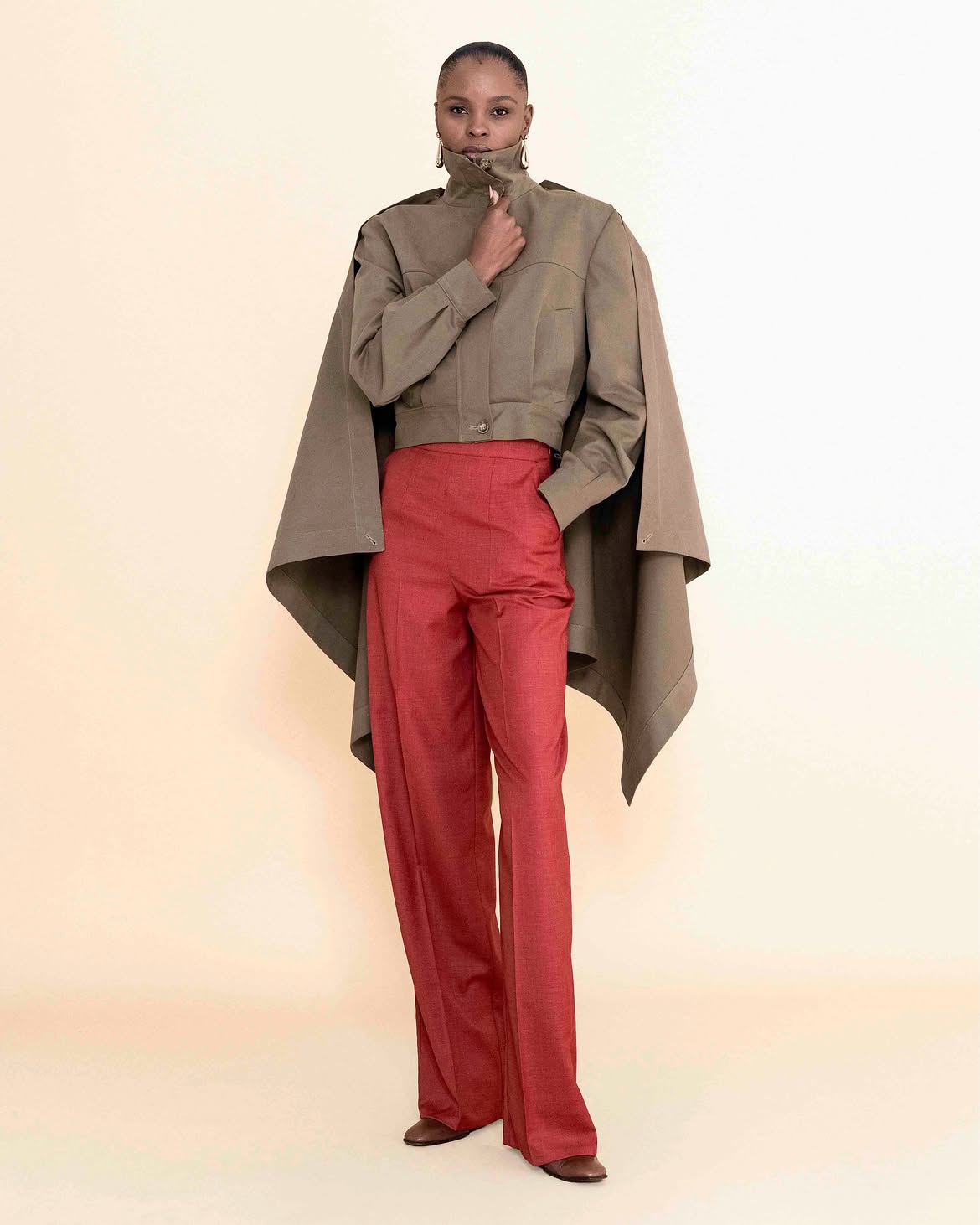
The strongest feature of Obhuti Abatsha’s explanation is its refusal to make cultural reference entirely dependent on literal imagery. The designers identify an ambition to work through the organisation of clothing. The named product descriptions then supply limited but concrete points of contact: a shirt’s extended placket and exposed button stand, and trousers defined by a straight cut and fly closure. That is a credible basis for introducing the collection. It is not yet a complete assessment of its visual coherence, nor evidence that viewers or wearers necessarily experience brotherhood or transformation through the clothes. Those are different levels of claim.
The collection’s documented interest lies in the relationship it proposes between cultural memory and tailoring. Its explanation becomes most persuasive when it moves towards an identifiable design decision. That is where a future garment-led assessment should concentrate, not on repeating that masculinity is fluid, but on explaining what the clothes make possible within that proposition.
The Omiren Argument
The principle is translation. A cultural reference becomes a design proposition when it influences decisions within the garment, not simply when it appears in the explanation beside it.
MMUSOMAXWELL’s account of Obhuti Abatsha identifies structure and layering as the intended means of that translation. Its named products provide specific features to investigate, but intention must remain distinct from achievement.
The serious critical task is to connect the two: explain which decisions are present, what relationships they create and how convincingly they carry the collection beyond its statement.
Also Read:
- Meet the African Menswear Designers You Should Know Before the Rest of the World Does
- Week of Fashion South Africa AW26: How Cape Town’s Menswear Platform Is Expanding
- Top 5 Traditional Styles for Ndebele Women in 2026
- The Modern Gentleman’s Guide to Style: Redefining Masculinity in Fashion
Frequently Asked Questions
What is Obhuti Abatsha?
It is MMUSOMAXWELL’s debut menswear collection, discussed in reporting from June 2025 and explained retrospectively by the designers in February 2026. The later interview is a retrospective account, not an announcement of a new November 2026 launch, and it describes the collection as centred on brotherhood, identity and transformation.
What inspired the collection?
The designers identify brotherhood, identity and transformation. They say cultural memories, including initiation rites and family narratives, informed structure and layering rather than literal reproduction. This is their own account of the collection, not a complete explanation of every tradition involved or of South African masculinity more broadly.
What details are documented in the named products?
The shirt listing specifies an elongated placket and exposed button stand. The tailored trousers are described as straight-cut with a zip fly. Both listings record red and black as the colour and state that the garments are made in South Africa, but neither supplies fibre composition or complete measurements.
Does that establish where the fabrics were produced?
No. A garment’s declared manufacturing location does not, by itself, identify the origin of its cloth or fibre. The cited product details do not provide that full chain, and the designers’ stated fondness for South African Merino wool should not automatically transfer to the named shirt or trousers.