The most useful question before buying a jacket online is not “Does this look good?” It is “Do I have enough information to make a sensible first assessment?” A persuasive photograph cannot answer a question about sleeve length.
An attractive discount cannot resolve an uncertain size. An alteration service helps only when the proposed work is suitable, and its consequences are clear.
This guide uses three actual listings to turn those uncertainties into a method: Charles Tyrwhitt’s Wool Texture Twill Check Jacket, Suitsupply’s Perennial Tailored Fit Havana Suit Jacket and Jaeger’s Tailored Fit Wool Rich Suit Jacket sold through M&S. They are examples of different information systems, not finalists in a best-jacket competition.
Compare three UK jacket listings to check garment measurements, length, alteration options and return conditions before ordering tailoring online.
The Five Checks Before Checkout
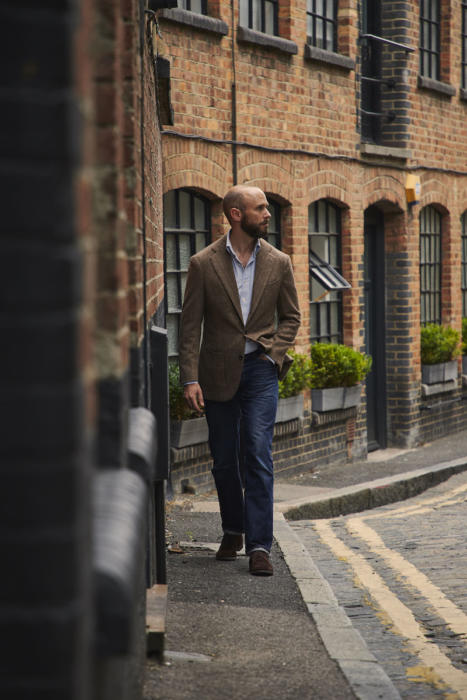
Start with five questions: Which exact product am I ordering? Does the chart describe my body or the finished garment? What are the body and sleeve lengths? What alteration, if any, am I anticipating? What return conditions apply before and after that work? Together, these questions are more useful than treating a familiar size label as sufficient evidence.
Record the answers beside the product code, selected fit and length. If an answer is missing, turn it into a specific enquiry rather than an assumption. Suitsupply, for example, directs customers to the size selector for product-specific dimensions and explicitly suggests comparing those measurements with an existing wardrobe item.
Charles Tyrwhitt’s general guide separately labels body and garment measurements. Both are useful routes, but you must apply them to the correct product.
What the Three Listings Actually Tell You
The comparison below records what was established from the retrieved pages. “Not confirmed” means the research did not secure that information; it does not mean the retailer cannot supply it. In particular, a general sizing guide should not be substituted silently for a product-specific specification.
| Check | Charles Tyrwhitt | Suitsupply | Jaeger through M&S |
|---|---|---|---|
| Product | Wool Texture Twill Check Jacket, navy; SEK0002NAV. | Perennial Tailored Fit Havana Suit Jacket, navy; C9559. | Tailored Fit Wool Rich Suit Jacket; T152845J. |
| Listed jacket price | £129, reduced from £249. | £239. | £260. |
| Length information | Short, regular and long selectors; stock varies. | Available length choices not established in the retrieved text. | Length choices not established in the retrieved text. |
| Finished dimensions | General guide available; its application to this jacket needs confirmation. | The retailer directs buyers to product-specific charts in the size selector; numerical dimensions were not captured here. | Finished chest, back and sleeve dimensions were not captured here. |
| Alteration route | Exact jacket operation, price and suitability not confirmed. | Published in-store service menu; suitability for the selected jacket still needs assessment. | No fitting-alteration route established through the product page; the M&S SOJO hub specifies repairs only. |
| Principal return caution | Altered and personalised products are excluded from the stated return offer. | Ordinary returns require the item to be unworn and unaltered, with tags attached. | Original, unworn and unused condition required; check the applicable full-price or sale deadline. |
Each price is for the jacket listing, not a complete outfit. The Jaeger page separately identifies matching trousers and a waistcoat.
If you need a suit rather than a standalone jacket, check the availability and price of its matching pieces before committing. A jacket can be available while the combination you intended to buy is not.
Know Whether You Are Measuring a Person or a Garment

Body measurements and finished-garment measurements answer different questions. Charles Tyrwhitt’s general suit-jacket guide illustrates the distinction: its classic-fit size 40 row lists “your chest” up to 40 inches and a garment chest of 43.5 inches.
This is an explanatory example from that guide, not a verified measurement of the checked jacket in this comparison. The larger number describes the clothing, not a different wearer.
The guide also gives different garment dimensions across classic, slim and extra-slim fits. A nominal size therefore does not determine one universal circumference, even within the same retailer’s guidance.
Ask whether the chart applies to your exact product and selected fit. If the retailer provides only body measurements, request the finished chest, waist, back length and sleeve length needed for your comparison, together with the measuring method.
Compare With a Jacket You Already Understand
An existing jacket can make unfamiliar numbers more useful. Choose one whose look and fit you know, then follow the retailer’s measuring instructions when comparing.
Suitsupply specifically recommends this approach through its product-size information. This reference is valuable because it connects a measurement to an experience rather than guessing what a number might look like.
Matching methods are essential. Charles Tyrwhitt defines sleeve length as shoulder to cuff and labels its body-length column “centre back length.” You can’t compare a sleeve measurement that starts elsewhere without clarification.
Keep the method alongside each figure, and do not assume that two jackets with similar headline measurements will feel identical. Use the reference to identify likely differences and questions, not to manufacture a fit guarantee.
Make Length a Separate Decision
Don’t treat short, regular, and long as secondary details after selecting the chest size. Charles Tyrwhitt’s listing offers those categories, but many combinations were marked out of stock when checked.
That can tempt you to choose the remaining option and assume alterations will resolve the difference. Before doing so, confirm what changes between those lengths and whether the alternative matches your reference jacket.
Model information is supporting context, not a substitute for dimensions. Charles Tyrwhitt identifies its model as 188 cm tall and wearing 40L. The Jaeger page gives the same model height but does not state a wearing size in the retrieved text.
Neither allows a buyer of similar height to infer the correct jacket size automatically. Ask for both back and sleeve measurements; one should not stand in for the other.
Read Fit Descriptions Without Converting Them Into Sizes
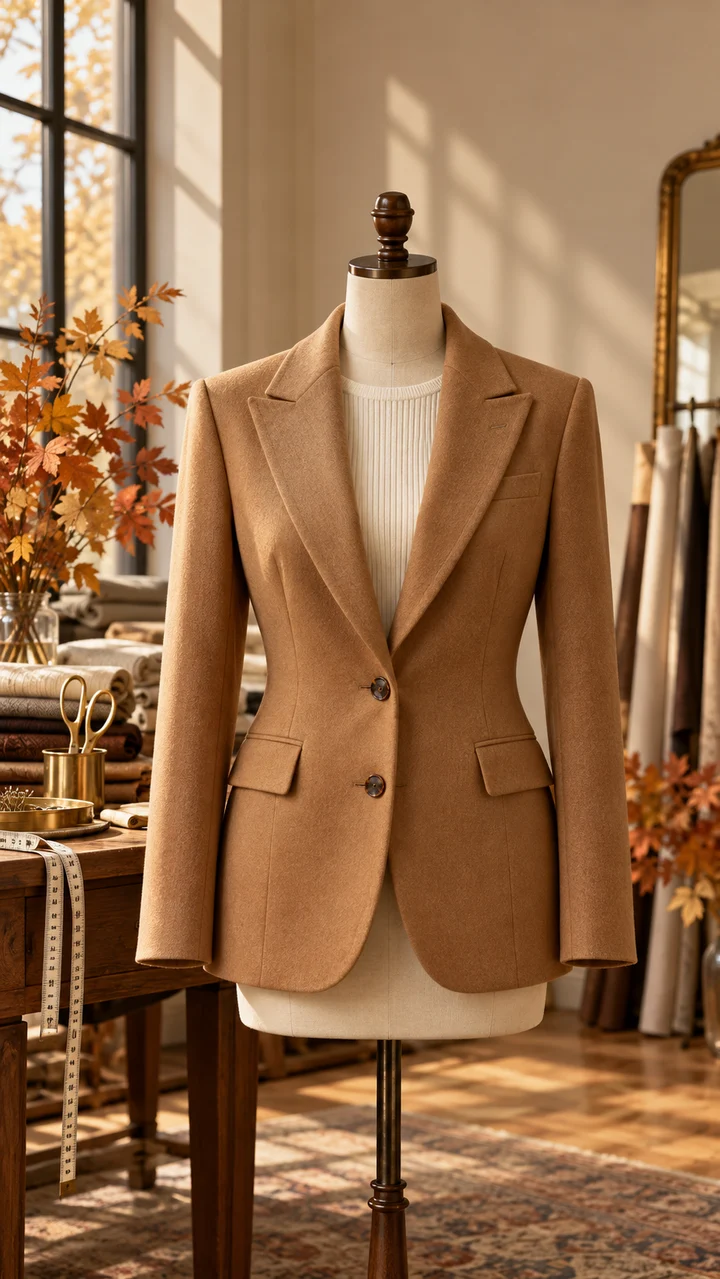
Suitsupply describes its selected Havana as slim through the chest and waist, with a natural shoulder. Jaeger’s listing describes a tailored fit and soft shoulder construction.
Charles Tyrwhitt lists a lighter shoulder pad and describes classic and slim options in the product information. These details help explain the intended appearance, but they do not establish equivalence between brands.
Use those descriptions to guide questions. If a listing promises a fitted waist, ask for the garment waist measurement. If shoulder treatment matters to you, seek clearer photos or advice rather than translating “soft” or “natural” into an assumed fit.
The practical distinction is between information about a design’s intention and information that helps you compare its dimensions. You need both, but they perform different jobs.
Turn Alterations Into a Defined Proposal
Suitsupply’s UK alteration menu lists jacket side-seam adjustments at £22, sleeve shortening or lengthening at £24, and squaring the back neck at £16. Each has a 2- to 3-day service time.
Those figures start a conversation; they don’t mean every operation is appropriate for this jacket or that the advertised time will meet your deadline. Confirm the proposed work with the store before relying on it.
For the other examples, avoid treating general service language as a confirmed solution. Charles Tyrwhitt’s page mentions extra time for altered orders, but it didn’t specify what options were available for this jacket.
M&S’s help page specifically says its repaired-by-SOJO hub is for repairs, not alterations. If you intend to use an independent tailor, obtain a separate assessment and quote, and clarify the return implications before work begins.
Check Return Eligibility Separately From Return Postage
Charles Tyrwhitt’s UK terms allow returns or exchanges within six months of dispatch, while excluding altered and personalised products. They also state a £3.95 deduction for return shipping under the relevant ordinary-return provision.
Suitsupply requires ordinary returns to be unworn and unaltered, with original tags attached, and advertises free return shipping. A generous deadline and a free label are different benefits; neither removes the eligibility conditions.
M&S requires original, unworn and unused condition and distinguishes standard and sale-item procedures. These are retailer return offers, not a complete statement of rights concerning faulty or misdescribed goods.
For an ordinary fit decision, check the terms attached to your purchase, preserve the required condition and settle any proposed alterations before authorising them. Do not assume that a jacket remains returnable simply because the work is minor.
Record the Deadline That Applies to Your Order
Seasonal extensions make a remembered deadline unreliable. On 10 November 2026, Suitsupply’s help page advertised a 60-day return period for purchases between 1 November and 25 December, alongside its standard 30-day policy. M&S advertised an extension for qualifying full-price purchases made on or after 22 October 2026 until 17 January 2027, unless its standard 28-day period ended later.
Those offers should be checked against the order, not treated as permanent rules. M&S separately describes online sale returns through notification and return stages.
Record the actual deadline shown for your purchase and follow its instructions. If the policy wording is unclear, seek written clarification rather than choosing the interpretation that gives the longest period.
Proceed, Ask or Pause
Proceed to a returnable first assessment when the exact product, selected size and length are clear, the dimensions provide a reasonable comparison, and you understand the applicable conditions. Ask before ordering when one defined gap remains, for example, an unpublished back length. A useful enquiry is “For product code X in size Y and length Z, please confirm the finished chest, waist, centre-back and shoulder-to-cuff sleeve measurements, and how they are taken.”
Pause when the purchase depends on an unsuitable length becoming suitable through unspecified work, or when the alteration and return consequences remain unresolved. This is the distinction between a calculated first try and an optimistic commitment. The three listings do not identify one universally best retailer; they show which information must be assembled before an individual jacket becomes a sensible order.
The Omiren Argument
The principle is legibility. Readers should not have to reverse-engineer a jacket from a size label, an attractive photograph and a vague promise of tailoring. Clear finished dimensions, understandable measurement methods and explicit alteration conditions are part of useful retail information.
The jacket test doesn’t promise a perfect fit from a distance. It gives the purchase a decision structure: identify the garment, compare the dimensions, establish the length and preserve the choices you still need. A persuasive listing should make those decisions easier, not require greater optimism.
Also Read:
- Tailoring As Identity: Why Fit Still Matters
- When a Fashion Return Crosses a Border, Who Pays?
- The Technology Behind the Garment: From Technical Pack to Product Data
- How Models Prepare for Castings, Fittings, and Runway Shows in African Fashion
Frequently Asked Questions
Is the labelled chest size the jacket’s actual circumference?
Not necessarily. Charles Tyrwhitt’s guide separates body chest from garment chest and provides different finished measurements by fit. In its classic-fit size 40 row, the body chest is up to 40 inches, while the garment chest is 43.5 inches. Confirm what the chart describes and whether it applies to the selected product.
What if the retailer publishes only body measurements?
Request the relevant garment dimensions and their measuring method, including finished chest, waist, back length and sleeve length. If your preferred size exists only in the wrong length, investigate that difference before ordering rather than assuming it is an easy alteration. Where policy or sizing wording leaves uncertainty, seek written clarification.
Can I return the jacket after alterations?
Do not assume so. Charles Tyrwhitt excludes jacket alterations from its stated return offer, while Suitsupply’s ordinary-return conditions require an unaltered item. M&S requires the item to be in original, unworn, and unused condition. Do not assume that a jacket remains returnable simply because the work is minor. Obtain the applicable answer before authorising work, not afterwards.
What should I ask a retailer before ordering?
Quote the product code, size and length, then ask the retailer to confirm the finished chest, waist, centre-back and shoulder-to-cuff sleeve measurements and how they are taken. Where an answer is missing, a specific enquiry is more useful than an assumption. If the gap affects length or alterations, pause before ordering.