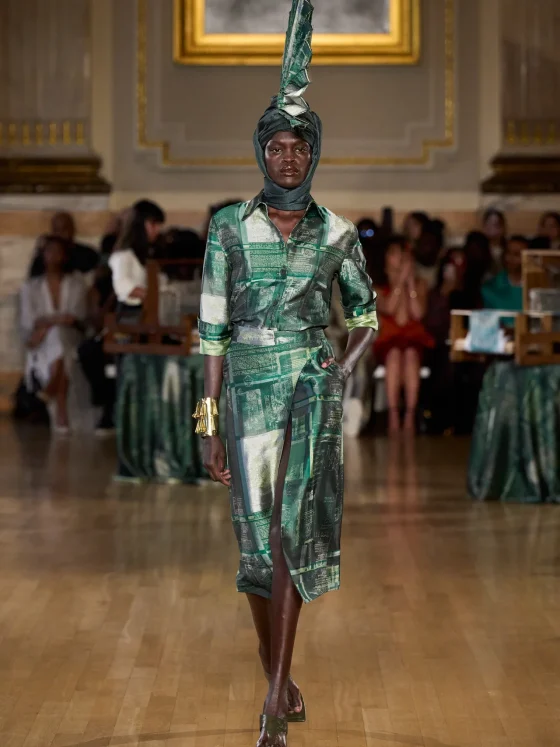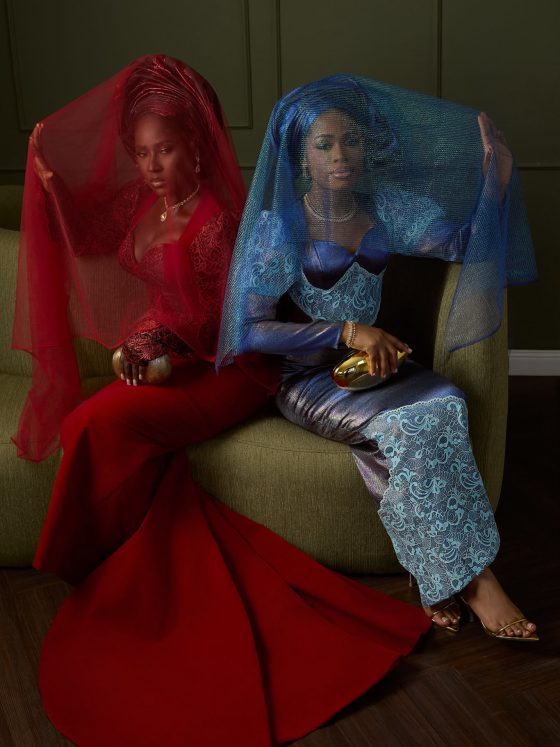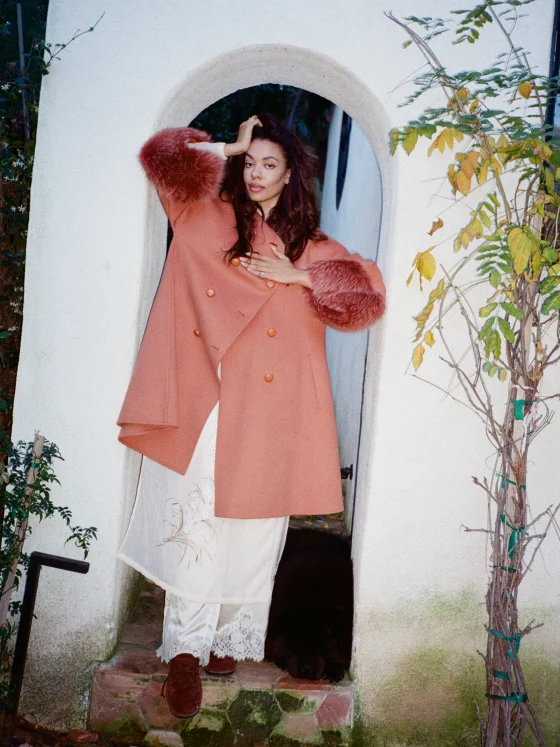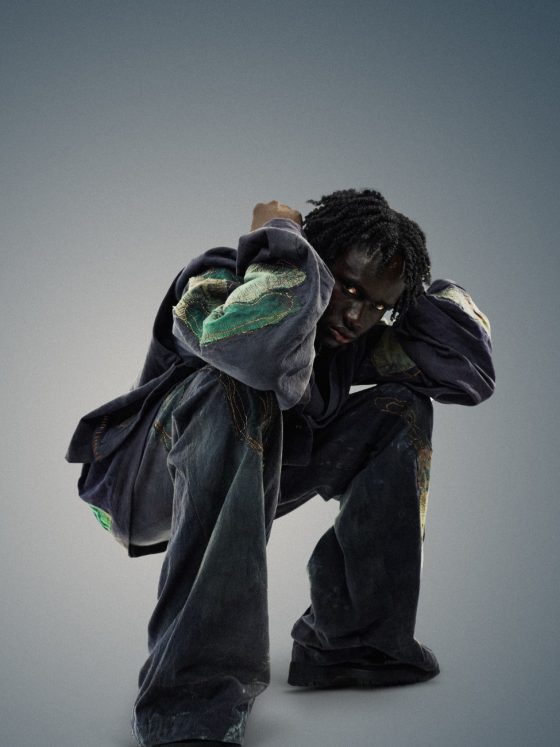
Rags ’n Prints begins with a shape, not a print. The Washington, D.C.–based studio describes a process in which the silhouette comes first, followed by fabrics chosen for how they hold, soften or complicate its outline. That sequence offers a useful introduction to a label whose material vocabulary includes reclaimed Ankara, mudcloth, denim and raw burlap. The textiles matter, but they are not intended to explain the clothes on their own. Their role develops through construction: where they sit, how they behave and what happens when one surface meets another.
For the Senegalese founder, this approach belongs to a broader refusal to let geographic identity fully account for a designer’s work.
Explore how Washington, D.C.–based Rags ’n Prints approaches silhouette, reclaimed Ankara, mudcloth and the founder’s Afro-Eurasian design identity.
A Self-Definition, Not Another Boundary
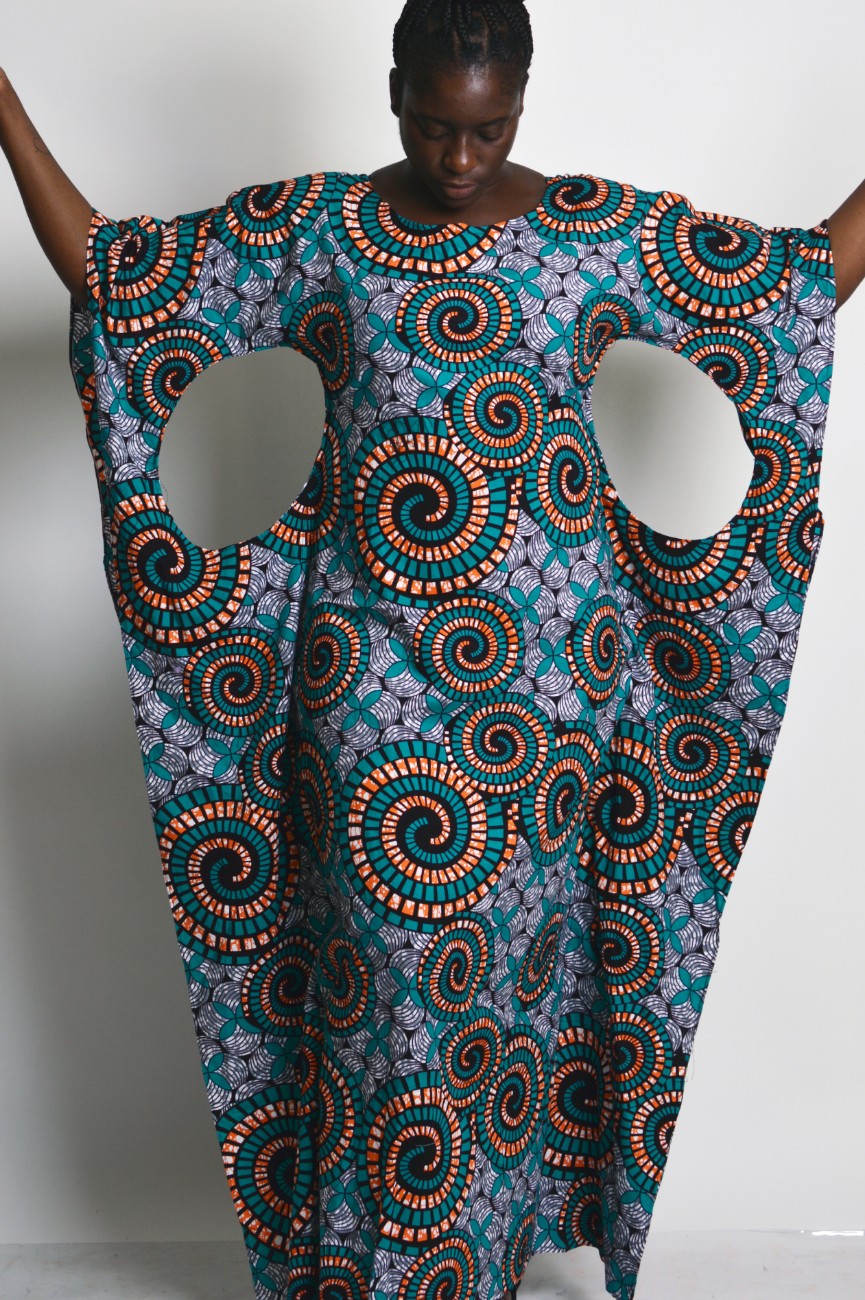
“When an American or European creates, they are simply called a designer,” the founder writes. “The moment an African creates, the industry attaches a qualifier: an African designer.” The statement expresses a personal objection to that distinction, rather than presenting a documented assessment of the entire industry. Its significance for Rags ’n Prints is clear: the founder does not want Senegalese heritage to become the only influence anyone recognises. Alongside West African textile traditions, the designer cites Giorgio Armani’s structural elegance, Yohji Yamamoto’s expansive silhouettes and the fluidity of contemporary Korean fashion. These are named interests within a personal design vocabulary, not a division in which one continent owns tailoring, and another owns volume.
“Combining these influences, I define myself as an Afro-Eurasian designer,” the founder explains. The term works best as a self-description. It makes room for several influences to operate together without asking the designer to choose between cultural rootedness and creative range. That distinction matters to the clothes. A textile can carry a connection to heritage while participating in a silhouette shaped by other encounters, observations and preferences. Neither relationship has to cancel the other.
The Silhouette Sets the Brief
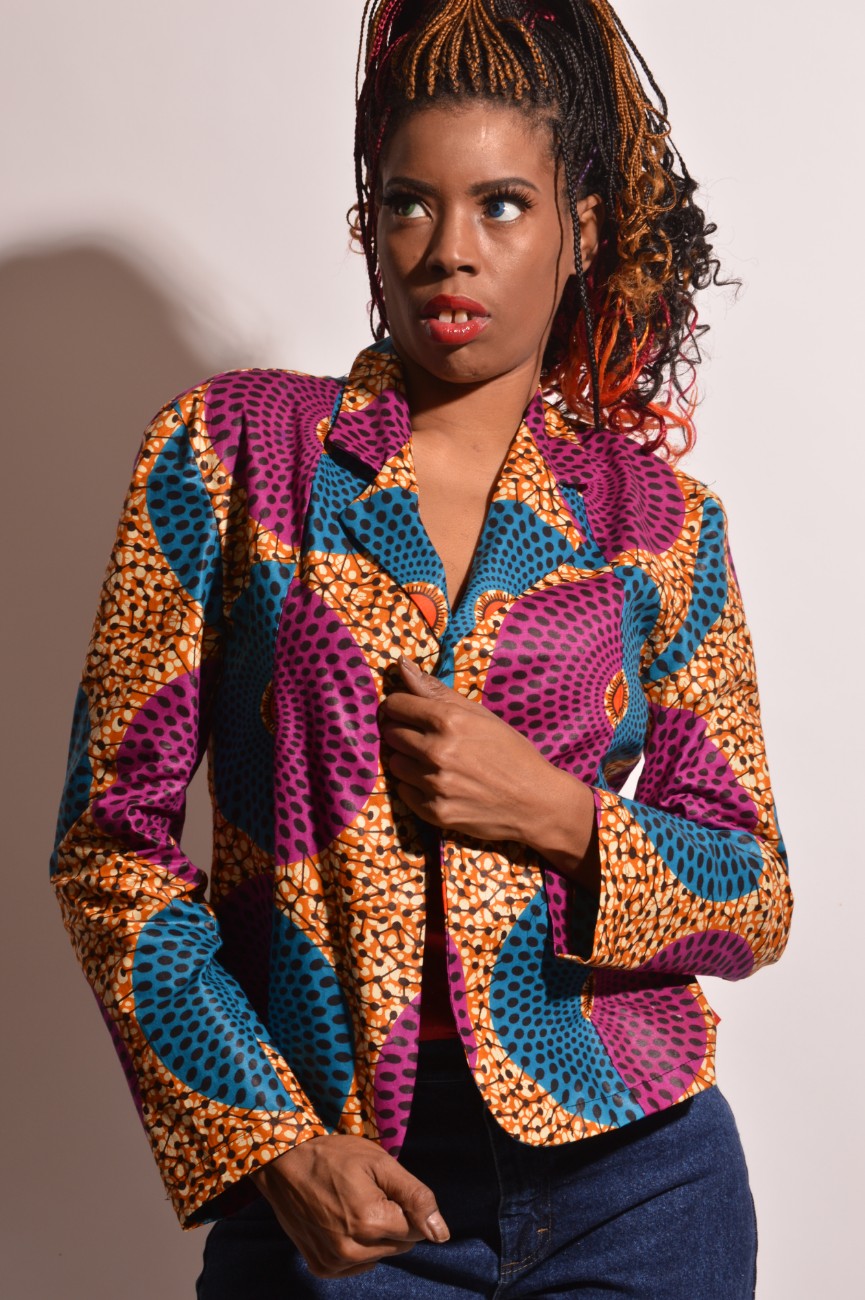
The founder connects garment-making to a background in painting, illustration and photography. Across those disciplines, the stated interest is composition: organising shape, surface and colour into a deliberate whole. At Rags ’n Prints, the imagined silhouette sets the initial brief. Fabric selection follows its demands. A material might be chosen because it flows, holds its shape, or changes the composition’s character through its texture. This is a more specific proposition than simply combining different fabrics. It gives each material a job. In describing the method, the founder offers the example of a vibrant wax-print peplum balanced by a raw, neutral base. The print supplies visual activity; the quieter surface provides a counterweight. The intention is to direct attention rather than let every element compete equally.
The example is presented in the studio’s statement, not as a garment examined for this article. Nevertheless, it makes the design logic legible: contrast is something to organise, not merely something to add. The slogan “Add Colour to Your Life” captures the label’s enthusiasm for colour. Its account of composition adds an important qualification. Colour gains force through its relationship with what surrounds it.
Working With Contrasting Surfaces
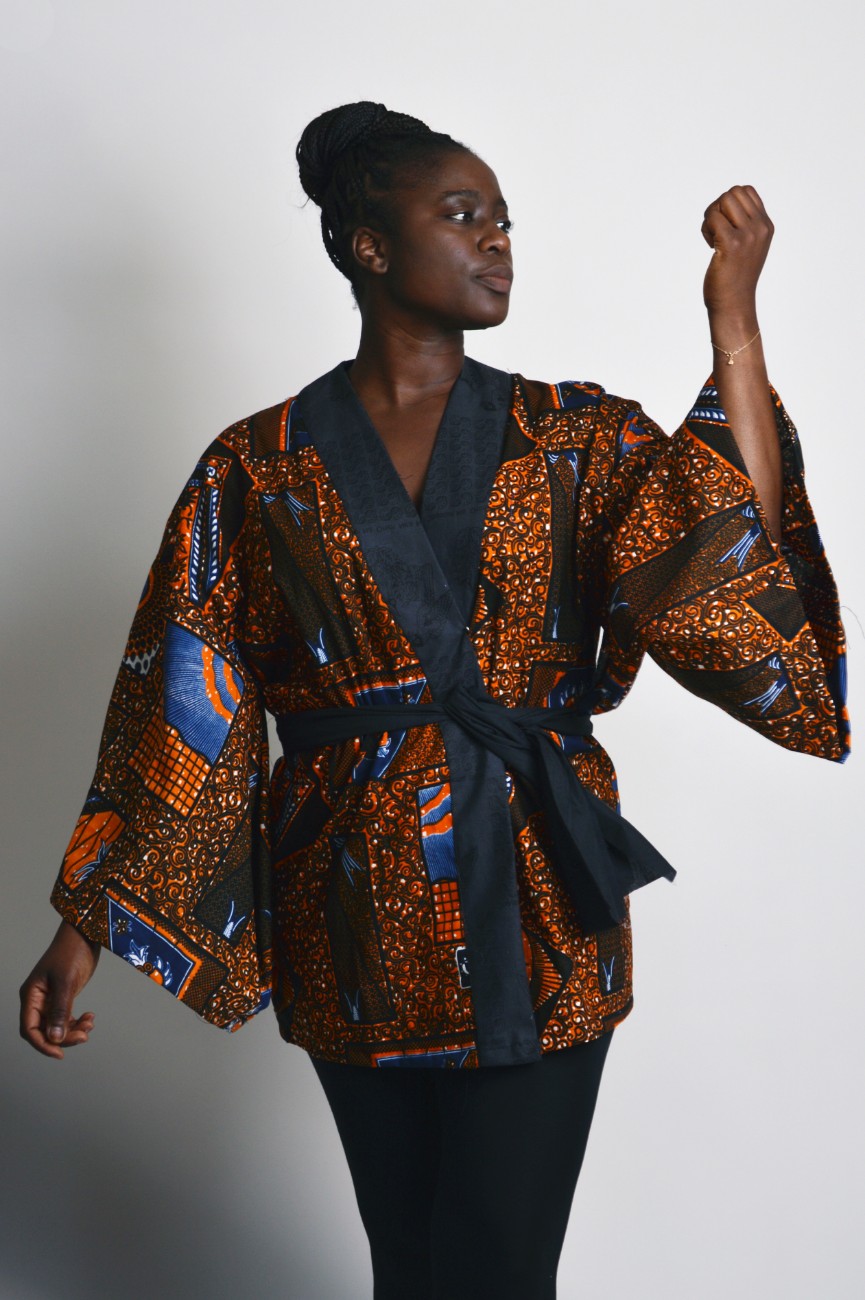
The founder calls denim, mudcloth and burlap a “triumvirate of unloved and raw textiles”, paired with Ankara prints. “Unloved” is a deliberately provocative description. It should not be mistaken for a claim that these materials lack established value or appreciation. Within the studio’s account, the phrase introduces an ambition to reconsider the surfaces associated with elevated clothing. The useful question is what the designer proposes to do with them. Rags ’n Prints describes an approach in which rawness need not disappear beneath a uniformly polished finish. Different textures can remain perceptible within the same garment, contributing to its character rather than being treated as imperfections to conceal.
The studio’s stated material practice also includes reclaimed Ankara. Here, it is best understood as a sourcing choice described by the label, rather than evidence for a broader environmental claim. Taken together, these materials suggest a design interest in opposing qualities: vivid and restrained, structured and yielding, visually intricate and comparatively plain. The challenge is to make those differences purposeful.
A Wider Place in the Wardrobe
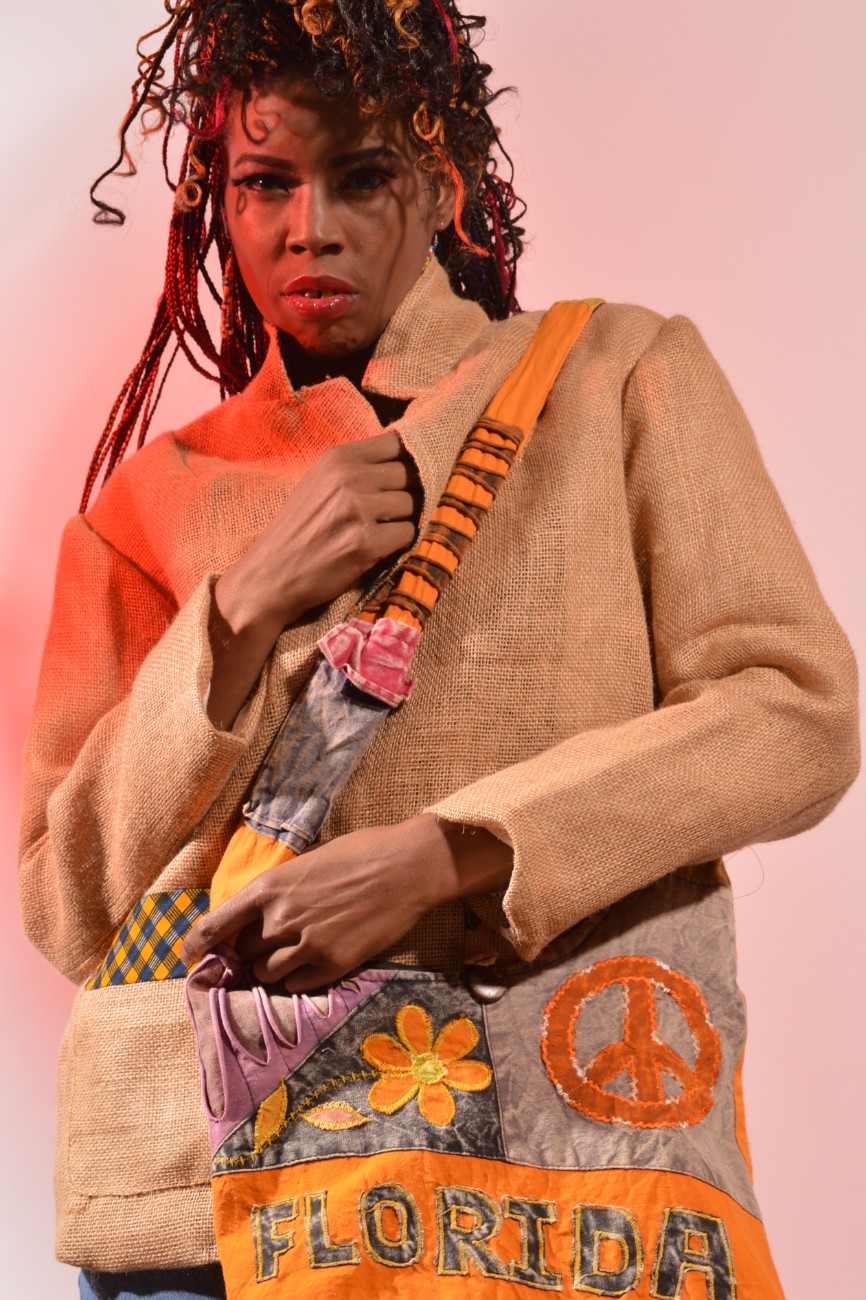
The founder also objects to the expectation that African textiles belong primarily to weddings, ceremonies or cultural events. Rags ’n Prints identifies structured outerwear, tailored suiting and elevated daily wear as other settings for its material vocabulary. The ambition is to expand the wardrobe possibilities, not to diminish occasion dressing. That brings the argument back to silhouette. Moving a textile into a different clothing category requires more than describing it differently. It means considering the form it will take and the role it will play within an outfit. In the studio’s proposed approach, Ankara or mudcloth is not confined to an established template simply because the material is recognisable.
The founder’s resistance to fixed definitions extends to African fashion itself:
“To define it is to freeze it in time and kill its soul.” Read alongside the silhouette-first workflow, this is less an argument against discussing identity than an insistence on leaving room for change. Heritage supplies resources and relationships; it does not have to prescribe every subsequent decision.
The Omiren Argument
Rags ’n Prints is most compelling when its language of creative independence resolves into composition: a silhouette conceived before fabric selection, a vivid peplum balanced by a neutral base, or contrasting materials given distinct roles. Those decisions provide a more useful entry point than either celebrating or debating the founder’s chosen label in isolation. “Afro-Eurasian” explains how the designer understands a field of influences. The proposed construction process explains how those influences might become clothing. The founder’s objection is not to heritage, but to heritage becoming the only thing anyone sees. Rags ’n Prints asks for attention to the decisions that follow: the outline of a garment, the placement of colour and the tension between one surface and another.
Also Read:
- African Sacred Textiles: Adire, Kente, Aso-Oke, and Bogolan Reclaim Global Luxury
- The Ankara Economy: Who Is Actually Capturing the Value?
- The Future of Fashion in Senegal: Sustainability, Tailoring, and Global Reach
- Afromodernism in Fashion: The African Designers Defining a New Design Language
Frequently Asked Questions
How does Rags ’n Prints approach design?
Rags ’n Prints is a Washington, D.C.–based studio that begins with the silhouette and then chooses fabrics for how they hold, soften or complicate its outline. The founder connects this to a background in painting, illustration and photography, where the stated interest is composition: organising shape, surface and colour into a deliberate whole.
What does Afro-Eurasian mean here?
The Senegalese founder uses “Afro-Eurasian” as a self-description. It combines West African textile traditions with Giorgio Armani’s structural elegance, Yohji Yamamoto’s expansive silhouettes and the fluidity of contemporary Korean fashion. The article treats the term as a personal definition rather than an industry category.
Which materials does the label use?
The label’s material vocabulary includes reclaimed Ankara, mudcloth, denim and raw burlap. The founder calls denim, mudcloth and burlap a “triumvirate of unloved and raw textiles”, paired with Ankara prints. Reclaimed Ankara is a sourcing choice described by the label, not evidence for a broader environmental claim.
Are African textiles only for occasion wear?
Not in the founder’s view. The founder rejects the expectation that African textiles belong mainly to weddings, ceremonies, or cultural events. Rags ’n Prints identifies structured outerwear, tailored suiting and elevated daily wear as other settings for its material vocabulary, aiming to expand wardrobe possibilities rather than diminish occasion dressing.