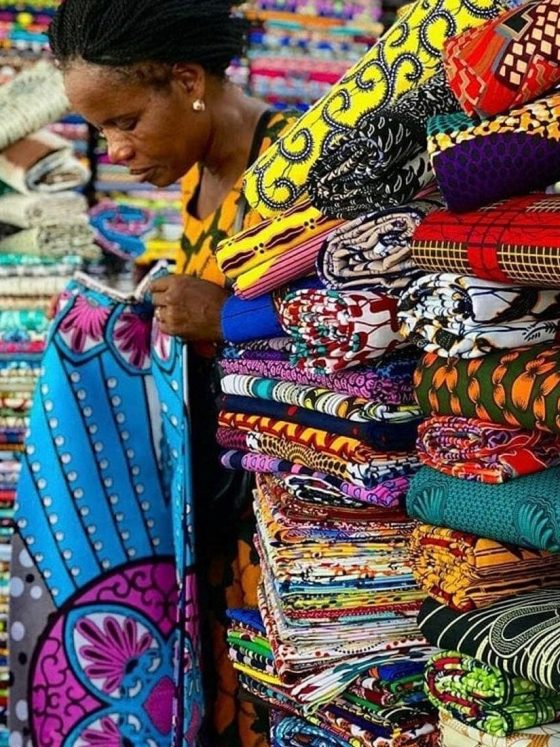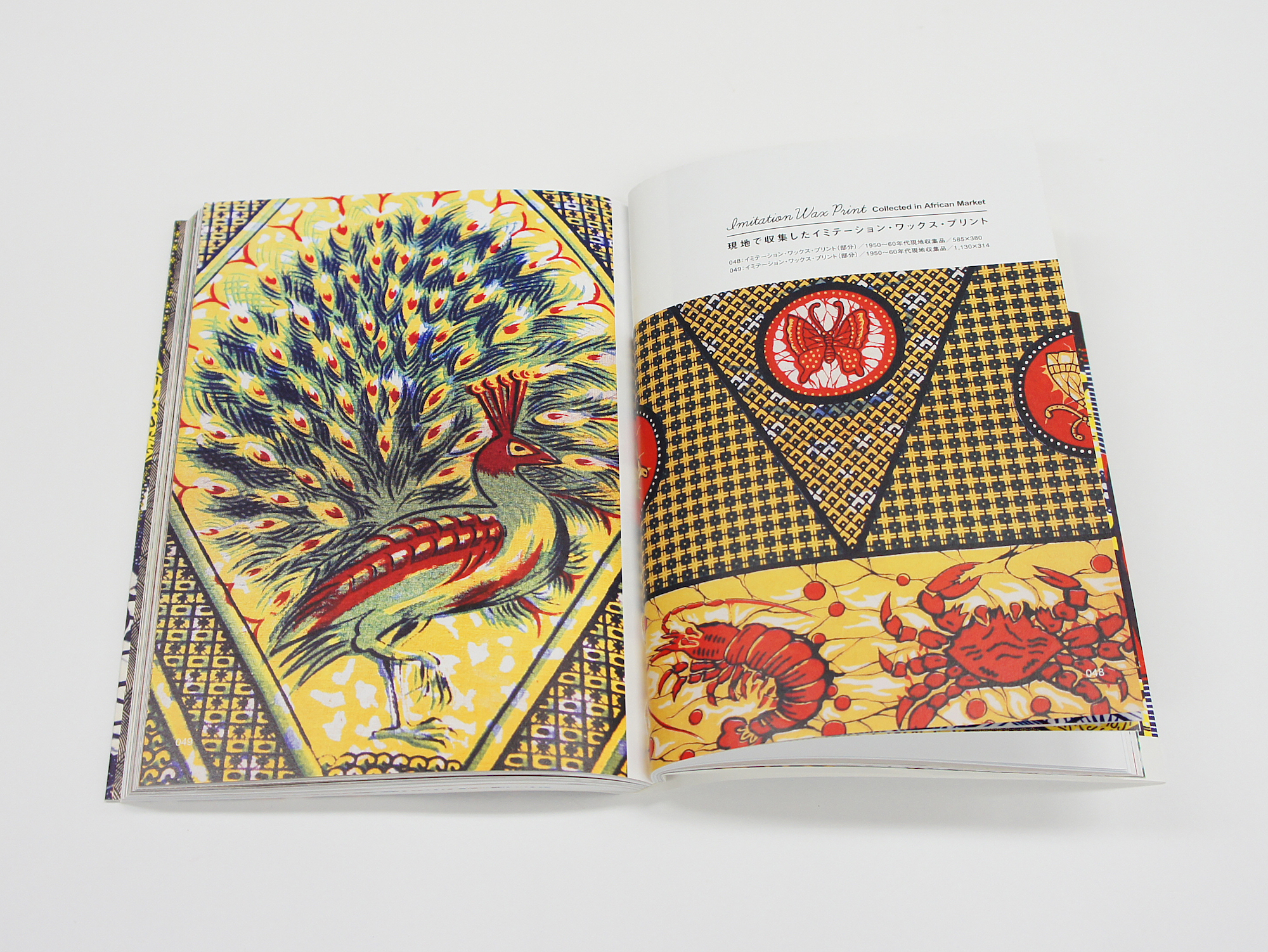
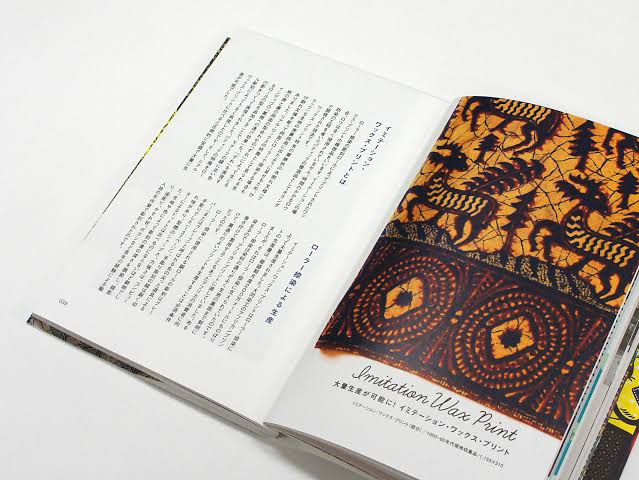
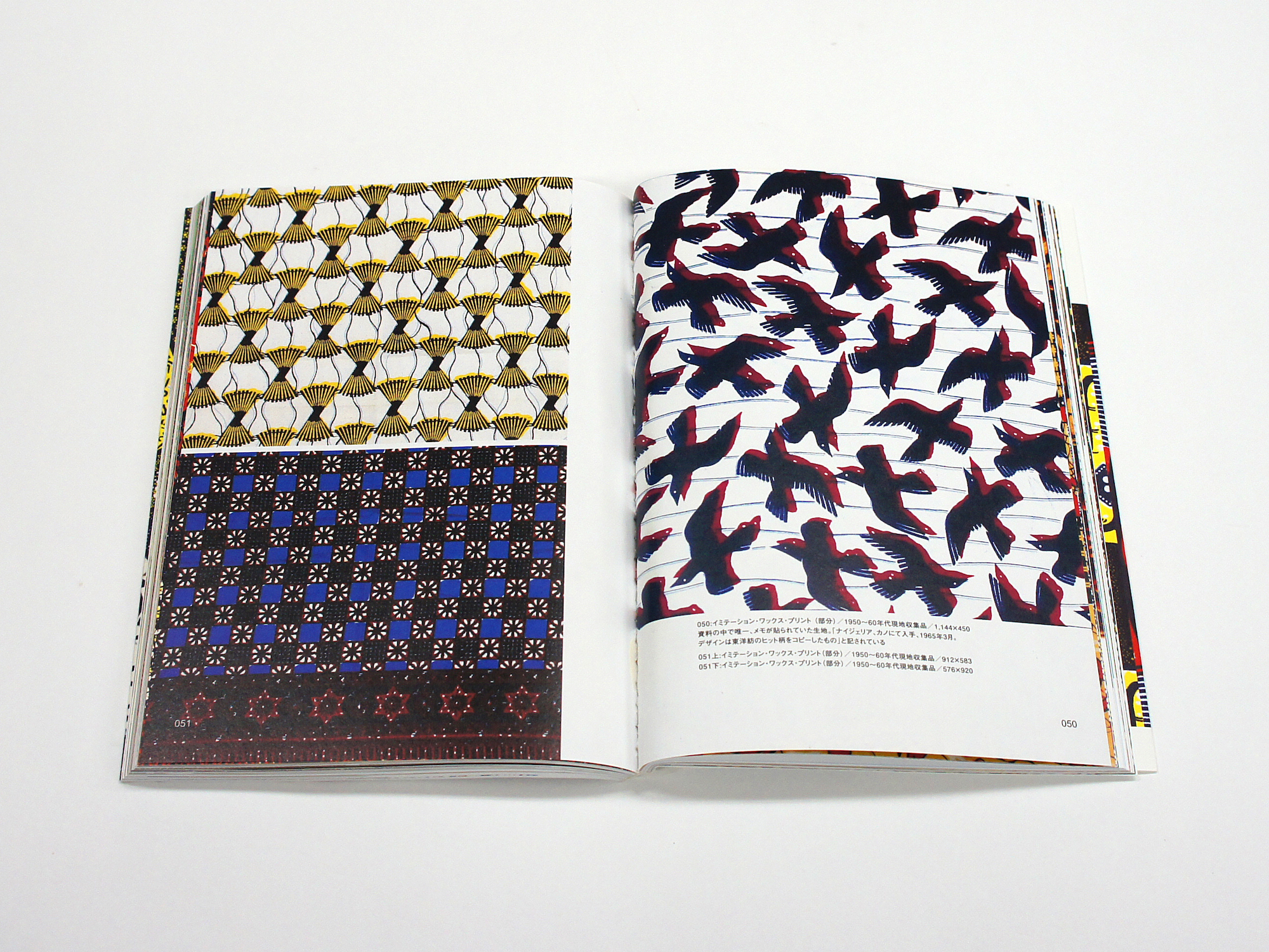
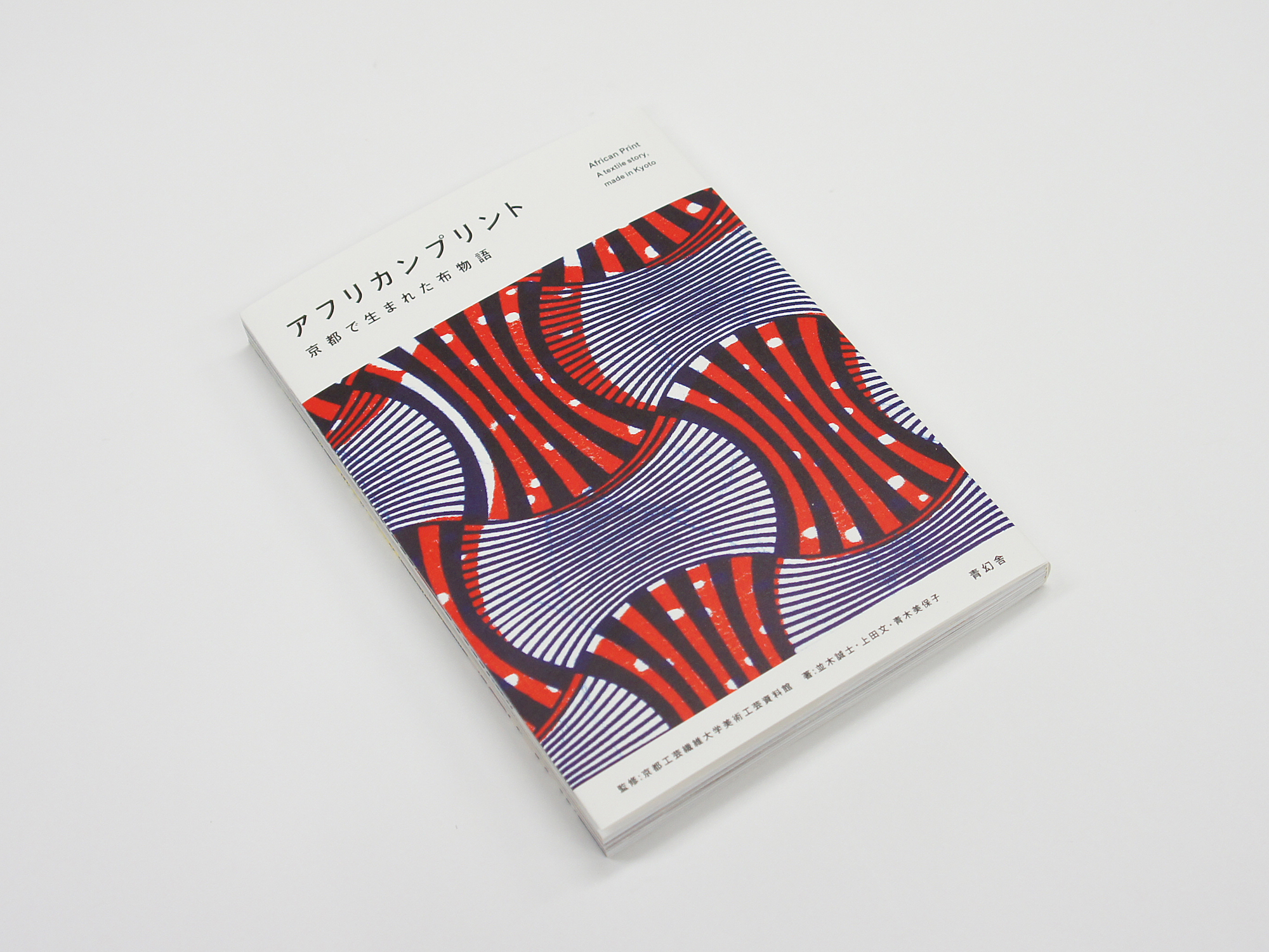
In the 1960s and 1970s, Kyoto manufacturers produced printed fabrics specifically for African markets. Their designs included motifs described as “Sun” and “Cashew Nuts,” alongside animal, plant and geometric patterns. These were export products, not fabrics made for Japanese customers that happened to find buyers overseas. The history is documented in African Print: A Textile Story Made in Kyoto, published by Seigensha in 2019. Written by Seiji Namiki, Aya Ueda, and Mihoko Aoki, the book highlights a manufacturing relationship that is easy to miss when cloth is described only by its appearance or where it is worn.
But the story is more interesting than an unexpected manufacturing address. Kyoto’s involvement raises a practical question: when cloth is printed in one country and selected, sold and worn in another, whose contribution defines it? The answer requires looking beyond the factory. Research on the Kyoto company Daido-Maruta connects its fabrics to competing manufacturers, circulating designs and customers whose preferences did not always match the producer’s expectations. The archive records Japanese industrial production, but it also points beyond it.
Discover how Kyoto manufacturers produced African-print fabrics, with evidence from Daido-Maruta’s textile archive and research on the export trade.
Why “African Print” Does Not Name One Manufacturing Country
“African print” can sound like a straightforward statement of origin. In this history, it is not. In Aya Ueda’s research on Japanese African prints, the term describes printed cotton dress fabrics manufactured in countries including the Netherlands, Britain, Switzerland and Japan, and exported mainly to West and Central Africa. Several manufacturing centres supplied these markets. That does not make the word “African” meaningless. It means we need to understand what part of a textile’s history it describes. Where was the cloth printed? Which market was it intended for? Who selected it, and what happened when it became clothing? These questions concern different people and different stages of the same fabric’s life.
A production label answers the first question. It cannot answer all the others. Ueda places Japanese African prints within a wider history involving Dutch manufacturers and relationships with Indian and Indonesian textiles. Kyoto was part of that network, not an isolated source from which an entire category emerged. This is why discovering a Japanese manufacturing origin should make a description more precise. It should not replace one oversimplified account with another.
How Japanese Prints Reached African Markets
Japanese participation in this trade began before the export period highlighted in the Seigensha book. Ueda’s research abstract dates the start of Japanese printed-fabric exports to Africa to 1927, initially through British and French trading firms. After the Second World War, Japanese textile production resumed supplying overseas markets, including Africa. Ueda dates direct entry into African markets to 1958. The distinction between those arrangements matters. Manufacturing cloth and controlling its distribution were not necessarily the same business. A Japanese producer could supply fabrics through an intermediary rather than deal directly with the destination market.
By the 1960s and 1970s, Kyoto was an established production centre within the history documented by Seigensha. Its manufacturers were making fabrics expressly for export, with designs intended to sell beyond Japan. Among the companies Ueda examines is Daido-Maruta Finishing Co., Ltd., a Kyoto dyeing and printing business. Her research compares its products with those of the Dutch manufacturer Vlisco, looking at design, technique, terminology and price. That comparison brings the commercial setting into focus. These fabrics were not produced outside the pressures of competition. Manufacturers worked within a field of existing products, recognisable styles and different production methods.
The Designs in the Kyoto Record
The publisher’s description of African Print: A Textile Story Made in Kyoto introduces the fabrics through their motifs: “Sun,” “Cashew Nuts,” animals, plants and geometric patterns. Those names give readers a more tangible starting point than the broad phrase “export textiles.” They also invite closer attention to the cloth. A named motif identifies something within a design. It does not automatically tell us who first drew it, who chose it for production or what it meant to every person who wore it. Those details need their own records. Here, the useful starting point is the product itself. The book directs attention to patterned fabrics associated with a particular manufacturing history, rather than treating Japanese exports as an anonymous volume of goods.
This matters for fashion writing as much as textile history. Calling cloth “bright,” “bold” or “African-inspired” tells us little about the decisions behind it. A manufacturer, a named design and a documented commercial relationship give us something more substantial to investigate. The Kyoto material becomes especially revealing when individual products can be compared with another producer’s fabrics.
From Angelina to Green Wax
One of Ueda’s most useful examples concerns Vlisco’s Angelina and Daido’s Green Wax. Her research abstract identifies Angelina as a popular product associated with green-ground Java prints. It describes Daido’s Green Wax as a machine-printed fabric strongly influenced by Angelina. Ueda then argues that Green Wax came to be regarded as an independent category of luxury textile in African markets, rather than simply as an imitation of Dutch prints. This is a more specific history than the general statement that manufacturers borrowed from one another. It identifies a product relationship and then asks how the market understood the resulting fabric. In Ueda’s reading, influence did not prevent Green Wax from acquiring a distinct position.
That does not remove the Dutch reference from the account. It makes the later history worth examining too. If we stop at resemblance, the story ends with one producer following another. If we follow the product further, we can ask how manufacturing method, naming, price and customer reception contributed to its identity. Ueda’s research draws on Vlisco samples preserved within the Daido-Maruta Collection at the Museum and Archives of Kyoto Institute of Technology. The collection therefore offers material for comparison, including examples from a competing producer. These samples help make the relationship concrete. The archive is not only a record of what one company made. It can also preserve evidence of the commercial and design world around it.
What Customers Valued
The factory’s priorities were not always the customer’s. In a UNDP account of the Osaka discussion, Ueda described Daido Maruta Senko’s production for African markets during the 1960s. The report records an anecdote about staff being surprised that misalignment in printed patterns could be appreciated. It also notes the importance of vivid, deep colours to sales. The example is useful because it identifies a difference in judgement. A manufacturer might evaluate a print through one set of technical expectations. A customer could value an effect differently. The desirable qualities of the finished fabric were not necessarily determined at the production site.
Ueda’s account shows customers valuing qualities the manufacturer had not expected. It does not require a larger claim that buyers directed every design in the archive. The same UNDP report attributes a broader interpretation to Ueda: African people shaped these textiles through selection and reinterpretation. That shifts attention towards what happened after production. A manufacturer could offer a range of fabrics. Still, it could not determine every subsequent decision about which ones mattered, how they would be used or what associations they would acquire. The market was not simply an endpoint on a shipping route. It was a place where products were judged and given further meaning.
What the Archive Can Tell Us
The Daido-Maruta material gives Kyoto a clear place in this textile history: dyeing, printing, export manufacturing and competition between producers. It also helps distinguish several kinds of contribution. The manufacturer produced the cloth. Other firms supplied references or competing products. Trading businesses connected production with distribution—customers selected from what was available. The surviving research brings some of those relationships into view. An export archive is strongest when we ask questions it can answer. Samples can support comparisons between products. Company material can help identify manufacturing relationships. A documented account of customer preference can explain why a producer reconsidered its assumptions.
Following the cloth into clothing introduces another stage. Omiren’s examination of the African bespoke fashion economy considers the work involved when fabric becomes something made for a particular wearer. That is a related question, rather than evidence about these individual Kyoto exports. Keeping those stages distinct makes the history easier to follow. It also prevents the factory record from becoming the whole account simply because it survived in an accessible collection.
The Omiren Argument
The Kyoto archive should make our descriptions more precise. It should not transfer ownership of African dress to a Japanese factory. Daido-Maruta belongs in the account because it manufactured cloth for these markets. Its relationship with competing products belongs there because design did not develop in isolation. The customers described in Ueda’s account belong there because their preferences were not always what the producer expected. The question is one of agency: who did what, and whose decisions remain visible when the story is told? Omiren’s position is that naming the manufacturer gives us a more accurate textile history. It does not make everyone who came afterwards secondary.
A factory address is important information. So is the purpose for which the fabric was made. But neither cancels the choices through which cloth entered dress and acquired a place in people’s lives. That is what makes Kyoto’s African-market textiles worth examining. They show that manufacturing origin and cultural significance need not point to the same place. A careful account can acknowledge both without making either disappear.
Also Read:
- The Ankara Economy: Who Is Actually Capturing the Value?
- African Textile Glossary: 20 Terms Fashion Keeps Getting Wrong
- Nana Benz of Lomé: How Togolese Women Traders Built West Africa’s Wax Print Empire
- Wax Print Lappa: How Liberian Women Took a Foreign Fabric and Made It Speak Their Language
Frequently Asked Questions
Were African-print fabrics made in Kyoto?
Yes. Seigensha’s description of African Print: A Textile Story Made in Kyoto identifies Kyoto as a production centre for fabrics made expressly for export to Africa during the 1960s and 1970s. Their designs included motifs described as “Sun” and “Cashew Nuts”. This documents one part of the trade, not the origin of all African-print fabrics.
What was Daido-Maruta?
Daido-Maruta Finishing Co., Ltd. was a Kyoto dyeing and printing company examined in Aya Ueda’s research on Japanese African prints. Her work compares its products with those of Vlisco and draws on Vlisco samples preserved within the Daido-Maruta Collection at the Museum and Archives of Kyoto Institute of Technology.
What is African Print: A Textile Story Made in Kyoto?
It is a Japanese-language book by Seiji Namiki, Aya Ueda and Mihoko Aoki, published by Seigensha in 2019. It presents fabrics manufactured in Japan for African markets, including animal, plant, and geometric designs. It highlights a manufacturing relationship that is easy to miss when cloth is described only by its appearance.
Does “African print” identify where a fabric was manufactured?
Not necessarily. In Ueda’s research, the term describes printed cotton dress fabrics manufactured in countries including the Netherlands, Britain, Switzerland and Japan and exported mainly to West and Central Africa. The manufacturing location is one part of the textile’s history; its intended market and subsequent use are others.