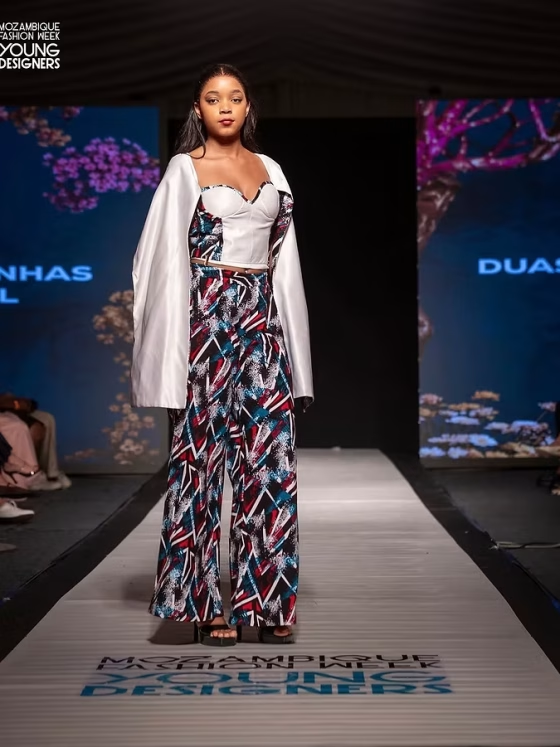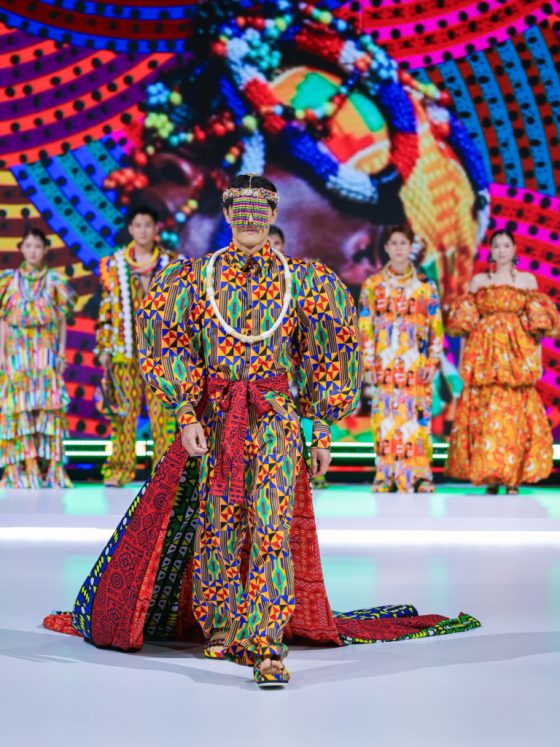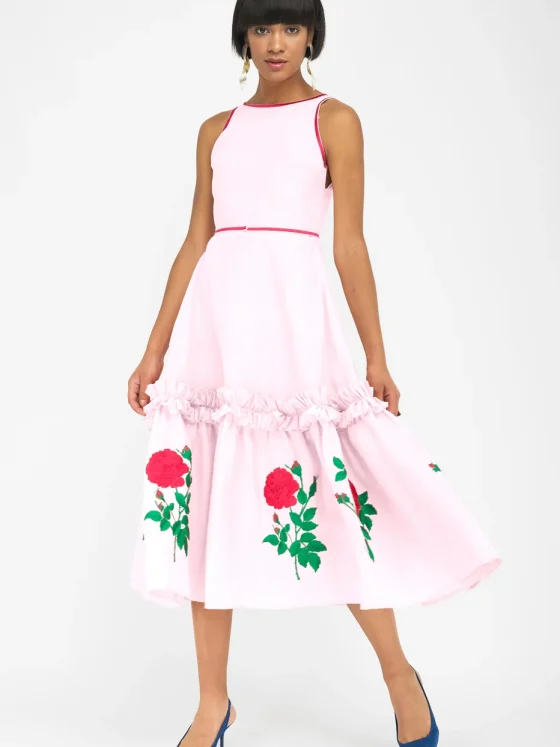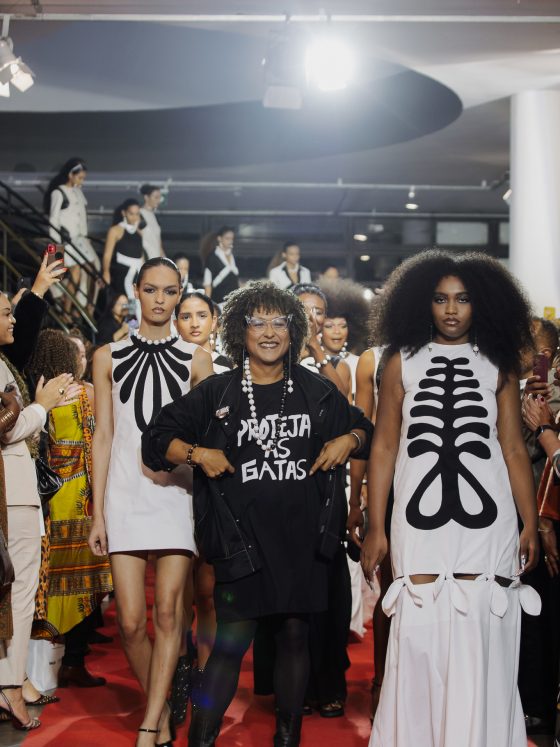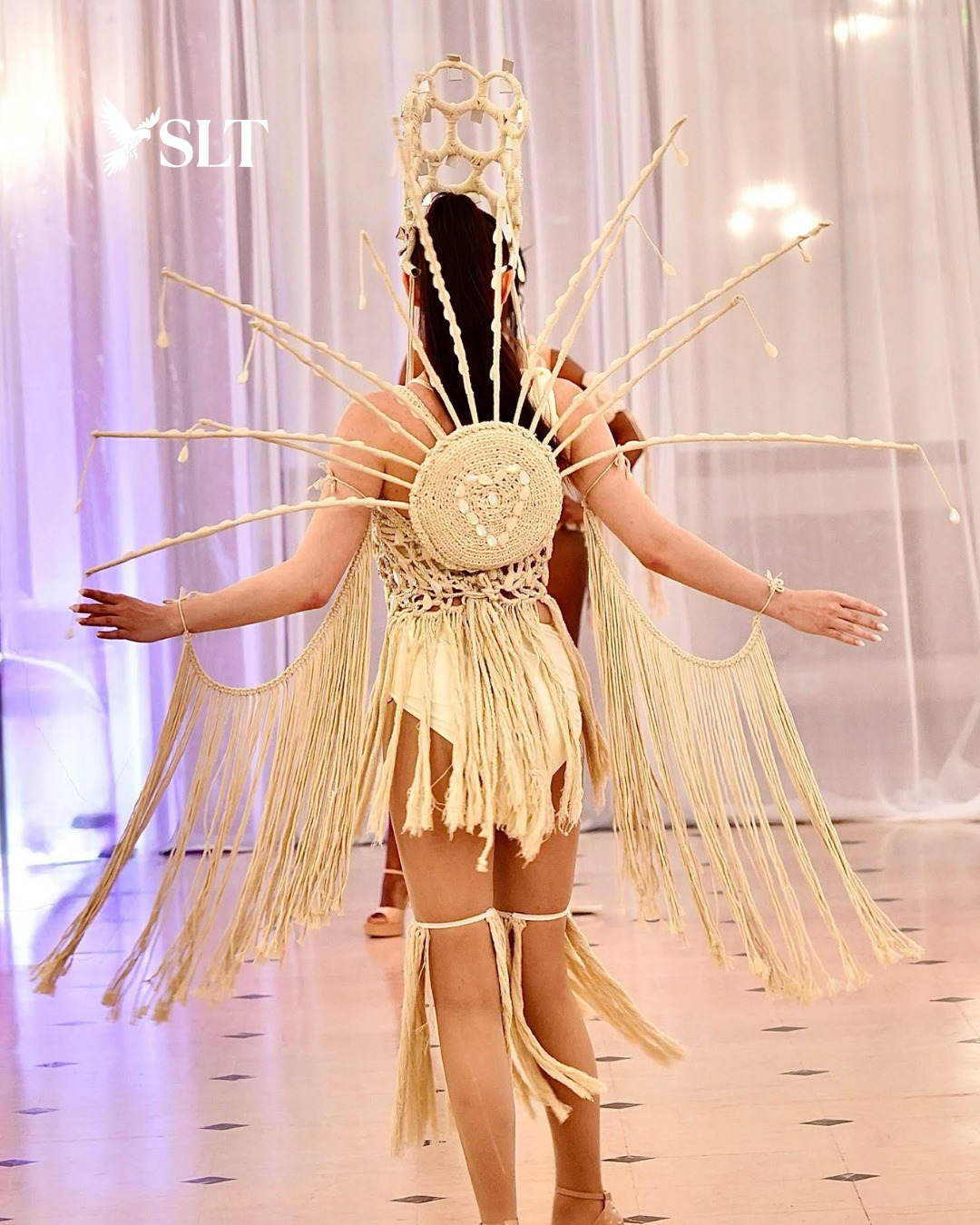
Petra Baptiste did not approach her Kai Baptiste debut as a conventional collection of dresses and trousers. Before the presentation, she described costumes developed around Caribbean references, including the ocean, carnival and Saint Lucia’s flower festivals.
Afterwards, she explained the medium’s appeal: “It allows culture, celebration, and storytelling to come together in a powerful way.”
According to Keryn Nelson’s post-show report for St. Lucia Times, Baptiste presented ten pieces at World Fashion Expo at Les Salons Hoche in Paris on 7 March 2026. The report describes a collection of colour, texture, and fabric manipulation, with materials cut, tucked, twisted, and fastened into full-body designs.
Those are the publication’s observations, not technical specifications supplied by the designer.
The most useful starting point is Baptiste’s decision to work in costume. It establishes the creative purpose against which the collection should be examined.
Rather than asking only whether the pieces could enter an everyday wardrobe, it directs attention towards how clothing can carry an image, sustain a character or communicate a story. That purpose does not remove the need for close assessment; it changes the question.
Petra Baptiste explains the costume-led approach behind her ten-piece Kai Baptiste debut, reported at World Fashion Expo in Paris in March 2026.
Why costume, rather than a conventional wardrobe?
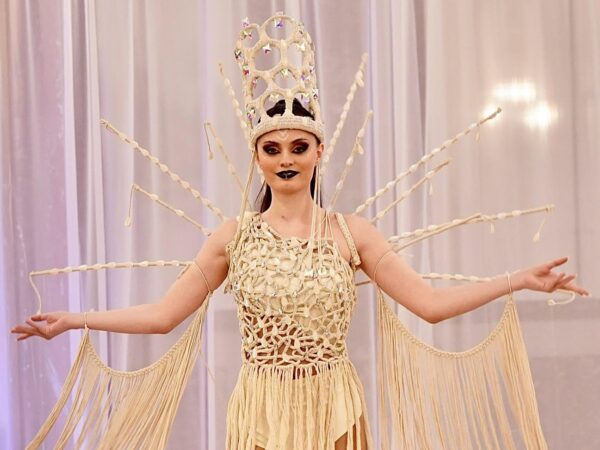
In her pre-show interview with Nelson, Baptiste distinguished her work from the usual “dress and pants”. She described a collection using different colours, textures and materials to express her ideas about the Caribbean.
The statement gives the debut a clear format. She wasn’t presenting a documented capsule wardrobe or explaining how a series of separates could be combined for daily use; her stated interest was in costume as a vehicle for expression.
“A costume does not have to justify itself by how often it can be worn. It has to justify itself by what it makes someone see.” Omiren Styles, Editorial Intelligence
The distinction matters because an article can misread a collection by imposing the wrong expectations. A costume need not justify itself through versatility alone, as its purpose may be concentrated in a particular visual or narrative effect.
Equally, spectacle is not an exemption from design criticism. An expressive piece still depends on decisions about shape, proportion and the relationship between material and body.
A cultural intention may explain why a costume exists, but it does not establish how successfully the object communicates that intention. Baptiste’s comments supply the creative premise, and the ten pieces are where that premise must take form.
A Caribbean reference is not a single design instruction.
Baptiste identified the ocean, carnival, Saint Lucia’s flower festivals and macramé among the collection’s references. These do not all belong to the same category: the ocean names an environment, carnival and flower festivals identify cultural settings, and macramé names a making practice.
Their differences tell us more than a general statement that the collection is “Caribbean-inspired”. They suggest several possible routes into design: observing a place, participating in celebration, and engaging with a technique.
The Voice St. Lucia, reporting on the same debut, gives more detail on the references. It describes the Caribbean Sea’s blues, traditional macramé, Notting Hill Carnival, and the floral societies La Marguerite and La Rose.
The published interviews do not map each reference to a particular costume. They therefore do not support assigning a flower-festival meaning to an unidentified look or treating a colour as an established representation of the sea.
What they establish is Baptiste’s stated field of interest. Her task was not simply to name those references but to bring them into a body of work that could be encountered through clothing.
Keeping the references distinct also protects their specificity. These interviews don’t automatically make macramé uniquely Saint Lucian or ancestral, because they identify its place in Baptiste’s thinking, not a complete history of the practice.
More coverage of designers working with culture and costume is on Omiren Styles.
For readers who want the wider tradition behind costume as a Caribbean art form, our piece on the textile and costume traditions behind Trinidad’s Carnival is a good companion.
The difference between an intention and a garment
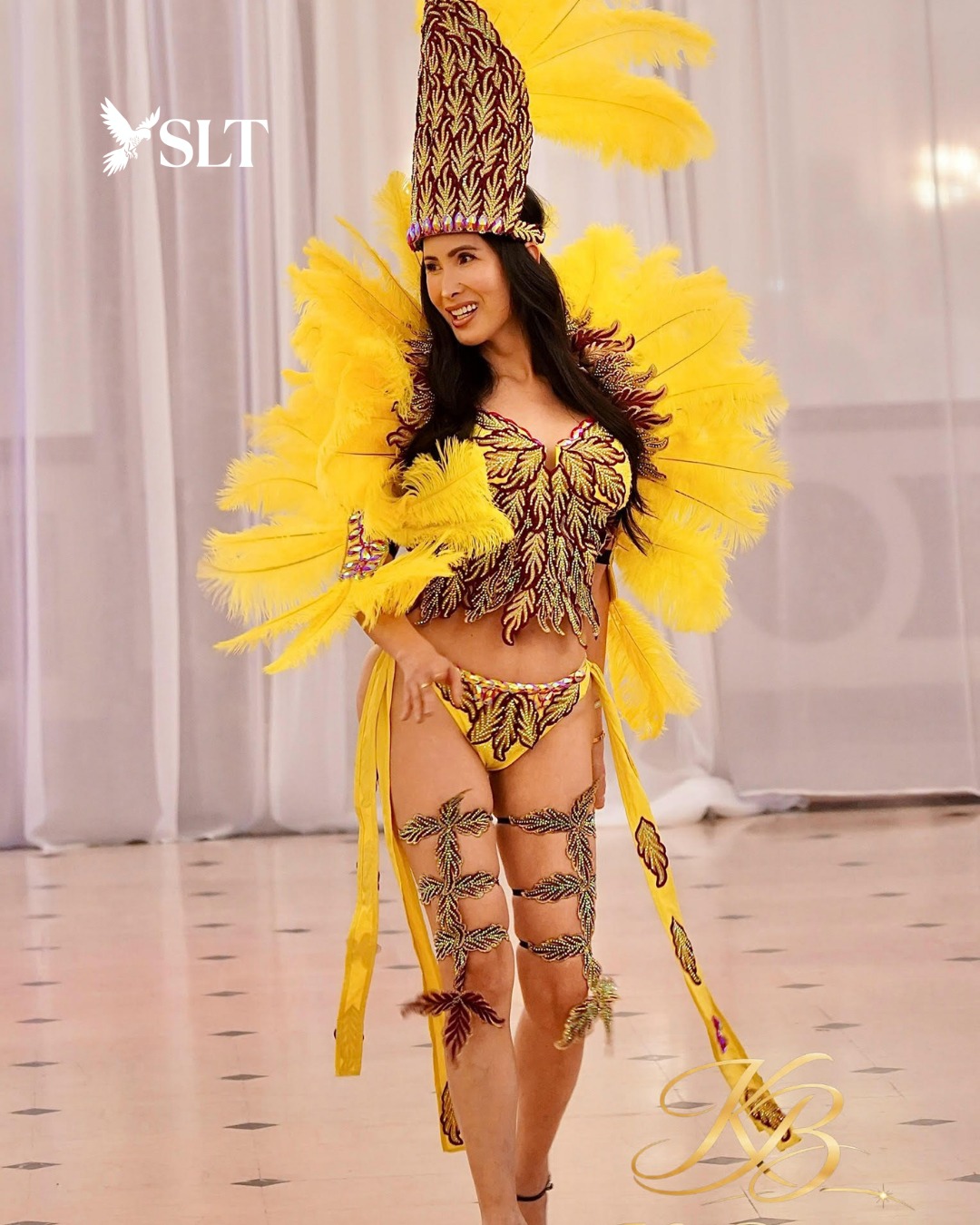
Nelson’s post-show report describes the fabrics through a sequence of operations: etching, cutting, tucking, twisting and fastening. That wording puts the handling of material within the account of the collection’s visual effect.
It is useful evidence of how the presentation was reported, but it is not an itemised construction record. “Tucked” does not identify a specific tuck, and “fastened” does not establish a closure system.
The report does not explain what “etched” means in relation to a particular material. These distinctions matter because technical language can create an impression of precision without providing the information needed to reproduce or assess a process.
The supported observation is narrower: the coverage describes fabric manipulation as part of the collection’s character. It does not demonstrate how those operations shaped individual pieces.
For a construction-led review, the next layer would be an identifiable garment, a clear image and an attributable explanation of the making decision. Without that connection, the operation should remain a reported description rather than become an invented analysis.
From cultural promotion to a design practice
Baptiste’s interest in Caribbean visibility preceded the label. In Nelson’s January interview, she described moving from Saint Lucia to London at 18 and later living in Paris.
She linked her time abroad to a concern about Caribbean communities’ visibility and to the development of Island Empress & Emperor, a platform highlighting Caribbean women and men.
The Voice places her move to England in 1999 and her relocation to Paris in 2016 alongside that account, without stating her age at the move.
That background is relevant because it explains the purpose she gives her creative activity. The collection did not emerge in the reporting as an isolated exercise in styling a regional theme but appeared alongside a longer commitment to presenting Caribbean people and culture.
The label changes the medium through which that commitment operates. A cultural platform can introduce people, circulate images, and create occasions for recognition, while a design practice adds objects that must communicate on their own terms.
This is where the biography should meet the work rather than overwhelm it. Baptiste’s account explains why visibility matters to her; it does not make every garment an automatic success, nor does it require one designer to represent the entire Caribbean.
Her perspective is specific, and the collection should be allowed the same specificity.
The designer and the making
The pre-show profile described Baptiste as a “one-woman show”, designing and creating the costumes for her inaugural collection. That account supports identifying her as the designer-maker described in the interview.
It does not constitute a complete credit list for the eventual presentation. This distinction preserves her documented contribution without assuming she undertook every task associated with staging, styling, modelling, or photographing the work, and it reflects the standard we ask for in what a heritage fashion product page should clarify.
It also keeps the focus on practice. Designing and making a costume means moving between an intended image and material decisions, and the published account shows that Baptiste undertook both roles without documenting every stage of the process.
In a later interview with Joël A. Grandjean for Swiss Watch Passport, Baptiste described 7 March 2026 as the moment she stepped forward as a designer after years working behind the scenes. That is her retrospective account of the debut, not an independently established history of all her earlier work.
Taken together, the interviews describe a public transition into a named design practice. They do not justify inventing a training record, production method or earlier collection history.
Naming the Paris platform accurately
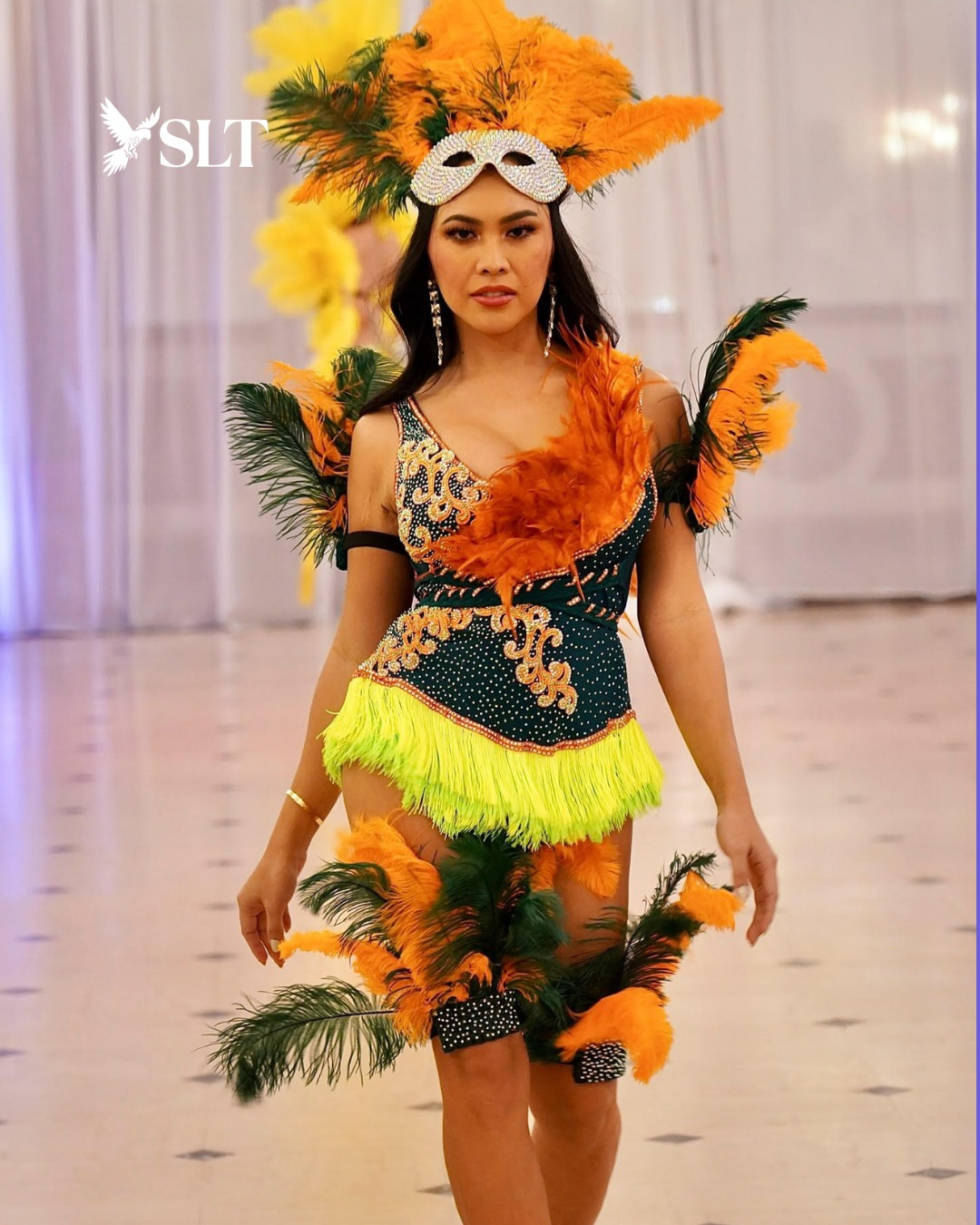
St. Lucia Times identifies the completed presentation as World Fashion Expo at Les Salons Hoche on 7 March 2026, and Baptiste gives the same date in her later interview. Those details are more useful than an unqualified claim that the label simply “showed at Paris Fashion Week”, because they identify the reported event and venue.
The reviewed sources do not independently establish inclusion in the Fédération de la Haute Couture et de la Mode’s official calendar, and no such status is claimed here.
That boundary is not a judgement about the collection’s quality. A presentation’s location or calendar status cannot determine how well a garment is designed, and naming the platform accurately gives readers context without letting prestige replace assessment.
The same precision applies to the response. Baptiste told Nelson that the reception might accelerate future projects and collaborations, and the report adds that she had originally planned one show a year.
This records her expectation after the event; it does not confirm a particular agreement, commission or commercial result.
What the debut establishes
The reporting establishes a ten-piece costume debut, a named designer, a reported presentation and a set of references Baptiste discussed before showing the work. It also records her explanation of why costume appeals to her.
That is enough for a focused introduction to the practice. It is not enough to judge the inspected finish, comfort, or durability.
Those qualities should not be inferred from an elaborate appearance. Nor should their absence from a news report be treated as evidence they were overlooked in production, since they simply fall outside what the reviewed documentation establishes.
This distinction lets the article remain affirmative without becoming promotional. Baptiste has articulated a creative purpose and presented a body of work, and understanding individual pieces requires a closer garment record.
The Omiren Argument
Baptiste’s choice of costume changes the appropriate critical question. The collection should be examined for how its pieces organise form and communicate their references, rather than being treated automatically as an everyday wardrobe.
Her stated interests, culture, celebration and storytelling, provide a coherent reason for choosing the medium. The published coverage describes fabric manipulation but stops short of connecting those operations to individual garments.
That is where intention and execution must remain distinct. A Caribbean reference explains part of the collection’s purpose; it doesn’t determine the quality of the result, and an overseas presentation sets an occasion without offering a design verdict.
Kai Baptiste’s debut introduces a designer who has chosen expressive clothing as an extension of her cultural work. The strongest next assessment will take that choice seriously enough to examine the costumes themselves, not merely celebrate the story attached to them.
Also Read:
- Trinidadian Carnival Masquerade Is a Fashion System; It Is Time the World Called It That
- The African Origins of Carnival Costume: Feathers, Beads, and the Masquerade Tradition
- The People Behind Carnival: The Hidden Fashion Supply Chain of Mas
- The Afro Carib Fashion Show: Two Women, One Runway, and the Diaspora Platform Nobody Else Is Building
Frequently Asked Questions
Who is behind Kai Baptiste?
Saint Lucian designer Petra Baptiste introduced Kai Baptiste. The pre-show interview describes her as designing and creating the inaugural collection’s costumes.
When and where was the debut presented?
The post-show report identifies the debut as taking place at World Fashion Expo at Les Salons Hoche in Paris on 7 March 2026. Baptiste gives the same date in her later interview with Swiss Watch Passport.
What references did Baptiste identify?
She named the ocean, carnival, Saint Lucia’s flower festivals and macramé among the collection’s references. The published accounts do not explain how each reference corresponds to a specific piece.
Was the debut part of the official Paris Fashion Week calendar?
The reviewed sources identify the World Fashion Expo at Les Salons Hoche as not an official listing on the Fédération de la Haute Couture et de la Mode calendar. No such status is claimed here.