The festival promises a route from ideas to manufacturable products. The useful test is whether the production model fits the design and whether the materials, skills and financing support it.
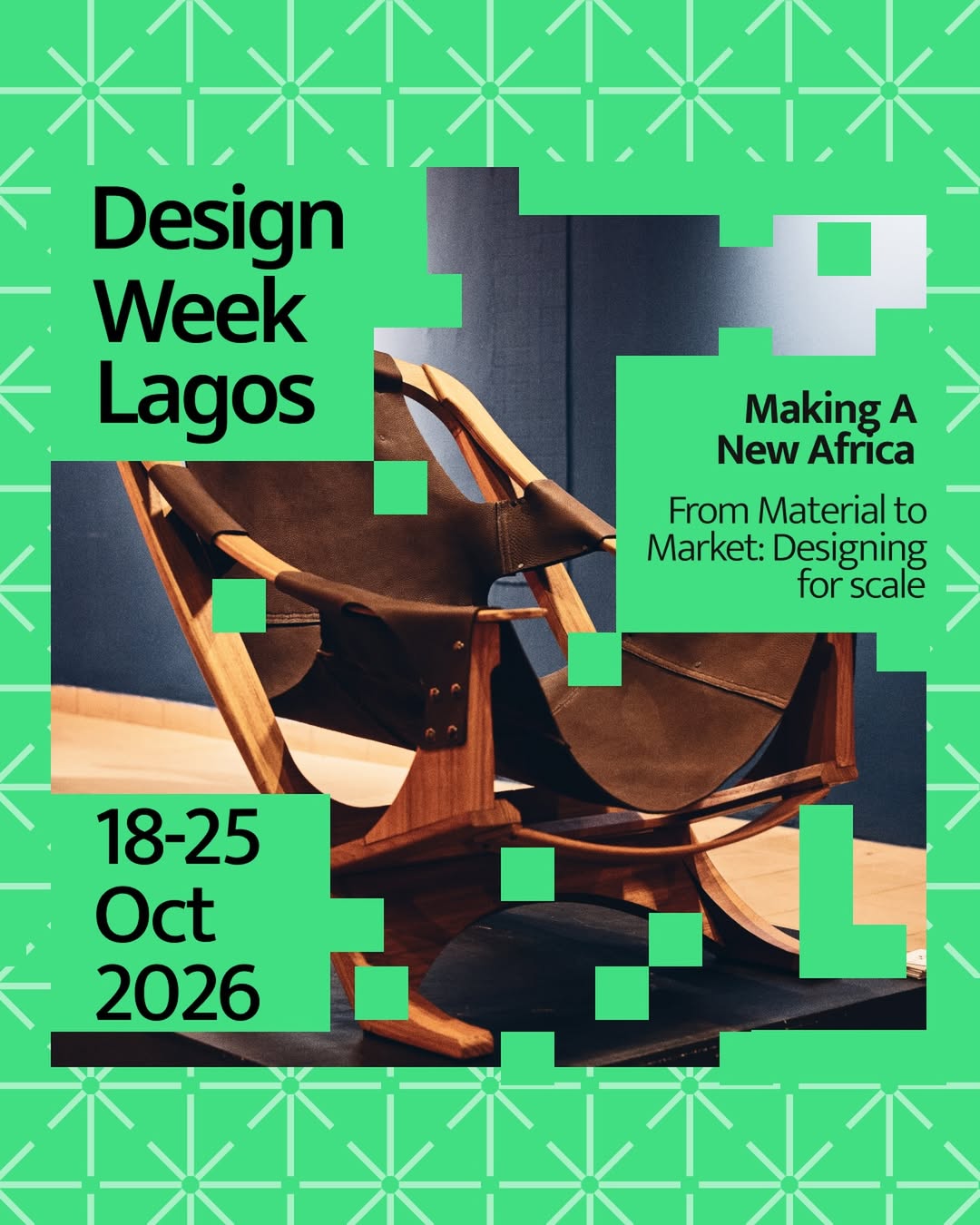
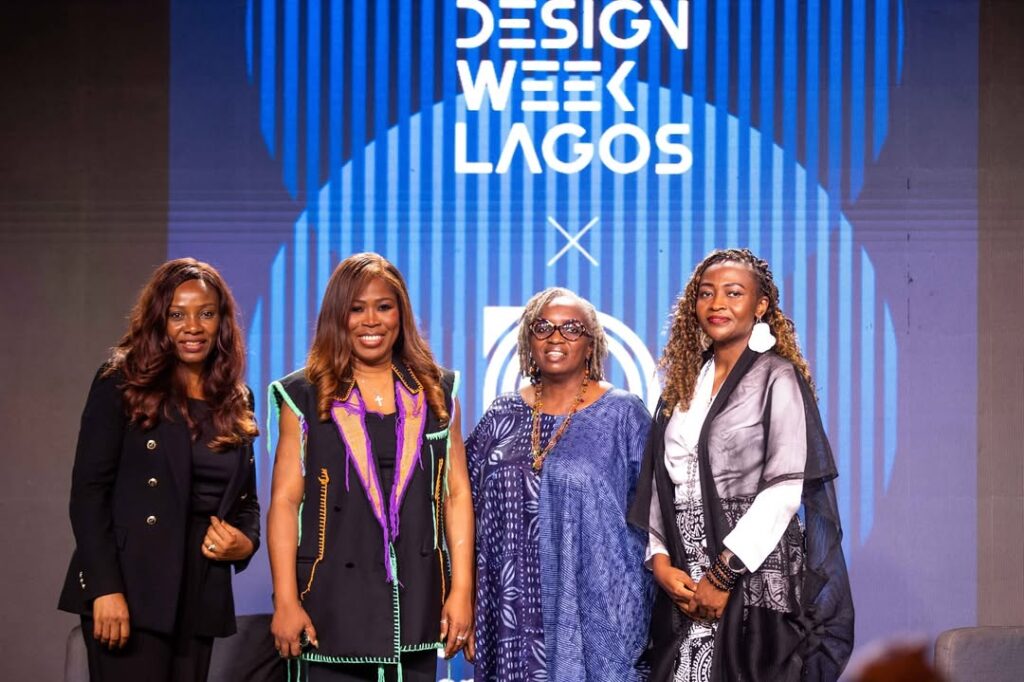
Design Week Lagos‘s most consequential 2026 commitment is not a promise of visibility. Its official website says selected works will be developed through “limited production pathways”, moving from concepts towards manufacturable outcomes. The pledge sits beneath the sub-theme “From Material to Market: Designing for Scale.
“The decisive question is the fit between the ambition and production model. If the promise is a limited run, examine consistency, delivery and the arrangements that enabled it.” Omiren Styles Editorial Intelligence
The language introduces a practical question: what, precisely, must happen between a successful prototype and a product that can be made again? The festival’s announced programme runs from 18 to 25 October 2026, with an official opening on 21 October. Its release positions manufacturing alongside design and research, but neither that announcement nor the reviewed homepage specifies the funding, quantities, production partners or delivery timetable for the limited-production commitment.
That is the starting point for this assessment, not a reason to dismiss the proposal. A pathway has been announced. Its effectiveness will depend on the underlying arrangements. Published accounts from Nigerian furniture businesses show why those arrangements matter.
Design Week Lagos’s production pledge meets Nigeria’s manufacturing realities: material quality, power, technical skills and the economics of making beyond a prototype.
A Prototype, a Small Run and a Factory Are Different Propositions
For this analysis, we need to separate three production models. A prototype tests an idea or construction approach. A limited run tests whether several objects can be made to an agreed specification. Larger-scale manufacturing introduces a different combination of capacity, procurement, finance and distribution requirements.
These are distinctions, not a ladder every designer must climb. A specialist commission can succeed without becoming a mass-produced object. A workshop can build a viable practice around small quantities. The problem arises when evidence from one model is used to claim readiness for another.
An accomplished exhibition piece does not automatically demonstrate a reliable supply chain. Equally, an object’s unsuitability for high-volume manufacture does not make it an unsuccessful design. Design Week Lagos’s commitment should therefore be judged against the model it actually funds and delivers. If the outcome is a limited run, the evidence should describe that run, not imply industrial scale.
Materials Must Be Available in the Right Form
William Ubachukwu Emekalam, chief executive of Furniture and Fitting Interior Architects, describes a mixed sourcing system in an April 2026 BusinessDay interview. His company prioritises local inputs where they meet its standards, but imports specialised materials that are unavailable or unsuitable locally. He also connects currency fluctuations and rising input costs with pricing and delivery decisions.
This makes “local materials” a more demanding proposition than a declaration of preference. The relevant question is not simply whether a material exists within Nigeria. It is whether a maker can obtain the required form, quality and quantity when the production schedule needs it.
A related argument comes from Demi Samande, founder and chief executive of Majeurs Holdings, in a December 2025 BusinessDay interview. She identifies inconsistent raw-material quality as a constraint and calls for investment in domestic processing, particularly timber and board factories. She describes increasing local timber use where quality permits.
Together, these accounts locate part of the manufacturing gap before final assembly. A designer may specify an input that works in a prototype. Repeating the object requires dependable access to a suitable input, not merely a sample that happened to be available. For a production programme, supplier capability belongs within the design discussion from the start.
The Maker’s Brief Needs More Than a Drawing
Emekalam also identifies unreliable power, transportation difficulties, port congestion and restricted access to capital as obstacles within Nigeria’s furniture value chain. His account is a separately published practitioner perspective, not a statement issued for the festival. Those constraints help explain why connecting a designer with a workshop is necessary but insufficient.
The relationship needs a shared understanding of what is being made. Dimensions, finishes, components and acceptable variation cannot remain implicit if several people are responsible for execution. There is also a difference between the ability to make an object and the ability to commit to its delivery.
A workshop may have the relevant expertise but lack the cash to purchase a batch of materials. Another may have machinery but insufficient capacity alongside existing commissions. These are questions for the proposed pathway to resolve. They should not become assumptions about every Nigerian maker.
The useful assessment is specific: which workshop, which process, which quantity and which responsibilities? Those four questions should have answers before the production phase begins, not after the first delivery attempt runs into difficulty.
Power Costs Are Part of the Production Environment
A separate industry voice comes from the Manufacturers Association of Nigeria. The Guardian’s report on the MAN annual meeting records the association’s estimate that manufacturers spent ₦1.35 trillion on alternative power in 2025. MAN president Francis Meshioye linked energy spending to broader investment pressures, including financing, logistics, and imported inputs.
This is association-reported evidence for manufacturing broadly, not a furniture-sector cost estimate. MAN represents manufacturers’ interests; treat the figure as an indicator of the operating environment, not an independent audit of festival participants. Its relevance is the operating environment.
Equipment and technical training require investment, but so does keeping a workshop functioning week to week. A programme that funds development without examining operating costs risks misunderstanding what production actually requires. That does not mean every project needs the same infrastructure solution. It means the budget and timetable must reflect the selected producer’s conditions. National evidence supplies context. It cannot replace a project-level cost account.
A Chair Shows What Technical Translation Looks Like
Jomo Tariku’s Meedo Chair provides a bounded comparison. In a 2023 Fine Woodworking article, the Ethiopian-American designer describes successive sketches and three-dimensional models developed from references, including carved combs and the Afro pick. David Bohnhoff made the first chair in Virginia for the Metropolitan Museum of Art’s Afro-Futurist period room. Its construction used 16 layers of walnut veneer, bent-laminated in a mould derived from the digital design.
The account identifies a chain: research, iteration, modelling, tooling, material and specialist making. It demonstrates technical translation from concept to object. It does not establish the economics of manufacturing the chair in quantity. Nor should production in Virginia be read as a deficiency. Cultural authorship and manufacturing location are related facts, not interchangeable ones.
The comparison is useful because it shows how specific a production story can be. For a Lagos project, the question is which capabilities its chosen partners provide and which it must develop, not whether it reproduces Tariku’s arrangement.
Equipment and Skills Have to Work Together
Samande’s interview describes digital design and computer-controlled production as part of Majeurs’ approach to consistency. She also identifies technical training as essential to using those systems and describes the company’s academy as a response to that gap.
That is the business’s account, not an independent evaluation of its training results. The practical relationship is nevertheless clear: buying equipment and learning to use it are separate tasks. You can have the machine on the floor without having the person who knows how to set it up for a new design specification.
Existing craft expertise should not be treated as obsolete because a programme introduces digital tools. The productive question is how knowledge passes between design development, machine preparation, making and quality checks. An incubator could strengthen those connections. To demonstrate that contribution, it needs evidence beyond attendance figures or a final presentation. What changed in the object? What did the maker learn? What would the next run cost?
What a Credible Limited Run Would Demonstrate
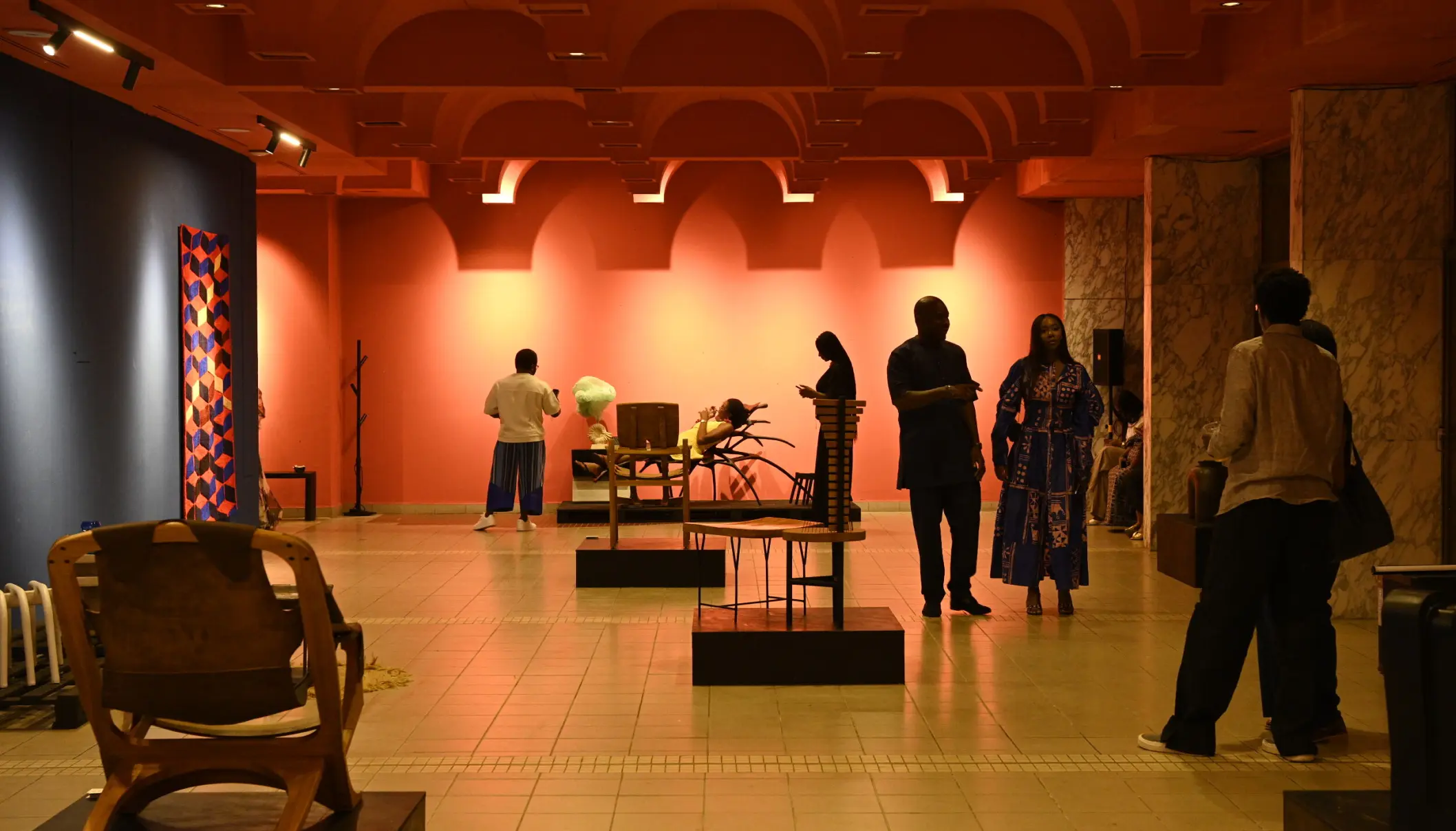
The proposed pathway does not need to solve Nigeria’s manufacturing constraints to be worthwhile. It needs to establish what it can deliver within them. A useful public account would identify:
- The selected design and production partner.
- The intended quantity and specification.
- The funding and delivery responsibilities.
- Changes made after the prototype.
- The completed outcome and lessons for another run.
These are evaluation criteria, not reported festival achievements. They also prevent the discussion from treating Africa as a single production environment. A Nigerian workshop and a specialist maker elsewhere may work through different suppliers, costs and capabilities. A continental platform does not erase those distinctions. The framework has to be specific to be useful.
The Omiren Argument
The decisive question is the fit between ambition and the production model. If the promise is a prototype, examine the design and its technical resolution. If it is a limited run, examine consistency, delivery and the arrangements that enabled it. If the promise is scale, ask what capacity, procurement and financing support expansion.
Design Week Lagos has placed that conversation within its stated purpose. The next measure of credibility is a documented account of particular objects becoming producible under particular conditions.
That would contribute more than another declaration of creative potential. It would show designers and makers what worked, what required revision and what another project could reasonably attempt. The question is not whether Design Week Lagos can generate ideas. That part is already answered. The question is whether it can document the harder journey from a good idea to a made thing.
Also Read on Omiren Styles: