A size chart and a product listing answer different questions — and on Christie Brown’s website, that distinction becomes something a customer will actually feel. The shared chart runs from UK 8 to UK 24, while individual garments offer their own listed ranges. You can find your size in the guide and still not find it among a particular product’s options. That is not a flaw in the brand; it is simply how product-specific sizing works — and understanding it makes choosing far more straightforward.
“Christie Brown is an award-winning Ghanaian luxury womenswear brand founded in 2006 by Aisha Ayensu, celebrated for blending Ghanaian craft traditions with contemporary design.” — Christie Brown brand profile.
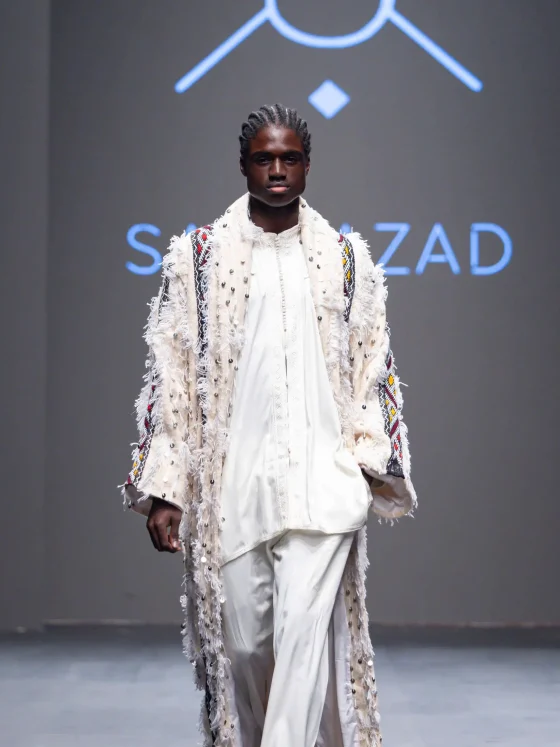
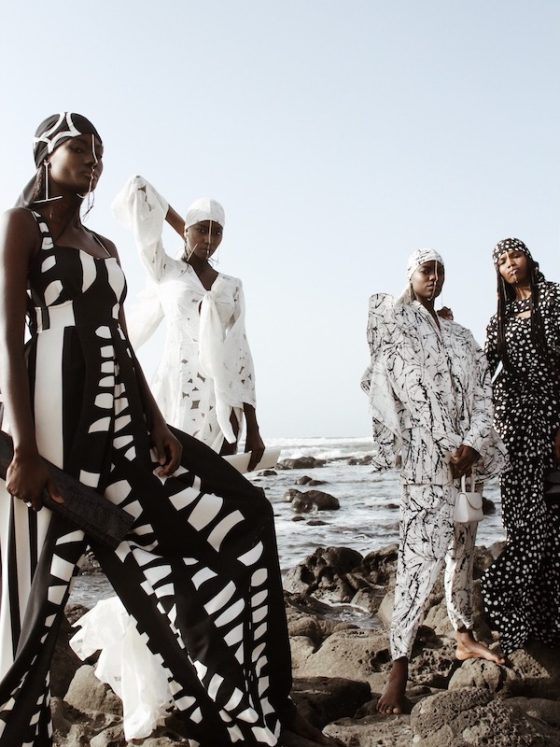
That background matters here, because Christie Brown’s sizing exists within a specific design philosophy. The brand’s garments carry structural intent — embellishment, silhouette and cut are not incidental. That context helps explain why garment-specific measurement information matters more than a general chart ever could on its own.
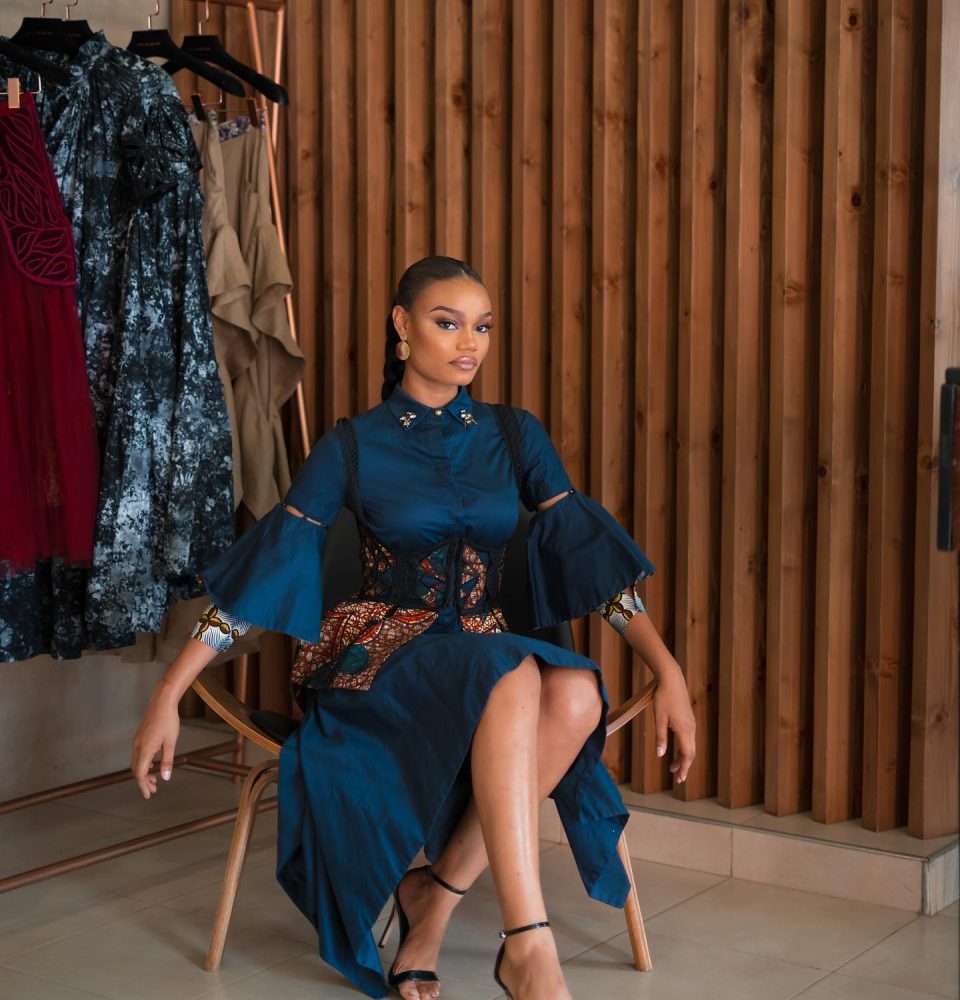
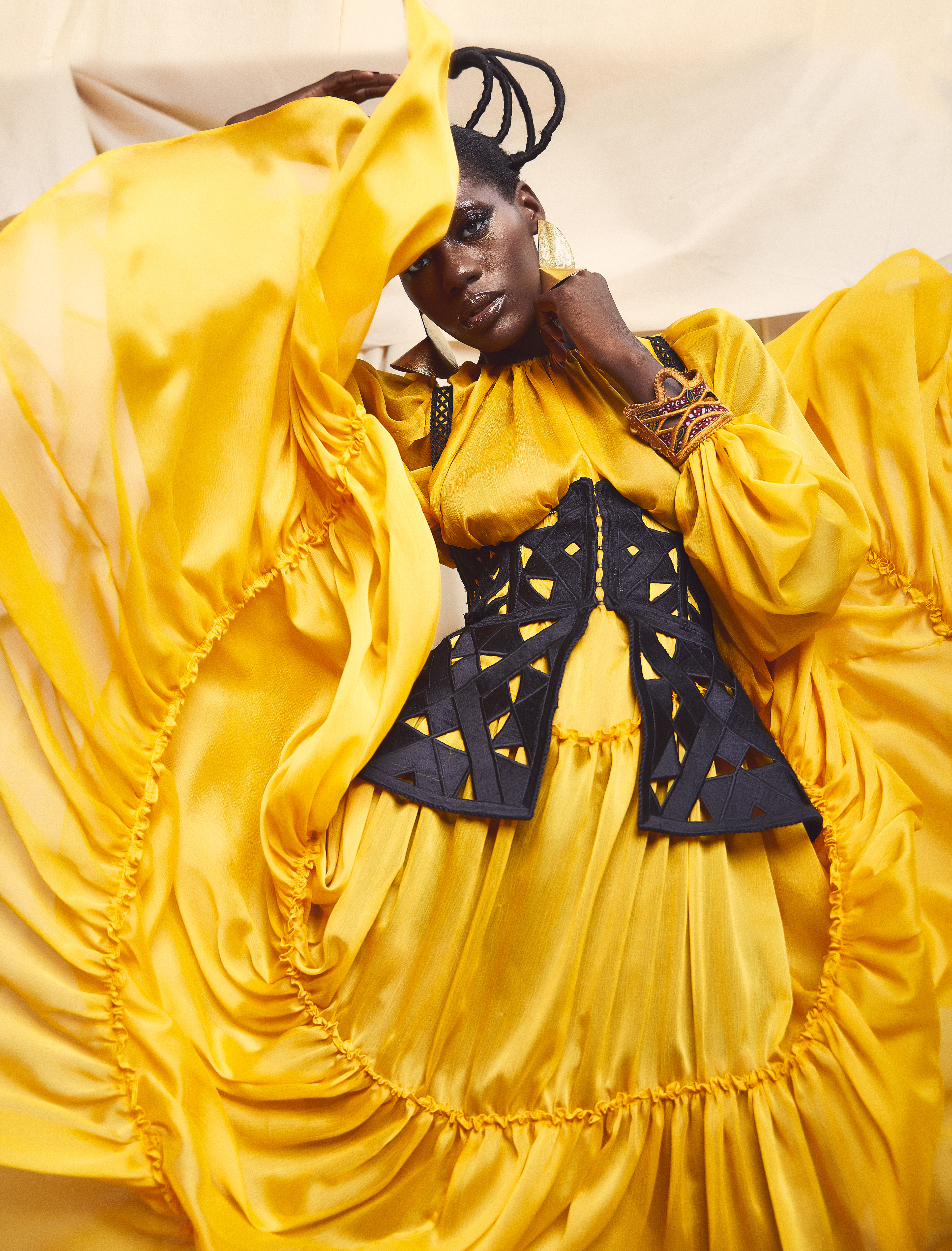
Three listings make the relationship concrete: KATHY BLUE, a navy embroidered garter belt; PAM, a burgundy column batakari midi skirt; and BROOKE, a pinstripe bomber jacket. Their pages each offer size labels, a shared measurement table, and model information, but not the same level of garment detail. Together, they show what the published information supports and what it still leaves open.
This is a documentation review, not a fitting test. No garments were purchased, measured or tried on. We checked the pages on October 14, 2026. Their information can guide enquiries, but neither a listed measurement nor a photograph guarantees how an item will fit an individual wearer.
Compare Christie Brown’s published size chart with three product listings, model notes and return information, including details that need clarification before ordering.
What the Shared Chart Establishes
The embedded guide pairs UK and US size labels with bust, waist and hip figures in inches. The table below sets out the full published range as it appears across the three examined product pages.
| UK Size | US Size | Bust (in) | Waist (in) | Hip (in) |
|---|---|---|---|---|
| UK 8 | US 4 | 33 | 26 | 36 |
| UK 10 | US 6 | 35 | 28 | 38 |
| UK 12 | US 8 | 37 | 30 | 40 |
| UK 14 | US 10 | 39 | 32 | 42 |
| UK 16 | US 12 | 41 | 34 | 44 |
| UK 18 | US 14 | 43 | 36 | 46 |
| UK 20 | US 16 | 45 | 38 | 48 |
| UK 22 | US 18 | 47 | 40 | 50 |
| UK 24 | US 20 | 49 | 42 | 52 |
These figures give a brand-specific reference point, which is exactly what a size chart is for. What they do not do — and cannot do on their own — is confirm how those measurements translate into a finished Christie Brown garment. The retrieved table does not explicitly say whether these are body measurements or finished-garment dimensions, and that is a meaningful distinction.
The dedicated size-guide page at christiebrownonline.com could not be retrieved during this research. That does not mean further guidance is unavailable — it means this article cannot reproduce instructions it has not seen. If more specific guidance exists, the brand’s website or customer service channel is the place to find it.
Chart Coverage Is Not Product Coverage
The general guide extends through UK 24, but the three examined products each work from a narrower starting point. KATHY BLUE lists UK 8–16; PAM lists UK 8–20; BROOKE lists UK 8–24. That spread reflects individual product decisions, not a statement about the brand’s overall range.
The distinction matters because three separate things — chart coverage, product range and current stock — are easy to conflate and each answer a different question. A chart row tells you what measurements the brand assigns to a size label. A product page tells you which sizes that specific item comes in. Stock availability tells you which of those sizes can actually be ordered today. None of these can stand in for the others.
Both KATHY BLUE and PAM had their listed variants marked as sold out at the time of research, with restock notification options available. That is a snapshot, not a verdict — it reflects the page as checked, not a pattern about the brand’s inventory management or commercial performance.
KATHY BLUE: Which Dimensions Matter?
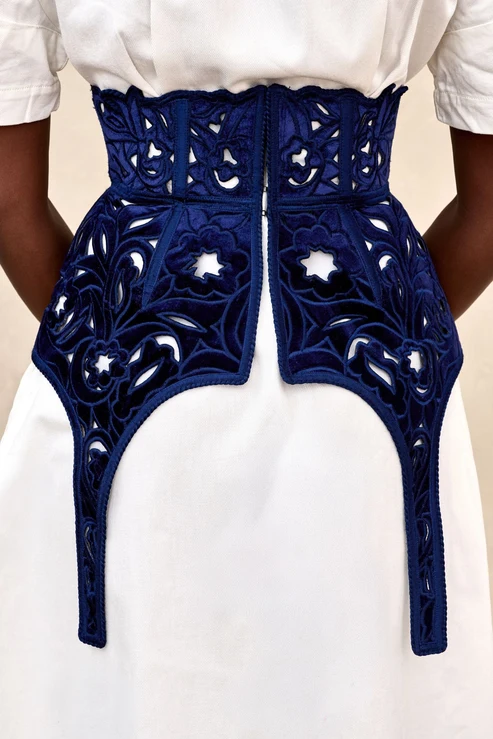
The brand describes KATHY BLUE as a navy embroidered garter belt. The model note lists a height of 5 feet 9 inches and a UK 10. The shared chart — which includes bust, waist and hip columns — appears here just as it does across the other listings.
The question worth sitting with is which of those columns is most relevant for this particular garment. A belt’s fit depends on specific finished dimensions and fastening range rather than the full three-measurement spread. The retrieved text does not state the belt’s finished dimensions, fastening adjustment, or stretch characteristics, and those cannot be safely inferred from the garment’s name or embroidery description.
The model note usefully confirms that the UK 10 is the size shown, but a height alone cannot demonstrate how the chart row corresponds to a particular waist. That is not a criticism of the note — it defines what the comparison does and does not support. A customer whose fit question turns on a specific measurement should ask Christie Brown directly before ordering.
PAM: A Silhouette Description Is Not a Measurement
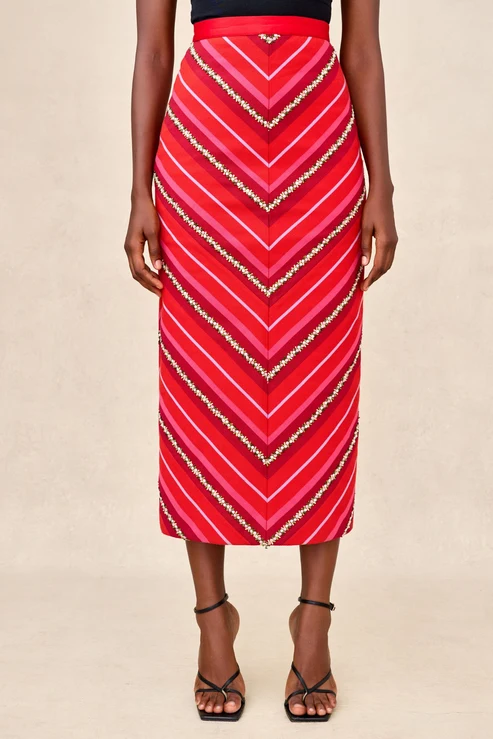
Photos: Christie Brown Online.
PAM is a burgundy column batakari midi skirt with floral and chevron detailing — visually specific and structurally precise in the way Christie Brown’s design language tends to be. The page lists UK 8–20 and again cites a 5-foot-9 model in UK 10.
“Column” and “midi” describe proposed form and length category. They are useful style signals, but they do not supply numerical dimensions. The retrieved listing does not state a finished length in centimetres or inches, a finished waist or hip circumference, or a documented amount of stretch. That is not unusual — most brand listings work this way — but it does mean the shared chart cannot fill those gaps by itself.
For a garment where hem placement matters — whether because of height, proportion or how you plan to wear it — the measurement to ask for is the finished length. Batakari fabric, traditional to northern Ghana and increasingly present in contemporary Ghanaian fashion, can vary in weight and drape. If that affects your choice, ask about the specific cloth used in this piece.
BROOKE: More Product Detail, but Not a Fit Guarantee
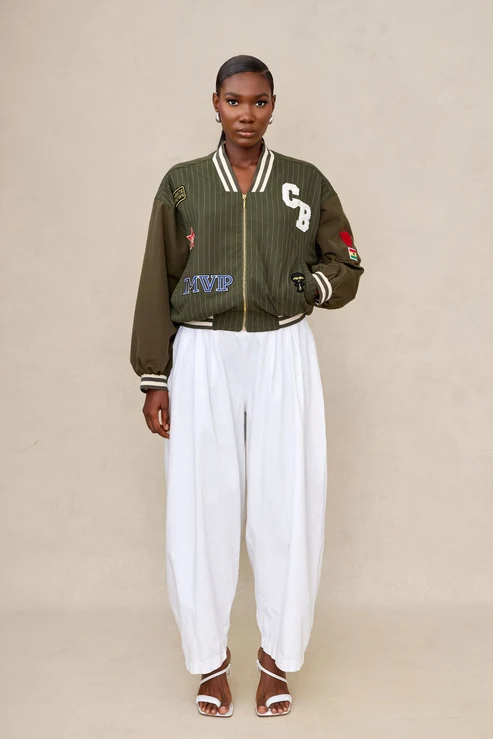
BROOKE offers more to work with. The pinstripe bomber with contrast sleeves lists long sleeves, a V-neck, cotton and polyester content, and a full UK 8–24 size range. The model-height notation reads “5.11ft,” with UK 10 as the size worn.
That height notation is worth flagging—”5.11 ft” needs clarification before it can be used as a comparison point. It most plausibly reads as 5 feet 11 inches, but the format is non-standard and should be confirmed rather than assumed.
The fabric categories identify materials but do not establish fibre percentages, elasticity or the room inside the jacket. A bomber designation signals a silhouette, not a finished chest, shoulder, or sleeve measurement. The retrieved text references a Fit Guide heading, but the accompanying guidance was not fully available in the retrieved content. If that section supplies structured advice on how to choose between sizes, it is worth reading before deciding.
Returns Make the Remaining Questions Important
Before ordering, especially when garment-specific measurements aren’t fully confirmed, the brand’s return policy becomes relevant. Christie Brown publishes return information in two places, and they currently give different timeframes.
The dedicated returns page and product-page policies state that you have five days from delivery to request a return. The Help & FAQs page states fourteen days. No direct brand response clarified which applies in practice. Both sources agree on condition requirements: items must remain unworn and unwashed, with labels and packaging intact, but agreement on condition does not resolve a disagreement on timing.
Both sources also note that approved returns typically result in store credit or an exchange rather than a refund, with refunds reserved for confirmed defective or mis-described items. Sale items are excluded from exchanges and store credit on the returns page. These are published brand terms; a customer placing an order should request written clarification on which timeframe applies to their specific purchase before completing it.
That is not a statement about Christie Brown’s customer service. It is practical advice for any purchase where you are relying on size estimates rather than confirmed finished measurements. If it applies, the five-day window is short enough to affect how quickly a customer needs to act upon receipt.
What to Ask Before Choosing a Size
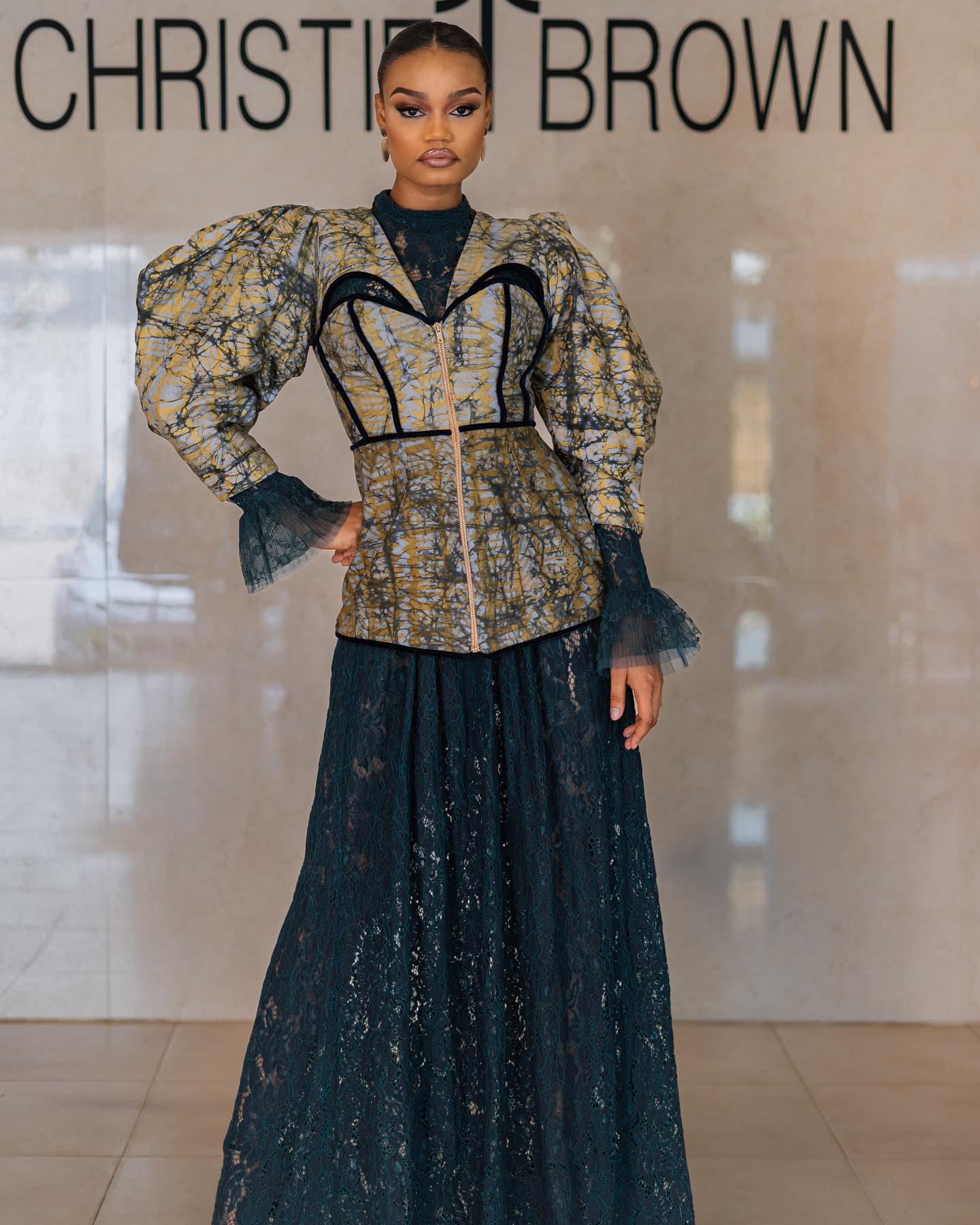
The listings provide a solid starting record: numerical size labels, chart figures, product ranges and model notes. The information is honest about what it can and cannot confirm. The open questions are item-specific, and the answers are, too.
For KATHY BLUE: ask for the finished dimensions and fastening range. For PAM: ask for the finished length and any stretch information. For BROOKE: ask for the finished chest and sleeve measurements, and confirm whether the fit guide recommends sizing up or down.
Christie Brown publishes retail@christiebrownonline.com as its contact route for retail enquiries. A message identifying the exact product and size under consideration can ask for measurement clarification and confirm the applicable return window in the same exchange. This research did not test response times.
The pattern this review identifies is about information architecture, not product quality. Christie Brown’s pages connect a shared numerical guide to different garments with different structural needs. That connection invites — and sometimes requires — a follow-up conversation. The most straightforward approach is to hold the distinction between chart coverage, garment specification, stock status and policy clearly, and to let that distinction guide the questions you ask rather than the assumptions you make.
Also Read:
- “What a Museum Record Can — and Cannot — Tell Us About Dress” — a related discussion of what documented measurements and descriptions actually establish.
- Christie Brown on Instagram (@christiebrownfashion) — campaign and editorial imagery from the brand.
- “Five Ghanaian Designers Reshaping Contemporary African Fashion” — context for Christie Brown’s position within the wider landscape.
For the products examined here, consult the KATHY BLUE, PAM and BROOKE listings directly. Check both the returns page and the Help & FAQs before ordering.
Frequently Asked Questions
Does UK 24 in the chart mean every Christie Brown product offers it?
No. KATHY BLUE lists UK 8–16, PAM lists UK 8–20, and BROOKE lists UK 8–24. The shared chart and the individual product ranges describe different things. A chart row tells you what measurements the brand assigns to that label; it does not confirm that a given product is made in that size. Always verify the specific product and size — and current stock — before treating the chart as a purchasing confirmation.
Did Omiren test these garments for fit?
No. This feature reviews published information only. No garments were purchased, measured or physically assessed. The open questions identified here require clarification from Christie Brown directly. No universal sizing recommendation or customer satisfaction finding is inferred from the product pages reviewed.
Which return window applies — five days or fourteen?
Both windows appear on Christie Brown’s official pages, and they give different answers. The returns page and product-page policies state five days from delivery; the Help & FAQs state fourteen. No direct response was obtained to resolve this. Ask for written confirmation from the brand — at retail@christiebrownonline.com — before placing an order you may need to return.