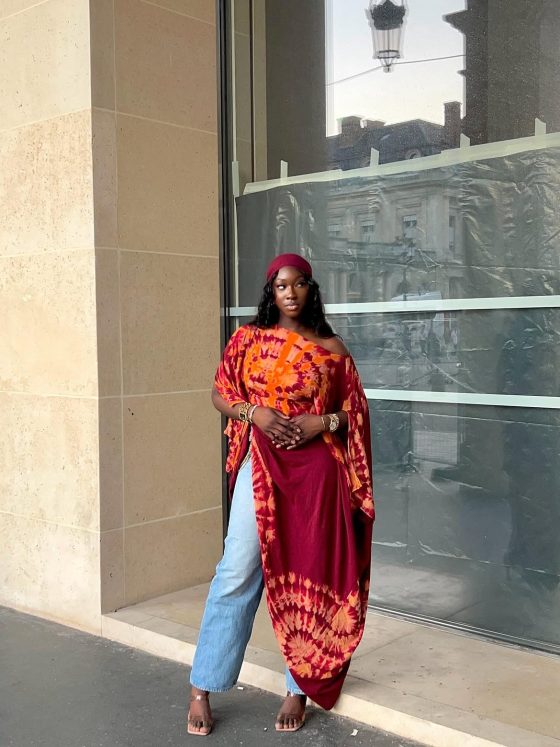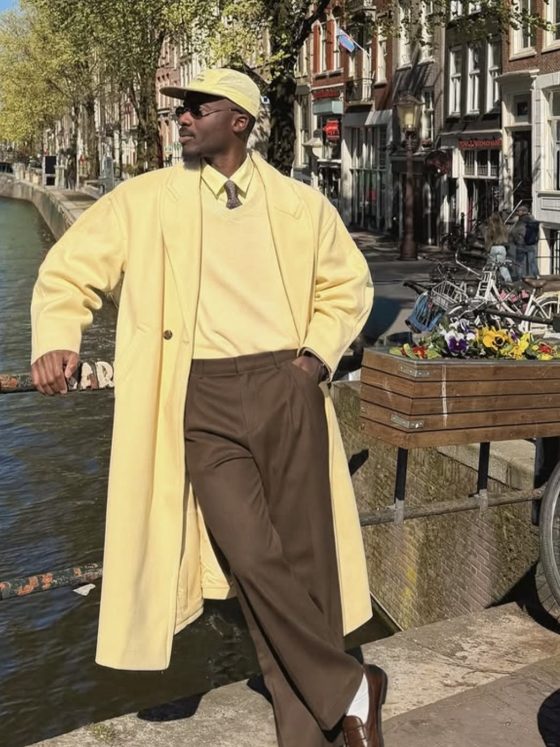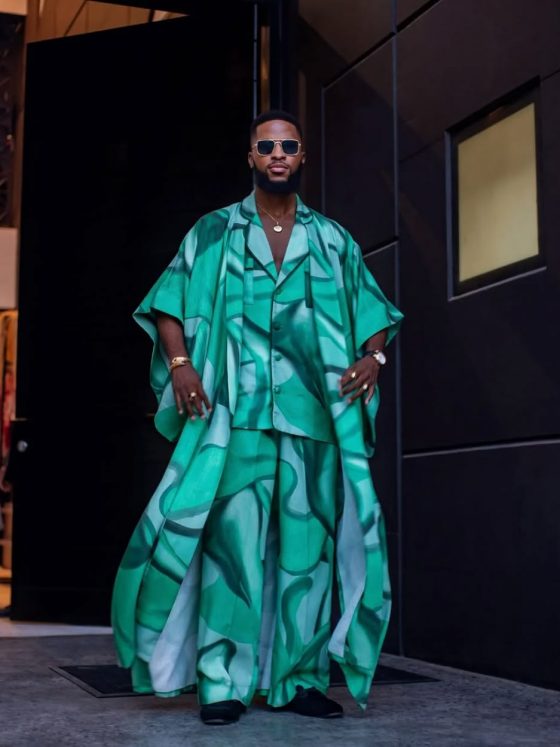
Build an occasion outfit for a cool-weather London celebration without abandoning the colour, texture or personal details that make it yours.
The outfit works in the mirror. The journey is the part you have not dressed for.
The walk to the station, the wait outside the venue, and the moment you leave a warm reception for the trip home. An occasion look that feels right indoors can become uncomfortable long before the celebration begins.
This wardrobe guide is for a specific setting: a guest attending an indoor autumn or winter wedding reception in London, with outdoor travel and brief periods outside. This isn’t a guide to prolonged outdoor ceremonies or a one-size-fits-all set of rules for every Caribbean-diaspora gathering.
The aim is adaptation. Keep the elements that matter to you, whether colour, jewellery, texture, tailoring or a particular designer, and make the complete outfit work for the occasion.
You don’t need to become visually restrained because the weather changes. Equally, Caribbean identity doesn’t require bright colour, exposed skin, or any other prescribed look. As Omiren has noted in its coverage of Caribbean diaspora designers, cultural identity in fashion is expressed through deliberate personal choices, not through adherence to an expected aesthetic. Begin with your preferences and the invitation. Then dress for the whole evening, not just for the photos.
Build an occasion outfit for a cool-weather London celebration without abandoning the colour, texture or personal details that make it yours.
Work Out Where the Cold Actually Happens
Before choosing clothes, map the event.
Will you travel by car or public transport? Is there a separate ceremony venue? Does the reception include an outdoor drinks area? Can you leave outerwear securely once inside?
These questions help distinguish an outfit for a heated room from one that must also work through a long journey.
Fashion writers and stylists often start with the same relationship between setting and clothes. Vogue Scandinavia’s occasionwear guide emphasises fabrication, sleeves, styling potential, and how an outfit works once outerwear, tights, or different shoes enter the picture. The practical recommendation here is to build two connected versions of the outfit: the reception version, appropriate to the invitation and your preferences, and the travel version, with the layers and footwear needed to get there and home.
Try both before the day. A layer that looks compatible on a hanger may catch on a sleeve, obscure a fastening or make the complete outfit difficult to move in.
Choose the Element You Want to Keep
Don’t start by replacing your preferred outfit with something you consider more winter-appropriate.
First, identify what makes it yours. It might be the movement of a dress, a pair of earrings, a strong colour combination, a tailored trouser or a garment you already associate with celebrations.
British Vogue’s wedding-guest reporting offers a useful practitioner example. Senior shopping writer Alice Cary describes selecting occasion wear with longevity in mind, looking for something she can wear beyond one event. That approach leaves room to build around an existing piece rather than buy an entirely new look.
Ask what must remain visible and what can change. If the dress is the focus, the outer layer should accommodate it. If jewellery defines the outfit, the clothing around it can take a different form. Personal continuity does not require every component to stay the same.
A Knit Dress Is Not Automatically a Warm Dress
The Diotima Notte mini dress provides a useful example. Its retailer describes a merino wool-blend construction with an open texture and fringe that adds movement. Those details explain its appeal as a textured occasion piece. They don’t show it provides enough warmth outdoors.
This distinction matters when shopping by material name. An open-knit garment and a densely constructed garment can present very different practical questions, even when both contain wool. For this event, treat the Notte as an example of reception dressing, not as a substitute for a travel layer.
If considering an open-knit dress, check its lining, coverage and recommended underlayers. Try the actual combination you intend to wear, including hosiery if wanted.
Also check how the fringe or surface treatment behaves beneath outerwear. The purpose is not to hide the garment’s character. It is to avoid discovering that your travel layer interferes with the detail you chose it for. Omiren’s Rachel Scott profile provides background on Diotima’s design practice. For this wardrobe decision, however, the relevant evidence is the particular garment’s construction and fit, not the brand story alone.
Tailoring Offers Another Route Into Occasion Wear
A dress is not the only starting point.
The Wales Bonner Rise Tailored Trouser is described by the brand as a tuxedo trouser in wool grain de poudre, with a black satin waistband, side stripe and adjustable buckle. These details give it an occasion-wear proposition without requiring a dress silhouette. The satin elements provide formal contrast within a tailored garment.
For this London reception, it could serve as the foundation for a look built around a shirt, knit or other top suited to the invitation. That is a styling suggestion, not a claim that the trouser satisfies every dress code. Check the complete outfit rather than assuming the description settles the question. A garment’s name does not determine whether your chosen combination meets the host’s expectations.
Tailoring can also preserve the details that matter to you: jewellery, a particular colour or a deliberate contrast of textures. You don’t need to treat it as a compromise because the weather ruled out your first choice.
Give Outerwear a Job Beyond Matching
The outer layer needs to accommodate the outfit and serve the journey.
Instead of starting with an ideal coat length, consider how the pieces work together. Can the sleeves sit comfortably inside it? Can you fasten it without compressing important details? Does it interfere with jewellery, fringe or embellishment? Can you sit, walk and carry your bag comfortably? Is it appropriate for the expected weather?
A decorative wrap and a protective outer layer are not necessarily interchangeable. Vogue’s formal wedding guidance distinguishes an evening wrap from tailored outerwear and emphasises maintaining the occasion’s level of formality. For this article’s setting, practicality should remain part of the choice, not an afterthought.
If you need a substantial coat for the journey, wear it. The reception outfit can have its own identity once you arrive. No practical layer needs to become the visual centre of the evening.
Plan the Underlayers With the Outfit
Consider underlayers during the fitting, not added hurriedly before departure.
Check whether they change a neckline, show through an open surface or alter how a close-fitting garment sits. If you want a visible layer, make that visibility deliberate. For an outfit that will spend most of the evening indoors, consider how you will feel after you remove the travel coat. The goal is a combination you can manage across the different settings.
The same principle applies to hosiery. It can become part of the look, rather than something you must conceal or apologise for. Vogue Scandinavia’s guide includes tights among the elements that should make sense with the dress and outerwear. There is no single correct treatment. Test colour, finish and coverage with the actual garment, in lighting that lets you judge the complete result.
Let Shoes Respond to the Journey
Choose footwear with both the invitation and your route in mind. A shoe can look appropriate for the reception but be inconvenient for walking between venues. Conversely, a practical travel pair doesn’t have to be the shoes you wear throughout the celebration.
If changing footwear is feasible, decide where the second pair will go and whether the venue has suitable storage. If it is not, select a pair you can realistically use for the whole evening.
Try the trousers or dress with the shoes you intend to wear. British Vogue’s occasionwear writer notes that she styles dresses with her usual wedding heels when assessing their overall look and fit. That is a useful habit regardless of shoe type. Do not infer comfort, grip or weather resistance from a product photograph. Those are separate considerations from how a shoe completes an outfit.
Keep Cultural Relevance Personal

Caribbean-diaspora occasion wear is not one visual category.
For this guide, the connection is the reader’s context and choices, not a uniform assembled from supposed regional preferences. A Diotima dress or Wales Bonner trousers can be a considered part of a wardrobe. Neither should become compulsory evidence of identity.
Likewise, a family piece of jewellery, an existing outfit, or a colour you enjoy doesn’t need a sweeping cultural explanation to belong at the celebration. This reflects what Omiren has argued in its wider editorial coverage, including The Global South Made Fashion. It Just Never Got Credit, the strongest case for diaspora dressing respects individual judgement rather than prescribing a collective look.
The invitation may establish shared expectations. Your choices can remain individual within them. The weather changes the practical conditions of dressing. It does not decide how visibly expressive you are allowed to be.
Check the Complete Outfit Before the Day
A final fitting should include more than the reception clothes.
Put on the underlayers, footwear and outerwear. Carry the bag. Sit down, walk and use the fastenings. Check whether you can remove the coat without disturbing the outfit and whether the bag accommodates anything you need for the journey.
Then revisit the event plan. If the outdoor portion is longer than expected, the travel version may need more attention. The most useful outfit is not simply the one that looks complete indoors. It is the one whose different components allow you to take part in the occasion comfortably and on your own terms.
Omiren Argument
Cooler-weather occasion wear should not require a Caribbean-diaspora reader to exchange personal style for a generic seasonal formula.
The practical task is to connect the outfit to the setting: the invitation, the journey, the room and the time spent outside. Real garments help make that discussion specific. An open-knit wool-blend dress presents different questions from a tailored wool trouser. A wrap does different work from a protective coat. Those distinctions matter more than broad claims about what Caribbean style should look like.
Omiren’s position is that adaptation should preserve choice. Start with what matters to the wearer, then make the complete outfit workable. The best result is not a prescribed winter identity. It is an occasion look that still feels like yours when you leave the house and when you finally arrive.
ALSO READ
- Rachel Scott: The Jamaican Designer Who Remade the Terms of American Luxury Fashion
- We Tried On 16 Wedding-Guest Outfits So You Don’t Have To
- What to Wear to Every Wedding This Year
- The Global South Made Fashion. It Just Never Got Credit.
Frequently Asked Questions
What setting does this guide cover?
An indoor autumn or winter wedding reception in London, with outdoor travel and brief periods outside. It is not designed for a prolonged outdoor ceremony.
Does cooler weather rule out an open-knit dress?
Not automatically. Check coverage, underlayers and outerwear rather than assuming a wool content alone settles warmth. The Diotima Notte is described as open-knit and is used in this guide as a reception example, not a complete cold-weather solution.
Can tailored trousers be an occasion-wear starting point?
Yes, where the invitation permits your complete outfit. The Wales Bonner Rise Tailored Trouser provides a documented example with tuxedo detailing and satin contrast.
Do I need to buy from a Caribbean or diaspora designer?
No. The guide prioritises the wearer’s preferences and the event’s practical requirements, not a compulsory brand list.