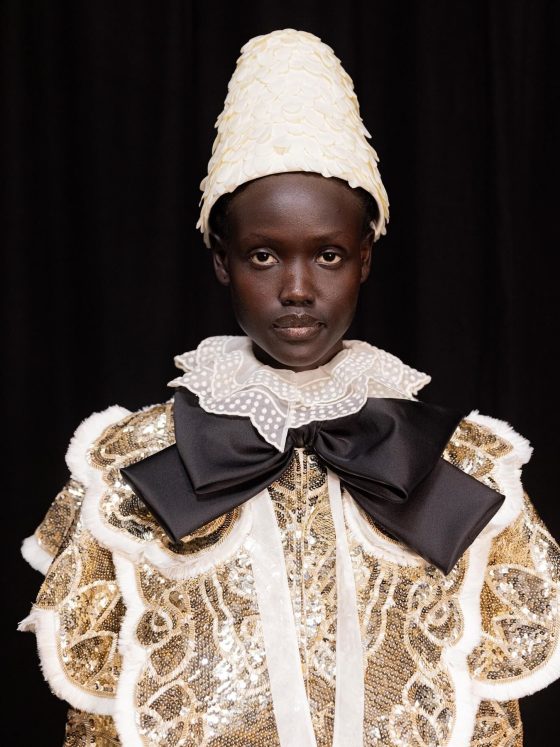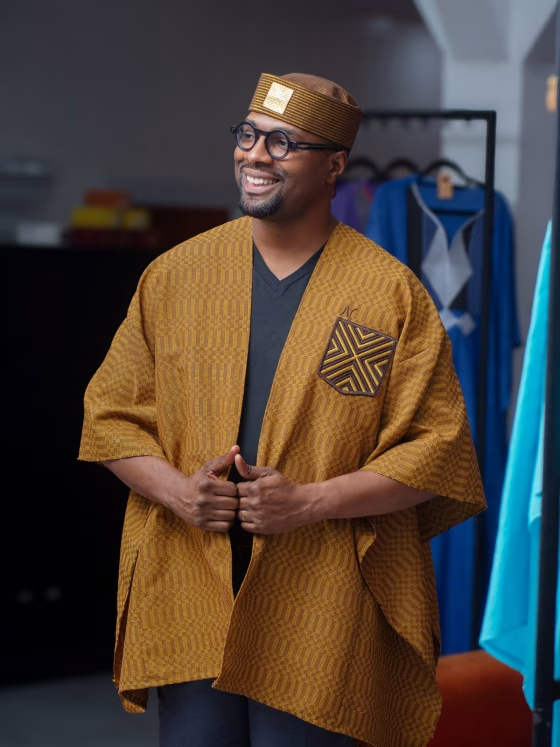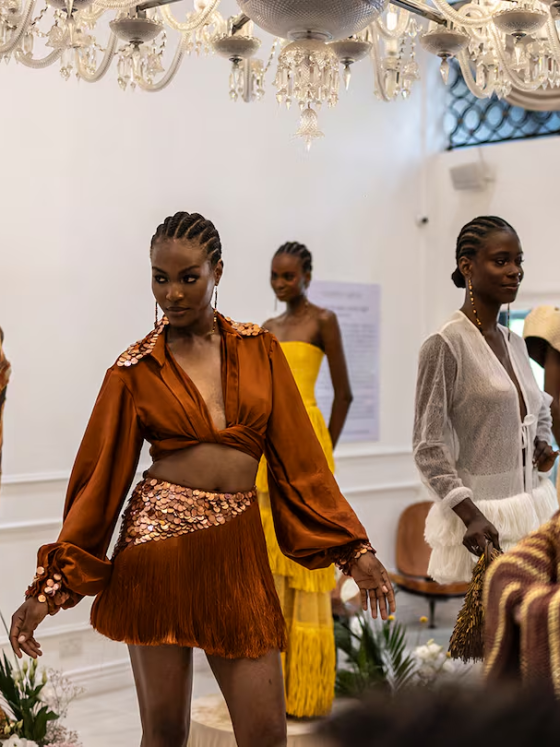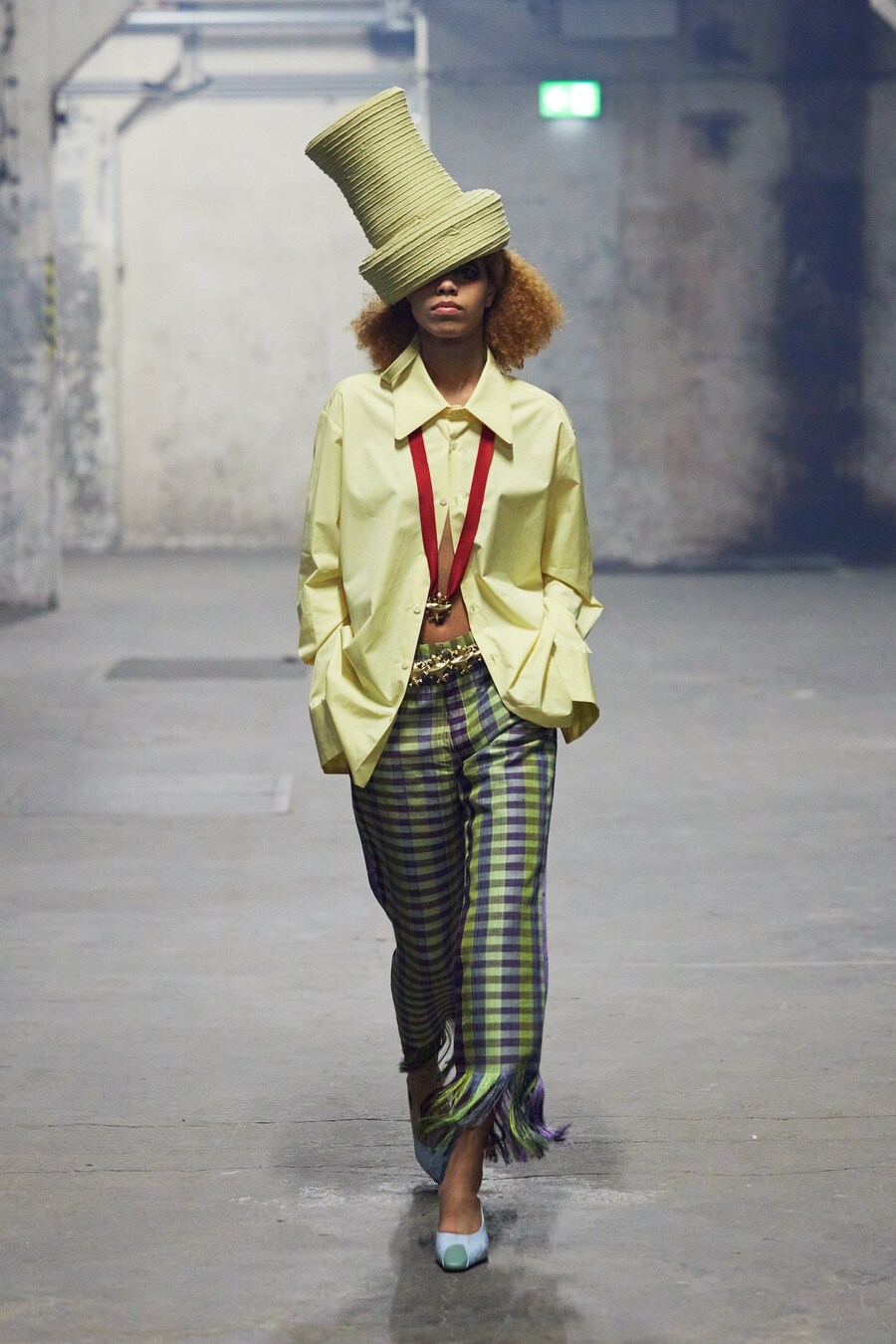
The most interesting thing about this Kenneth Ize jacket is not how much colour it contains. It is where the colour stops.
A vertically striped front sits between plain brown sleeves, with brown trousers continuing the quieter surface below. The eye goes first to the torso, then to the shape surrounding it. The pattern supplies the energy; the tailoring gives it direction.
The look belongs to Ize’s Autumn/Winter 2026 collection, ‘JOY’, presented during Intervention at Berlin Fashion Week. Published coverage identifies collaboration as central to the collection and describes a material vocabulary that includes aso oke, velvet, wool, lining, and denim. These are collection-level details, not confirmation of the fabric used in this particular jacket.
The collection’s title offers an emotional starting point. This outfit offers something more concrete to examine: how a designer makes several colours, competing lines and formal details coexist without giving each equal emphasis.
Close reading of one jacket from Kenneth Ize’s Autumn/Winter 2026 collection JOY, presented at Intervention during Berlin Fashion Week. The analysis focuses on how pattern, tailoring and placement organise colour across the garment.
Giving Colour a Boundary
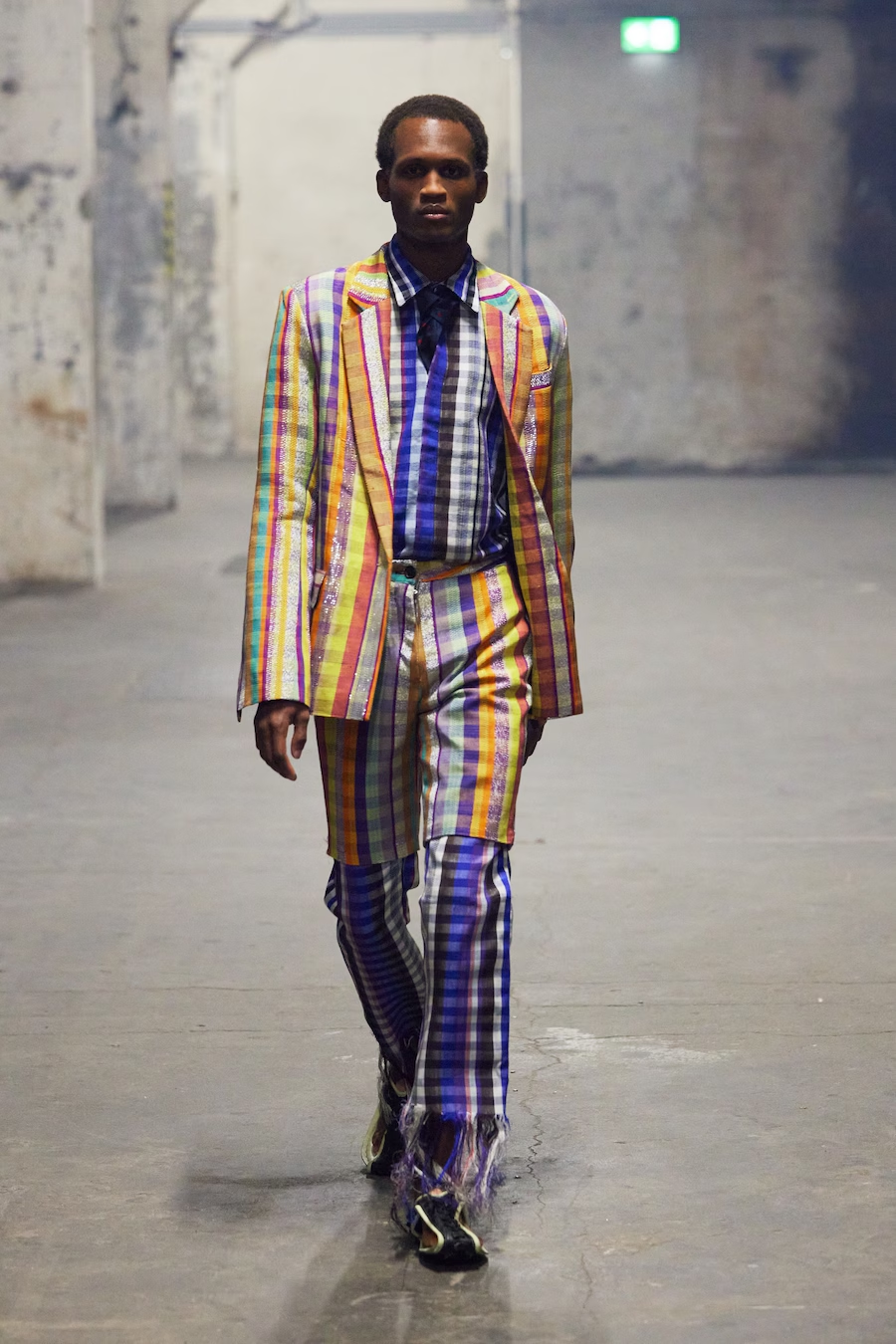
The jacket’s front brings together narrow stripes in pink, reddish, green, yellow and pale tones, separated by darker bands. Changes in width and small surface details prevent the pattern from becoming a uniform sequence.
The brown sleeves are essential to its effect. They establish a clear outer edge rather than carrying the stripes across the entire upper body. The patterned front remains prominent, but the arms and shoulders retain a distinct outline.
The trousers extend this restraint. Their plain surface keeps the jacket the centre of attention without making the outfit feel abruptly divided at the waist.
What works here is not simply the contrast between colourful and neutral areas. It is their placement. The more active surface occupies the torso; quieter areas surround it. The eye can register the pattern and still understand the silhouette.
The jacket’s shape reinforces that arrangement. Its middle appears relatively narrow before the lower panels extend over the hips. The front opens beneath the fastening, allowing the brown trousers to reappear between the patterned sections.
Vertical stripes encourage a downward movement. The shaped torso interrupts that movement just enough to prevent the jacket from reading as a flat column of cloth. The opening below adds separation without abandoning the pattern.
That approach connects to a longer argument in how heritage textiles organise their surface. Woven textiles with inherent vertical or horizontal structure do not simply decorate a garment. They assert a logic of their own, and the designer’s job is to work with or against that logic rather than override it. Ize’s placement of the striped panel at the torso works with the textile’s vertical movement while using the tailored shape to hold it in place.
Where the Balance Becomes Complicated
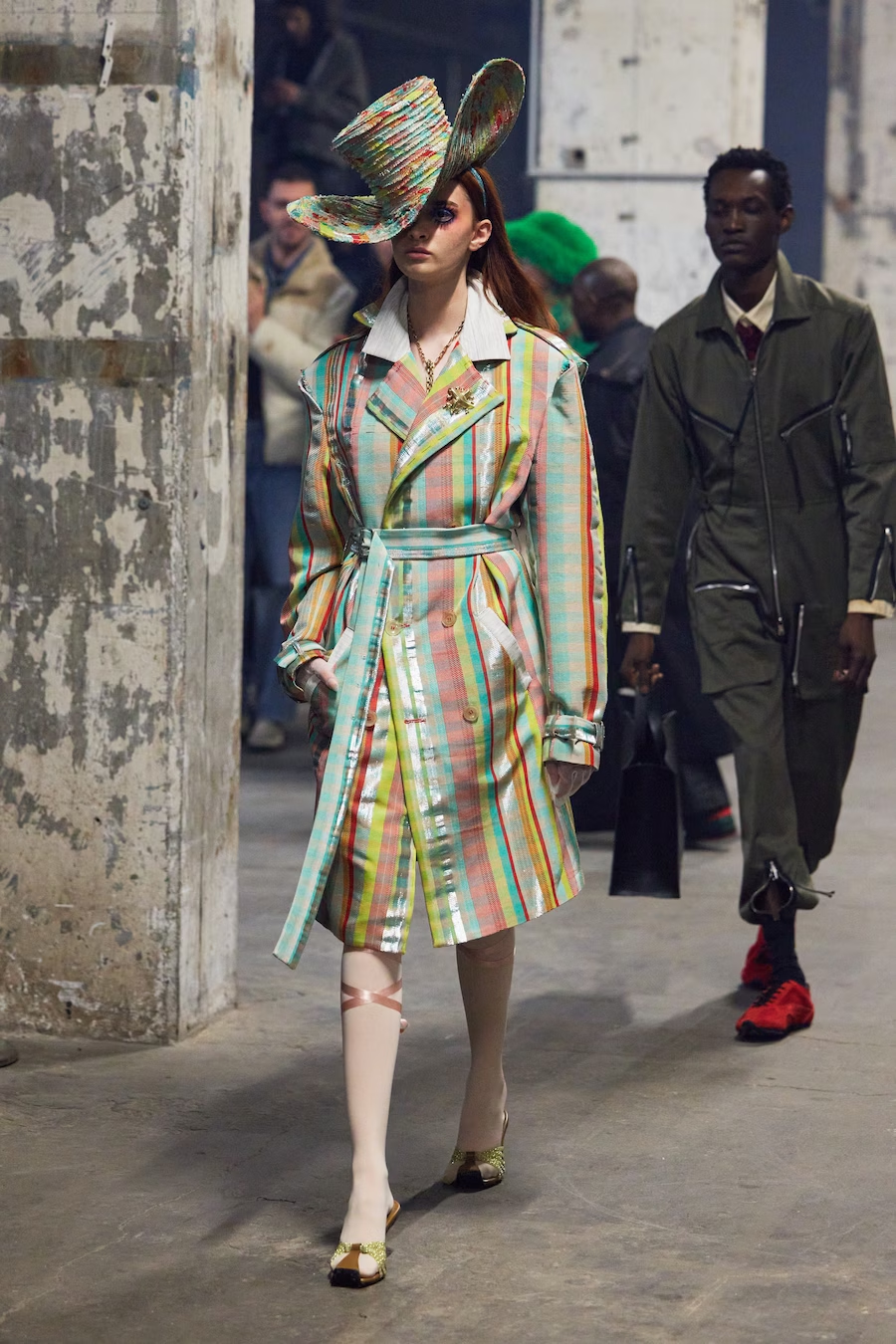
The lower pocket flaps introduce horizontal lines across the stripes. Their mix of patterned and plain brown areas makes them noticeable, rather than letting them disappear into the front.
That decision gives the jacket character, but it also makes the lower half more demanding.
Above the pockets, the arrangement is comparatively clear: a patterned torso, a central fastening and a defined neckline. Around the hips, pocket flaps, longer front panels and the opening between them compete for attention.
The brown portions of the pockets help connect these interruptions to the sleeves and trousers. They belong to an established colour structure rather than introducing an unrelated contrast. Even so, the lower front feels busier than the upper section.
This is the jacket’s most interesting tension. Its construction does not merely contain the stripes; visible garment details interrupt their rhythm. The result is organised, but not seamless.
The buttons provide a useful central axis. They give the eye a route through the patterned surface, while the smaller chest pocket adds another interruption without carrying the visual weight of the lower pockets.
The jacket succeeds most clearly where these divisions remain easy to follow. Its longer lower panels push the arrangement closer to excess. That slight imbalance makes the design more engaging than a perfectly tidy colour distribution would.
The aso oke tradition’s relationship to the body is part of the relevant context here. West African woven textiles are not designed for a single silhouette. They are made to be wrapped, draped, or cut across the body in ways the wearer negotiates with the cloth’s pattern. When a jacket format is applied to a woven textile with a strong vertical structure, as appears to be the case here, the pocket placement is not a neutral choice. It is a decision about how much a tailored convention can interrupt a textile’s own logic before the two begin to conflict.
Formal Details, Precise Emphasis
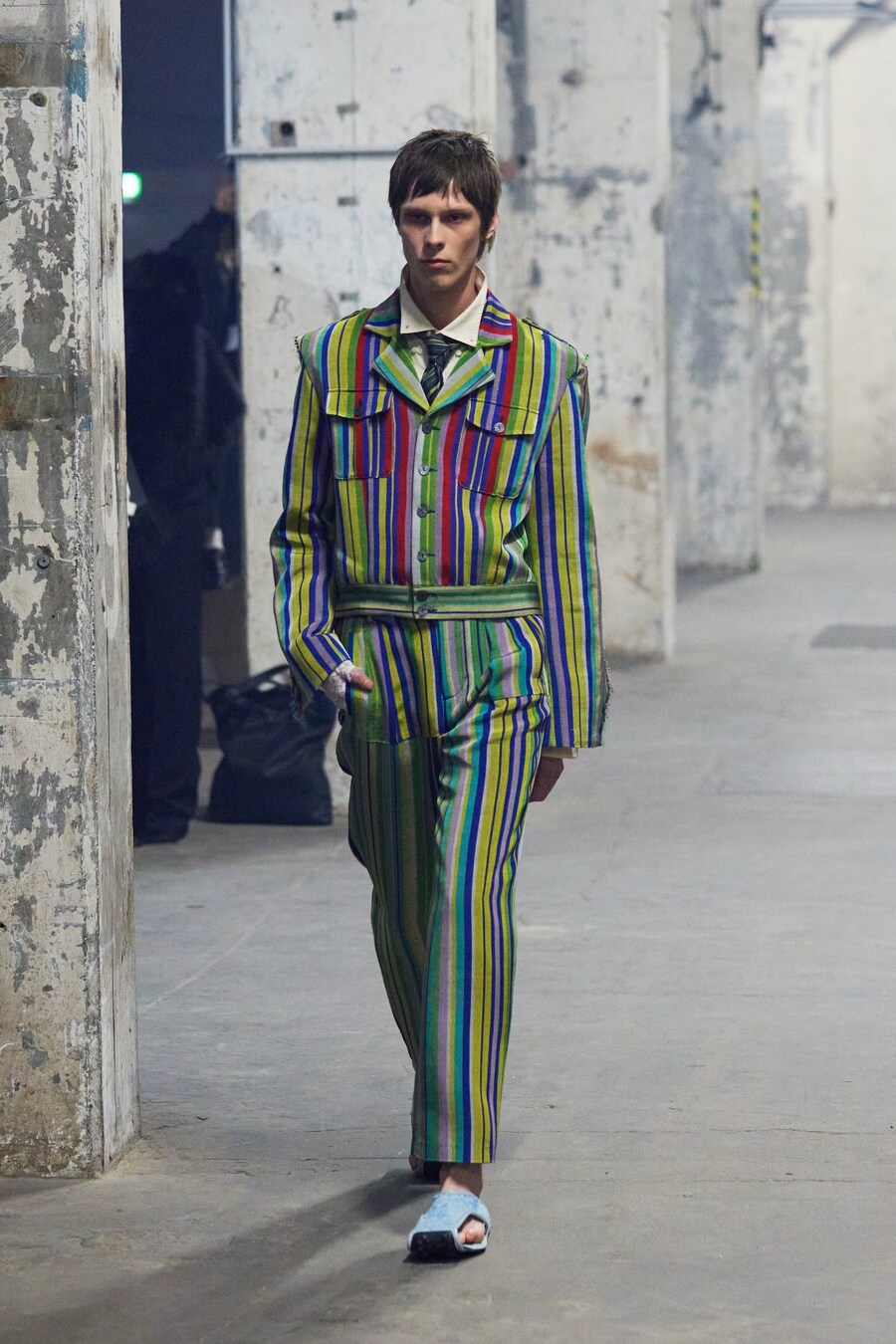
The white collar and cuffs introduce crisp edges against the more active jacket front. They separate the neckline and sleeve endings from their surroundings, giving familiar formal details an unusually visible role.
Purple neckwear adds another colour near the face. Its scale matters: it occupies a small area rather than creating another large pattern field.
The collar could have looked detached from the textile’s softer visual texture. Here, its sharpness provides a useful counterpoint. The purple accent is more conspicuous, but it does not displace the jacket as the main event.
Both the collar and the neckwear demonstrate a compositional principle that runs through the outfit as a whole. Emphasis appears in small doses and is concentrated near the face, where the eye naturally travels first. The pattern below is the main subject; the details above sharpen it.
The relationship between the formal details at the collar and cuffs and the striped textile in the body of the jacket is worth sitting with. The collar and cuffs are conventions borrowed from tailored suiting. The textile they are attached to carries a completely different set of associations, rooted in handcraft, community production and occasions of gathering rather than the office or the formal dinner. The jacket does what Ize has consistently done across his career: it places two different dress traditions in the same garment and asks what they produce together.
What the Jacket Is Doing
Vogue’s collection review discusses togetherness alongside details like reversed pockets and exposed construction. That broader account helps situate the look, but this jacket is best understood through the relationships visible on its front, not through claims about a back view or concealed construction.
Its achievement is specific. Ize gives a vivid patterned surface boundaries, then complicates those boundaries with pockets, fastening and proportion. The plain areas do not reduce the textile’s impact. They make its impact legible.
The outfit is strongest through the upper torso, where colour and shape feel concentrated. Below the pockets, the arrangement becomes less settled. That is worth acknowledging: the jacket is persuasive not because every detail produces effortless harmony, but because its competing elements mostly hold together.
What holds them together is a decision that precedes everything visible in the garment: the decision to use a strongly characterised textile and to let that textile lead. The tailoring responds to the cloth, not the other way around. That is not an inevitable choice, and the history of how African textiles have been used internationally is partly a history of that choice not being made, of textiles being used as surface decoration on Western silhouettes rather than as the primary logic the garment is built around. In this jacket, the stripe tells the body where to look. The body obliges.
The Collection Context
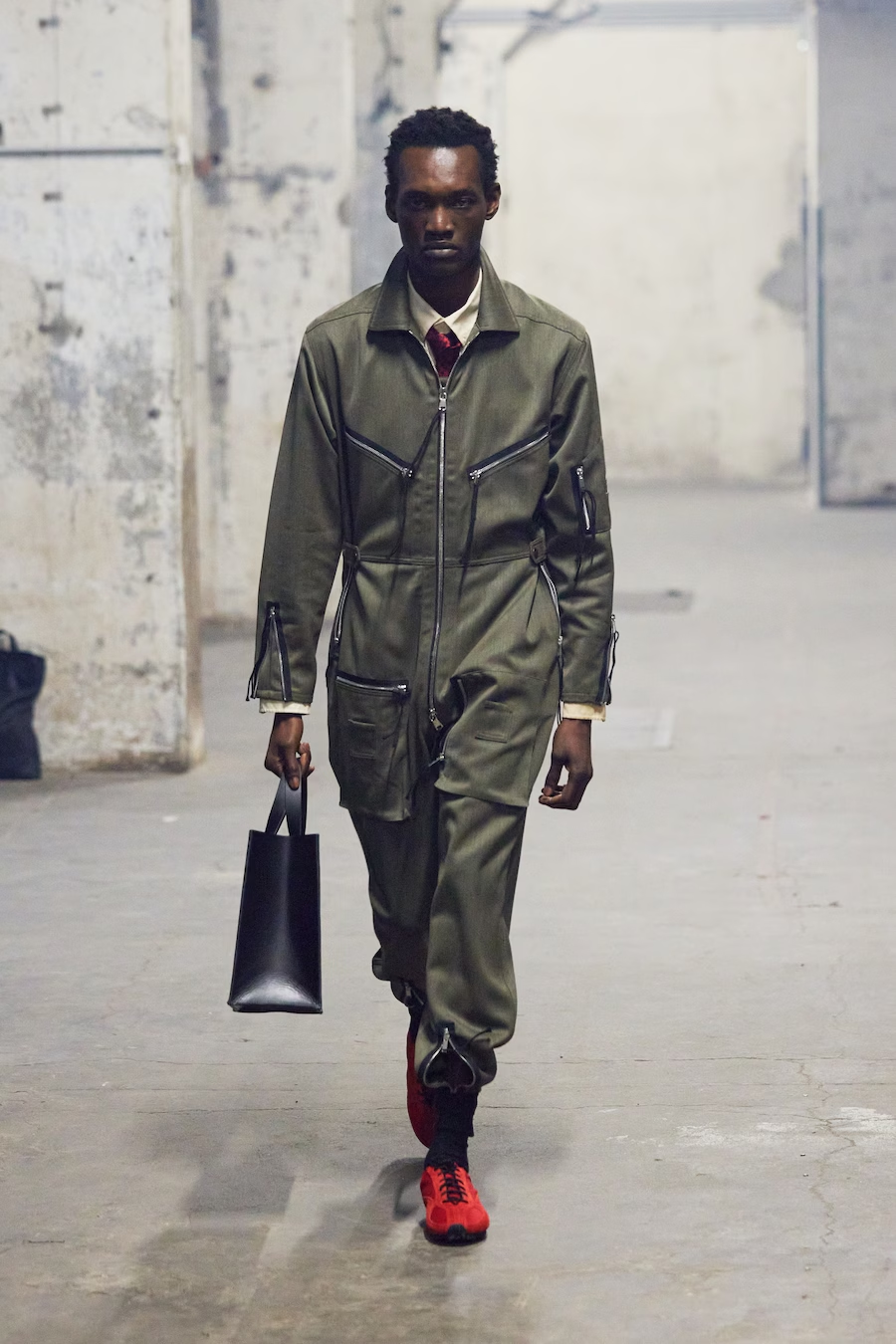
The AW 2026 collection titled JOY was presented at Intervention, a showcase at Berlin Fashion Week, in February 2026. Published reporting describes collaboration as central to the collection: Ize’s creative process involved exchanges with James Tennessee Braindt, Rodney Patterson, KK Obi, Giovanni Mareschi, Ceecee, Affa Osman, Michael Musa, Jd Ankomah and Reference Studios, among family and friends. Ize described those conversations as woven into the textiles themselves.
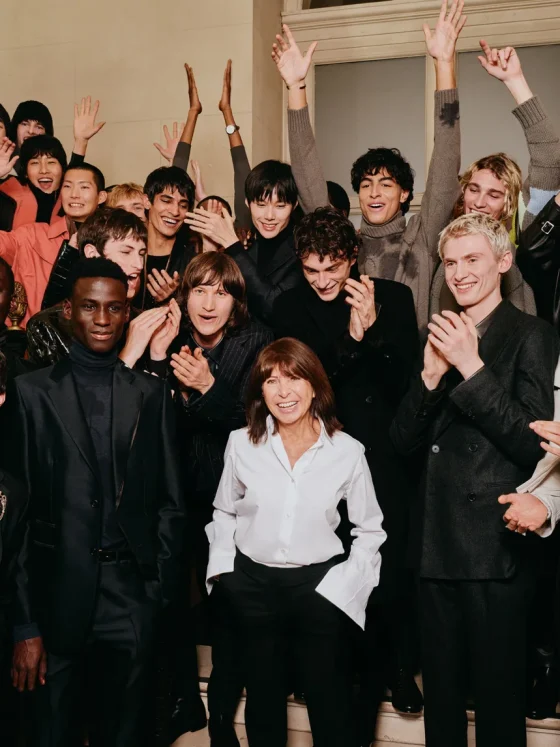
Published coverage reports the collection’s material vocabulary includes aso oke, velvet, wool, lining and denim. Published descriptions of the silhouettes identify trench coats, overalls, and hats among the forms shown, alongside a deconstructed aesthetic paired with structured tailoring. Shin Jeong Hoon photographed the backstage images.
That collection-level information frames this jacket without determining everything we can say about it. The specific garment is best understood by closely examining what the supplied photographs show. Those photographs show a jacket that organises a vivid woven surface through placement, proportion, and a set of formal details applied with restraint.
ALSO READ
- Can Heritage Textiles Scale Without Losing Their Meaning?
- How Adire Cloth Holds Memory, Labour and Place
- The Global South Made Fashion. It Just Never Got Credit.
Frequently Asked Questions
Which collection does this jacket belong to?
The jacket is identified in the supplied AnOther gallery as Kenneth Ize Autumn/Winter 2026. Published collection coverage names the collection JOY and places its presentation at Intervention during Berlin Fashion Week in February 2026.
What makes the jacket distinctive?
Its vertically striped front contrasts with plain brown sleeves and trousers. Horizontal pocket flaps interrupt the stripes in the lower section, while a white collar, white cuffs, and purple neckwear create smaller points of emphasis near the face. The interest lies in how these details organise the pattern, not in colour alone.
Is this particular jacket made from aso oke?
That has not been verified. Published reporting on the collection’s material vocabulary mentions aso oke, but collection-level information does not establish the composition of this individual garment. The visual analysis in this article is based on the supplied photographs and does not claim to identify the specific textile.
Where did the supplied photographs come from?
The photographs came from AnOther’s Kenneth Ize Autumn/Winter 2026 gallery. The gallery’s photographer credit has not been independently verified, and the URL’s page reference should not be treated as an official runway look number. Photographer attribution and reproduction permission remain unconfirmed before publication.
What does the collection title JOY mean for this garment?
Published coverage describes JOY as a collection that reframes joy not as distraction but as emotional resistance, asking what has been done wrong and tracing vulnerability and community through the garments. The jacket’s specific relationship to that theme is not separately confirmed in published coverage. The article’s visual analysis focuses on what the garment demonstrates through its design rather than on claimed connections to the collection concept.
Who are the collaborators named in the collection?
Published coverage and Ize’s own statement name the following collaborators on the AW 2026 collection: James Tennessee Braindt, Rodney Patterson, KK Obi, Giovanni Mareschi, Ceecee, Affa Osman, Michael Musa, Jd Ankomah and Reference Studios, alongside family and friends. Shin Jeong Hoon took the backstage photographs from the Intervention presentation.