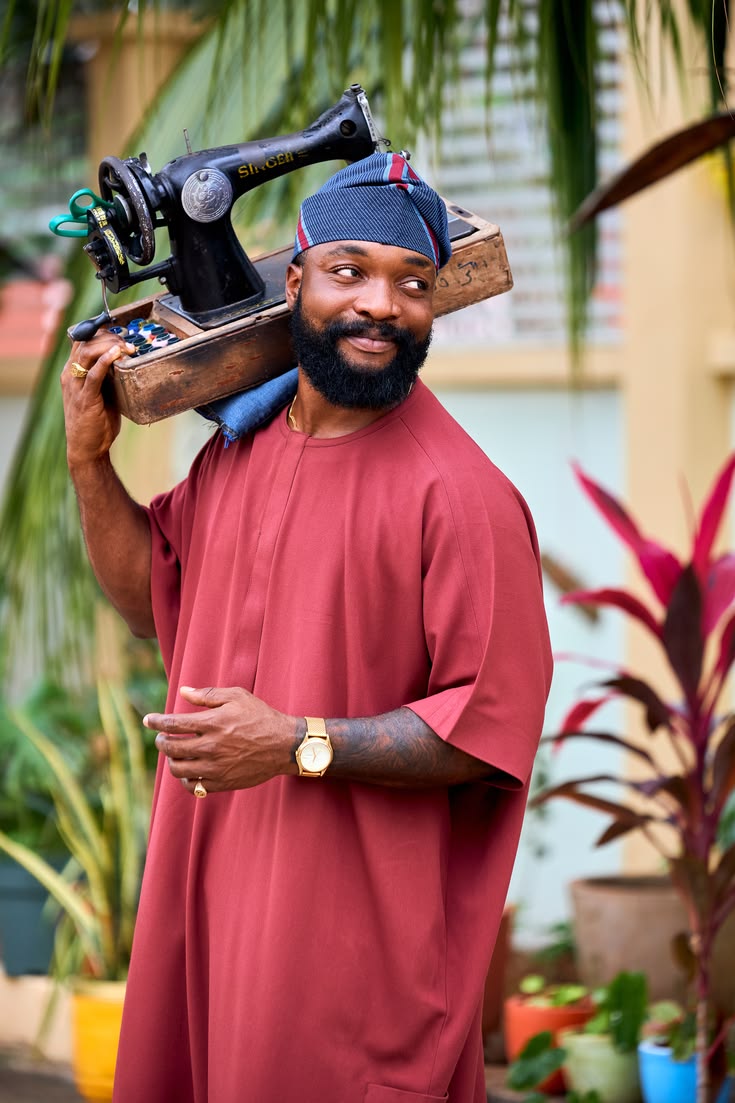
Before bespoke became a buzzword, African tailors were already perfecting the art of made-to-measure fashion.
As Ekinken documented in its January 2026 analysis of the untold story of African tailors, in cities like Lagos, Accra and Nairobi, tailors form the backbone of the fashion ecosystem. They are the reason why custom-made clothes remain a cultural norm across Africa. Whether it is the neatly tailored agbada, an ankara two-piece, a flowing boubou or a figure-hugging ankara dress, the tailor stands at the heart of the creative process. They are interpreters of design, translating sketches and fabric choices into garments that serve multiple occasions. Their work bridges creativity and culture, technique and tradition. Tailors are not just producers; they are custodians of heritage.
That is a description of what a tailor does in Lagos, Accra, or Nairobi. It is not the description of what formal fashion coverage documents. In the industry reports, the brand profiles, the retail analyses and the runway coverage that constitute the international record of African fashion, the tailor is largely absent. The brand that commissioned the tailor may be named. The garment the tailor made may be photographed. The tailor who made it is not in the record.
This article is about what the tailor does in the last mile of African fashion, why they are there, what they provide that formal commerce cannot, and what the industry’s systematic failure to document them says about whose contribution the record has been designed to capture.
The last mile of African fashion is not the delivery driver. It is the person in the market who takes what was delivered and makes it fit. That person’s name is almost never in any commercial record. Their labour is the difference between a garment sold and a garment worn.
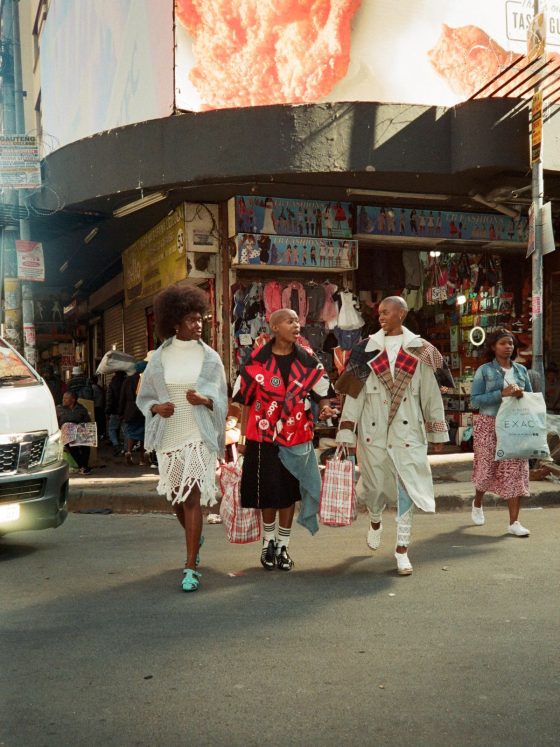
In African markets, the last mile of fashion commerce is frequently a local tailor. They alter, reproduce and create what formal commerce cannot provide. Their invisibility in the commercial record is a documentation problem, not a measurement of their importance.
What the Last Mile Is
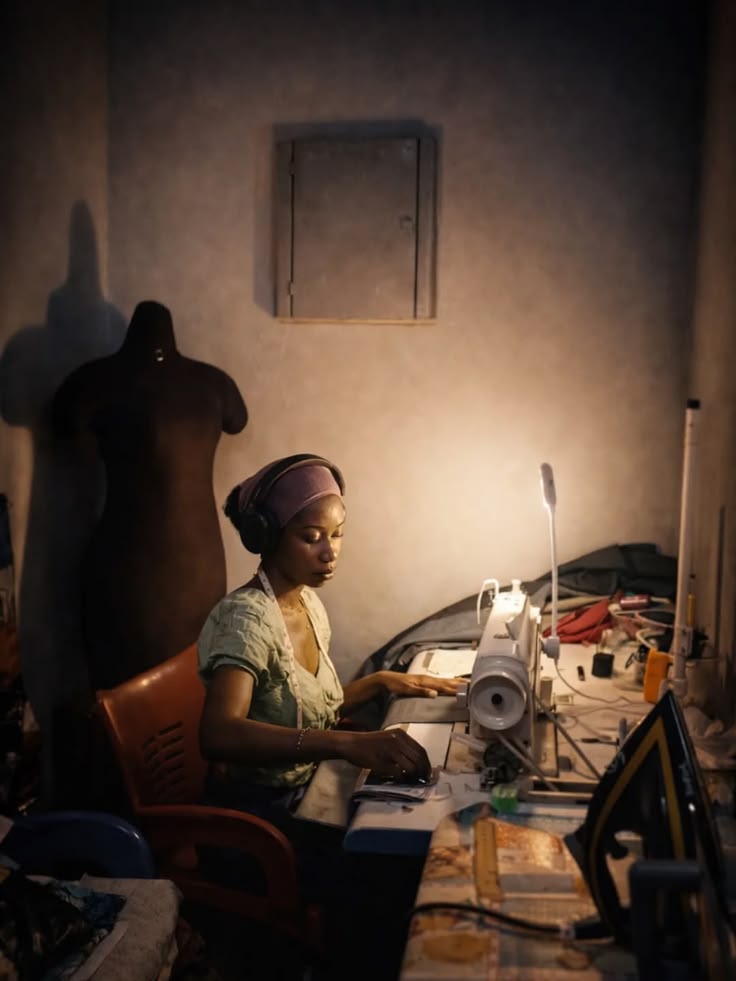
The logistics industry uses ‘last mile’ to describe the final stage of a product’s journey from distribution hub to the end customer: the most expensive, most complex and most variable segment of the delivery chain. In fashion logistics, the last-mile problem is often described as a delivery problem: how does the parcel get from the courier’s van to the customer’s door?
In African fashion markets, the last mile is rarely a delivery problem. The fabric arrived. The garment arrived. The customer has access to the product. The last mile is a fit problem, a price problem, a style adaptation problem or an occasion requirement that the formal commercial system has not anticipated.
The fit problem: ready-made garments are produced using standard sizing systems developed in contexts where body distributions do not match customers’ bodies. The solution is not a return, whose cost and logistics this series has already documented as structurally prohibitive for African markets. The solution is a local tailor who takes in the waist, lets out the hips, shortens the hemline, adjusts the sleeves and produces a garment that fits.
The price problem: the brand’s garment is priced for an international market whose purchasing power does not reflect the local economy. The local customer wants the design, not the brand premium. The solution is a tailor who reproduces the design at a locally sustainable price, in fabric chosen from the local market, fitted to the specific person who commissioned it.
The style adaptation problem: the brand’s design was created for a climate, occasion, or cultural context different from the customer’s. The solution is a tailor who adapts the silhouette, fabric, hemline, or details to the specific occasion the customer needs it for: a wedding in the specific community’s style, a ceremony whose dress code is not served by any ready-made product available in the formal market.
The occasion problem: the customer needs a garment that does not exist as a ready-made product. A specific combination of fabric, colour, embroidery, silhouette, and occasion-specific detail that the formal market has never catalogued because it is too local, too specific, and too small a commercial opportunity for a brand to address. The tailor addresses it as a matter of course.
The Scale of What the Tailor Economy Is
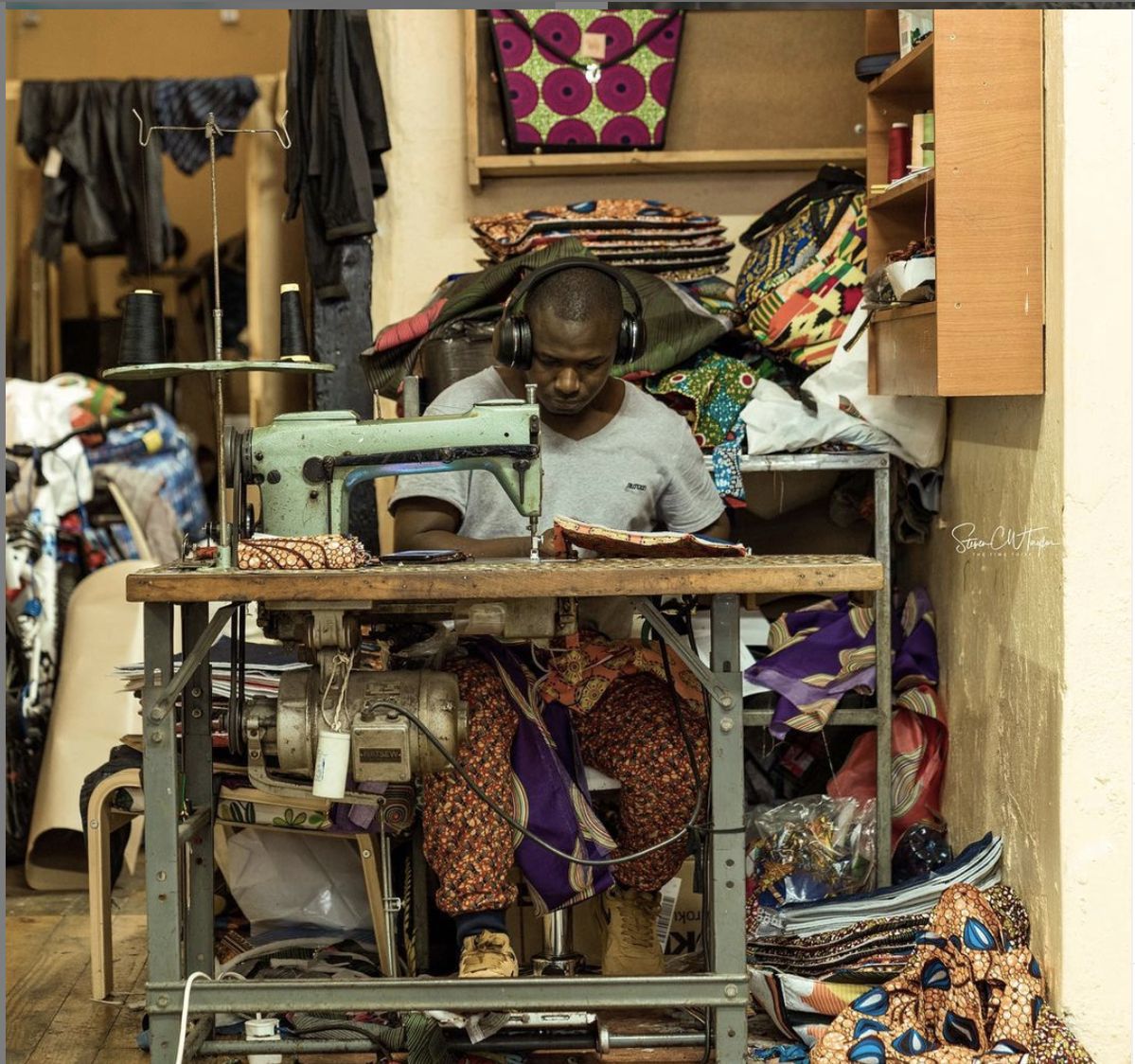
The global tailoring and alteration services market was valued at $9.82 billion in 2025, growing to $10.3 billion in 2026 at a compound annual growth rate of 4.9%, and projected to reach $14.1 billion by 2034. That figure is the documented market: the tailoring operations that are formally registered, invoiced and captured in market research. The informal tailoring economy in African cities is not captured in that figure. It operates outside the formal record, in the market stalls, the workshop annexes, the home sewing machines and the open-air workspaces that are as present in Lagos, Accra and Nairobi as any brand retail outlet.
The growth drivers in the global tailoring market are instructive about why the African tailor economy is not in decline. Poor standard apparel fit, rising online clothing sales, demand for sustainability-led garment repair, and growth in formal, occasion, and ethnic wear consumption are the primary drivers of the global market. Each of these drivers is more present, not less, in African fashion markets than in the markets where the formal tailoring industry is most developed.
Poor standard apparel fit is a chronic problem in African markets served by global ready-to-wear, because the sizing systems embedded in most international garments were not designed for the body distribution of most African consumers. Online clothing sales are growing faster in African markets than in most mature markets. Occasion-wear demand, driven by the ceremony culture that this series has documented across Nigerian, Ghanaian, Togolese, Somali, and Ethiopian fashion traditions, is structural and sustained. The African tailor economy is not a heritage practice persisting in the margin. It is the primary solution to a set of formal market failures that global fashion has not addressed.
The Tailor and the Secondhand Economy
As Global South Policy Review has documented in its analysis of the creative clothing economy in Africa, open-air tailors and seamstresses working from markets and homes are busy sourcing readily available secondhand clothes for alteration and creative redesign into new garments. Most operate within their country’svaste informal economy, lacking substantive state support orlong-term sponsorships. The fashion potential from the creative clothing economy in African countries has not been tapped. At the same time, secondhand clothing has not fallen out of fashion. Used clothes are being repurposed with fresh fashionable spins.
The relationship between the tailor and the secondhand clothing market is one of the most commercially significant yet least documented features of the actual economy of African fashion. A used garment entering the African secondhand market from European or North American charity and resale flows is not a finished product when it arrives. It is raw material: a garment that may be disassembled, altered, combined with other garments, dyed, embroidered or restructured by a tailor or seamstress who creates something new from what was discarded elsewhere.
That value-creating transformation is not captured in any formal market data because it occurs in the informal economy. The garment, which originated in a British charity shop and now exists as an altered, embroidered dress worn at a wedding in Accra, has undergone a value-creation process at least as significant as anything in its formal production chain, yet the tailor who performed that transformation is not named in any record.
The Tailor and Cultural Authority
The tailor in African fashion does not only alter and produce. They carry knowledge.
The specific knowledge of how an agbada should drape for a particular community’s standard of formality, how an ankara two-piece should be constructed for a specific occasion, how an embellishment should be placed to communicate the right level of celebration without excess, how a silhouette should be adjusted for a body whose specific proportions the tailor has been dressing for years: none of this knowledge is in a pattern book, a trend forecast or a brand’s design archive. It is in the tailor’s practice.
Before bespoke became a luxury positioning strategy for international brands, African tailors were building specific, sustained, embodied knowledge of what their customers’ bodies looked like, what their communities’ occasions required and what their cultural dress codes demanded. The tailor who has been making clothes for the same family for twenty years knows more about what that family needs in fashion than any data system can capture.
In 2026, tailoring across Africa is being recognised as something more than a service. As the analysis of trends defining African fashion in 2026 confirms, tailoring now redefines what power dressing looks like on the continent: less corporate mimicry, more cultural authority, rooting professionalism in climate, culture and identity rather than Western corporate templates. That recognition is arriving in the formal fashion coverage. The tailors who have been doing the work for decades are receiving a fraction of the credit.
What the Tailor Provides That Formal Commerce Cannot
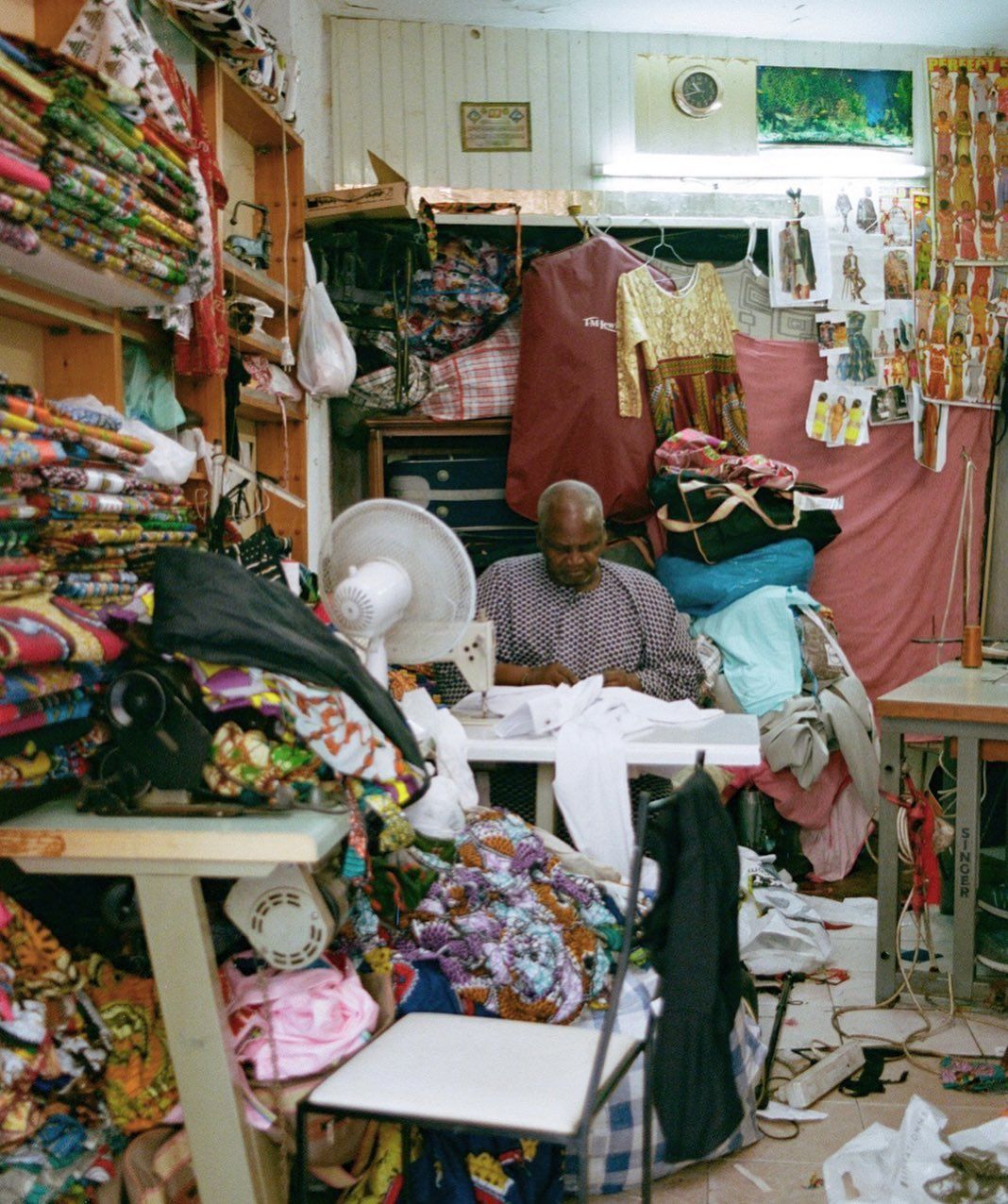
The local tailor serves four functions that formal fashion commerce systematically fails to provide in African markets.
First: genuine fit. A garment made by a tailor who takes the customer’s measurements and builds it to those measurements fits in a way no ready-made garment can guarantee. In a market where standard sizing systems do not reflect local body distribution, this is not a luxury service. It is the only reliable way to obtain a garment that fits.
Second: cultural specificity. The tailor who knows the community’s dress code for occasions can produce a garment that meets those specific requirements. The brand whose collection was designed in another context for another market cannot.
Third: price point access. The local tailor, working with locally sourced fabric and charging locally sustainable labour rates, can produce a garment that the local market can afford. The imported brand, whose price reflects international production costs, logistics and brand premium, cannot serve the same customer.
Fourth: circular extension. The tailor who alters, repairs, restructures or extends the life of an existing garment is performing the most valuable intervention available in the garment lifecycle. A garment repaired is a garment not disposed of. An altered garment is a garment not replaced. A restructured garment is one that serves a new purpose without the environmental cost of new production.
As Omiren Styles has established in its analysis of Africa’s repair economies and the sustainability metrics that cannot see a tailor, the tailors, cobblers, and repair specialists of African fashion cities are invisible to the certification frameworks that determine what counts as sustainable. A tailor who produces zero overstock, extends garment life through repair and uses no new inputs is performing the highest-value intervention in the textile lifecycle by the standards of circular economy literature. That practice is undocumented in the frameworks that reward sustainability, because those frameworks were built around the disclosure requirements of industrial companies rather than the practice records of craft practitioners.
Why the Tailor Is Absent From the Commercial Record
The local tailor’s invisibility in the formal record of African fashion is not an oversight. It is a structural feature of how the fashion industry documents value creation.
The formal record captures what the formal economy transacts: brand sales, wholesale orders, retail revenues, export volumes, licensing fees, platform transactions. The tailor who operates from a market stall, invoices in cash, pays no VAT, has no registered business, and whose entire commercial record is a mental ledger of who owes what for which garment does notfit inton any of these categories. The commercial value they create is real. It is not measured, and what is not measured is not funded, not protected, not credited and not represented in the institutional decisions about what African fashion is and what it needs.
As Omiren Styles has established, in its analysis of the economics of made-to-measure tailoring and scale, the tailoring economy in African cities operates at a scale that formal fashion data consistently underestimates, because the informal nature of the transactions makes them structurally invisible to the market research, the industry databases and the investment analyses that shape decisions about where fashion infrastructure investment should be directed. The tailor is not absent from the economy. They are absent from the economic record; research is a different and more addressable problem.
The Tailor and the Documentation Gap
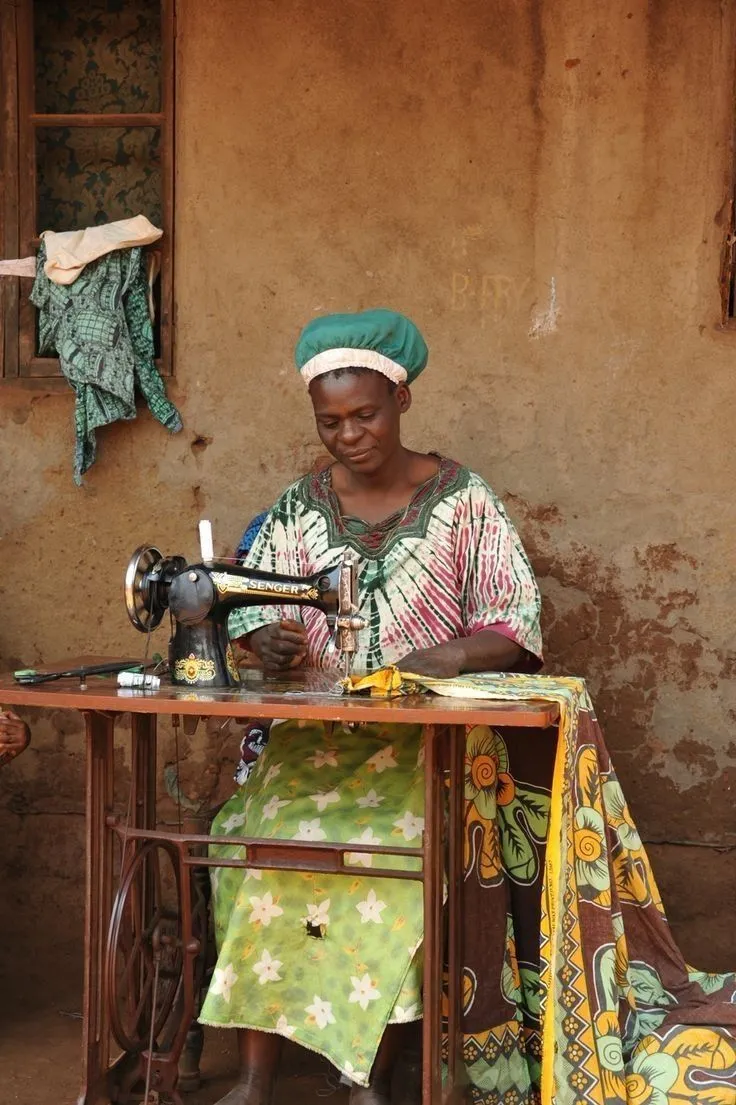
As Omiren Styles has established in its analysis of the documentation gap in fashion supply chains, the things the fashion supply chain fails to record are precisely the things whose documentation would make extraction harder to disguise and exploitation harder to sustain. The tailor is the most complete example of that argument: the person whose labour is most central to what African fashion actually is for most of the people who wear it, and whose name appears least frequently in any record that the fashion industry maintains.
The documentation gap around African tailors has specific commercial consequences beyond the reputational. A tailor whose work is not in the commercial record cannot access formal credit, because formal credit requires formal financial history. A tailor whose practice is not documented cannot access training programmes that require proof of practice. A tailor whose skills are not certified cannot access export markets that require supplier credentials. A tailor whose business is not formally registered cannot access the commercial relationships with brands and retailers that would allow their work to be included in the formal supply chain and priced accordingly.
The path from informality to formality for African tailors is not a question of desire. Most tailors who could formalise their practice would benefit from doing so. The path is blocked by the same infrastructure gaps that hinder formalisation across the African informal economy: registration costs, access to banking, certification requirements, and the market connections that enable formal operators to convert their skills into credentialled commercial relationships.
The Omiren Argument
The last mile of African fashion is often a local tailor, because the formal fashion market has not solved the problems the tailor addresses.
The tailor is not a symptom of an underdeveloped fashion infrastructure. They are the most effective available response to a set of persistent formal market failures: standardised sizing that does not fit, prices that do not reflect local purchasing power, cultural specificity that global brands have not catalogued, and occasion requirements that formal commerce has not anticipated. The tailor solves each of these problems specifically and efficiently for the customer who needs them solved.
What the fashion industry owes the African tailor is not sympathy. It is documentation, credit and inclusion in the commercial record. The tailor who made the garment that appeared in the photograph deserves to be named in the caption. The alteration that made the dress fit the body it was worn on deserves to be in the production record. The repair that extended the garment’s life by five years deserves to be in the sustainability accounting. The bespoke piece, created for an occasion no brand had designed for, deserves to be recognised as the creative output it is.
As Omiren Styles has argued throughout this series, the Global South made fashion and never got credit. In the African tailoring economy, that argument is most specific and most daily: the people who make most of what most Africans actually wear are the least documented, least credited and least commercially supported practitioners in the fashion system. The last mile is a tailor. The tailor should be in the record. The industry that builds its brand authority on African fashion’s visual vocabulary owes them that, at minimum.
ALSO READ
- Can Africa’s Repair Economies Become Formal Fashion Infrastructure?
- The Economics of Made-to-Measure: What Tailoring Teaches About Scale and Fit
- The Sustainability Metrics That Cannot See a Tailor
- The Documentation Gap: What Fashion Supply Chains Still Fail to Record
- The Global South Made Fashion. It Just Never Got Credit.
Frequently Asked Questions
Why are local tailors so important in African fashion?
As Ekinken documented in its January 2026 analysis, tailors form the backbone of the fashion ecosystem in cities like Lagos, Accra and Nairobi. They solve problems that formal fashion commerce cannot: standard sizing systems that do not fit the local body distribution, international price points that do not reflect local purchasing power, cultural occasion requirements that global brands have not catalogued, and bespoke needs that no ready-made product addresses. Before bespoke became a luxury positioning strategy, African tailors were already practising made-to-measure fashion as standard practice.
What is the global tailoring market worth in 2026?
The global tailoring and alteration services market reached $10.3 billion in 2026, up from $9.82 billion in 2025, growing at a CAGR of 4.9%, and is projected to reach $14.1 billion by 2034. The key growth drivers include poor standard apparel fit, rising online clothing sales, and demand for sustainability-led garment repair. These drivers are particularly pronounced in African markets, where standard sizing systems consistently fail to accommodate local body distributions, online clothing growth is rapid, and demand for occasion wear is structurally sustained by ceremony culture across multiple communities.
Why are African tailors invisible in formal fashion data?
As Omiren Styles has established in its analysis of the economics of made-to-measure tailoring, the tailoring economy in African cities operates at a scale that formal fashion data consistently underestimates, as the informal nature of transactions renders them structurally invisible to market research, industry databases, and investment analyses. A tailor operating from a market stall, invoicing in cash and maintaining no formal financial record does not appear in any commercial data category despite creating real commercial value. The tailor is not absent from the economy: they are absent from the reconomy’s record, which is a different and more addressable problem.
How do African tailors relate to the secondhand clothing economy?
As documented in analysis of the creative clothing economy in Africa, open-air tailors and seamstresses working from markets and homes source secondhand clothes for alteration and creative redesign into new garments, often with fresh fashionable spins. A used garment entering the African secondhand market is frequently raw material rather than a finished product: a tailor disassembles, alters, combines, dyes, embroiders or restructures it into something new for a specific customer’s occasion. That value-creating transformation happens in the informal economy and is captured in no formal fashion market data, despite being commercially and culturally significant.
What would documentation of African tailors change?
A tailor whose work is in the commercial record can access formal credit (which requires formal financial history), training programmes (which require proof of practice), certification that opens export markets (which requires supplier credentials), and commercial relationships with brands and retailers (which require formal registration). The path from informality to formality for African tailors is not a question of desire. It is blocked by registration costs, banking access requirements, certification barriers, and market-connection gaps, all of which the same infrastructure investments required to formalise African fashion commerce more broadly would address.
EXPLORE MORE
Read the full Industry and Production and Manufacturing sections at Omiren Styles for ongoing documentation of African tailoring practice, the informal fashion economy and the infrastructure investments that would bring tailors into the formal commercial record. Discover travel and heritage intelligence across Africa, the Caribbean and Latin America at Rex Clarke Adventures.