You know it the moment you see it.
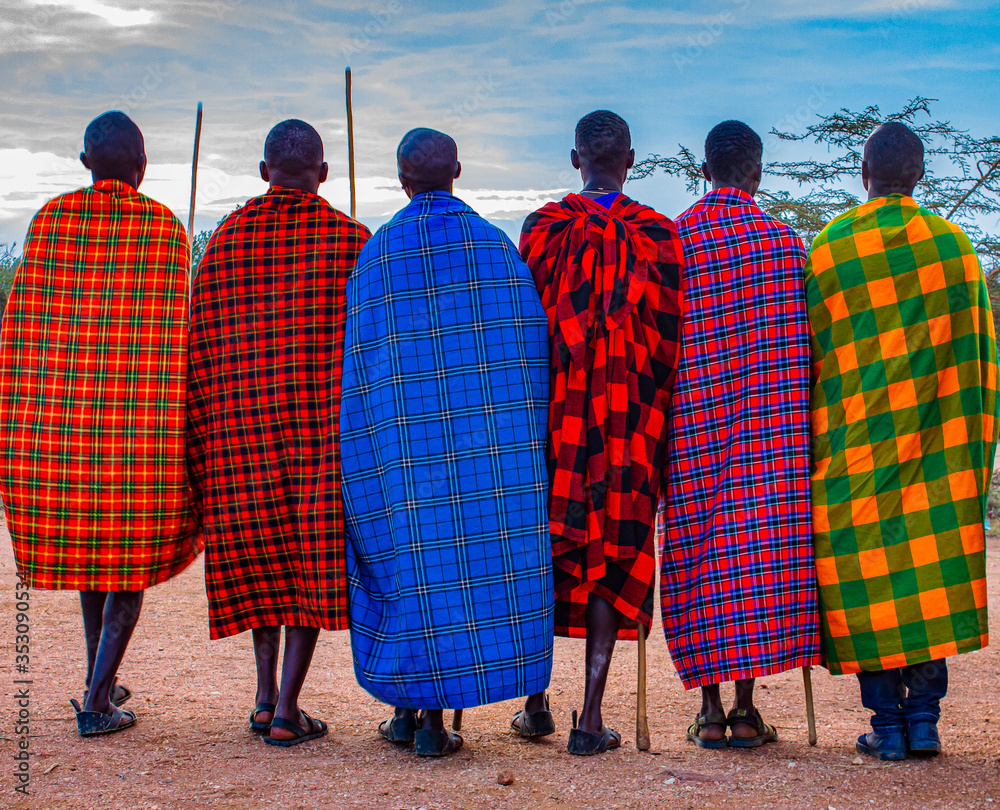
A bolt of red moving across open land. A checked cloth draped across a shoulder. The specific weight of cotton in a colour that carries meaning before a word is spoken. The Maasai Shuka is one of the most immediately recognisable garments anywhere in Africa, and one of the most consistently misread outside the communities that wear it.
Outside Kenya and Tanzania, the Shuka is often reduced to a red blanket, a pattern borrowed by luxury fashion houses and automotive brands, a visual shorthand for an idea of Africa. What it actually is: a garment whose colour vocabulary communicates age, status, occasion and identity; a cotton cloth whose adoption replaced leather garments within living memory; a production tradition whose commercial value flows primarily to global markets rather than to the Maasai weavers who hold the knowledge; and a community’s answer to the specific demands of life in one of the most demanding environments on earth.
Shuka means ‘body wrappings’ in the Maa language. That is the most honest description of what it has always been: cloth that wraps a body and, in doing so, tells you something about the body it is, the occasion they are attending, and the place they occupy in their community.
Explore the Maasai shuka beyond its iconic checks: its cultural meaning, community authority and the politics of value in global fashion.
What the Shuka Is
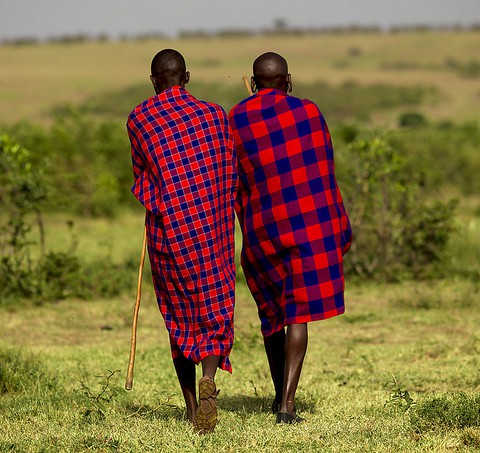
As Trunk Trails Safaris documented in its August 2026 guide to Maasai traditional clothing, the Maasai Shuka is essentially a length of cotton cloth, typically around 1.5 by 1.5 metres, worn in various configurations depending on gender, age and occasion. It is draped, wrapped or tied rather than cut and sewn. The visual power comes from the colour. The most iconic is red, usually in a checked pattern with black or blue, though solid red, solid blue, striped, and other colourways are all part of the full Shuka tradition.
The Shuka is worn by both men and women, and its specific styling varies by the wearer’s age, their social position, and the region of Kenya or Tanzania they come from. The Maasai community has a population of approximately 1.5 million people, living mainly across the ainnds along the Great Rift Valley in Kenya and northern Tanzania, with the majority residing in the Masairesiding inara National Reserve. The dress tradition they have built is shaped by the specific demands of that landscape: extreme heat, open terrain, pastoral movement, and the specific social structures of a semi-nomadic community.
The cloth is durable, strong and thick enough to protect against the harsh weather and terrain of the East African savannah. It can be worn as a body wrap, a shoulder drape, a blanket against the cold of the highland night, a sling to carry a child, a makeshift shelter against the elements, or a ceremonial garment at the most significant moments of a Maasai life. Its versatility is not a contemporary fashion adaptation. It is built into the original design.
The History of the Shuka
As G Adventures documents in its analysis of the Maasai Shuka’s history, the word ‘traditional’ must be taken with a grain of salt when applied to the Shuka. Before the colonisation of Africa, the Maasai wore leather garments: calf hides and sheepskins, softened with animal fat and dyed using natural ochre. Historical photographs from the 1800s and early 1900s show no evidence of the Shuka. The shift from leather to cotton cloth happened in the 1960s, though the exact reasons remain unclear.
Two primary explanations exist. The first connects the Shuka to the trade routes of the colonial era: fabrics were used as a means of payment and exchange during the period of commercial expansion into East Africa, with red-and-blue checked fabric having its own history of trade across the African continent. The second connects it to Scottish missionaries: the Africa Inland Mission was established in 1895, and Scottish traders and missionaries in the region in the late 19th and early 20th centuries brought checked wool cloth that the Maasai adopted and made their own.
What happened next is the more important story. The Maasai took a colonial trade cloth and built a complete cultural vocabulary around it: a colour system whose meanings were specific and internally consistent, a pattern language whose variations communicated social information, and a styling tradition whose nuances communicated age, status, occasion and community identity. The cloth arrived from outside. The meaning was built from within.
In 2023, the Maasai community celebrated the 140th anniversary of the Shuka with an inaugural festival that brought together 10,000 people from Kenya and Tanzania. Whatever the cloth’s colonial origins, its cultural significance is entirely Maasai.
What the Colours Mean
As documented by Project FUEL’s research with the Maasai community in Losimingori village, Arusha, Tanzania, the Maasai colour vocabulary is specific, internally consistent and applied across both clothing and beadwork. Before a single word is spoken, the colours communicate.
Red: bravery, unity and strength. Red is the most important colour, and the one most associated with warriors (Moran). The Maasai believe that red can be seen from great distances across open savannah, which matters when herding cattle in lion country. Red also represents blood and community: livestock are slaughtered when communities come together in celebration, and the colour marks the significance of that gathering.
Black: a holy colour. Newly circumcised boys wear black cloth during the period of initiation and continue to do so until they are confirmed as Moran. The black cloth signals a period of spiritual protection and transition.
White: cow’s milk, and therefore energy, purity and peace. In Maasai beadwork, white beads are particularly prominent among communities in Tanzania.
Blue: the sky and rain, and by extension, energy and nourishment. Blue is the second most prominent colour in Maasai Shuka patterns and the one most often paired with red in the checked patterns internationally recognised as the Shuka’s visual signature.
Green: the pastures and grass that feed cattle, and therefore health, land and well-being. When the grass is green, the cattle are healthy; when the cattle are healthy, the community is well.
Orange and yellow: hospitality and warmth. Yellow also references the colour of animal skin, which connects it to the Maasai’s pastoral heritage.
These colours operate across both the Shuka and the beadwork that accompanies it. The number of bead strands around a woman’s neck can indicate age. The pattern on earrings can communicate marital status. The colours of a beaded collar can identify clan affiliation. The Shuka’s colour is the opening statement; the beadwork is the full biography.
How the Shuka Is Worn
By Warriors (Moran)
As Touring Insights documented in its June 2026 guide to Maasai traditional clothing, Maasai warrior dress is a deliberate, layered statement. Every element carries meaning. The red Shuka is worn draped over one shoulder rather than fully wrapped, leaving one arm free. The red signals warrior status from a distance in open terrain. The Moran grow their hair long and braid it with red ochre, animal fat and water, producing distinctive copper-red locks that are maintained through the warrior years. When a warrior passes the Eunoto ceremony and leaves the warrior phase, his mother shaves this hair: one of the most emotionally significant moments in Maasai male life. The Shuka worn at Eunoto may change in colour to reflect the transition in status.
By Women
As the Omiren Styles guide to Shuka styles for Maasai women documents, Shuka styles are among the most visually powerful expressions of cultural identity in East Africa. A woman arriving at a naming ceremony with her Shuka wrapped around her crown and draped across her body communicates the care she brought to the moment before she has said a single word. The full red ceremonial drape worn by a Maasai woman of elder status is not attempting to be anything other than what it is: no tailoring, no coordination, no concession to contemporary styling logic. A woman in a full red Shuka, with layered beaded necklaces, is the complete visual statement.
Women also layer multiple cloths simultaneously, each serving a distinct practical and ceremonial function. A nursing mother may use one cloth to carry her child and another to cover herself. A woman attending a significant ceremony layers on her finest pieces to match the occasion’s gravity. The intriguing tradition is not merely aesthetic: it reflects the practical intelligence of a garment system designed for a life in which the same cloth must serve multiple purposes in a single day.
By Elders
Elder Maasai men and women typically wear clothing that differs from the warrior and younger adult traditions. The colour and styles associated with elders reflect the seniority and authority that the Maasai community assigns to age and experience. The transition from warrior to elder is marked by changes in dress as well as in social role: the beadwork changes, the Shuka may change in colour, and the wearing style shifts to reflect the different style of wearing at this stage.
On Occasions
The Adumu, the traditional jumping dance of the Moran, is performed in red Shukas, the cloth moving as the dancer rises. Weddings are occasions for the finest Shukas, worn with the most elaborate beadwork. Naming ceremonies, Eid celebrations, and important family gatherings each call for appropriate attire that conveys the occasion’s significance. The choice of Shuka colour and style is part of the preparation for the event, not an afterthought.
The Shuka in Global Fashion
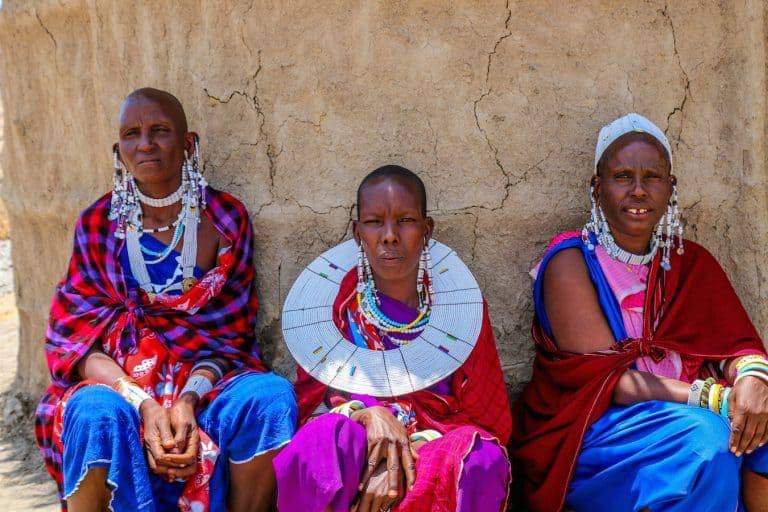
The Maasai Shuka has entered global fashion through multiple routes, not all of them accountable.
The ethical route: East African designers working directly with Maasai weavers to produce garments and accessories that credit their source, return economic benefit to the community and present the Shuka’s visual vocabulary in contemporary contexts that acknowledge rather than erase its origin. This route produces fashion that knows what it is: a living continuation of a specific cultural practice, presented honestly and built on a commercial relationship with the people who hold the knowledge.
The extraction route: international luxury houses, automotive brands, and fast-fashion producers that use Shuka patterns and colour vocabulary without acknowledgement, without payment to the Maasai community, and without any commercial relationship with the weavers or the culture that built the visual language they are borrowing. The pattern becomes a print. The community receives nothing.
As Omiren Styles established in its craft field note on who owns the value when heritage technique becomes luxury fashion, the Maasai Shuka is one of the clearest available examples of the extraction dynamic in global fashion: a cultural vocabulary built over generations by a specific community, whose bold colours and checkered patterns are internationally recognised and commercially valuable, and whose community has received almost none of the commercial value that recognition generates. The question of GI protection for the Maasai Shuka, comparable to the protection now in place for kente in Ghana, is the commercial accountability question that the fashion world has not yet ans.
As Omiren Styles has used analysis of whether heritage textiles can scale without losing their meaning, the three forms of scaling that heritage textiles face are authentic expansion (the community produces more), licensed reinterpretation (brands pay for the right to use the vocabulary and credit the source), and unacknowledged substitution (brands take the visual without acknowledgement or payment). The Maasai Shuka’s current position in global fashion is predominantly in the third category.
What Sourcing Responsibly Means
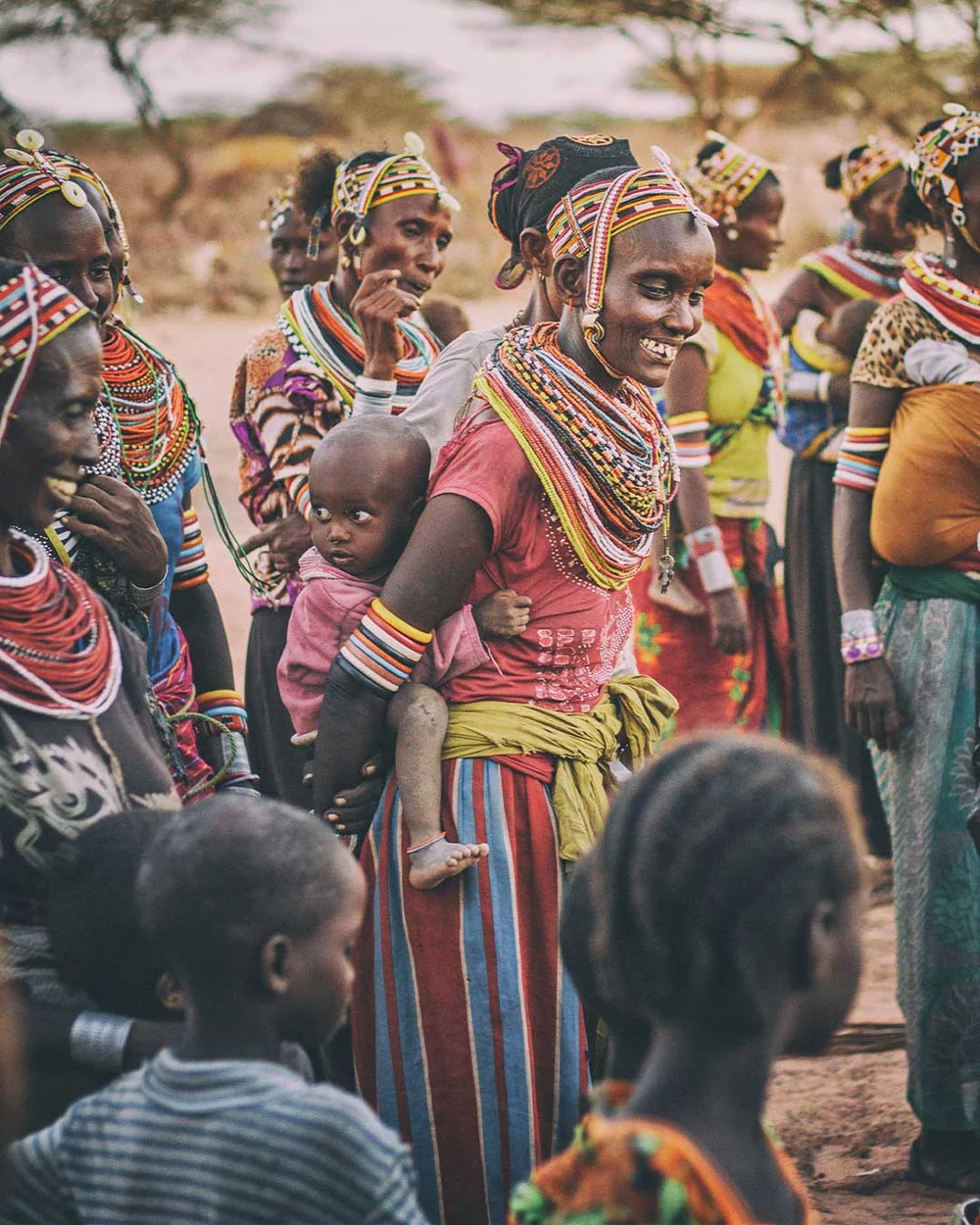
Authentic Shukas are available at Maasai markets in Kenya and Tanzania. East African labels working directly with Maasai artisans are the best source for diaspora buyers.
The questions to ask before buying: Does this product credit its Maasai origin specifically rather than generically? Does the seller have a documented commercial relationship with Maasai weavers or cooperatives? Is some portion of the commercial return flowing back to the Maasai community? Can the seller name the specific community or cooperative that produced the cloth?
As Omiren Styles has established in its analysis of material intelligence in African fashion, that material intelligence is the knowledge system that converts a fabric from a visual reference into a production decision, a cultural relationship, an economic commitment and a sustainability position simultaneously. For the Maasai Shuka, material intelligence means knowing what the cloth is, where it comes from, who makes it, what its colours mean, what occasions it belongs to and what commercial relationship your purchase creates or sustains.
The Omiren Argument
The Maasai Shuka is a garment, a communication system, a cultural identity marker, a functional object for extreme environments and an unresolved question about who owns the commercial value of knowledge built over generations.
The colour vocabulary is specific and documentable. The wearing traditions carry social meaning that is not accessible from the visual surface alone. The production knowledge is held by a community of approximately 1.5 million people whose landscape, history and ceremonial life shaped every aspect of what the Shuka is.
The fashion world’s relationship with the Shuka has, to date, taken the visual and left the accountability question unanswered. The GI protection that kente now has in Ghana is the beginning of a model that could apply to the Maasai Shuka. The licensing infrastructure that would allow Maasai weavers to receive commercial returns from the global market for their community’s visual vocabulary is not technically complex. What it requires is the commercial decision to build it.
The Global South made fashion and never got credit. The Maasai Shuka is one of the most visible and most commercially significant examples of that argument. The cloth is known everywhere. The community that built its meaning is not receiving the commercial value that meaning generates. That is the accountability gap. Naming it is the first step toward closing it.
ALSO READ
- Top 5 Shuka Styles for Maasai Women in 2026
- Can Heritage Textiles Scale Without Losing Their Meaning?
- Who Owns the Pattern? Why Cultural Credit Still Rarely Becomes Licensing Revenue
- The Global South Made Fashion. It Just Never Got Credit.
Frequently Asked Questions
What does Maasai Shuka mean?
Shuka means ‘body wrappings’ in the Maa language, the language of the Maasai people. The name describes exactly what the cloth does: it wraps the body. A shuka is essentially a length of cotton cloth, typically around 1.5 by 1.5 metres, worn in various configurations depending on gender, age and occasion. It is draped, wrapped or tied rather than cut and sewn. The power comes from the colour and from the social information that colour, pattern and wearing style communicate to those who know the vocabulary.
What do the colours of the Maasai Shuka mean?
As documented by Project FUEL with the Maasai community in Tanzania, red represents bravery, unity and strength; it is most associated with warriors and is believed to be visible from great distances across open terrain. Black is a holy colour associated with initiation and spiritual protection. White represents cow’s milk, energy and purity. Blue represents the sky, rain and energy. Green represents the pastures that feed cattle, and therefore health and well-being. Orange and yellow represent hospitality and warmth. These colour meanings apply across both the Shuka and the beadwork that Maasai women create and wear.
When did the Maasai start wearing the Shuka?
As G Adventures documents, before the colonisation of the Maasai, they wore leather garments made from animal hides, softened with animal fat and dyed with natural ochre. The shift to cotton cloth happened in the 1960s, though the exact reasons remain unclear. Possible explanations include trade fabrics arriving through colonial commerce and the influence of Scottish missionaries through the Africa Inland Mission, established 1895. In 2023, the Maasai community celebrated the 140th anniversary of the Shuka with a festival bringing together 10,000 people from Kenya and Tanzania.
How is the Maasai Shuka worn?
The Shuka is draped, wrapped or tied rather than cut and sewn. Warriors typically wear it draped across one shoulder, leaving the other arm free. Women may wrap it around the body, use it as a headwrap, layer multiple pieces of cloth, or pair it with contemporary pieces of clothing for formal or diaspora contexts. Elders wear it in ways that reflect their status and experience. The specific style of dress communicates the occasion, the wearer’s age, and their social position in the community.
Why do fashion brands use Maasai Shuka patterns without attribution?
As Omiren Styles has established, the fashion industry’s default relationship with heritage cultural vocabularies is to take the visual without creating commercial accountability to the community that built it. The Maasai Shuka’s checked red-and-blue pattern is internationally recognisable and commercially valuable. International luxury houses and automotive brands have used it without acknowledging or paying the Maasai. Acknowledging the GI compensating mechanism that Kenya now has in Ghana is one possible model for addressing this. The licensing infrastructure that would allow Maasai weavers to receive commercial returns from the global market for their visual vocabulary exists in principle. Whether it is built depends on commercial decisions that the fashion industry has not yet made.
EXPLORE MORE
Read the full Culture and Dress and Identity sections at Omiren Styles for ongoing documentation of East African dress traditions, the Maasai Shuka colour vocabulary and the cultural accountability questions that the global fashion market has yet to answer. Discover travel and heritage intelligence across Kenya, Tanzania and East Africa at Rex Clarke Adventures.