Before a factory can produce your collection, it needs to understand what you want made, in what materials, in what quantities, to what quality standard, by what date, and at what cost. A production brief is the document that answers all of those questions in a form the factory can act on.
The production briefs that fail are not the ones written by designers whose creative vision is unclear. They are the briefs that leave out the information the factory needs to do its job: the costing structure that allows an accurate quote, the material specification that produces the right sample, the minimum order quantity that makes the commercial relationship viable, and the timeline that accounts for the actual lead times of cross-border production rather than the optimistic timeline the designer is hoping for.
For an independent designer in Africa, the Caribbean, Latin America or the Latinx diaspora working with a factory across a border, those omissions are more costly than for a designer working with a domestic factory in a market with well-established production relationships. Cross-border production adds a language gap, currency conversion, customs documentation, international freight logistics, and potentially different standards and frameworks to every interaction. A brief that is incomplete in a domestic context is catastrophic in a cross-border context.
Seventy per cent of downstream production issues trace back to ambiguities introduced in the design lock, tech pack and fabric sourcing phases of a production timeline. A production brief that resolves those ambiguities before production begins does not prevent every problem. It prevents the 70% that the evidence says are preventable.
As Omiren Styles has established in its analysis of why independent designers struggle between the sketchbook and the factory floor, the documentation gap between intuitive design practice and the technical documentation a factory relationship requires is one of the primary barriers to independent designers’ commercial development. The production brief is the document that closes that gap. Writing it completely and accurately is the production intelligence task that determines whether the factory relationship produces what the designer intended or something close to it.
C'[oss-border fashion production brief converts your design vision into factory instructions across borders, currencies, and supply chains. This guide covers every section: budget, MOQ, materials, timeline and the negotiation terms that protect both parties.
What a Cross-Border Production Brief Must Cover
A complete cross-border production brief covers ten sections. Each is necessary. Each omission creates a specific problem downstream. The sections are presented here in the order in which they should appear in the document, which is also approximately the order in which the factory will need to read and act on them.
Section 1: Brand and Brief Identification
The first section of the brief establishes who is making the request, what the brief covers, and what production relationship the brief initiates. It seems obvious. It is consistently underspecified in briefs that fail.
FIELDS REQUIRED
Brand name and legal entity
The brand’s legal trading name. If the brand is incorporated, use the legal entity name alongside the trading name. A factory that is producing for a legal entity rather than an individual has a clearer picture of the commercial relationship and the basis for any contractual documentation.
Contact name, position and communication channels
The name and title of the person the factory should address, along with their email address, phone number, and preferred communication platform. If the factory will work across a time zone difference, note the time zone of the primary contact and their availability hours.
Brief reference and version number
Every brief should have a reference number and a version number. A brief without version control cannot be referenced unambiguously in subsequent communication. If the factory receives an updated brief, the version number indicates which brief supersedes the previous one.
Production order type
Whether this is a sampling order, a pilot production run, a full production order or a combination. The type of order determines the factory’s expectations for the approval process, the level of detail required in the brief and the timeline structure.
Target retail markets
The countries and market channels in which the finished product will be sold. This is relevant to the factory for labelling requirements, care labelling content, country-of-origin marking, textile composition disclosure formats, and any market-specific compliance requirements. It also determines which quality standards and safety regulations the finished product must meet.
Section 2: Budget Structure
Budget is the section most consistently omitted from production briefs written by independent designers, usually because the designer is uncertain about the budget or does not want to anchor the negotiation at a number the factory might simply quote up to. Both instincts are understandable,e and both are commercially counterproductive.
A factory that does not know the budget cannot tell you whether your project is within the range of what it can produce. It will quote for the work described and only later discover, when the quote comes in above what the designer can afford, that the brief was incompatible with the commercial relationship from the beginning. Both parties have wasted time. Stating a budget range at the beginning allows the factory to tell you immediately whether to proceed or to discuss whether the specification can be adjusted to fit the budget.
As Omiren Styles has established in its analysis of the economics of the missing middle, small-batch production carries a 30 to 50% per-unit cost premium compared with bulk orders, and this premium must be built into the retail price architecture before the production relationship begins. The budget section of the brief is where that architecture is made explicit.
FIELDS REQUIRED
Target cost per unit (ex-factory)
The designer’s target unit cost, excluding freight, customs and domestic logistics. State this as a range if a precise figure is not yet established. The ex-factory cost forms the basis for all subsequent pricing calculations and must be established before the quote is issued.
Currency and payment terms
The currency in which the designer proposes to pay, the currency in which the factory typically invoices, and the agreed payment terms: percentage deposit at order placement, balance due at shipment or delivery, payment method. Cross-border payments carry conversion costs and timeline implications. State the preferred payment method and clarify who bears the conversion cost.
Target retail price
The retail price at which the brand intends to sell the finished product. This gives the factory context for the product’s value proposition and helps both parties assess whether the target ex-factory cost is commercially rational for the specification.
Costing inclusions and exclusions
A clear statement of what is included in the requested quote. Does the quote cover materials only, materials and cutting, full CMT (cut, make and trim), or full package including materials sourcing? Are labels, hangtags, poly bags and packaging included? Is pre-production sampling included or quoted separately? The scope of the quote must be specified, or the factory and the designer will be comparing incompatible numbers.
Section 3: Minimum Order Quantity
The minimum order quantity is the most commercially sensitive section of the production brief, and the one where the information asymmetry between the factory and the independent designer is most commercially damaging.
As Omiren Styles has established in its analysis of the missing middle gap, “small batch” is not a regulated term: one factory’s small batch is 500 units, another’s is 50. A designer planning around a factory’s self-described flexibility has lost weeks of the development timeline when the quote arrives, revealing the real minimum is five times their actual production capacity. The MOQ section of the brief is where this gap is identified before it causes a delay in the timeline.
FIELDS REQUIRED
Required production quantity per style
The actual number of units the designer can commit to per style in this production run. State the number clearly. Do not inflate it to appear commercially serious and then negotiate down, as this produces a relationship built on a misrepresentation of the designer’s actual scale.
Size range and ratio
The sizes the production run covers and the ratio of units across those sizes. A production run of 100 units split 20/30/30/20 across sizes XS/S/M/L has a different production implication than 100 units entirely in size M. The size ratio affects pattern grading requirements, cut efficiency and certain material yields.
Colourway breakdown
If the garment is being produced in multiple colours or prints, the number of units per colourway. Minimum orders that are viable for one colourway may not be viable for four, because the factory’s minimum cut quantity per colourway may mean a four-colourway production run requires four times the total number of units.
MOQ flexibility statement
A clear statement on whether the designer’s required quantity is firm or whether it can be increased if needed to meet the factory’s minimum. If the designer has a hard ceiling on units, say so. If there is upward flexibility to a specified limit, specify it. This is the information the factory uses to assess whether to take the order at all.
Section 4: Product Specifications
The product specification section is the technical core of the production brief. It is the section that tells the factory what to make. Its completeness directly determines whether the sample the factory produces matches the designer’s intent.
FIELDS REQUIRED
Garment category and type
The specific garment category: dress, jacket, trousers, shirt; and, within the category, the specific style: structured blazer, unstructured jacket, wrap dress, trousers with side seam pockets, and so on. The category and type establish the construction vocabulary the factory will use.
Technical flat or sketch
Front and back technical flats for each garment in the production run. Technical flats are black-and-white line drawings that show the garment’s silhouette, construction details, seam lines, pocket placements, collar construction, sleeve attachments, and any notable surface details. They are the garment’s structural schematic. A fashion illustration is not a substitute for a technical flat.
Measurement specification
The garment measurements for each size in the production run, expressed in centimetres or inches consistently throughout the brief. Measurements should cover all critical dimensions: body length, chest width, waist width, hip width, shoulder width, sleeve length, cuff circumference, hem circumference and any style-specific measurements relevant to the garment’s fit. If the brand uses a specific fit model’s body measurements as the basis for pattern development, note those measurements.
Construction details
Seam allowances, stitch types and stitch counts per centimetre for each seam type, lining requirements, interfacing specifications, closure types and hardware specifications (zip type and length, button size, snap type), hem finish methods, and any non-standard construction details that distinguish this garment from a standard factory production piece. The more specific this section is, the fewer rounds of correction the sampling phase requires.
Labelling and finishing
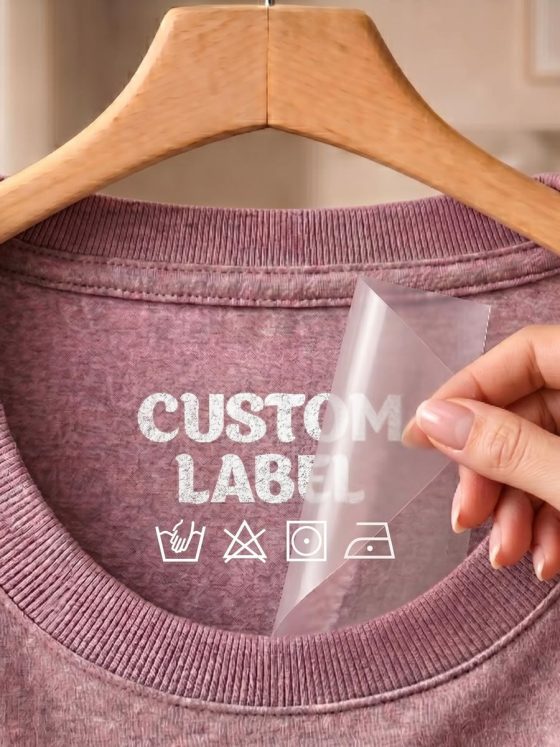
Care label content and placement (woven or printed; inside neck or side seam; care symbol standards for the target market), brand label specifications, size label specifications, country-of-origin statement requirement, barcode format, if required by the buyer, and any other finishing elements the garment requires before delivery.
Section 5: Materials Specification
The materials section of the brief is where most sampling failures originate. A brief that describes a fabric as ‘cotton jersey’ without specifying the weight, the percentage composition, the stretch percentage, the wash finish or the colour reference is a brief that will produce a sample in whatever cotton jersey the factory has available, which may be technically within the description and entirely unlike what the designer intended.
FIELDS REQUIRED
Shell fabric specification
The fibre composition (percentage breakdown if blended), the fabric weight in GSM (grams per square metre), the weave or knit structure, the finish required (pre-washed, enzyme-washed, calendered, brushed, etc.), the colour or print specification (Pantone colour reference if solid, or print file and colourway specification if printed), and the required width. If the designer is supplying the fabric, note this. If the factory is sourcing, specify whether a supplier reference is provided or whether the factory is being asked to source to spec.
Lining fabric specification
Same fields as shell fabric where lining is required. Note whether the lining should match, contrast or be a neutral colour to the shell, and any performance requirements for the lining (breathability, moisture management, etc.)
Trims and components
Every trim and component the garment requires, specified to the same level of detail as the fabrics: zips (brand, type, length, colour, puller style), buttons (size in millimetres, material, number of holes, colour), elastic (width, stretch percentage), ribbon, bias tape, interlining, shoulder pads, boning, underwiring, and any other component. Trim specifications that leave the factory to choose defaults produce samples where the trim is the wrong size, weight or colour.
Material supply responsibility
A clear statement for each fabric and trim indicating whether the designer is supplying it, whether the factory is sourcing it (and, if so, whether against a specific reference or to spec), or whether a nominated supplier will provide it directly to the factory. This section determines the factory’s sourcing liability and its ability to commit to the production timeline.
Section 6: Quality Standards
The quality standards section tells the factory what good looks like. Without it, the factory applies its own standard, which may be higher or lower than the designer’s requirement and which may not be appropriate for the designer’s target market.
As Omiren Styles has established, in its analysis of what makes a fashion manufacturer verified, that consistent quality across the batch, all pieces meeting the same quality standard as the approved sample with the same construction, finishing and measurements within agreed tolerance, is the production standard that distinguishes a credible specialist manufacturer from an uncredible one. The quality standards section of the brief is where that standard is defined in writing before production begins.
FIELDS REQUIRED
Measurement tolerance
The permitted deviation from the specified measurement for each dimension, expressed in centimetres. A typical tolerance for body measurements is ±1 centimetre. Tighter tolerances are appropriate for fitted garments; slightly wider tolerances may be appropriate for more relaxed silhouettes. State the tolerance explicitly for each critical measurement.
Defect classification
A classification of garment defects into critical (render the garment unsaleable and must not be present in any delivered unit), major (significantly impair the garment’s appearance, fit or function and must not exceed a specified rate in the delivered batch), and minor (small imperfections within acceptable limits). State the acceptable defect rate for major and minor defects per hundred units.
Pre-shipment inspection requirements
Whether the designer or a nominated third party will conduct a pre-shipment inspection before goods are approved for despatch, what the inspection will cover, and what happens if the inspection identifies defects above the acceptable rate. Agree the inspection process and the pass/fail criteria before production begins, not at the point of inspection.
Reference sample
Confirm whether the factory or the designer is responsible for producing the approved reference sample against which production quality will be assessed, and confirm the approval process for that sample before production commences.
Section 7: Timeline
The timeline section is where optimism is most dangerous and most common. A designer who tells a factory they need delivery in six weeks when the actual lead time for the production they are requesting is twelve weeks has created a timeline conflict that cannot be resolved through goodwill alone.
Cross-border production timelines include stages whose durations are specific to the factory, the material sourcing route, the shipping method and the customs processing time at both ends of the journey. A timeline that does not account for all of these stages is not a timeline. It is a preference.
FIELDS REQUIRED
Key dates
The date the brief is issued. The date by which the factory must confirm receipt and indicate willingness to quote. The date by which the quote is required. The date by which the sample is required for review. The date by which sample approval must be confirmed (allowing adequate time for corrections if needed). The date by which production must begin. The date by which production must be complete and goods ready for inspection. The date by which goods must ship. The required arrival date at the destination.
Sampling rounds allowed
The number of sampling rounds that the timeline and budget allow. If one sample round is possible, state this and make clear that the brief must be complete enough to produce an approvable first sample. If two rounds are budgeted, state the time allowed for each round and the feedback turnaround commitment from the designer between rounds.
Lead time confirmation
A request to the factory to confirm its actual lead time for this type of garment at this quantity, and to flag any lead-time risk, including material-sourcing delays, capacity constraints,s or seasonal production peaks that might affect the timeline. This is the section where the timeline fantasy meets production reality, and the earlier in the brief process that reality is encountered, the better.
Force majeure and delay provisions
A brief statement of what happens if delays occur on either side: the factory’s obligation to notify the designer of a production delay and within what timeframe, the designer’s obligation to notify the factory of a design change, material supply delay or approval delay, and the agreed process for revising the timeline if delays occur.
Section 8: Packaging and Shipping
Packaging and shipping are consistently underspecified in briefs from independent designers, usually because the designer has not yet made decisions about packaging when the production brief is written. In a cross-border production context, leaving packaging decisions until after the garments are made creates practical problems: the factory needs to know which packaging to source, how many of each type to order, and whether the designer or the factory will supply it.
FIELDS REQUIRED
Individual unit packaging
Whether units are to be packed flat or folded, whether they require polybags (and if so, the bag size, thickness and closure type), whether hangtags are attached before boxing, and whether tissue paper or other protective packaging is required within the unit bag.
Shipping carton specification
The carton type (master carton, inner carton), the number of units per carton, the carton dimensions if specified, and any labelling requirements for the carton exterior. If the buyer has specified carton requirements, they must be stated here.
Shipping method and terms
The shipping method (air freight, sea freight, courier) and the Incoterms under which the shipment moves. Incoterms define which party bears the cost and risk at each stage of the international shipping journey. Commonly used Incoterms in fashion production include FOB (Free on Board, risk transfers to buyer when goods are loaded on the vessel at the port of origin), CIF (Cost, Insurance and Freight, seller arranges shipping and insurance to destination port) and DDP (Delivered Duty Paid, seller bears all costs including import duties to the destination). The Incoterms determine who pays freight, insurance and customs charges. State them explicitly.
Customs and import documentation
A list of the shipping documents the designer requires for import: commercial invoice, packing list, bill of lading or air waybill, certificate of origin, and any other documents required by the destination country’s customs authority or by the buyer. The factory’s responsibility for each document should be stated.
Section 9: Intellectual Property and Confidentiality
The intellectual property section addresses who owns the designs, patterns, samples and production documentation generated during the production relationship, and whether the brief’s contents are confidential.
FIELDS REQUIRED
Design ownership
A clear statement that the design, the technical flat, the measurement specification and all creative materials included in the brief are the property of the brand, and that the factory’s right to use them is limited to producing the units specified in this brief. A commissioned sample produced by the factory does not create a factory IP claim over the design. This should be stated.
Pattern ownership
Whether the production patterns developed by the factory for this brief are owned by the brand (who may request delivery of the pattern files), by the factory (who retains them for future orders), or shared subject to specific terms. Pattern ownership determines whether the brand can take a reorder to a different factory without paying for pattern redevelopment.
Confidentiality
A statement that the brief’s contents, including the designs, the pricing discussion and the brand’s commercial plans, are confidential and may not be shared with third parties without the brand’s consent. This is standard practice in commercial production relationships, and most factories will expect to see it.
Section 10: Terms and Signature
The final section confirms that both parties have read and accepted the terms of the brief, and establishes the basis for the formal production contract that will follow if the quote is accepted.
FIELDS REQUIRED
Acceptance process
How the factory should confirm acceptance of the brief: by email, by countersignature, or by submission of a quote that incorporates the brief’s terms by reference. The acceptance process creates the documented record that both parties understood and agreed to the brief’s contents before production began.
Quote validity period
The period for which the factory’s quote is valid. Prices for materials, labour and freight change. A quote that is valid indefinitely is one the factory will struggle to honour if production is significantly delayed after the quote date.
Contract reference
A note that the brief will form part of the formal production contract to be executed upon acceptance of the quote, and reference to the contract template that will be used. If the designer does not have a standard production contract, this is the time to commission one from a fashion trade lawyer, rather than discovering the need for one at the point of dispute.
The Cross-Border Brief Checklist
Before sending the brief to any factory, confirm the following:
- The brief reference number and version number are on the document.
- Every garment in the production run has a technical flat, not a fashion illustration.
- Every measurement is in a consistent unit (all centimetres or all inches) and covers all critical dimensions.
- Every fabric and trim is specified to a quality the factory can source against, including fibre composition, weight, colour reference, and finish.
- The MOQ stated in the brief is the quantity the designer can actually commit to, not an aspirational figure.
- The budget range is stated, and the costing scope (CMT, full package, sampling) is defined.
- The currency and payment terms are specified.
- The Incoterms are specified.
- All key dates are stated, including the date by which the factory must confirm receipt.
- The number of sample rounds the timeline allows is stated.
- The quality standard, including measurement tolerance and defect classification, is defined.
- The target retail markets are stated (for labelling and compliance requirements).
- The design ownership and confidentiality provisions are included.
- A contact name, email and phone number are on the document.
- The brief has been reviewed by a second person before sending. A brief reviewed only by its author will contain assumptions that are not visible to the author but that the factory will need to make explicit.
The Omiren Argument
A complete production brief is not a courtesy. It is the document that makes the production relationship possible on terms that are fair to both parties.
An incomplete brief does not give the factory what it needs to quote accurately. An inaccurate quote produces a production relationship that begins with a financial surprise for one party. A financial surprise at the outset of a cross-border production relationship, where the commercial distance makes correction more difficult than in a domestic relationship, often marks the start of a breakdown that neither party intended and both could have avoided.
For independent designers in Africa, the Caribbean, Latin America and the Latinx diaspora whose cross-border production relationships are the commercial infrastructure on which their fashion businesses depend, a complete production brief is not a nice-to-have. It is the production intelligence document that determines whether the creative work survives the journey from the sketchbook to the factory floor.
As Omiren Styles has argued throughout this series, the Global South made fashion and never got credit. A production brief that is complete, accurate and professionally presented is the document that establishes the Global South designer as a commercially serious partner in a cross-border production relationship. The credit begins with the brief.
ALSO READ
- The Missing Middle: Why Independent Designers Struggle Between the Sketchbook and the Factory Floor
- What Makes a Fashion Manufacturer Verified? A Practical Framework for Emerging Brands
- African Fashion Does Not Need Another Marketplace. It Needs Production Intelligence.
- The Documentation Gap: What Fashion Supply Chains Still Fail to Record
- The Global South Made Fashion. It Just Never Got Credit.
Frequently Asked Questions
What is a cross-border fashion production brief, and how does it differ from a standard brief?
A production brief is the document that converts a designer’s creative vision into a set of instructions a factory can act on. A cross-border production brief covers the same core content as a domestic brief but must additionally address currency and payment terms, Incoterms (which party bears cost and risk at each stage of the international shipping journey), customs documentation requirements for the destination country, target retail market compliance requirements (which affect labelling and care label content), and the timeline stages specific to cross-border logistics, including factory production time, port handling, freight transit time and customs clearance at the destination. Omissions that create problems in a domestic production context create larger problems in a cross-border context because the commercial distance makes correction more difficult and more expensive.
What are Incoterms and which should an independent designer use?
Incoterms (International Commercial Terms) are internationally recognised standard trade terms that define which party, the seller or the buyer, bears the cost and risk of international shipping at each stage of the journey. The most commonly used in fashion production are: FOB (Free on Board), where risk transfers to the buyer when goods are loaded on the vessel at the factory’s nearest port, with the buyer arranging and paying for freight and insurance from that point; CIF (Cost, Insurance and Freight), where the seller arranges and pays for shipping and insurance to the destination port, with risk transferring to the buyer at the destination port; and DDP (Delivered Duty Paid), where the seller bears all costs including import duties and delivers to the buyer’s named destination. For an independent designer working with an overseas factory for the first time, FOB is the most common arrangement: the designer assumes responsibility for freight from the factory’s port, giving them control over shipping arrangements and freight costs.
What is a technical flat and how is it different from a fashion illustration?
A technical flat is a black-and-white line drawing of a garment that shows its structural details: silhouette, seam lines, pocket placements, collar construction, sleeve attachment, closure position, hem finish, and any construction details relevant to the factory’s pattern development. It is drawn without a human figure, typically flat as if the garment were spread on a table. A fashion illustration is an artistic rendering of a garment on a figure, showing the aesthetic intent of the design but typically not the construction details the factory needs to make it. Most factories cannot develop a pattern from a fashion illustration alone. A technical flat is the minimum documentation requirement for the product specification section of any production brief.
How should the MOQ be handled in the brief if the designer does not know the factory’s minimum?
As Omiren Styles has established, in its analysis of the missing middle gap, the designer should state in the brief the quantity they can actually commit to, and request that the factory confirm its actual minimum for this garment type at this quantity. Do not inflate the quantity to appear commercially serious and then negotiate down, as this misrepresents the designer’s actual scale from the beginning of the relationship. If the designer’s committed quantity is below what the factory can accommodate, the factory should state this at the quotation stage, rather than having either party discover the incompatibility after significant time has been invested. The brief is the right place to surface the MOQ question. The time to discover that the factory’s minimum is five times the designer’s committed quantity is before production begins, not after.
Who owns the patterns developed by a factory during sampling?
Pattern ownership is a contractual matter that varies by production relationship and by the terms agreed in the production brief and formal contract. In many factory relationships, patterns developed for a specific brand are considered the brand’s property, and the factory retains them for production convenience rather than as a commercial asset. In other relationships, the factory retains ownership of the pattern, and the brand must pay for pattern redevelopment if it reorders from a different factory. The brief and the production contract should specify pattern ownership explicitly before sampling begins. If the designer intends to retain ownership of the pattern and the ability to move production between factories, they should state this in the brief and confirm it in the contract. Discovering that the factory claims ownership of the pattern at the moment the designer wants to move production to a different factory is a legal and commercial complication that a clear brief avoids.
EXPLORE MORE
Read the full Industry and Production Intelligence sections at Omiren Styles for ongoing practical guides to fashion production, cross-border manufacturing relationships and the production intelligence that allows independent designers in the Global South to build commercially credible factory relationships. Discover travel and heritage intelligence across Africa, the Caribbean and Latin America at Rex Clarke Adventures.