“Tun Yuh Han Mek Fashan.”
The Jamaican patois phrase, meaning the ability to create beauty and utility from meager or unexpected resources, was used by the Fashion Institute of Technology in New York as a framing concept for its Africa’s Fashion Diaspora exhibition. It is the most precise available description of how diaspora fashion actually works as a production system: not with the resources that mainstream fashion institutions assume a designer needs, but with the resources available in the specific geography, community and economic position that diaspora life creates.
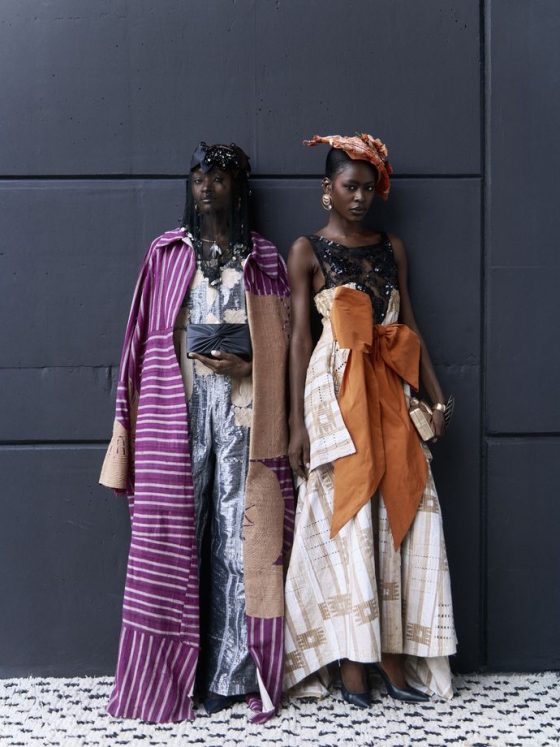
Diaspora fashion is one of the most covered and least understood sectors in global fashion media. It receives attention as a style story: the aesthetic identity, the cultural references embedded in the silhouette and the textile, the biography of the designer who crosses between two cultural worlds and produces work that carries both. The coverage is often genuinely engaged and occasionally beautiful. It is almost never about where the fabric came from, how the garment was made, what it costs to ship from Kingston to London or from Lagos to New York, how many countries’ customs procedures a designer crosses when they produce in one geography and sell in another, or what happens to the business when the shipping fee exceeds the production cost.
The style story is visible. The supply chain story is the one that determines whether the business survives.
“The absence of robust supply chains forces designers to rely on small ateliers, which prolongs production timelines, limits scalability, and raises per-piece costs. As a result: brands struggle to fulfil international orders, creative work is slowed by logistics, and many designers are priced out of partnerships or suffer identity dilution when forced to chase cheaper fabrics elsewhere.” That description applies as precisely to a Trinidadian designer producing for a London market as to a Nigerian designer trying to fulfil orders from New York. The logistics challenge does not care about the cultural story the collection carries.
As Africa Fashion Tour documented in its April 2026 assessment of African fashion chains, the African textile industry is ‘driven by the diaspora and rooted between textile tradition and modernity.’ Many African fashion houses recorded a significant increase in sales in 2025, stimulated by growing demand for unique, personalised pieces with a strong cultural identity. The most successful brands in 2025 were those that combined transparency on their internal sourcing and processes with a clear cultural design identity. The diaspora is named as a commercial driver. The supply chain infrastructure that would allow that commercial energy to translate into sustainable business is the part of the story that the same coverage consistently omits.
Global fashion media covers diaspora fashion as a style story. The supply chain story behind it, where fabric is sourced, how production is managed across geographies and what cross-border logistics cost, is the story that determines whether diaspora fashion survives.
What Diaspora Fashion Production Actually Involves
A diaspora fashion designer operating between two geographies is managing a production and distribution challenge whose specific complexity does not appear in the editorial coverage of their work.
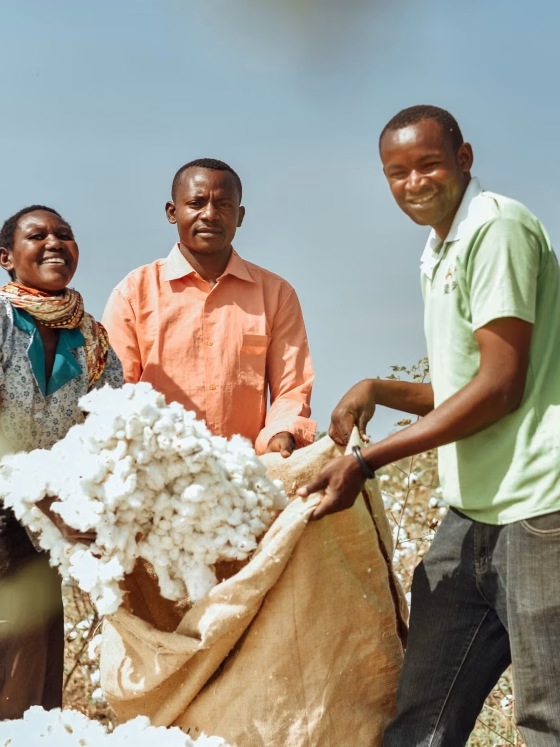
The fabric problem: diaspora designers sourcing materials for collections that reference a specific cultural aesthetic frequently face the same fabric-cost disadvantage as designers producing in their home countries. A Jamaican designer working in London whose collection draws on Caribbean textile traditions may need to source pagne or wax print from specialist suppliers whose supply chain routes back through the same intermediary layer that adds a 2x to 2.5x markup at each stage. The cultural specificity of the material the collection requires and the cost efficiency of the sourcing route it is available through are in tension, a tension the style review of the collection never mentions.
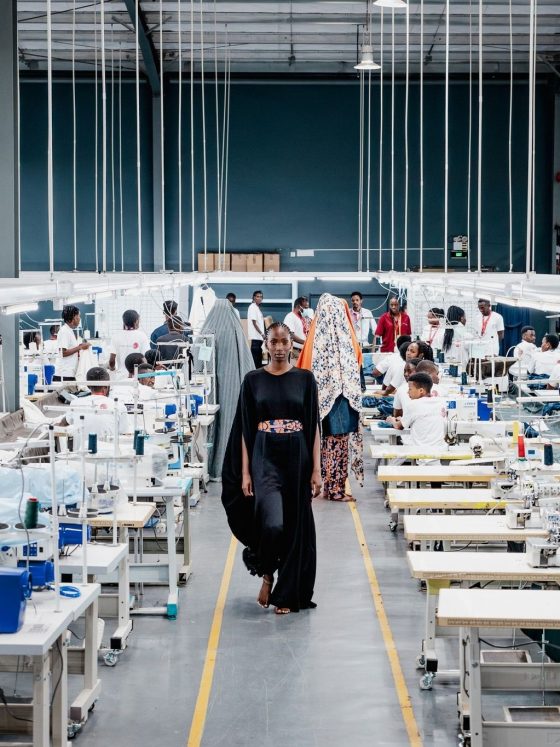
The production problem: a designer who produces in their home country and sells to diaspora markets has solved the cultural authenticity question and created the cross-border logistics problem. A designer who produces for the diaspora market has solved the logistics problem and may have created the cultural authenticity and unit economics problems simultaneously. The compromise most diaspora designers reach, producing some elements in one geography and others in another, creates a production management challenge that doubles the communication requirements, the quality-control complexity, and the customs paperwork, without providing the cost or quality advantage of either fully local or fully offshore production.
The shipping problem: the cost of shipping between the geographies that most diaspora fashion brands navigate is one of the most significant and least discussed structural constraints in diaspora fashion commerce. A designer shipping individual wholesale orders from Kingston, Lomé, Lagos, or Bridgetown to retail buyers in London, New York, or Toronto faces shipping costs that can exceed the production cost of the garment. That structural cost disadvantage means that the same garment that would be price-competitive as part of a larger consolidated shipment is price-uncompetitive as part of a small-volume diaspora commerce operation, and the small volume is a consequence of the market size, not of the designer’s commercial ambition.
The customs problem: cross-border fashion retail does not operate under a single set of rules. A brand shipping to several markets must navigate different customs procedures, import regulations, tax regimes and consumer protection requirements for each market. Expanding into multiple countries involves adapting operations on a country-by-country basis rather than applying a single international shipping model. For a designer who is simultaneously producing across two geographies and selling across two or more, the customs complexity compounds at each border in the chain.
The Caribbean Specific Case
As Omiren Styles has established in its analysis of the Caribbean fashion week circuit and its distribution problem, that the Caribbean fashion distribution challenge is not a talent problem but an infrastructure problem, and that the most natural distribution channel for Caribbean fashion, the Caribbean diaspora communities in the United Kingdom, the United States, Canada and the Netherlands, is geographically close but commercially distant. The same analysis that applies to Caribbean fashion weeks applies to Caribbean diaspora designers: the community that most reliably understands, values and wants to buy the work is the community that is most expensive and most logistically complex to reach from the geography where the work is produced.
The specific supply chain challenge of Caribbean diaspora fashion is the archipelago problem: the Caribbean’s fashion markets are separated from each other and from the diaspora markets by inter-island freight costs, by customs regimes that are not harmonised even within CARICOM, and by logistics infrastructure that routes most Caribbean commerce through Miami or London rather than directly between Caribbean territories and Caribbean diaspora destinations. A Trinidadian designer shipping to London is not shipping to a foreign market. They are shipping to one of the largest concentrations of Trinidadian consumers in the world. The logistics treat the shipment as a standard international export. The community at the destination end understands the package’s cultural content better than any buyer along the shipping route.
The FashionTT Value Chain Investment Programme, which this series has documented, assesses designers on export production capacity as one of its 16 evaluation criteria precisely because the production-to-export gap is specific and assessable. A designer who can produce quality but cannot manage the export logistics, customs documentation, foreign currency receivables, and buyer relationship maintenance that export commerce requires is not export-ready, regardless of the quality of their sample. Export readiness is a production intelligence problem, and the diaspora fashion context makes it a production intelligence problem that must be solved simultaneously in two or more geographies.
The African Diaspora Specific Case

As Omiren Styles has documented in its analysis of African diaspora fashion brands building reverse commerce by shipping back to the continent, the model of African diaspora fashion brands shipping to African markets reflects decisions about fulfilment, logistics and customer experience that determine whether cross-border commerce can scale. Expanding into Nigeria, Ghana or Kenya involves adapting operations on a country-by-country basis rather than applying a single international shipping model. The brands that have built the most sustainable diaspora-to-Africa commerce have done so by investing in the technology and logistics infrastructure that makes cross-border commerce operationally manageable, not only in the aesthetic and cultural identity that makes it commercially desirable.
KAHINDO, founded in New York by Congolese designer Kahindo Mateene, combines international e-commerce with production partnerships involving artisan communities in Africa. The model builds reverse commerce through deeper connections with African production networks: customers purchase from a global online store with international shipping and returns policies while the supply chain remains connected to African makers. That model is supply chain architecture, not only cultural positioning. The decision to maintain production relationships with African artisan communities is simultaneously a cultural authenticity decision and a supply chain decision whose logistics, payment and quality control implications are as complex as any manufacturing relationship.
The FIT Museum’s Africa’s Fashion Diaspora exhibition documented the supply chain commitments that give diaspora fashion its economic dimension. Akosua Afriyie-Kumi’s AAKS brand consciously pays fair wages to raffia weavers in northern Ghana. Nairobi Apparel District upcycles secondhand garments with graphic motifs to create modern Kenyan streetwear. Tracy Reese’s Hope for Flowers brand operates to help revitalise urban Detroit. Each of these is as much a supply chain commitment as a design philosophy: the decision about where to source, who to pay, and what production model to maintain is the structural decision on which the brand’s relationship to its community of origin rests.
What the Style Story Omits
Fashion editorial coverage of diaspora designers has an established vocabulary: the cultural synthesis, the heritage reference, the identity negotiation, the aesthetic bridge between worlds. That vocabulary is not wrong. The cultural dimension of diaspora fashion is real, significant and worth documenting.
What it consistently omits is the commercial architecture behind the cultural statement. A diaspora designer who has built a sustainable fashion business has not done so solely through the cultural authenticity of their aesthetic. They have solved a set of supply chain problems that their non-diaspora competitors, producing in a single geography with established sourcing relationships, logistics infrastructure and buyer networks, did not have to solve. The solution to those problems is where the real operational story of diaspora fashion lies, and it is the story that would be most useful to the next generation of diaspora designers trying to build the same kind of business.
The style review that praises a collection’s cultural synthesis without asking how the fabric was sourced, how the garment was produced, how the shipping cost was factored into the retail price and how the designer manages the logistics of selling in a market they do not live in, has documented the most visible output of a supply chain process it has not investigated. The supply chain is the story behind the story. It is also the story that predicts whether the brand will still exist to show a second collection.
As Omiren Styles has documented in its analysis of the documentation gap in fashion supply chains, the fashion supply chain consistently fails to record the knowledge, skills, cultural practices, and specific human labour that make a product what it is. Diaspora fashion’s supply chain story is a specific instance of that documentation gap: the editorial record of diaspora fashion does not include the logistics problem, the sourcing challenge, the customs complexity or the production management decision that underlies the aesthetic statement the coverage celebrates.
What Documenting the Supply Chain Would Show
If fashion coverage of diaspora designers included the supply chain story alongside the style story, it would show several things that current coverage does not.
It would show that the most commercially successful diaspora fashion brands are those that have made explicit decisions about their supply chain architecture, not only about their aesthetic identity. The brands that have built sustainable cross-border commerce have invested in fulfilment infrastructure, logistics partnerships, customs expertise, and production management systems that enable the cultural product to reach the cultural market. The aesthetic is the face of the business. The supply chain is the body.
It would show that the logistics problems diaspora designers face are structural rather than individual. The shipping cost that exceeds the production cost is not a problem unique to any one designer. It is a structural feature of the small-volume cross-border commerce economics that characterises most diaspora fashion operations. Addressing it requires institutional solutions: consolidated shipping infrastructure, logistics partnerships, customs facilitation programmes and the kind of trade policy attention that the Caribbean Development Bank’s CIIF and FashionTT’s VCIP have begun to build but have not yet solved at scale.
As Omiren Styles has established in its analysis of what it takes to scale fashion manufacturing in Africa, the infrastructure gaps that block scale in African fashion manufacturing are specific, addressable, and compounding. The same analysis applies to diaspora fashion supply chains: the fabric sourcing problem, the production management problem, the export logistics problem and the cross-border commerce problem are each specific, each addressable and each more damaging when they compound across the dual geographies that diaspora fashion necessarily navigates.
It would show that the cultural and commercial commitments of a diaspora fashion brand are not in tension but in interdependence. A brand that sources its fabric from its community of origin, employs artisans from that community in its production, ships to diaspora consumers whose connection to that community drives their purchasing decision, and prices in a way that sustains the supply chain relationships that make all of that possible, has built a supply chain whose cultural and commercial dimensions are the same thing. The style is the supply chain, and the supply chain is the style.
The Omiren Argument
Diaspora fashion is a supply chain story. It is a story about where the fabric comes from, how it travels, who transforms it, how much that transformation costs, how the product reaches the community that wants to buy it and what the commercial structure of that transaction looks like. It is also a style story, a cultural story, an identity story and a community story. All of those stories are true simultaneously. The coverage that focuses only on the style story is not wrong. It is incomplete.
The supply chain story matters because it determines sustainability. A diaspora fashion brand whose cultural identity is compelling but whose logistics are unmanageable will not survive long enough to build the community relationships and the institutional presence that cultural sustainability requires. A brand whose supply chain works, whose fabric sourcing is efficient, whose production management handles the complexity of dual geographies, whose customs expertise prevents shipment delays, and whose pricing reflects the real cost of cross-border commerce can build the community foundation that makes the cultural story durable.
‘Tun Yuh Han Mek Fashan.’ Create beauty from the resources available. In the context of diaspora fashion, the resources available include the cultural knowledge, the design instinct, the community connection and the aesthetic intelligence that diaspora life produces. They also include, for every designer who has built a sustainable diaspora fashion business, the hard-won logistics knowledge, the supply chain relationships, the customs expertise and the production management capability that the style coverage never photographs but that the business could not exist without.
As Omiren Styles has argued throughout this series, the Global South made fashion and never got credit. For diaspora fashion specifically, the form of that argument is supply-chain-specific: the designers who built the cultural bridge between their communities of origin and the markets where they work solved supply-chain problems whose difficulty the celebration of their aesthetic rarely acknowledges. The supply chain is where the work happened. It is also where the credit belongs.
ALSO READ
- The African Fashion Brands in the Diaspora That Are Actually Shipping Back to the Continent
- The Documentation Gap: What Fashion Supply Chains Still Fail to Record
- From Market Stall to Export Order: What It Takes to Scale Fashion Manufacturing in Africa
- The Global South Made Fashion. It Just Never Got Credit.
Frequently Asked Questions
Why is diaspora fashion primarily covered as a style story rather than a supply chain story?
Fashion editorial coverage has developed a vocabulary for diaspora fashion that is oriented toward the aesthetic and cultural dimensions of the work: heritage reference, identity synthesis, and the visual bridge between cultural worlds. That vocabulary reflects genuine editorial interest in the cultural significance of diaspora fashion and produces coverage that is often accurate and engaged. It omits the supply chain because fashion editorial is generally not structured to document production logistics, sourcing economics, customs complexity or cross-border commerce infrastructure. The supply chain story requires the same investigative approach as any commercial reporting: specific questions about sourcing, production, logistics and pricing whose answers are less immediately visual and less culturally legible than the aesthetic story the collection tells. The result is a coverage pattern that celebrates the cultural output of diaspora fashion without documenting the commercial architecture that determines whether the business survives.
What specific supply chain challenges do diaspora fashion designers face?
As Ekinken documented in July 2026, the absence of robust supply chains forces designers to rely on small ateliers, prolonging production timelines, limiting scalability and raising per-piece costs. For diaspora designers specifically, these challenges compound across two geographies simultaneously. The fabric sourcing problem: materials that reference a specific cultural aesthetic may only be available through intermediary chains that add significant markup at each stage. The production management problem: producing in one geography and selling in another doubles the communication requirements, the complexity of quality control, and the customs paperwork. The shipping problem: small-volume cross-border shipments face per-unit logistics costs that can exceed the production cost of the garment. The customs problem: each market requires country-specific customs procedures, import regulations and tax compliance rather than a single international shipping framework.
How are African diaspora fashion brands addressing the supply chain challenge?
As Omiren Styles has documented, in its analysis of African diaspora fashion brands shipping back to the continent, the brands that have built the most sustainable diaspora-to-market commerce have done so by investing in the technology and logistics infrastructure that makes cross-border commerce operationally manageable. KAHINDO, founded by Congolese designer Kahindo Mateene in New York, combines international e-commerce with production partnerships involving artisan communities in Africa, building reverse commerce through connections with African production networks while maintaining a global online store with international shipping and returns policies. The model reflects a broader shift in African fashion, where technology and logistics are becoming essential to how brands grow internationally, and where the future of fashion commerce will be defined not by design alone but by the commercial infrastructure that makes design commercially accessible.
What would it mean for fashion coverage to document the supply chain story of diaspora fashion?
Documenting the supply chain story alongside the style story in diaspora fashion coverage would require an editorial practice of asking different questions: where was this fabric sourced, from whom, at what cost, and through what intermediary chain? Who made this garment, under what conditions and at what rate of pay? How does this collection reach the market it is made for, and what does that logistics cost as a percentage of the retail price? What customs procedures does the designer navigate, and how does the country-by-country complexity of cross-border fashion retail affect the brand’s pricing and distribution decisions? These questions have answers that are as specific and as interesting as the aesthetic questions that current coverage asks. Their answers would produce a more complete picture of diaspora fashion as a commercial and operational practice, and would be more useful to the next generation of diaspora designers building the same kind of business.
What is “reverse commerce” in African diaspora fashion?
As Omiren Styles has documented, reverse commerce in African diaspora fashion refers to the model in which African diaspora brands, typically based in the United States, the United Kingdom or Europe, build supply chains and commercial relationships that ship products back to African markets rather than exclusively serving diaspora consumers in their country of base. The model creates a more connected fashion economy in which African diaspora brands and African consumers are no longer separated by geography, and in which technology and logistics infrastructure enables commercial relationships that were previously impractical to sustain. Cross-border fashion retail in this model requires country-by-country adaptation of operations, customs procedures, import regulations and consumer protection requirements, with the brands that have succeeded doing so by treating logistics investment as a core business function rather than a peripheral operational requirement.
EXPLORE MORE
Read the full Industry and Diaspora sections at Omiren Styles for ongoing analysis of diaspora fashion supply chains, cross-border logistics, reverse commerce and the commercial infrastructure that determines whether diaspora fashion survives as a business rather than as a style moment. Discover travel and heritage intelligence across Africa, the Caribbean and Latin America at Rex Clarke Adventures.