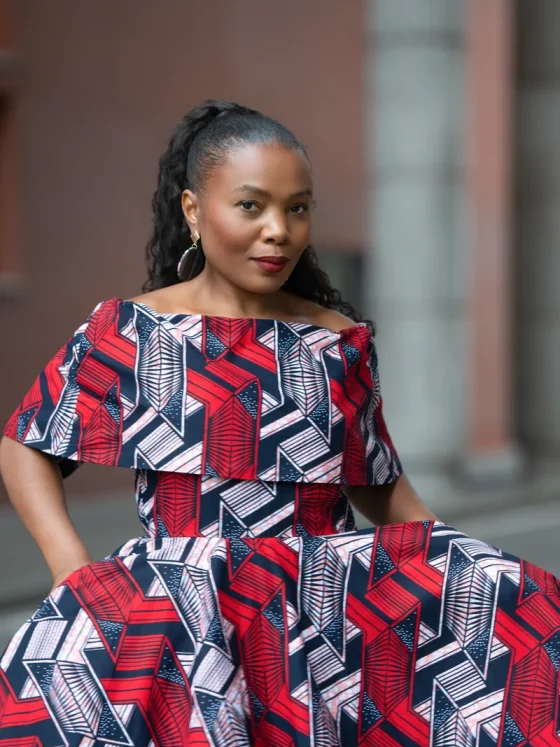
Aso-oke was luxury before the word existed in the vocabulary of global fashion.
The cloth woven in narrow strips by Yoruba weavers in Iseyin, Oyo, and Ilorin has been the prestige textile of Yoruba ceremonial life for over five centuries. An aso-oke wedding ensemble costs between ₦15,000 and ₦40,000 per yard, with complete high-society outfits running into hundreds of thousands of naira. As Omiren Styles has documented in its analysis of aso-oke styles for Yoruba women in 2026, this price is not manufactured by a brand or a season. The hands of Iseyin weavers and five centuries of Yoruba ceremonial life have built it into the fabric. That is what prestige means before fashion decides to engage with it: value that precedes the market, authority not granted by an institution, luxury built through time.
The contemporary fashion conversation about aso-oke has been framed primarily as a question of what fashion can do with the cloth. The more accurate question is what the cloth has already done without fashion’s help, and whether the fashion industry’s engagement with it builds on that foundation or displaces it.
Aso-oke has survived colonialism, the cheap industrial textiles that flooded Nigerian markets in the nineteenth century, and every subsequent wave of fashion that has attempted to replace it. It survived because the Yoruba understood, and continue to understand, that this cloth is not a garment. It is a civilisational record.
The $31 billion African fashion market contains no textile with a better-established prestige logic than aso-oke. The industry supports over 50,000 artisans across weaving centres. It generates approximately USD 120 million in foreign exchange revenue annually, as documented in the Omiren Styles analysis of the aso-oke inheritance economy. It does not need fashion’s discovery to prove its value. What it needs is documentation at the level of its actual sophistication: the quality hierarchy within the textile, the regional variation across weaving communities, the craft economy that sustains it, and the logic by which contemporary designers engage with it seriously. This article provides that documentation.
Aso-oke is not a ceremonial textile that occasionally enters fashion. It is a living luxury material with its own quality hierarchy, craft economy and prestige logic. The designers engaging with it are translating what it already is.
The Textile Itself: What Aso-Oke Actually Is

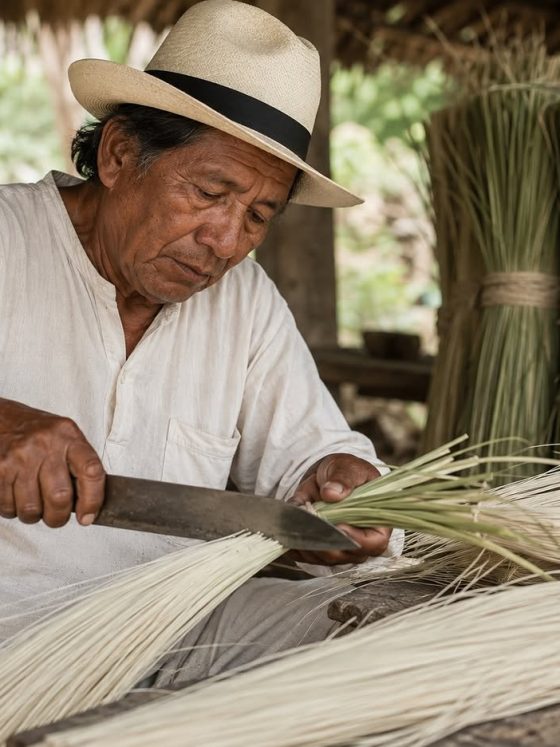
Aso-oke, meaning “top cloth” in Yoruba, is a handwoven prestige textile produced in narrow strips on a horizontal loom. The strips, typically five to seven centimetres wide, are woven separately and then sewn together to form a fabric panel. This strip-weaving technique is the technical foundation of the cloth’s authority: it requires a specific loom, specific knowledge and specific physical discipline that cannot be replicated on industrial equipment without losing the material qualities that define the cloth.
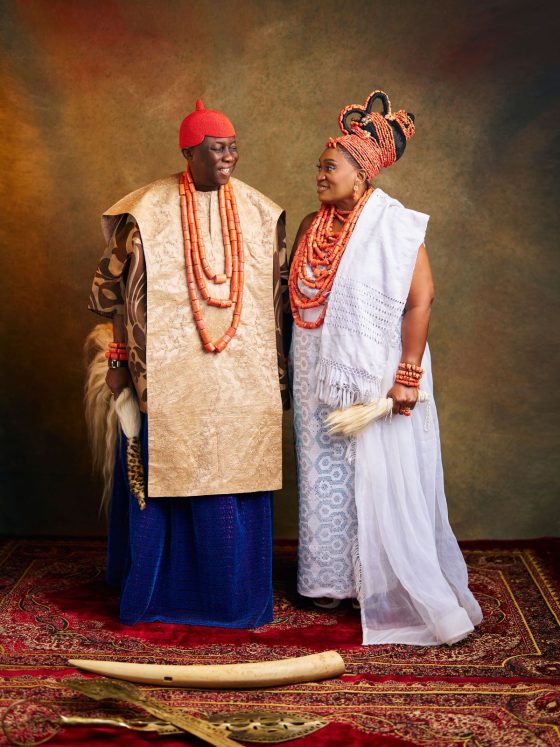
The classical aso-oke types establish a quality hierarchy that predates any contemporary fashion categorisation. Etu, the dark indigo cloth with fine white stripes, is the most everyday of the three classical types and the one most commonly encountered at Nigerian ceremonies across all social levels. Alaari, the red or deep burgundy cloth, carries higher ceremonial weight and is associated with specific occasions and social positions. Sanyan is the most distinguished of the three. Woven originally from the thread of forest moths rather than cultivated silk, authentic Sanyan represents wealth and is associated with royalty and chiefs. A woman who wears authentic Sanyan at a ceremony is wearing one of Nigeria’s rarest traditional fabrics.
These three types are the classical foundation against which everything else in aso-oke production is measured. Modern production has added dozens of variations: new colourways, metallic lurex threads, contemporary pattern innovations, and the aso-oke-adjacent fabrics that use similar construction methods with different fibre contents. But as the Omiren Styles documentation of aso-oke styles for Yoruba women established, Etu, Alaari, and Sanyan remain the vocabulary against which the value and authenticity of all aso-oke production is read. The hierarchy is not arbitrary. It reflects the specific material properties, rarity, production complexity and social history of each type.
The weave variation that aso-oke displays is not a defect. As the Omiren Styles analysis of imperfection as intention in contemporary high fashion established, the slight variation in thread tension, the marginal inconsistency in colour density across strips, and the small gaps where human hands rather than machines make decisions are evidence of the weaver’s presence in the cloth. They are not corrected. They are the point. What industrial luxury manufacturing spent decades eliminating from its production is precisely what aso-oke has retained as the material evidence of its authority.
The Ceremony as the Market

Understanding aso-oke’s relationship to contemporary luxury requires understanding the market it has always operated in: the Nigerian ceremony.
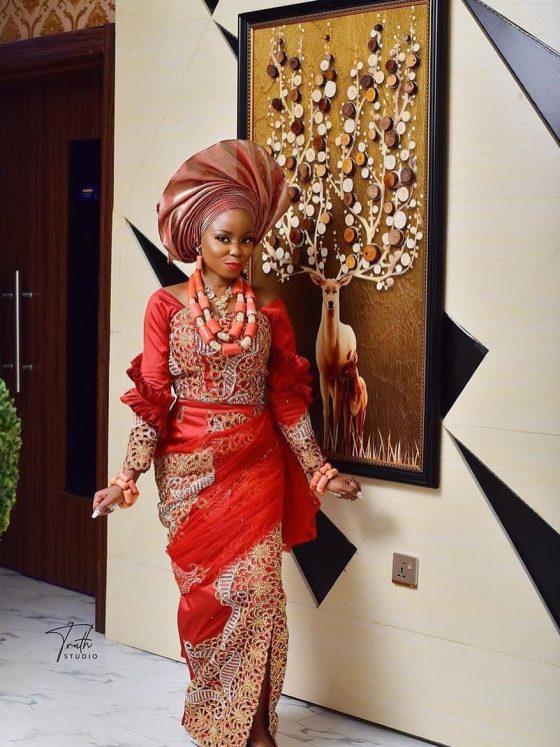
The Yoruba ceremony, whether wedding, naming, chieftaincy installation, religious celebration or festival, is one of the most sophisticated fashion markets in the world. Guests arrive in coordinated aso-ebi fabrics that communicate their relationship to the host family. Hosts dress in aso-oke of a quality that signals their social position. The gele headwrap, styled with architectural complexity, carries as much communicative weight as the garment below it. Coral beads and gold jewellery add another layer of prestige signalling. Other guests read the whole ensemble with the literacy of people who have done this their entire lives. As Omiren Styles documented at the Ojude Oba Festival in Ijebu-Ode in 2026, women glide forward in aso-oke so richly woven that each fabric strip carries a story of lineage, pride and reverence. The fabrics hold archives: handwoven aso-oke in indigo, burgundy, champagne and gold, with geometric motifs passed down through families.
This market has its own quality signals, pricing logic, authentication practices, and knowledge networks. A Yoruba woman selecting aso-oke for her daughter’s wedding applies the same quality assessment criteria that a Savile Row customer applies to a bespoke suit: she examines the thread count, the consistency of the weave, the depth of the colour, the weight of the fabric, the credibility of the weaver’s reputation and the appropriateness of the cloth type for the occasion. This is not informal. It is expertise developed over years of attending and hosting ceremonies, learning from mothers, aunties, and fabric merchants, and building relationships with weavers whose specific skills are known and trusted.
The ceremony is also where aso-oke’s inheritance function operates. The Saint Louis Art Museum, which holds a significant collection of historical Yoruba textiles, describes aso-oke as cloth that families commission for the most important milestones of life, often passing the textiles on to the next generation as heirlooms. A cloth woven in the 1970s for a grandmother’s first child’s wedding arrives at a granddaughter’s celebration carrying a different kind of value from any new production: it carries time, family history and the specific evidence of the generation in which it was made. New aso-oke, however well made, does not carry 1970. That temporal specificity is what the inheritance market trades in.
Kenneth Ize and the Translation Argument

Kenneth Ize, born in Vienna to a traditional Nigerian family, has built his label around aso-oke, working with weaving communities in Ilorin to produce the cloth that forms the foundation of his Paris Fashion Week collections. As Omiren Styles has documented in its dedicated analysis of Kenneth Ize and aso-oke, Ize has developed a circular stewardship plan that ensures the craft’s future by establishing a dedicated weaving centre in Ilorin, where slow-burning quality is prioritised over bulk manufacturing. Every rhythmic pedal stroke and hand-dyed thread is an investment in a future in which the craftsman is the protagonist. Each item becomes, in his account, an upscale relic.
Ize’s own language about the work is precise. “I want people who wear my clothes to feel the soul inside the clothing. It takes a person to create the fabric they are made from, and it takes days, within a community, to weave the cloth. It’s their life and DNA. That’s how much soul is being put into that fabric.” As the Omiren Styles analysis of African menswear designers documented, Ize has shown at Paris Fashion Week to critical recognition precisely because the garments carry a form of proof that luxury manufacturing erased and now attempts to reclaim through the “undone dressing” trend. The aso-oke’s irregularity is its authority. It does not pretend to be machine-produced. That authenticity is what the global luxury conversation is reaching toward and what aso-oke already embodies structurally.
The translation argument is this: Ize is not elevating aso-oke by taking it to Paris. He is demonstrating that the prestige logic already embedded in the cloth, the hierarchy of Etu, Alaari and Sanyan, the irreplaceable hand of the Ilorin weaver, the temporal depth of a textile sustained across five centuries, is legible to international luxury audiences when it is placed in a context those audiences already know how to read. Paris Fashion Week does not make the cloth valuable. It is a translation mechanism. The value was already there.
The AMVCA and the Upstream Creative Community

The Afrimma and AMVCA 2026 Cultural Night provided one of the year’s most precise illustrations of aso-oke operating at the level of its full cultural authority. As Omiren Styles documented in its analysis of AMVCA 2026 fashion, Kaybobo’s green and purple Aso-Oke Agbada, built on the OKIN peacock cosmology, encoded Yoruba design philosophy in every choice of colour and weave. The designers who produced the Cultural Night looks were not all ateliers with Instagram pages. They were aso-oke weavers in Iseyin and Ilorin, coral bead artisans in Benin City, and embroiderers whose knowledge is passed down through family apprenticeship rather than fashion school.
The AMVCA Cultural Night is the ceremony-as-market operating at its most concentrated. The audience reads the cloth with the full literacy of people who understand what Etu communicates versus Alaari, what the quality of a gele’s aso-oke strip says about its wearer’s social investment in the occasion, and what it means for a designer to have sourced cloth from the Iseyin weavers rather than from a machine-made imitation. That literacy does not travel automatically to international audiences. But it is present, active and authoritative in the Yoruba ceremonial context, and it is this context rather than any international fashion week that sets the terms on which aso-oke’s luxury status is actually assessed.
The Second-Hand Market and Irreplaceability

The second-hand aso-oke market is one of the most precise illustrations of the irreplaceability argument that Omiren Styles made in its analysis of luxury beyond price: an object is irreplaceable not because it is expensive or difficult to obtain, but because replacing it would mean losing something specific.
Pre-worn aso-oke reaches buyers through specialist vintage textile dealers, including Nzuri Textiles and Niger Bend, who source directly from Nigeria and sell to international buyers primarily in the United States and Europe. The pieces they carry are described by weave type, approximate age and condition. Etsy carries a significant volume of vintage aso-oke sourced from Nigeria, with sellers describing pieces made thirty or more years ago. As the Omiren Styles analysis of the aso-oke inheritance economy established, the second-hand market for Yoruba prestige cloth is a cultural economy, not a thrift store. New production cannot provide time. A cloth woven in 2026, however well made, does not carry 1970.
The temporal dimension of aso-oke’s value is structurally irreplaceable in a way that no contemporary production, however skilled, can compensate for. This is aso-oke at its most sophisticated as a luxury textile: it accumulates value through use, inheritance, the specific occasions at which it was worn, and the family history it carries. A new luxury brand can offer new aso-oke of the highest craft quality. It cannot offer a cloth that was present at a grandmother’s wedding in 1968.
What the Producer Economy Requires
The craft economy that sustains aso-oke production is not incidental to its luxury status. It is the source of it. The handwoven strip that requires a specific loom, a specific knowledge of tension and thread, and days of work within a weaving community is what makes the cloth what it is. Remove the craft economy, and you don’t get a cheaper version of the same textile. You have a different textile.
The aso-oke industry currently supports over 50,000 artisans across weaving centres in Iseyin, Oyo, and Ilorin, with exports reaching approximately USD 120 million in foreign exchange revenue in 2023. These are significant figures. They also mask significant vulnerability: weavers at the base of the production chain face the same structural challenges as artisan producers across African textile economies, including competition from machine-made imitations, currency instability affecting material costs, and a market that does not consistently distinguish between handwoven and machine-produced cloth in its pricing.
As After the Textile Explainer: A Dyeing Economy Cannot Grow by Leaving Its Producers Behind established, the global interest in an African textile tradition does not automatically generate proportionate economic return to the producers who sustain it. The prestige that aso-oke carries in the Yoruba ceremonial market creates pricing power that allows skilled Iseyin weavers to earn more than generic textile workers. The international fashion market’s engagement with aso-oke, through designers like Kenneth Ize and through the international vintage and collectables market, creates additional demand. Whether that demand produces proportionate return to the weavers in Iseyin and Ilorin depends on how the commercial structures between the weaver, the designer and the end market are built.
As Credit Is Not Compensation established, naming the source of a textile in a collection’s press materials is not compensation. Compensation requires that the commercial premium generated by the textile’s cultural authority flows back toward the people whose knowledge and labour produce it. Kenneth Ize’s weaving centre model in Ilorin, which prioritises long-term relationships with weavers over single-commission sourcing, is one structural response to this obligation. It is not the only possible response, but it establishes the principle: a brand that builds its identity on aso-oke’s authority owes a sustained commercial relationship to the craft economy that produces that authority.
The Omiren Argument
The contemporary fashion conversation about aso-oke frames the cloth as a textile that fashion is discovering. That framing is exactly backwards.
Aso-oke has a quality hierarchy, a prestige logic, an inheritance economy and a ceremonial market that operates with greater sophistication than most international luxury fashion markets. The Yoruba woman selecting aso-oke for her daughter’s wedding applies a set of quality assessment criteria, a reading of occasion appropriateness and a knowledge of weaver reputation that is as rigorous as any luxury buying practice. The cloth has been sustaining a prestige economy across five centuries without any input from Paris, London or New York.
What contemporary fashion can do with aso-oke, and what Kenneth Ize has demonstrated most clearly, is translate the cloth’s existing authority into a format that international audiences without Yoruba ceremonial literacy can access. That translation is valuable. It is not the same as discovery. The cloth was already found.
The standard for engaging with aso-oke in contemporary luxury is therefore different from the standard that applies to fashion’s engagement with most African textiles. It is not “how do we elevate this craft.” It is “how do we work with a craft that already has its own elevation system and ensure that the commercial relationships we build are proportionate to the authority we are drawing on.” As the Global South made fashion and never got credit, the standard is not to make aso-oke legible to external markets on external terms. The standard is to engage with what the cloth already is: a prestige textile with five centuries of authority, a craft economy supporting 50,000 artisans, a quality hierarchy that predates any contemporary luxury categorisation, and a ceremonial function that gives it a depth of meaning that no fashion brief can replicate. Prestige cloth does not become less prestigious after the ceremony. It carries the ceremony with it wherever it goes.
ALSO READ
- Second-Hand Aso-Oke and the Inheritance Economy
- Top 5 Aso-Oke Styles for Yoruba Women in 2026
- Kenneth Ize: The Man Who Made Aso-Oke a Global Conversation
- After the Textile Explainer: A Dyeing Economy Cannot Grow by Leaving Its Producers Behind
- Credit Is Not Compensation: What Fashion Owes Beyond Naming a Cultural Source
Frequently Asked Questions
What is aso-oke and what makes it a luxury textile?
As Omiren Styles has documented, aso-oke, meaning “top cloth” in Yoruba, is a handwoven prestige textile produced in narrow strips on a horizontal loom by Yoruba weavers primarily in Iseyin, Oyo and Ilorin. Its luxury status rests on several specific factors: the irreplaceable skill and knowledge of the weaver required for production, which cannot be replicated on industrial equipment; a quality hierarchy of three classical types, Etu, Alaari and Sanyan, with Sanyan being the most prestigious, originally woven from raw silk gathered from forest moths; a price point of ₦15,000 to ₦40,000 per yard with complete high-society outfits running into hundreds of thousands of naira; and a five-century ceremonial function in Yoruba life that gives the cloth a depth of cultural authority no fashion brief can manufacture. Its prestige is not the product of a brand or a season. It is built into the fabric by the hands of the weavers and by the history of Yoruba ceremonial life through which it has been worn.
What are the three classical types of aso-oke and how do they differ?
The three classical aso-oke types establish a prestige hierarchy that has governed Yoruba ceremonial dress for centuries. Etu is the dark indigo cloth with fine white stripes, the most everyday of the three and the one most commonly encountered at Nigerian ceremonies across social levels. Alaari is the red or deep burgundy cloth, carrying higher ceremonial weight and associated with specific occasions and social positions. Sanyan is the most distinguished: woven originally from the thread of forest moths rather than cultivated silk, authentic Sanyan represents wealth and is associated with royalty and chiefs. Modern aso-oke production has added many variations in colourways, metallic lurex threads and contemporary patterns. Still, Etu, Alaari and Sanyan remain the vocabulary against which the value and authenticity of all aso-oke production is measured.
How has Kenneth Ize brought aso-oke into contemporary luxury fashion?
As Omiren Styles has documented in its dedicated analysis of Kenneth Ize and aso-oke, Ize has built his Paris Fashion Week label around aso-oke produced at a dedicated weaving centre in Ilorin. His model prioritises slow-burning quality over bulk manufacturing and long-term relationships with weavers over single-commission sourcing. He describes the cloth’s soul as the reason his work means what it means: the days of work, within a community, that go into each piece of fabric. His argument is not that aso-oke needs fashion to give it value. It is that aso-oke’s existing authority is legible to international luxury audiences when placed in a context those audiences already know how to read. Paris Fashion Week is a translation mechanism. The value was already in the cloth.
What is the aso-oke inheritance economy and how does it work?
The aso-oke inheritance economy is the market for pre-worn and vintage aso-oke, which operates on a distinct logic from new production. Families commission aso-oke for life’s most important milestones, often passing the textiles to the next generation as heirlooms. Pre-worn aso-oke reaches buyers through specialist vintage textile dealers, including Nzuri Textiles and Niger Bend, who source directly from Nigeria and sell to international buyers. Etsy also carries a significant volume of vintage aso-oke, with pieces described by weave type, age and condition. The inheritance economy’s prestige logic is temporal: a cloth woven in the 1970s carries something that no new production, however skilled, can provide. It carries time, family history and the specific evidence of the generation in which it was made. This temporal specificity is what makes vintage aso-oke irreplaceable rather than merely scarce.
What does the aso-oke craft economy look like in 2026?
The aso-oke industry in 2026 supports over 50,000 artisans across weaving centres in Iseyin, Oyo and Ilorin, with exports reaching approximately USD 120 million in foreign exchange revenue in 2023. Iseyin in Oyo State is widely recognised as the craft’s home. The industry faces structural challenges common to African artisan textile economies: competition from machine-made imitations that may be sold as handwoven, currency instability affecting material costs, and a market that does not consistently distinguish between handwoven and machine-produced cloth in its pricing. The luxury positioning of brands like Kenneth Ize, which builds long-term sourcing relationships with Ilorin weavers and prioritises craft quality over volume, represents one model for ensuring that international fashion engagement produces proportionate economic return to the weaving communities whose knowledge sustains the textile.
What is the difference between aso-oke as a ceremonial textile and aso-oke in contemporary luxury fashion?
In its ceremonial context, aso-oke operates within a complete social knowledge system. Every Yoruba woman selecting aso-oke for a wedding applies quality assessment criteria, reads the occasion-appropriateness of each cloth type, and draws on knowledge of specific weaver reputations built over years of attending ceremonies. The cloth communicates lineage, pride and social position to audiences who share that knowledge system. In contemporary luxury fashion, aso-oke’s ceremonial authority is translated into a context international audiences without Yoruba ceremonial literacy can access: the visible handwork, the weave variation, and the cloth’s specific material qualities all communicate craft authenticity and provenance in a language global luxury markets understand. The translation is valuable, but it is not discovery. The cloth’s authority predates and exceeds any fashion engagement with it.
EXPLORE MORE
Read the full Heritage and Fashion sections at Omiren Styles for ongoing documentation of Nigerian luxury textiles, Yoruba ceremonial dress and the craft economies that sustain them. Discover travel and heritage intelligence across West Africa, including the weaving centres of Iseyin and Ilorin, at Rex Clarke Adventures.