Africa Fashion Week London 2026 is over.
The runway has closed. The photographs are circulating. The press coverage has been filed. The designers who travelled to London, sometimes from Lagos, Accra, Nairobi or Johannesburg, are back at their studios, ateliers, factories and home markets.
The question that matters now is not how good the collections looked.
The question is what the event produced.
Specifically, how many attending buyers had confirmed purchasing authority? How many buyer conversations became sample requests? How many sample requests became purchase orders? How many brands secured confirmed stockist listings as a result of participation? How many press introductions led to published coverage? How many partnership conversations initiated at the event moved forward? Did the Shop The Runway mechanism produce direct commercial transactions on the day? How many of those have led to follow-on wholesale conversations?
The runway is the beginning of the commercial conversation, not its conclusion. What AFWL is judged on now, and what it should be judged on in every subsequent edition, is what it produced after the lights went down.
Omiren Styles has argued throughout this series that fashion events should be judged by what happens after the runway, not by attendance or applause. That standard applies directly to AFWL 2026. The platform made a genuine commercial commitment with this edition. It moved to 8 Northumberland Avenue, placing itself in the institutional tier of London’s event geography. It introduced Shop The Runway. It partnered with the British Council’s Creative DNA programme. These were structural changes. They warrant structural accountability.
AFWL 2026 was the most commercially ambitious edition of Africa Fashion Week London. The runway is over. Omiren asks: what converted into orders, stockists, press and partnerships?
What AFWL 2026 Committed To

Before asking what AFWL 2026 produced, it is worth being precise about what it set out to achieve. Omiren Styles published a full pre-event analysis in Africa Fashion Week London 2026: Design Beyond Borders. Three things distinguished this edition from its predecessors.
The first was the venue. The move to 8 Northumberland Avenue placed AFWL in the institutional tier of London’s fashion calendar for the first time. The venue is one of London’s most prominent central event spaces. The choice signalled to buyers, press and institutional partners that AFWL was serious about occupying the same commercial geography as other major London fashion events.
The second was Shop The Runway. For the first time in the platform’s sixteen-year history, visitors, buyers, stylists and media attending the catwalk on Sunday 23 August could purchase directly from participating designers on the day. This was not an aesthetic addition to the programme. It was a structural change in how AFWL connected runway to retail, closing the gap between a fashion moment and a commercial transaction at the point of maximum attention.
The third was the British Council Creative DNA partnership, which brought professional development infrastructure into the AFWL programme and connected six designers from the UK and Sub-Saharan Africa through a skills exchange that treated learning as bidirectional rather than as European expertise flowing to African designers. This signalled that AFWL was building the institutional layer around the event rather than relying on the event alone to do all the work.
Together, these commitments positioned AFWL 2026 as the most commercially serious edition of the platform. The question is whether the outcomes match the ambition.
The Runway Was Strong. That Is Not the Point.

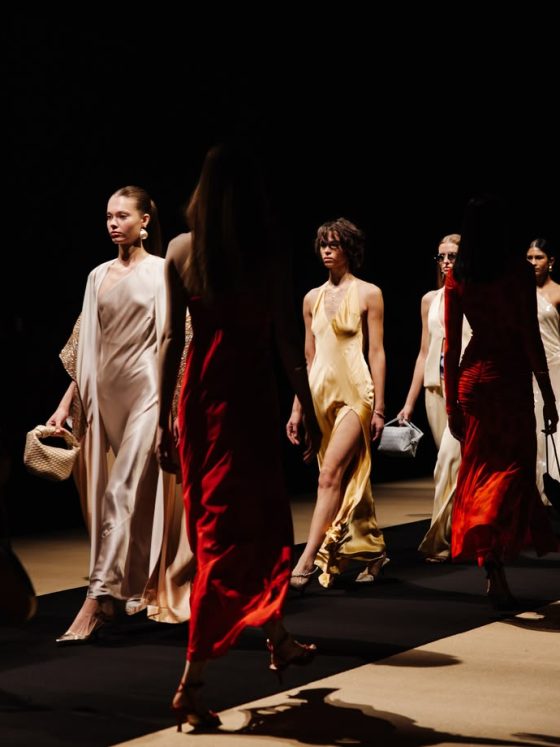
Omiren Styles has documented the creative quality of the AFWL 2026 runway in detail. As the runway trends analysis established, the strongest collections on the AFWL 2026 catwalk used heritage textiles, including Ankara, Aso-oke, Adire, Kente and Bazin Riche, as structural design arguments rather than decorative references. The structured volume that moved through the programme reflected the formal vocabulary of West African tailoring in its contemporary register. Wide sleeves were cut with interior shaping. Expanded shoulders were built to carry visual weight. Layered wrapping was worn to create a complete silhouette.
That is real fashion intelligence. The designers who produced those collections were not operating at the periphery of global fashion. They were working with specific textile knowledge, making specific construction decisions, and producing work that could hold its own in any London presentation context.
But creative quality is not the same thing as commercial outcome. A strong collection on a runway does not automatically create a purchase order. A powerful silhouette does not automatically create a stockist relationship. A heritage textile used intelligently does not automatically produce a buyer follow-up. As Visibility Is Not Market Power has argued throughout this series, the gap between being seen and being commercially viable is wide and specific. AFWL 2026 closed some of that gap with Shop The Runway. Whether it closed enough of it to constitute genuine market access for its designers is the question that now requires an answer.
The Specific Questions AFWL Should Now Answer
Omiren Styles does not have access to AFWL’s internal commercial data. The platform has not, at the time of writing, published a formal post-event commercial report. What follows is therefore the framework of questions that such a report should answer, based on the commercial standards this series has established across its full run.
Shop The Runway: the day-of results.
How many participating brands sold product through Shop The Runway on Sunday 23 August? What was the aggregate sales value? What was the average transaction value? How many buyer-led transactions, as opposed to public consumer purchases, were made through the mechanism? Have any of those buyer transactions led to follow-on wholesale conversations in the weeks since the event? The Shop The Runway mechanism was the single most significant commercial innovation at AFWL 2026. Its results are the most important commercial data point the platform holds.
Buyer meetings
How many buyers with confirmed purchasing authority attended AFWL 2026? Which retailers were represented? How many structured buyer meetings were scheduled and completed across the two days? Of those meetings, how many produced follow-up conversations within four weeks? How many follow-up conversations produced sample requests? How many sample requests have produced purchase orders?
Stockist listings
How many participating brands have secured confirmed stockist listings as a direct result of their participation in AFWL 2026? At which retailers? In which markets? Have any of those listings resulted in a second order?
Press outcomes
How many participating brands received press coverage as a result of AFWL 2026 that they would not otherwise have generated? In which publications? At what scale? Have any press introductions initiated at the event led to ongoing editorial relationships rather than single-feature coverage?
Partnership outcomes
How many business partnership conversations initiated at AFWL 2026 have moved forward? What kinds of partnerships: production partnerships, distribution agreements, showroom representation, export support, logistics partnerships, investment conversations?
British Council Creative DNA outcomes
What commercial or professional outcomes have the six designers who participated in the British Council Creative DNA programme attributed to that participation? Have they established new market connections, production relationships or buyer introductions through the programme?
What the Benchmark Looks Like
AFWL 2026 does not need to be compared against London Fashion Week’s commercial infrastructure. That comparison would not be fair or useful. The relevant comparison is with African fashion events that have invested seriously in measuring and reporting their commercial outcomes. As Omiren Styles has documented in its analysis of Lagos Fashion Week’s decade of impact, LFW has reported that 68% of attending brands have secured new funding or distribution deals post-event. Its Rising Stars showcase at the 2024 edition produced over 30 international retail partnerships for 15 emerging designers. The 2024 edition generated approximately 2.50 billion naira through sponsorships, pop-up shops and international partnerships.
Those are specific figures. They represent a platform that has invested in measuring its output and is willing to publish what it finds. AFWL does not need to match Lagos Fashion Week’s scale. It does need to develop the same seriousness about measurement and disclosure.
The move to a premium London venue, the introduction of Shop The Runway, and the British Council partnership all signal that AFWL has moved beyond platform-building into commercial accountability. That transition is welcome. Its test is the post-event report.
Why Post-Event Reporting Matters for the Wider Ecosystem

The case for AFWL publishing detailed commercial outcomes extends beyond accountability to the platform itself.
Designers deciding whether to apply and invest in participation need to know what a realistic return looks like. Application requires significant investment of time, money and creative energy. A designer travelling from Lagos or Accra to London for AFWL is taking a commercial risk. They deserve to make that decision based on documented outcomes from previous editions rather than on the platform’s own aspirational description of what it produces.
Buyers and retailers considering whether to attend AFWL need to know that the platform will connect them to commercially ready brands in a structured, efficient way. A buyer who attends a fashion event and does not find what they need will not return. Attracting serious buyers consistently requires demonstrating consistent commercial outcomes. As Omiren Styles has established in its analysis of London’s retail route for African and diaspora brands, the route to London’s premium retail market runs as much through demonstrated commercial reliability as through creative quality. AFWL’s post-event outcomes are part of that demonstration.
Press and media deciding whether to cover AFWL need to understand what kind of story the event produces. Cultural coverage of fashion weeks serves a different editorial purpose than commercial coverage of market outcomes. AFWL can generate both kinds of coverage, and should. The platform’s ability to attract both kinds of press depends on having both kinds of outcomes to report.
Investors and institutional partners considering whether to support AFWL need to understand what return the platform generates on investment. The BFC’s 2030 strategy connects access, creativity and growth as a system. For AFWL to attract institutional partnerships consistent with that framework, it needs to demonstrate that its commercial programming delivers growth alongside access and creativity.
What Good Follow-Up Infrastructure Looks Like

A post-event commercial report requires more than good intentions. It requires the infrastructure to collect the data in real time rather than attempting to reconstruct it weeks later.
The most effective post-event commercial tracking systems build data collection into the event itself: a structured buyer meeting registration process that records which buyers attended, which brands they met and whether meetings produced follow-up commitments; a Shop The Runway transaction database that captures sale values, buyer identities and contact information for follow-on engagement; a press attendance log that records which publications were represented and which designer meetings they attended; a designer follow-up survey sent within two weeks of the event asking specifically about orders received, sample requests, press coverage and partnership conversations initiated.
None of this is technically complex. All of it requires a decision to prioritise commercial measurement from the start of the planning process rather than as an afterthought.
As Omiren Styles has established in its guide to what buyers need before they take on an independent label, the most important thing a platform can do for its designer participants is help them arrive with the commercial documentation that converts buyer attention into buyer action: a line sheet, confirmed pricing, production capacity, lead times and the operational readiness to turn a meeting into an order. Post-event, the platform can extend that support by tracking which brands completed that preparation and whether it correlated with better commercial outcomes, creating a knowledge base for the next edition.
Platforms such as The Folklore Connect demonstrate that structured commercial infrastructure for African and diaspora brands produces verifiable outcomes: confirmed placements at major retailers, documented transaction volumes, measurable market access. AFWL does not need to replicate The Folklore Connect’s B2B wholesale model, but it can apply the same standard of commercial seriousness to its own post-event measurement and disclosure.
The Omiren Argument
AFWL 2026 was sixteen years in the making in the specific sense that it took Queen Ronke Ademiluyi-Ogunwusi sixteen editions to build a platform capable of occupying 8 Northumberland Avenue, introducing direct commercial mechanisms and partnering with institutions like the British Council. That is a genuine achievement. The platform has survived and grown through periods when its commercial sustainability was uncertain, through the indifference of much of the UK fashion establishment, and without the institutional support that equivalent European fashion events have received as a default condition of operating.
The question Omiren Styles is now asking is not whether AFWL deserved to reach this point. It clearly did. The question is whether the commercial infrastructure matches the creative ambition, and whether the platform is willing to be accountable to the standard it has set for itself by making this edition the most commercially serious in its history.
As established by “African Designers Are Not Waiting to Be Discovered,” the UK fashion market does not have a talent problem when it comes to African and diaspora designers. It has a distribution problem. AFWL can be part of the solution to that distribution problem. But the solution requires more than a runway, a venue upgrade and a new commercial mechanism. It requires the data needed to know whether any of those changes produced the commercial outcomes they were designed to achieve, and the willingness to publish that data so that designers, buyers, press, investors, and institutional partners can make better decisions about their engagement with the platform going forward.
The runway is over. The work is not.
Omiren Styles will update this article when AFWL publishes its post-event commercial outcomes. The editorial standard is the same as it would be for any fashion platform making a commercial claim: specific figures, verifiable data, and a genuine account of what the event produced for the participating designers.
ALSO READ:
- Africa Fashion Week London 2026: Design Beyond Borders — What to Watch, Who to Watch, and Why It Matters
- AFWL 2026 Runway Trends: The Best Looks, Fabrics and Silhouettes
- What Happens After a Fashion Showcase? The Measures That Prove Market Access
- London’s Retail Route for Premium African and Diaspora Brands
- Visibility Is Not Market Power: Why Global Attention Still Fails Independent African Fashion Brands
Frequently Asked Questions
What made AFWL 2026 the most commercially ambitious edition of Africa Fashion Week London?
Three structural changes distinguished AFWL 2026 from its fifteen previous editions. The move to 8 Northumberland Avenue placed the platform in the institutional tier of London’s fashion event geography, signalling to buyers, press and partners that AFWL occupied the same commercial territory as other major London fashion events. Shop The Runway, launching on Sunday 23 August, allowed visitors, buyers, stylists and media to purchase directly from participating designers on the day of the catwalk show, for the first time in the platform’s history. As Omiren Styles documented in its pre-event analysis, this was a structural change in how AFWL connected runway to retail. The British Council Creative DNA partnership added professional development infrastructure to the event programme.
What commercial outcomes should be measured after Africa Fashion Week London?
A complete post-event commercial assessment should measure: how many buyers with confirmed purchasing authority attended; how many structured buyer meetings were completed; how many produced sample requests within four weeks; how many sample requests converted to purchase orders; how many participating brands secured confirmed stockist listings; how many listings resulted in a second order; what aggregate sales value was generated through Shop The Runway and by whom; how many press introductions led to published coverage; and how many partnership conversations initiated at the event moved forward. These measures tell a more honest story about whether a platform produces market access or visibility.
How does AFWL 2026 compare to Lagos Fashion Week’s commercial outcomes?
Lagos Fashion Week’s documented commercial outcomes show that 68% of attending brands secured new funding or distribution deals post-event. The Rising Stars showcase at its 2024 edition produced over 30 international retail partnerships for 15 emerging designers. The 2024 edition generated approximately 2.50 billion naira through sponsorships, pop-up shops and international partnerships. AFWL 2026 does not need to replicate Lagos Fashion Week’s scale, but it does need to develop the same commitment to measuring and publishing commercial outcomes. Those figures changed the quality of conversations LFW can have with buyers, investors and institutional partners. AFWL’s equivalent data would do the same for it.
What is the significance of Shop The Runway and what should be measured from it?
Shop The Runway directly closes the gap between a runway moment and a commercial transaction. Fashion platforms have historically created visibility for designers without creating purchase mechanisms at the point of maximum attention. Shop The Runway inverts that model: it makes a commercial transaction available to buyers, stylists and media on the day they are most engaged with the collection. The commercial metrics that matter from Shop The Runway are: total sales value by designer; number of buyer-initiated transactions, distinct from public consumer purchases; average transaction value; and whether any of those buyer transactions have led to follow-on wholesale conversations in the weeks since the event.
Why should AFWL publish a formal post-event commercial report?
Designers deciding whether to participate in future AFWL editions need to know what a realistic commercial return looks like. The application requires a significant investment of time, money, and creative energy, particularly for designers travelling from African markets. Buyers considering attendance need evidence that the platform efficiently connects them to commercially ready brands. Press and media need to understand what kinds of outcomes the event produces. Investors and institutional partners need to understand what return the platform generates on investment. Publishing specific, verifiable commercial outcomes is the mechanism through which AFWL can build credibility with all those audiences, allowing it to continue improving its commercial infrastructure across future editions.
What support should AFWL provide to designers after the event?
The most valuable post-event support a platform can provide is structured follow-up infrastructure. This includes tracking which buyer meetings produced follow-up conversations and helping designers respond to those promptly; passing on buyer feedback where a designer did not receive an order, including the commercial reasoning behind that decision; supporting designers to respond to sample requests with appropriate speed and documentation; providing a commercial survey within two weeks of the event to capture outcomes that may not be disclosed to the platform unless asked; and publishing aggregate outcomes that allow future participants to make informed decisions about participation. The goal is to extend the platform’s commercial value beyond the event itself, into the weeks and months when orders are actually placed.
EXPLORE MORE
Read the full Industry and Events sections at Omiren Styles for ongoing commercial intelligence on African fashion events, market access and the measures that separate visibility from durable distribution. Discover travel and heritage intelligence across Africa at Rex Clarke Adventures.