Style in São Paulo is not produced primarily inside studios or on runways.
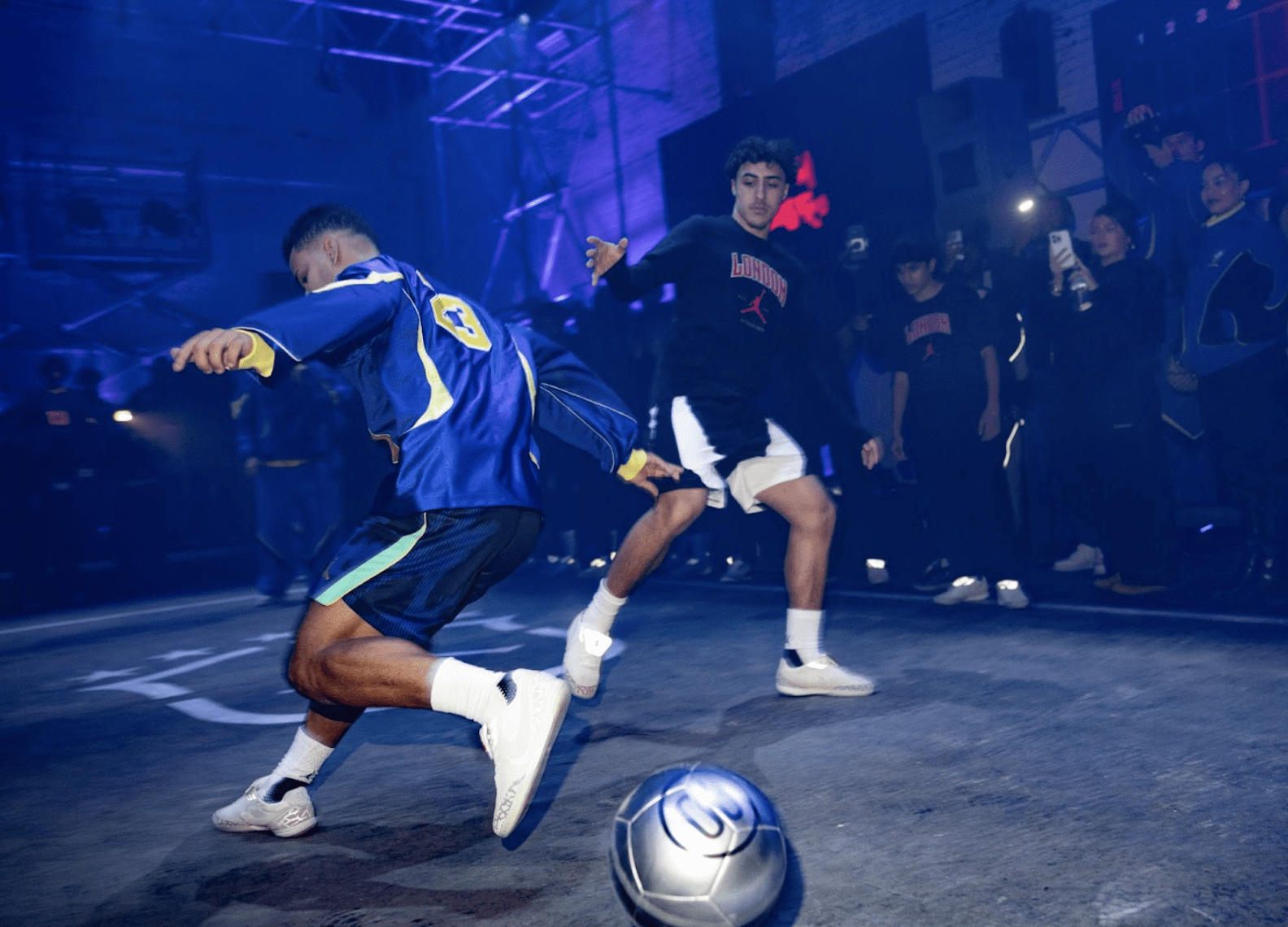
It is produced at night, in baile funk parties where the floor is the stage, the lighting is harsh and close, and the crowd’s gaze is immediate and honest. It is produced in stadiums and on streets outside them, where football supporter culture turns collective allegiance into a wearable declaration. It is produced on social media accounts run by young people in the periphery, at local markets, in evangelical communities, in skate parks and in the music videos of artists whose faces and bodies carry the visual language of a city that fashion media has not yet fully learned to read.
Baile funk fashion and football culture in São Paulo are not entertainment consumed passively by people who dress according to other rules. They are two of the most active systems through which São Paulo style is generated, tested, circulated and revised.
Understanding either requires understanding them together, and together they explain something that a fashion-week photograph cannot: how millions of people in a city of nearly twelve million residents make clothing decisions every day, under specific social conditions, drawing from specific cultural sources that no major fashion institution has adequately documented.
Fashion does not begin at São Paulo Fashion Week. It begins at the baile. It begins at the stadium gate. It begins on the streets of Itaquera, Capão Redondo, Cidade Tiradentes and the peripheries that international fashion continues to overlook.
Why No One Talks About São Paulo Streetwear: the absence of São Paulo from serious international fashion coverage is not a creative failure of the city. It is an institutional failure of curiosity. This article goes one level deeper. It explains the specific mechanisms through which baile funk and football produce style, and what the fashion industry misses when it treats those scenes as spectacle rather than as design systems.
Baile funk and football are not entertainment in São Paulo. They are two of the primary engines through which the city’s style is generated, tested and circulated.
Baile Funk Is Not Background Music to Fashion
Baile funk began in Rio de Janeiro’s favelas. It spread across Brazil through sound systems, pirate radio, local parties, cassette tapes, neighbourhood DJs and the creative energy of communities with limited access to mainstream music infrastructure but deep investment in their own cultural production.
It was always more than music. It was a way of organising public social life. The baile funk party created a space where social hierarchies could be suspended, aspiration could be performed, desire could be made visible, and bodies that polite Brazilian society often tried to contain, control or criminalise could move freely.
The Museum of Art of Rio’s documentation of funk as cultural movement describes funk as a cry for boldness and freedom, a music created and recreated by funkeiras and funkeiros from the favelas and communities that confronts the standard of white-hetero-patriarchal-bourgeois-Christian society.
That political dimension has always had a fashion dimension. The body that the baile celebrates is not the body that Brazilian mainstream media has historically elevated. It is Black, working-class, peripheral, female and unapologetically present. The clothing worn to a baile reflects that assertion. It is body-conscious not because it lacks resources for more modest options, but because it makes a deliberate choice about what visibility means and who deserves it.
Fashion labels that come from the favela and the periphery are not designing “favela fashion” as a category. They are designing for people they know, from cultural references they carry, in response to aesthetic problems the scene has already identified. That is design working from the inside outward rather than from the outside in.
Funk’s influence on global fashion has been building for years. Favela aesthetics researchers have documented how baile funk beats and Brazilian DIY creativity reached major global stages, including Rosalía’s funk-infused showcase at the Louis Vuitton autumn-winter 2023 show in Paris and Beyoncé’s passinho dance performance at Rock in Rio. When those references travel outward, they carry the visual language of the baile: body consciousness, shine, colour confidence, energy. What rarely travels with them is accurate attribution.
The Visual Language of Ostentação
Funk ostentação is one of the most important fashion subcultures that global fashion media has failed to name as such.
Ostentação, meaning ostentation or display, refers to a strand of funk music and lifestyle that developed prominently in São Paulo’s periphery from the late 2000s onward. Its visual logic is built around conspicuous consumption as a form of aspiration, escape, performance and social signalling. Luxury brands, sportswear, expensive cars, jewellery, trainers, sunglasses, designer labels and high-quality fabric are central to its visual vocabulary.
The apparent paradox is its location of origin. The most commercially aspirational visual culture in Brazilian music came from communities with limited purchasing power. That is not ironic. It is deliberate. For young people in the periphery, styling yourself in the register of luxury communicates ambition, skill, resourcefulness and a refusal to accept that expensive aesthetics belong only to people with expensive incomes.
The logic is similar to that which produced British grime’s relationship with designer labels, American hip-hop’s relationship with Versace and Gucci in the 1990s, or Caribbean dancehall’s relationship with branded sportswear. Across all of these scenes, communities with limited institutional access to luxury built a relationship with luxury imagery that was aspirational, critical, playful and political at once. São Paulo’s ostentação funk does the same, but it has received far less serious analysis in international fashion media.
Ostentação shaped the sneaker, sportswear, and accessories markets for young Brazilians in ways that global brands have benefited from without acknowledging it. Brands with significant Brazilian market presence have grown in part on the cultural energy of communities whose style they absorbed without proportionate credit or investment.
Football as a Daily Fashion System
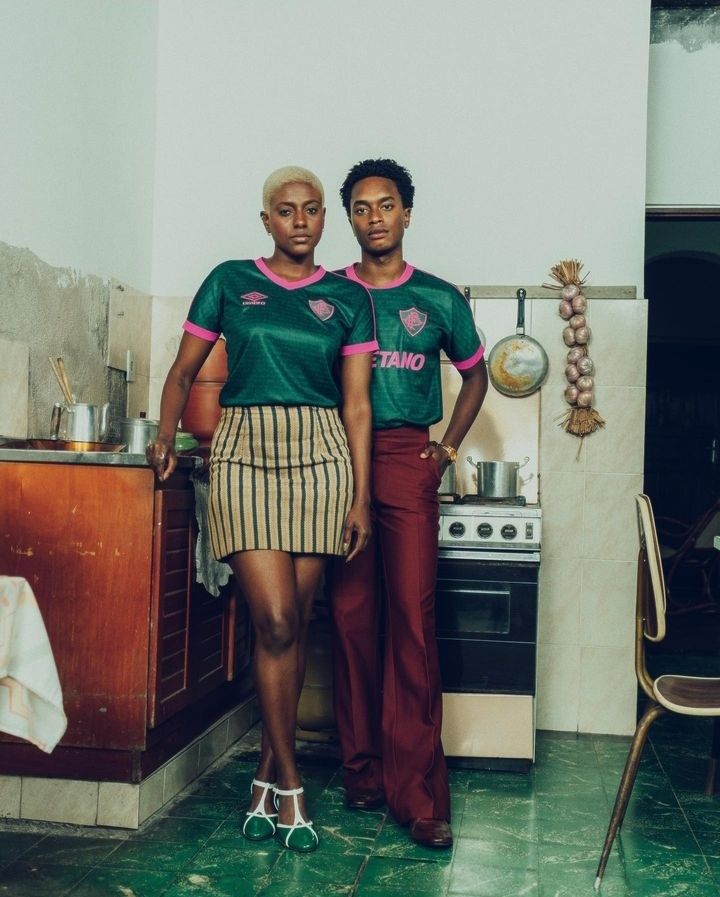
Football in Brazil is not a leisure activity that generates secondary fashion interest. It is a primary cultural institution that structures how people think about colour, identity, loyalty, design and public visibility.
The football jersey is the most widely worn garment category in the country. That is not hyperbole. A Palmeiras, Corinthians, Flamengo or São Paulo FC shirt can function simultaneously as fan identification, neighbourhood marker, class signal, generational memory, political object, fashion statement and everyday clothing. Wearing a shirt is not always a simple statement of sporting support. It is a declaration of where you come from, what you value and who your community is.
The torcidas organizadas, the organised supporter groups that sit at the passionate core of Brazilian football culture, have developed their own visual languages. Scarves, flags, specially designed T-shirts, branded jackets, custom patches, coordinated colours and limited-run merchandise all circulate through supporter networks. The aesthetic quality of these items varies, but the cultural seriousness behind them does not.
São Paulo has been particularly significant in this history. Both Corinthians and Palmeiras have supporter bases among the largest in the country, with identities shaped by class, neighbourhood and historical association. Corinthians draws heavily from the periphery and working-class communities on São Paulo’s east side. Palmeiras has strong connections to São Paulo’s Italian-descended communities but commands a much wider contemporary base. These histories produce distinct visual cultures within each club’s supporter world.
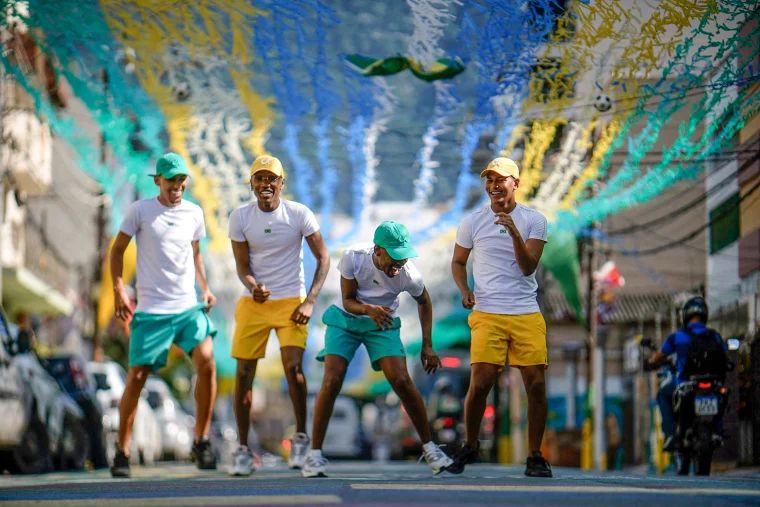
Brazil’s recent World Cup campaigns have also demonstrated how football and national identity can produce fashion in real time. As Mixmag documented in its analysis of baile funk and Brazilian visual culture, following the 2022 World Cup, the phenomenon known as Brazilcore saw communities, influencers and young people across Brazil reclaiming the national yellow and green from political association and rearticulating them as signs of shared cultural pride. That reclamation happened through fashion: in how people chose to dress for the tournament and what those choices said.
Vinícius Jr and What a Footballer’s Body Can Carry
Brazil’s most widely discussed footballer in recent years has become a style icon as much as a sporting icon.
Vinícius Jr’s relationship to fashion is inseparable from his relationship to the racial politics that have surrounded his career. He has faced sustained racist abuse in Spain’s La Liga, including from opponents and spectators. His responses have been public, consistent and increasingly confident. He has also become one of the most visually documented young Black Brazilians in the world, which makes his choices about clothing, hair, music and cultural affiliation politically significant whether he intends them that way or not.
Mixmag’s analysis of baile funk and Brazilian cultural identity describes how GR6, the largest independent music label in Latin America, produced the track “Os Pretos no Devido Lugar” specifically to honour Vinícius Jr in response to the racism he faces, bringing together significant funk artists. The connection between football, music and cultural solidarity is direct. The visual culture that surrounds that solidarity is part of São Paulo’s fashion landscape.
A footballer’s body carries history. The trainers, the chain, the ear stud, the braids, the post-match outfit, the endorsement, the music choice, the gesture: all of these form a semiotic field that young people in the periphery read and respond to. When Vinícius Jr chooses to amplify Brazilian funk culture internationally, he is doing something that connects peripheral São Paulo to a global audience in ways that fashion institutions with far larger budgets have not managed.
That should matter to anyone who wants to understand where São Paulo fashion actually comes from.
The Fluxo and How Street Events Generate Style
Style in São Paulo also moves through the fluxo.
The fluxo is a street gathering event associated with baile funk culture. It takes place on streets, squares, public spaces and open areas, often with sound equipment, DJs, MCs, dancers and large crowds of young people. The fluxo is not a licensed festival or a branded event. It is an informal public gathering that creates a temporary social world in a city that offers working-class young people limited access to comfortable, affordable, safe social spaces.
Fashion at the fluxo is competitive in the best sense: it rewards originality, precision and cultural fluency. A look that makes sense at the fluxo must work under outdoor conditions, under the judgement of peers who understand the same references, and within a visual economy that prizes both knowledge of the codes and skill in applying them.
The fluxo is one reason São Paulo streetwear cannot be understood solely through retail. It develops through events. It is tested in public. It is photographed and circulated on phones. It develops through conversation between people who share a physical space and a cultural language.
Documenting the fluxo as a fashion system requires the same approach that fashion journalism applies to London’s underground club scenes, New York’s sneaker drops or Tokyo’s Harajuku gatherings. It requires being present, building relationships, learning the references and treating the people producing the culture as creative actors rather than as social phenomena. As Omiren Styles has documented in its analysis of Afrocentric streetwear as a cultural argument across Dakar, Kampala, and Monrovia, streetwear becomes a cultural argument when it emerges from specific communities, using clothing to articulate a position in the world. The fluxo produces exactly that kind of argument.
The Mandrake and Ostentação as Parallel Style Systems
Within baile funk culture, two visual identities stand in productive tension.
The mandrake aesthetic, associated with baile funk and peripheral youth culture, typically includes sportswear, Oakley sunglasses, bleached or highlighted hair and a combination of branded and custom elements. It reads as local, specific and grounded in the visual language of the quebrada, the working-class neighbourhood or favela. It does not perform deference to mainstream taste. It develops from within its own community’s standards.
The ostentação aesthetic moves in a different register. It performs aspiration: luxury logos, high-shine finishes, expensive-looking accessories and the visual signalling of financial ambition. Yet it operates alongside the mandrake rather than simply replacing it. Many people in the periphery move between registers, choosing elements from each depending on the occasion, the audience and the message.
That flexibility is itself a form of style intelligence. Fashion writers who encounter these systems from the outside often try to fix them into stable categories. The people inside the systems use them fluidly, combining, adapting and revising based on cultural knowledge that cannot be acquired quickly or cheaply. Understanding this requires time, relationship and genuine investment in the communities where the knowledge lives.
Global Fashion Has Taken the Image. It Has Not Built the Relationship.

The gap between what global fashion absorbs from São Paulo’s style cultures and what it returns to those cultures is significant. Favela aesthetics have reached global catwalks and major stages, but the communities whose creative energy makes those aesthetics possible have rarely received proportionate credit, investment or economic return.
A European fashion house can borrow body consciousness, colour logic, or the sportswear fusion of baile funk for a collection. It can hire a Brazilian model. It can feature Brazilian music in a campaign. None of those choices, by itself, constitutes a relationship with the communities that produced the culture.
A relationship looks different. It involves commissioning Brazilian photographers, stylists, directors and cultural consultants from inside the relevant communities. It involves investment in independent labels, local production, fashion education and infrastructure. It involves long-term editorial relationships rather than single-issue features. It involves accountability for how the reference is framed: does the brand name what it has taken, and from whom?
As Omiren Styles has documented in its analysis of the Afro-Brazilian fashion designer movement, the designers and collectives building on this material are doing so without the institutional infrastructure that European fashion brands inherit by default. As Lab Fantasma and the Afro-Brazilian streetwear movement demonstrate, the most serious creative work in São Paulo streetwear is being produced by people who have built their platforms independently, through music communities, social media and local retail, precisely because formal institutional support has not arrived at the scale the culture deserves.
The Omiren Argument
Baile funk and football are not supplementary to São Paulo fashion. They are its most important drivers. Brazil’s 2022 census confirmed that a majority of the Brazilian population now identifies as Black or mixed-race, and the cultural systems driving the country’s most original fashion are rooted in those communities. To ignore baile funk and football supporter culture is to ignore the creative source of a major part of what Brazilian style actually is.
The fashion industry’s habit of looking to Brazil through the São Paulo Fashion Week calendar, beach culture, luxury editorial, and designers already legible to European institutions means it repeatedly misses the city’s most generative creative work. That is the pattern The Global South Made Fashion. It Just Never Got Credit. Documents across every territory in this series: the fashion industry extracts visual energy from Global South communities while building the infrastructure of recognition, credit and investment primarily in the places it already considers central.
São Paulo’s answer is not to wait. Academic research on São Paulo’s peripheral fashion brands documents a growing scene of independent labels, community platforms and creative collectives building from the inside outward. The baile and the stadium are not waiting for fashion to validate them. They are continuing to produce the culture that the world will eventually have to name.
As Carnival Is a Design Economy. No One Tracks It. argues in the context of Trinidad and Tobago, the creative systems doing the most culturally significant work in the Global South are often those that the formal measurement and attribution apparatus of the fashion industry finds hardest to see. The task for journalism is to make them visible. That begins not with discovering them but with accepting that they were already there.
ALSO READ
- Why No One Talks About São Paulo Streetwear
- Lab Fantasma and the Afro-Brazilian Streetwear Movement That Fashion Forgot to Cover
- The Rise of Afro-Brazilian Fashion Designers and Their African Roots
- Dancehall Dressed the World First
- Carnival Is a Design Economy. No One Tracks It.
- The Global South Made Fashion. It Just Never Got Credit.
Frequently Asked Questions
How does baile funk shape fashion in São Paulo?
Academic research on funk as a cultural movement describes baile funk as confronting the aesthetic standards of mainstream Brazilian society and creating space for Black working-class bodies to be visible on their own terms. The baile party creates a competitive fashion environment where styling is evaluated immediately by peers who share the same cultural references. This produces a distinct visual language characterised by body-consciousness, branded sportswear, shine, jewellery and the performance of aspiration through dress. That language has spread from Rio de Janeiro’s favelas across Brazil and into global music. Still, São Paulo has developed its own forms of it, particularly through the ostentação funk scene and the fluxo, where styles are tested in public gatherings before they circulate on social media and in local retail.
What is ostentação funk and why does it matter for fashion?
Ostentação funk is a strand of Brazilian funk music and lifestyle culture that developed in São Paulo’s periphery from the late 2000s onward. Its visual logic centres on conspicuous display: luxury brands, designer labels, expensive sportswear, jewellery, cars and high-quality accessories used to signal aspiration, skill and ambition. For communities on the periphery with limited access to actual luxury-purchasing power, ostentação translates aspirational aesthetics into a visual language of cultural refusal. It says that expensive-looking presentation does not belong only to people with expensive incomes. Global fashion brands with a major presence in the Brazilian market have benefited from the cultural energy of ostentação without proportionately crediting or investing in the communities that generated it.
How do football supporter cultures shape São Paulo streetwear?
Football jerseys are among the most widely worn garments in Brazil, and São Paulo’s supporter cultures have built visual identities that extend well beyond the stadium. Torcidas organizadas produce custom T-shirts, coordinated colours, branded jackets, scarves and limited-edition merchandise that create distinct aesthetic fields for each club’s community. Corinthians and Palmeiras supporters in particular carry strong cultural associations with specific neighbourhoods, classes and histories. Those associations produce visual codes that move between football, music, street style and social media. The 2022 World Cup also demonstrated how football and national dress can intersect politically: the Brazilcore movement reclaimed Brazil’s yellow and green through fashion, with communities, influencers and artists rearticulating the national colours as signs of cultural rather than political identity.
What is the fluxo and how does it function as a fashion space?
The fluxo is a street gathering event associated with baile funk culture in São Paulo. It takes place in public spaces, typically without formal organisation or licensing, with DJs, MCs, sound equipment and large crowds of young people. It creates a temporary social world where fashion is tested against the judgement of peers who share the same cultural references and can immediately evaluate whether a look works within the scene’s specific visual logic. The fluxo functions as a fashion proving ground: looks that circulate successfully there then move through social media and local retail. It is one reason São Paulo streetwear cannot be understood solely through commercial retail or fashion-week observation. The most important fashion decisions in the city’s peripheral communities often happen in public outdoor spaces that international fashion media never visits.
How has baile funk influenced global fashion?
Researchers tracking favela aesthetics in global fashion document how Brazilian funk culture has influenced major global stages, including Rosalía’s funk-infused showcase at the Louis Vuitton autumn-winter 2023 show in Paris, Rihanna’s incorporation of funk beats into her Super Bowl halftime show and Beyoncé’s passinho dance at Rock in Rio. These moments show the visual and musical vocabulary of the Brazilian periphery reaching the highest-profile platforms in global fashion and entertainment. What rarely accompanies that reach is accurate attribution, the commissioning of Brazilian creative practitioners, or an economic return to the communities whose cultural energy makes the aesthetic possible.
What role does Vinícius Jr play in connecting São Paulo’s cultural world to international fashion?
Vinícius Jr is the most widely documented young Black Brazilian in the world, which makes his choices about clothing, music, hair, and cultural affiliation politically significant, whether he frames them that way or not. His public responses to racist abuse in European football, his connection to Brazilian funk artists and his visibility in global media have made him a conduit between São Paulo’s Black cultural world and international audiences. When GR6, Latin America’s largest independent music label, produced a funk track specifically to honour him in response to racism in European football, the connection between football, music and community solidarity became directly visible. The styling, image-making, and cultural decisions surrounding his public presence are part of São Paulo’s broader fashion landscape and should be documented as such.
EXPLORE MORE
Read the full The Lens and Fashion > Culture sections at Omiren Styles for ongoing analysis of Brazilian streetwear, baile funk culture and the wider argument about Global South creative authorship. Discover travel and heritage intelligence across Latin America and Africa at Rex Clarke Adventures.