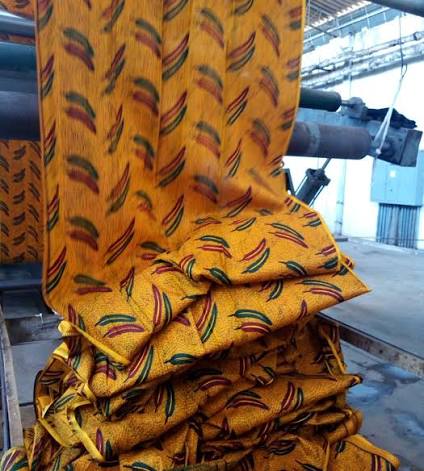
In Mozambique, a capulana can be culturally central and commercially precarious at the same time. The cloth is present at birth, at weddings, at funerals, in the market, in the field, in the church, and on the runway of every Mozambican fashion event. It is also present in a production system that Mozambique does not fully control: imported greige fabric, overseas manufacture, pattern design that may belong to the factory rather than the community, and a single domestic printing plant that can be shut down by a pandemic, a supply-chain disruption, or a currency shift in the markets from which it imports its base fabric.
The African fashion and beauty market is part of the continent’s 31 billion-dollar economy. The capulana’s position in Mozambique’s economy illustrates one of the most persistent structural problems in African fashion: a textile can be culturally essential to a country while most of the economic value it generates accrues outside that country’s borders. As Club of Mozambique’s documentation of Nova Texmoque’s COVID-era operations confirms, Nova Texmoque in Nampula is the only capulana production plant in the country, employing more than 100 workers. When all orders were cancelled during the national emergency, the factory stopped production entirely. That single point of domestic production failure reveals the structural vulnerability of Mozambique’s capulana manufacturing at its most concentrated: one factory, one location, one disruption, complete domestic production shutdown.
Nova Texmoque is the only capulana factory in Mozambique. It prints imported fabric. The pattern rights belong to whoever commissioned the design. Here is what that means.
The Colonial Foundation and Its Aftermath
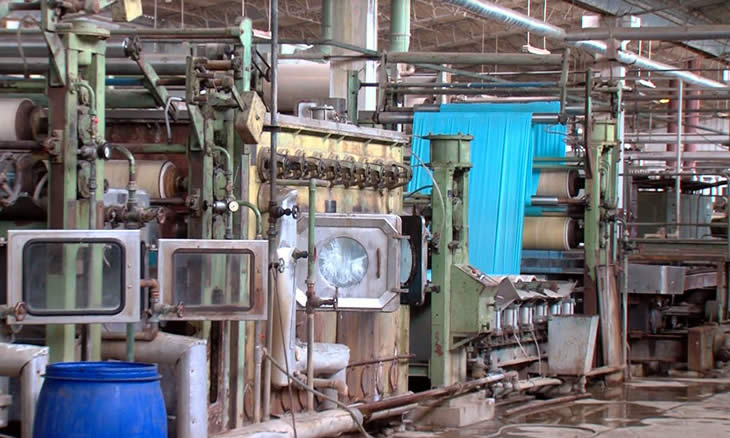
Mozambique’s textile industry was built to benefit the Portuguese colonial economy, not to develop Mozambican productive capacity. As the Fondazione Aurora’s documentation of Mozambique’s textile industry history confirms, in the 1900s Portugal designated Mozambique as its centre of overseas cotton production. Mozambique’s fertile soil, ideal weather, and accessible ports were favourable to producing cotton. The country’s agricultural capacity was placed in service of European manufacturing rather than domestic textile development.
The first textile mill in Mozambique, Textáfrica, was founded in the 1940s. The industry expanded through the late colonial period and into the early post-independence years. By the 1980s, factories including TEXLOM, TEXMOQUE, and Riopele formed part of the country’s manufacturing base. At TEXLOM, capulana reportedly accounted for roughly half of factory output in 1990, much of it for domestic consumption. This was not a vertically integrated industry: Mozambique was not spinning its own cotton into yarn, weaving it into base cloth, printing it, and finishing it all within the country. But it was a more substantial domestic manufacturing presence than what followed.
The civil war, which lasted from 1977 to 1992, damaged infrastructure, disrupted investment, weakened demand, and made consistent production difficult. Trade liberalisation and competition from Asian producers created further pressure. TEXMOQUE closed in 1994. The regional demand for capulana continued. The domestic manufacturing capacity to meet it contracted. Imports filled the gap.
Nova Texmoque is the only capulana production plant in Mozambique. It prints imported fabric. When orders halted during a national emergency, the factory shut down. That is not resilience. It is structural vulnerability dressed as domestic production.
What Nova Texmoque Actually Does
Nova Texmoque’s return to capulana production represents a meaningful but partial restoration of domestic manufacturing. As Apparel Resources’ documentation of Mozambique’s textile industry revival efforts confirms, the original Texmoque factory in Nampula was the subject of revival negotiations with the Mozambican government before being acquired by Tanzania’s MeTL Group in 2006 and reopening as Nova Texmoque. The factory’s return to production was welcomed as evidence that domestic capulana printing could be sustained.
What Nova Texmoque does is print. It takes imported cotton fabric, applies designs using printing processes, and produces finished capulana for sale in the Mozambican market. That process is real manufacturing: it employs people, develops technical skill, creates local design work, and generates economic activity in Nampula. But it is not a complete domestic textile chain. The base fabric is imported. The cotton that Mozambique grows does not necessarily end up as Nova Texmoque’s printing substrate. The factory occupies one stage in a chain that begins outside Mozambique and ends in the Mozambican market.
The specific economic vulnerability this creates is documented in research on Texmoque’s 2023-24 operations: imported raw materials accounted for 62.7% of total production costs, and the cost of imported fabric rose by 52.6% during the period examined. These figures describe a factory that adds value domestically but whose cost base is determined externally. A currency depreciation, a shipping disruption, or a price increase in the imported fabric market directly affects the cost of producing a capulana in Nampula. The factory has limited ability to absorb those shocks because it does not control its primary input.
The Pattern Design Question
The production question: who makes the cloth is separate from the design question: who creates the pattern. A factory can print a design. That does not mean it created the design or that it holds the rights to it. A client can commission a pattern. That does not automatically mean the client holds copyright in the finished work. A designer can develop the artwork. That does not mean the designer retains reproduction rights after the commission is complete.
The capulana pattern’s journey from idea to market can involve multiple contributors whose relationships to the final design are not always clearly documented. As the Textile Value Chain’s documentation of Mozambique’s capulana traditions confirms, Northern Mozambique is considered the most creative capulana region; the book Capulanas and Lencos, published by Missanga, credits the women from the north for their creativity in fashioning the capulana. That creativity is cultural knowledge held by communities. The question is whether that knowledge is adequately protected when it enters commercial production.
A pattern can acquire social meaning in Mozambican community life while remaining commercially controlled by the factory that first produced it. A community may attach a name, occasion, and social significance to a design that originated in a factory’s studio. The factory may own a production file or printing plate. The community’s cultural relationship to the design does not create intellectual property rights in the absence of legal frameworks that recognise community cultural ownership. This gap between cultural significance and commercial control is the central unresolved problem in capulana’s production economy.
Cultural Ownership and Commercial Control
The relationship between cultural belonging and commercial control applies not only to patterns but to the cloth itself. As Springer Nature’s academic documentation of Mozambique’s textile and fashion industry confirms, Mozambique’s capulana was influenced by regional culture and overseas elements, drawing on the Indian sari and the Indonesian sarong. That historical fact is important for two reasons. First, it demonstrates that cultural authenticity in the capulana has always coexisted with external material influences. Second, it shows that the contemporary situation, in which imported fabric is printed locally to produce a culturally Mozambican textile, has structural precedents.
The critical issue is not whether the capulana is culturally Mozambican. It is. The critical issue is whether the economic value generated by that cultural significance flows back into Mozambique’s economy at any meaningful scale. A country that grows cotton for export, imports finished fabric for printing, sells the finished capulana domestically, and faces competition from cheaper imported capulanas printed in China, India, and Tanzania is a country whose national textile sits at the centre of its cultural life. At the same time, most of its economic value is captured outside its borders.
What a Functioning Capulana Industry Would Require
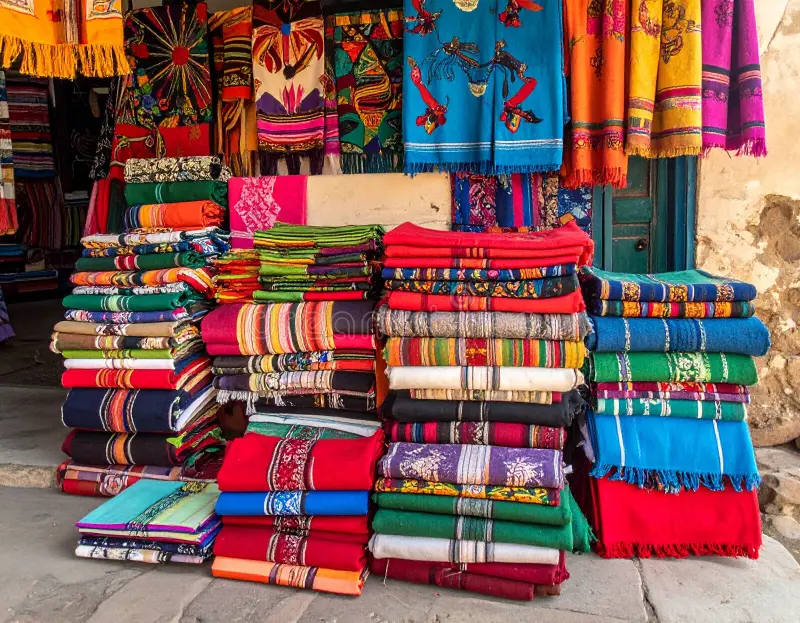
A stronger capulana production system for Mozambique would require interventions at multiple points in the chain. At the cotton production stage, more of Mozambique’s domestically grown cotton would need to be retained and processed domestically rather than exported as raw fibre. At the spinning and weaving stage, either new capacity would need to be built, or regional partnerships would need to provide reliable access to base fabric at costs that make domestic printing competitive. At the pattern design stage, contracts among clients, designers, and factories would need to clearly establish authorship and reproduction rights to ensure creative work is properly credited and compensated. At the production stage, Nova Texmoque’s capacity constraints and import dependence would need to be addressed through investment and supply-chain development.
The question of pattern protection is particularly important for locally designed capulana. Mozambican designers who create original surface patterns risk having their work copied without credit or compensation, whether by other domestic producers or overseas manufacturers. A geographical indication framework for Mozambican capulana could help, as it has for other African textiles, by establishing a legal basis for claiming origin and design authority. This would require political will, community organisation, and international legal support, but precedents exist in the GI frameworks being developed for other African textile traditions.
The Omiren Argument
Capulana is culturally Mozambican. Its production and pattern rights are more complicated. The African fashion and beauty market is part of a 31-billion-dollar continental economy. Nova Texmoque in Nampula is the only capulana production plant in Mozambique, employs more than 100 workers, prints imported base fabric, and is exposed to currency risk, supply chain disruptions, and international fabric price movements beyond its control. The civil war and trade liberalisation destroyed a more substantial domestic textile base that existed in the 1980s. The pattern designs that give specific capulanas their social meaning and their names in Mozambican community life are not necessarily legally owned by the communities that use them. A factory print and a cultural archive are different things with different ownership structures, and the gap between them is where Mozambique’s capulana economy currently operates. The question is not who owns the cloth. The question is who owns each stage of the system that produces it, and whether any of those stages can be moved from outside Mozambique to inside it without sacrificing the quality and affordability that make capulana central to everyday Mozambican life.
Also Read:
- The Capulana Does Not Need Cutting to Be Modern
- Guinea Léppi GI Protection: Can Fouta Djallon’s Textile Reach Export Markets?
- African Textile Reporting: 8 Editorial Shortcuts That Need Fact-Checking
- The Uniform of Liberation: Samora Machel’s Field Dress and Mozambique’s Memory of War
Frequently Asked Questions
Where is capulana made?
Capulana worn in Mozambique comes from multiple sources. Nova Texmoque in Nampula is the only domestic capulana production plant in the country, employing more than 100 workers and printing capulana from imported base fabric. Significant quantities of capulana are also imported into Mozambique from China, India, Tanzania, and other producers. The cultural significance of the capulana to Mozambican life does not depend on its country of manufacture. Still, the economic question of where value is created and who captures it depends entirely on the production location and supply chain.
What is Nova Texmoque?
Nova Texmoque is Mozambique’s only domestic capulana printing factory, located in Nampula in northern Mozambique. It operates as the successor to the original Texmoque factory, which opened in 1978 and closed in 1994. Nova Texmoque was established after Tanzania’s MeTL Group acquired the facility following 2006 negotiations for the facility’s revival with the Mozambican government. The factory employs more than 100 workers in the production sector and prints imported cotton fabric with capulana designs. Research on its 2023-24 operations found that imported raw materials accounted for 62.7% of total production costs.
Does Mozambique manufacture its own capulana?
Mozambique has one domestic capulana printing facility, Nova Texmoque in Nampula, but this factory prints imported base fabric rather than operating as a vertically integrated textile manufacturer using Mozambican cotton. Mozambique grows cotton but exports significant volumes of it as raw fibre rather than processing it into finished textile domestically. The country therefore has domestic capulana printing capacity. Still, it depends on imported fabric inputs, making the domestic manufacturing process structurally exposed to international supply chains, currency movements, and overseas fabric prices.
Who owns capulana patterns?
Capulana pattern ownership depends on the specific circumstances of each design’s creation. A factory may own production files and printing plates for designs developed by its staff. A client who commissions a design may hold contractual rights depending on the agreement. A designer who creates original artwork may retain copyright in the design if no transfer of rights has occurred. Community cultural associations with specific patterns, including the names, occasions, and social meanings attached to designs within Mozambican communities, constitute a distinct form of connection that does not automatically confer intellectual property rights in the absence of legal frameworks recognising community cultural ownership. This gap between cultural significance and commercial control is unresolved in Mozambique’s capulana economy.
What happened to Mozambique’s textile industry?
Mozambique had a more substantial textile manufacturing base in the late colonial period and early post-independence years, with factories including Textáfrica (founded in the 1940s), TEXLOM, TEXMOQUE, and Riopele. The civil war from 1977 to 1992 damaged infrastructure and disrupted investment, while trade liberalisation and competition from lower-cost Asian producers created further pressure. TEXMOQUE closed in 1994. The broader textile base contracted significantly, and Mozambique shifted toward importing finished textiles rather than manufacturing them domestically. Nova Texmoque’s reopening after 2006 partially restored domestic capulana printing capacity but did not restore the fuller manufacturing chain.
Explore More
Read the full Fashion > Industry section for Omiren Styles’ analysis of African textile production economics, GI protection frameworks, and the commercial structures that determine who captures value from culturally significant African textiles.
Discover travel and heritage intelligence across Mozambique and southern Africa at Rex Clarke Adventures.