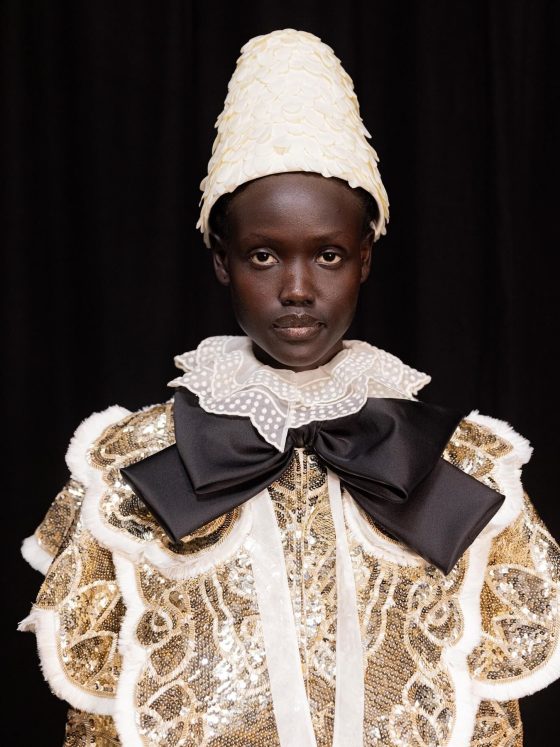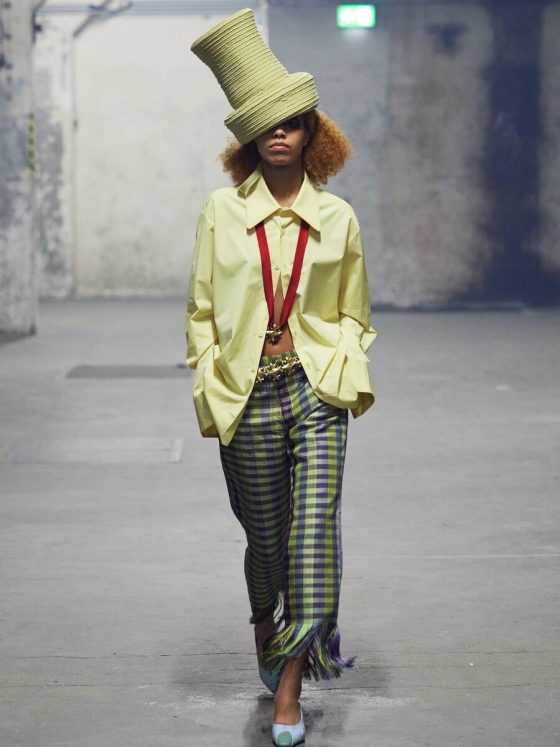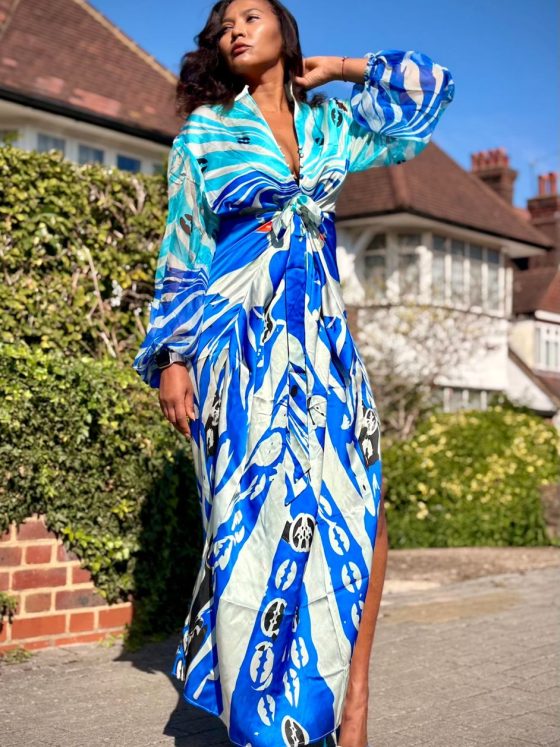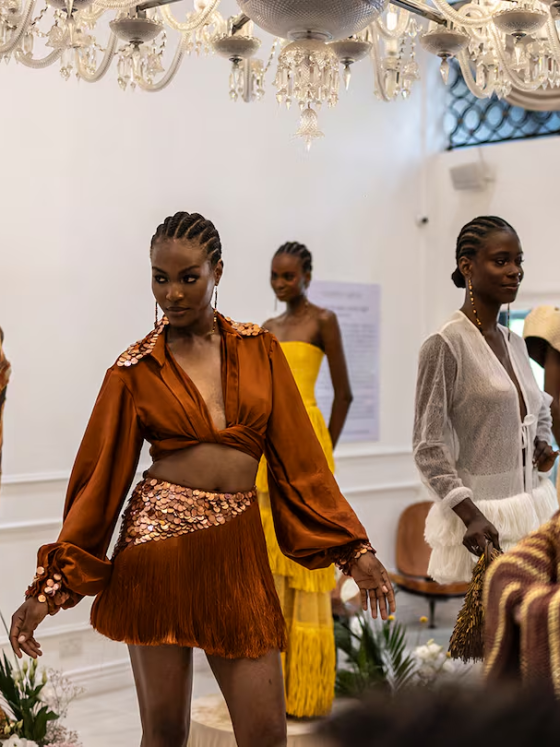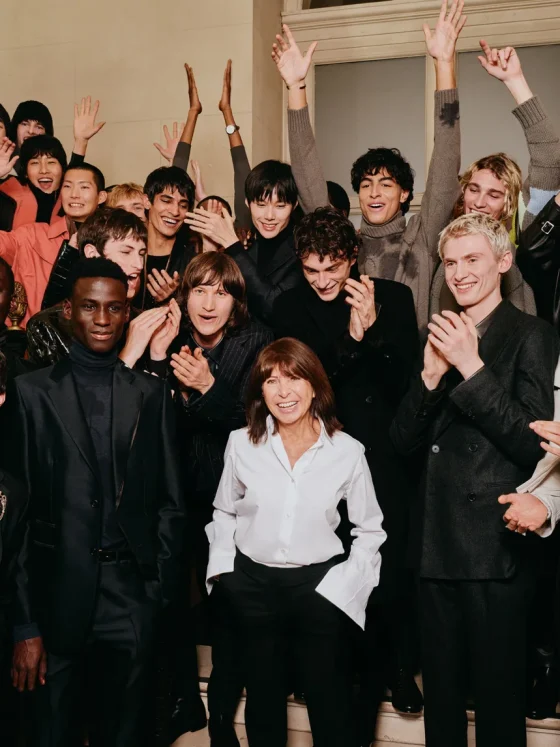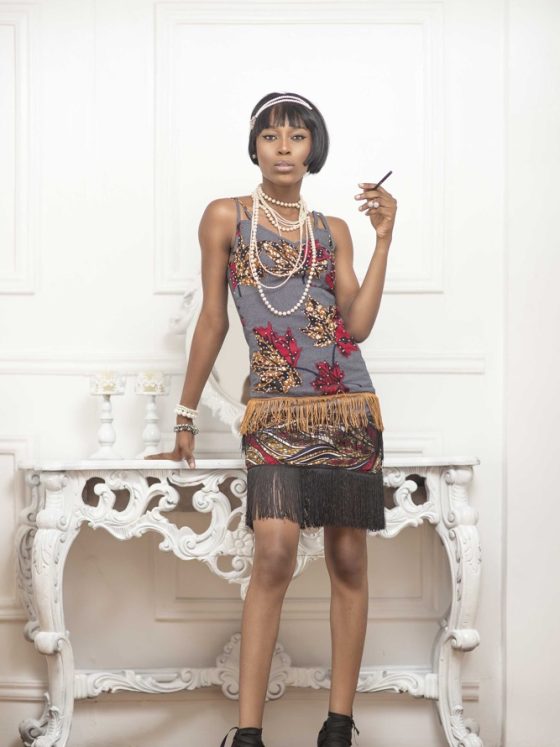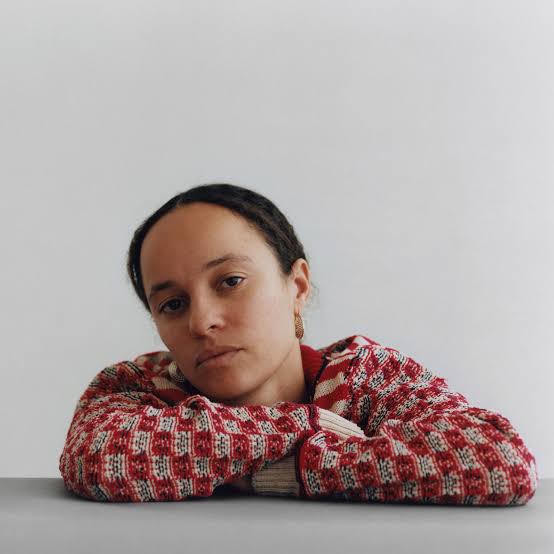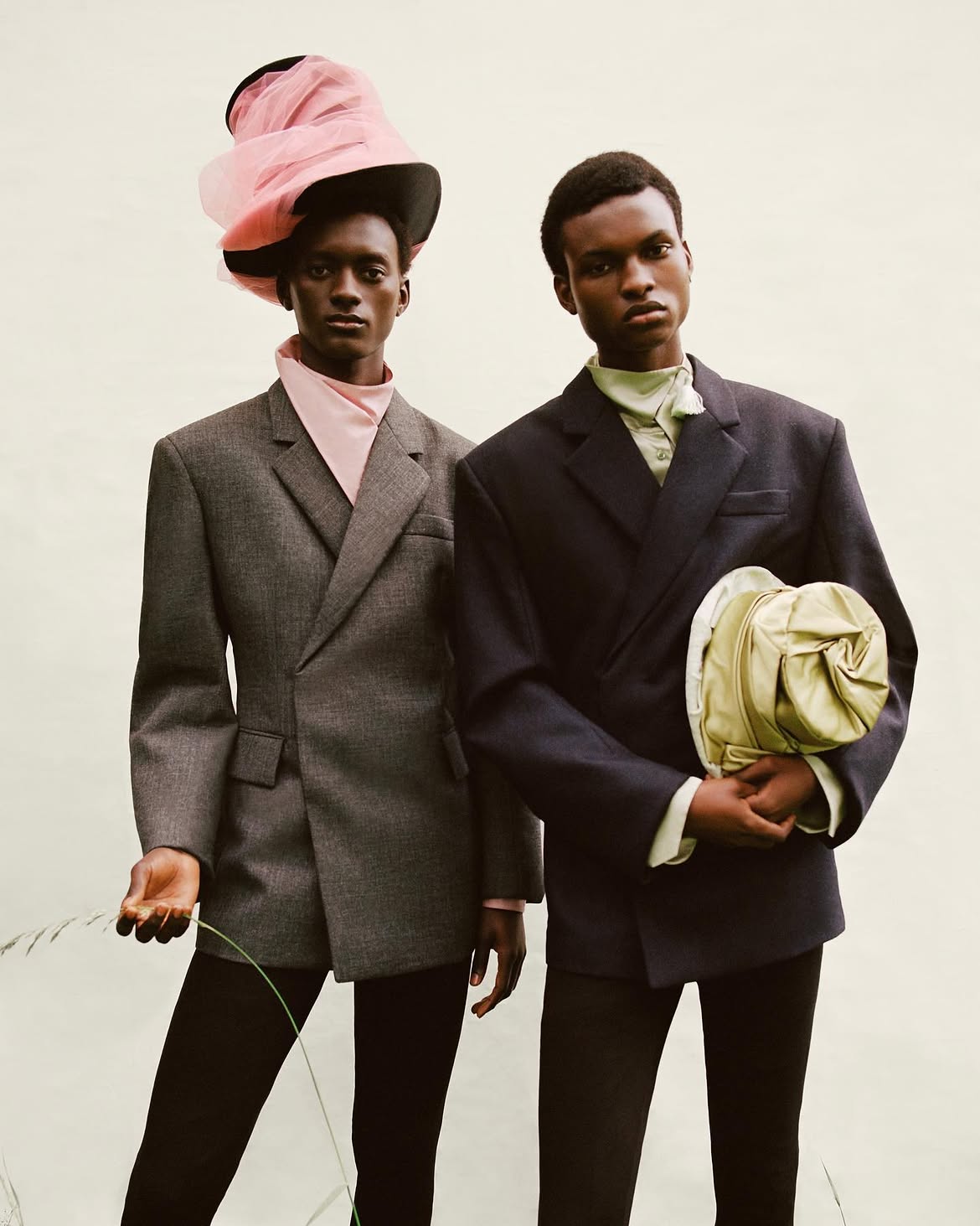
When Ola Ebiti was studying fashion communication at Northumbria University, as he moved through the art history books that formed the curriculum, he did not find his Nigerian heritage. Not in the images, not in the historical record, not in the frameworks the discipline used to describe beauty, dress, and identity. That absence was not incidental. It was structural: a canon built by exclusion, maintained by institutions that treated West African visual culture as ethnographic subject matter rather than as intellectual production. Ola Ebiti decided to produce what was missing. Every editorial shoot he has made since is the answer to those books.
The African fashion market is worth 31 billion dollars. Ola Ebiti, represented by Streeters and published in AnOther Magazine, W Magazine, T: The New York Times Style Magazine, Le Monde, System, and the Sunday Times, is one of the practitioners building the editorial infrastructure that makes African visual culture legible to international fashion media on its own terms. His practice is research-led, culturally grounded, and technically precise. He is not a stylist who uses Nigerian heritage as an aesthetic reference. He is a researcher who uses fashion as his medium of publication.
Ola Ebiti did not find his Nigerian heritage in art history. He built an editorial practice to put it there. Here is what that practice actually is.
Ola Ebiti Stylist: What the Research Actually Is
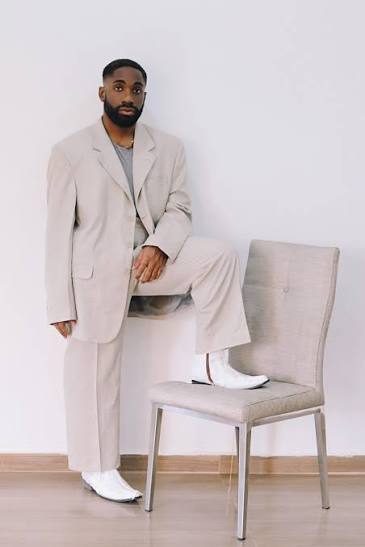
Ola Ebiti’s styling methodology begins with his mother. He speaks to her and her friends about Yoruba culture in the 1970s, specifically about how they dressed. He studies their photographs. The Lagos highlife era, the parties, the specific way that Nigerian women and men presented themselves during that period of creative and cultural confidence, form his primary visual reference archive. From those sources, he reconstructs images that carry cultural authority because they are grounded in documented reality rather than in a designer’s imagination of what African identity looks like.
This methodology is more rigorous than it sounds. The highlife era photographs of Lagos in the 1960s and 1970s document a specific relationship between Nigerian formal dress and Nigerian cultural self-expression at its most precise: before the structural adjustment programmes that followed the oil crisis, at a moment when Yoruba dress culture was producing its most elaborate and most internationally engaged forms. Ebiti is not romanticising that period. He is researching it with the discipline of an art historian and using that research to produce editorial images that appear in the publications that the art history curriculum he studied from would have recognised as authoritative. He is inserting the archive into its own exclusion.
When Ola Ebiti could not find his Nigerian heritage in the art history books he was studying, he did not file a complaint. He built a styling practice whose entire editorial output is the argument those books failed to make. That is not aesthetic correction. That is the production of knowledge.
The Tailoring Education: Two Traditions, One Frame
Ola Ebiti studied fashion communication at Northumbria University, graduating with first-class honours. He interned at British Vogue and Marie Claire. He worked at Wallpaper magazine for seven months under men’s fashion editor Jason Huce. He assisted at Dazed under Ib Kamara. Each stage added a distinct technical register to his practice. The Wallpaper placement gave him the most specific and most durable technical education: he learnt how a suit should fit a person and how his body should move in clothes. That precision about fit, about the relationship between cloth and body in motion, is visible in every editorial image Ebiti produces.
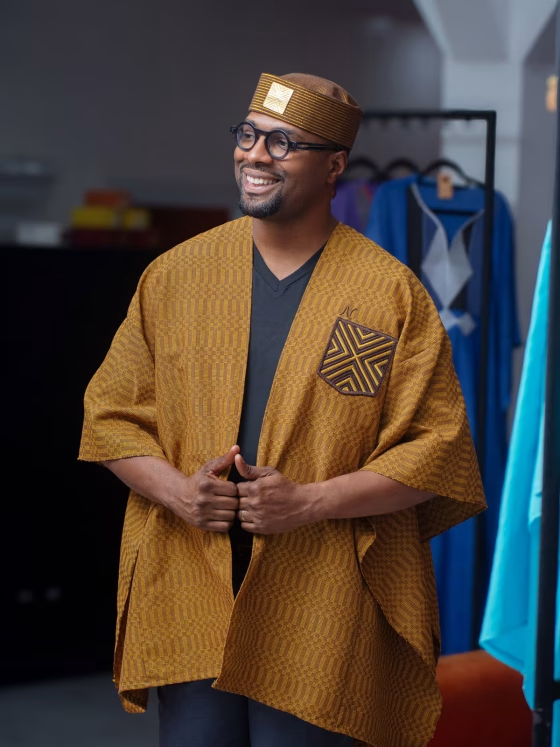
The cultural education came from Nigeria, and it was always running parallel to the European technical training. Nigerian tailoring, the hand-sewn agbada, the fitted kaftan, the formal buba and sokoto of Yoruba ceremonial dress, is a sophisticated construction tradition. It is not a regional alternative to European tailoring. It is a different system with different aesthetic logic: volume as authority, embroidery as argument, cloth as the medium in which social position is declared rather than indicated. Ebiti holds both of those traditions simultaneously. His personal dress reflects the combination directly: he wears button-up shirts and tailored trousers made by Nigerian tailors. The image he produces on a professional shoot and the image he presents in daily life are built from the same source material.
The Collaborators: Curation as Argument
Ola Ebiti does not work with photographers at random. As his Fashionography profile confirms, his collaborators include Nadine Ijewere, whose editorial work centres Black female identity without exoticisation; Campbell Addy, whose practice consistently treats African and diaspora subjects as primary rather than peripheral; Joshua Woods; Rafael Pavarotti; and Paul Kooiker. The selection is curatorial. Ebiti works with photographers who share his understanding of what the image is for, because the editorial argument he is making requires consistency between the styling and the image-making. A stylist who builds the cultural precision he builds and then delivers it to a photographer who frames the subject with an ethnographic gaze has produced nothing. The collaboration is the argument.
The collaboration with Ruth Ossai for Browns Fashion, the Homecoming edit titled Ma People Ma People, is the clearest statement of this principle. Ossai is a British-Nigerian photographer known for her vibrant use of colour, costume, and backdrop. The brief was to celebrate African designers and their influence on the global fashion industry. The resulting images treated those designers and their work as primary subjects of beauty rather than as objects of documentation or as aspirational markers in a Western luxury narrative. Ebiti described his inspiration as the dramatic and sometimes chaotic way of life you witness on the streets of Lagos. That specific, located reference is the consistent feature of his practice: not Africa as concept, but Lagos as place, with everything a place contains.
Editorial Record and Show Work
The list of publications is evidence of the argument’s reach. AnOther Magazine, W Magazine, T: The New York Times Style Magazine, M Le Magazine du Monde, D Repubblica, System, The Sunday Times. As Models.com’s 2023 documentation of his practice confirms, the year 2023 marked a turning point: he added two magazine covers with D Repubblica and M Le Magazine du Monde and styled Erdem’s F/W 23 runway show alongside Bianca Saunders’ F/W 23 show. The Bianca Saunders relationship is particularly precise: Saunders is a British-Jamaican designer whose menswear practice explores Black male identity with a rigour and specificity that directly mirrors Ebiti’s editorial approach. His description of that collaboration carries the argument plainly: the conversation is always ongoing when you share similar visual references and ideas of beauty.
Commercial clients include Harrods, Harvey Nichols, Belstaff, Mr Porter, and bespoke Savile Row house Richard Anderson. The Richard Anderson connection is not incidental. Richard Anderson is a house built on precision: traditional English bespoke tailoring, clients who understand craft rather than trend, a practice that treats fit as a primary moral category. Ebiti’s position working across a Savile Row bespoke house and his Nigerian-heritage editorial projects is not a contradiction. It is the same intelligence about tailoring expressed in two different institutional contexts. Both require the same knowledge.
The Afrofuturism Position
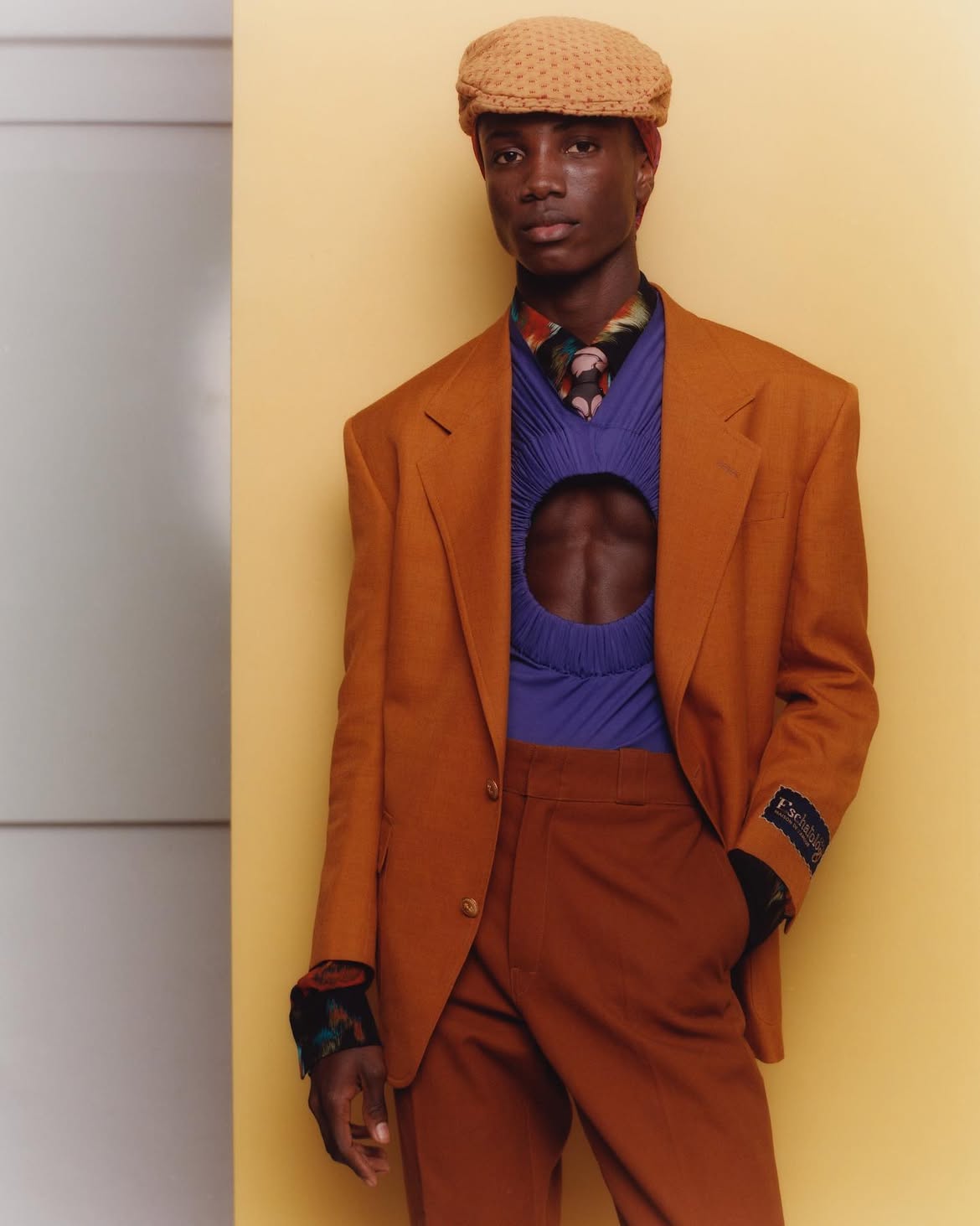
Ola Ebiti has described his styling as carrying Afrofuturism vibes. The term is important to understand precisely. Afrofuturism does not treat African cultural identity as heritage to be preserved. It treats it as a living intelligence that projects forward. For Ebiti, the Yoruba dress culture of the Lagos highlife era is not a historical reference to reproduce. It is a source archive from which he constructs images of African identity that do not require validation by European-style systems to carry authority. Afrobeats-influenced streetwear aesthetics current in South London’s Nigerian and Ghanaian communities for a decade are described as new only when they become visible to Western observers. Ola Ebiti’s editorial practice is the high-fashion version of the same structural argument: the visual intelligence of Nigerian dress has always existed. International fashion media is slowly arriving at a record that was always already there.
The specific combination in Ebiti’s work, Nigerian tailoring, Yoruba cultural archive, Afrofuturist visual imagination, and European editorial precision, could not have been produced by a practitioner who had operated within only one of those traditions. It requires exactly the biography he has: Lagos childhood, European fashion education, Wallpaper tailoring apprenticeship, Yoruba cultural archive kept active through conversations with his mother’s generation, and a career practised at the publication level that forces precision rather than permitting approximation.
The Omiren Argument
Ola Ebiti’s practice produces knowledge. The African fashion market is worth 31 billion dollars. The editorial infrastructure that makes African visual culture legible to international fashion media on its own terms is built by practitioners who bring cultural precision, technical training, and the willingness to treat African identity as a primary subject rather than as a reference. Ola Ebiti is one of those practitioners. When he could not find his Nigerian heritage in the art history curriculum he studied from, the absence he identified was not aesthetic. It was epistemological: a body of knowledge that the discipline had structured itself around not containing. His response was not to argue for inclusion. It was to build an editorial practice whose entire output constitutes the missing record. Every image he produces in AnOther Magazine or W Magazine is not a representation of Nigerian culture in a Western publication. It is a publication of Nigerian cultural knowledge in a medium the art history canon recognises as authoritative. That distinction is what separates Ola Ebiti’s practice from the fashion diversity typically discussed. This is not about who appears in the images. It is about who holds the knowledge that produces them.
Also Read:
- How African Designers Should Compare Fabric Suppliers Before Placing an Order
- What Makes a Textile or Trim Supplier Reliable for Fashion Production
- The Fugu, the Boubou, and the Kanzu: African Traditional Menswear Beyond Nigeria and Ghana
- Agbada, Boubou, Grand Boubou: One Silhouette, Four Countries, Four Arguments About Power
Frequently Asked Questions
Who is Ola Ebiti?
Ola Ebiti is a London-based fashion stylist born and raised in Lagos, Nigeria, represented by the Streeters creative agency. He studied fashion communication at Northumbria University with first-class honours, interned at British Vogue and Marie Claire, worked at Wallpaper magazine under men’s fashion editor Jason Huce, and assisted at Dazed under Ib Kamara. His editorial work has appeared in AnOther Magazine, W Magazine, T: The New York Times Style Magazine, Le Monde, System, and the Sunday Times. He styled Erdem’s and Bianca Saunders’ F/W 23 shows and works commercially with Harrods, Harvey Nichols, Belstaff, Mr Porter, and Richard Anderson.
What is Ola Ebiti known for?
Ola Ebiti is known for editorial work that draws on his Nigerian Yoruba heritage to recreate images of West African beauty that were absent from the art history curriculum he studied in England. His practice combines European editorial and tailoring precision, developed at Wallpaper under Jason Huce, with cultural research drawn from Yoruba dress culture, particularly the Lagos highlife era of the 1960s and 1970s. He regularly collaborates with photographers Nadine Ijewere, Campbell Addy, and Ruth Ossai. He describes his approach as carrying Afrofuturism vibes rooted in specific, documented Nigerian cultural history.
What publications has Ola Ebiti worked with?
Ola Ebiti’s editorial work has appeared in AnOther Magazine, W Magazine, T: The New York Times Style Magazine, Le Monde Magazine, Repubblica, System, The Sunday Times, and The Sunday Telegraph. Commercial clients include Harrods, Harvey Nichols, Belstaff, Mr Porter, and Savile Row bespoke house Richard Anderson. His Browns Fashion collaboration with photographer Ruth Ossai, the Homecoming edit Ma People Ma People, brought his practice to a luxury retail audience.
How does Nigerian heritage influence Ola Ebiti’s styling?
Ola Ebiti researches his Yoruba heritage through direct oral and photographic sources: he speaks with his mother and her friends about how they dressed in Lagos in the 1970s, studies their photographs, and uses the Lagos highlife era as his primary visual reference archive. He describes that period as the pinnacle of creativity in Nigeria and uses it to build styling with Afrofuturism vibes. In his personal dress, he wears button-up shirts and tailored trousers made by Nigerian tailors, maintaining the same approach he brings to editorial shoots in daily life. The cultural research and the technical precision from Wallpaper’s European tailoring tradition operate simultaneously in his work.
What shows has Ola Ebiti styled?
Ola Ebiti was the lead stylist for Erdem’s F/W 23 show and Bianca Saunders’ F/W 23 show. The Bianca Saunders relationship is particularly close in terms of shared visual references and ideas of beauty: Saunders is a British-Jamaican designer whose menswear practice explores Black male identity with the rigour and cultural specificity that directly mirrors Ebiti’s editorial approach.
Explore More
Read the full Fashion > Designer Profiles section for Omiren Styles’ documentation of African and diaspora creative practitioners, editorial stylists, and the practitioners building the visual language that African fashion deserves.