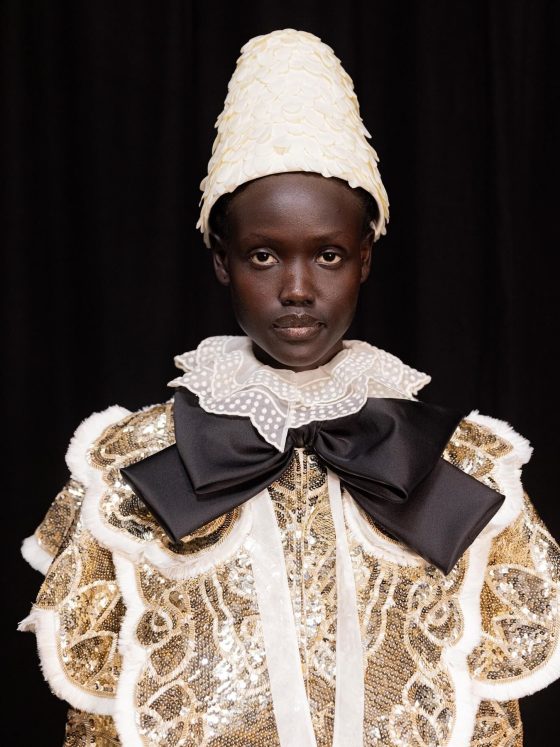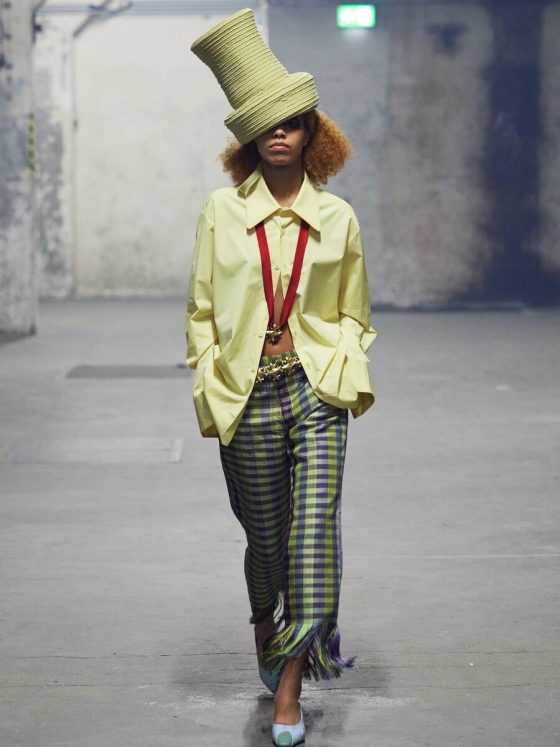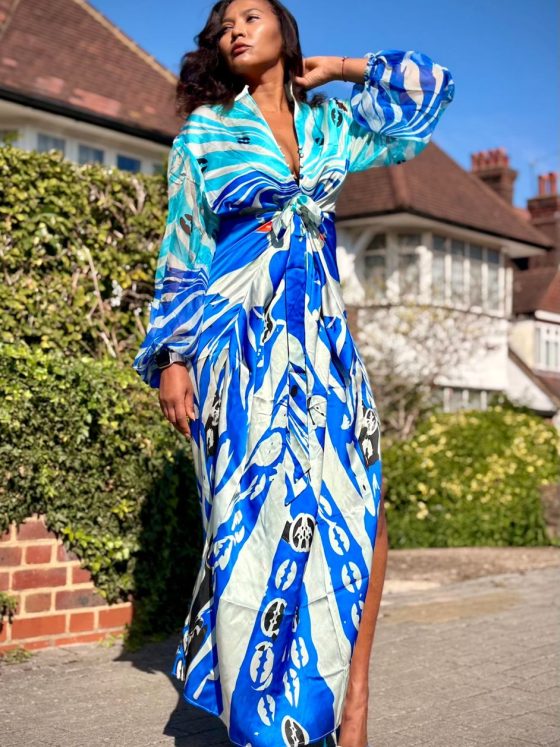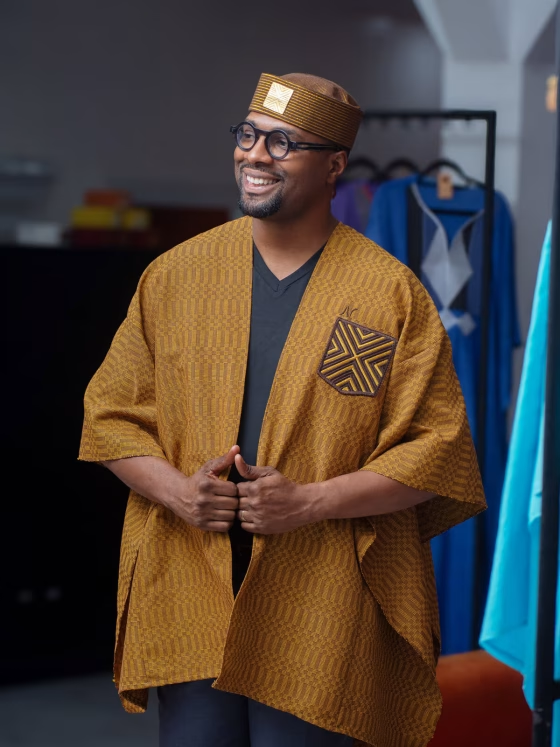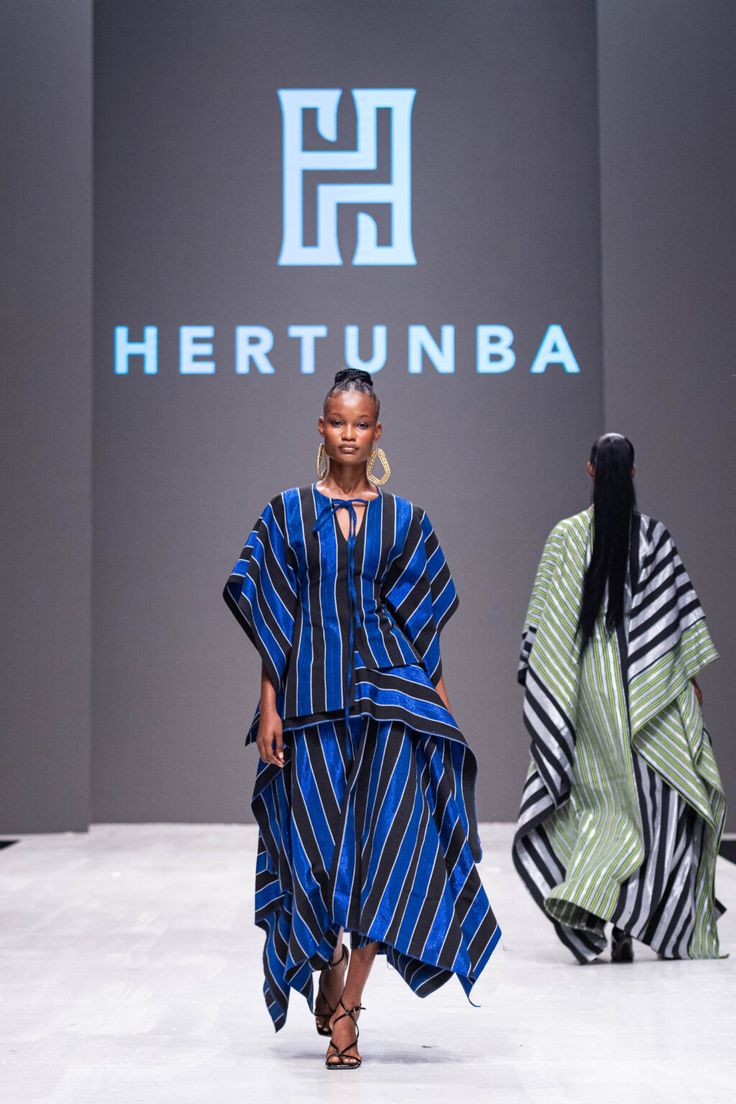
The African fashion market is worth $ 31 billion. Within that figure is a growing class of brands that are not making the usual argument about heritage or identity. They are making a sharper argument: that a woman who is dressed with intention is a woman who is positioned to act. Hertunba, founded in Lagos in 2020 by Florentina Agu, is built entirely on that position. The name makes it explicit: Hertunba is a compound of the English Her and the Yoruba title Otunba, the designation for a highly revered chief. The brand names every woman it dresses a chief. That is not a marketing tagline. It is a design brief.
Agu founded the brand during the pandemic, asking herself a question that would become the brand’s entire argument: can fashion be playful and sustainable while filling the gap it was expected to? The answer she built in Lagos has reached Paris trade floors, the wardrobes of international celebrities, and the runway at Lagos Fashion Week. What it has not done is drift from the question it started with.
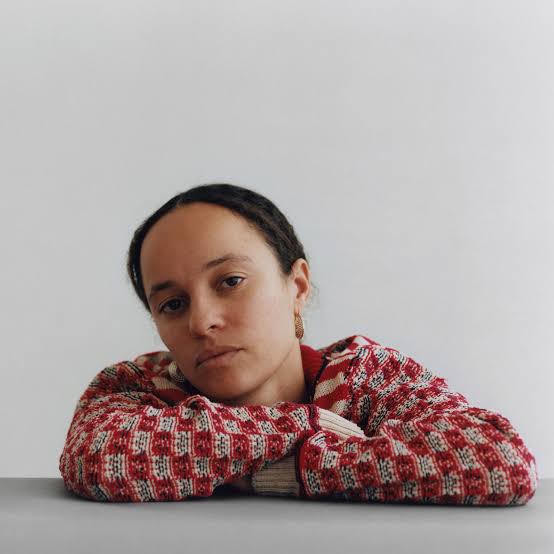
Florentina Agu founded Hertunba in 2020 with one argument: that dressing well is an act of power. Five years in, the Lagos fashion world has agreed.
Hertunba and Florentina Agu: Where the Brand Began
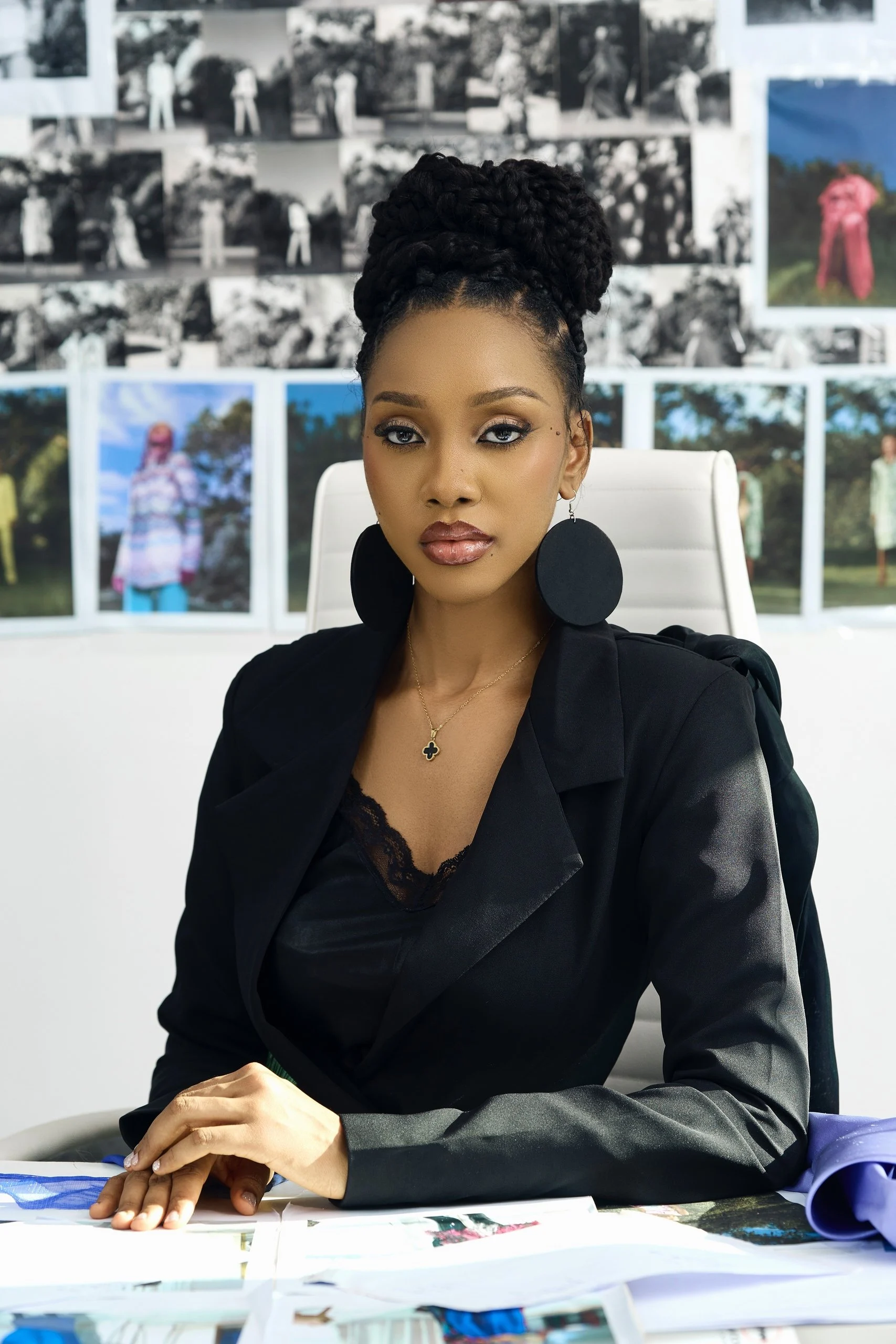
Florentina Agu’s relationship with fashion began at thirteen, with her father’s wardrobe. As Essence magazine’s profile of the designer confirms, her earliest fashion memory was making her way into her father’s closet, taking pieces of his old clothes, tearing them apart, and turning them into dresses. The instinct was not destructive. It was editorial: a thirteen-year-old reading what a garment could become if you refused its existing form. That same instinct runs through every Hertunba collection.
The professional turning point was not fashion school but student government. While serving as faculty president at university, Agu discovered firsthand how confidence is ignited through the right outfit. The observation was specific and consequential: the woman who walked into a room dressed with intention moved differently in that room. That experiential knowledge, earned through the particular pressures of student leadership rather than through the abstractions of design theory, became the brief for everything Hertunba would make.
She brought to that brief a textile education passed down through her grandmother. As the Veuve Clicquot Bold Woman Award coverage confirms, Agu’s deep knowledge of textiles, inherited from her grandmother, has been instrumental in preserving rare Nigerian weaving techniques. The grandmother is the unannounced co-designer of everything Hertunba produces. The hand knowledge required to work with Akwete and Aso Oke, the primary fabrics in the Hertunba vocabulary, was not acquired through research. It was transmitted.
Florentina Agu’s question at the start of the pandemic was precise: can fashion be playful and sustainable while filling the gap it was expected to? Hertunba is five years of answered questions.
The Materials: Akwete, Aso Oke, and the Craft Behind the Silhouette
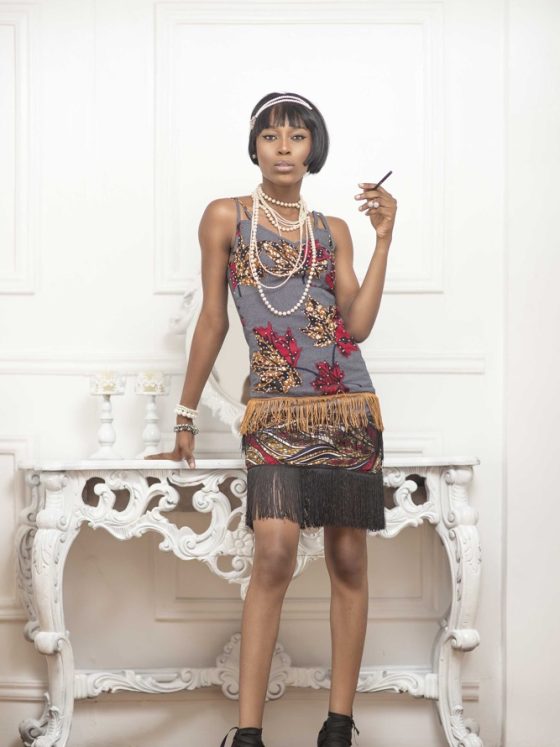
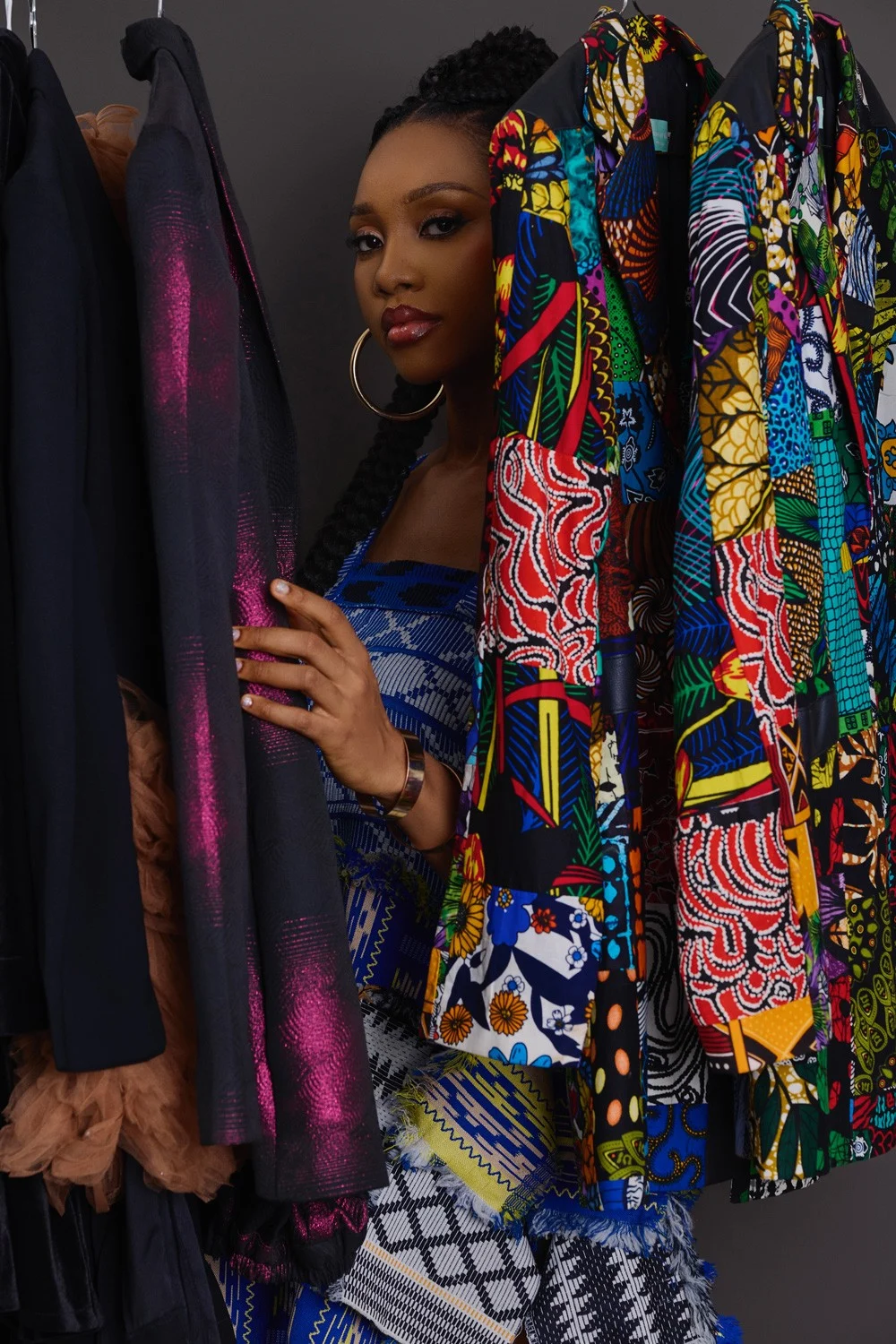
Hertunba’s signature is in its fabrics before it is in its silhouettes. As Marie Claire Nigeria’s Lagos Fashion Week 2025 coverage confirms, the brand works with upcycled fabrics and handwoven textiles including Akwete, a fabric known for its bold patterns and deep cultural roots in Igbo weaving traditions in southeastern Nigeria. Akwete cloth is not an embellishment. It is the primary structural argument. The weave carries information about the community that made it: the patterns, the colours, the weight, the specific textural language of a handloom tradition that predates the international fashion market by centuries.
Alongside Akwete, Hertunba works with Aso Oke, the Yoruba hand-woven fabric whose strips are sewn together into larger cloths that carry social and ceremonial meaning in the communities of southwestern Nigeria. In Hertunba’s hands, both textiles are used not as heritage quotations but as primary materials whose properties shape the construction logic of each piece. The drape of Akwete, the density of Aso Oke, the way each fabric behaves under tension and in movement: these are design variables, not decoration.
Production is carried out in small batches. Approximately 90% of textile offcuts are repurposed into accessories and home decor rather than discarded, reducing waste while extending the life of each material used. Artisans working with the brand are trained, paid fairly per piece, and supported to develop their craft rather than contracted and replaced. A portion of the brand’s net profits goes toward educational initiatives for women. The supply chain is as much of the argument as the garment.
Recognition: Veuve Clicquot, Essence, and the International Runway
On September 22, 2024, at the Federal Palace Hotel, Victoria Island, Lagos, Florentina Agu received the Veuve Clicquot Bold Future Award at the Bold Woman Award Ceremony, recognising her bold leadership and innovation in the fashion industry. The ceremony celebrated bold, innovative, and audacious women who embody leadership across various industries. The Bold Future designation is specifically for emerging leaders whose trajectory is the argument: it is given to people who have not yet arrived at their full scale but whose direction makes the destination clear.
Hertunba has shown at Lagos Fashion Week and presented at Who’s Next in Paris, the international trade show where African designers have increasingly been establishing their commercial credentials with European buyers. As Africa Fashion Tour’s documentation of Hertunba’s international trajectory confirms, from Lagos to Paris, the brand has established itself as one that celebrates its roots while embracing modernity. The Who’s Next appearance is specifically significant: it is not a cultural showcase. It is a wholesale trade environment where buyers are assessing commercial viability and unit economics, not heritage credentials.
The celebrity endorsement record is another register of the brand’s reach. Meagan Good, Jackie Aina, Tiwa Savage, Temi Otedola, Genevieve Nnaji, Nara Smith, and Bonang Matheba have all worn Hertunba. Matheba wore the brand at Cannes in 2026. These are not gifted pieces to influencers in exchange for posts. They are women who have chosen to be seen in Hertunba at moments that matter to them. The distinction is important. When Bonang Matheba marks her birthday in Cannes in a Hertunba piece, she is not endorsing a Nigerian brand. She is wearing what she wants to wear. Hertunba has become the thing an ambitious African woman reaches for when she wants to look exactly like herself.
Essence magazine’s profile of the designer, published in August 2025, confirmed Hertunba’s position in the broader African fashion narrative. Hertunba has grown in five years to become a well-known brand in the Nigerian fashion ecosystem, capturing the attention of celebrities and the international press simultaneously. Essence is not an easy landing for a Nigerian brand. It is a platform with a Black American audience that is sophisticated about fashion and heritage, and it reads both with precision. The fact that Hertunba read clearly to that audience is the clearest evidence that its argument is not regional.
What Hertunba Is Actually Arguing
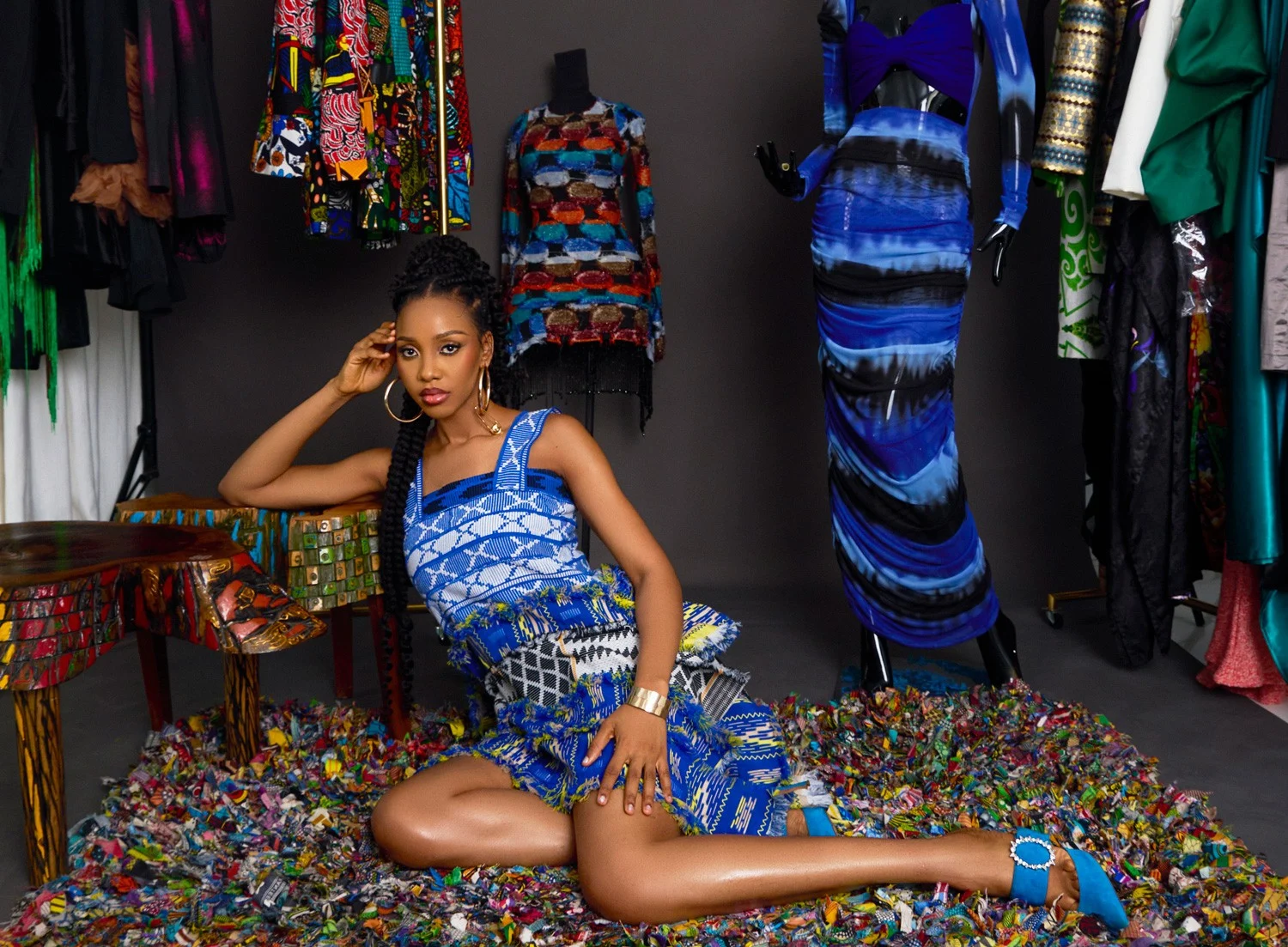
The brand’s explicit statement, from Florentina Agu herself, is direct: Hertunba is a love letter to African women, to their resilience, beauty and strength. The goal was to create something that preserves culture while reinventing it for the future. That description is accurate, and it is also slightly modest about what the brand is doing. Hertunba is not simply preserving Nigerian textile culture. It is using that culture to make a specific argument about women’s authority.
The argument is built into the name, the materials, the supply chain, and the design brief. The most significant Nigerian fashion labels of the current period are those that understand cultural authority as a design variable rather than a heritage obligation. Hertunba operates in that space: a brand that uses Akwete and Aso Oke not because they are Nigerian materials but because they are the most powerful materials available for the argument the brand is making. The argument is about women. The materials are evidence.
The three pillars that Hertunba identifies publicly are sustainability, cultural preservation, and diaspora connection. The first two are familiar territory for African fashion brands making international arguments. The third is the most precise: Hertunba creates contemporary pieces that enable women around the world to wear their roots with pride. That phrasing is careful. It is not about wearing African heritage. It is about wearing your roots. The distinction matters for the diaspora woman who has never lived in Nigeria but grew up knowing what Akwete means in her family. Hertunba is designed for her as much as for the Lagos professional who wears it to a board meeting.
Hertunba at Lagos Fashion Week
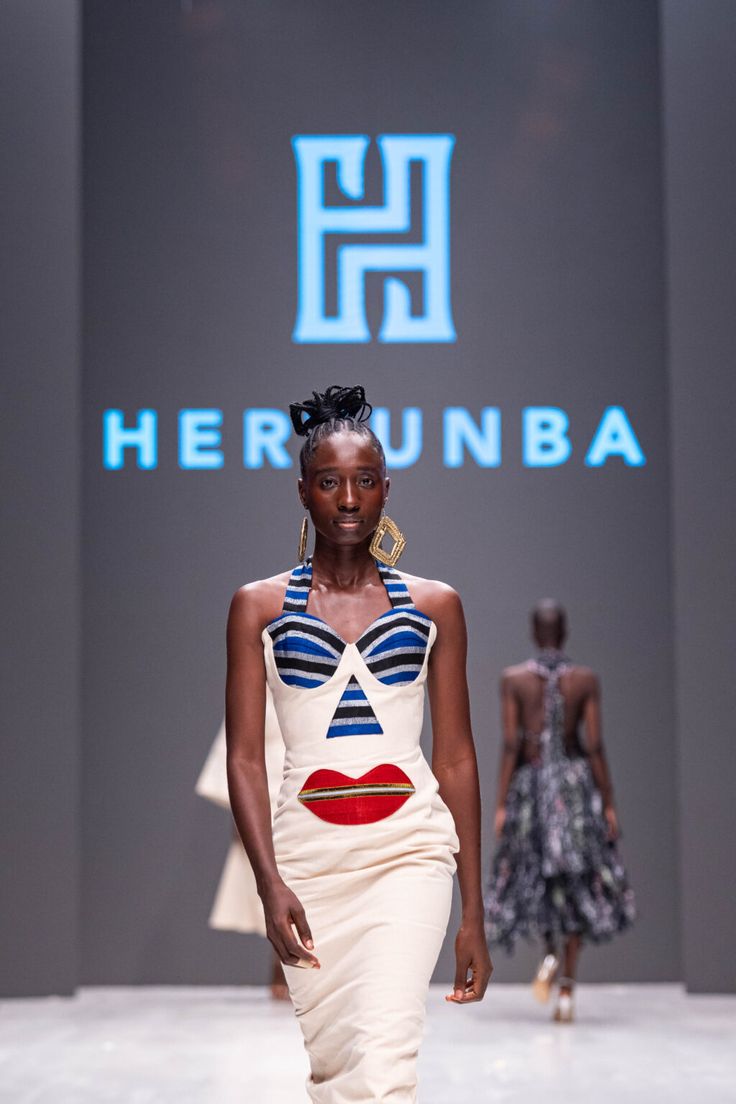
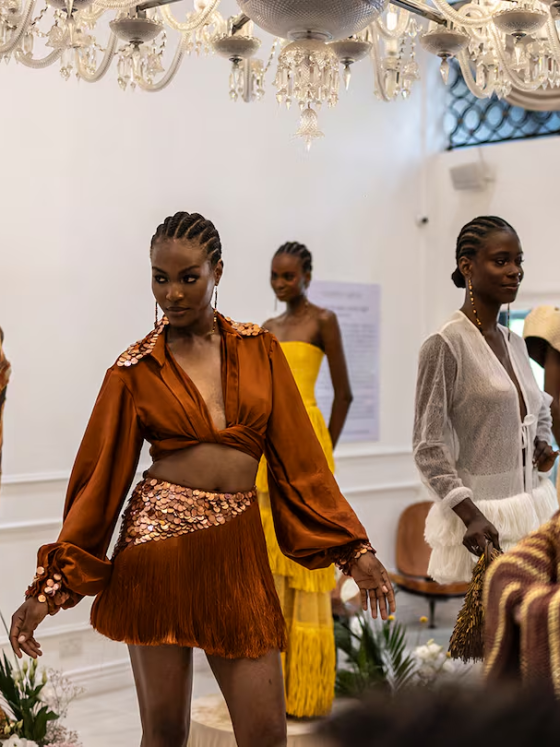
The Lagos Fashion Week SS26 season saw Hertunba deliver what reviewers described as a show that felt like a deep breath: slow, intentional, grounded, and powerful. The collection expressed the brand’s core ethos through fabric and silhouette rather than through spectacle. Lagos Fashion Week’s mandatory sustainable practice requirements for runway designers create a framework in which brands like Hertunba, where sustainability is foundational rather than added, compete from an inherent position of strength. The Green Access infrastructure that LFW has built over fifteen years is the ecosystem within which Hertunba operates.
The Lagos fashion market context amplifies the significance of that position. Omiren Styles’ Lagos Fashion Market Report 2026 documents that sustainable and circular fashion is among the five categories with verified sustained growth momentum in the Lagos market. An upper-middle-class Lagos consumer that is fashion-literate, globally aware, and willing to pay for provenance and craft is the exact customer Hertunba is building for. The convergence of brand argument and market trajectory is not accidental.
The Omiren Argument
Hertunba is making the most precise argument in Nigerian sustainable fashion: that dressing a woman with intention is dressing her to win. Florentina Agu built this case over five years in Lagos, with handwoven Akwete and Aso Oke as her primary evidence, artisans paid fairly and trained as her production argument, and 90% of textile waste repurposed as her operational proof. The African fashion market is worth 31 billion dollars. Hertunba is positioned at the sustainable luxury tier of that market, with international trade floor presence at Who’s Next Paris, runway credibility from Lagos Fashion Week, celebrity endorsement from Bonang Matheba, Tiwa Savage, Meagan Good, and Jackie Aina, and institutional recognition from the Veuve Clicquot Bold Future Award in 2024. None of those accolades is the argument. The argument is the brand name: Hertunba, Her and Otunba, the woman who is a chief. Every piece Florentina Agu makes says that. The rest is context for the main claim.
ALSO READ:
- From Ibadan to Paris to Lagos: How Abiola Olusola Built a Global Brand by Staying Rooted
- The Lagos Fashion Week Effect: What a Decade of Runway Has Actually Done for Nigerian Designer Revenue
- Lagos Fashion Market Report 2026: Retail, Price Points and Growth Categories
Frequently Asked Questions
What is Hertunba and who founded it?
Hertunba is a Lagos-based sustainable ready-to-wear label founded in 2020 by Florentina Agu. The name combines the English word Her with the Yoruba title Otunba, a designation for a highly revered chief, symbolising that every woman Hertunba dresses is positioned as a chief. The brand works with handwoven Akwete and Aso Oke fabrics, repurposes approximately 90% of textile offcuts, pays artisans fairly per piece, and directs a portion of net profits toward educational initiatives for women.
What does the name Hertunba mean?
Hertunba is a compound of Her and Otunba, the Yoruba title for a highly revered chief. Florentina Agu chose the name to reflect her core vision: that every woman who wears the brand carries the authority and position of a chief. The name functions as both the brand identity and the design brief, shaping every garment decision the brand makes.
What award has Hertunba won?
Florentina Agu received the Veuve Clicquot Bold Future Award on September 22, 2024, at the Bold Woman Award Ceremony held at the Federal Palace Hotel, Victoria Island, Lagos. The Bold Future designation recognises emerging leaders whose trajectory demonstrates exceptional commercial and creative promise. Agu was one of six finalists for the award, drawn from business, fashion, finance, and advocacy.
What celebrities wear Hertunba?
Hertunba has been worn by Meagan Good, Jackie Aina, Tiwa Savage, Temi Otedola, Genevieve Nnaji, Nara Smith, Chioma Ikokwu, and Bonang Matheba, who wore the brand at Cannes in 2026. These endorsements are organic: public figures choosing Hertunba at moments that matter to them rather than paid promotional arrangements.
Has Hertunba shown internationally?
Yes. Hertunba has presented at Who’s Next in Paris, the international wholesale trade show where African designers have established their commercial credibility with European buyers. The brand has also shown at Lagos Fashion Week for multiple consecutive seasons. The combination of community trade floor presence in Paris and runway credibility in Lagos places Hertunba in the small tier of Nigerian brands building commercially on both continents simultaneously.
Explore More
Read the full Fashion > Designer Profiles section for Omiren Styles’ documentation of African fashion houses, creative directors, and the commercial and cultural arguments being built from Lagos, Accra, Nairobi, Kigali, and across the diaspora.