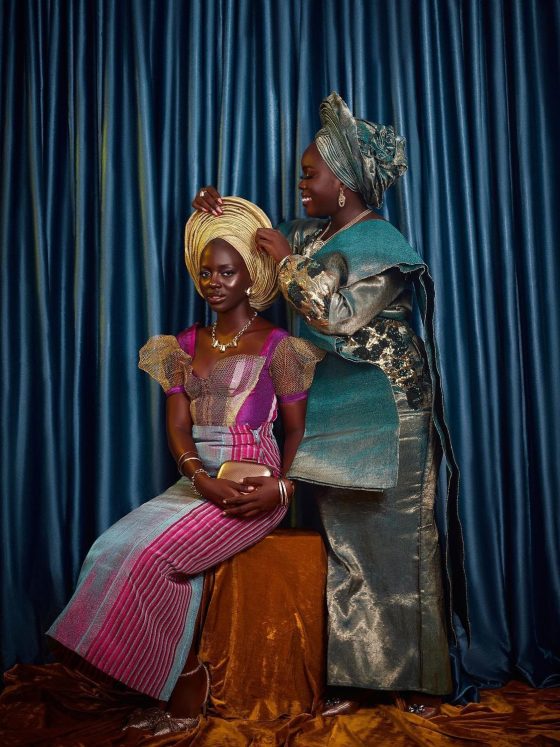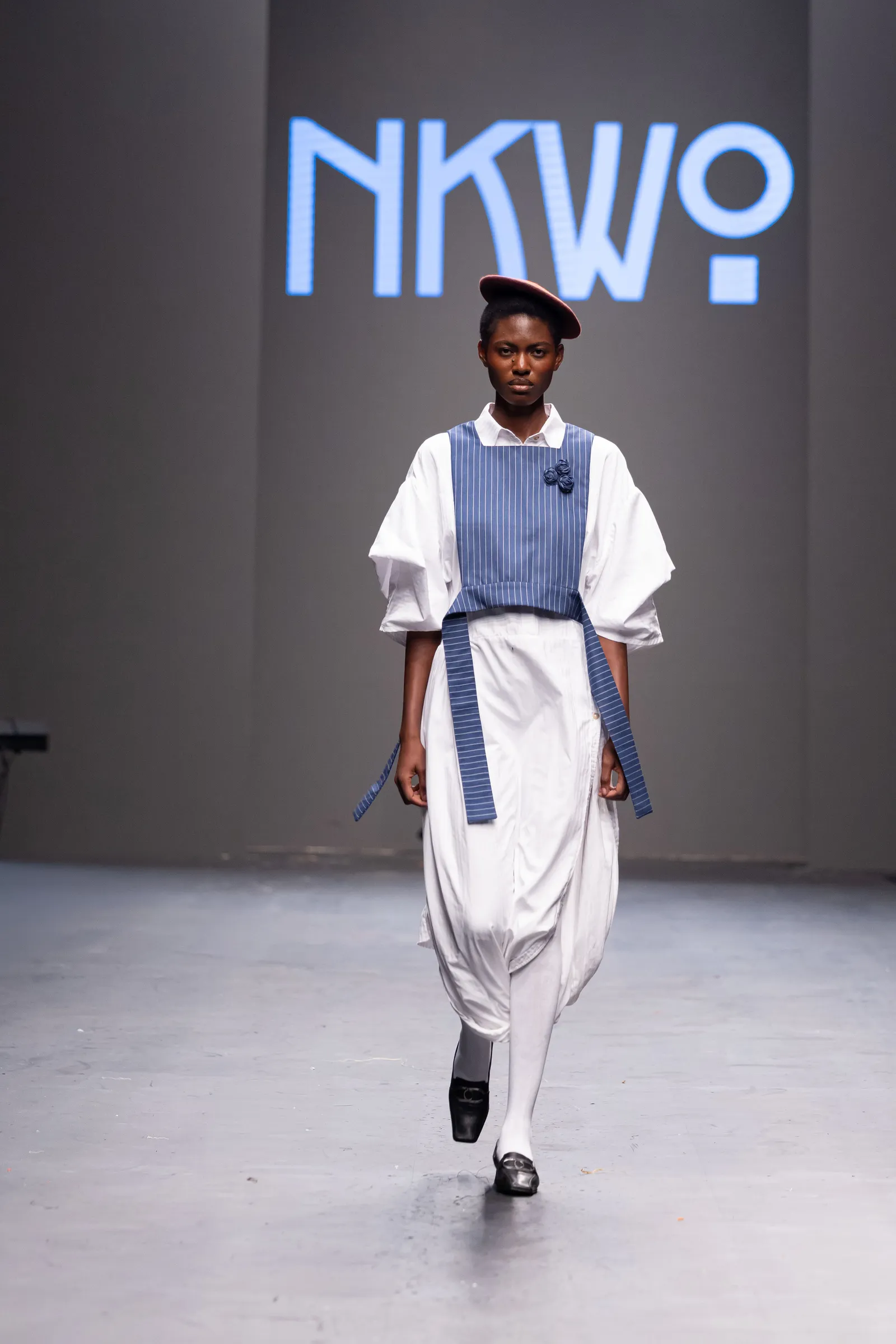
The standard way to cover African fashion weeks is to cover them separately. Lagos Fashion Week gets its recap. Accra gets its round-up. Kigali gets, if it is lucky, a mention in a broader continental trend piece. Each city is treated as a discrete local event, interesting and growing, but ultimately contained. The coverage rarely asks what it would mean to read all three together, or what the pattern would reveal if you did.
The African fashion market is worth 31 billion dollars. Across that market, Lagos, Accra, and Kigali are the three continental runway cities most clearly moving in a shared direction: toward an African fashion logic that is increasingly shaped by regional audience, local retail ambition, and a less West-dependent idea of what legitimacy looks like. They did not formally coordinate. They arrived at related positions independently. That is precisely why it is worth reading them together.
Lagos ran the most documented African runway season of 2025-2026. Accra and Kigali are moving in the same direction. Here is what the three cities agreed on.
Lagos, Accra and Kigali: 2026 Runways and the Shared Direction
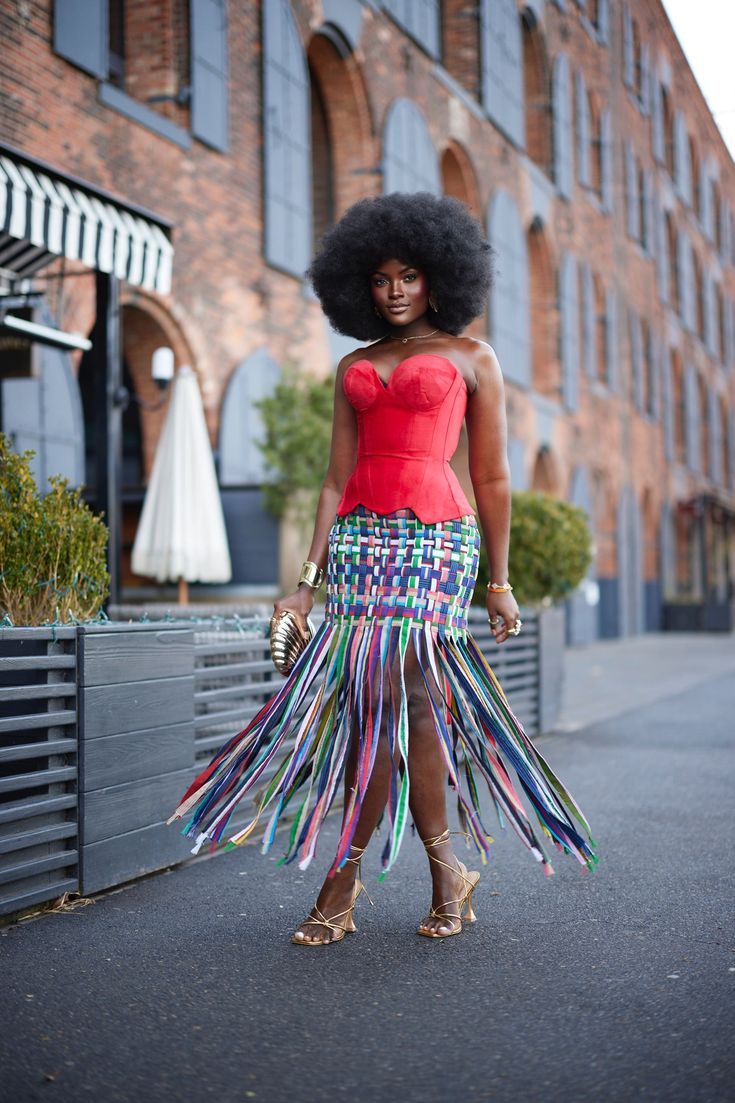
The most fully documented of the three cities’ recent runway seasons is Lagos Fashion Week SS26, which ran from October 29 to November 2, 2025. As the Marie Claire Nigeria trend report for Lagos Fashion Week SS26 confirms, the 15th anniversary edition delivered a dominant silhouette built on structural denim, earthy tones, and raffia elevated to luxury textile. Specifically: denim was reimagined in fresh and inventive ways across multiple designers, with JZO delivering denim ensembles including a standout armless jumpsuit, Boyedoe exploring patchwork in a three-piece denim set balancing edge and craftsmanship, and OLOOH presenting a denim drop-waist gown with a bubble hem. Brown, often dismissed as dull, appeared as a deliberate statement colour across Babayo, Ajabeng, and Adama Paris. Raffia was transformed from a craft material to a luxury textile by Pepperrow, Cynthia Abila, and Babayo.
The venue itself made an argument. Omiren Styles’ analysis of what a decade of Lagos Fashion Week has done for Nigerian designer revenue confirms the SS26 season moved beyond Federal Palace Hotel to the J. Randle Centre for Yoruba Culture and History. The venue change was the show’s first statement: this runway is located inside African cultural history, not outside it looking in. Every designer who showed there was showing in a room that said something before a single garment walked.
Accra Fashion Week 2025 ran December 16-21 at Silver Star Towers in Airport City, its 10th anniversary edition. As News Ghana’s reporting on the decade milestone confirms, the platform welcomed designers from more than 20 countries, including Lusanda Couture from Angola, Unik Dress from Côte d’Ivoire, Keljhani from Liberia, and Nene Yeye from Senegal, alongside Ghanaian brands including JKU, Mikoko Deluxe, Arvelys, Odefille, and Fohrella. Managing Director Nana Addo Tamakloe described the milestone edition as demonstrating sustained impact on Ghana’s creative economy. Accra Fashion Week 2026 is confirmed for December 15-20, 2026 and has not yet taken place. The 2025 edition established the platform’s continental reach and its increasing seriousness as a trade event: a runway ecosystem that reflects a Ghana fashion economy building its own infrastructure.
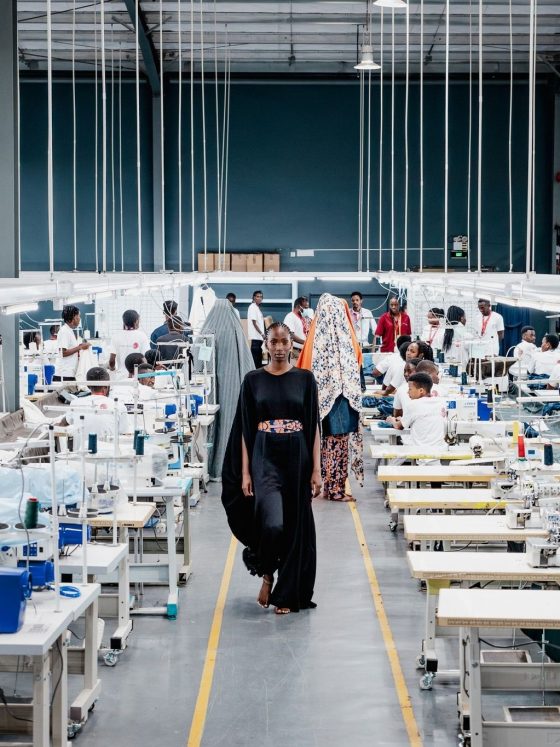
Kigali’s fashion positioning is documented not through a major 2026 runway season but through the trajectory that Moshions, Asantii, and House of Tayo represent: a city building fashion authority through brand quality and export ambition rather than through fashion week scale. Kigali Innovation City, a 61-hectare, 2 billion dollar smart-city development that broke ground in February 2026, sits alongside Rwanda’s Made in Rwanda garment manufacturing policy as the infrastructure argument for what Kigali’s fashion economy is building toward.
Lagos Fashion Week SS26 moved to the J. Randle Centre for Yoruba Culture and History. The venue change was the show’s first argument: this runway is located inside African cultural history, not outside it looking in.
The Shared Silhouette Logic
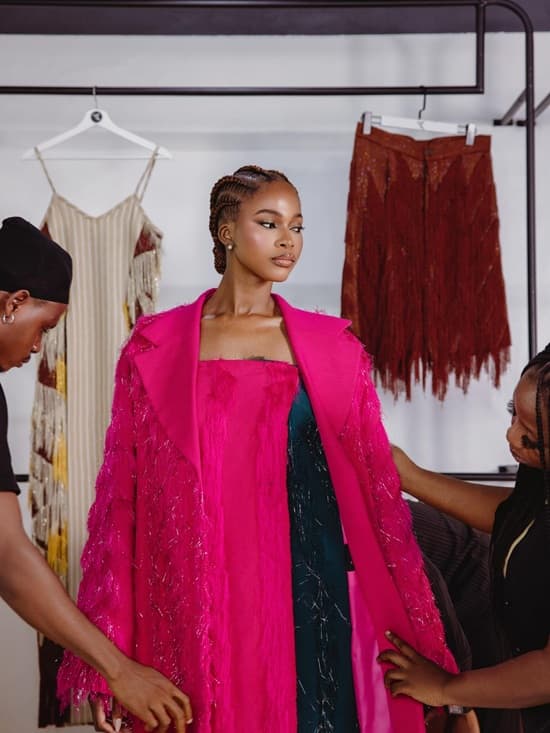
The dominant silhouette at Lagos Fashion Week SS26 was not body-conscious in the conventional international fashion sense. It was structural, material-led, and proportion-driven in ways that reflected craft intelligence rather than trend responsiveness. At Lagos Fashion Week SS26, NKWO brought structured denim blazers, ponchos, and dresses to the runway, each wearing the evidence of its making on its surface: patch seams, visible joins, deliberate juxtapositions that made the construction process visible as a design decision. The garment was arguing for craftsmanship rather than concealing it.
LFJ’s architectural pleating and oversized headwear, and Kadiju’s 1980s-inspired silhouettes with contemporary cuts, pushed the same logic in different registers: proportion and structure as the primary fashion statement, with surface decoration following from construction rather than leading it. The dropped waist silhouette, visible across multiple SS26 designers, created a centre of gravity lower than international conventions typically place it, producing a distinctly African body-in-dress argument.
In Accra’s runway ecosystem, the silhouette argument runs parallel. The designers who have come through the Accra Fashion Week platform, including Christie Brown, who has built an international profile specifically on voluminous proportions and construction confidence, share with Lagos’s strongest designers a conviction that shape is the argument, not the canvas. The West African tailoring intelligence that produces agbada, kaftan, and wrapped silhouettes across Ghana and Nigeria is not a heritage reference in this work. It is the technical foundation.
Kigali’s contribution to the shared silhouette logic comes through Moshions. As Omiren Styles’ profile of Moshions confirms, designer Moses Turahirwa has built an international profile by translating Rwandan cultural motifs into tailored, ready-to-wear and statement garments that operate at a luxury level through clean silhouettes, precise construction, and cultural integrity embedded in modern forms. Moshions has presented at Pitti Uomo in Florence and Shanghai Fashion Week 2025. The Kigali silhouette argument is about control and precision: the East African tailoring sensibility finding a contemporary form that the market outside Rwanda is only beginning to read correctly.
Casting, Colour, and the Audience These Runways Are Building
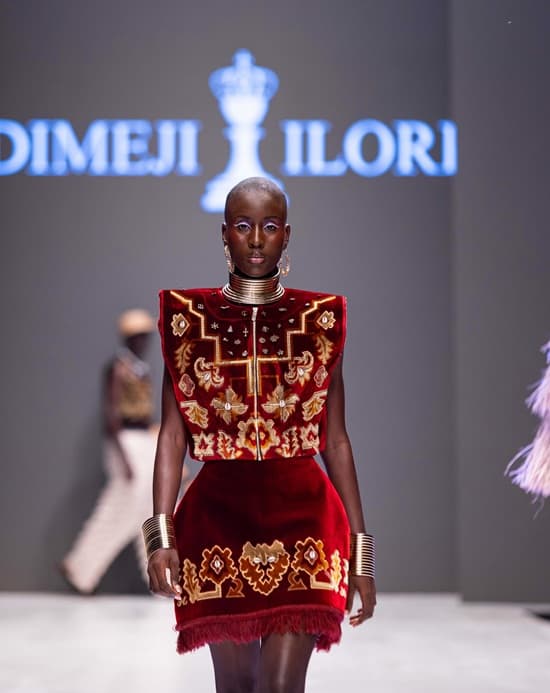
The casting story at Lagos Fashion Week SS26 reflected the same shift. Models were not selected for their legibility to an international standard of generic cosmopolitan beauty. The runway’s casting used age range deliberately, with women in their forties and fifties placed in hero looks, closing looks, the pieces the designers clearly wanted remembered. The message was built into the structure of the show: the audience this runway is building knows what these choices mean, and that audience includes women who are not twenty-two.
The colour argument at SS26 was equally deliberate. As Guzangs’ analysis of the ten trends that defined Lagos Fashion Week SS26 confirms, raffia dominated the season, transformed from humble craft material to luxury textile, while cowries, shells, and coral beads carried ancestral weight rather than functioning as decoration. Brown as a statement colour was the season’s most striking editorial call. The earthy tones that dominated- terracotta, ochre, the red-brown of laterite soil- were not chosen because they are trending globally. They were chosen because they are grounded in a specific African landscape and cultural context, where these are not neutral colours but loaded with visual and social meaning.
The buyer story at SS26 was where the continental argument became most commercially legible. Omiren Styles’ Lagos Fashion Market Report 2026 documents that the premium and designer tiers of the Lagos fashion market command NGN 100,000 to NGN 500,000 per piece, sustained by a Lagos upper-middle class that is fashion-literate, globally aware, and willing to pay for provenance and craft. As Omiren Styles’ guide to shopping African fashion with cultural literacy confirms, genuine handwoven kente, identified by its strip construction and colour grammar, and properly sourced aso-oke, by its weight and density, are the kinds of knowledge that distinguish a culturally literate buyer from an aesthetic browser. The buyers at SS26 included a visible increase in continental African buyers from Nairobi, Johannesburg, and Abidjan, bringing exactly that literacy to the Lagos runway.
What the Three Cities Are Building Together
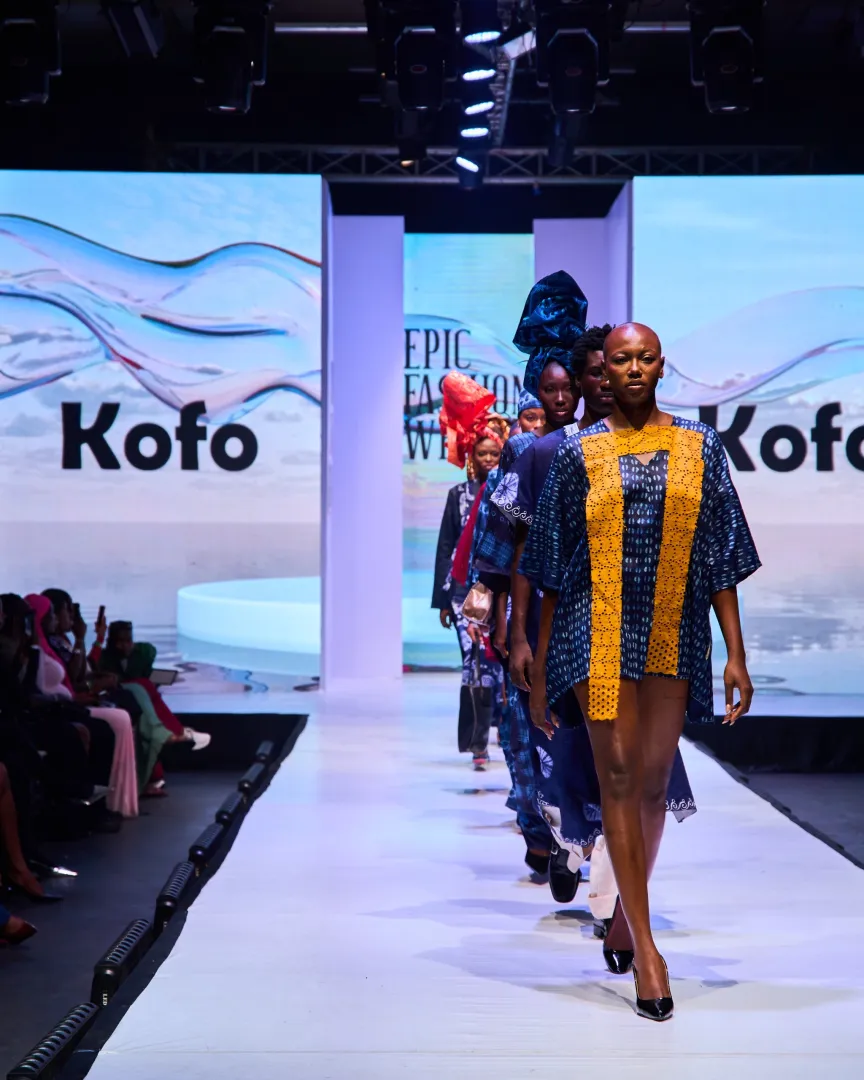
Africa holds 32 fashion weeks annually according to UNESCO’s 2023 report on the fashion sector in Africa. Omiren Styles’ analysis of the African cities that will define global fashion by 2030 confirms that the ecosystem is distributed across many cities, each building a different kind of influence, rather than converging on one dominant centre. Lagos has scale and infrastructure. Accra has consistency and continental reach. Kigali has manufacturing depth and brand-building ambition. Together they are constructing an African fashion system that is increasingly capable of sustaining itself without Western validation as the primary measure of legitimacy.
That does not mean these cities are in formal agreement. Lagos Fashion Week, Accra Fashion Week, and the Kigali brand-building ecosystem are run by different organisations, with different funding structures, different designer communities, and different commercial contexts. What they share is a response to the same underlying conditions: the African consumer class is growing, the intra-African buyer market is building, and the designers producing the most compelling work are those who understand that speaking to that audience directly produces better fashion. As Omiren Styles’ documentation of AMVCA 2026 confirms, the most significant Nigerian fashion of the current period is produced by designers for whom African cultural knowledge is not a reference library but a living inheritance, built from the inside out. That is the standard the Lagos, Accra, and Kigali runway ecosystems are each, in their own way, trying to reach.
The consensus that emerges from reading them together is not a trend in the seasonal sense. It is a shift in orientation. African fashion is increasingly in conversation with itself, with the continental African audience, the intra-African buyer, and the regional cultural logic that gives the clothes their specific gravity. The three cities are not trying to look like Milan or Paris. They are trying to look like Lagos, Accra, and Kigali. And as their runways are demonstrating, that is more than enough.
The Omiren Argument
The African fashion market is worth 31 billion dollars. The runway seasons being built in Lagos, Accra, and Kigali are documenting what that market looks like when it stops seeking external validation and starts setting its own terms. Lagos Fashion Week SS26 delivered a 15th anniversary edition in which denim was elevated through craftsmanship, raffia was repositioned as a luxury textile, brown became the season’s most deliberate statement colour, and the venue itself, the J. Randle Centre for Yoruba Culture and History, made the cultural argument before a single garment walked. Accra Fashion Week celebrated its 10th anniversary as a continental platform with designers from five countries and a buyer ecosystem that treats Ghana as a fashion economy rather than a showcase. Kigali builds authority through brand quality, manufacturing infrastructure, and a $2 billion city-building investment that places fashion inside a national economic strategy. These are three different arguments being made with different materials at different scales. They are not coincidentally pointing in the same direction. They are responding to the same underlying truth: African fashion is most powerful when it is most itself, and 2026 is the clearest demonstration yet that the continent has decided to test that proposition fully.
ALSO READ:
- The Lagos Fashion Week Effect: What a Decade of Runway Has Actually Done for Nigerian Designer Revenue
- African Deconstructed Denim Movement: What Lagos, Accra, and Johannesburg Built From a Western Fabric
- The African Cities That Will Define Global Fashion by 2030
- Lagos Fashion Market Report 2026: Retail, Price Points and Growth Categories
Frequently Asked Questions
What were the key trends at Lagos Fashion Week SS26?
Lagos Fashion Week SS26, which ran October 29 to November 2, 2025 as the 15th anniversary edition, was defined by denim reimagined through craftsmanship (JZO, Boyedoe patchwork denim, OLOOH drop-waist denim gown), brown as a deliberate statement colour (Babayo, Ajabeng, Adama Paris), raffia elevated to luxury textile (Pepperrow, Cynthia Abila, Babayo), architectural silhouettes (LFJ pleating and oversized headwear), and earthy tone dominance. The season moved to the J. Randle Centre for Yoruba Culture and History, a venue shift that positioned the runway inside African cultural history.
Has Accra Fashion Week 2026 already happened?
No. Accra Fashion Week 2026 is confirmed for December 15-20, 2026, and has not yet taken place at the time of this article. The most recent completed edition is Accra Fashion Week 2025, which was the 10th anniversary edition and drew designers from Angola, Nigeria, Togo, the United Kingdom, and the United States. The 2025 edition confirmed Accra Fashion Week’s standing as a continental platform with a buyer ecosystem that extends well beyond Ghana.
What makes Lagos, Accra and Kigali read as a shared fashion direction?
The three cities are making related but distinct arguments about African fashion’s relationship to external validation. Lagos builds through runway scale, sustainability infrastructure, and a growing intra-African buyer base. Accra builds through consistency, continental reach, and a fashion week platform now in its 10th year. Kigali builds through brand quality, manufacturing depth, and a government-backed investment in creative economy infrastructure. None of them is primarily oriented toward Western editorial recognition as the measure of success. All three are building audiences and markets that are African-first.
Who are the designers defining the current African runway moment?
At Lagos Fashion Week SS26, the most discussed designers included NKWO (structured deconstructed denim), Boyedoe (patchwork denim craftsmanship), LFJ (architectural pleating and oversized headwear), Kadiju (1980s-inspired contemporary silhouettes), Babayo (earthy tone and texture), and Adama Paris (brown tulle with constructed detail). In Kigali, Moses Turahirwa of Moshions and Maryse Mbonyumutwa of Asantii represent the brand-building approach that positions Kigali as a manufacturing and design hub. In Accra, Christie Brown has built the most internationally documented profile from the Ghanaian runway ecosystem.
What does the intra-African buyer shift mean for these runways?
A growing proportion of the buyers attending Lagos Fashion Week and the Accra Fashion Week ecosystem are from other African cities: Nairobi, Johannesburg, Abidjan, treating these runways as supply sources for continental African retail rather than as export origins for Western markets. That shift changes what gets designed, how it is priced, and who the target customer is. When the primary market is intra-African rather than export-to-West, the design incentive is to make clothes that speak directly to African consumers with specific cultural knowledge, which is exactly what the strongest work at these runways is doing.
Explore More
Read the full Fashion > Industry section for Omiren Styles‘ documentation of African runway seasons, market reports, and the continental fashion economies being built across Lagos, Accra, Dakar, Nairobi, Kigali, and the diaspora.