Every major fashion reference system in the world is built around the same unit: the designer.
The most influential ones are rankings: the LVMH Prize, the Business of Fashion 500, the CFDA lists, the various country-level emerging designer indexes that have proliferated alongside global fashion week culture. Others are databases, digital directories that aggregate designer profiles, collection archives and brand histories. Others are editorial selections: the magazines and fashion media organisations that compile their own curated lists of designers to watch, designers who matter, designers whose work represents the future of fashion in a particular geography or aesthetic category.
Almost all of them share the same limitation. They can tell you who is making interesting work. They cannot tell you who controls the supply chain that designer depends on. They cannot tell you who finances the retail relationship that determines whether that work reaches a buyer. They cannot tell you who owns the logistics infrastructure that moves the collection from the atelier to the store. They cannot tell you what the working conditions are for the makers whose labour the collection requires, or what the cultural knowledge holders who contributed to the collection were paid, or whether the fabric that makes the collection possible was sourced through an intermediary chain whose markup structure systematically disadvantages the designer relative to larger brands.
The Omiren Style Index should be built differently.
A fashion index that covers only the designer covers the most visible node in a system whose most consequential actors are often invisible. The farmer who grew the cotton, the converter who processed the fabric, the maker who constructed the garment, the logistics operator who moved it, the buyer who placed the order, the cultural community whose aesthetic knowledge informed the collection: each is part of the fashion system. The Index should document the system, not only its most photographed participants.
Omiren Styles has established, in its analysis of the full cultural and commercial value chain behind fashion, that every commercial fashion transaction is downstream of a cultural decision, and that the communities whose cultural production enters the commercial system first are the ones whose commercial interests that system has been least equipped to protect. An Index that maps only the designer captures the commercial endpoint of this chain but fails to document the cultural and material chain that made that endpoint possible.
Fashion indexes are built around the designer. The Omiren Style Index should be built around the system, the supply chain, the retail infrastructure, the institutions, the materials, and the cities that make fashion possible, before any designer makes a collection.
What Fashion Indexes Get Right and What They Miss

The designer-centric fashion index is not wrong. It is incomplete.
Designers are the creative decision-makers whose vision determines what a collection is. The designer’s name on a label is a genuine unit of commercial and creative identity that the fashion market uses to organise purchasing decisions, press coverage, investment and retail placement. An index that accurately tracks designers, with verified information about their work, commercial positioning, and cultural context, provides genuinely useful reference material for buyers, journalists, researchers, and consumers who want to understand what is being made and why.
What the designer-centric index misses is the system that makes the designer’s work possible or impossible: the fabric supply chain whose access conditions determine which designers can afford which materials; the manufacturing infrastructure whose capacity, quality and minimum orders determine what can be produced; the retail and distribution channels whose buyer relationships and order requirements determine whether the collection reaches consumers; the policy and institutional environment whose trade agreements, tax structures and export support determine whether a brand in Lagos or Lomé can compete in the same international market as a brand in Paris or Copenhagen; and the cultural knowledge holders whose contribution to the collection’s aesthetic authority may be entirely absent from the label’s credit line.
As Omiren Styles has documented in its analysis of the fabric middleman and the fashion system, the fabric converter, the wholesaler, and the jobber are as commercially significant as any designer, manufacturer, or retailer in the fashion supply chain, yet far less discussed than any of them. An index that covers the designer but not the intermediary chain that supplies the designer with materials is a partial map of a system in which the most structurally significant actors remain invisible.
As Omiren Styles has established in its analysis of why African fashion manufacturing has not scaled, the gap between a designer’s creative output and their commercial scale is determined primarily by infrastructure: power reliability, access to capital, logistics costs, fabric supply, and trade policy. A designer index that ranks creative output without mapping the infrastructure conditions under which that output is produced is measuring the symptom while ignoring the structural diagnosis.
What the Omiren Index Covers
The Omiren Index is an independently curated editorial reference to people, brands, places, materials, institutions and systems. The distinction between that scope and the designer-centric index is not incidental. It reflects a deliberate editorial argument about what a fashion reference system needs to cover to be useful to the readers, researchers, practitioners, and institutions that Omiren Styles serves.
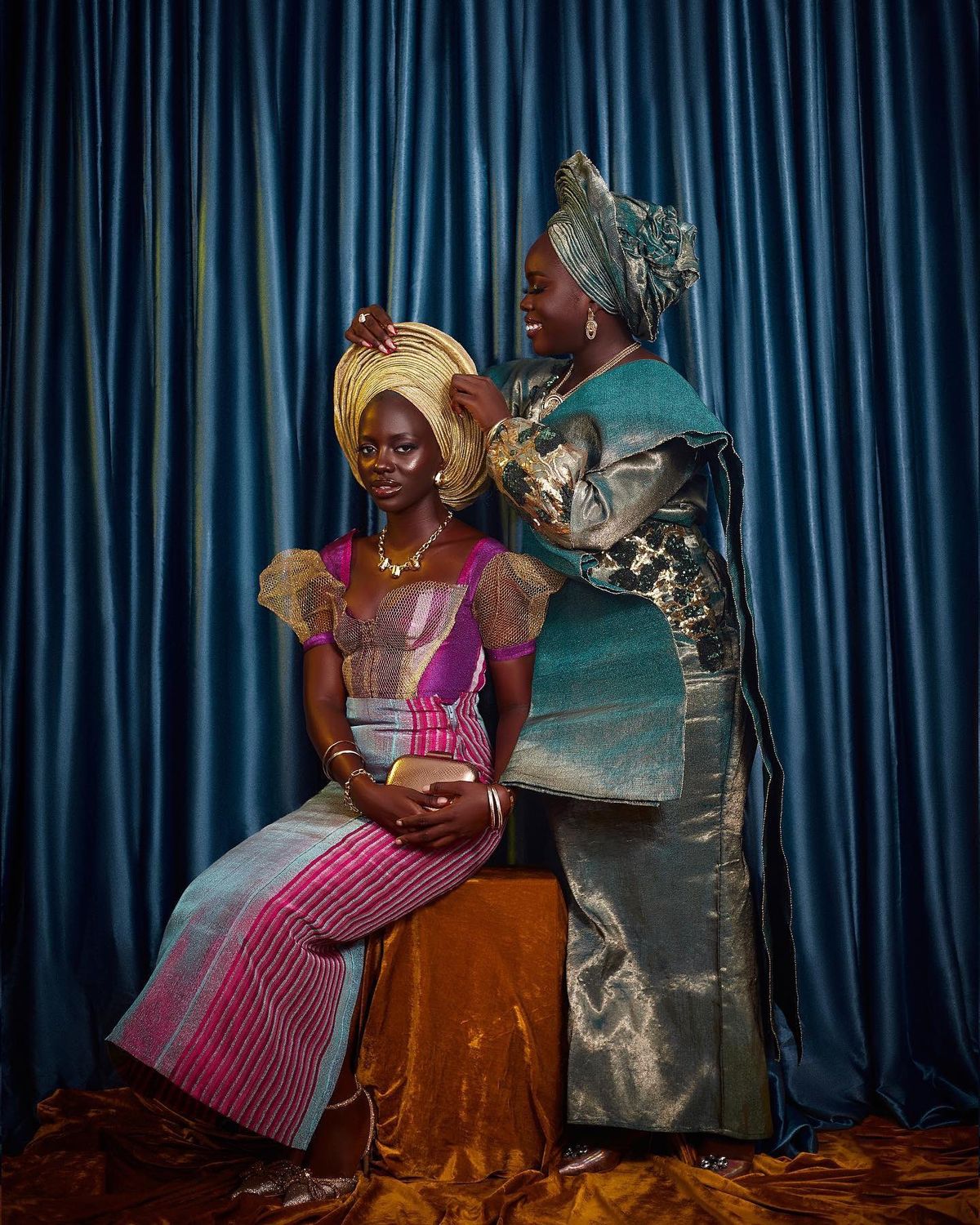
The Index covers people: designers and their creative practices, but also the makers, tailors, artisans, weavers, dyers, embroiderers and repair specialists whose skilled labour underlies the production of fashion in every market Omiren covers. The wire bender in Port of Spain who shapes Carnival costume frames belongs in the Index for the same reason as the designer who sketches those frames: both are practitioners whose knowledge and skill are part of what makes the fashion system work.
As Omiren Styles has documented in its analysis of the hidden fashion supply chain of Carnival mas, the seamstresses, wire benders and feather workers who produce Carnival costumes are invisible in the photographs that the event generates, and largely invisible in the documentation. The Omiren Index is built on the premise that they should not be invisible in the reference architecture of the fashion system that their work makes possible.
The Index covers brands: not only the most internationally visible brands but also the labels operating at the local and regional scale whose commercial practices, production models, or cultural significance make them part of the fashion story that Omiren documents. Nadiaka, which has operated from Lomé for over two decades; Bazara’Pagne, which built an international presence from Togolese atelier production; the Chola aesthetic’s most commercially authentic expressions in the Chicana-owned brands that built from within the tradition: each belongs in the Index because each is part of the system whose record the Index is building.
The Index covers places, cities, markets, districts, and specific locations, whose material and cultural infrastructure makes fashion possible. The Grand Marché de Lomé, where pagne traders have set the terms of West African textile circulation for generations. The Kantamanto market in Accra, where the global secondhand trade’s consequences manifest in tangible form. The Restrepo and San Victorino districts of Bogotá, where Colombia’s popular fashion economy is produced for a domestic market that the country’s international fashion week does not primarily serve. Places are not backgrounds in the Omiren Index. They are active agents in the fashion system, and their documentation is as essential as that of the people who work within it.
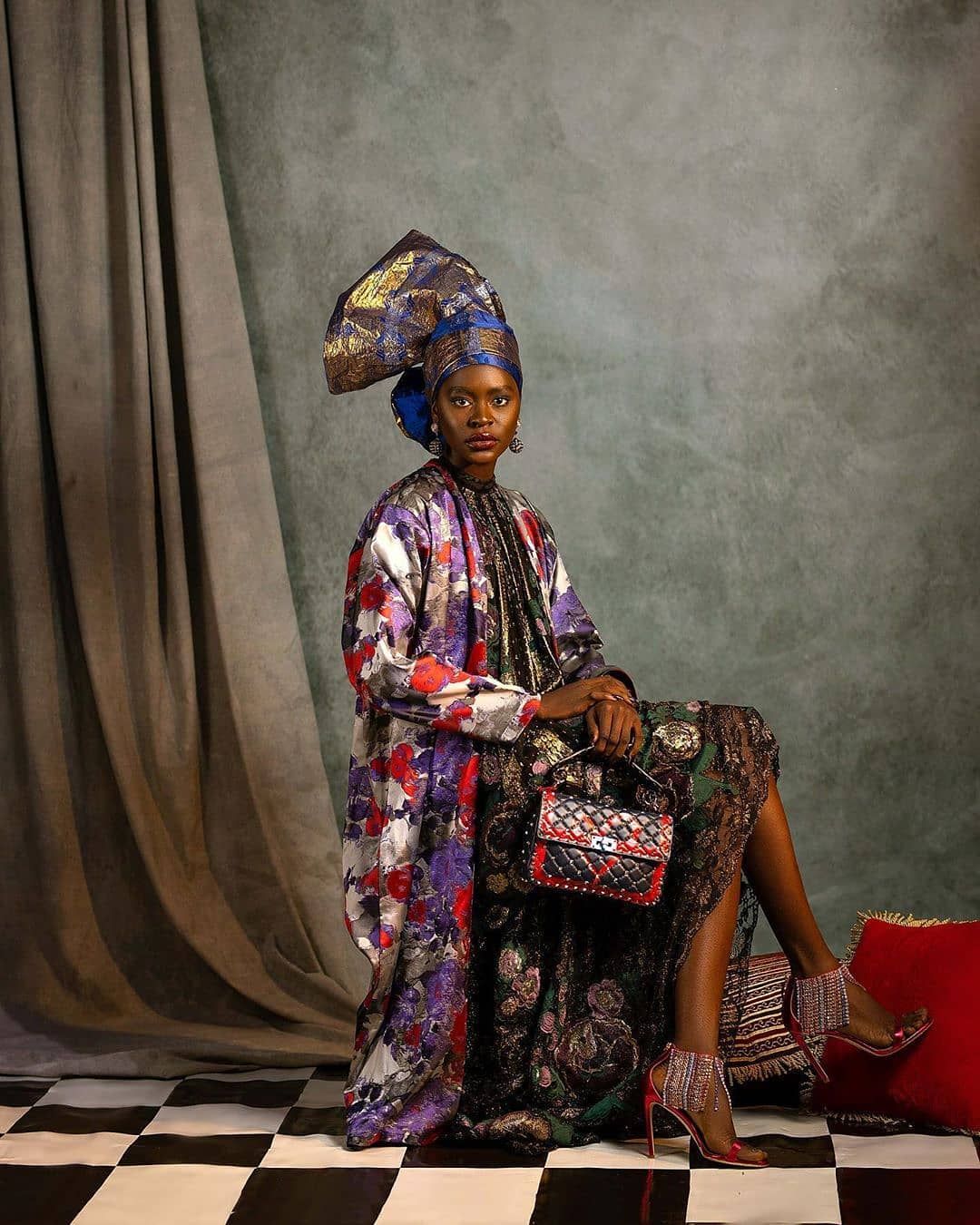
The Index covers materials, the specific fibres, textiles, dyeing traditions, and craft techniques whose knowledge forms the foundation of fashion’s cultural authority. Bogolan from Mali. Kente from Ghana. Aso-oke from south-western Nigeria. Madras as transformed by Creole Caribbean communities into a social communication system. Each material carries a knowledge history that the designer who works with it draws on, and whose documentation in the Index establishes the reference record required for attribution, licensing, and community benefit claims.
The Index covers institutions, including fashion weeks, development bodies, trade organisations, schools, certification bodies, and policy agencies, whose decisions shape the conditions in which fashion practitioners work. The LVMH Prize and what it reflects about the global fashion industry’s discovery apparatus. FashionTT and what its decade of operation has produced for Trinidadian fashion businesses. The Caribbean Development Bank’s CIIF and what its grant-making reveals about the development finance available for Caribbean creative industries. Lagos Fashion Week and the circular fashion infrastructure it built to win the Earthshot Prize. Each institution is part of the system whose map the Index is building.
And the Index covers systems, supply chains, licensing frameworks, intermediary structures, trade policy regimes, and distribution networks, whose operation determines who can participate in the fashion economy and on what terms. The fabric middleman system determines which designers can access which materials at what prices. The cultural licensing framework determines whether the knowledge holders whose contribution made a collection possible receive any share of the commercial value it generates. The retail distribution system that determines whether a Caribbean designer can convert runway visibility into wholesale orders. Systems are the architecture within which every other Index entry operates. The Index must document them.
What Independence Requires
The Omiren Index is independently curated. That independence is not a claim to objectivity in the sense of having no editorial position. Omiren has an editorial position: that the Global South made fashion and never got credit, that the fashion system’s most consequential actors are often its least documented, and that the reference architecture of fashion must be rebuilt to reflect the full range of people, places, materials, institutions and systems that make fashion possible.
In the context of the Index, independence means that inclusion cannot be purchased. A designer, brand, institution or system does not appear in the Index because its owner or representative paid for placement, applied through a submission process that guarantees inclusion, or received favourable editorial treatment in exchange for commercial partnership. Inclusion follows research, verification, source records and editorial judgement. It is possible to apply to the Omiren Creative Directory, a separate platform for practitioner discovery and portfolio review. Directory listing does not determine Index inclusion.
Independence also means that commercial relationships, where they exist, are disclosed and do not affect editorial assessment. An institution that is a commercial partner of Omiren Styles is still assessed in the Index on the same evidentiary basis as an institution with which no commercial relationship exists. The distinction between editorial coverage and commercial relationship is one of the most important structural features of the Index’s credibility.
The independence requirement has a corollary that is worth stating directly: the Omiren Index does not rank. It records and contextualises. A ranking implies a single evaluative axis along which all entries can be compared: the most talented, the most commercially successful, the most internationally recognised. Fashion systems do not operate along a single axis, and a reference architecture that imposes one flattens precisely the diversity of practice, scale, geography and cultural context that makes the Index worth building.
What the Index provides instead is a documented record of what each entry is, what makes it significant, what sources verify that significance and what the entry’s relationship is to other entries in the Index. A Togolese artisan who has maintained a specific dyeing technique for forty years is not comparable to an internationally known luxury brand on any ranking axis that produces meaningful information. Both belong in the Index. Both have a documented record. The relationship between them is part of what the Index maps.
Why the System Over the Designer

The argument for building the Index as a system map rather than a designer catalogue is not only about completeness. It is about what kind of authority the Index can accumulate and what kind of reference it can become.
A designer catalogue accumulates authority as a catalogue. It becomes the definitive list of which designers have been sufficiently interesting to earn a place on it. That kind of authority is real and useful. It is also limited: the catalogue is only as valuable as the editorial credibility of the selection process that populates it, and the selection process is only as credible as the range of knowledge and access that editorial judgement can bring to bear.
A system map accumulates authority as a reference architecture. It becomes the structural record that anyone who wants to understand how the fashion system in a particular geography, category or supply chain segment works can consult. A journalist investigating why a Ghanaian designer’s collection costs more to produce than a comparable Portuguese collection can use the Index to understand the fabric-sourcing intermediary chain, the manufacturing infrastructure gap, the export logistics cost structure, and the trade policy environment that together produce the cost differential. A buyer who wants to understand whether a culturally referenced collection was built with community consent can use the Index to find the cultural knowledge holders, institutional frameworks,s and relevant licensing precedents to assess the brand’s practice.
A system map is harder to build than a catalogue. It requires verification of facts about entities, relationships and systems that are not always legible from the designer’s public profile or the brand’s communications. It requires field reporting, primary sources, institutional relationships and the sustained editorial investment that turns one-off documentation into a maintained reference. It requires the kind of source-backed, methodology-transparent, correction-ready practice that distinguishes editorial reference from promotional content.
Omiren Styles has established, in its analysis of what makes fashion documentation credible and accountable, that specificity is the precondition for accountability. A brand that names a specific community, place and tradition in its collection notes has done the research to identify what it is using. A brand that uses generic category labels has not. The same principle applies to the Index: a record that names the specific people, places, materials, institutions and systems that make a particular fashion practice possible is more useful than one that identifies the practice’s most visible participant and calls that sufficient.
What the Index Should Not Be

Clarity about what the Omiren Index covers requires equal clarity about what it does not cover and what it is not.
The Index is not a promotional platform. An entry in the Index is not an endorsement of commercial quality, an invitation to collaboration or a recommendation to buyers. It is a documented record of significance within the fashion system that Omiren covers. A designer whose practice is documented in the Index because their work is culturally significant and historically documented should not interpret that documentation as a claim that their product quality meets any particular commercial standard.
The Index is not complete. The fashion system that Omiren documents is vast in the territories and categories it covers. The Index is being built entry by entry, through research, field reporting and editorial judgement. Absence from the Index does not imply insignificance. It implies that the research and verification process has not yet reached that entry. The Index is a living document with review dates, update mechanisms and a correction policy.
The Index is not primarily forward-looking. It documents what exists and what has been built, not what is about to emerge. The discovery of emerging talent is a function of Omiren’s editorial coverage and the Creative Directory. The Index documents the system that emerging talent is entering, the infrastructure they are working within or against, and the historical record of the practitioners, brands and institutions whose work has shaped the conditions in which new work is made.
The Index is not built around accessibility to the Omiren editorial team. The practices, places and systems most important to document are often the ones furthest from the pathways that conventional fashion documentation uses to discover and verify subjects. A pagne trader in the Grand Marché de Lomé whose commercial relationships shaped the distribution of West African textile culture for a generation is more difficult to document accurately than a designer with a website, a press officer and a set of high-resolution campaign images. Difficulty with documentation is not a reason for exclusion. It is a reason to invest more in the research.
The Standard
Every entry in the Omiren Index should be able to answer the same set of questions, regardless of whether the entry is a person, a brand, a place, a material, an institution or a system.
What is this, specifically? Not a category label but a precise description of what this entry is, who is involved, where it operates and what it does. What makes it significant within the fashion system Omiren documents? Not a claim of greatness but a specific editorial argument for why this entry belongs in the reference record. What sources verify the documented facts? Not promotional materials alone but primary documents, field reporting, institutional records, community testimony and credible independent journalism. What are this entry’s relationships to other entries in the Index? Not a list of associated tags but a documented record of the commercial, cultural, institutional and supply chain relationships that make the entry part of a system rather than an isolated fact. When was this record last reviewed, and what is the process for correcting it?
Those five questions are the structural requirements of every Index entry. Taken together, they are also the methodology statement for the Index as a whole. The Index is not simply more comprehensive than other fashion reference systems. It is built on a different theory of what a fashion reference system is for.
The Omiren Argument
Fashion documentation has been designer-centric because the fashion industry has been designer-centric. The designer is the creative decision-maker, the brand identity, the face in the campaign and the name on the label. Building a reference system around the designer is a natural response to the industry’s own self-presentation.
It is also a response that leaves most of the fashion system undocumented. The makers are invisible. The supply chain is opaque. The cultural knowledge holders are uncredited. The institutions that shape the conditions of production are absent from the record. The systems that determine who can access what, and on what terms, are treated as background rather than as the subject.
The Omiren Index is built on the conviction that the full fashion system is documentable, and that documenting it is a more useful contribution to understanding fashion in Africa, the Caribbean, Latin America, and the Latinx diaspora than producing a more comprehensive version of what already exists. The designer who appears in the Index appears within a documented system: the supply chain they depend on, the institutions they navigate, the cultural knowledge they draw on and the infrastructure conditions they work within. That context is not background. It is the substance of the record.
As Omiren Styles has argued throughout this series, the Global South made fashion and never got credit. The Index is the reference architecture through which that credit becomes documentable, verifiable and persistent. Not as a promotional claim but as a factual record: the specific people whose knowledge made the work possible, the specific places where it was made, the specific materials whose cultural history it draws on, the specific institutions that shaped the conditions of its production, and the specific systems whose operation determined who benefited from the commercial value it created. The map is the credit. Building it is the obligation.
ALSO READ
- Fashion’s Value Chain Is Cultural Before It Is Commercial
- The Fabric Middleman Is Part of the Fashion System
- The People Behind Carnival: The Hidden Fashion Supply Chain of Mas
- Can Africa’s Repair Economies Become Formal Fashion Infrastructure?
- The Global South Made Fashion. It Just Never Got Credit.
Frequently Asked Questions
What is the Omiren Style Index?
The Omiren Style Index is an independently curated editorial reference to people, brands, places, materials, institutions and systems in the fashion world as Omiren Styles covers it: primarily Africa, the Caribbean, Latin America and the Latinx diaspora. It is selectively built through research, primary documentation, field reporting and editorial judgement rather than through an open application process. Inclusion follows independently verified significance within the fashion system rather than commercial payment, self-submission or social following. The Index does not rank. It documents and contextualises, building a reference record whose entries are connected by their relationships to one another and to the systems they operate within.
How does the Omiren Index differ from the Omiren Creative Directory?
The Omiren Creative Directory is an inclusive, application-led talent-discovery platform covering students, emerging talent, freelancers, practitioners and creative professionals. Inclusion in the Directory follows application, portfolio review and consent. Directory listing does not guarantee editorial coverage, Index inclusion, commercial introductions or paid work. The Omiren Index is separate and selective: inclusion follows research, verification and editorial judgement rather than application. The Directory is where practitioners make themselves visible to the Omiren community. The Index is where the fashion system that those practitioners operate within is documented. A practitioner who appears in the Index may or may not appear in the Directory, and vice versa.
What categories does the Omiren Index cover?
The Index covers six categories: People, including designers, makers, tailors, artisans, weavers, cultural knowledge holders and other practitioners whose work is part of the fashion system Omiren documents. Brands, including labels at the local, regional, and international scales, whose commercial practices, production models, or cultural significance are part of the record. Places, including the cities, markets, districts and specific locations whose material and cultural infrastructure makes fashion possible in the territories Omiren covers. Materials, including specific fibres, textiles, dyeing traditions and craft techniques whose knowledge history is part of the fashion record. Institutions, including fashion weeks, development bodies, trade organisations, schools, certification bodies and policy agencies whose decisions shape the conditions of the fashion system. Systems, including supply chains, licensing frameworks, intermediary structures, trade policy regimes, and distribution networks, whose operations determine who can participate in the fashion economy and on what terms.
Why does the Index cover systems and supply chains rather than only designers and brands?
As Omiren Styles has established in its analysis of fashion’s full value chain, every commercial fashion transaction is downstream of a cultural decision, and the most consequential actors in the fashion system are often its least documented. The fabric converter whose minimum order conditions determine which designers can afford which materials, the maker whose skilled labour constructs the collection that a designer’s name appears on, the cultural knowledge holder whose aesthetic authority made the collection legible and desirable: each is part of the fashion system whose record the Index is building. A reference architecture that documents only the designer covers the most visible node in a system whose structural actors remain invisible. The Index covers the whole system because it determines who makes fashion, under what conditions, and on whose terms.
How does the Index handle corrections and updates?
Every Index entry includes a documented source record and a review date. The Index has an explicit corrections policy: errors are corrected transparently, with the original record and the correction both visible in the entry. Where facts change over time, including changes in who holds a role, the status of an institution or the availability of a material, the entry is updated with the current information and the date of the update. Subjects who believe an entry about them is inaccurate can contact Omiren Styles through the editorial channel, and corrections are investigated and resolved independently of any commercial relationship between the subject and Omiren. The Index is a living document rather than a static archive, and its credibility depends on the accuracy and currency of its records.
EXPLORE MORE
Read the full Opinion and The Omiren Argument sections at Omiren Styles for the editorial argument behind the Omiren Index, the fashion system documentation project, and the reference architecture that would make the Global South’s contribution to fashion visible, credited, and commercially protected. Explore the fashion, heritage and creative intelligence of Africa, the Caribbean and Latin America at Rex Clarke Adventures.