In most discussions of dress in Muslim-majority societies, the conversation quickly narrows to modesty: what women cover, how much, and why. The Comoros refuses this narrowing. Here, in an archipelago where Islam has been practised for over a thousand years, women inherit the family home, own the land jointly through their matrilineal line, and carry the heaviest ceremonial dress obligations in the entire social system. The African fashion market is worth 31 billion dollars. The question Comorian women’s dress culture poses to that market is not about coverage. It is about authority.
Comoros is one of the most unusual social formations in the global Islamic world. As Oxford University Press’s Research Encyclopedia of African History documents, the inhabitants of the Comoros archipelago are Muslim and at the same time follow a matrilocal residence rule and, in two of the four islands, a matrilineal descent rule. Authored by Sophie Blanchy, the leading ethnologist of Comorian society at the Centre National de la Recherche Scientifique, France, this documentation establishes that this combination has direct consequences for women’s place in society. The dress culture that emerges from it is weighted toward women in a way that is structural, not incidental.
In Comoros, women inherit the home and the land. That social authority shapes one of Africa’s most elaborate dress cultures. This is what the garments carry.
Comorian Women Dress Culture and the Social Structure Behind It
The social architecture that underpins Comorian women’s dress begins with inheritance. As Every Culture’s documentation of Comorian family structure confirms, when a woman marries, she is given a house and arable land. On Ngazidja (Grande Comore), land owned jointly through the matrilineal line may be sold only to avoid dishonour, so deep is its connection to family identity. Children belong to the mother’s lineage, called the belly or house, which carries its own name across generations. Residency is matrilocal: the husband moves into the wife’s community, not the other way around.
Sophie Blanchy’s landmark study published in the Cambridge University Press journal Africa establishes that matriliny is found in only 15% of societies globally, and is associated with matrilocal residence in only 7% of those. A matrilineal, matrilocal Muslim society is genuinely rare anywhere in the world, and almost singular in the Indian Ocean region. The Comoros is not simply an exception to the usual patterns of Islamic social organisation. It is a distinct civilisational architecture, one that Islamic practice and matrilineal inheritance have built together over centuries.
Aesthetically, this means that the social weight placed on women’s appearance is not decorative or patriarchal in the conventional sense. Comorian women are the centres of their households and lineages. The house is theirs. The land is theirs. The children carry their family name. The ceremonial dress worn at the Grand Marriage is not performed for the groom. It is performed for the community, as a declaration of the standing of the family she carries forward into the next generation.
The marital residence itself marks this from the beginning. As ethnologist Sophie Blanchy observed, documented by photographer Nadia Ferroukhi: these rising walls are like little girls growing up. The construction of a woman’s house begins at her birth. The dress that will be worn at the Grand Marriage is the culmination of a process that started before she could speak.
Sophie Blanchy, the leading ethnologist of Comorian society, observed that the construction of a marital residence begins at the birth of a little girl. These rising walls are like little girls growing up. In Comoros, the house a woman will own is built before she can speak.
The Garments and What Each One Is Carrying
The vocabulary of Comorian women’s dress is specific, varied, and calibrated to context. No single garment covers all occasions. Each piece has its register, its moment, and its social meaning. Understanding the system requires understanding that the garments are not interchangeable. They are a grammar.
The everyday foundation is the chiromani, the national fabric worn by women of all ages across all situations, from the market to the mosque to the ordinary morning. The chiromani is not the prestige garment. It is the baseline: the language of ordinary life, which is to say the language of everything. The prestige garments come in layers above it, reserved for the occasions that require them.
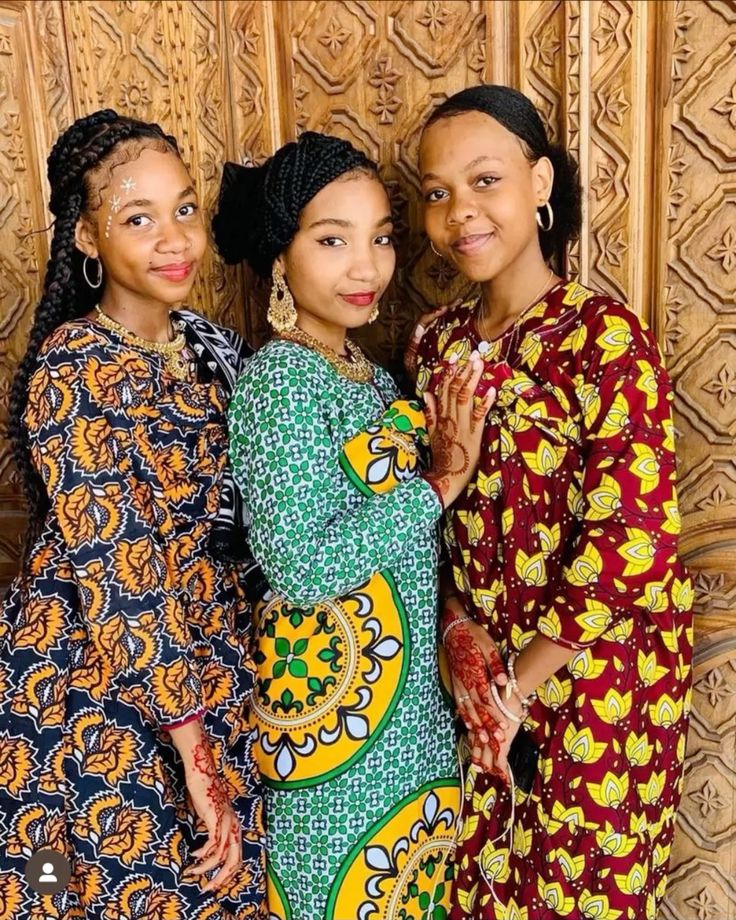
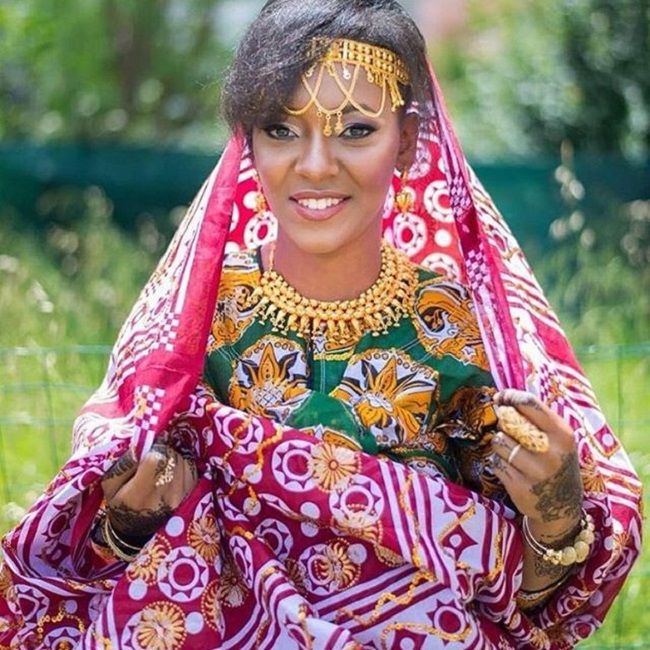
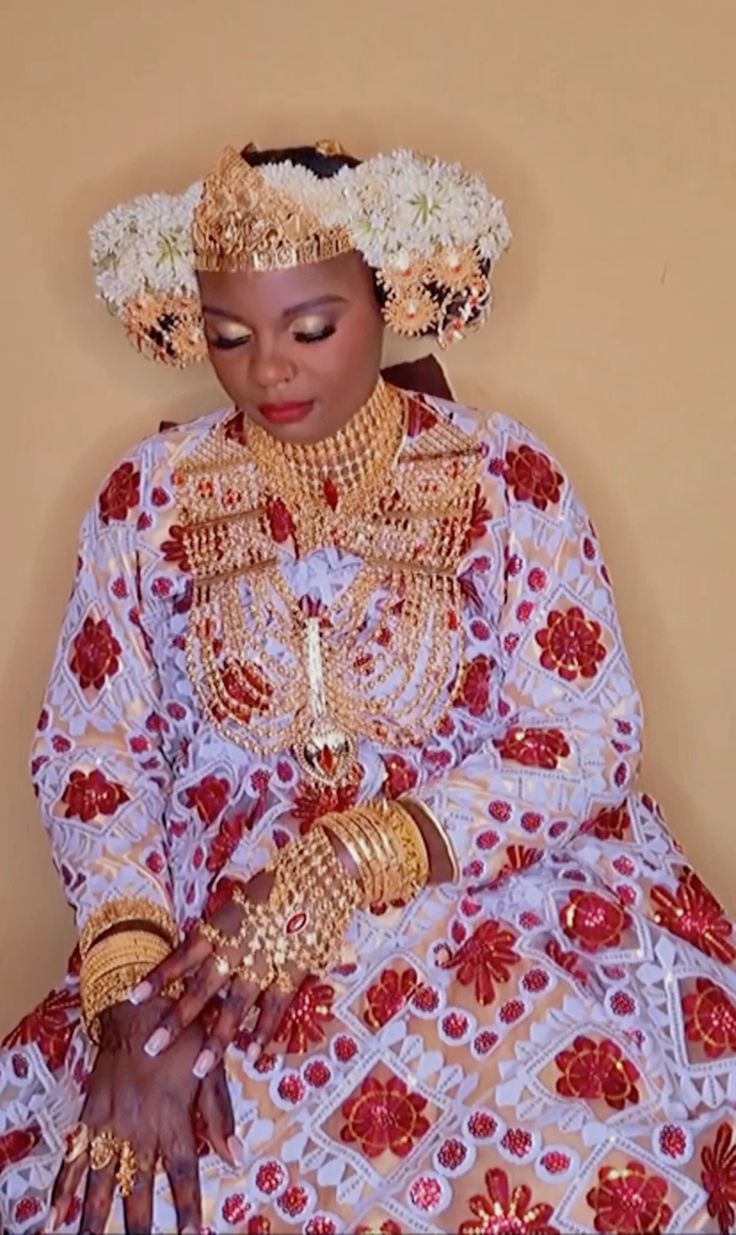
For daily modesty and warmth, women wear the leso, a rectangular cloth used as a headscarf or shawl, shared across the Swahili coast. The salouva is a large cloth tied at the chest, specific to Anjouan and Mohéli and not worn on Grande Comore: its presence immediately places the wearer geographically as well as culturally. For formal occasions, the muwali steps in. This is the garment that most clearly encodes the status logic of Comorian women’s dress. The muwali comprises a wrap and an elaborate headpiece, worn in bold colours and floral patterns, accessorised with gold jewellery and henna designs. A woman wearing a muwali is announcing an occasion. The community reads it as such.
The bwibwi, the covering garment associated with Islamic modesty practice in Comoros, occupies its own position in the system. On Ngazidja, it carries an additional social restriction: only women who have completed the Grand Marriage may wear it. This is the same logic as the dragila for men, where a garment is not available until the holder has earned the right to wear it. In Comoros, the covering garment is a mark of arrival, not of subordination.
The m’sindzano headwrap carries its own specific social text. Crafted from vibrant fabric in intricately woven patterns, it communicates the wearer’s ethnic group, social status, and marital status. Where the chiromani announces everyday presence, the m’sindzano announces social position. The two garments work in the same system, at different registers, as part of the same coherent language.
Henna, Gold, and the Months Before
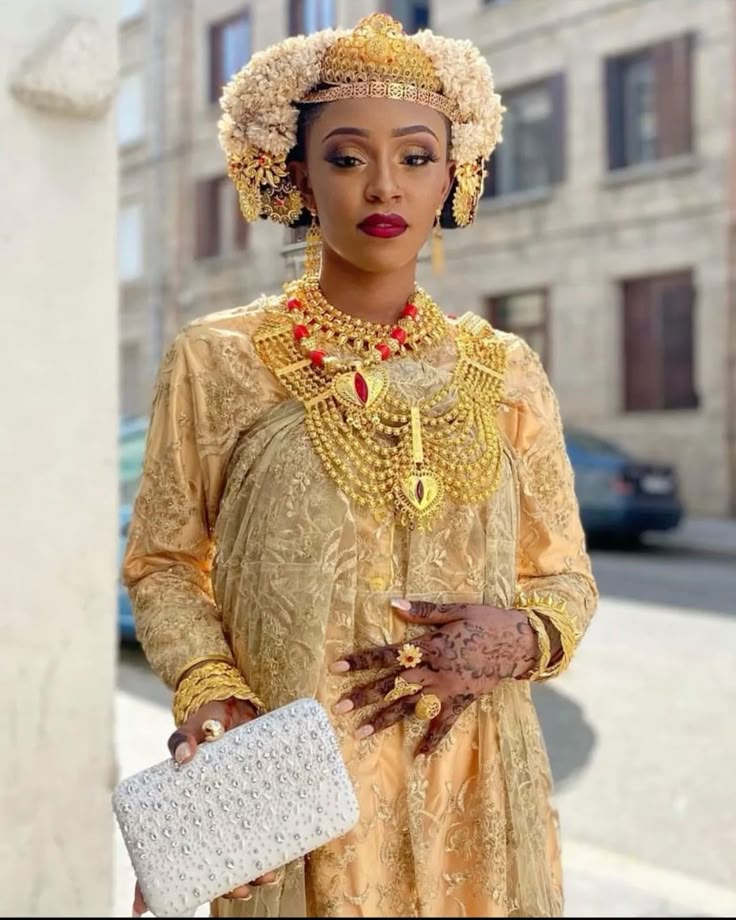
The ceremonial dress of Comorian women extends beyond garments into beauty practice, and it does so over time. The preparation for the Grand Marriage is not an event but a process. Some women begin preparing their skin and hair six months before the ceremony. The difference in preparation length is not simply financial. It reflects the seriousness with which the occasion is treated and the depth of the beauty practice that the tradition demands.
Henna is central to this preparation. Comorian bridal henna designs are elaborate, time-consuming, and deeply traditional, applied to the hands and feet in patterns that carry aesthetic history alongside personal meaning. Gold jewellery completes the picture. Passed down through generations or purchased specifically for the occasion, it is worn not as an accessory but as declaration. Gold in Comorian ceremonial dress is a visible record of what the family has accumulated. In many Islamic societies with matrilineal or matrifocal traditions, the power in dress lies not in concealment but in intentional visibility. Comorian ceremonial dress is the fullest expression of that principle: the more significant the occasion, the more elaborate the visible statement.
On Anjouan, the beauty culture is particularly developed. The island’s women draw on botanical resources including ylang-ylang, jasmine, vanilla, and clove. The m’sindanu, a white paste of ground sandalwood applied to the face, is a daily practice as well as a ceremonial one. It protects the skin from the sun while marking the wearer as a woman who tends to herself, maintaining an ongoing relationship with the islands’ natural resources rather than performing beauty only at events.
The Ukumbi: Dress for Women, Judged by Women
One of the most significant features of Comorian dress culture is a ceremony that exists entirely outside the male gaze: the Ukumbi. This is a women-only reception that marks the end of the Grand Marriage celebrations, held at the Foyer des Femmes, a venue dedicated specifically to women’s gatherings. At the Ukumbi, women who have recently completed the Grand Marriage are formally introduced to the congregation of women. The dress at the Ukumbi is among the most elaborate of the entire multi-week celebration. When women dress for an audience of women who fully understand the dress code, the aesthetic stakes are the highest they ever reach. There is no audience more demanding than one that knows exactly what it is looking at.
At the Ukumbi, women present themselves to other women in a social context organised by and for women, in a matrilineal society where women are the primary holders of land and lineage. The dress, jewellery, henna, and styling visible there are for an audience of women who understand exactly what they are reading and why it matters. The fashion conversation rarely reaches this far, focusing instead on the visible and the public. The Ukumbi is interior, communal, and women-controlled. The aesthetic it produces is one of the most elaborate in the entire Comorian dress calendar.
What Comorian Women’s Dress Tells the Fashion Conversation
The Comoros sits at an intersection that African fashion has not yet fully explored: Islamic practice and matrilineal authority, combined in a dress culture of real sophistication and social depth. The standard accounts of Islamic fashion in Africa tend to centre patriarchal social structures, dress as restriction, modesty as externally imposed boundary. Comoros complicates all of this.
Here, Islamic practice and matrilineal authority coexist, negotiate, and produce a dress culture that cannot be understood through either framework alone. The women who wear the muwali at the Grand Marriage are Muslim and matrilineal. The ceremony that unlocks the dragila for men also marks the woman’s social elevation in a society where the house and land are hers. The bwibwi, restricted to women who have completed the Grand Marriage, is a garment of arrival. The Ukumbi is a space of women’s authority inside an Islamic cultural framework, entirely on its own terms. The Grand Marriage is as much about the woman’s elevation as the man’s. The dress that marks that elevation is hers to build, over months, through beauty practice, through inherited gold, through the fabric that has been prepared since she was born.
This is not a contradiction between Islam and matriliny. It is an architecture that Comorian society has built and maintained over centuries, and that its dress culture makes visible every day, on every island, in every occasion from the ordinary morning at the market to the month-long ceremony that marks the passage of a lifetime. The woman who owns the house also owns the aesthetic logic of what is worn inside it. Fashion would do well to take that seriously.
The Omiren Argument
Comorian women’s dress culture is powerful because it emerges from matrilineal authority, not from passivity or restriction. The garments, beauty practices, and ceremonial codes worn by women in Comoros reflect a society where women inherit property, anchor the household, and shape how social status is displayed. The chiromani is the everyday baseline. The muwali is the ceremonial declaration. The bwibwi is earned, not imposed. The Ukumbi is a women’s aesthetic institution with no male audience and the highest dress standards in the entire Grand Marriage calendar. The m’sindzano headwrap communicates ethnic group, social status, and marital status simultaneously, readable to everyone who knows the code. In a dress system this precisely built, the African fashion market’s 31 billion dollars has a component it has not yet documented: the aesthetic authority of a matrilineal Muslim society in the Indian Ocean that has been dressing on its own terms for over a thousand years. Omiren Styles is documenting it now.
ALSO READ:
- Comorian Traditional Dress: The Clothes You Earn
- Chiromani Fabric Comoros: How the Islands Encoded Their Identity in Cotton
- Modesty as Power: Why Afro-Arab Women Embrace Loose Clothing
- The Reed Dance and What Eswatini’s Umhlanga Ceremony Tells the Fashion World About Collective Dress
Frequently Asked Questions
What is Comorian women’s dress culture?
Comorian women’s dress culture is the dress system practised by women across the Comoros archipelago, comprising the chiromani (everyday fabric), salouva (Anjouan and Mohéli regional wrap), leso (headscarf), muwali (formal ceremonial wrap with headpiece, gold jewellery, and henna), bwibwi (covering garment restricted to women who have completed the Grand Marriage), and m’sindzano (headwrap communicating ethnic group, social status, and marital status). It is grounded in the matrilineal social structure of the islands, in which women inherit the family home and land and carry the primary ceremonial obligations of the society.
Why is Comoros different from other Muslim-majority societies in its dress culture?
Comoros is a matrilineal, matrilocal Muslim society, a combination documented by Oxford University Press as genuinely rare globally and almost singular in the Indian Ocean region. When a Comorian woman marries, she receives a house and arable land. Her husband moves into her community. The children carry her family name. The dress culture reflects this: women’s ceremonial attire is more elaborate and symbolically weighted than men’s, and specific garments such as the bwibwi are restricted to women who have achieved the highest social rite of passage.
What is the muwali dress?
The muwali is a formal Comorian women’s ceremonial garment comprising a wrap and elaborate headpiece, worn in bold colours and floral patterns and accessorised with gold jewellery and henna. It is the highest-register everyday garment in the Comorian women’s dress vocabulary, worn to announce ceremony, occasion, and social status to a community that reads the dress system with precision.
What is the salouva?
The salouva is a traditional Comorian women’s garment specific to the islands of Anjouan and Mohéli: a large cloth tied at the chest, functioning as both a practical wrap and a regional identity marker. It is not worn on Grande Comore. Its presence immediately places the wearer geographically as well as socially, making it one of the most specific geographic dress markers in the Comorian system.
What is the Ukumbi and why does it matter for understanding Comorian dress?
The Ukumbi is a women-only reception that marks the end of the Grand Marriage celebration and is held at the Foyer des Femmes. Women who have recently completed the Grand Marriage are formally introduced to the congregation of women. The dress at the Ukumbi is among the most elaborate of the entire ceremony. Because the audience is entirely women who understand the dress code in full, the Ukumbi represents the highest-stakes aesthetic occasion in the Comorian ceremonial calendar. No male gaze is involved. The dress is made for women, judged by women, within a system built by women.
What role does inheritance play in Comorian women’s dress authority?
Inheritance is the structural foundation of Comorian women’s dress authority. Every woman is given a house and arable land at marriage. On Ngazidja, land owned jointly through the matrilineal line may only be sold to avoid dishonour, so deep is its connection to family identity. The children carry the mother’s lineage name. This social weight, women as the anchors of household, land, and descent, gives their ceremonial dress a meaning that is architectural rather than decorative. The woman dressing for the Grand Marriage is not dressing for the groom. She is declaring the standing of the lineage she carries.
Explore More
Read the full Culture > Heritage & Identity series for Omiren Styles’ documentation of the dress traditions, social systems, and ceremonial practices through which African communities communicate authority, belonging, and what has been earned.