There is a fabric worn daily by women across the Comoros, at the market, the mosque, weddings, funerals, ordinary mornings, that encodes the identity of an entire archipelago in cotton. It is called the chiromani. The African fashion market is worth 31 billion dollars. The chiromani fabric of Comoros is one of its most specific and least documented contributions: a two-tone cotton textile whose six repeating tiles carry the botanical symbols of an island economy that supplies approximately 60% of the world’s ylang-ylang essential oil, the flower whose scent anchors Chanel No. 5, Dior’s J’adore, and Guerlain’s Samsara. To understand the chiromani properly, you have to begin not with cloth but with flowers.
Comoros is known as the Perfumed Islands. This is not a tourist designation. It is a statement of economic and botanical fact. The island of Anjouan alone is home to 350 perfume distilleries. The flowers are harvested before dawn by hand, forty kilograms of flowers to produce one litre of essential oil. The resulting oil goes almost entirely to France, Germany, Italy, and the United States, where it is transformed into perfume that retails for hundreds of dollars and carries no trace of Anjouan on the label. The chiromani names what the bottle does not.
The chiromani is Comoros’ everyday fabric. Its six tiles carry ylang-ylang, clove, and jasmine, the same flowers that supply Chanel No. 5 and Dior. The cloth names what the bottle doesn’t.
What the Chiromani Fabric Is
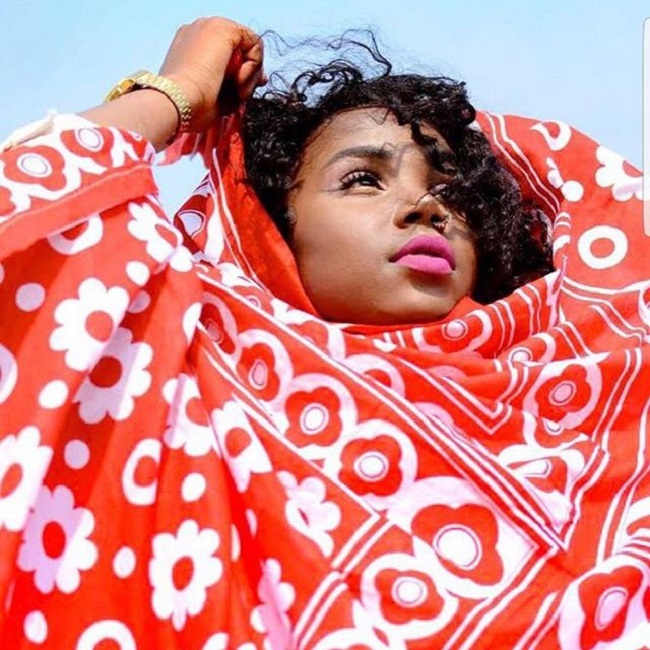
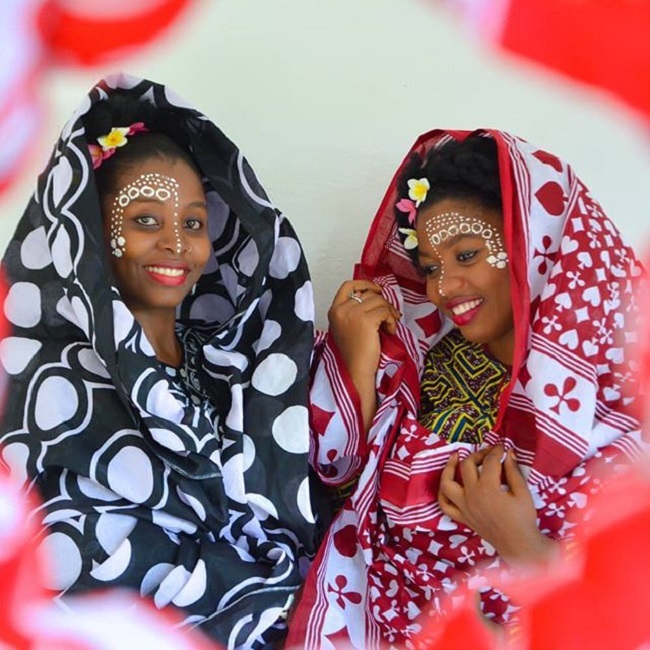
The chiromani is a two-tone cotton fabric made from six repeating tiles. Historically bicoloured in red and white, it is now produced across a full spectrum of colours, with bright red, black, and burgundy remaining the most traditional palette. As D&D Clothing’s documentation of Comorian dress culture confirms, the tiles carry botanical symbols including clove, jasmine, and ylang-ylang, alongside motifs borrowed from the card game: clover, spade, heart, tile. That combination is the chiromani’s defining quality: it is rooted in local ecology while absorbing external design references, a fabric that records what the islands grow, what they trade, and what they hold as beautiful.
The word chiromani translates simply as clothing in Comorian. That plainness is intentional. The chiromani is not occasion wear. It is everyday dress. Women wear it wrapped as a skirt, draped as a veil, or used to envelop the entire body. It appears at the mosque and at the market, at celebrations and at funerals. In a dress culture that assigns specific garments to specific social achievements, the chiromani is the one constant, the fabric of ordinary life, which is to say the fabric of everything.
On Anjouan, a new chiromani pattern is released almost every week. This is not diluted mass production. It is active design culture: a living tradition that produces new variations on a fixed structure, the way a musician improvises on a standard. The underlying grammar stays; the expression shifts. The chiromani is simultaneously ancient and contemporary, stable and restless, traditional and in constant motion.
The Botanical Logic: What the Tiles Are Encoding
The islands’ relationship to scent is not incidental to their dress culture. It is foundational to it. As The National’s AFP-sourced reporting on Comorian ylang-ylang production confirms, Comoros produces between 30 and 40 tonnes of ylang-ylang essential oil each year, mainly from Anjouan, which is home to 350 distilleries. The flower, Cananga odorata, provides the distinctive scent in Chanel No. 5, one of the world’s best-selling fragrances, and is at the heart of Dior’s J’adore, Guerlain’s Samsara, and Givenchy’s Organza.
The harvest is carried out predominantly by women, who pick the delicate yellow blossoms before sunrise when volatile concentration peaks. The distillation is carried out predominantly by men. The resulting oil goes to France and other markets where it enters the formulation of luxury fragrance products. Over 70% of Comorian ylang-ylang oil is exported to France, Germany, Italy, and the United States. The country receives a fraction of the downstream value.
Comoros produces approximately 60% of the world’s ylang-ylang essential oil. The scent travels to France inside luxury bottles that carry no Comorian name. The chiromani keeps the flower on the body of the woman who grows it.
This is one of the more significant disconnects in the global luxury industry. Comoros provides the raw material for some of the world’s most recognisable fragrances and receives limited visibility in return. The archipelago is the scent behind the scent: present but unnamed. The chiromani makes the attribution the luxury market refuses to make. When a Comorian woman wraps herself in a fabric whose tiles carry the symbol of ylang-ylang, she is wearing the archipelago’s most significant export on her body. The cloth keeps the flower where the bottle erases it.
A Living Design Practice, Not a Heritage Object
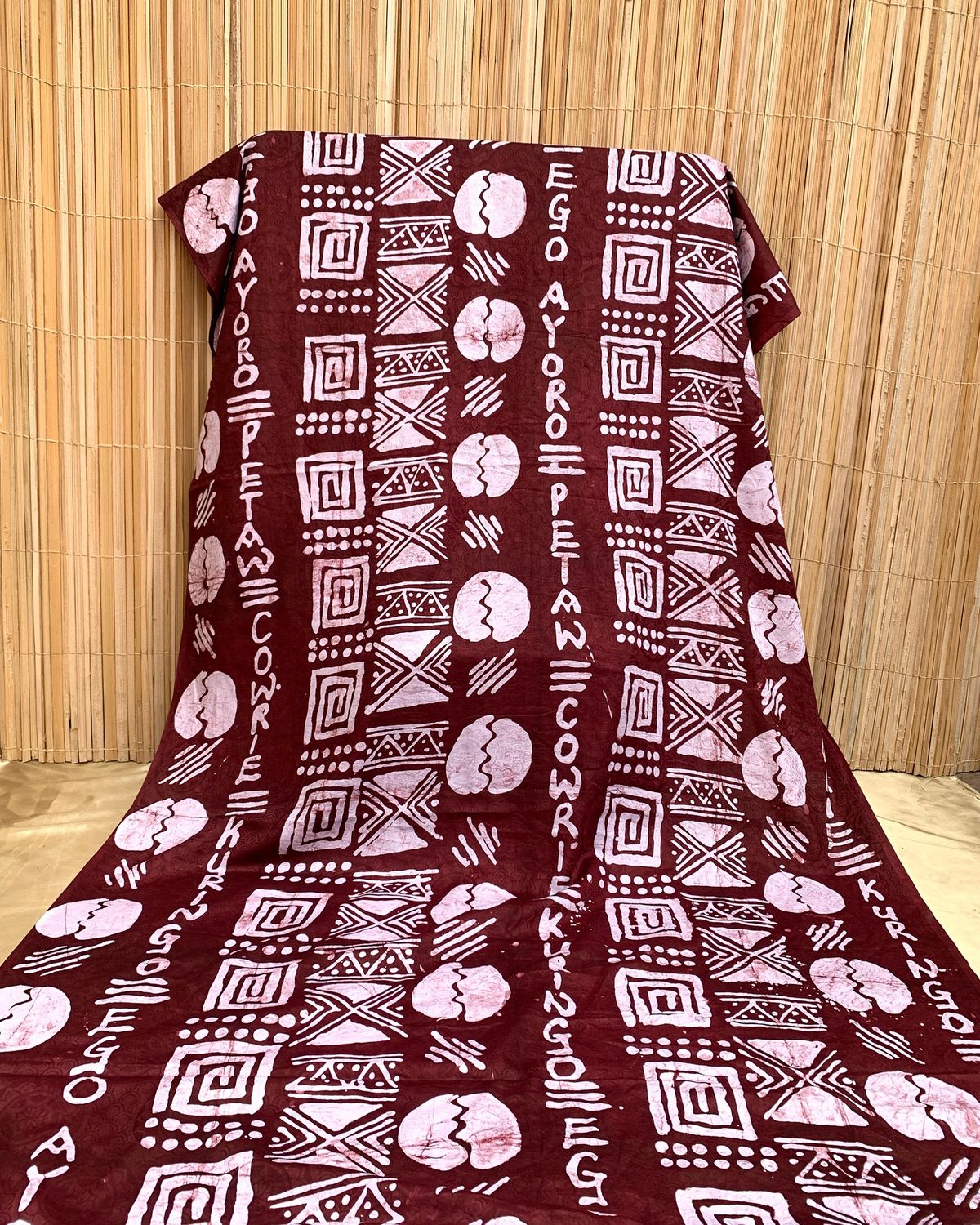
What makes the chiromani exceptional within African textile culture is its combination of structural stability and living innovation. Unlike textiles treated as museum objects, the chiromani is an active design field. Tailors and designers across the Comoros, particularly on Anjouan, continuously develop new colourways and contemporary applications while working within the fabric’s essential grammar.
Contemporary Comorian designers have taken this further. The chiromani, traditionally worn by women as a wrap, is now being cut and constructed into dresses, skirts, blouses, and shirts for men. That design energy has not yet achieved significant international visibility, and that invisibility is worth naming. The chiromani circulates within Comorian communities globally, worn by diaspora in France, Reunion, and Mayotte, but has not entered the broader African fashion conversation the way kente, ankara, or kanga have. The pattern is consistent across African textile economies: African materials supply global industries, the brand value accumulates elsewhere, and the producing community remains unnamed. The chiromani’s active design culture is one of the few mechanisms resisting that extraction.
The Full Dress System: What the Chiromani Sits Within
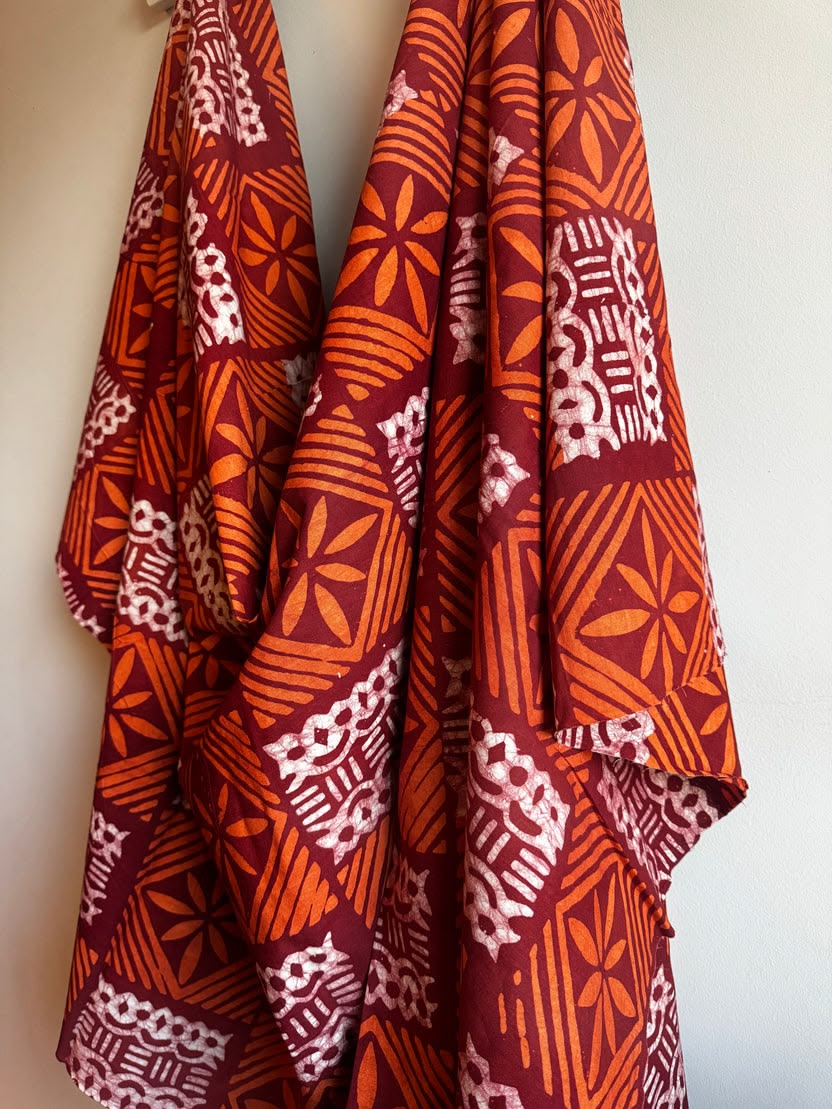
The chiromani is the most visible element of a Comorian dress system in which every garment is socially legible. The m’sindzano, the traditional headwrap worn by Comorian women, is skillfully crafted from vibrant fabrics in intricately woven patterns. It is not merely decorative. It signifies the wearer’s ethnic group, social status, and marital status. It is readable to anyone who knows how to read it. The chiromani announces everyday presence. The m’sindzano announces social position.
The leso, a rectangular cloth used as a headscarf or shawl, connects Comorian dress to a wider East African coastal textile tradition in which garments carry written or visual messages. Different garments and accessories communicate different things to different audiences. The chiromani is the most commonly spoken word in that language. The Grand Marriage, the rite of passage that governs what garments a Comorian man or woman is permitted to wear, is the system the chiromani sits inside. The chiromani moves freely through all occasions. Other garments are earned.
Beauty as Part of the Same System
The botanical logic of the chiromani is reinforced by Comorian beauty practice in a different register. Women across the archipelago apply m’sindanu, a fine white paste made from ground sandalwood, to their faces. It protects the skin from the sun while functioning as a distinct cosmetic language. The materials of the Comoros- ylang-ylang, clove, jasmine, vanilla, sandalwood- are the same materials that have anchored global trade routes, religious ceremonies, and luxury industries for centuries. In Comoros, these materials are not only exported. They are worn on the body and embedded in the fabric.
Anjouan women are noted across the archipelago for the sophistication of their beauty practices, drawing on botanical resources that include ylang-ylang, vanilla, cloves, jasmine, and orange blossom. What emerges is a culture in which scent, beauty, and textiles are not separate categories. They are part of the same system, a total aesthetic organised around the islands’ botanical identity. The chiromani carries the botanical symbols in its tiles. The m’sindanu applies the islands’ natural resources to the skin. The ylang-ylang fields supply the world’s perfume industry with a scent the industry then sells back to the world without Comoros’ name attached.
The Omiren Argument
The chiromani is Comoros’ most important everyday textile because it turns local ecology into dress and keeps that attribution on the body rather than erasing it in the global supply chain. The African fashion market is worth 31 billion dollars. Comoros produces approximately 60% of the world’s ylang-ylang supply, the flower inside Chanel No. 5, Dior’s J’adore, and Guerlain’s Samsara. Over 70% of that oil travels to France and other Western markets. The Comorian women who harvest it before sunrise receive a fraction of the downstream value. The chiromani refuses that arrangement. When its six tiles carry the symbol of ylang-ylang, they are making the attribution that the luxury perfume industry withholds. A living textile culture, producing new patterns weekly on Anjouan, maintaining botanical symbolism across generations, insisting on visibility through dress: this is not a heritage object. It is an argument made in cotton, worn daily, and still being written.
Also Read:
- Comorian Traditional Dress: The Clothes You Earn
- When Dressing Becomes Declaration: Clothing as Cultural Identity
- The Cultural Geography of Smell Through Fragrance
- Moringa, Marula, and Mongongo: The African Oils That No One Told You Were the Best in the World
Frequently Asked Questions
What is chiromani fabric in Comoros?
Chiromani is a traditional Comorian two-tone cotton fabric made from six repeating tiles. Originally bicoloured in red and white, it is now produced in a full range of colours including bright red, black, and burgundy. Its tiles carry botanical symbols including ylang-ylang, clove, and jasmine, alongside card motifs such as clover, spade, heart, and tile. The word chiromani means clothing in Comorian. It is everyday dress worn by women across the archipelago at markets, mosques, weddings, funerals, and ordinary daily life.
What do chiromani patterns mean?
The chiromani’s tiles carry botanical symbols tied to the Comoros islands’ ecology and economy: ylang-ylang, jasmine, and clove are the same plants that define the archipelago’s agricultural identity and its supply to the global perfume industry. The fabric also incorporates card-game motifs, clover, spade, heart, tile, reflecting design exchange with external cultures. Together the patterns record what the islands grow, trade, and hold as beautiful.
Is chiromani only worn for ceremonies?
No. The chiromani is everyday dress, worn daily to the market, mosque, bakery, and post office, as well as at weddings, funerals, and formal occasions. On Anjouan, new chiromani patterns are released almost weekly, confirming that it is a living contemporary design practice rather than reserved occasion wear.
How does the chiromani connect to Comoros’ perfume industry?
Comoros produces approximately 60% of the world’s ylang-ylang essential oil, the flower whose scent anchors Chanel No. 5, Dior’s J’adore, and Guerlain’s Samsara. The chiromani’s tiles carry ylang-ylang symbolism, effectively keeping the islands’ most significant export visible on the body of the women who grow and harvest it. The luxury perfume industry extracts and markets the scent without attributing its Comorian origin. The chiromani makes that attribution in its own medium.
What is the m’sindzano headwrap?
The m’sindzano is a traditional Comorian headwrap crafted from vibrant fabric in intricately woven patterns. It is part of the same dress system as the chiromani and functions as a social marker: it communicates the wearer’s ethnic group, social status, and marital status to anyone who knows how to read it. Where the chiromani announces everyday presence, the m’sindzano announces social position.
What is m’sindanu?
M’sindanu is a fine white sandalwood paste applied by Comorian women to the face. It protects the skin from sun exposure while functioning as a distinct cosmetic tradition. It is part of a broader botanical beauty practice that uses the same plants, ylang-ylang, clove, jasmine, and sandalwood, that define both the dress and the export economy of the Comoros.
Explore More
Read the full Culture > Heritage & Identity series for Omiren Styles‘ documentation of African textile traditions, botanical identities, and the dress systems through which island and continental communities name themselves in cloth.