The pattern is consistent enough to be named. A global beauty brand launches a new hero product. The ingredient is ancient, plant-derived, and sourced from somewhere on the African continent. The press release describes it as a “breakthrough discovery.” The African communities who have used that ingredient for generations, in kitchens, in beauty rituals, in healing practices passed from grandmother to daughter, receive no credit, no royalty, and no acknowledgement in the campaign. This is not an occasional oversight. It is the operating logic by which the global beauty industry has always engaged with African botanical knowledge: extract the ingredient, erase the origin, and market the result at a significant premium.
These are not discoveries. They are inheritances. The difference matters because inheritances come with obligations that discoveries do not. The six ingredients below have extensive documented histories of use across the continent. What is new, each time a major brand rediscovers one, is the price point and the press release. The sourcing notes at the end of each section point toward brands, most of them African-founded, that engage with these botanicals without that erasure. As Omiren Styles has documented in its analysis of shea butter’s supply chain, the economics of African botanical extraction follow the same logic regardless of the ingredient. The cultural and economic argument is the same for all six.
Shea butter, baobab, marula, African black soap, moringa, rooibos: six African botanicals with centuries of documented use that the global beauty industry keeps framing as discoveries. Here is the actual origin of each.
Shea Butter — West and Central Africa
The Ingredient
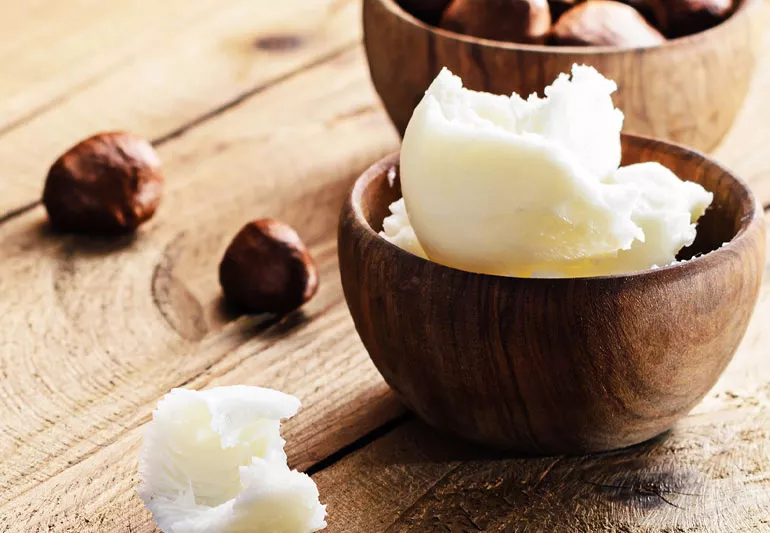
Shea butter is extracted from the nut of the Vitellaria paradoxa tree, which grows across a sub-Saharan belt from Senegal to Ethiopia. As Omiren Styles has documented in its full supply chain investigation, women in Ghana, Mali, Burkina Faso, and Nigeria have processed shea manually for centuries: cracking, boiling, churning, and drying,g using methods passed down through generations of female knowledge holders. Its uses span moisturiser, cooking fat, hair treatment, wound salve, and sunscreen.
How the global industry rebrands it
The global shea market is worth billions of dollars annually. Brands use shea in everything from luxury face creams to mass-market lip balms. The women who harvest and process raw shea in West African cooperatives receive only a fraction of the value of their labour. Brands that use shea as a hero ingredient without acknowledging its West African origin and supply chain are not engaging with a neutral commodity. They are participating in a specific economic arrangement whose terms have never been renegotiated.
Where to source — Shea butter: Alaffia (Togolese-founded, Fair Trade shea cooperative); SheaMoisture (founded in Sierra Leone, built on shea cooperatives); raw unrefined shea from African cooperative suppliers.
Baobab Oil — East and Southern Africa
The Ingredient
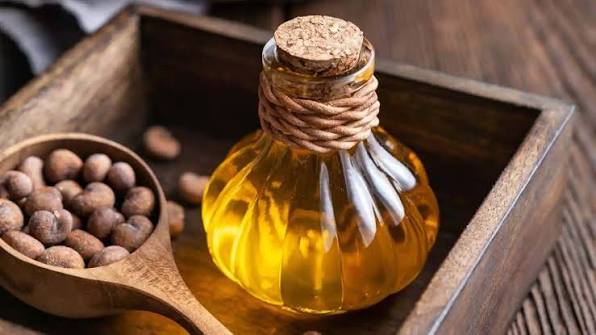
The baobab tree (Adansonia digitata) lives for over a thousand years across the dry savannahs of sub-Saharan Africa. Its fruit pulp, seeds, and leaves have been used as food and medicine across East and Southern Africa for millennia. The cold-pressed oil from its seeds is exceptionally rich in omega fatty acids — oleic, linoleic, and palmitic acids — making it a highly effective skin-barrier oil that absorbs quickly and leaves no residue.
How the global industry rebrands it
European natural beauty brands began incorporating baobab oil in the mid-2000s, positioning it as an exotic botanical discovery. Today it appears in face oils, body serums, and hair treatments from brands across the market, typically with no reference to the communities in Madagascar, Tanzania, Senegal, or Zimbabwe where the trees grow, and the oil is harvested. As Omiren Styles has documented in its analysis of African fashion cities’ structural growth, the absence of investment in the African communities that sustain the resource is a pattern that applies equally to fashion supply chains and beauty supply chains.
Where to source — Baobab oil: Aduna (UK-based, sources baobab directly from Ghana with traceable supply chain); African Botanics (South African luxury brand, baobab-centred formulations).
Marula Oil — Southern Africa
The ingredient
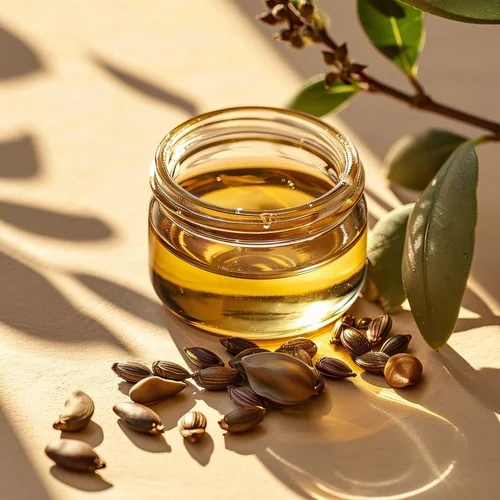
Marula oil comes from the kernel of the fruit of the Sclerocarya birrea tree, indigenous to Southern Africa and found across Mozambique, Zimbabwe, Botswana, Namibia, and South Africa. The Tsonga people of South Africa have used marula oil for centuries as a skin moisturiser, a leather conditioner, and a preservative for dried meat. It contains approximately 70-78% oleic acid, which provides outstanding skin penetration and oxidative stability. It absorbs rapidly, does not clog pores, and has meaningful antioxidant properties.
How the global industry rebrands it
Estée Lauder reformulated Advanced Night Repair around marula oil. Drunk Elephant built a core part of its brand identity around its Virgin Marula Luxury Facial Oil. The ingredient has become one of the most commercially successful hero botanicals in global luxury skincare over the last decade. Marula was a Tsonga skincare staple centuries before it became a Drunk Elephant product. That context is not a footnote. It is the story.
Marula was a Tsonga skincare staple centuries before it became a hero product in a London or New York retailer. The ingredient is the same. The credit is not.
Where to source — Marula oil: Africology (South African-founded, authentic origin, marula-centred formulations); Marula Natural Products cooperative (South Africa, community-owned); The Ordinary 100% Plant-Derived Marula Oil (accessible price point).
African Black Soap — Ghana and Nigeria
The ingredient
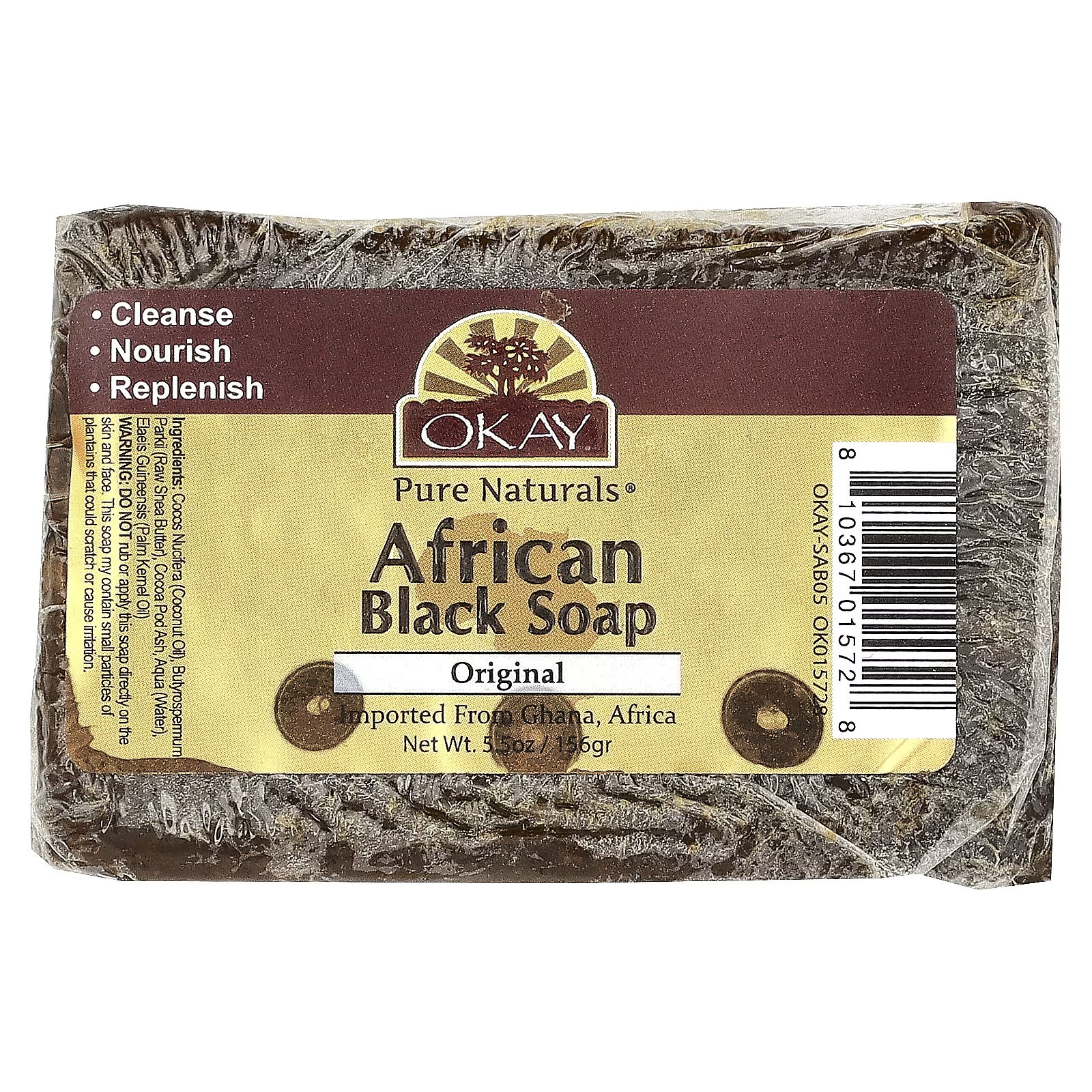
African black soap, known as ọṣẹ dúdú in Yoruba and alata samina in Twi, has a documented history of use across West Africa that predates the modern cosmetics industry by centuries. It is made by combining plant ash from plantain skin, shea tree bark, or cocoa pods with water and plant-based oils or butters, then cooking and curing the result. The potassium and sodium salts in the ash give the soap its cleansing and mild exfoliating properties. It is genuinely effective for oily skin, hyperpigmentation, and mild acne, as Omiren Styles has documented in its analysis of Black haircare and skincare markets.
How the global industry rebrands it
African black soap became a mainstream global beauty product in the early 2000s. Mass-market versions sold by large Western brands frequently use synthetic approximations of the formula while trading on the cultural cachet of the name. The authentic product is still made by women’s cooperatives in Kumasi, Accra, and across Yorubaland. The commercial and the counterfeit are both sold under the same name, and the consumer who cannot distinguish between them is supporting different supply chains without knowing it.
Where to source — African black soap: Alaffia Authentic African Black Soap (Togo-sourced, Fair Trade certified); SheaMoisture African Black Soap Bar; for authentic sourcing, direct from Ghanaian cooperatives via artisan suppliers.
Moringa — East Africa and the Sahel
The ingredient
Moringa oleifera is fast-growing, native to the foothills of the Himalayas, and widely cultivated across East Africa, West Africa, and the Sahel. It is not uniquely African in origin, but African cultivation, particularly in Uganda, Kenya, Ethiopia, and Senegal, has been a source of supply for the beauty industry. Moringa seed oil is exceptionally high in behenic acid, which gives it outstanding stability and a long shelf life, making it a natural preservative as well as a skin conditioning agent.
How the global industry rebrands it
The editorial value of the moringa entry lies not in the ingredient’s origin but in how African cultivation and traditional use have been folded into beauty marketing without acknowledgement. East African smallholder farmers who grow moringa for export receive commodity prices that bear no relationship to the retail value of the finished products their crop enters. The “miracle tree” framing that African communities have used for centuries becomes a “superfood” marketing claim in a premium serum, with the communities who developed that framing receiving no credit or margin.
Where to source — Moringa oil: Raw moringa oil from African smallholder suppliers via traceable direct-trade platforms; Kiehl’s Clearly Corrective Dark Spot Solution (contains moringa, widely stocked).
Rooibos — South Africa (The Most Politically Specific Entry)
The ingredient
Rooibos (Aspalathus linearis) grows exclusively in the Cederberg mountain region of South Africa’s Western Cape. It cannot be cultivated anywhere else on earth. The Khoisan people of the region have used rooibos as a medicinal plant for centuries, brewing it as a tea for its calming and digestive properties. In skincare, it is valued for its high concentration of antioxidants — particularly aspalathin and nothofagin, which are compounds unique to this plant — as well as its anti-inflammatory properties, making it especially useful for sensitive and redness-prone skin.
Why this case is different from the others
Rooibos achieved Protected Designation of Origin (PDO) status in 2021 — a significant legal milestone that restricts the use of the name “rooibos” to products sourced from the Cederberg region. The PDO provides a framework to ensure that the Khoisan community, whose ancestral knowledge first identified the plant’s properties, receives recognition and a share of the commercial value. It is an imperfect mechanism, but it is a meaningful legal precedent: the only one of the six ingredients in this piece to have achieved formal origin protection. The global beauty industry has largely continued to market rooibos-branded products without engaging with the PDO framework or the Khoisan community’s claim. As Omiren Styles has documented in its analysis of African craft and knowledge systems, the knowledge embedded in African material culture is the tradition itself. Rooibos is where that argument has the clearest legal standing.
Rooibos is the only ingredient in this piece to have achieved formal legal protection of its origin. The global beauty industry has largely continued to market rooibos products without engaging with the PDO framework or the Khoisan community’s claim to having first identified it.
Where to source — Rooibos: African Extracts Rooibos Skin Care range (South African-founded, Cederberg-sourced); Antipodes Apostle Skin Brightening and Refining Serum (rooibos-centred, widely available).
The Omiren Argument
The beauty industry’s relationship with African botanical knowledge is structural, not incidental. The plants that now underpin billions of dollars in global skincare revenue were identified, cultivated, and prepared by African women whose names do not appear in press releases and whose communities do not share in the margins. The pattern holds across shea, baobab, marula, black soap, moringa, and rooibos: the ingredient becomes a hero, the brand becomes the authority, and the community of origin becomes a background detail if it appears at all.
This does not mean consumers should stop using these ingredients. It means they should use them in ways that close the credit gap rather than widen it. The African-founded brands and ethical sourcing cooperatives named throughout this piece exist, are accessible, and in most cases produce the ingredient at higher quality precisely because they source it with more direct knowledge of its properties and provenance. As Omiren Styles has argued, African traditions have always been producing sophisticated knowledge that the global industry treats as raw material. The botanical case is identical to the fashion case. The knowledge was always there. The industry arrived later and called it a discovery.
These are not discoveries. They are inheritances. The brands that understand the difference are the ones worth buying from.
ALSO READ
- Shea Butter’s Supply Chain: From Source to Shelf
- Black Haircare in the UK: Market Ownership and Shelf Space
- African Fashion Is Not Emerging. It Has Always Been Here.
Frequently Asked Questions
Which African beauty ingredients are most widely used in global skincare?
Shea butter (West and Central Africa), baobab oil (East and Southern Africa), marula oil (Southern Africa), African black soap (Ghana and Nigeria), moringa oil (East Africa and the Sahel), and rooibos extract (South Africa’s Cederberg region). Each has a documented history of traditional use on the continent that significantly predates its adoption by the global beauty industry. As Omiren Styles has documented in its shea butter supply chain investigation, the economic structure of how each ingredient travels from the origin community to the global shelf follows a consistent pattern of value capture that favours the brand over the source.
How can I tell if an African beauty ingredient is ethically sourced?
Look for a named supply chain (the brand can tell you which country, region, or cooperative the ingredient comes from), a Fair Trade or equivalent certification where available, and African founding or co-founding of the brand itself. Brands that describe ingredients as “exotic discoveries” without geographic specificity are not engaging transparently with their supply chain. For rooibos specifically, check whether the brand acknowledges the PDO status and the Khoisan community’s role as originators.
What makes rooibos different from the other African ingredients in this piece?
Rooibos is the only ingredient in this piece with formal legal origin protection: a Protected Designation of Origin (PDO) achieved in 2021 that restricts the use of the rooibos name to products sourced from the Cederberg region of South Africa’s Western Cape. The PDO was partly developed to ensure some formal recognition for the Khoisan community, whose ancestral knowledge identified the plant’s properties. It is an imperfect mechanism, but it is the clearest legal precedent available for how African botanical knowledge can be formally protected rather than freely extracted.
Are these African beauty ingredients actually effective?
Yes, and the efficacy is documented rather than marketed. Shea butter’s emollient and anti-inflammatory properties are backed by peer-reviewed research. Marula oil’s high oleic acid content gives it excellent skin penetration. Rooibos contains antioxidants unique to the plant with demonstrated anti-inflammatory activity. African black soap’s cleansing efficacy comes from its saponification chemistry. The trend framing is part of the problem — these ingredients are not trending. They have been effective for centuries.
What African-founded beauty brands use these ingredients with honest sourcing?
Alaffia (Togo) works with Fair Trade shea and black soap cooperatives. Africology (South Africa) centres marula and indigenous botanicals. SheaMoisture was founded by a Sierra Leonean immigrant family and built on shea cooperative sourcing—Africann Extracts (South Africa) sources rooibos directly from the Cederberg. Aduna (UK-based, Ghana-sourced) maintains traceable baobab supply chains. These brands exist across price points and are widely accessible. As Omiren Styles has documented in its analysis of ownership in the African fashion and beauty market, the brands closest to the source tend to understand the ingredient most precisely because that proximity is structural rather than aspirational.