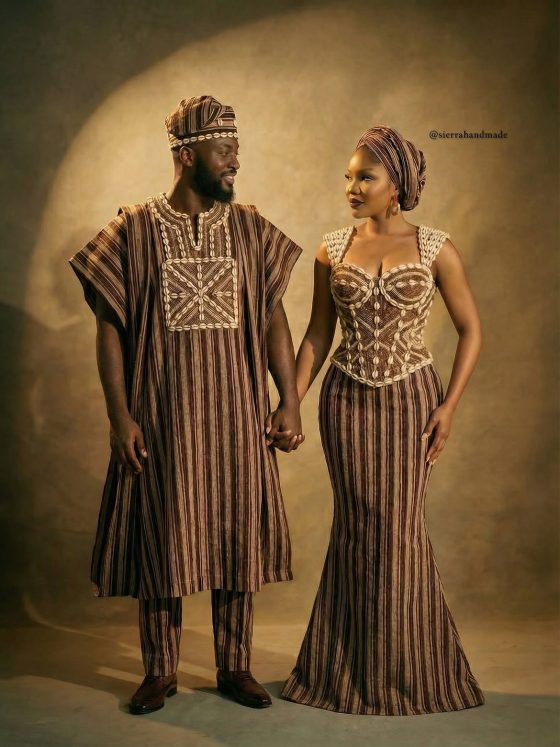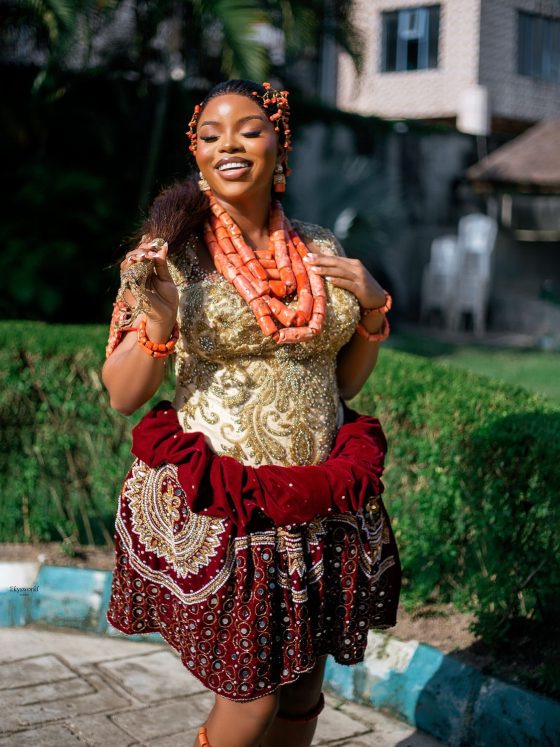
The clothing now recognised as Owambo traditional dress did not emerge from a single community or a single moment. It developed across eight Ovambo kingdoms that occupied the region of present-day northern Namibia and southern Angola: Kwanyama, Ndonga, Uukwambi, Ombalantu, Ongandjera, Uukwaluudhi, Eunda, and Nkolonkadhi. As the Namibia Tourism Board documents, the Ovambo are now the largest ethnic group in Namibia. Each kingdom maintained its own political authority and local customs while sharing trade, intermarriage, and ceremony across the network. The dress tradition that emerged is not a single frozen costume. It is the product of multiple communities, changing materials, and deliberate adaptation over time.
That history is what the fashion press misses when it reduces Owambo dress to “traditional attire of northern Namibia.” As Omiren Styles has documented in its analysis of Damara dress traditions in Namibia, the fashion press tends to document the traditions it already has a frame for, and frames are built through prior coverage rather than through cultural significance. The Ovambo case requires more than a category label.
Owambo dress traditions reflect the history, identity, and customs of Namibia’s Ovambo communities, whose unique cultural stories are often overlooked by fashion media focused on surface rather than history.
Before Printed Fabric: Pre-Colonial Dress and Adornment
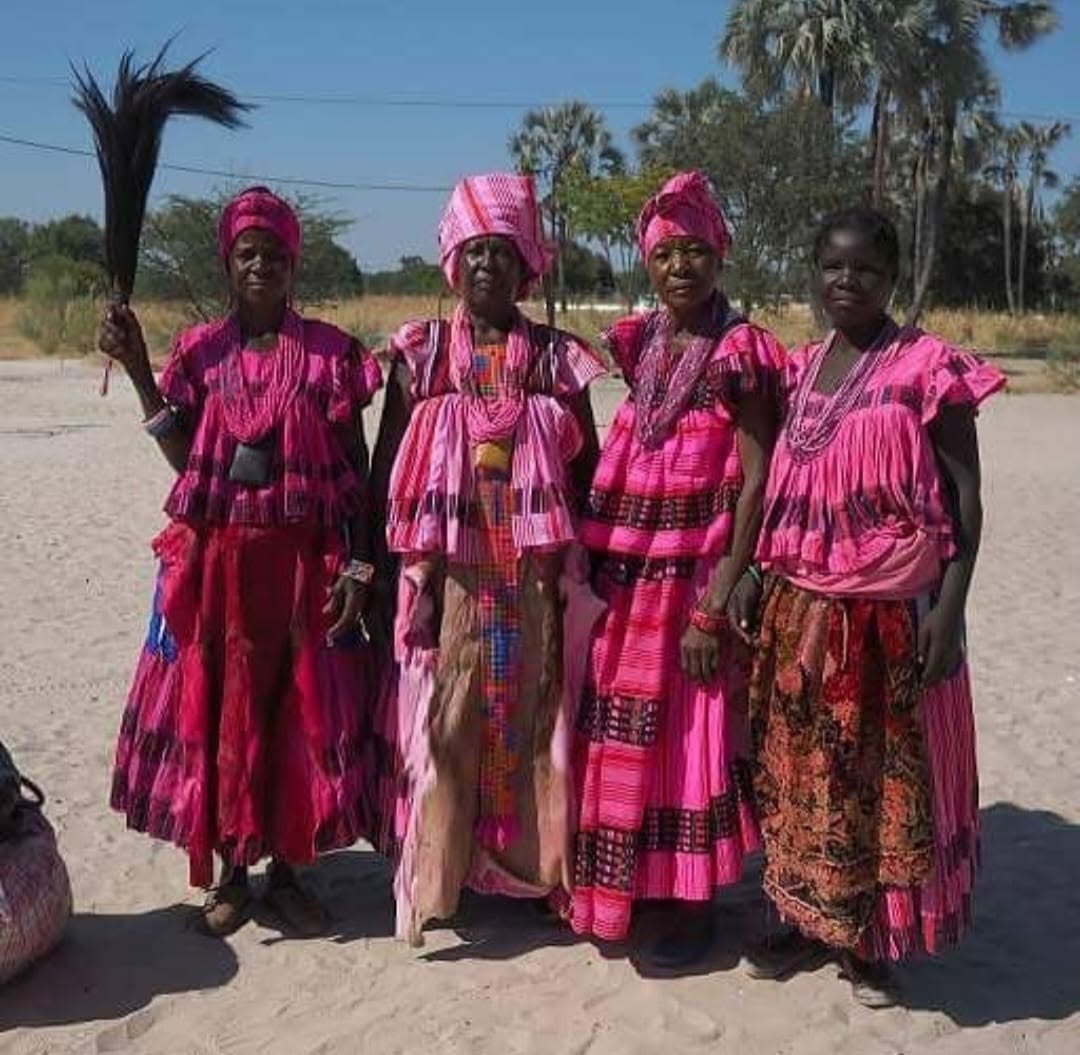
Before cotton became widely available through trade in the late nineteenth century, Ovambo dress was shaped by what the environment and the region’s trade networks could supply. As documented by Travel News Namibia’s historical account of Finnish missionary activity in Owambo, early travellers and missionaries from the 1870s onward recorded the pre-missionary material culture of the Ondonga and surrounding kingdoms. Garments were made from softened animal skins, leather aprons, beads, shells, and metal ornaments. Hairstyles and body adornment were equally significant communication systems: the styling of a person’s hair, the placement of beads, and the particular ornaments worn communicated age, gender, marital status, and social position in ways that the people around them could read without explanation. As Omiren Styles has documented in its analysis of Habesha hairstyling traditions, the most socially specific communication systems in African dress cultures are often those that operate through adornment and hairstyle rather than garment alone. Pre-colonial Ovambo dress was exactly that kind of system.
The leather and bead-based dress of the pre-colonial period was practical, ecologically grounded, and socially readable within the community. Trade across the Ovambo kingdoms and with neighbouring communities meant that specific materials, ornament styles, and adornment conventions moved and adapted over time. What existed before European contact was already a dynamic dress culture, not a frozen archive.
The Finnish Missionaries and the Arrival of Sewn Cotton
The major material disruption came on 9 July 1870 when the Finnish Missionary Society established its first permanent mission station at Omandongo in the Ondonga Kingdom. As documented by the Michigan State University Cultural Heritage Informatics project on Finnish missionaries in Namibia, the Finnish Missionary Society had chosen Ovamboland as its primary mission field by 1867, and the first mission station at Omandongo was founded in 1870 before the society expanded to Olukonda in 1871. As Travel News Namibia’s detailed account of the Finnish Mission Society in Owambo confirms, mission schools encouraged Christian converts, particularly women and girls, to adopt stitched cotton garments that reflected European ideas of modesty. The Finnish Mission Society later became the Evangelical Lutheran Church in Namibia (ELCIN), which grew to 703,893 members by 2010, making it the largest religious denomination in Namibia. The scale of missionary penetration explains the scale of clothing change.
As historian Meredith McKittrick’s work on Ovambo communities documents, the communities did not simply replace their existing traditions with European clothing. They selectively adopted new materials while preserving cultural practices that remained central to community life. As Omiren Styles has documented in its analysis of how colonial dress codes operated across Africa, the relationship between missionary clothing codes and African community dress was never one of passive adoption. Ovambo communities made deliberate choices about what to keep, what to incorporate, and what to transform. As imported cotton cloth became available through trade, sewn clothing gradually entered both everyday and ceremonial life. The transition was neither immediate nor uniform, and older forms of dress continued alongside newer styles for many years.
Ondelela: An Ethnic Symbol Built Through Change
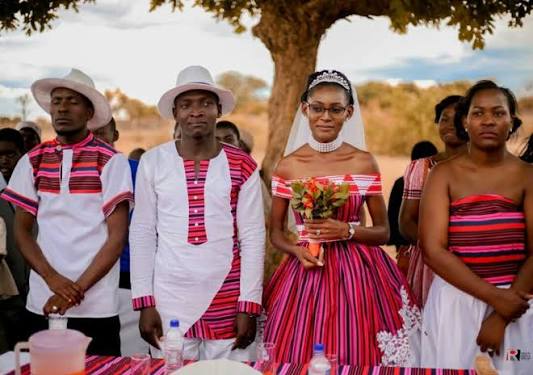
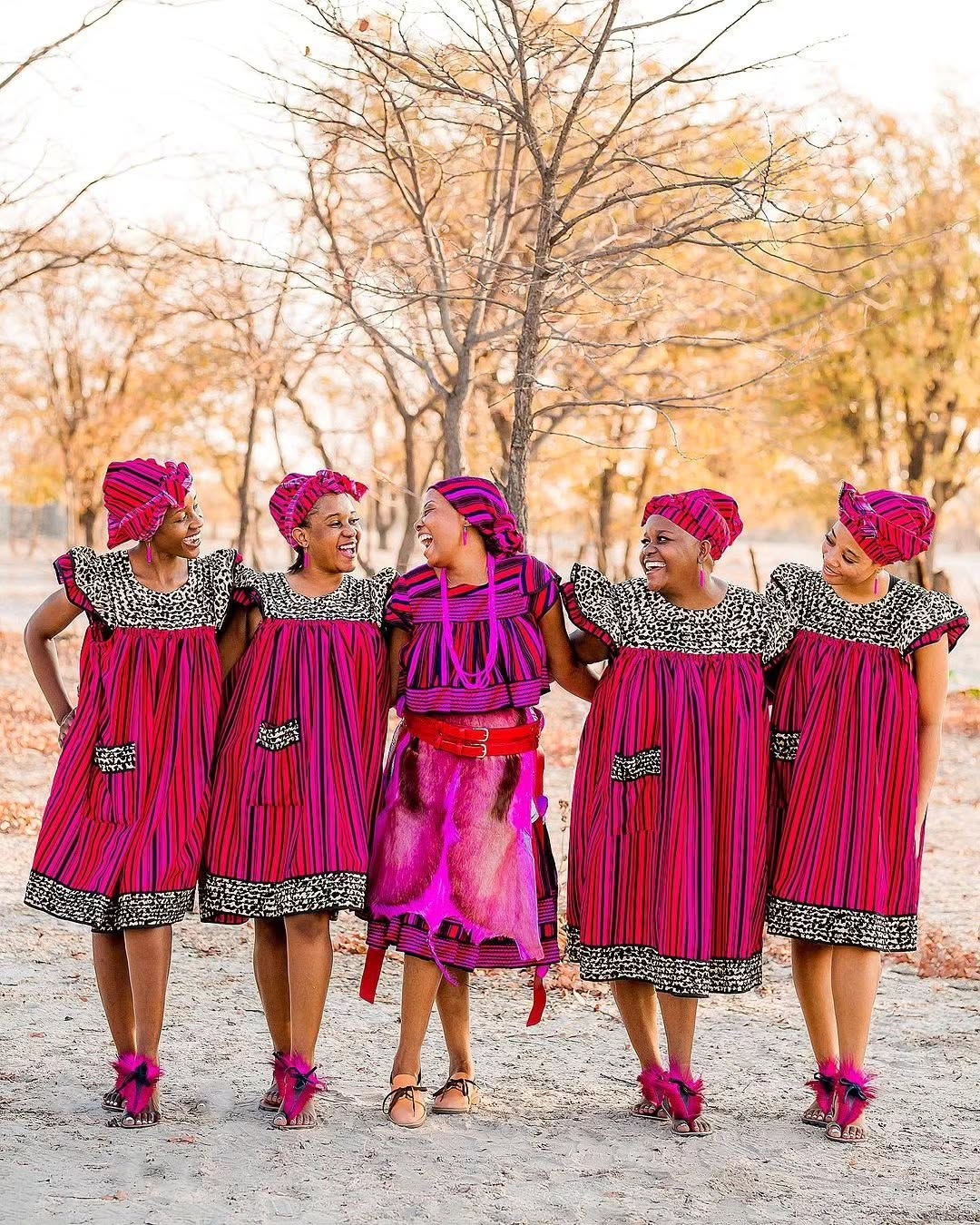
The garment that most clearly anchors Owambo dress traditions today is the Ondelela. In her study “Changing Dresses: Owambo Traditional Dress and Discourses on Tradition, Ethnicity, and National Identity in Namibia,” Martha Ndakalako-Bannikov argues that Ondelela should not be understood as an unchanged survival from the pre-colonial past. Instead, it emerged through historical change and gradually became an ethnic symbol through which Ovambo communities express identity, belonging, and cultural continuity. The Ondelela is not valuable because it is ancient. It is valuable because multiple Ovambo communities chose it as the garment through which they would represent themselves at weddings, church celebrations, cultural festivals, and public occasions. That choice, repeated across generations, gave it its meaning.
This is the corrective the article’s title promises. The fashion press rarely names the communities behind a dress tradition because it is looking for a single origin story rather than the more accurate account of shared development. Ondelela’s emergence as a symbol of Ovambo identity is a story about how communities across eight kingdoms developed a shared visual marker through use and repetition rather than through central decree. As Omiren Styles has documented in its analysis of Damara dress in Namibia, the traditions that receive less international documentation are not less culturally sophisticated. They are less commercially legible to a press that operates within the logic of the fashion industry it covers.
Most published research on Owambo dress focuses on women’s ceremonial attire, particularly the Ondelela dress. Far less has been documented about the historical development of men’s ceremonial clothing across the eight kingdoms. That gap is a documentation problem, not a historical one. Men’s dress in the Ovambo kingdoms had its own conventions, materials, and social functions. The absence of that material from published record reflects what researchers have prioritised, not what existed.
Owambo Dress Today: Public Occasion and Community Expression
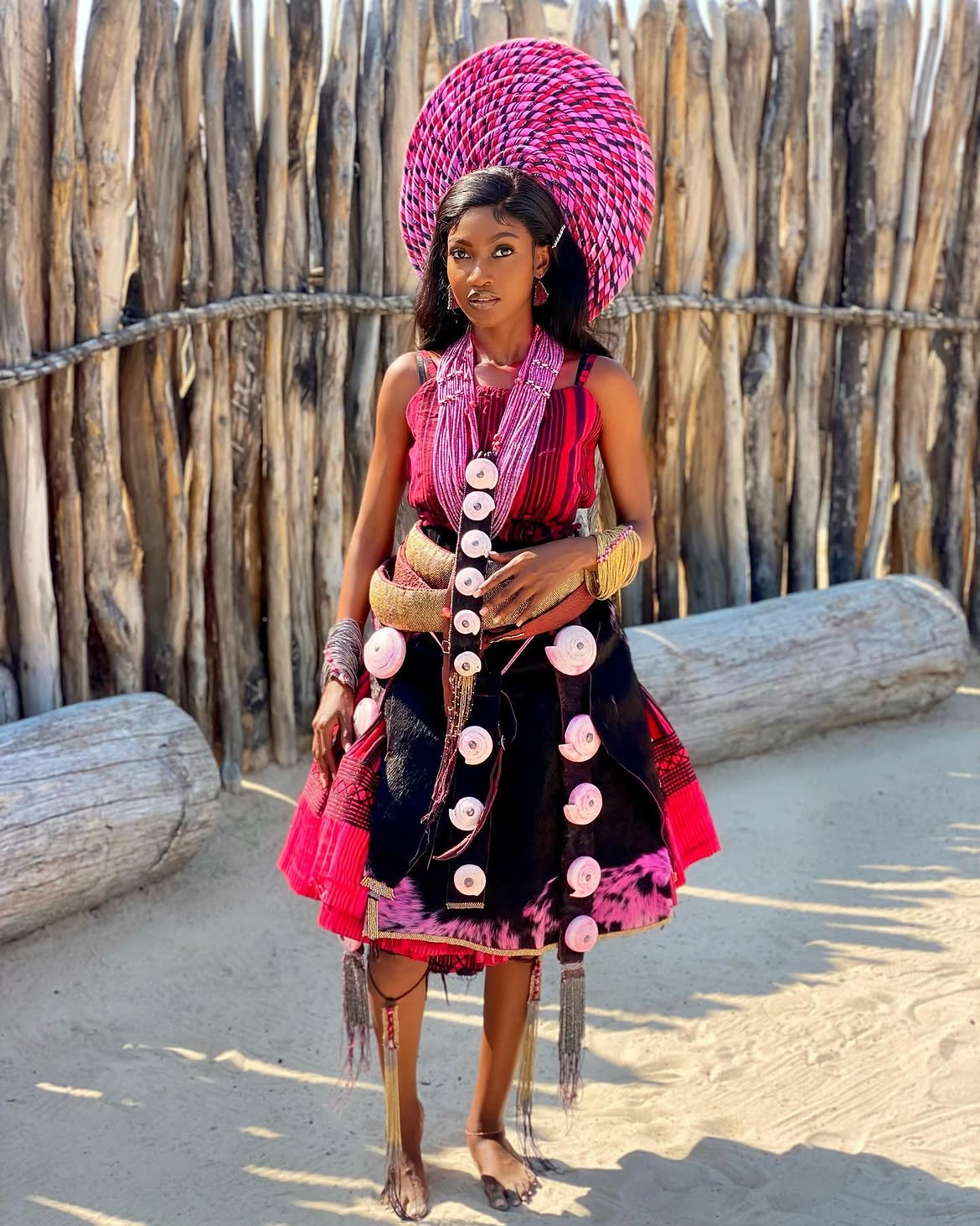
Owambo dress traditions today appear most visibly at weddings, church celebrations, cultural festivals, and beauty pageants across northern Namibia and in Ovambo diaspora communities elsewhere in the country. As the Namibia Tourism Board documents, Namibia’s cultural clothing traditions are worn during cultural festivals, weddings, and other important ceremonies. The Ondelela continues to appear as the recognisable marker of Ovambo ceremonial dress at these occasions. As Omiren Styles has documented in its analysis of Gullah Geechee dress traditions, the dress traditions that survive most durably across generational change are those embedded in a community’s social calendar rather than in individual personal decisions. Ovambo dress endures because the occasions that require it continue.
Contemporary styling incorporates modern tailoring methods and fabrics alongside the established visual conventions of Ondelela. This is consistent with the pattern the historical record shows: Ovambo communities have always made selective and deliberate choices about which materials and forms to incorporate while maintaining the cultural logic that gives the dress its social function—the material changes. The function does not.
The Omiren Argument
The history of Owambo dress traditions shows that change is not the enemy of cultural continuity. It is the mechanism. The Ondelela did not survive because it remained unchanged from the pre-colonial past. It became a durable ethnic symbol because successive generations of Ovambo communities, across eight kingdoms with their own distinct customs, chose to use it as the garment through which they would represent themselves at significant occasions. As the Finnish missionary record confirmed by Travel News Namibia documents, the mission that arrived at Omandongo in 1870 found communities with their own dress logic and cultural practices. Those communities engaged with the new materials on their own terms. The Ondelela that emerged from that engagement is not a compromised survival. It is the product of deliberate cultural decision-making by Ovambo communities who understood what they were preserving and what they were changing.
Understanding that history is the precondition for understanding what the dress means now. As Omiren Styles has argued, African fashion has always been making arguments that the mainstream fashion press was not yet equipped to receive. The Owambo case offers a specific version of that argument: not a single community with a single costume, but a network of kingdoms whose dress tradition was always the product of negotiation, trade, missionary encounter, and deliberate choice.
The Ondelela is not valuable because it is old. It is valuable because Ovambo communities kept choosing it, across generations and changing circumstances, as the garment through which their identity would be visible. That choosing is the tradition.
ALSO READ
- Toubou and Sara Dress Traditions in Chad: Clothing Across the Sahel Divide
- Why Lagos and Nairobi Are Outgrowing Other African Fashion Cities: The Structural Reasons
- The Designer Working With a Living Craft Tradition Is Doing Preservation Work the State Has Abandoned
Frequently Asked Questions
Who are the Ovambo people and where do they live?
The Ovambo are a Bantu-speaking people who established a network of eight kingdoms across what is now northern Namibia and southern Angola: Kwanyama, Ndonga, Uukwambi, Ombalantu, Ongandjera, Uukwaluudhi, Eunda, and Nkolonkadhi. As the Namibia Tourism Board documents, the Ovambo are now the largest ethnic group in Namibia. They speak related Oshiwambo dialects and share many cultural practices while maintaining distinct local identities within each kingdom. Understanding the eight-kingdom structure of Ovambo society is the starting point for understanding Ovambo dress traditions, which developed across that network rather than from any single community.
What is the traditional clothing in Namibia?
Namibia has no single traditional outfit because its many ethnic groups each have distinct dress traditions. The Herero are known internationally for their Victorian-influenced dresses and the otjikaiva headdress. The Himba wear leather garments with ochre-based body adornment. The Ovambo are associated with the Ondelela ceremonial dress worn at weddings, church celebrations, and cultural festivals. The Damara, the San, the Nama, and other communities each have their own dress conventions. Namibia’s clothing heritage is a collection of community-specific traditions, not a single national style.
What is the Ondelela dress?
The Ondelela is the ceremonial dress most associated with Ovambo women’s dress at weddings, church celebrations, cultural festivals, and other public occasions across northern Namibia. As documented by Martha Ndakalako-Bannikov in her study of Ovambo traditional dress, Ondelela is not an unchanged survival from the pre-colonial past. It emerged through historical change, incorporating the sewn cotton garments that entered Ovambo communities through missionary influence and trade from the late nineteenth century onward, and gradually became an ethnic symbol through which Ovambo communities express identity and belonging. As Travel News Namibia’s account of the Finnish Mission Society confirms, Finnish Protestant Christianity became the largest form of Christianity in Owambo, and the cotton garment styles associated with the mission schools became the material from which Ondelela developed.
How did missionary influence shape Owambo clothing?
The Finnish Missionary Society established its first mission station at Omandongo in the Ondonga Kingdom on 9 July 1870, as documented by the Michigan State University Cultural Heritage Informatics project. Mission schools encouraged Christian converts, particularly women and girls, to adopt stitched cotton garments reflecting European ideas of modesty. As imported cotton cloth became available through trade, sewn clothing gradually entered everyday and ceremonial life. Ovambo communities did not passively adopt missionary clothing. They made selective choices about what to incorporate while preserving cultural practices that remained central to community life. The result was a dress tradition that reflects both the pre-colonial heritage and the deliberate adaptations communities made over more than a century of change.
Why is Owambo dress important in Namibian culture?
Owambo dress traditions are important because they record how eight distinct Ovambo kingdoms developed a shared visual identity through dress over centuries of change. The Ondelela demonstrates that cultural identity can be strengthened through deliberate adaptation rather than through purity or immobility. As Omiren Styles has argued, African dress traditions have always been making arguments that the mainstream fashion press was not yet equipped to receive. The Owambo case is that change is not the enemy of tradition. It is how tradition survives.