Savile Row’s official history has always been selective about which firsts it records. The street at the heart of British bespoke tailoring has a documented record of the houses, the appointments, the royal warrants, and the celebrity clients. It has a less complete record of who broke into that establishment from outside it, and how. Two men, arriving from Trinidad and Ghana respectively, changed what Savile Row was in the second half of the twentieth century. Their stories sit in a complicated relationship with each other: both are described as “first Black” on the Row, both claims are independently and well-sourced, and the contradiction between them is genuine rather than the product of careless reporting. This article presents both cases accurately rather than resolving the tension by privileging one story over the other.
Rupert Ramroop became Savile Row’s first Black proprietor in 1988. Ozwald Boateng became the first Black tailor to open a store there in 1995. Both claims are independently sourced. Here is why both matter.
Rupert Ramroop: Savile Row’s First Black Proprietor
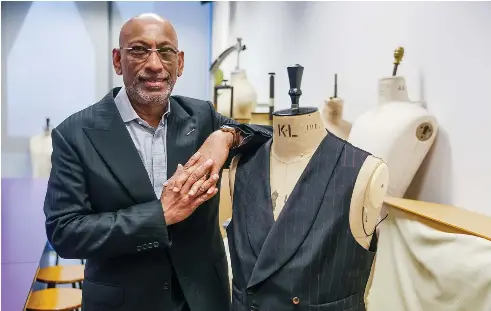
Rupert Ramroop arrived in Britain from Trinidad in 1970. His entry into Savile Row’s world was not straightforward. His initial approach to Anthony Sinclair, the tailor best known for making Sean Connery’s James Bond suits, was rejected: Sinclair told him that Savile Row didn’t take apprentices. Ramroop persisted, found his way to the house of Huntsman, one of the Row’s most prestigious establishments, and built the skills and the relationships that would eventually allow him to do something no Black tailor had done before him. In 1988, he bought a controlling stake in Maurice Sedwell, the Savile Row tailoring house. He began with 45% of the business, according to Financial Times reporting on the acquisition, before buying out the remaining shareholders, with Maurice Sedwell himself retaining a 10% stake. What Ramroop built was not a start-up. It was an acquisition of an existing Savile Row house, achieved through a gradual equity progression from minority stake to controlling ownership.
The claim that this made him the Row’s first Black proprietor is independently sourced across multiple authoritative accounts. Vogue’s profile of Ramroop states plainly that he “became the first Black proprietor on Savile Row” in 1988. Maurice Sedwell’s own site confirms the history. The BFUWI profile uses the same language. Exceptional Caribbean calls him “the first black person to own a tailor’s store” on the Row. The specificity of Ramroop’s claim is about ownership and proprietorship: he did not open a new shop on Savile Row; he acquired and took controlling ownership of an established house. That distinction matters for understanding how the two “firsts” can coexist.
In 2008, Ramroop founded the Savile Row Academy, a training institution designed to bring new talent into the bespoke tailoring tradition and specifically to make access to that tradition less restricted than it had been for him. The Academy is both the logical extension of his career and the sharpest critique of the system he entered: a man who was told Savile Row didn’t take apprentices created an institution specifically designed to change that.
“To do that you have to look good. You have to be presentable.” The Windrush generation’s calculation about dress and visibility applied to Savile Row with particular precision: Ramroop’s arrival in 1970 and his proprietorship in 1988 are separated by eighteen years of building the relationships and skills that a closed institution required before it would grant entry.
Ozwald Boateng: First Black Tailor to Open a Store
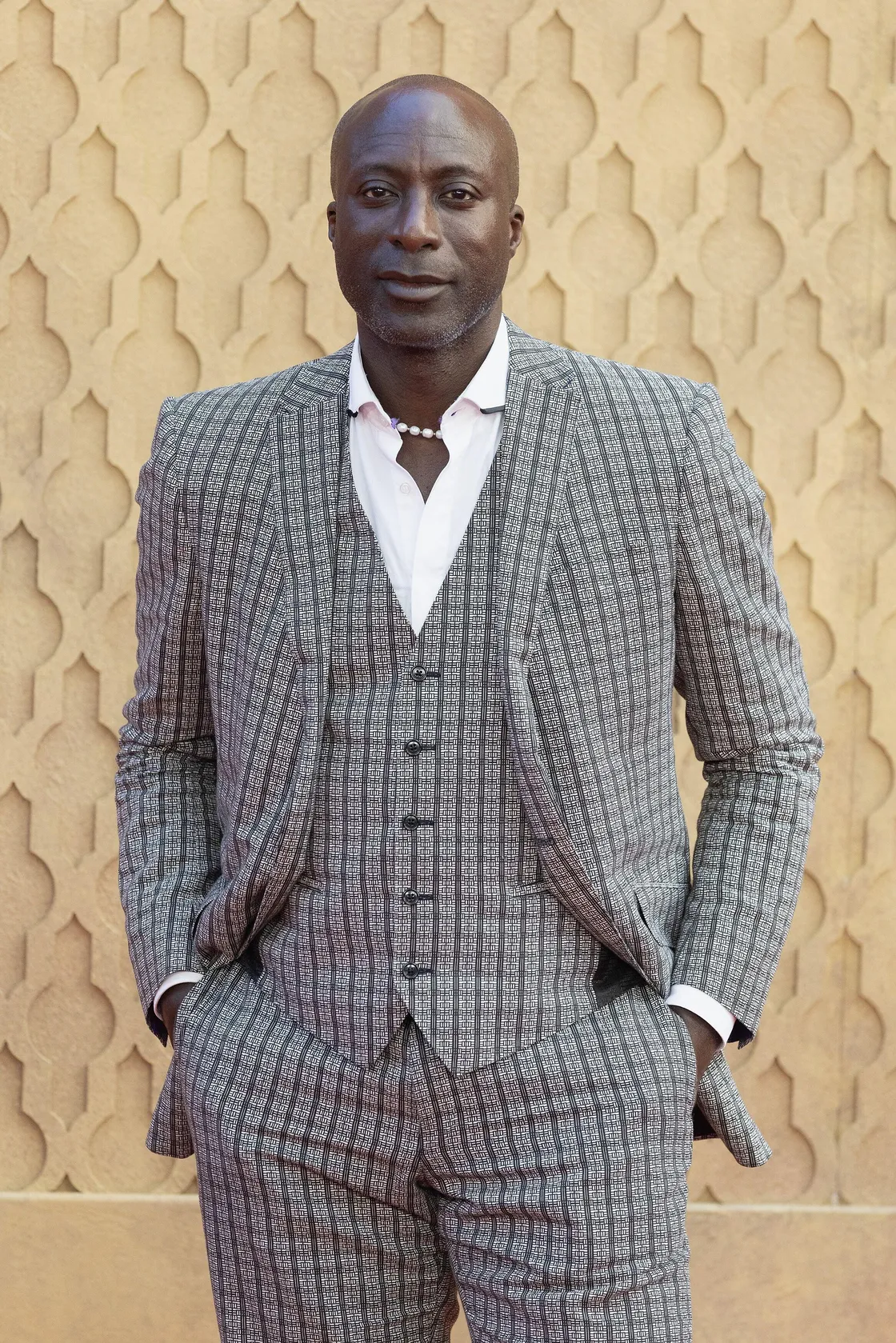
Ozwald Boateng was born in Haringey, north London, the child of Ghanaian immigrants. He is largely self-taught as a tailor: he began sewing at 14, taught himself on his mother’s sewing machine, sold suits to fellow students, and eventually built a freelance reputation significant enough to attract high-profile clients including Spike Lee before he opened his own premises. His approach to tailoring was from the outset distinct from the Savile Row tradition: he fused traditional bespoke construction with bold colour, modern silhouette, and the aesthetic influences of his Ghanaian heritage, producing suits that the London Museum describes as introducing Savile Row “to a new younger clientele” at a moment when the Row was “struggling to attract a new, young clientele” and “having something of an identity crisis.”
In 1994, Boateng became the first tailor to present a collection via catwalk at Paris Fashion Week, as confirmed by the V&A’s own documentation and multiple independent sources. That international visibility preceded his Savile Row opening. In 1995, he opened his first retail store on Vigo Street, at the southern end of Savile Row, becoming the youngest tailor to set up shop in the district and, as Boateng’s own site states, the first Black tailor to do so. This specific claim, “first Black tailor to open a store,” is confirmed by The Independent, the London Museum, NPR, Wikipedia, and his own brand documentation. At 28, he was also the youngest tailor to open a shop on the Row, a separate documented distinction that has been independently confirmed across multiple sources, including the V&A.
A note on the date: most sources, including Boateng’s own site, the London Museum, and the V&A, give 1995 as the year of opening. At least one contemporary source, a 1994 interview with The Independent, gives “1994” and describes him as 34 at the time. The discrepancy is minor but real: the 1995 figure is the dominant source consensus, and this article uses it, while noting that even basic facts in this history have been reported inconsistently across different sources.
Two Firsts, Genuinely Unresolved
The contradiction between Ramroop’s 1988 claim and Boateng’s 1995 claim is not the product of careless history-writing. The two “firsts” describe different things. Ramroop’s claim is about proprietorship: he acquired controlling ownership of an existing Savile Row house, becoming the first Black person to own a Savile Row business. Boateng’s claim is about opening: he opened an entirely new retail store on the Row, becoming the first Black tailor to do so. These are distinct achievements. A claim to be the first Black person to own a Savile Row business and a claim to be the first Black tailor to open a new store on the Row are not the same claim, and both can be true simultaneously without contradiction.
The editorial decision to present both claims accurately rather than forcing a resolution is the correct one. Choosing to privilege one man’s story over the other’s on the basis that one claim sounds more impressive or is more frequently repeated would be a form of editorial carelessness masquerading as accuracy. What this article can do, and what the available sourcing supports, is name the distinction precisely: Ramroop was the first Black proprietor on Savile Row, acquiring an established house in 1988. Boateng was the first Black tailor to open a new store on Savile Row, doing so in 1995. Both claims are real. Both men changed the Row.
What They Changed and What They Left Unchanged
The changes Ramroop and Boateng made to Savile Row are documented differently. Ramroop’s impact is most visible in the institutional legacy: the Savile Row Academy that he founded in 2008, which operates as a structured alternative to the informal gatekeeping that had kept him out of Huntsman’s apprenticeship programme in 1970. As Omiren Styles has documented in its analysis of Windrush dress culture, the Windrush generation’s relationship to dress in Britain was shaped by the calculation that looking good was a practical requirement for being taken seriously. Ramroop’s eighteen-year journey from rejected apprentice to proprietor is a documented case of that calculation applied to the highest level of British tailoring. The Academy is its institutional expression.
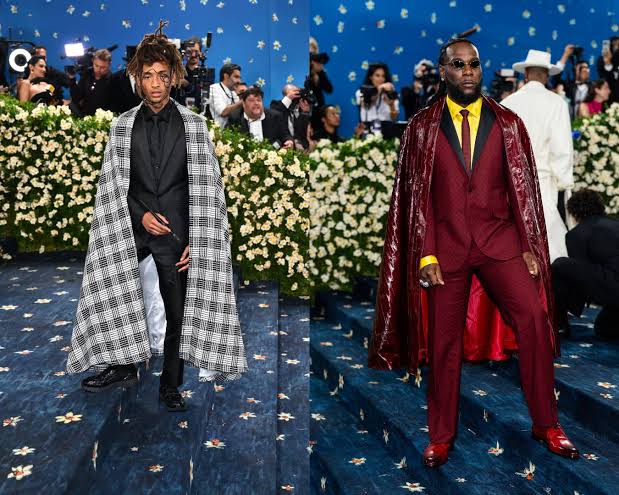
Boateng’s impact is most visible in the aesthetic transformation he contributed to. The London Museum documents that he was “credited with reviving London tailoring in the 1990s with his modern, youthful take on suit-making” and that “the Row had found its cool again” after his opening. His subsequent career, creative director of Givenchy menswear from 2003, Black Panther costume collaboration, British Airways uniform design, and the 2025 Met Gala suit worn by Lewis Hamilton that paid homage to his design philosophy, demonstrates a trajectory from Savile Row disruptor to global institution. That trajectory is built on the opening of a single store on Vigo Street in 1995 by a 28-year-old self-taught tailor who introduced Ghanaian colour and modern silhouette to a street that had been producing grey, black, white, and navy for over a century.
What neither man changed, at least not yet, is the fundamental structure of Savile Row as an institution. The Row remains the world’s most prestigious address for bespoke menswear, its prices remain prohibitive for most buyers, and the number of Black proprietors and tailors with shops there remains small. The firsts that Ramroop and Boateng represent are genuine and documented. They are not evidence that the Row is no longer an institution whose access requires exceptional persistence from those who arrive at it from outside its traditional networks.
The Omiren Argument
The question of who was first on Savile Row is less interesting than the question of what it took to get there. Rupert Ramroop was told in 1970 that Savile Row didn’t take apprentices. He spent eighteen years building the skills and relationships that allowed him to buy the business that wouldn’t take him as an apprentice. Ozwald Boateng built a freelance career and a Paris runway reputation before opening a store that the Row hadn’t seen before: a Black Ghanaian tailor with bold colour and a modern silhouette, the youngest person to open on the Row in the Row’s modern history. Both paths are documented. Both required extraordinary persistence in an institution that was not designed for them.
As Omiren Styles has argued across its series on diaspora dress and resistance, the dress cultures and craft traditions that Black and African-heritage communities have built in Britain are almost always built against institutional resistance rather than with institutional support. The Savile Row history is one of the sharpest documented examples of that pattern: an institution whose entire identity rests on craft, tradition, and a form of excellence that is available to anyone with the skill and the capital, and which nevertheless required two extraordinary individuals, arriving from Trinidad and Ghana respectively, to demonstrate that its doors were not as open as its mythology suggested.
Ramroop was first as proprietor. Boateng was first as the opener of a new store. Both were exceptional. The Row would have them believe it was always open to anyone good enough. The eighteen years between Ramroop’s rejected apprenticeship application and his acquisition of Maurice Sedwell tells a different story.
ALSO READ
- Windrush Dress: Arriving in Britain’s Sunday Best
- Diaspora Fashion Diplomacy in Britain: How African and Caribbean Style Shapes Culture and Identity
- When Dressing Becomes Declaration: Clothing as Cultural Identity
- Black British Style in 2026: Designers, Codes and Cultural Luxury Shaping UK Fashion
Frequently Asked Questions
Who was the first Black tailor on Savile Row?
Two men hold distinct, independently sourced “first” claims, and both are accurate. Rupert Ramroop became the first Black proprietor on Savile Row in 1988, when he acquired a controlling stake in Maurice Sedwell, beginning with 45% and buying out the remaining shareholders over time, per Financial Times reporting. Ozwald Boateng became the first Black tailor to open a new store on Savile Row in 1995, at the age of 28, also becoming the youngest tailor to set up shop on the Row. Both claims are confirmed across multiple independent sources. The two firsts describe different achievements: proprietorship of an existing house versus opening a new retail store.
Who is Rupert Ramroop?
Rupert Ramroop is a Trinidadian-British tailor who arrived in the UK in 1970, built his skills at the Savile Row house of Huntsman, and in 1988 became the first Black proprietor on Savile Row by acquiring Maurice Sedwell. He began with a 45% stake and bought out the remaining shareholders, with Maurice Sedwell himself retaining 10%. In 2008, he founded the Savile Row Academy, a training institution designed to make access to bespoke tailoring less restricted than his own entry had been. As Vogue’s profile documents, his path from rejected apprentice to proprietor spanned eighteen years of building relationships and skills within a closed institution.
Who is Ozwald Boateng?
Ozwald Boateng is a British-Ghanaian tailor and designer, born in Haringey, London. Largely self-taught, he opened his first store on Vigo Street, at the southern end of Savile Row, in 1995, becoming the first Black tailor to open a new store on the Row and the youngest tailor to set up shop in the district. He had previously become the first tailor to present a collection at Paris Fashion Week, in 1994. As documented by the London Museum, he is credited with reviving London tailoring in the 1990s. His subsequent career includes creative director of Givenchy menswear (2003), costume work on Black Panther, and a 2025 Met Gala suit worn by Lewis Hamilton.
Why does the article say there is a contradiction rather than resolving who was “really” first?
Because the contradiction is real and independently documented on both sides, and resolving it in favour of one man’s story over the other’s would require suppressing well-sourced evidence. Ramroop’s 1988 proprietorship claim and Boateng’s 1995 shop-opening claim describe different achievements. Both are confirmed across multiple authoritative sources. Presenting both accurately is more honest than choosing one version and erasing the other.
What is the Savile Row Academy?
The Savile Row Academy was founded by Rupert Ramroop in 2008 as a training institution designed to bring new talent into the bespoke tailoring tradition. It represents both the legacy of his career and an institutional critique of the system he entered: a man who was told the Row didn’t take apprentices created an academy specifically to ensure that others would not face the same barrier.