The question “who is building something that lasts” is a different question from “who is generating buzz.” The American fashion market produces enormous amounts of attention for African and African-diaspora designers at regular intervals: a celebrity dressing moment, a magazine feature, a social media campaign, a market trend piece about the next wave of African fashion. Most of that attention does not translate into the commercial infrastructure that makes a brand sustainable across seasons. This article is about the brands that have done both and what they built to get there.
The evidentiary standard applied here is specific. A brand that is “building something that lasts” in the American market has documented evidence of at least two of the following: named physical or digital stockist relationships with US retailers; revenue or investment figures confirmed by independent sources; institutional programme recognition from CFDA, Tory Burch Foundation, or equivalent; and a production model that is structured rather than ad hoc. The distinction between these criteria and social media metrics, press coverage, or celebrity dressing credits is deliberate. As Omiren Styles has argued in its analysis of African jewellery brands and global market access, the strongest signal of international wholesale readiness is a named stockist in a named city. That standard applies here.
Some African fashion designers in America have built brands that last. KAHINDO is in Nordstrom. Lemlem is a CFDA member with estimated $5-8M annual revenue. This is what they built and how.
KAHINDO: The Most Completely Documented Case
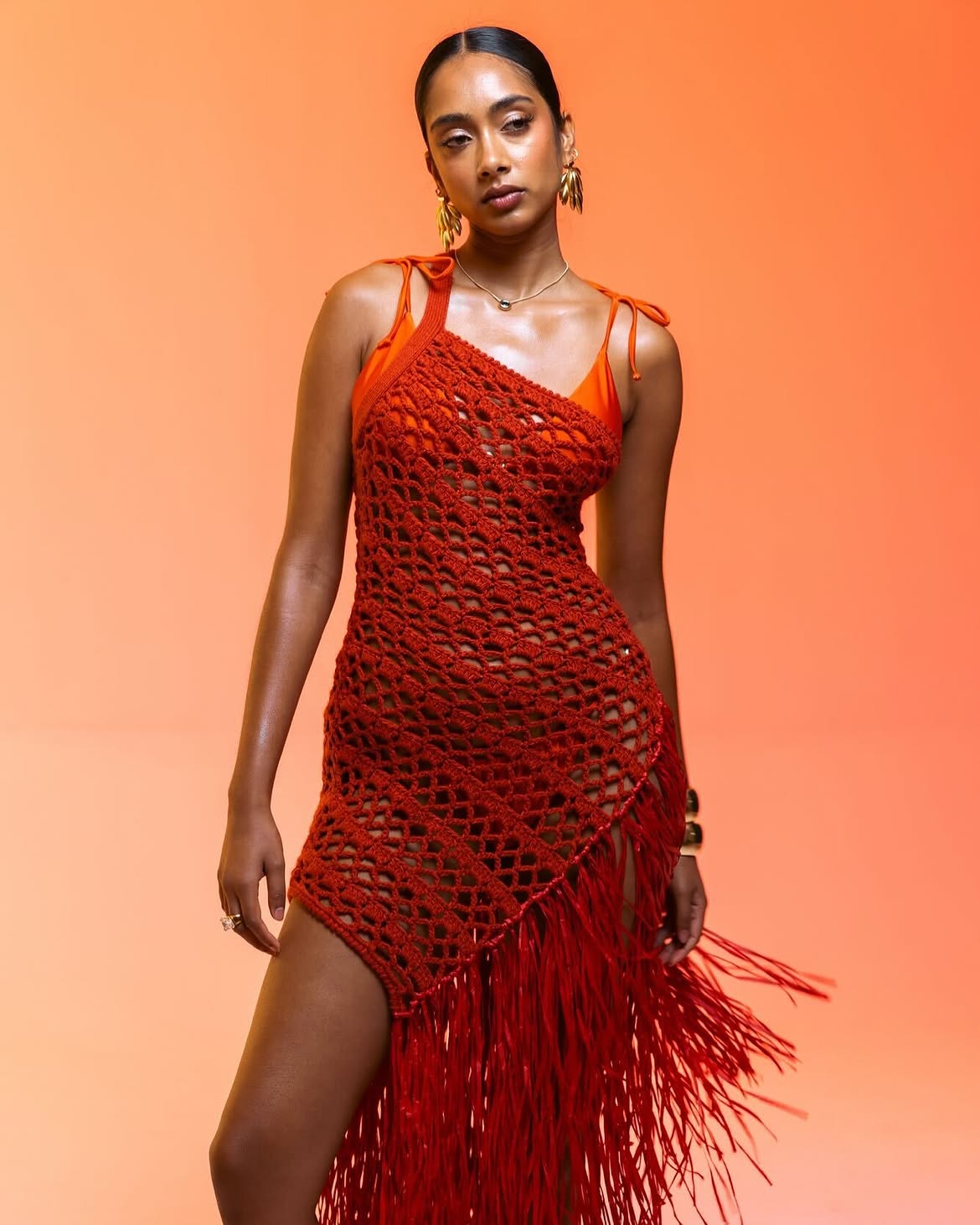
KAHINDO is the clearest documented case of an African-founded fashion brand building durable US market infrastructure. Founded in 2017 by Kahindo Mateene, who was born in Uganda, raised across Africa in Uganda, Kenya, Ethiopia, Niger, and the Democratic Republic of Congo, and is based in New York City, the brand is confirmed by its own site and by independent reporting as carried at Nordstrom, Bloomingdale’s, and Anthropologie. As documented at kahindo.com and confirmed by Industrie Africa’s designer directory, every collection is designed in New York and handcrafted by female artisans in Africa under fair-trade conditions, with living wages and named artisan credit on every piece. The brand has been recognised as a Tory Burch Fellow and a Workshop at Macy’s graduate, two of the most substantive institutional programme recognitions available to independent fashion brands in the United States.
The Nordstrom, Bloomingdale’s, and Anthropologie placement is not simply an achievement of editorial visibility. It requires production consistency at wholesale volumes, appropriate packaging and documentation for major retailer standards, a wholesale pricing architecture that gives stockists a workable margin, and the institutional track record that these buyers use to assess risk before committing. KAHINDO has met all of these requirements while maintaining the artisan production model and the fair-trade framework the brand was built on. The commercial and the ethical are not in tension in this case. The ethical model is part of what made the commercial placement possible: major retailers seeking artisan-made, ethically produced, African-heritage brands have a brand to point to that can demonstrate the full infrastructure required.
“KAHINDO is stocked at Nordstrom, Bloomingdale’s, and Anthropologie — not despite its ethical model, but because of it. Kahindo proved that an ethical fashion brand made in Africa can meet the standards of the world’s leading retailers.” — KAHINDO brand documentation, 2026
Lemlem: The Longest-Running Documented Case
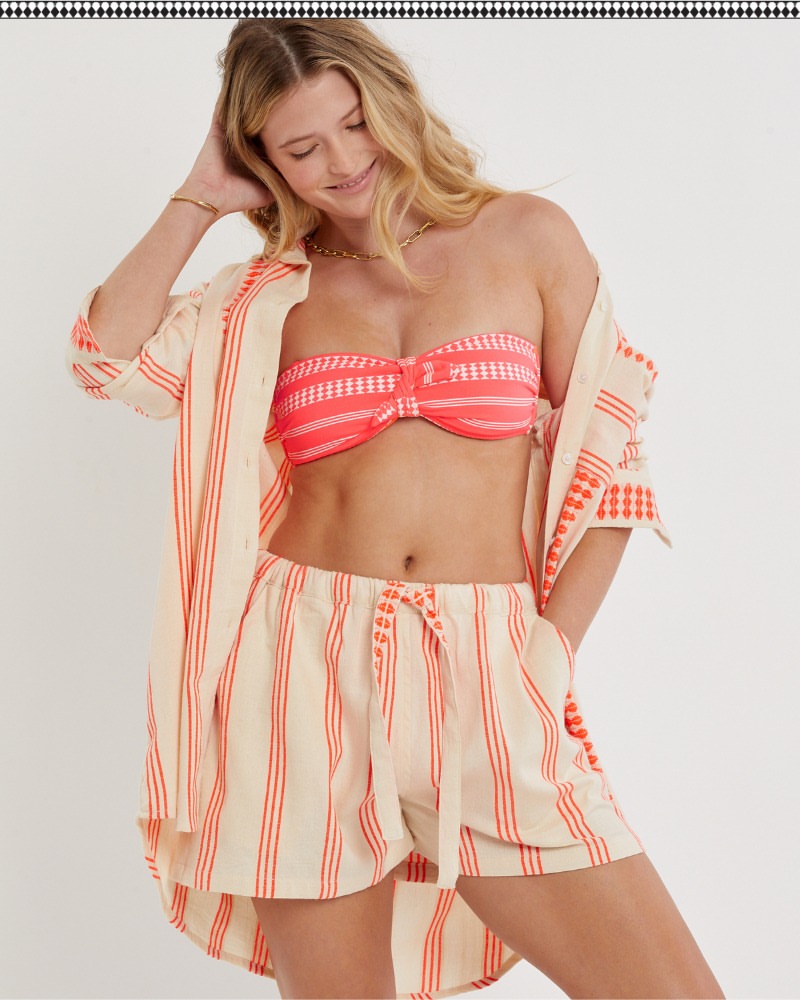
Lemlem, the artisan-driven fashion label founded in 2007 by Ethiopian supermodel and designer Liya Kebede, is the longest-running documented case of African-heritage brand-building in the American market. Kebede founded the brand in New York after discovering on a visit to Ethiopia that traditional weavers were losing their livelihoods due to declining domestic demand for handwoven goods. The brand partners with artisan studios in Ethiopia, Kenya, and Morocco using traditional techniques in hand weaving, crochet, and embroidery, as documented by the CFDA, of which Kebede is a member. Lemlem has been stocked at Net-a-Porter, J Crew, and boutiques globally, with annual revenue estimated between $5 million and $8 million by industry sources cited in Early Magazine’s 2025 profile. These are industry estimates rather than confirmed financial statements, but they place lemlem at a scale that most African-heritage brands operating in the US market have not reached.
Lemlem’s eighteen-year track record demonstrates something that African fashion commentary rarely has the opportunity to document: what staying power in the American fashion market actually looks like. It does not look like consistent press coverage, though Lemlem has had that. It looks like a production model that has adapted across seasons, a supply chain relationship with artisan communities that has deepened rather than been abandoned when it became commercially inconvenient, and a founder who understood from the beginning that the brand’s artisan model was not a marketing angle but an operational commitment. The Business of Fashion profile notes that Kebede’s H&M collaboration did not use lemlem’s artisan supply chain, which BOF identified as “underscoring the complexities of these kinds of collaborations. That complexity is a signal of how seriously the artisan model is taken: it is not a label to be applied to any commercial opportunity. It is the architecture of the brand.
What “Building Something That Lasts” Actually Requires
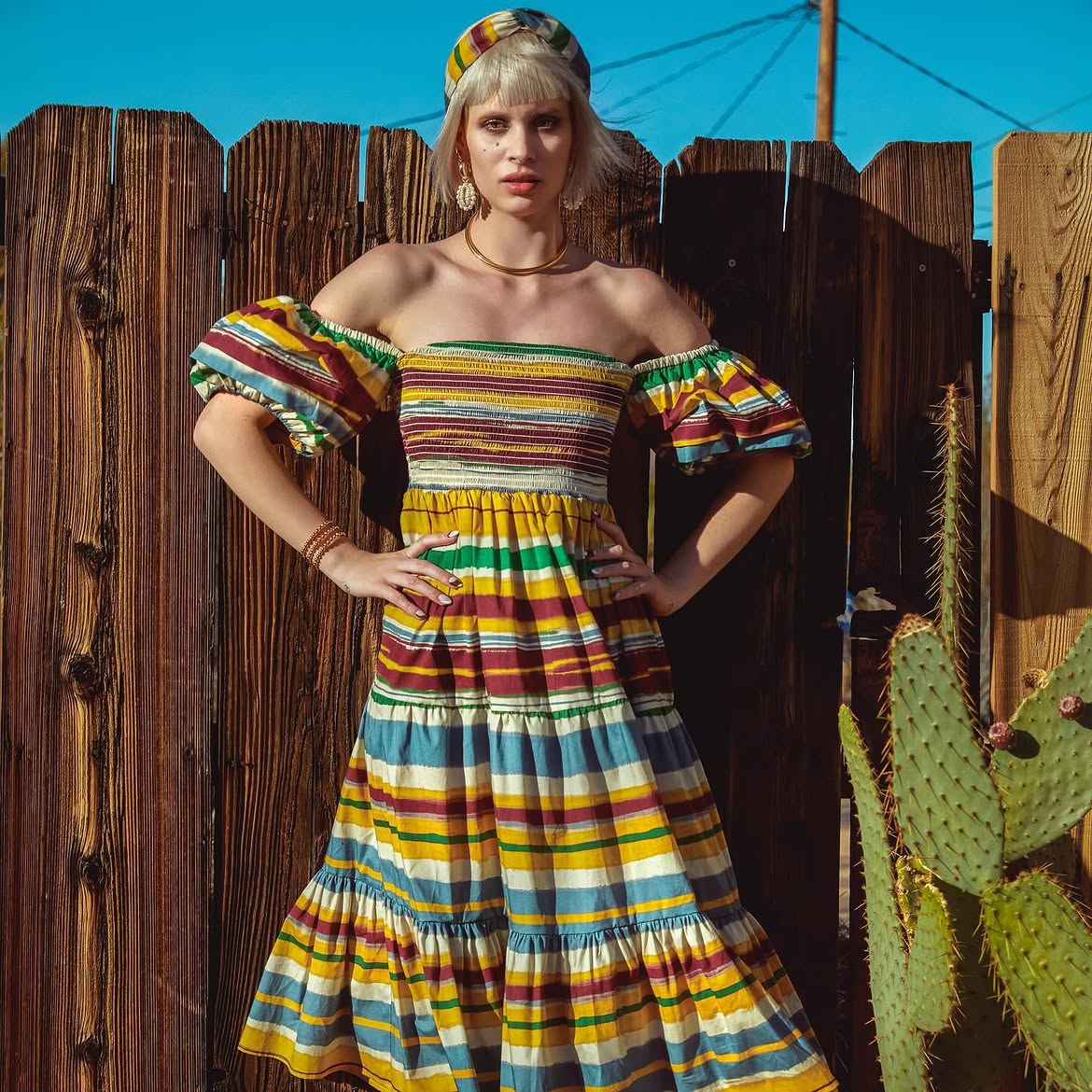
The KAHINDO and lemlem cases, taken together, identify four structural conditions that separate lasting African-heritage fashion brands in the American market from the brands that generate attention without building infrastructure. First, a production model that can deliver at retail volumes consistently: both brands have built relationships with artisan communities that are structured enough to produce at the quantities US retail requires, on the lead times US retail expects, at the quality standard US retail will reorder. Second, a pricing architecture that works for wholesale: lemlem at Net-a-Porter and KAHINDO at Nordstrom are both priced at levels that give their stockists a workable margin while maintaining the production economics that artisan manufacturing requires. Third, institutional programme relationships: the CFDA membership, the Tory Burch Fellowship, and the Workshop at Macy’s credential are not decorative. They provide access to buyers, mentorship, and the institutional credibility that makes large retailer conversations possible. Fourth, a brand narrative that is specific rather than generic: both brands have a named artisan community, a documented cultural heritage, and a production story that is not interchangeable with any other brand. As Omiren Styles has argued, the brands that attract repeat international attention are those whose cultural content is verifiable and irreducible.
The American market has a specific appetite in 2026 for what both KAHINDO and lemlem supply: artisan-made, ethically produced, African-heritage fashion at accessible luxury price points, with documented supply chain transparency. The US sustainable fashion market is growing at a rate that rewards verifiable sustainability credentials and penalises vague claims. The FTC Green Guides and California’s Extended Producer Responsibility legislation are creating a regulatory environment in which documentation of production ethics is becoming a legal requirement rather than a marketing choice. African-heritage brands whose artisan model is genuinely documented are positioned for that environment. Those whose sustainable positioning is narrative rather than operational are exposed.
The Designers Who Are Building With Different Models
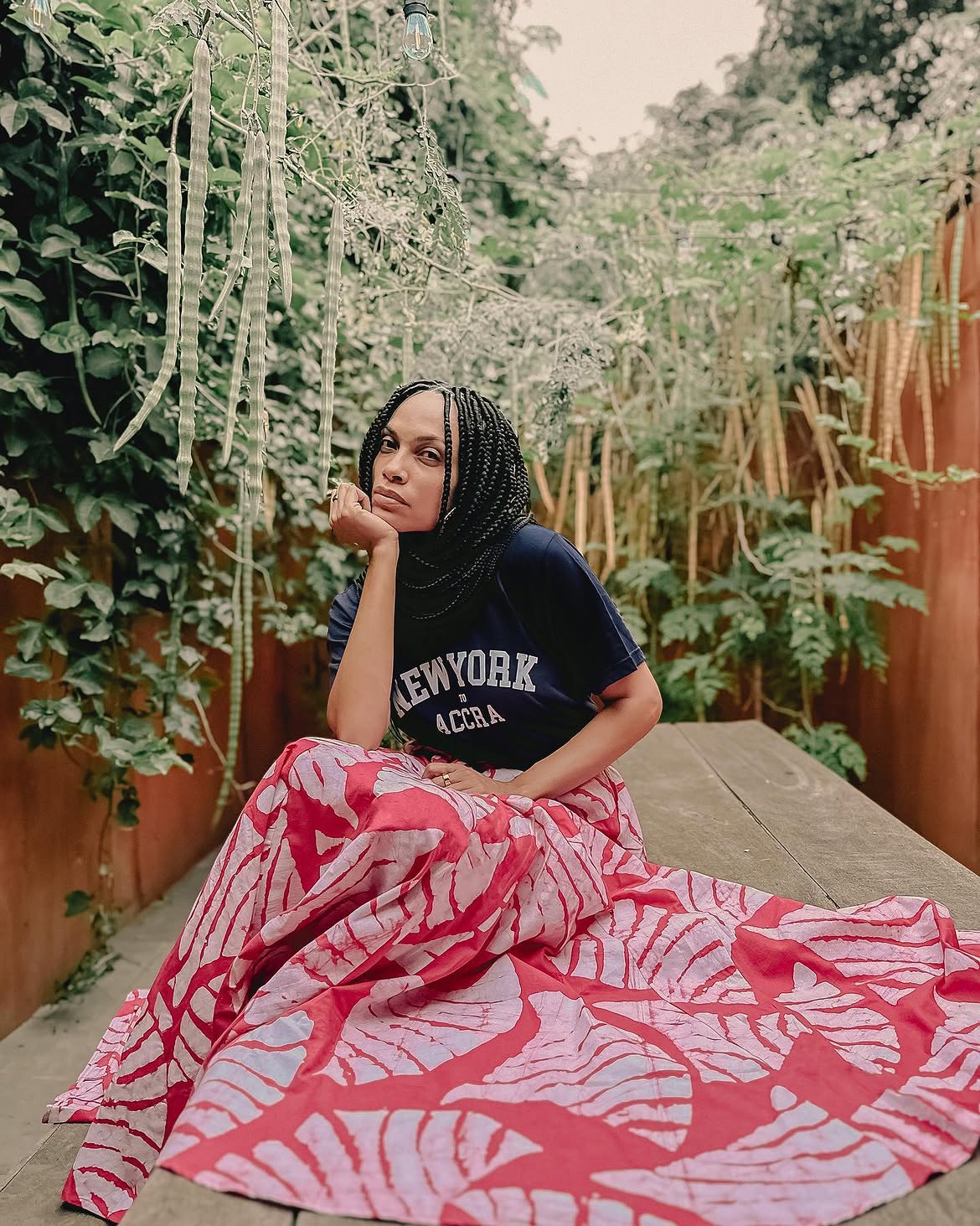
Not every African fashion designer in America is building through the artisan-supply-chain model that KAHINDO and lemlem represent. Maki Oh, the Nigerian label founded by Amaka Osakwe in Lagos in 2010, made its New York Fashion Week debut in 2012, as documented by WWD’s coverage of the brand, and built international recognition for its adire textile work and sheer, structured silhouettes. Maki Oh operates primarily from Lagos and is a Lagos-based brand with international visibility rather than a US-based brand with African production. The distinction matters for the question this article is asking: Maki Oh is building in Nigeria with international reach, which is a different and equally valid model from KAHINDO’s New York headquarters with African production. Both represent African designer success in the American market. They are doing different things.
The Folklore and Jendaya, both of which have been documented by Omiren Styles in its analysis of African fashion investment, provide the platform infrastructure that allows African-based brands to access US retail buyers without establishing US operations. The Folklore has connected African brands to Nordstrom, Saks Fifth Avenue, and Bergdorf Goodman. That infrastructure is part of what makes the “building something in America” question more complex than it was ten years ago: a Lagos-based brand can build US retail relationships without relocating, using platform intermediaries that did not exist when lemlem launched in 2007.
What the Next Generation Is Doing
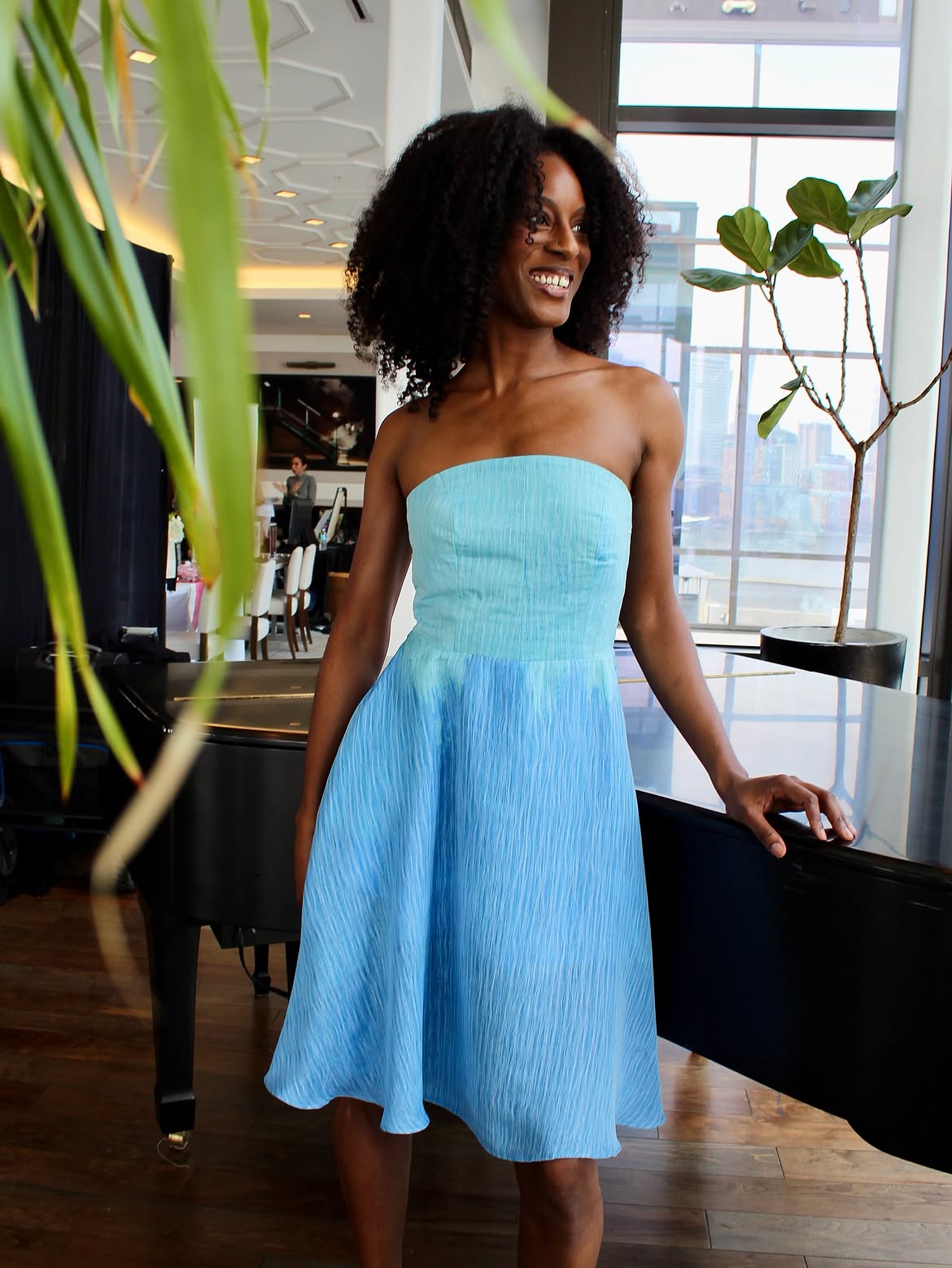
The generation of African-heritage designers entering the US market now has structural advantages that neither KAHINDO nor lemlem had at founding. The platform infrastructure is more developed. The institutional programmes are better funded. The consumer appetite for African-heritage fashion with documented supply chain credentials is measurably larger. And there is now a body of documented precedent, in KAHINDO’s retailer placements and lemlem’s eighteen-year track record, that proves the model works. As Omiren Styles has documented in its analysis of second-generation African designers, the designers entering the market now are not building from zero. They are building on a foundation that took the previous generation two decades to lay.
What the next generation still faces is the same structural challenge that confronted KAHINDO and lemlem: the gap between the moment of attention and the moment of commercial infrastructure. Social media has accelerated the attention cycle dramatically: a designer can go from unknown to widely covered in weeks. The infrastructure cycle has not accelerated at the same rate. Building the artisan relationships, the production consistency, the wholesale pricing architecture, and the institutional credentials that make a US retail conversation commercially productive still takes years. The attention may arrive faster. The infrastructure still requires the same investment of time and commitment it always has.
The Omiren Argument
The question of who is building something that lasts is ultimately a question about what kind of build counts. Social media reach counts for something. Press coverage counts for something. Celebrity dressing credits count for something. None of them counts as the same thing as a multi-year stockist relationship with Nordstrom, or an artisan supply chain that has survived multiple seasons without compromising on the fair-trade standards that the brand was built on, or a CFDA membership that provides access to the buyers and mentors that the American market’s institutional gatekeepers control. KAHINDO and lemlem demonstrate that the longer build is possible. They also demonstrate what it requires: a production model that can be sustained without compromising its core proposition, a pricing architecture that works for wholesale as well as direct-to-consumer, and the institutional relationships that open the doors that press coverage alone cannot.
As Omiren Styles has argued, African fashion did not arrive at the world’s attention because the world became more attentive. It arrived because the designers who built it refused to stop building through the periods when the world was not paying attention. The brands that last in the American market are the ones that build through those periods too. KAHINDO and lemlem have both done that. The question for the next generation is whether they will have the structural support to do it without taking as long.
Building something that lasts requires building through the seasons when no one is watching. That is the work that the attention cycle does not show and that the stockist relationship ultimately proves.
ALSO READ
- African Jewellery Brands That Go Global Do Not Get Lucky. They Get These Four Things First.
- E-Commerce Access and Physical Retail Are Not the Same Achievement. Here Is What Separates Them.
- Second-Generation African Designers Are Not Borrowing From Heritage. They Are Translating It.
- Why No Serious Investor Has a Pan-African Fashion Portfolio: The Cost of Institutional Blindness
Frequently Asked Questions
Which African fashion designers are most established in the American market?
KAHINDO, founded by Kahindo Mateene (Congolese-born, New York-based) in 2017, has the most completely documented current US market infrastructure: confirmed placement at Nordstrom, Bloomingdale’s, and Anthropologie, Tory Burch Fellow recognition, and Workshop at Macy’s graduation. Lemlem, founded by Ethiopian supermodel Liya Kebede in 2007 and a CFDA member, is the longest-running documented case, with stockists including Net-a-Porter and J Crew and estimated annual revenue of $5 million to $8 million. Both brands are built on artisan production models with documented supply chain transparency.
What is KAHINDO and how has it built US market presence?
KAHINDO is a New York-based womenswear brand founded in 2017 by Kahindo Mateene, who was born in Uganda and raised across Africa. Every collection is designed in New York and handcrafted by female artisans in Africa under fair-trade conditions with named artisan credit on every piece. As confirmed by the brand’s own documentation, it is carried at Nordstrom, Bloomingdale’s, and Anthropologie, and has received recognition as a Tory Burch Fellow and Workshop at Macy’s graduate. KAHINDO demonstrates that an artisan-production, fair-trade model can meet the standards of America’s leading mainstream retailers.
What is Lemlem and what has it built over its eighteen years?
Lemlem is an artisan-driven sustainable fashion label founded in 2007 by Ethiopian supermodel and designer Liya Kebede in New York. It partners with artisan studios in Ethiopia, Kenya, and Morocco using traditional hand-weaving, crochet, and embroidery techniques. Kebede is a CFDA member. The brand has been stocked at Net-a-Porter, J Crew, and boutiques globally. Industry estimates place annual revenue between $5 million and $8 million. Its eighteen-year track record is the most documented example of sustained African-heritage brand-building in the American fashion market.
What four conditions separate lasting African fashion brands in America from those that don’t sustain?
A production model that delivers at retail volumes consistently and on US retail lead times. A pricing architecture with wholesale margins that work for major retailers while sustaining artisan production economics. Institutional programme relationships, including CFDA membership, Tory Burch Fellowship, or Workshop at Macy’s, that provide buyer access and institutional credibility. A brand narrative that is specific and irreducible: a named artisan community, a documented cultural heritage, and a production story that is not interchangeable with any other brand. Social media reach, press coverage, and celebrity dressing credits are not on this list because they are conditions for attention, not conditions for sustainability.
How does The Folklore change the equation for Africa-based designers entering the US market?
The Folklore’s wholesale management software, which has connected African brands to Nordstrom, Saks Fifth Avenue, and Bergdorf Goodman, means that a Lagos-based or Accra-based brand can build US retail relationships without establishing US operations. This infrastructure did not exist when lemlem launched in 2007. As Omiren Styles has documented, The Folklore raised US$1.7 million in pre-seed funding specifically to build this bridge. The platform can connect brands to buyers. It cannot create the production consistency, wholesale pricing architecture, and cultural specificity that make those connections commercially productive. That structural work still has to be done by the brand.