On the night of 11 January 2013, a fire broke out in the main building of the Grand Marché de Lomé and burned for nearly twelve hours. The blaze was so severe that firefighters from Ghana crossed the Aflao border to assist their Togolese colleagues in bringing it under control. Traders who arrived the following morning found their stock destroyed, their stalls gone, and the building that had housed the most important fabric market in West Africa reduced to a shell. The area remained under development for four years. Traders continued working.
This is the most important thing to understand about the Grand Marché de Lomé: it is not a building. The building burned. The market did not. The market is the commercial intelligence of the women who run it, the relationships between buyers and sellers that have operated across multiple generations, the price knowledge, pattern knowledge, and network knowledge that the Nana Benz and their successors carry in their heads and have never needed a market building to house. The building is a convenience. The market is an institution. The distinction between the two was demonstrated on the morning after the fire.
The Omiren Argument: the Grand Marché de Lomé is not a market. It is the financial and creative infrastructure of West African fashion. Every practitioner documented in this series has a relationship to it. The Nana Benz built their empires from the first floor. The Nanettes rebuilt from the same floor after the empire fell. Amah Ayivi sources from Hédzranawoe because the Grand Marché corridor is where Western textile waste and premium Dutch wax print meet in the same city. No designer, no textile tradition, no fashion event in this series exists independently of what happens at the Grand Marché. It is the ground on which everything else is built.
The Grand Marché de Lomé is where West African fashion is built, bought and debated. This is the full history and present of Togo’s most significant market.
The Grand Marché and Its Place in Lomé
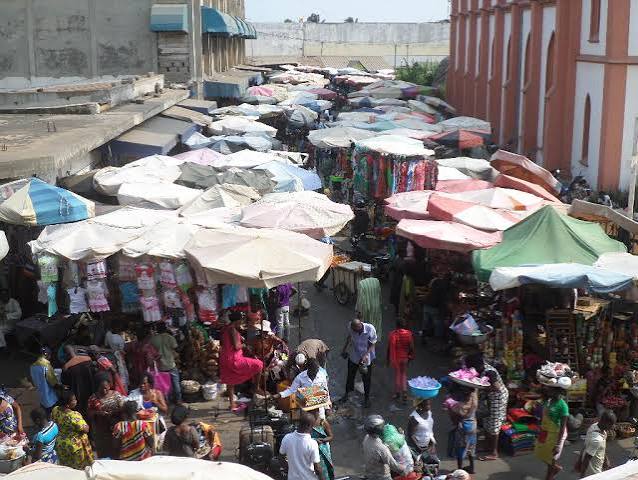
The Grand Marché de Lomé, built in 1967, sits near the Sacred Heart Cathedral at the heart of the capital. It occupies an entire city block and is divided into three sections known locally as Atipoji, Assigamé, and Assivito. The Assigamé name, often used interchangeably with Grand Marché, refers specifically to one of its three sections but has become the common shorthand for the entire market complex. Petit Futé’s documentation describes the layout: the first level is the stronghold of the Nana Benz, who sell loincloths and fabrics; the upper floors hold crockery, tools, and salvaged crafts.
The market is also inseparable from its geographic position. Lomé sits on the Atlantic coast at the southern edge of Togo, and the city’s port has been the logistical foundation of the textile trade since the colonial era. While neighbouring countries such as Ghana moved to limit fabric imports to protect domestic manufacturing, the Togolese government maintained low tariffs and port access for traders. This was not an accident. It was a political and commercial strategy that made Lomé the preferred hub for the redistribution of wax print fabric across West Africa. Buyers came from Nigeria, Ghana, Benin, Burkina Faso, the Democratic Republic of Congo, and beyond. They came because the prices were competitive and the selection was unmatched, and because the women who controlled the market understood their customers’ preferences better than the European manufacturers who produced the fabric.
The Grand Marché is not only a textile market. Spices, dried fish, traditional medicinal remedies, jewellery, pottery, tools, household goods, and street food all circulate through its sections. But the fabric trade defines its international identity and its historical significance. The textile section is what made Lomé a fashion city before Lomé had a fashion week, before any of the designers in this series had founded their labels, before the English-language fashion press had heard of any of them.
The Grand Marché and the Nana Benz: How the Market Made an Empire
After an economic crisis disrupted Ghana’s wax fabric trade in the 1950s, it moved to Lomé. The women who took control of it became the Nana Benz. By the 1960s, they had accumulated enough wealth to be the first people in Togo to buy Mercedes-Benz cars. By the 1970s, they held exclusive wholesale distribution rights for Vlisco, the Dutch company whose wax print fabric had become the most prized textile in West Africa. Buyers from Nigeria to the Democratic Republic of Congo came specifically to Lomé to buy from them. The power of the Nana Benz was inseparable from the power of the market they controlled: the Grand Marché was not the location where they operated their business. It was the commercial infrastructure that made their business possible.
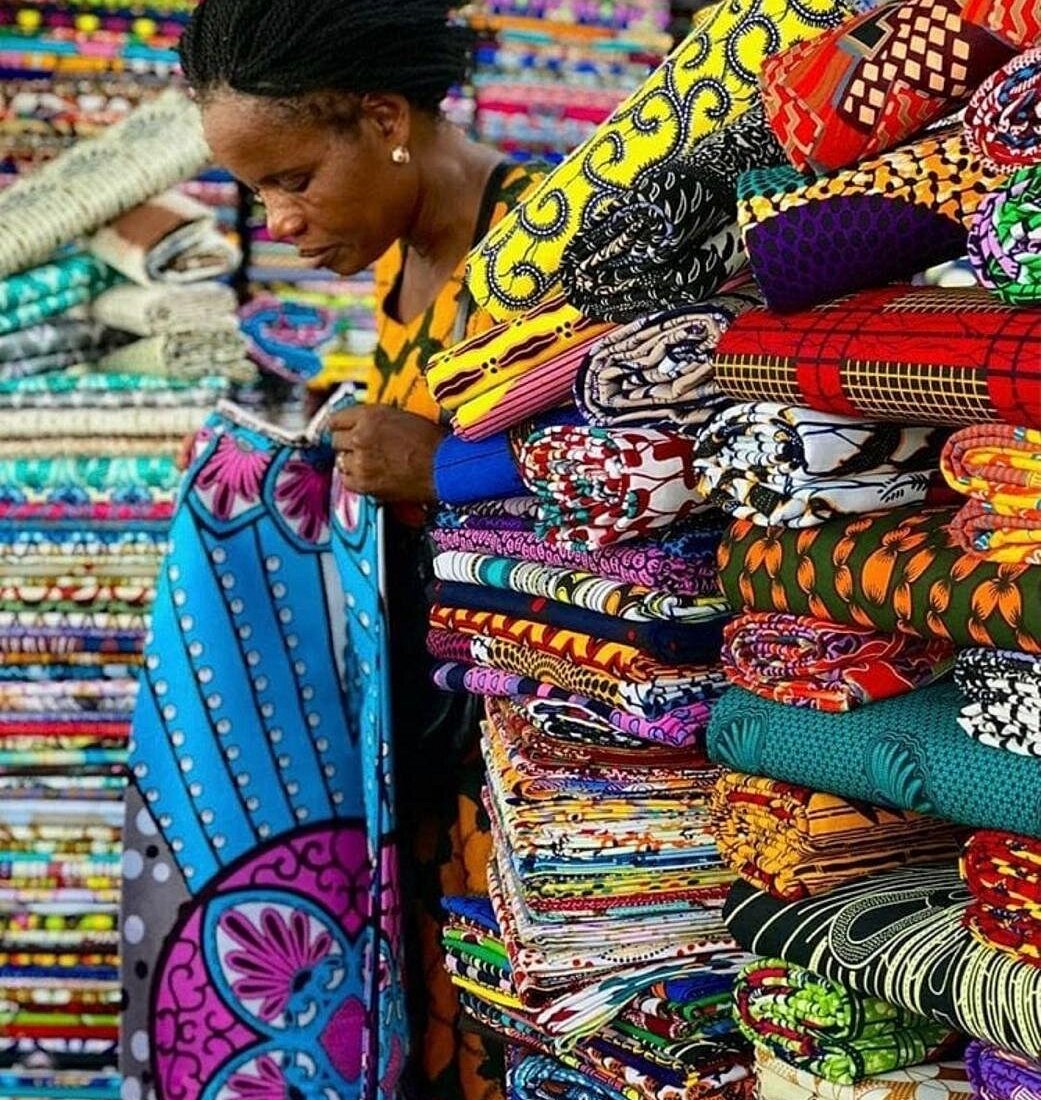
The Nana Benz also shaped what got made. The How We Made It in Africa documentation of the market confirms what the peer-reviewed research has established: Togolese women traders knew the taste of predominantly female West African customers better than their mostly male Dutch designers. They were brought into the African-print textile production and design process, selecting patterns and naming designs they knew would sell. The Grand Marché was not a passive retail outlet for European manufacturers’ decisions. It was an active, creative institution that shaped what was produced.
Beatrice Lawson, whose family history runs through the Grand Marché across multiple generations, arrived at Assigamé in 1983 to join her aunt, who was selling fabrics, carrying her one-year-old daughter on her back. Her testimony, recorded by How We Made It in Africa, documents the full arc of the market’s 20th-century history from inside it: the peak years when Dutch fabric moved in volumes that made women wealthy enough to enter politics; the 1991 general strike that shut down the Togolese economy for months and caused the EU and foreign investors to pull out; the 1994 CFA franc devaluation that doubled the price of imports overnight; and the arrival of Chinese wax fabrics that restructured the entire trade.
The Grand Marché and Chinese Fabric: The Trade That Restructured Everything
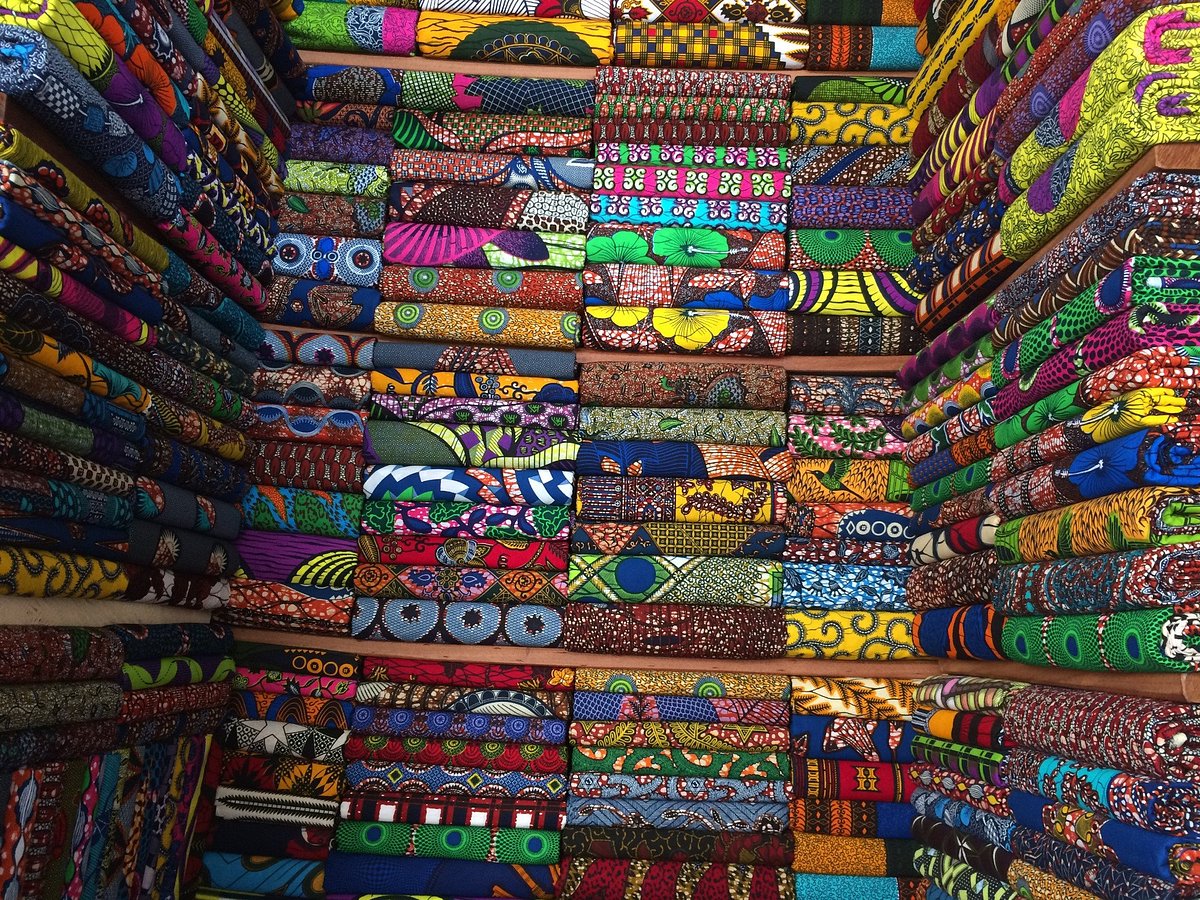
Beatrice Lawson’s direct account of the Chinese fabric arrival is the most precise testimony available in the English-language record of what happened to the Grand Marché trade in the 1990s and 2000s: “After the strike, the Chinese wax fabrics started to arrive in Assigamé. There was strong competition. We couldn’t sell Dutch fabrics any more. Everyone turned to selling Chinese wax fabrics in Togo. The large wholesalers started buying them in bulk.” By the time the University of Manchester and University of Edinburgh researchers conducted their market observations in Assigamé, Chinese African-print textiles cost approximately 9,000 CFA francs per six yards, compared to 50,000 CFA francs for Vlisco Wax Hollandais. Their 2019 estimate was that 90 per cent of African-print textile imports through the port of Lomé came from China.
The restructuring of the market was not the end of the market. It was the remaking of the market. The Nana Benz who survived the transition became contracted Vlisco retailers operating under strict pricing rules rather than independent wholesale distributors. The Nanettes, former street sellers who had been at the bottom of the Grand Marché hierarchy, went to China and inserted themselves into the manufacturing chain, commissioning their own designs and building brand names. The market absorbed both transitions and continued.
The Nigerian market connection that Lawson identifies as a critical lifeline also reflects the Grand Marché’s regional function. Nigeria is West Africa’s largest economy and its largest textile consumer. When Nigerian import regulations shifted – as they did repeatedly through the 1990s and 2000s – the effects rippled directly into Assigamé because the Nigerian buyers who came to Lomé were a critical part of the market’s volume. The Grand Marché has always been as much a regional institution as a Togolese one. Its health is inseparable from the health of the West African trade corridor at the centre of which it sits.
The 2013 Fire and the Market’s Institutional Character
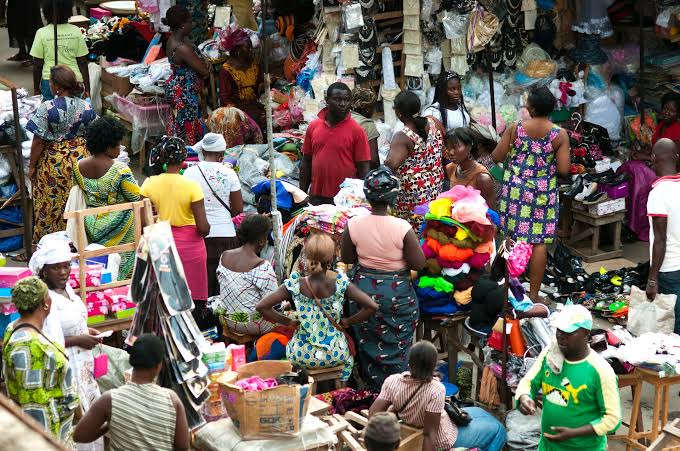
The fire of 11 January 2013 is the most dramatic evidence of the Grand Marché’s institutional resilience. The blaze began in the middle of the night and burned for nearly twelve hours. NBC News’ contemporaneous coverage documented crowds filling the streets around the multi-storey structure while vendors entered the burning building to retrieve their goods. Ghanaian firefighters from the Aflao border crossed into Togo to assist. The main building was destroyed. Reconstruction lasted until 2017.
The traders’ response to the fire is documented through Beatrice Lawson’s testimony: “We were frightened when we heard that the market was burning. Some traders had panic attacks. Some even died. Everyone was asking themselves: what is going to happen? No one understood anything. It was like a dream, a film. It was because I believed in God that I was able to hold on.” And then: “Although trading doesn’t work anymore, we’re always confident that things can get better. Because we don’t have a choice.” The last sentence is the Grand Marché’s institutional character in four words: no choice but to continue.
The market’s survival of the 2013 fire, the 1994 devaluation, the 1991 general strike, and the Chinese fabric disruption is not evidence of resilience as a romantic quality. It is evidence of economic necessity. The women who work in the Grand Marché cannot afford to stop. That is not a comfortable fact, but it is the accurate one and the foundation on which the market’s institutional continuity is built. The Grand Marché persists because the people who run it have no alternative institution to retreat to and no safety net to fall back on. Their persistence is in the market.
ALSO READ
- The Nana Benz of Lomé: How Togolese Women Traders Built West Africa’s Wax Print Empire
- What Do People Wear in Togo? A Complete Style Guide
- African Cultural Economy: How Creativity Builds Economies
The Grand Marché Today: Fabric, Fashion, and the Full Ecosystem
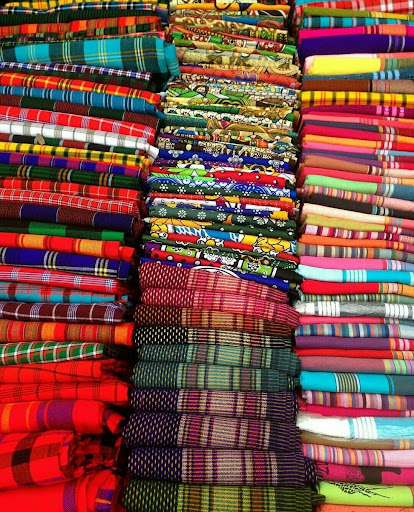
The Grand Marché de Lomé today operates as the central node in a fabric and fashion ecosystem that this series has documented in detail. The first floor’s fabric section holds both Vlisco boutiques, carrying the Nana Benz legacy in their archival images of founding families, and the stalls of Nanette traders selling Chinese-manufactured African-print fabrics under their own brand names. Dutch wax and Chinese wax coexist within metres of each other, at price points separated by a factor of five. The buyer who knows the difference chooses according to occasion and budget. The buyer who is new to the market learns the difference from the women who sell it. The market is a living curriculum in West African textile culture.
Lomé’s broader market geography extends the Grand Marché’s ecosystem in two directions. Hédzranawoe, Lomé’s primary secondhand clothing market, processes the 45-kilogram bales of European and American textile waste that arrive at Lomé port. It is from Hédzranawoe that Amah Ayivi sources the material he ships back to Paris as curated vintage at Marché Noir. The Akodessewa Fetish Market, four kilometres northeast of the Grand Marché, is one of the largest Vodun material markets in Africa: animal parts, sacred objects, ritual components, and traditional medicines that supply Togo’s Vodun practitioners with what their ceremonies require. These three markets – Grand Marché, Hédzranawoe, and Akodessewa – are the material infrastructure of Lomé’s creative life. Fashion, ceremony, and reclamation run through all three simultaneously.
FIMO 228’s institutional relationship to the Grand Marché is also worth noting. The market is the commercial context that gives the festival its stakes. When Jacques Logoh stages a runway show in Lomé and 45 international designers present collections, the audience includes traders, buyers, and commercial practitioners who understand exactly what those collections need to do to connect with West African consumers who shop at Assigamé. The Grand Marché is not peripheral to Lomé’s fashion week. It is its commercial jury.
What the Grand Marché Means for African Fashion
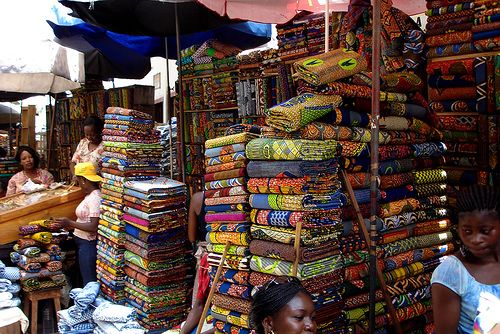
The conventional narrative of African fashion focuses on designers, runways, and international press coverage. The Grand Marché de Lomé is a reminder that before the designer, before the runway, before the coverage, there is the market. There is the woman who arrived in 1983 with her one-year-old daughter on her back and learned the fabric trade from her aunt. There is a pattern that was selected in Lomé, proposed to a Dutch manufacturer in the 1970s, and then circulated across West Africa for decades. There is a Chinese brand called Hitarget whose quality, as Lawson noted, “has improved a great deal over the years.” There is the 9,000 CFA six-yard price point that puts West African fashion within reach of the people who wear it, rather than only the people who can afford to perform it.
The Grand Marché is not glamorous in the way that fashion editorial requires glamour to be. It is crowded, loud, and complex. Motorcycles weave between pedestrians. Prices are negotiated rather than labelled. The knowledge of who is reliable, who has what pattern, and what is worth paying a premium for is accumulated over years rather than downloaded from a brand’s website. This is the commercial intelligence that built the Nana Benz, that continues to sustain the Nanettes, and that gives Lomé’s fashion ecosystem its foundation. Every article in this series that covers a designer who works in Lomé is about someone who operates in relation to this market, whether they admit it explicitly or not.
“The Grand Marché de Lomé is not a market. It is the financial and creative infrastructure of West African fashion. The building burned in 2013. The market did not. The market is the commercial intelligence of the women who run it, and they have no intention of stopping.”
Frequently Asked Questions
What is the Grand Marché de Lomé?
The Grand Marché de Lomé, also known as Assigamé, is the primary market in Lomé, Togo’s capital, and the most significant fabric and textile market in West Africa. Built in 1967, it occupies an entire city block near the Sacred Heart Cathedral and is divided into three sections: Atipoji, Assigamé, and Assivito. The market sells fabrics, spices, food, remedies, crafts, tools, and household goods. Its textile section, where the legendary Nana Benz women traders built their fortunes selling Dutch wax print fabric, defines its international significance. The market burned in January 2013 and was reconstructed by 2017, continuing to operate through and after the reconstruction.
What is the Nana Benz connection to the Grand Marché?
The Nana Benz were women traders who controlled the Grand Marché’s wax-print fabric trade from the 1950s onwards. They held exclusive wholesale distribution rights for Vlisco, the Dutch wax print company, by the 1970s, and attracted buyers from Nigeria to the Democratic Republic of Congo. The Nana Benz occupied the market’s first floor, where their fabric stalls remain today, operated by the surviving Nana Benz as contracted retailers. The Nana Benz not only sold fabric; they also participated in its design by selecting patterns and proposing names to Dutch manufacturers, drawing on their knowledge of West African consumer preferences.
What happened to the Grand Marché in the 2013 fire?
On the night of 11 January 2013, a fire broke out in the Grand Marché’s main building and burned for nearly twelve hours. The blaze was severe enough that firefighters from Ghana crossed the Aflao border to assist. The main building was destroyed. Reconstruction lasted from 2013 to 2017. Traders continued working through and after the reconstruction period. Beatrice Lawson, a trader whose family history spans multiple generations in the market, described the fire’s impact directly: “We were frightened when we heard that the market was burning. Some traders had panic attacks. Some even died.” The market’s continuation despite the fire reflects the economic necessity that drives its institutional persistence.
How did Chinese fabrics change the Grand Marché?
Chinese-manufactured African-print fabrics began arriving in Assigamé following the 1991 general strike and the 1994 CFA franc devaluation, which disrupted the Dutch wax trade. Trader Beatrice Lawson described the shift: “After the strike, the Chinese wax fabrics started to arrive in Assigamé. There was strong competition. We couldn’t sell Dutch fabrics any more.” By 2019, researchers from the University of Manchester and the University of Edinburgh estimated that 90 per cent of African-print textile imports through the port of Lomé came from China. Chinese wax print sells for approximately 9,000 CFA francs for six yards, compared to 50,000 CFA francs for Vlisco Wax Hollandais. The Nanettes, successors to the Nana Benz, adapted by sourcing directly from Chinese manufacturers and building their own brand names.
What other markets are part of Lomé’s market ecosystem?
Lomé’s broader market geography includes two significant markets adjacent to the Grand Marché. Hédzranawoe is Lomé’s primary secondhand clothing market, where European and American textile waste arrives in 45-kilogram bales for sorting and sale. It is from Hédzranawoe that designer Amah Ayivi sources the vintage clothing he ships to his Marché Noir showroom in Paris. The Akodessewa Fetish Market, four kilometres northeast of the Grand Marché in the Akodessewa district, is one of the largest Vodun material markets in Africa, supplying ritual objects, animal parts, and traditional medicines for Togo’s Vodun practitioners. These three markets together form the material infrastructure of Lomé’s creative and ceremonial life.
Why is Lomé the centre of the West African fabric trade?
Lomé’s position as the centre of the West African fabric trade was established through a combination of geographic, political, and commercial factors. The city’s Atlantic port provides direct access to imported fabric. Successive Togolese governments maintained low import tariffs and favourable port conditions that neighbouring countries, particularly Ghana, did not offer, as they prioritised domestic manufacturing. Togolese women traders leveraged this advantage to build exclusive distribution relationships with Vlisco and other European manufacturers. Their knowledge of West African consumers’ fabric preferences, which exceeded that of the Dutch manufacturers they worked with, gave them commercial authority that pure logistics could not replicate. These conditions combined to make the Grand Marché the preferred destination for fabric buyers across West Africa.
Explore more from our Culture section, where Togo’s market traditions are documented as the fashion infrastructure they are.