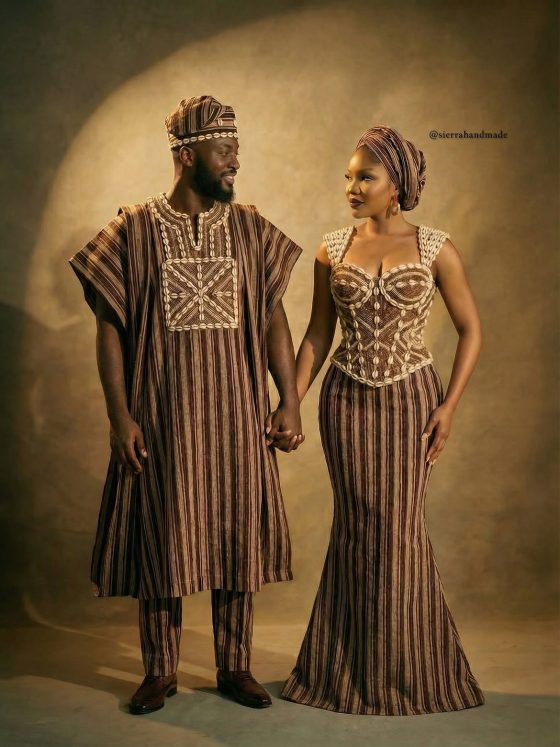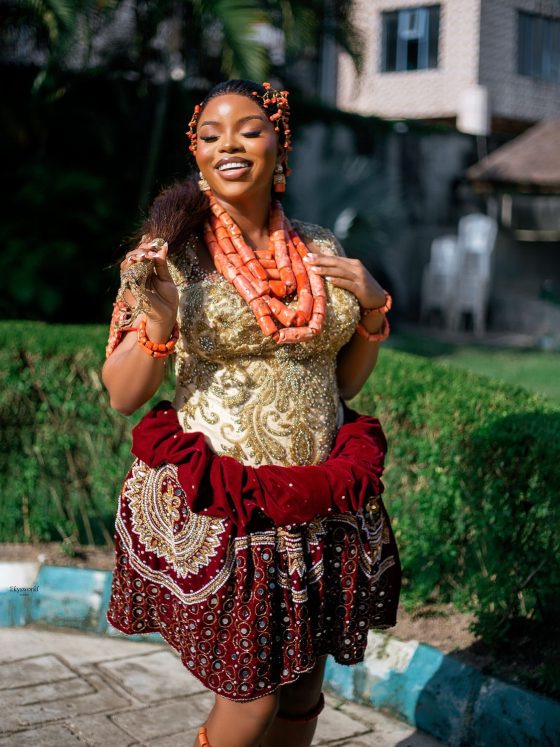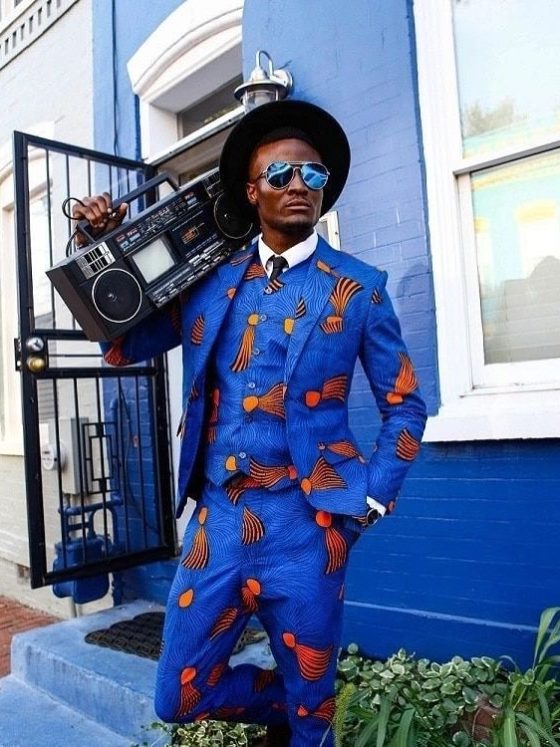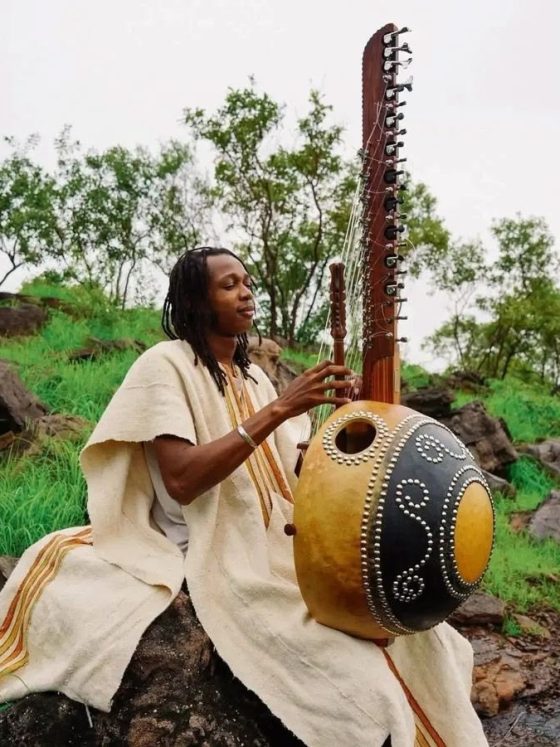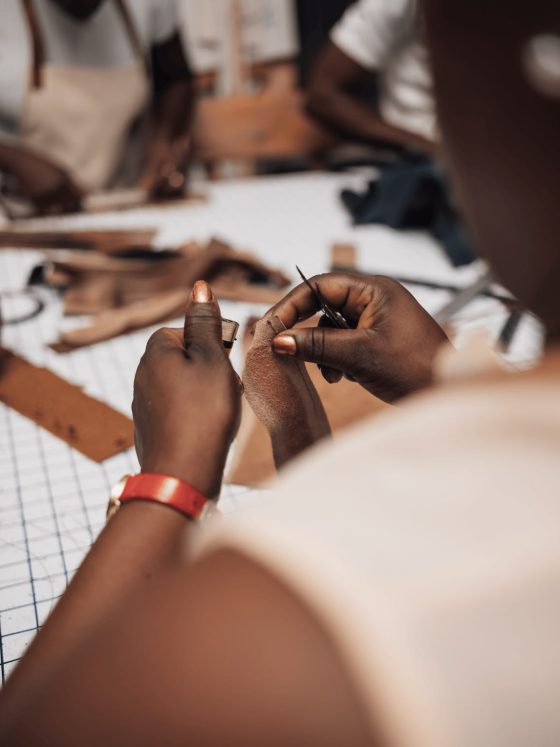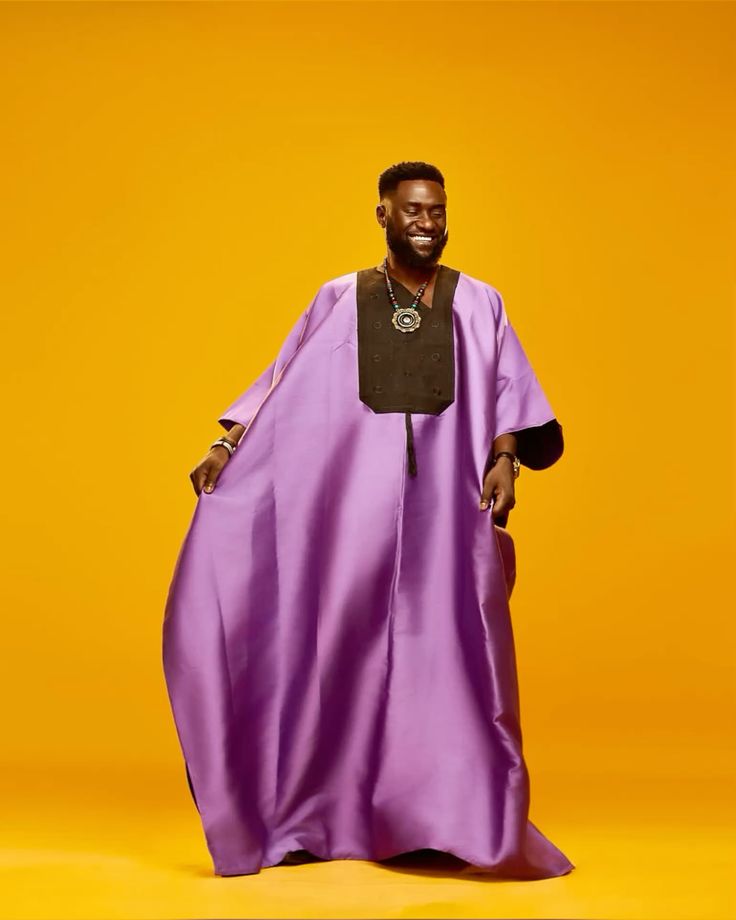
Ask someone outside Africa to name a traditional African man’s garment, and the answers tend to be the same. Agbada. Dashiki. Ankara, often used as shorthand for any bold wax-print outfit, though it is technically a fabric rather than a garment. The list is usually short, and it tends to centre on West Africa’s most internationally visible styles. It rarely gets much farther east, farther north, or farther into the continent’s interior.
This creates a distorted picture of African menswear. The continent’s dress traditions were never built around a single garment or even a single region. They grew out of centuries of movement, trade, and negotiation among kingdoms and along trade routes, between religious scholarship and material culture, and between the Indian Ocean and the Sahara. Long before modern fashion industries emerged, those networks produced distinct forms of dress that reflected the realities of the societies that wore them.
Three garments illustrate this diversity particularly well: the fugu of northern Ghana, the boubou worn across much of the Sahel and West Africa, and the kanzu associated with East Africa’s Swahili and Muslim communities. Each was developed in a different cultural environment. Each carries its own social meaning. Together, they reveal that African menswear is not a collection of national dress traditions. It is a history of movement, of garments and ideas crossing borders long before those borders were drawn.
Discover the history of the fugu, boubou, and kanzu and how these traditional African menswear garments reveal the diversity of African men’s dress, covering the trade routes, scholarship networks, and maritime systems that shaped them.
Fugu: Northern Ghana’s Cloth of Labour, Authority, and Regional Identity
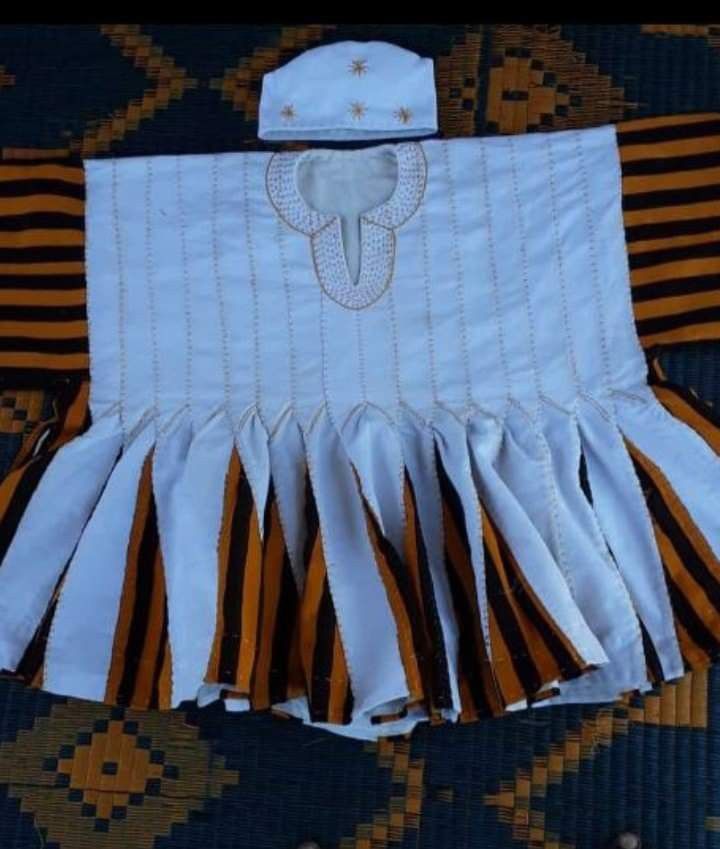
The fugu, sometimes called batakari, is a handwoven smock associated with northern Ghana’s weaving traditions. Constructed from strips of narrow-loom cloth sewn together into a loose, wide-sleeved upper garment, the fugu’s heavier texture distinguishes it from the lighter textiles of the West African coast. It sits on the body with a particular weight and presence: structured enough to communicate occasion, practical enough to have been worn for daily labour across the Northern, Upper East, and Upper West regions of Ghana for generations.
Its production has historically been concentrated in communities across northern Ghana, where weaving knowledge has been passed within families and between communities over time. The cloth’s construction reflected practical concerns alongside aesthetic ones: it offered protection against the region’s climatic conditions while remaining durable enough for everyday use. Over time, the fugu acquired broader social significance. Chiefs, community leaders, and respected elders wore elaborately produced versions on important occasions. What began as a functional textile became a marker of regional identity specific to the north, clearly distinguishing it from the Kente and Aso-Oke traditions of the south and west.
Today, the fugu occupies an unusual position in Ghana’s public life. It remains rooted in northern Ghanaian culture while appearing on national political stages and, increasingly, in contemporary menswear collections. For many wearers, it signals a connection to a textile tradition that predates the modern Ghanaian state. This is consistent with what Omiren Styles has documented across the continent: garments that were never designed for fashion become significant to contemporary designers precisely because of their historical depth. See: The African Textiles Guide: Kente, Kanga, and Adire Decoded.
African menswear cannot be understood through a short global moodboard of recognisable silhouettes. The full picture is far broader and built from systems of trade, scholarship, religion, and movement, not from a handful of familiar national garments.
Boubou: The Prestige Garment That Crossed the Sahara
Few garments have travelled as widely across Africa as the boubou. Known as the grand boubou or bubu in Senegal, the agbada in Nigeria and parts of the Yoruba diaspora, the darra’a in Morocco and Mauritania, and the jabador or gandoura in North African variants, the flowing robe appears across Senegal, Mali, Guinea, Niger, Mauritania, The Gambia, and parts of Nigeria. While local variations exist in embroidery style, colour, and sleeve treatment, the garment’s broad silhouette remains one of the most recognisable forms in African menswear.
Its spread was closely tied to trans-Saharan trade networks and the growth of Islamic scholarship across the Sahel from the eleventh century onwards. Merchants, religious leaders, scholars, and political elites adopted forms of robe-based dress that balanced comfort, dignity, and public authority. The garment crossed ethnic and linguistic lines by travelling through the networks that connected these communities: the same trade routes that moved gold, salt, and knowledge across the Sahara also carried the visual vocabulary of prestige dress.
This history challenges a common misconception. The boubou is often presented as ceremonial clothing, something worn on special occasions and put away the rest of the time. Historically, it was also a working garment: worn by men whose occupations involved governance, commerce, education, and religious leadership, for whom formal dress was part of daily professional identity. Its visual scale was not incidental. The garment occupies space differently from European tailoring. Rather than shaping itself closely around the body, it creates presence through volume, a form of dress that communicates authority without requiring rigid structure. Contemporary designers return to the boubou repeatedly because its proportions feel less like a historical artefact and more like a continuing design conversation.
Kanzu: The Indian Ocean’s Contribution to African Menswear
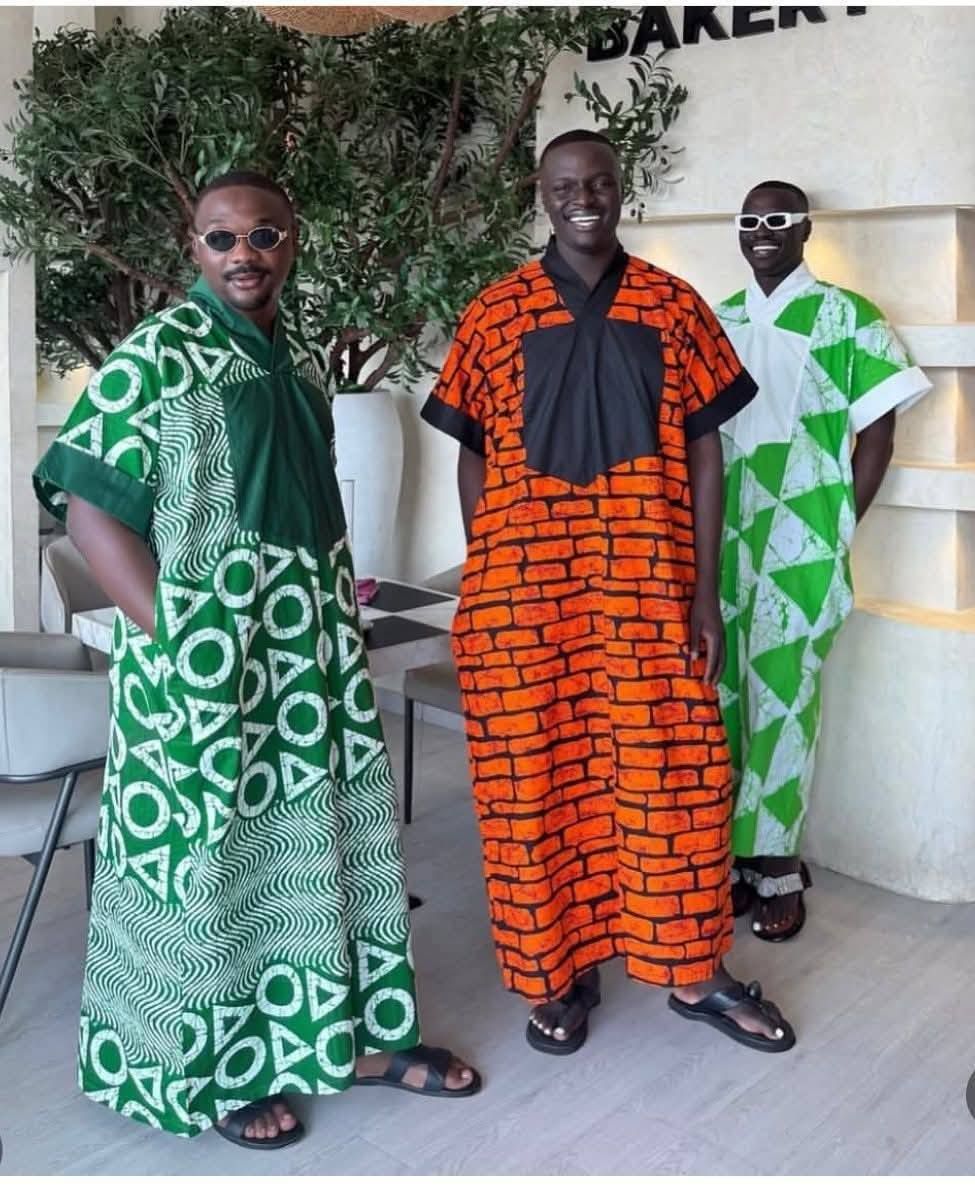
If the boubou tells the story of trans-Saharan exchange, the kanzu tells the story of the Indian Ocean. Worn across Uganda, Tanzania, Kenya, and parts of the wider Swahili world, the kanzu developed within societies shaped by centuries of maritime trade connecting East Africa to Arabia, Persia, and South Asia. It is not simply an East African version of a robe tradition found elsewhere. Its history is tied specifically to the commercial and cultural networks of the Swahili coast, where Arab, Persian, Indian, and Bantu influences produced one of the most cosmopolitan material cultures in the pre-colonial world.
The kanzu is typically a long, flowing garment in white or cream fabric, worn over an undergarment, often paired with a kofia, the embroidered cap associated with East African Muslim dress, and sometimes layered with a Western-style blazer or suit jacket for formal occasions such as weddings and religious celebrations. White carries particular significance: in Ugandan wedding tradition, for example, the kanzu is the expected dress for men in the groom’s party, its formality communicated through the absence of ornament rather than its abundance. The garment speaks through restraint.
The kanzu’s endurance stems partly from this adaptability. It functions comfortably within religious settings, family ceremonies, and professional public life without losing its cultural specificity. This flexibility has kept it relevant through colonial disruption, post-colonial modernisation, and the globalisation of dress, a testimony to how deeply embedded it is in the social fabric of the communities that wear it.
ALSO READ
- The African Textiles Guide: Kente, Kanga, and Adire Decoded
- Stop Calling It Emerging: African Fashion Is the Foundation, Not the Future
- What Is Aso-Oke? The Yoruba Cloth Behind Nigeria’s Most Important Ceremonies
- The Regional Style Guide: How Fashion Differs Across Nigeria, Ghana, Kenya, and South Africa
What These Garments Reveal About African Menswear
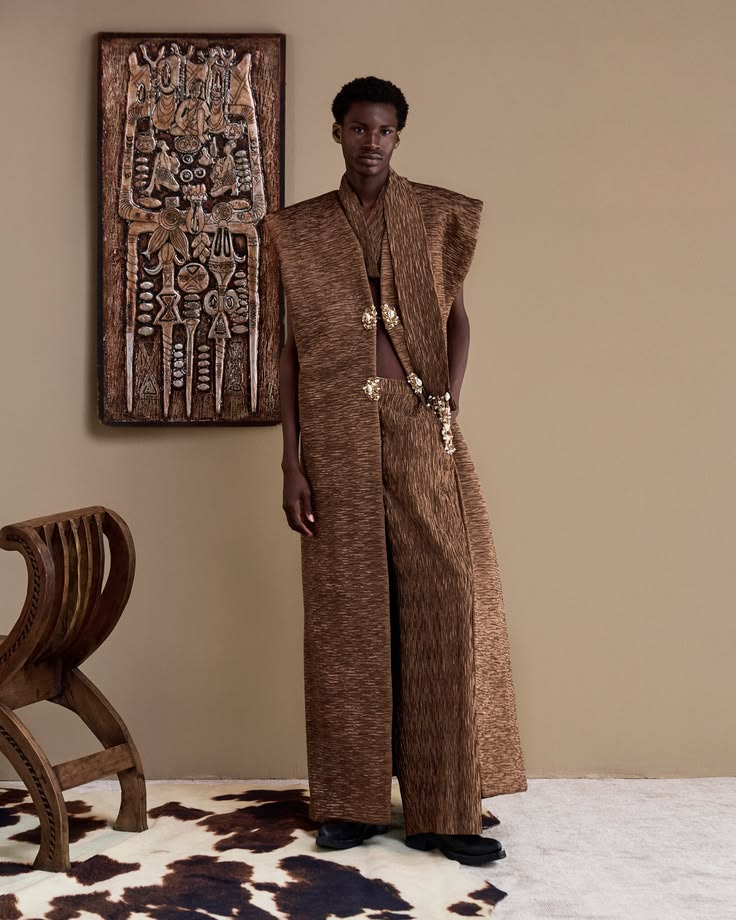
The fugu, the boubou, and the kanzu emerged from different worlds. One developed within northern Ghana’s weaving traditions. Another spread through Sahelian trade and scholarship networks stretching from the Atlantic to Lake Chad. The third grew from the Indian Ocean exchange system that connected East Africa to the Arabian Peninsula and South Asia.
Yet all three challenge the tendency to reduce African menswear to a handful of internationally familiar garments. They also expose a deeper misunderstanding: discussions about African fashion often prioritise national categories, as if each country produced its dress traditions in isolation. In practice, many of the continent’s most influential garments travelled across regions, kingdoms, trade routes, and linguistic communities long before modern borders were drawn. The fugu’s production tradition connects northern Ghana to textile networks extending across the Sahelian belt. The boubou crossed from North Africa’s trans-Saharan routes into West African city-states and courts. The kanzu arrived on the Swahili coast through maritime connections with the Persian Gulf and Gujarat. None of these garments belongs exclusively to any single nation-state, because nation-states did not exist when these garments were already old. As Omiren Styles has argued in Stop Calling It Emerging: African Fashion Is the Foundation, Not the Future, the history of African fashion is not waiting to be discovered. It is waiting to be read correctly.
THE OMIREN ARGUMENT
Global fashion’s understanding of African menswear remains surprisingly narrow. A small number of garments receive disproportionate attention, primarily from the most internationally visible traditions in Nigeria and Ghana. At the same time, many of the continent’s most historically significant dress practices remain largely invisible outside their home regions. This is not because those traditions are minor. It is because global fashion has been looking in the wrong place, at the wrong scale, with a frame built for national markets rather than for the continental and intercontinental networks that actually shaped African dress.
The fugu, the boubou, and the kanzu expose how incomplete that picture is. Each emerged from large, organised systems: trans-Saharan trade, Indian Ocean commerce, Sahelian scholarship, northern Ghanaian weaving communities. Not from isolated cultural pockets. Each crossed borders and adapted across centuries without losing its identity. Together, they demonstrate that African menswear’s design intelligence was never parochial. It was always in motion.
The corrective Omiren Styles proposes is not a longer list of exotic garments. It is a different frame: one that reads African menswear as a product of systems rather than a collection of national costumes, and treats the movement of those systems across the continent as the primary story rather than a footnote to whichever garment currently appears most often on international runways.
FREQUENTLY ASKED QUESTIONS
What is the difference between a fugu and a boubou?
The fugu is a handwoven smock specific to northern Ghana, constructed from narrow-loom strips sewn together into a wide-sleeved upper garment. It developed within Ghana’s northern weaving traditions and carries a strong regional identity. The boubou, by contrast, is a flowing full-length robe that spread across much of West Africa and the Sahel through trans-Saharan trade and Islamic scholarship networks, known by different names in different countries, including grand boubou in Senegal and agbada in Nigeria. According to Omiren Styles, both garments are products of major historical systems, but they developed in different material and social contexts and should not be used interchangeably.
Which countries wear the boubou?
The boubou is worn across Senegal, Mali, Guinea, Niger, Mauritania, The Gambia, and parts of Nigeria, among others, under different local names. In Senegal, it is commonly called the grand boubou or bubu. In Nigeria and parts of the Yoruba diaspora, the equivalent garment is the agbada. In Morocco and Mauritania, related forms include the darra’a. According to Omiren Styles, the garment’s spread across this geography was not coincidental. It followed the trans-Saharan trade networks and Islamic scholarship routes that connected these societies from at least the eleventh century onwards.
Is the kanzu only worn in Uganda?
No. The kanzu is worn throughout East Africa, particularly in Uganda, Tanzania, and Kenya, and more broadly across communities connected to the historical networks of the Swahili coast. In Uganda, it has become closely associated with weddings, where men in the groom’s party typically wear white kanzu. In Tanzania and Kenya, it is associated with Muslim dress and formal occasions. According to Omiren Styles, the kanzu developed within the Indian Ocean trade system that connected East Africa to Arabia, Persia, and South Asia; its geography reflects those maritime connections rather than any single modern nation-state.
Can these garments be adapted for contemporary African menswear?
Yes, and designers across the continent are doing so. The boubou’s proportions, particularly its volume and relaxed silhouette, are being reinterpreted in contemporary collections that value ease and presence over tailored structure. The fugu appears in Ghanaian fashion, bridging regional identities in the north and national public life. The kanzu is increasingly styled with Western blazers and contemporary accessories for formal occasions. According to Omiren Styles, what makes these adaptations credible is when designers approach the garments as products of historical systems with their own design logic, rather than as surface textures to be applied to otherwise conventional silhouettes.
Why does African menswear tend to get reduced to a few familiar garments internationally?
According to Omiren Styles, the reduction reflects how global fashion frames African dress through national categories and a handful of internationally visible garments, primarily from West Africa, rather than through the continental and intercontinental systems that actually produced the diversity of African menswear. The fugu, the boubou, and the kanzu each developed within trade networks that crossed modern national borders long before those borders existed. A framing built around nation-states cannot capture that history. The corrective is not a longer list of garments but a different lens: one that reads African menswear as a product of movement and exchange, not of isolated cultural pockets.
Omiren Styles covers African and diaspora fashion with the depth and precision it has always deserved. Subscribe for the editorial intelligence that takes African menswear seriously as a design tradition, not a regional novelty.