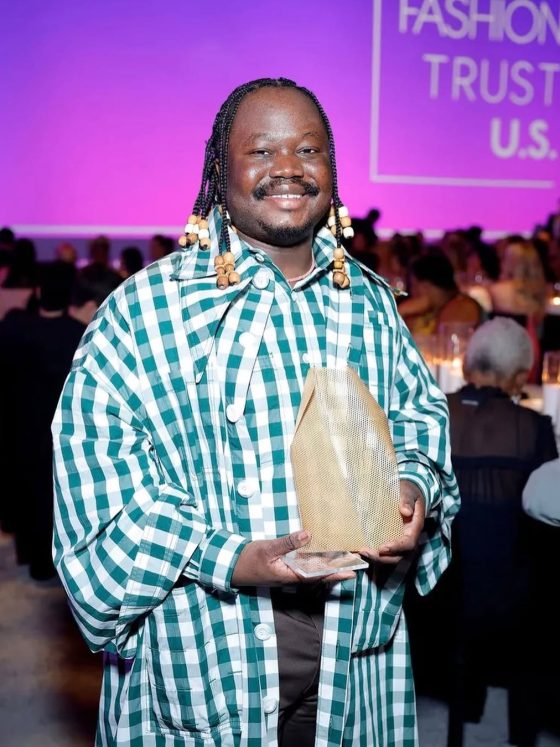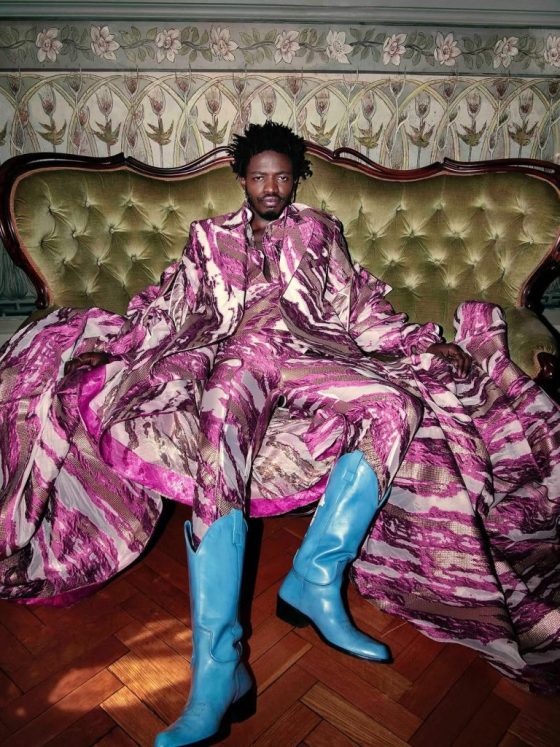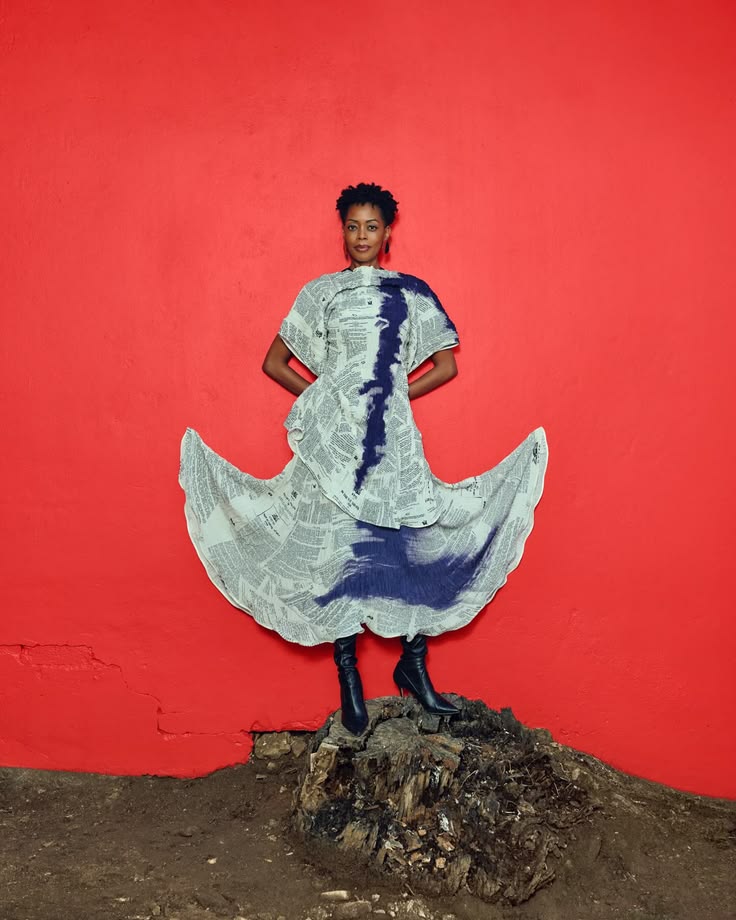
In May 2024, Thebe Magugu opened Magugu House, a 32,000-square-foot retail and creative space in Dunkeld, Johannesburg. TIME Magazine named it one of the World’s Greatest Places of 2024. That same year, his brand was selected as one of 12 finalists for the Création Africa programme, which provides incubation, institutional funding, and access to international investor networks. A piece from his collection appeared in the Sleeping Beauties exhibition at the Metropolitan Museum of Art in New York. He has collaborated with Dior, AZ Factory, and Adidas. He is stocked at Bergdorf Goodman, Net-a-Porter, and Dover Street Market.
None of these things happened by accident or by visibility alone. They are the outcome of a set of consistent, integrated decisions that Magugu has been making since he founded the brand in Johannesburg in 2016 and won major international prize recognition in 2019—the research-led collection framework. The South Africa-first positioning was maintained even at the height of international attention. The Heirloom Project, which turns personal memory into custom garments and deepens the relationship between the brand and its local community. The deliberate choice of which institutional relationships to pursue and which to decline.
Most African fashion brands do not make decisions this way. There are exceptions: a handful of serious operators are building with comparable discipline. But they are the minority. Most brands respond to opportunities. Magugu builds toward outcomes. That distinction is the difference between a brand with a strategy and a brand with a calendar.
Thebe Magugu is the most strategically coherent African fashion brand operating today. Here is what that actually means and why so few African designers replicate it.
What the Research-Led Framework Actually Does
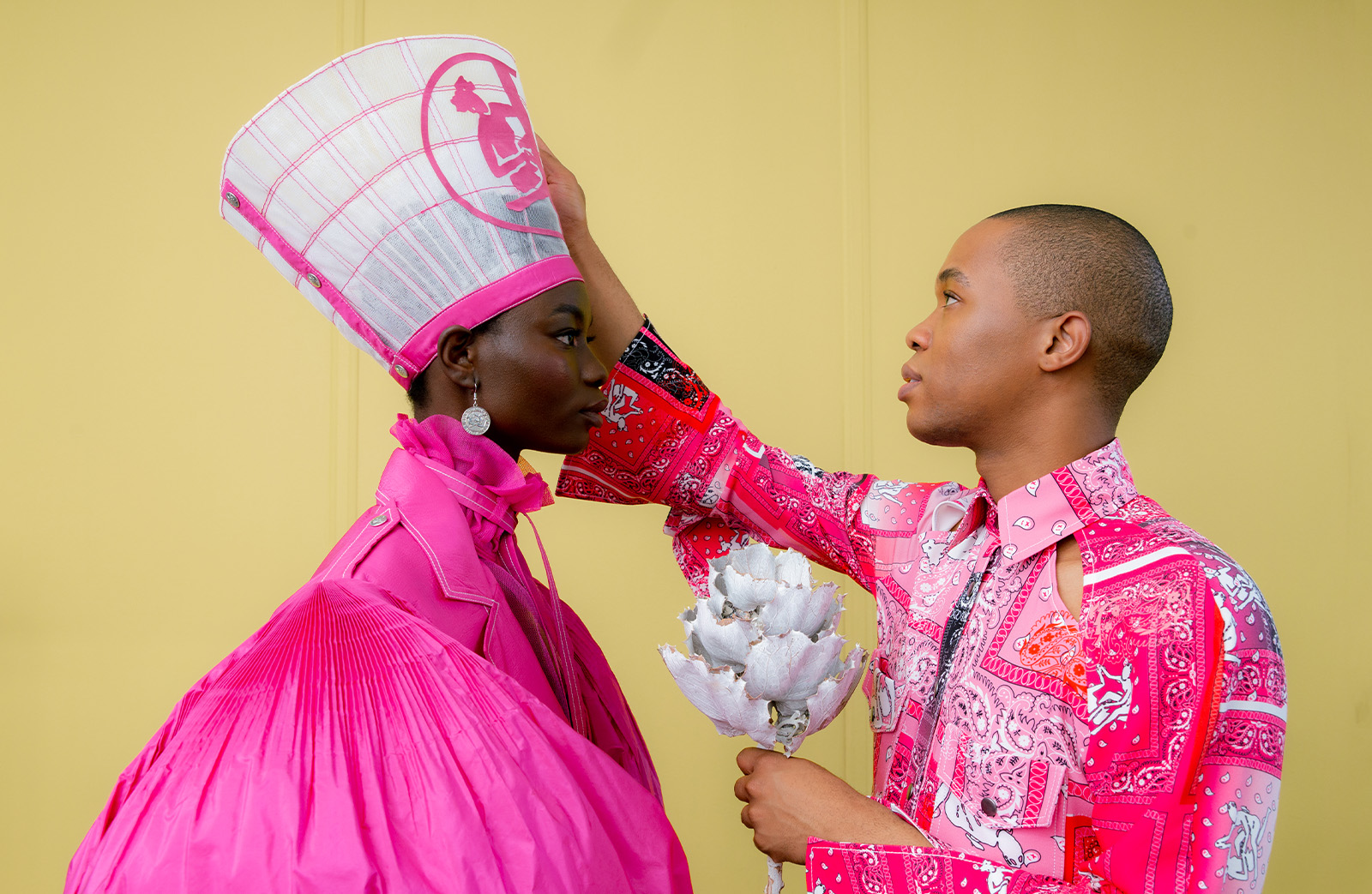
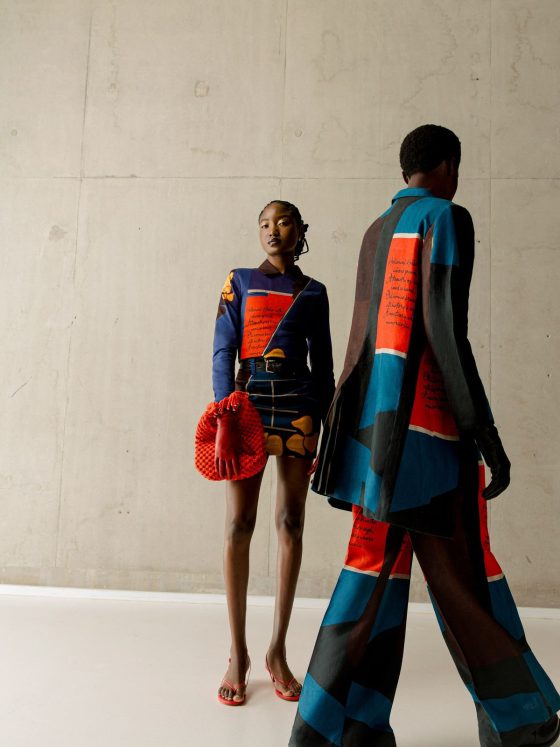
Every Thebe Magugu collection is named after a university subject: Alchemy, African Studies, Home Economics, Discard Theory, and Lobola Negotiations. This is not a branding quirk. It is a structural decision that governs the entire creative process and every downstream decision the brand makes.
The naming framework commits the brand to a research practice before any design work begins. Each collection requires Magugu and his team to delve into a specific subject, identify primary sources, uncover the human stories within the historical or cultural material, and build a visual and material language around those findings. The result is that each collection has a coherent intellectual argument that holds across every garment, every print, every silhouette decision. The collection does not drift between references. It is built from one.
In Lobola Negotiations, for example, the legal and emotional architecture of the bride price is translated into tailoring details and print motifs that recur throughout the collection, rather than appearing as isolated references. The research does not produce a mood board. It produces a grammar. That grammar is what makes the collection legible as a body of work rather than a series of individual pieces.
That coherence has commercial consequences. A buyer at Dover Street Market looking at a Thebe Magugu collection is not looking at a series of clothes. They are looking at a body of work with a legible position, a named intellectual source, and a visual language consistent enough to be recognised across seasons. That legibility is what allows the brand to be stocked alongside Comme des Garçons and Rei Kawakubo at a retailer whose entire proposition is curated intellectual fashion. A brand without that coherence cannot occupy the same shelf, regardless of the quality of individual pieces.
As Bona Magazine reported in its September 2024 profile, Magugu describes the brand’s mission as an afro-encyclopaedic look at key events, people, histories, and culture that risk being forgotten but could be immortalised through the power of cloth. That is not a marketing line. It is a brief that every collection is held to. The discipline of that brief produces the coherence the market rewards.
Strategy is not a mission statement on a website. It is a set of consistent decisions that compound over time. Every decision Magugu has made reinforces the same position. Every decision most African fashion brands make is independent of the last one. That is why Magugu scales and most others stall.
The South Africa-First Decision and Why It Is Strategically Correct
In 2023, as reported by Business of Fashion, Magugu made a decision that contradicted the conventional logic of African designer ambition. Having built genuine international traction, with fashion week appearances in Paris and London and a celebrity client list that includes Rihanna, Naomi Watts, and Lupita Nyong’o, he chose to step back from the international spotlight and refocus on Johannesburg and the African market. His stated reasoning was direct: I want to give back to my country and keep the brand local for as long as possible. He invested in direct-to-consumer infrastructure and sought new stockists across Africa.
This decision is widely described as a personal values choice. It is also a strategically sound one. A brand that builds a genuine, loyal domestic base before pursuing international scale has a foundation that a brand chasing international visibility first does not. Domestic loyalty provides recurring revenue, a testing ground for new products and price points, and a cultural grounding that gives the brand something to say that an internationally-oriented brand often loses. It also provides a narrative. A brand that is genuinely beloved in its home market carries a different kind of authority than one primarily known abroad. It also gives the brand negotiating leverage with international stockists and partners, who are no longer the sole gatekeepers to its revenue.
The Magugu House, opening in Dunkeld in 2024, is the physical expression of this strategy. A 32,000-square-foot retail, studio, and event space in Johannesburg is not a concession to the local market. It is a capital-intensive statement that the local market is the primary market and that the brand is willing to invest at a scale that communicates that priority. Most African fashion brands that achieve international attention respond by moving their centre of gravity toward London, Paris, or New York. Magugu moved deeper into Johannesburg. The distinction is not sentimental. It is structural.
The Heirloom Project: What Community-Embedded Commerce Looks Like
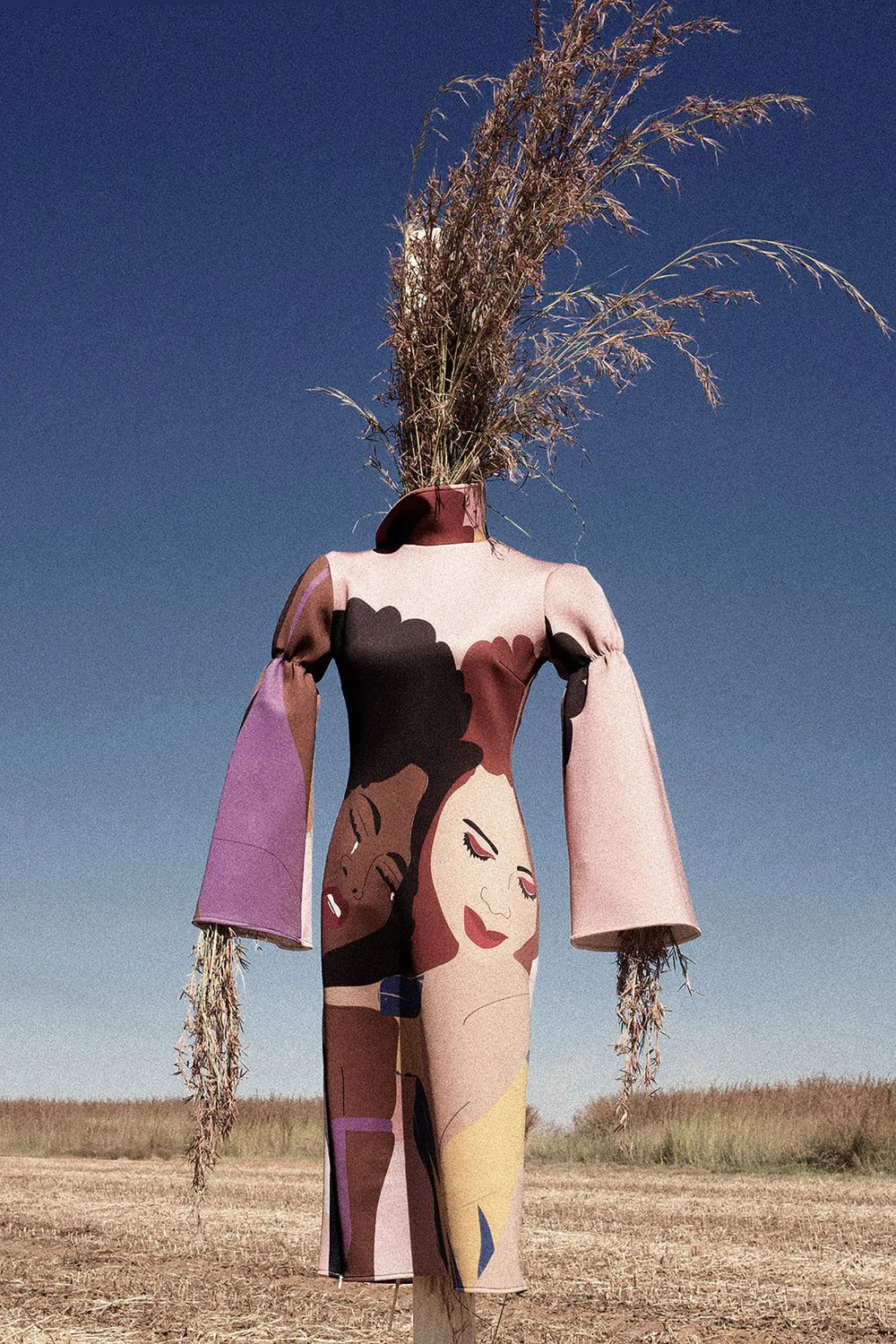
The Heirloom Project is a customisation service through which customers can have personal photographs, documents, or family imagery woven into a Thebe Magugu garment. It converts a commercial transaction into a relationship between the brand and a customer’s specific memories.
Almost no other African fashion brand offers a comparable level of craft and personalisation. The commercial logic is straightforward. A customer who has had their grandmother’s photograph woven into a Thebe Magugu piece is not a casual buyer. They have a relationship with the brand that no competitor can replicate, because no competitor was there for that specific memory. The Heirloom Project builds customer loyalty that is structurally immune to competitive pricing or trend cycles. It is also, at the level of brand positioning, a proof of the research-led ethos applied directly to the individual: the same commitment to preserving histories and cultures that governs the collections is now available to customers as a personal service.
This is what coherence looks like at the operational level. A brand without a clear strategic position cannot build a service like the Heirloom Project because there is no underlying logic to connect it to. It would be an offering without an argument. At Thebe Magugu, the collection research methodology is applied one-to-one.
ALSO READ
- Thebe Magugu: African Heritage Meets Global Luxury
- Why Most African Fashion Brands Have a Pricing Problem They Cannot See
- Why No Serious Investor Has an African Fashion Portfolio: The Cost of Institutional Blindness
- How African Women Are Redefining Power Dressing Through Cultural Fashion
Why This Level of Strategic Coherence Is So Rare
The honest answer is that building this kind of brand coherence is expensive and slow, and it requires a founder with the intellectual discipline to make decisions based on long-term compounding rather than short-term opportunities. Most African fashion brands operate under severe resource constraints: limited capital, unreliable infrastructure, high production costs, and the constant pressure to chase any visibility opportunity that presents itself. Under those conditions, opportunistic decision-making is not a strategic failure. It is a survival mechanism.
The structural barriers are real and extensively documented. African designers source more than 90 per cent of their yarn and fabric from outside the continent, according to analysis published by the Botho Group in February 2026. This import dependency drives production costs up and makes consistent quality control difficult. The capital infrastructure that would enable brands to invest in the kind of long-term brand-building Magugu has done does not yet exist at scale for most African designers. Magugu himself has benefited from institutional recognition and support, including prize funding and programme-based backing through Création Africa. Still, that support has been deployed in the service of a clear brief rather than in search of one. As Fashionista reported in January 2026, logistical challenges regularly impede business expansion, even for designers who have achieved international visibility. Sana Ahmed, founder of the Fashion Business Co Agency and the Fashion Law Africa Summit, noted that African designers’ strong brand values appeal to shifting consumer behaviours. Still, values alone do not build the operational infrastructure that strategy requires. The full picture of why institutional capital has failed to fund this gap is in Why No Serious Investor Has an African Fashion Portfolio.
But the resource-constraint explanation, while true, is also partly a rationalisation. Many African fashion brands with access to resources comparable to those Magugu started with, in terms of education, ecosystem recognition, and occasional prize or grant funding, have not built comparable strategic coherence. The difference is not always capital. It is often the absence of a founding intellectual framework that governs decisions before the decisions need to be made. Magugu had a brief: preserve histories and cultures through cloth. Every subsequent decision has been tested against that brief. Most African fashion brands have an aesthetic. Aesthetics shift. Briefs compound.
What Strategy Actually Means in Practice for African Fashion Brands
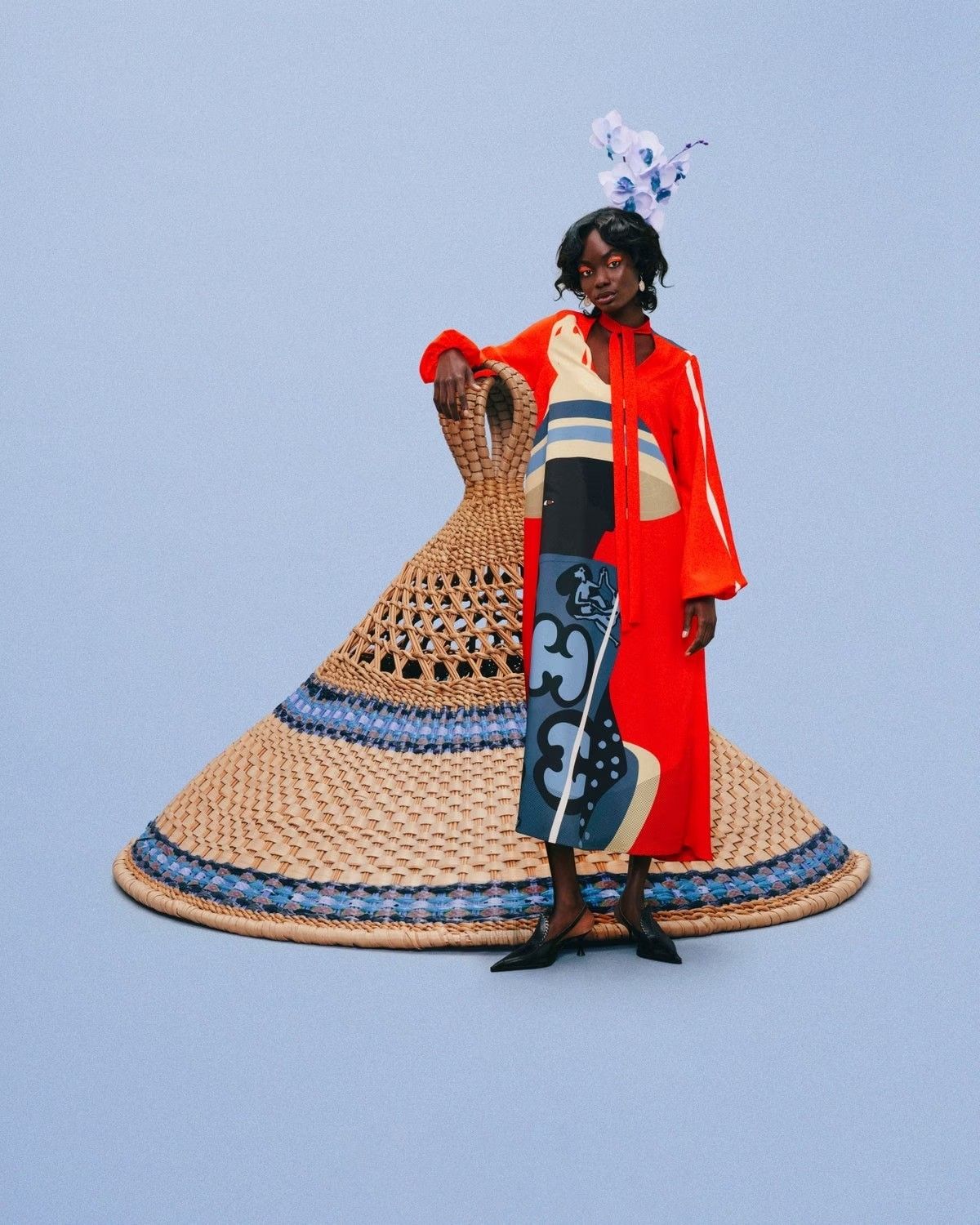
The lessons from Magugu’s approach are not transferable as a checklist. A research-led collection framework works because Magugu has the intellectual depth and the research practice to sustain it. A brand that adopts the format without the substance will produce empty conceptualism. The industry already has enough concept collections with no research behind them; copying Magugu’s surface without his process only deepens that problem. The underlying lesson is not about collection naming conventions. It is about the discipline of having a single, defensible position and making every decision in its service.
For an African fashion brand at an earlier stage, that means answering three questions before making any significant decision about stockists, pricing, events, or collaborations. First, what is the one thing this brand stands for that no other brand in our market does? Second: Does this decision strengthen or dilute that position? Third: are we making this decision because it compounds toward that position, or because the opportunity is in front of us?
Most brands cannot answer the first question with a single sentence. That inability is the diagnosis. A brand that cannot state its position in one sentence lacks a strategy. It has a collection of decisions waiting to be made inconsistently. The pricing piece in this series, Why Most African Fashion Brands Have a Pricing Problem They Cannot See, identifies the same root cause from a different angle: the absence of a strategic framework means that even the most fundamental commercial decisions, including how to price a garment, are made reactively rather than architecturally. Magugu’s pricing, his stockist choices, his local investment, and his collection research all point in the same direction because they are all governed by the same brief. That is what strategy is. It is also what makes it replicable in principle, even when the specific decisions are not.
There is also a more uncomfortable question this piece has not explored: whether some African fashion brands will choose, consciously or by default, to remain aesthetic-led and opportunity-driven rather than building this kind of strategic coherence at all. That is a separate argument about what kind of business they are building and what kind of capital they should seek. Not every label needs to become a brand. But that choice has consequences for pricing, scaling, and investor relationships, and it deserves its own analysis.
FREQUENTLY ASKED QUESTIONS
What makes Thebe Magugu’s brand strategy different from other African fashion brands?
Magugu’s brand operates from a single founding brief: to preserve African histories and cultures through cloth. Every decision the brand makes, from collection research to stockist choice to the Heirloom Project to the Magugu House opening in Johannesburg, is tested against that brief. The result is a coherence across all brand decisions that compounds over time. Most African fashion brands make decisions opportunistically rather than architecturally, so those decisions do not build on one another in the same way. A small number of serious operators are building with comparable discipline, but they remain the exception.
What is the Heirloom Project, and why is it strategically significant?
The Heirloom Project is a customisation service through which customers can have personal photographs or family imagery woven into a Thebe Magugu garment. It is strategically significant because it converts a commercial transaction into a relationship between the brand and a specific customer’s personal history. A customer who has commissioned an Heirloom piece has a loyalty to the brand that no competitor can replicate. It also demonstrates the brand’s research-led ethos applied directly to the individual consumer, making the connection between the brand’s intellectual position and its customer relationships concrete and commercially durable.
Why did Magugu step back from international fashion weeks to focus on Johannesburg?
As reported by Business of Fashion in 2023, Magugu stated that he wanted to give back to his country and keep the brand local for as long as possible. The strategic logic is that a brand with a genuine, loyal domestic base has a more durable foundation than one that prioritises international visibility first. It also gives the brand negotiating leverage with international stockists who are no longer the sole gatekeepers to its revenue. The Magugu House opening in Dunkeld in 2024 is the capital-intensive investment that operationalised this commitment.
How does the research-led collection framework create commercial value?
Each collection, named after a university subject, requires a research process before any design work begins. In Lobola Negotiations, for example, the architecture of the bride price is translated into tailoring details and print motifs that repeat throughout the collection. The result is a body of work with a coherent intellectual argument and a visual language consistent enough to be recognised across seasons. That legibility is what allows the brand to occupy shelf space at retailers like Dover Street Market and Bergdorf Goodman, whose entire proposition is curated intellectual fashion. A brand without that coherence cannot occupy the same position regardless of the quality of individual pieces.
What would it take for other African fashion brands to build comparable strategic coherence?
The foundational requirement is a single, defensible position the brand stands for that no other brand in its market stands for, stated in one sentence. Every significant decision about stockists, pricing, events, and collaborations should then be tested against three questions: does this decision strengthen or dilute that position; does it compound toward a long-term outcome; and is it being made because it builds toward that position, or simply because the opportunity is in front of us? Most African fashion brands cannot answer the first question with one sentence. That inability is the diagnosis.
Are the structural barriers African designers face sufficient to explain the absence of a brand strategy?
They are a partial explanation but also partially a rationalisation. The resource constraints are real: import dependencies drive up production costs, capital infrastructure is limited, and logistical challenges regularly impede scaling. But many African brands with access to resources comparable to those Magugu started with, including education, ecosystem recognition, and occasional prize or grant funding, have not built comparable coherence. Magugu has benefited from institutional support, but that support has been deployed in service of a clear brief rather than in search of one. Aesthetics shift with trend cycles. A governing brief compounds across them.
How can an early-stage African fashion brand begin to build a real strategy?
Start by answering three questions in writing before each major decision: what is the one thing this brand stands for that no other brand in our market stands for; does this decision strengthen or dilute that position; and are we doing this because it compounds toward that position, or simply because the opportunity is in front of us? If the first question cannot be answered in one sentence, the work is to define that sentence before adding more decisions on top of it. A brand that can answer these questions consistently has the foundation for a strategy. A brand that cannot make a calendar, not a plan.
Omiren Styles covers the business of African fashion with precision and without apology. Subscribe for weekly retail intelligence, brand strategy analysis, and the industry reporting the African fashion press is not doing. African fashion and culture are not emerging. They are foundational.