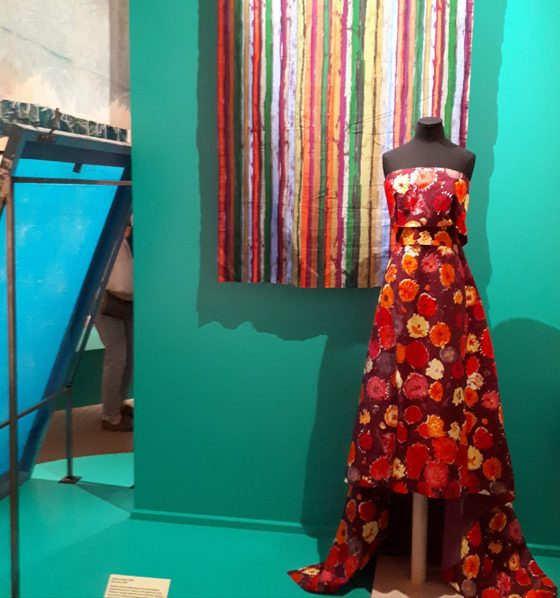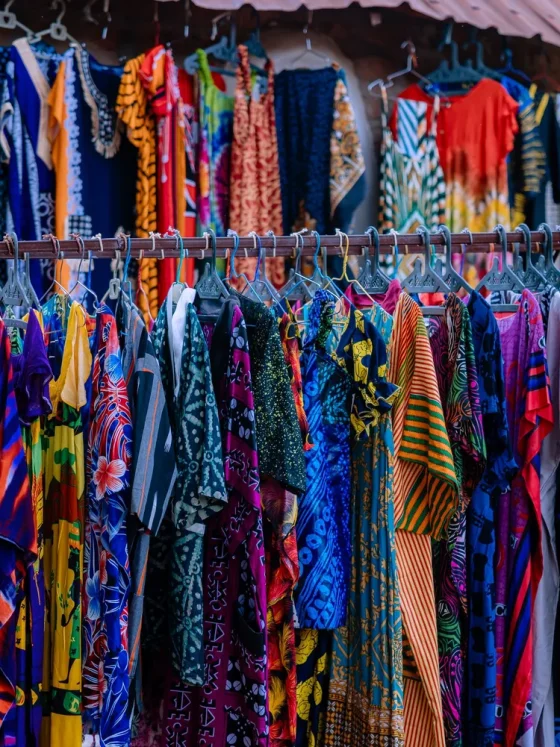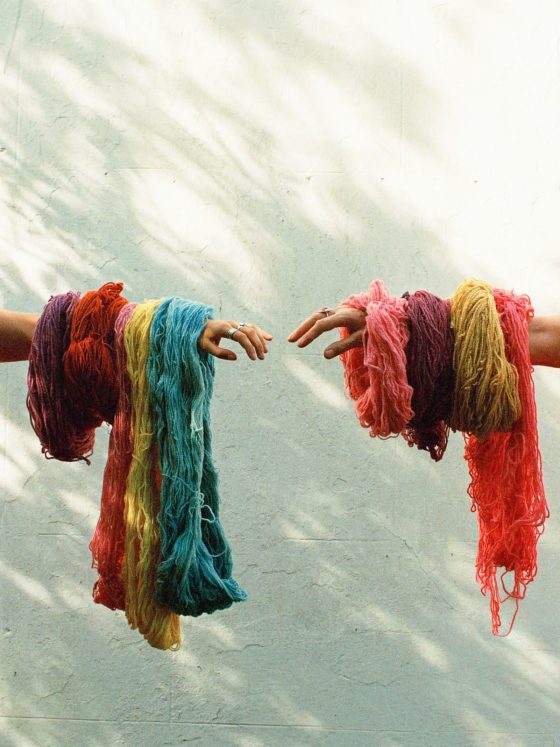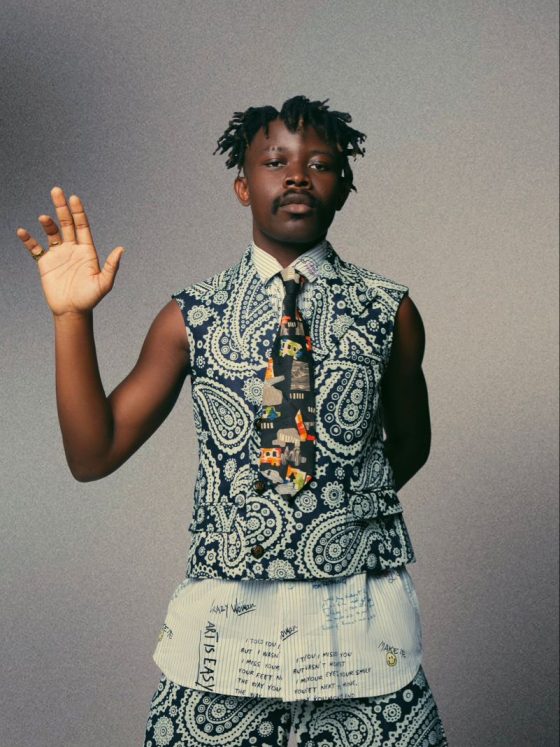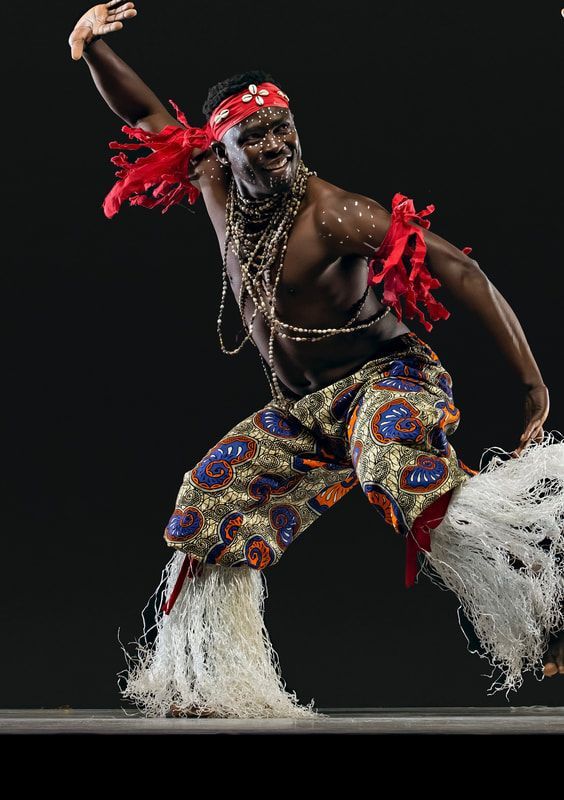
In Portobelo, Panama, on the Atlantic coast of the Colón province, men and boys dress as Congos every year during the carnival season and wear old clothes inside out. They adorn those inverted garments with dolls, found objects, and whatever materials they can gather from the world around them. They speak a language of inversion, saying the opposite of what they mean. They carry wooden swords. They move through the streets in exaggerated, playful performance, mocking the Spanish colonisers who enslaved their ancestors on this same ground. The inside-out clothing is not a theatrical choice. It is the continuation of a specific historical act: the way Africans modified the clothes they were allowed to wear to make them their own.
The African fashion market is worth 31 billion dollars. The Congo tradition of Portobelo, Panama, is one of the most precisely documented examples in the Americas of dress as an instrument of resistance: a complete system in which clothing, language, movement, and character are all inverted simultaneously as a single act of cultural defiance. As Digital Portobelo’s scholarly documentation of the Congo carnival tradition confirms, the ethos of Black rebellion, resistance, and reappropriation that frames the Panamanian Congo tradition in global imaginaries stems from the cultural context of playing with the devil and winning. The inside-out garment is how that winning is declared on the body.
In Portobelo, Panama, Congo men wear their clothes inside out to mock the colonisers who gave them those clothes. That is the oldest fashion argument in the Americas.
Congo Men’s Costume Tradition: The Historical Foundation
The Congo tradition of Portobelo began with the cimarrones: enslaved Africans who escaped from Spanish colonial bondage, disappeared into the hills and rainforests of Panama’s Atlantic coast, and built fortified villages known as palenques from which they waged war against their former enslavers. As Revista Panorama’s documentation of the Festival de Diablos y Congos confirms, the diablos dressed in vibrant costumes with dramatic masks and wielding whips personify the forces of evil and colonisation. At the same time, the Congos embody the enslaved people who resisted and held on to their culture. The theatrical encounter is more than a show. It is a living act of resistance, identity, and Afro-colonial pride.
Enslaved Africans were brought to Panama’s Atlantic coast in the early 1500s, primarily through Portobelo, which served as the main port for Spain’s colonial mercantilist enterprise in the Americas. By the end of the seventeenth century, free and enslaved Blacks greatly outnumbered the Spanish in Portobelo. The cimarrones who escaped into the interior were so effective in their resistance that the Spanish were eventually forced to recognise their freedom. The Congo tradition commemorates that recognition: the moment at which the people the Spanish called Congos, a generic colonial term for anyone of African descent, asserted and won their humanity.
To wear the coloniser’s discarded clothes inside out, adorned with dolls and found objects, is not a costume choice in any conventional sense. It is a declaration. It says: we took what you threw away, we turned it inside out, and we made it ours. That is the oldest fashion argument in the Americas.
The Inside-Out Garment: What the Inversion Means
The specific act of wearing clothes inside out is the costume tradition’s most precise and most politically legible element. As Trans-Americas Journey’s documentation of the Festival de Diablos y Congos confirms, some men and boys dress as Congos by wearing old clothes inside out and adorned with found objects like dolls, in imitation of the way Africans modified the clothes they were allowed to wear to make them their own. The imitation in that sentence is important: the contemporary performance re-enacts an original act that happened under the conditions of slavery, when enslaved people were given discarded colonial clothing and turned it into something that expressed their own identity by reversing its orientation.
The inversion carries multiple simultaneous meanings. At the most literal level, wearing a garment inside out makes visible the construction of the thing: the seams, the backing, the evidence of making that the finished exterior conceals. The Congo costume strips the colonial garment of its finished surface and shows its structure, which is also what the entire Congo tradition does to the colonial relationship: it exposes its mechanisms by re-enacting them in exaggerated, playful form. The inside-out garment is the Congo drama in miniature.
The found objects adorning the costume extend this logic. Dolls, pieces of cloth, discovered materials attached to the garment transform it from a reclaimed colonial discard into something that could not have existed without the specific creativity and improvisation of the people who made it. The colonial master gave cloth. The cimarrones returned an argument. That argument is still being made in Portobelo every carnival season, by men and boys who understand exactly what they are doing.
The Double Inversion: Clothing and Language
The Congo costume tradition operates alongside an equally specific linguistic practice. Congo participants also speak a form of inverted communication in which they say the opposite of what they mean. This verbal inversion mirrors the sartorial inversion: both are mechanisms for maintaining communication within a community while simultaneously confounding the surveillance of those outside it. Under slavery, inverting language allowed the cimarrones to communicate in the presence of enslavers without those enslavers understanding what was being said. Under contemporary carnival, the linguistic inversion is a performance of that historical survival strategy.
The parallel between the inside-out garment and the inside-out language is the Congo tradition’s most intellectually sophisticated element. Both operate on the principle that the coloniser’s systems of communication and dress can be taken, reversed, and returned as something the coloniser cannot fully control or read. The masquerade survived because people chose, deliberately and at great cost, to keep it. The feathers, the beads, the mask, the procession are not decoration. All of it is memory. The Congo costume’s inside-out garment is the same kind of memory: the physical trace of a survival strategy encoded in cloth.
The Congo Drama: A Hierarchy of Characters
The Congo tradition is not an unstructured festival. It is a drama with a specific narrative, a hierarchy of characters, and an outcome that is scripted to end the same way every year: with the forces of resistance defeating the forces of colonisation. The primary characters include the Queen, whose Congo name is Merced and who serves as the guardian of the community and culture; the King, Juan de Dioso; Prince Pajarito, whose name means Little Bird; Princess Minina; the Diablo Mayor, the Major Devil who represents the Spanish enslaver; the Diablo Segundo; a host of minor devils; a priest; one angel; and six souls.
The Congo men who wear the inside-out costumes are the Congos themselves: the self-liberated free Blacks who form the community around which the drama unfolds. Their playful, exaggerated movements and their comic interaction with the Diablos are the tradition’s most visible and most accessible element. But the drama has a structure and an outcome: the Congo game does not end until the Diablo Mayor is de-masked, de-whipped, baptised, and symbolically sold. The Congo wins. The coloniser loses. That outcome is performed every year, in front of the community, in the town where slavery once operated at its most concentrated, as a public declaration that the descendants of the cimarrones know who won.
The Congo Tradition in the Broader Diaspora Context
Portobelo’s Congo tradition does not exist in isolation. Variant Congo and cimarron communities and associated cultural performances exist throughout the Caribbean and along the Atlantic coast of the Americas, including Cuba, Jamaica, Venezuela, and Brazil. Each has developed distinct forms while maintaining the shared logic of reappropriating the colonial experience through performance, dress, and communal ceremony. Across the Black Atlantic, African spiritual and cultural traditions were maintained under conditions designed to suppress them, using performance, ceremony, and dress as the mechanisms of that maintenance. The Congo inside-out costume belongs to this broader tradition of African diaspora cultural preservation through the deliberate transformation of what was given into something that carries a different argument.
The Museum of Afro-Panamanian Memory, recently established in Portobelo’s historic Customs building, now provides institutional context for the Congo tradition and its place within the broader history of Afro-Panamanian cultural resistance. The museum documents the history of enslaved people in Panama, their struggle and liberation, and the cultural practices that their descendants have maintained. The inside-out garment that men wear during the Congo carnival is one of the objects that belongs in any serious account of how African communities in the Americas used dress as an instrument of resistance and self-determination.
The Omiren Argument
The Congo men’s costume tradition of Portobelo, Panama, is the most direct and most precisely documented example in the Americas of clothing as an act of deliberate political inversion. The African fashion market is worth 31 billion dollars. The inside-out garment worn by Congo men during the Festival de Diablos y Congos is not a theatrical prop. It is the re-enactment of an original survival strategy: the act by which enslaved Africans took the discarded clothes of their enslavers, reversed their orientation, adorned them with found objects, and returned them as an argument that the colonial system could not produce, predict, or suppress. That argument has been made in Portobelo every carnival season for centuries. The verbal inversion of Congo language mirrors the sartorial inversion of the Congo costume: both are mechanisms of survival encoded in systems of communication that the enslaving culture could not fully read. The Congo drama ends the same way every year: the Diablo Mayor is de-masked, and the Congo wins. Omiren Styles documents the inside-out garment here as what it is: the oldest and most persistent fashion argument in the Americas, because the fashion industry’s habit of covering carnival as spectacle without explaining its political intelligence is the same omission that the tradition was designed to resist.
ALSO READ:
Frequently Asked Questions
What is the Congo carnival tradition in Panama?
The Congo carnival tradition in Panama is a cultural performance that emerged as a response to enslavement on Panama’s Atlantic coast. It commemorates the cimarrones, enslaved Africans who escaped from Spanish colonial bondage, built fortified palenque villages in the hills and rainforests, and won their freedom. The tradition is performed most prominently in Portobelo, Colónn province, where the Festival de Diablos y Congos is held from January 20 until Ash Wednesday, every Saturday. The drama pits the Congos, self-liberated free Blacks, against the Diablos, who represent the Spanish colonisers, and ends with the Congo defeating the devil.
Why do Congo men wear clothes inside out?
Congo men wear clothes inside out as a re-enactment of the original strategy by which enslaved Africans modified the clothes they were allowed to wear to make them their own. The inversion of the colonial garment, which was typically the discarded clothing of enslavers, transforms it from an object of subjugation into a statement of creative self-determination. The found objects, including dolls, attached to the inverted garment extend this transformation: the costume becomes something that could not have existed without the specific improvisation and cultural intelligence of the people who made it.
What is the Festival de Diablos y Congos?
The Festival de Diablos y Congos (Festival of Devils and Slaves) is held in Portobelo, Panama, two weeks after the main Carnival period, running from January 20 until Ash Wednesday. It is an exaggerated re-enactment of the historical confrontation between the cimarrones (escaped enslaved Africans who formed free communities) and their Spanish colonisers. Men dress as Diablos in elaborate masks and costumes carrying whips, representing the colonisers. Other men and boys dress as Congos in inside-out clothing adorned with found objects, representing the enslaved people who resisted. The drama ends when the Diablo Mayor is de-masked, symbolically sold, and defeated.
Who are the cimarrones in Panama?
The cimarrones were enslaved Africans who escaped from Spanish colonial bondage in Panama and established independent communities, called palenques, in the hills and rainforests of the Atlantic coast. They waged sustained armed resistance against the Spanish and were so effective that the Spanish were eventually forced to recognise their freedom. The Congo tradition of Portobelo, Panama, commemorates their resistance and celebrates their descendants as free people who won their liberation through strategic, creative, and collective action.
How does the Congo language inversion relate to the inside-out costume?
Congo participants speak a form of inverted language in which they say the opposite of what they mean, paralleling the physical inversion of wearing clothes inside out. Both practices originated as survival strategies under slavery: inverting language allowed cimarrones to communicate in the presence of enslavers without being understood, just as modifying clothing made discarded colonial garments into expressions of African identity. Both inversions operate on the same principle: taking the coloniser’s system of communication and dress, reversing it, and returning something that carries a meaning the coloniser cannot fully control or decode.
Explore More
Read the full Culture > Heritage & Identity section for Omiren Styles’ documentation of African diaspora dress traditions, carnival costume histories, and the communities that encoded cultural memory and resistance in cloth across the Americas.