In February 2020, Maty Fall appeared on one of two Vogue Italia covers. Paolo Roversi photographed her wearing a Valentino cotton shirtdress with couture-volume details, styled by Ibrahim Kamara. She held the word “Italia” in her arms. The magazine’s “Italian Beauty” proposition was not confined to a headline: the country’s name became an object within the portrait. The construction gave the image an unusually direct relationship between person and nation. Fall was not simply placed beneath a national description. She physically carried its name. The gesture could be read as an assertion of belonging, but it also produced a question that would follow the image: why should a young Black Italian woman’s presence require an argument at all?
Four years later, Fall offered her own account. Looking back in an interview with Anna Osei, she said that the negative responses mattered less to her than showing that beauty in contemporary Italy has different facets. That testimony belongs at the centre of the story. Fall understood the cover’s significance; she was not merely an unwitting subject onto whom a magazine projected its position. Yet the cover is one assignment in a developing career, not a sufficient explanation of everything she has done since.
Maty Fall’s career connects Vogue Italia’s Italian Beauty cover with international modelling, professional ambition and her own account of belonging.
A Cover With Two Kinds of Meaning
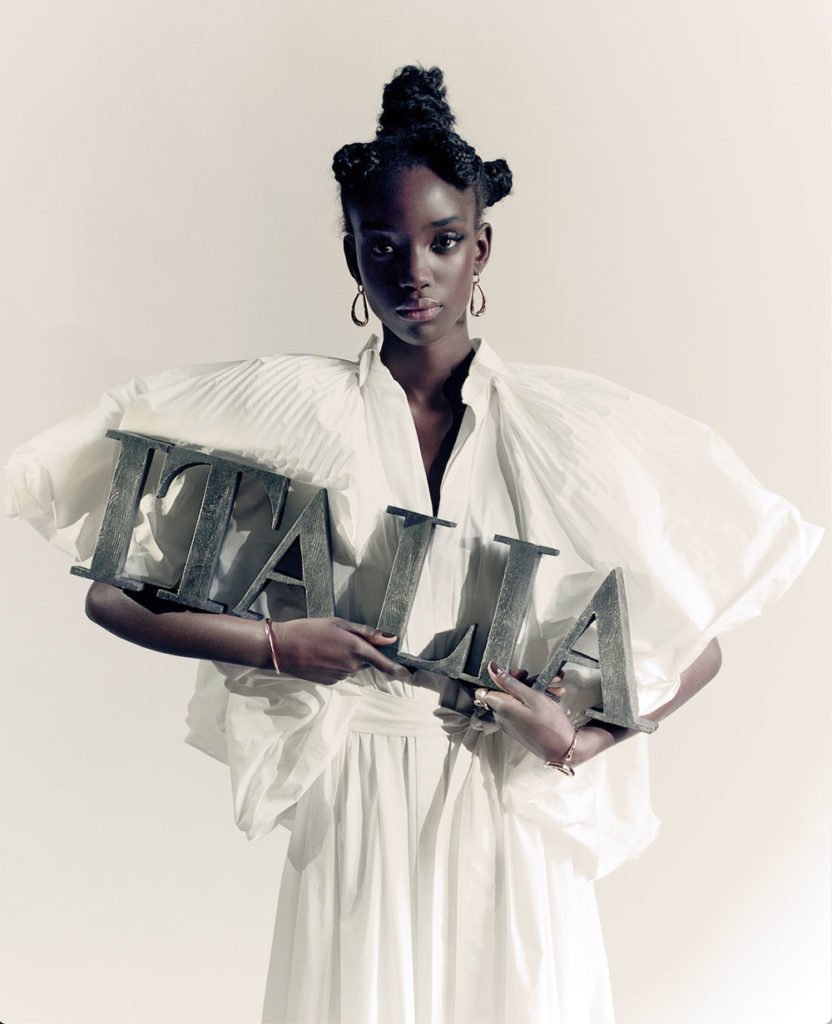
The original issue had another cover, featuring Vittoria Ceretti and an appeal to support Venice after flooding. The two images served different editorial purposes within the same publication. This context keeps Fall’s cover in proportion. It was a deliberate magazine statement, not a comprehensive portrait of Italian society. Its fashion language nevertheless matters. The shirtdress takes a familiar garment and expands it through volume. Pomellato jewellery accompanies it, while Kamara’s styling and Roversi’s photography place Fall within the conventions of a major fashion portrait. The image does not ask her to demonstrate belonging through recognisable regional dress or an account of assimilation. It gives her the visual resources routinely used to confer beauty and importance within fashion, then makes the national claim explicit.
The word held in her arms is the decisive element. It prevents the portrait from being read only as an attractive arrangement of model and clothes. “Italia” enters the composition as something tangible, positioned in relation to a particular body. That produces both the image’s force and its burden. Fall becomes visible as herself, but also as a figure through whom other people debate the nation. The most useful reading preserves both levels without allowing the second to consume the first.
Senegal, Chiampo and a Career of Her Own
Fall was born in Senegal in 2001 and moved to Chiampo, in northern Italy, at nine. She became an Italian citizen at eighteen. Her mother ran a sewing business near Dakar during her childhood. These details describe a life across places, rather than a choice between mutually exclusive identities. They also supply a connection to clothing that predates professional modelling. In an early interview published by Vogue Italia, Fall recalled trying on garments made by her mother and privately practising a walk in oversized shoes. The recollection is not evidence that a fashion career was inevitable. It establishes an earlier pleasure in dressing, looking and being seen.
That pleasure is easy to lose when a model’s biography is organised principally around public controversy. The individual’s interest becomes secondary to what her presence is supposed to prove. Fall’s account gives the sequence another starting point: before she carried a national statement on a magazine cover, she was a child experimenting with clothes.
The Model Inside the Spectacle
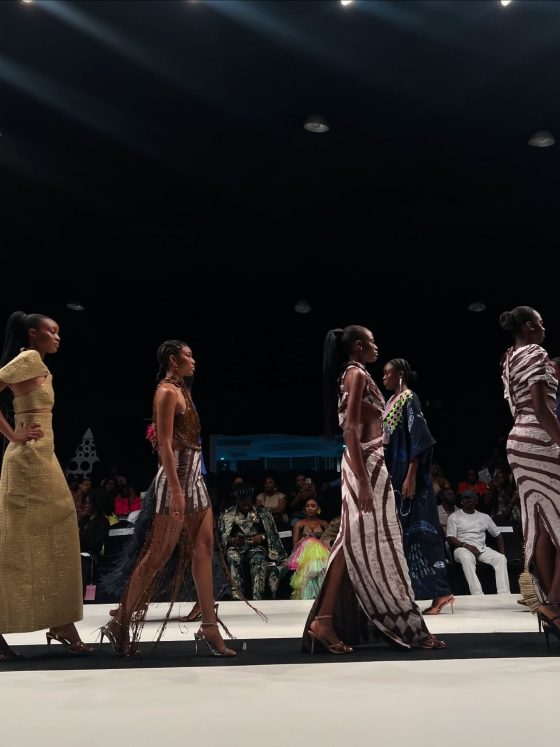
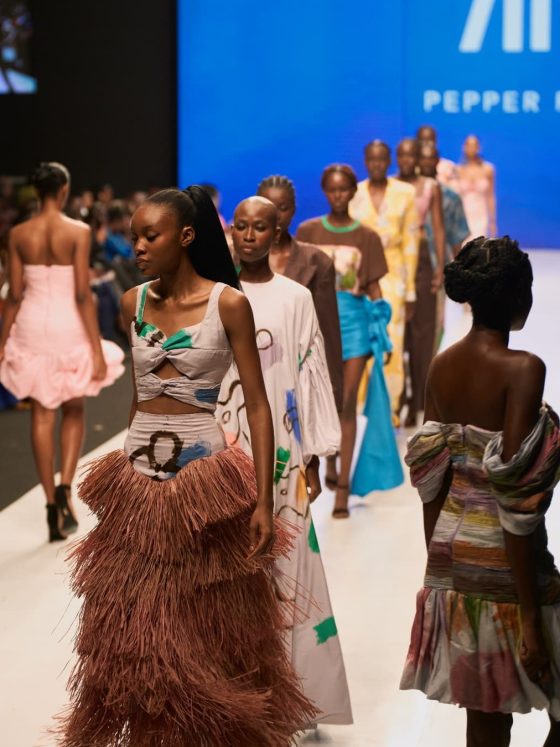
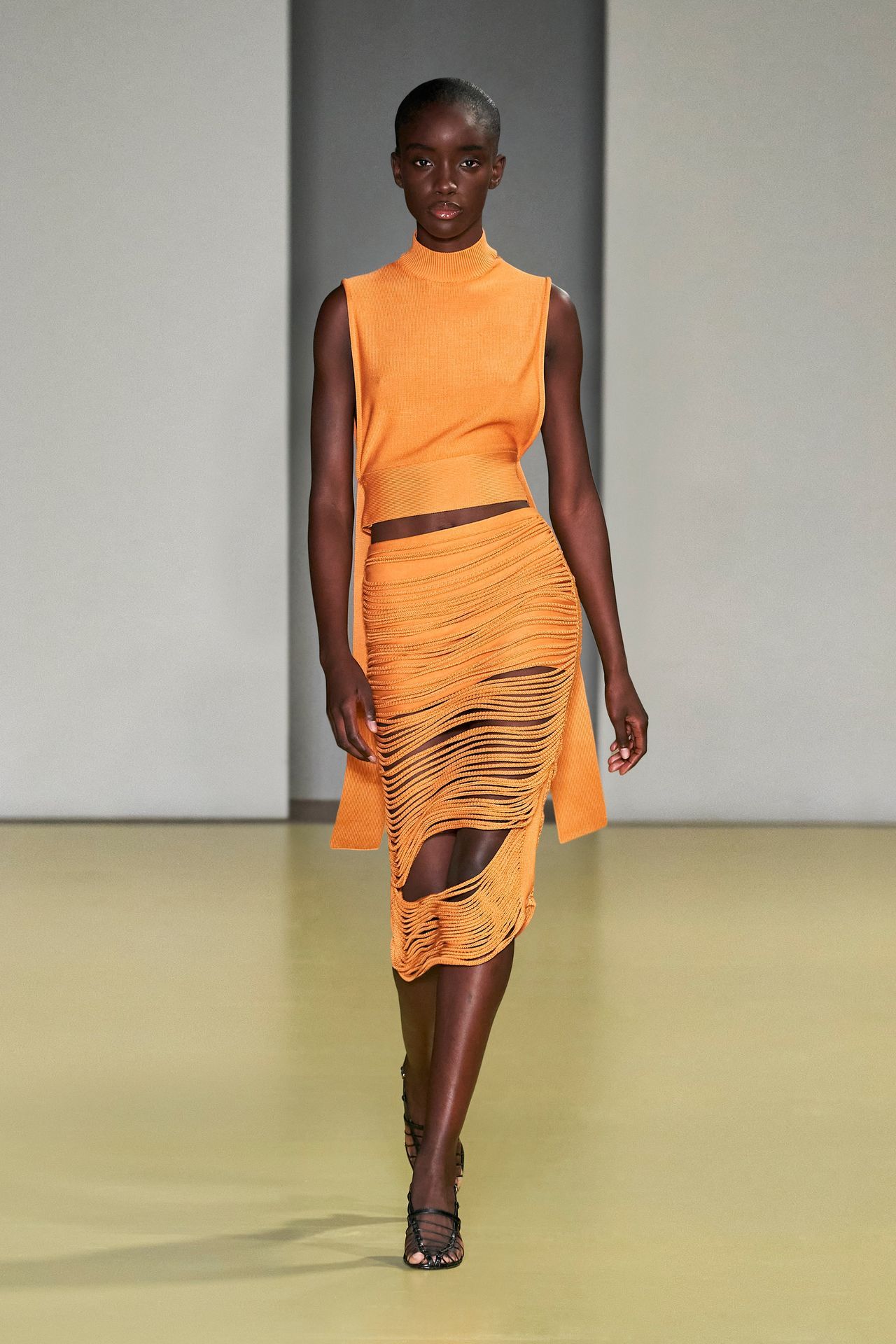
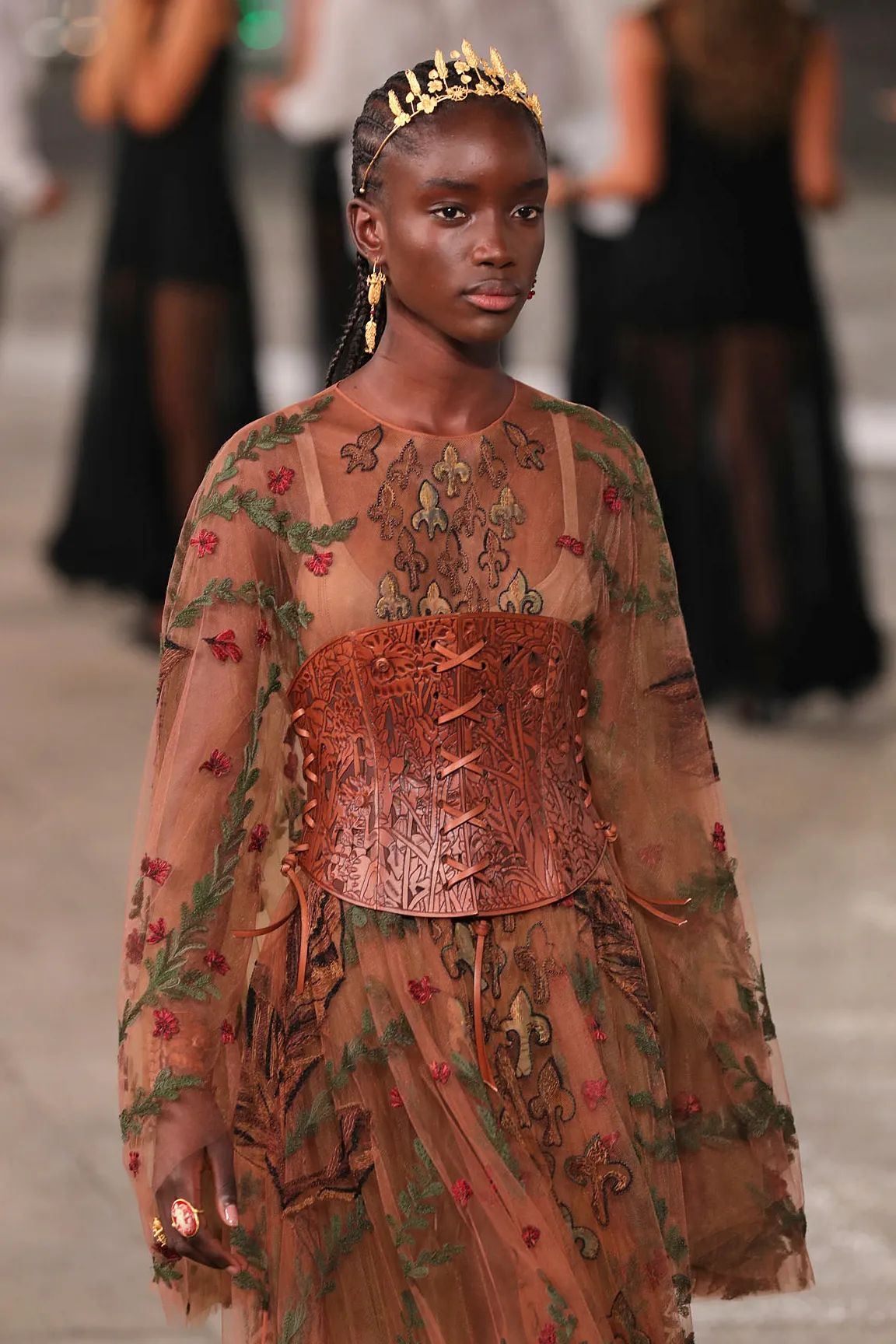
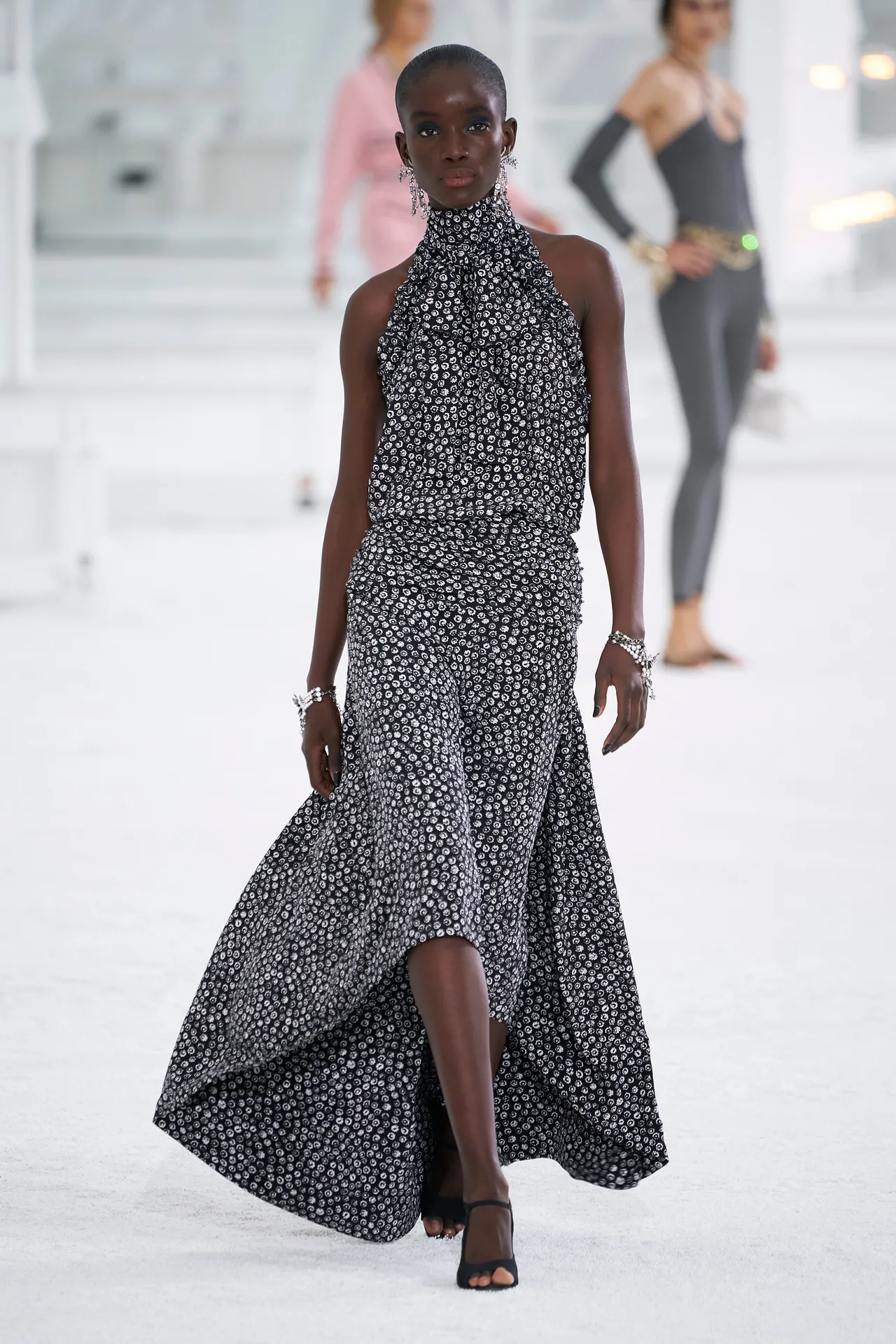
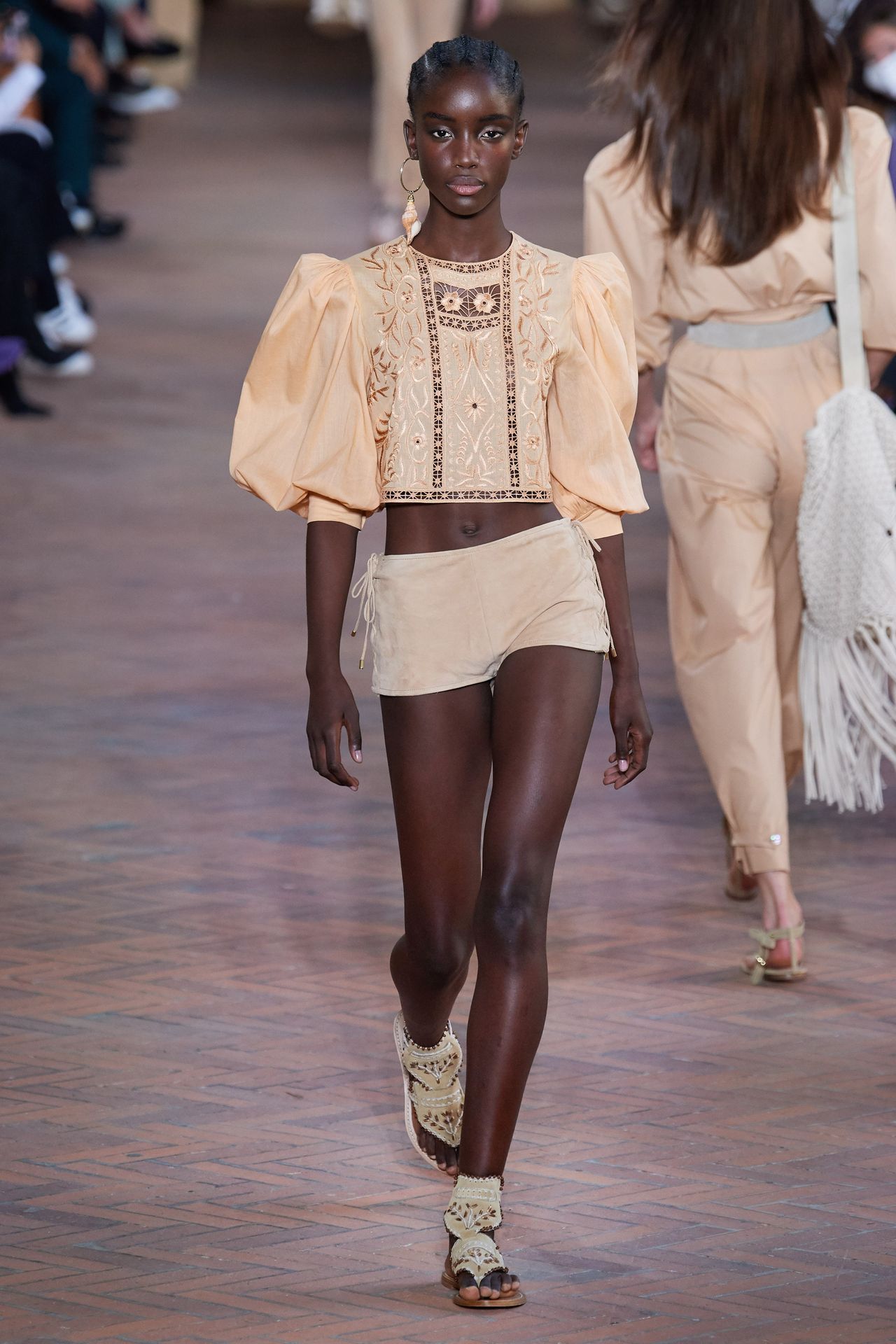
Her early runway record developed quickly. British Vogue reported that she appeared in 37 spring/summer 2021 shows, the highest total that season. Earlier in 2020, she had closed Dior’s Cruise 2021 presentation in Lecce wearing a crown-like headpiece around her braids. Those assignments establish visibility and demand. They do not, on their own, explain the experience of doing the work. Fall’s later testimony cuts through the grandeur. Asked in 2024 what she thinks about on the runway, she joked: “Don’t fall, don’t fall, don’t fall.” It is a useful correction to the language of effortless presence. A fashion image can appear assured while the person producing it is concentrating on an immediate physical task.
The Dior closing appearance illustrates that difference in scale. For the audience, the headpiece supplied a ceremonial frame around the face. For the model, it remained an assignment to execute within the movement and timing of a show. The distinction does not diminish the image. It makes the work more visible. The model carries the visual proposition while negotiating the practical conditions under which it has to appear. A closing position also creates emphasis through sequence. The last appearance gains significance from what precedes it; the model does not author that structure independently. Casting, styling, design and choreography combine to make the moment.
Fall’s contribution belongs within that collaboration, not outside it.
Professional Ambition Beyond Discovery
By 2024, Fall described her career through goals and working relationships rather than simply the excitement of being selected. She told Osei that she discussed desired assignments with her agents and worked towards them. A fragrance campaign and a shoot with Steven Meisel were among the ambitions she pursued. This is an important shift in the profile. It presents a model as someone with preferences and a strategy, not merely a face awaiting approval. Her relationship with Meisel also had a history. Fall recalled first working with him in 2020 for Pat McGrath Labs and continuing to revisit the resulting photographs and videos. She valued the makeup and the images.
That response recognises the completed work as a collaboration. It also shows her as an audience for her own professional record, able to identify an assignment that remains meaningful after publication. For Vogue Italia’s sixtieth-anniversary issue in September 2024, Meisel photographed her again, with styling by Joe McKenna. The connection between an earlier beauty assignment and a later anniversary commission gives the career continuity beyond a succession of breakthroughs. Repeated collaboration is not proof of complete creative autonomy. It does, however, complicate the idea that a model’s significance lies only in an initial moment of discovery.
Another Brief, Another Wardrobe
The January/February 2026 Vogue Germany cover story offers a contrasting editorial framework. Titled “Pleasure”, it was photographed on Gran Canaria by Felicity Ingram and styled by Nathan Klein. The magazine described the issue as celebrating life while acknowledging its fragility. This was not another edition of the “Italian Beauty” claim. Its published introduction organised the assignment around a different subject. The clothes also moved between distinct propositions. The gallery credits Fall in Giorgio Armani jersey separates, a Louis Vuitton wool one-shoulder cape and miniskirt, and a Givenchy silk bra and wrap skirt with sunflower appliqués. Other looks combine pieces from several houses rather than maintaining a single-label presentation.
Those credits establish the brief’s range, though they cannot explain every pose or movement. They show a model working within an editorial that needs continuity across changing volumes, materials, and degrees of exposure. The cape and miniskirt organise the body differently from jacket and trousers. The decorated silk separates offer another relationship between garment and skin. The story’s coherence depends on the collaboration maintaining an atmosphere through those changes. For Fall, this is another professional role rather than another identity to assume. A Senegalese-Italian model can occupy a German magazine’s fashion story, photographed in Spain, without each geographical fact becoming a demand for explanation.
That does not erase the significance of the Italian cover. It shows why the cover should not limit the career.
What “Changing” Can Responsibly Mean
The change visible here is within the published image and the range of assignments available to one model. The evidence does not establish a measurable transformation across Italian fashion. Nor does a successful career describe the opportunities available to everyone with a similar background. Fall’s own account resists that simplification. In 2024, she spoke about instability, uncertainty and the emotional effect of rejection, alongside her enjoyment of the profession. A prominent cover does not remove those conditions. Nor does it guarantee the next assignment. This is why representation and employment must remain distinct questions. One concerns who can appear within a visual idea of Italy. The other concerns the continuity, terms and experience of work.
Fall’s career speaks to both, but it cannot resolve either single-handedly. Her 2020 portrait broadened the image presented under an explicit national heading. Her later assignments demonstrate professional development beyond that heading. Together, they support a more substantial account than either a story of controversy or an uncomplicated celebration of progress.
Belonging Without Permanent Explanation
Another consequence of repeatedly presenting a model as a symbol is that every appearance can become a referendum on the institution that cast her. The questions may be necessary, but the repetition can make the person disappear. Fall has described wanting to walk for people who share her skin colour. She has also described enjoying particular clothes, setting career goals and learning to communicate with agents. These are not competing accounts of her significance. The cultural intention does not make the professional ambition less individual. Professional ambition does not make cultural intention disappear.
The strongest way to recognise her career is to permit both. She can care about what her presence communicates and still want an assignment because of the photographer, the clothes or the experience. The “Italian Beauty” cover made a claim about who could represent a country. A fuller account of Maty Fall asks what she has chosen, learned and contributed while working beyond that one image.
The Omiren Argument
Maty Fall’s career is not best understood as a permanent answer to whether a Black woman can embody Italian beauty. The 2020 cover answered that question editorially; her own later testimony explains why the answer mattered to her.
The fuller story includes what followed: continuing collaborations, deliberate professional goals, and assignments with different visual purposes.
That is the meaningful expansion. Fall can carry a national statement without being confined to carrying it forever.
Also Read:
- Stella Jean: The First Black Italian Designer Who Forced Milan to Look
- Alek Wek’s Runway Legacy: The Model Who Expanded Fashion’s Idea of Beauty
- Campbell Addy’s Feeling Seen: Recognition Is Only the Beginning
- Déborah David: The Garífuna Model Who Made Latin America Look
Frequently Asked Questions
Who is Maty Fall?
Maty Fall Diba is a Senegalese-Italian model, born in Senegal in 2001. She moved to Chiampo, in northern Italy, at nine and became an Italian citizen at eighteen. Her mother ran a sewing business near Dakar during her childhood, and Fall has recalled trying on garments her mother made before her modelling career began.
Why was her February 2020 Vogue Italia cover significant?
Paolo Roversi photographed Fall for one of two February 2020 Vogue Italia covers, wearing a Valentino cotton shirtdress styled by Ibrahim Kamara. She held the word “Italia” in her arms, which made the magazine’s “Italian Beauty” proposition physical. The other cover featured Vittoria Ceretti and an appeal to support Venice after flooding.
What modelling work has she done since the cover?
British Vogue reported that Fall appeared in 37 spring/summer 2021 shows, the highest total that season, and she closed Dior’s Cruise 2021 presentation in Lecce. She has worked with Steven Meisel, including a 2020 Pat McGrath Labs assignment and Vogue Italia’s September 2024 anniversary issue, and appeared in Vogue Germany’s January/February 2026 cover story.
Does the article claim Italian fashion has changed?
No. It treats change as something visible in the published image and in the range of assignments available to one model. It does not claim a measurable transformation across Italian fashion, and it notes that one successful career does not describe the opportunities open to everyone with a similar background. Fall herself spoke in 2024 about instability and rejection.