Through Legacy, Adesuwa Aighewi has explored how jewellery and collaborative making can connect cultural knowledge with creative ownership. Her launch interviews and a 2026 exhibition programme offer distinct views of that ambition.
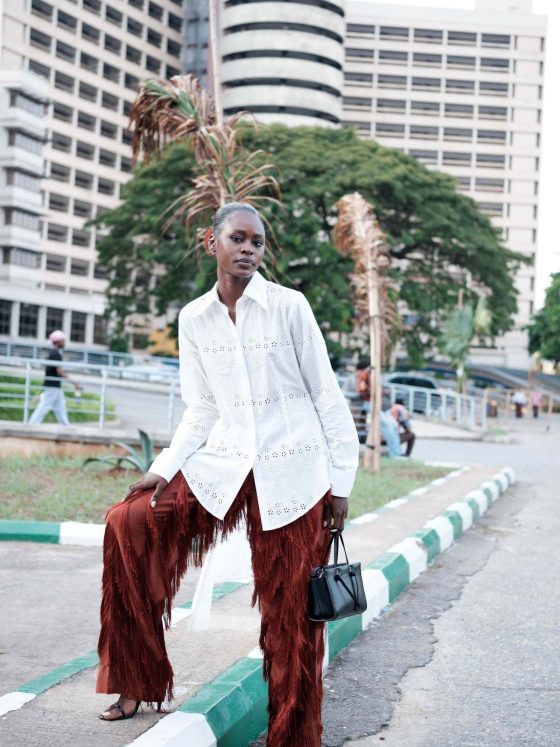
Adesuwa Aighewi is a model whose face has appeared in some of fashion’s most prominent spaces. Legacy is the project she built alongside that visibility, and it begins with a question she put plainly in a published interview: whether the people who recognise her face have any sense of what she is actually saying. That question is the foundation of everything that followed. Legacy gave her ideas another form through objects she helped develop, a proposed structure for collaboration between makers and artists, and eventually a presence in institutional arts programming.
“Millions have seen my face, but I’m like, do you even know who I am or what I’m saying?” — Adesuwa Aighewi, British Vogue, October 2022
The question established a tension between recognition and understanding. In her account, her visibility as a model did not guarantee that audiences encountered her ideas. Legacy gave those ideas a new form: objects she helped develop and a proposed structure for collaboration between makers, artists and designers. A 2026 exhibition programme at M.Bassy in Hamburg then placed Legacy. World within an institutional arts context, offering a later view of how that ambition has been framed publicly since the launch.
The creative story begins with what she made and the relationships and decisions behind it.
Explore Adesuwa Aighewi’s Legacy project through its debut jewellery, her published ideas about collaboration and a documented 2026 exhibition listing.
Jewellery as a Meeting Point
The debut collection didn’t express cultural connection through a single material or visual tradition, and that was deliberate. British Vogue‘s October 2022 coverage documented silverwork depicting Queen Mother Idia, Oranmiyan, and the Oba of Benin alongside vintage Ghanaian beads, precious stones, pearls from China, and silver forms cast from decorative coral beads. It also described Aighewi’s work with silversmiths in Thailand.
These details help distinguish three things often compressed into a general description of “inspiration”: the subject represented, the material used, and the process by which an object was made. A historical figure depicted in jewellery is not the same kind of contribution as a bead incorporated into it. A material’s origin is not necessarily its fabrication location. Legacy’s launch reporting described those elements separately, which reveals a collection constructed through several distinct connections rather than one undifferentiated cultural reference.
In her interview with i-D, Aighewi explained how Nigerian symbolism, the scale of a hip-hop medallion and Thai metalwork could meet within a single necklace. That account makes the exchange concrete: imagery, proportion, and technique each contribute to the result, and none arrives at the finished piece by accident. The collection’s interest lies in that combination. Its cultural references were not presented only as motifs to reproduce; they became part of active decisions about scale, materials and contemporary form.
Relationships Before the Launch
The published chronology also gives the project a more specific foundation than a broad claim to celebrate heritage. British Vogue traced the relationships behind Legacy to Aighewi’s 2019 trips to Ghana and Nigeria, followed by time in Benin City in 2020. Its account connected the jewellery to her Nigerian, Thai, and Chinese heritage and to her reflections on belonging and home during the pandemic years.
Personal background and working relationships intersected here, but they were not interchangeable. Heritage helped explain the questions she brought to the project; travel and specific collaborations helped explain how particular objects developed. That distinction matters whenever people discuss a diaspora creative’s work. Legacy expresses connection through named places and documented encounters, not merely through an identity label attached to a finished collection.
It also keeps the scope precise. Legacy is Aighewi’s project, developed through particular relationships at particular moments. It should not represent the whole of Nigerian design, Ghanaian beadwork, or Thai silversmithing. Each tradition has its own depth and practitioners, and the collection’s value lies partly in naming specific encounters rather than making a general claim on behalf of a continent or craft form.
From Visibility to Authorship
Aighewi’s launch interviews described an ambition that extended well beyond the debut products. British Vogue reported her intention to establish a “space of creation” centred on community and artisans. In i-D, she characterised Legacy as “the action that comes after my protests,” linking the project to her published arguments about how cultural work should be recognised and supported.
Her account shifts attention from appearing in fashion imagery to deciding what is made, how it is presented and who gets to participate in that process. That is the article’s central question of authorship. It concerns more than attaching a model’s name to a product. It asks where creative decisions actually take place and whose contribution remains visible when the finished object reaches an audience.
The jewellery supplies a practical starting point. Its historical references, material combinations and fabrication process each required choices. Aighewi’s interviews then place those choices within a wider ambition for collaboration that extends beyond any single collection. Her modelling visibility helps explain why she built this project, but it is not evidence that the project’s creative or commercial objectives have been achieved. Those require examination on their own terms, through what she has documented and what institutions have verified.
Collaboration, Credit and Benefit
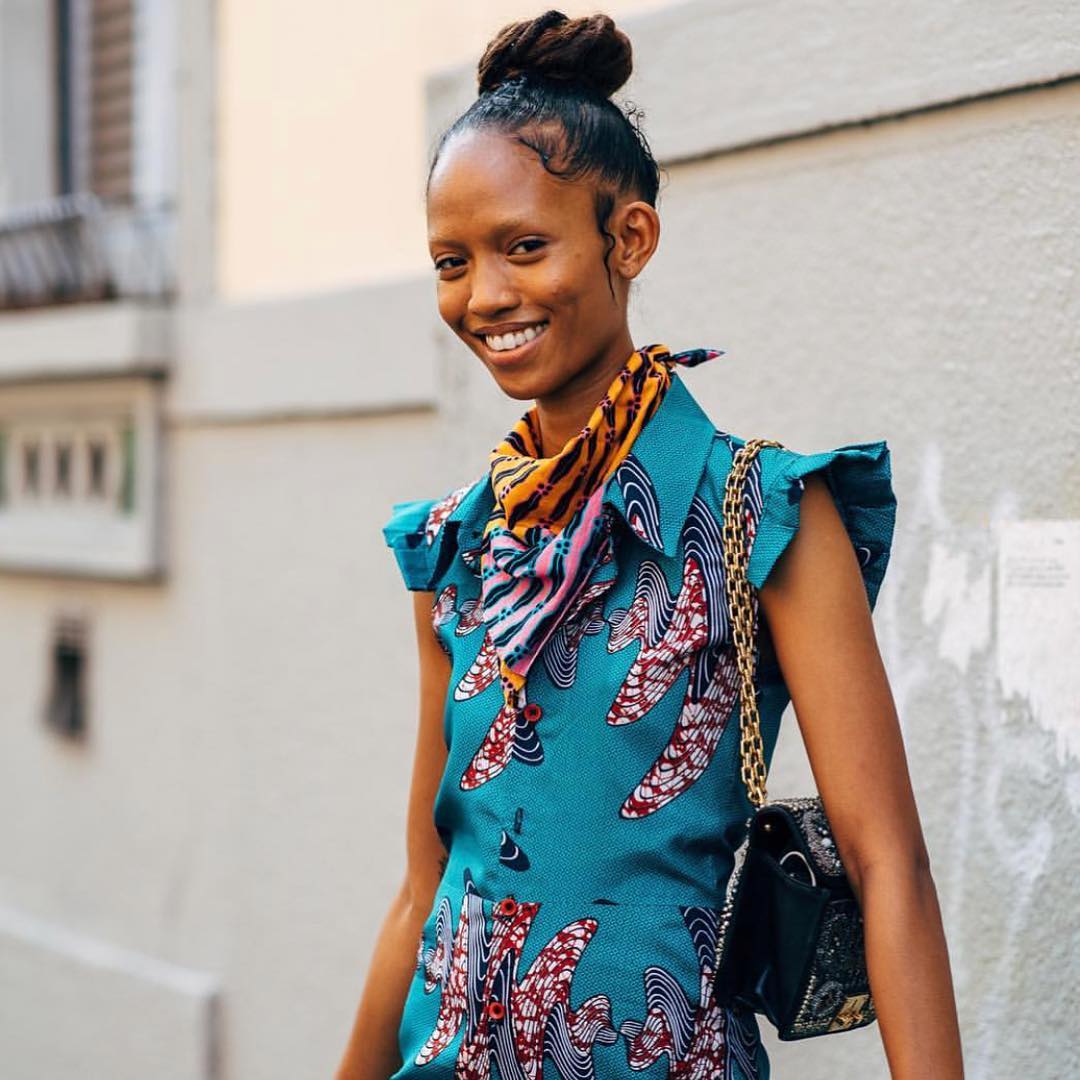
One of the most revealing passages in Aighewi’s i-D interview concerns the process that happens before a finished collection is ready for an audience. She described inviting artisans to experiment and design, then connecting that work with creatives elsewhere. She said her intention was to develop new forms of expression from which participants could benefit creatively and financially.
This presents craftsmanship as a source of ideas, not simply as the labour required to execute a predetermined design brief. That is a meaningful distinction. It places makers earlier in the creative process and asks different questions about whose thinking shapes the result. In this account, collaboration is not a marketing description for outsourcing production; it is a proposition about where creative authority sits.
Both interviews made the commercial ambition explicit. British Vogue reported Aighewi’s objective of reducing intermediary involvement so that proceeds could return more directly to makers. i-D described a network intended to allow participants to profit directly from their work. These are documented intentions, not verified outcomes. The sources consulted here do not independently establish contracts, payment arrangements, revenue distribution or collaborators’ financial results.
Keeping that distinction clear lets the project’s argument be examined without reducing it to promotional language or to an evidence-free success story. Legacy’s launch proposition joined the freedom to help shape objects with the opportunity to benefit from them. Whether and how that proposition has been realised in practice is a question the available sources open rather than close.
What Is Documented in 2026?
M.Bassy’s exhibition programme for We Return as Rain, and Even Stones Begin to Bloom, scheduled in Hamburg from 27 September to 13 November 2026, offers a later view of Aighewi’s practice. The organiser describes her as a model, interdisciplinary artist and founder of Legacy. World. Its account places her work across textiles, silver, bronze, photography, and film, with attention to labour, identity, and the stories material objects carry.
The programme lists her alongside Adama Delphine Fawundu and Monica de Miranda in an exhibition concerned with diaspora and ancestral knowledge. It announces an accompanying residency and lists an opening artist talk involving Aighewi. These statements establish what the organiser programmed and how it contextualised her work. This article has not independently confirmed delivery of every announced activity or visited the exhibition.
The listing nevertheless adds something distinct from the 2022 launch interviews. It situates Legacy. World within an artistic programme rather than solely within a product-launch account, and it shows how institutional partners have framed her creative practice four years after the debut collection. It should not be read as proof of marketplace growth. Nor does an institution-hosted residency automatically establish that Aighewi fulfilled her earlier ambition to create a residency programme through Legacy; those are different arrangements.
The contemporary finding is narrower and more useful: M.Bassy publicly includes Legacy. World in its description of Aighewi’s creative practice in 2026. That is verifiable and specific, and it places the project within a context where diaspora and material knowledge are the explicit frame.
The Decisions Behind the Objects
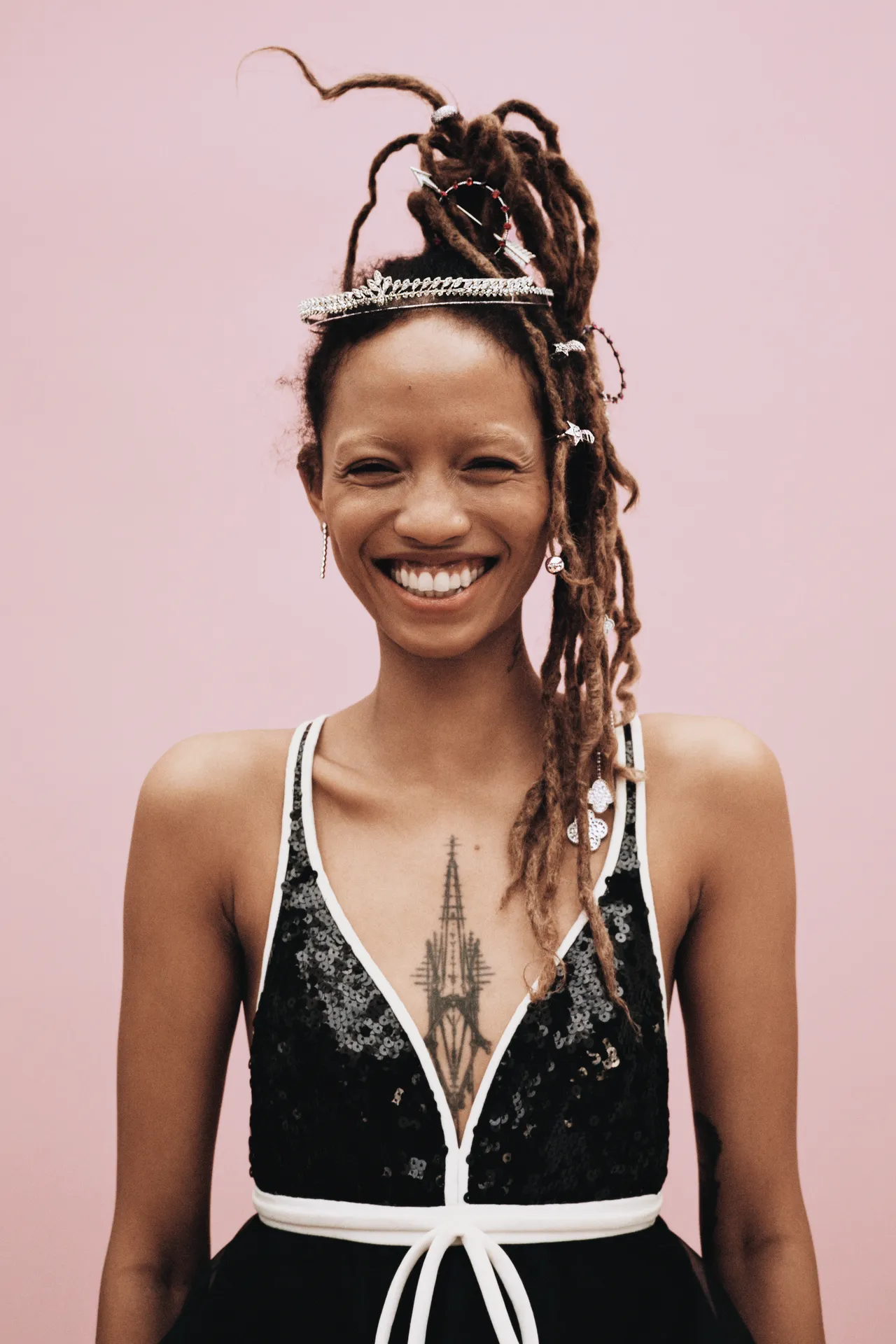
Legacy’s most informative connection to Aighewi’s modelling career is the movement from a recognisable image towards an identifiable set of creative decisions. The debut jewellery made those decisions tangible: historical figures represented in silver, beads and pearls brought into new combinations, and Nigerian symbolism considered alongside Thai metalwork and the proportions of a hip-hop medallion.
Her interviews placed experimentation and makers’ benefit at the centre of the project’s stated purpose. The later programme adds an institutional setting in which the work is discussed through material, labour and identity. That combination gives this spotlight its strongest foundation. Aighewi’s public visibility opens the story, but the substance lies in what she proposed to make, how she described making it with others and which parts of that practice can now be documented through verifiable sources.
For Omiren’s related discussion of how craft knowledge and diaspora context meet in contemporary African design, see “Five Ghanaian Designers Reshaping Contemporary African Fashion”. For more on how fashion’s different formats communicate creative decisions, see “A Collection Is Not a Campaign: How to Read Fashion’s Different Presentations”.
Also Read:
- British Vogue’s October 2022 interview with Adesuwa Aighewi — the debut jewellery and the project’s origins, in her own words.
- i-D’s launch interview — Aighewi’s account of experimentation, collaboration and why Legacy followed her public advocacy.
- “Five Ghanaian Designers Reshaping Contemporary African Fashion” — context for how diaspora creative practice is developing across the continent and beyond.
- “A Collection Is Not a Campaign: How to Read Fashion’s Different Presentations” — on distinguishing documented creative decisions from promotional framing.
Frequently Asked Questions
What did Legacy launch with?
The October 2022 launch reporting documented a made-to-order jewellery collection developed through multiple cultural references, materials and work with silversmiths in Thailand. Pieces depicted Queen Mother Idia, Oranmiyan, and the Oba of Benin and incorporated vintage Ghanaian beads, precious stones, Chinese pearls, and silver forms cast from decorative coral beads. The collection combined Nigerian symbolism with hip-hop medallion proportions and Thai metalwork techniques in individual pieces.
What does the 2026 M.Bassy listing establish?
It establishes that M. Bassy included Aighewi in its published exhibition programme for a show running from 27 September to 13 November 2026 in Hamburg and identified Legacy. World in its account of her practice. The organiser frames her work across textiles, silver, bronze, photography and film, with attention to labour, identity and material stories. It does not establish current sales, stock availability or marketplace performance.
Is Legacy a fashion brand or an arts project?
The sources examined here present it as both at different moments. The 2022 launch interviews describe a made-to-order jewellery collection with commercial intentions, including reduced intermediary involvement and direct benefit for artisan collaborators. The 2026 M.Bassy programme describes Aighewi as an interdisciplinary artist and frames Legacy. World within an exhibition concerned with diaspora and ancestral knowledge. World within an exhibition concerned with diaspora and ancestral knowledge. The two framings are not contradictory; they reflect different contexts in which the project has been presented.