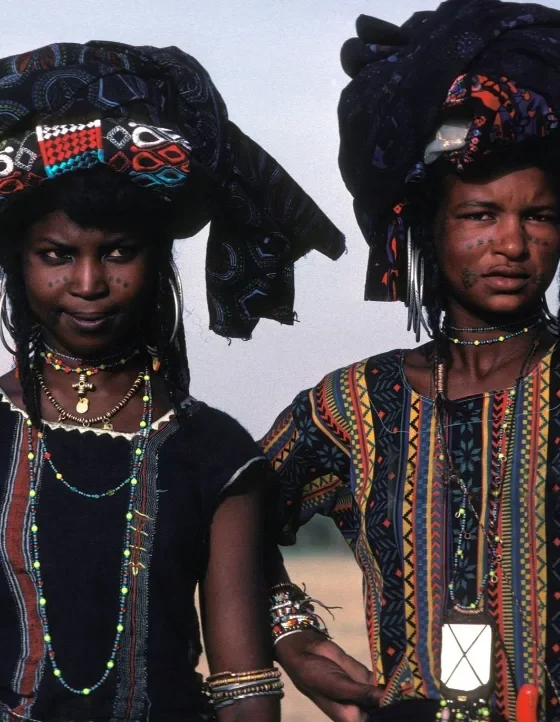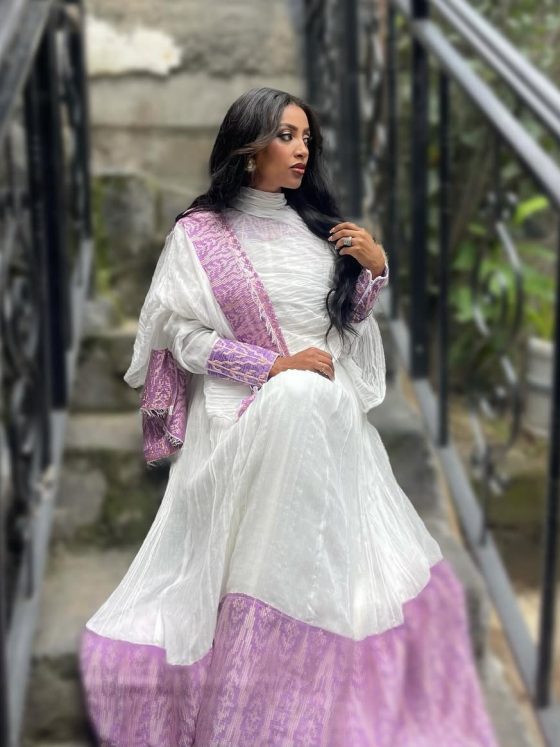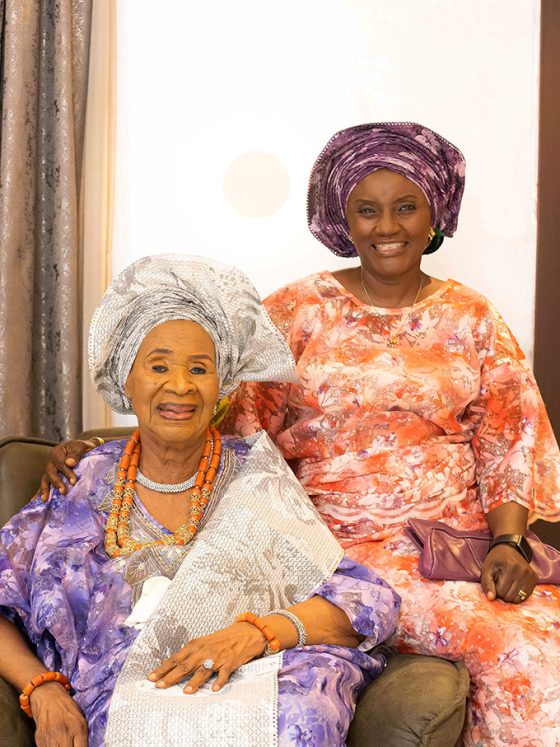
Eritrean cultural dress is not a single white garment. It never was.
Reducing Eritrean dress to one image—the white cotton zuria, photographed at a diaspora celebration or cultural event, captioned as “traditional Eritrean dress”—has represented a nine-community cultural dress system that accounts for roughly one tradition from one ethnic group in one highland region. It leaves out the black-and-red geometric precision of the Rashaida community’s dress. It leaves out the vibrant caftan traditions of the Saho and the Kunama. It leaves out the ceremonial wrapping practices of the Tigre lowlands. It leaves out the distinction between everyday dress and jedid, the new garment that marks celebration and transition. And it leaves out the embroidery vocabulary that communicates, to those who can read it, exactly which community the wearer belongs to, what occasion they are attending and what their status within it is.
To see only the white dress is to have stopped reading at the first sentence of a text that runs for nine chapters. Eritrean dress is a literature, and every ethnic community has written its own chapter in a different hand.
As Omiren Styles has established in its analysis of Eritrean men’s traditional dress, a persistent conflation in global fashion writing, diaspora retail markets, and even community conversations needs to be addressed directly. Eritrean Tigrinya ceremonial dress is consistently collapsed into the Ethiopian Habesha tradition, treated as a regional variation of a shared aesthetic rather than as a culturally and politically distinct practice in its own right. It is not a variation. It is its own system. This article begins the documentation that the conflation has prevented.
Eritrean traditional dress is not a single white garment. It is a multi-tradition system spanning nine ethnic communities. To read it accurately, understand Jedid, Zuria, and the meaning of cloth, cut, and ceremony.
Nine Communities, Nine Dress Systems
Eritrea is home to nine recognised ethnic communities, whose dress traditions reflect distinct ecologies, religious practices, social structures and material histories. The Tigrinya, Tigre, Saho, Afar, Bilen, Kunama, Nara, Rashaida, and Hedareb communities each carry a dress vocabulary specific to their own community and cannot be read accurately through the visual vocabulary of any other.
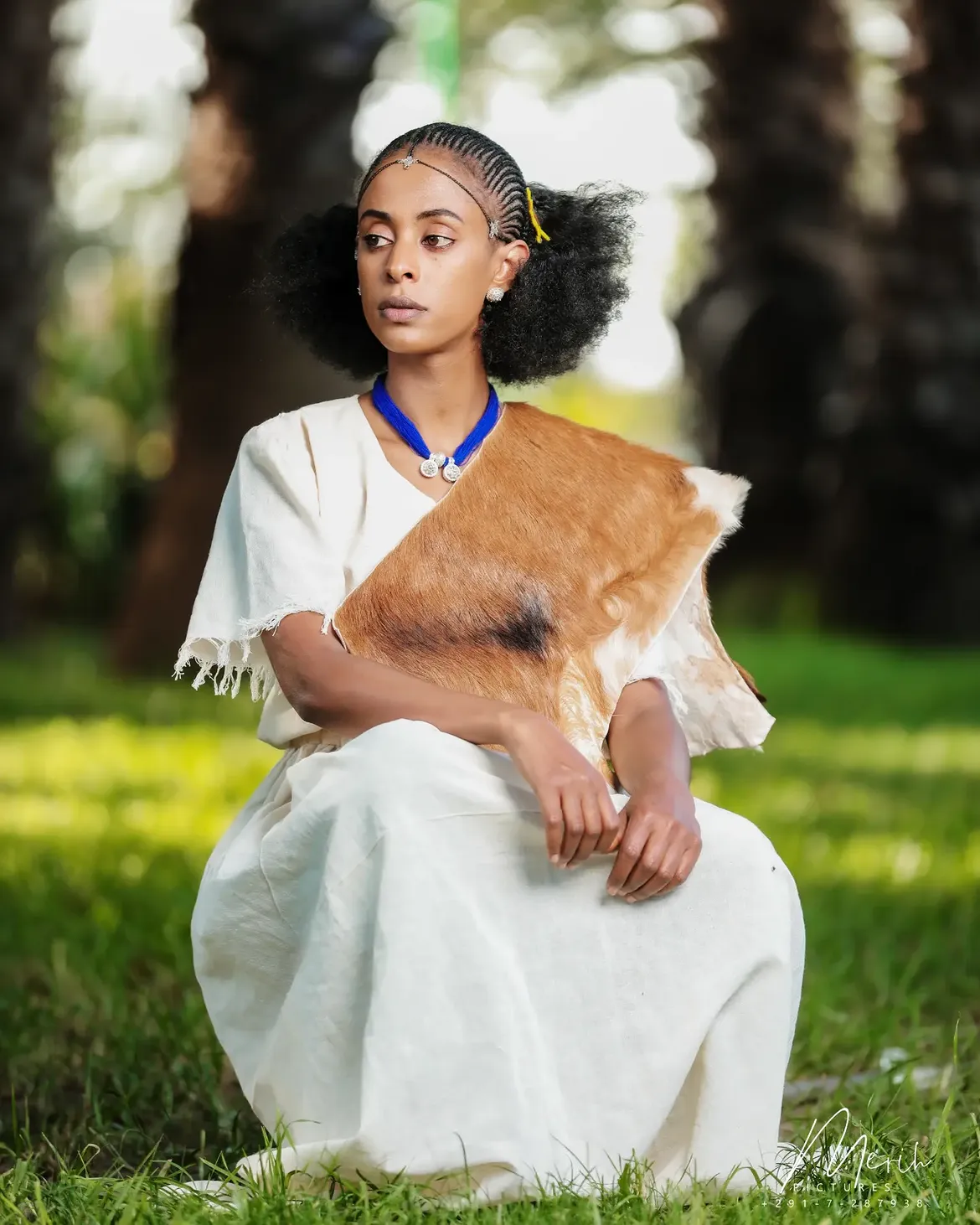
The highland Tigrinya community, the largest numerically and the most globally visible through the diaspora, has produced the dress forms most commonly associated with “Eritrean dress” in external representations: the zuria for women, the kidan habesha for men, the gabi and netela wraps for ceremonial occasions. These are the garments most frequently photographed, most frequently sold through diaspora retail, and most frequently described in fashion media coverage of Eritrean traditional dress. Their visibility is partly a function of the Tigrinya community’s numerical and urban dominance within Eritrea, and partly a function of the global Habesha fashion market that channels these garments through Addis Ababa for distribution to diaspora communities worldwide.
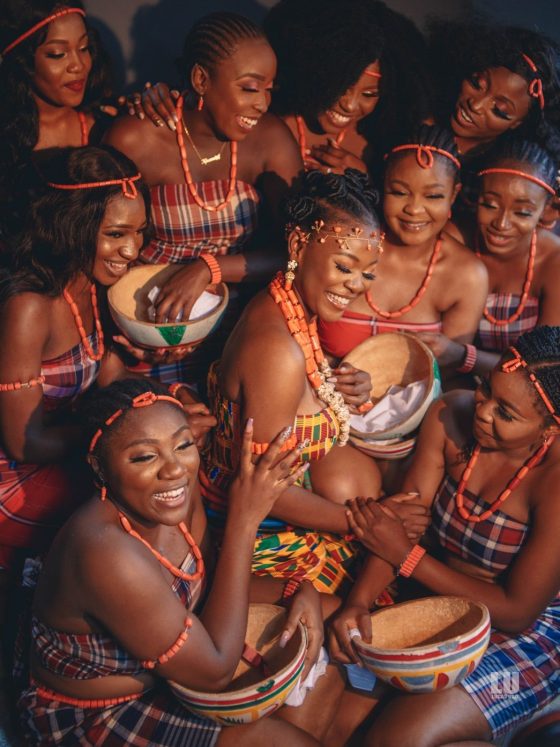
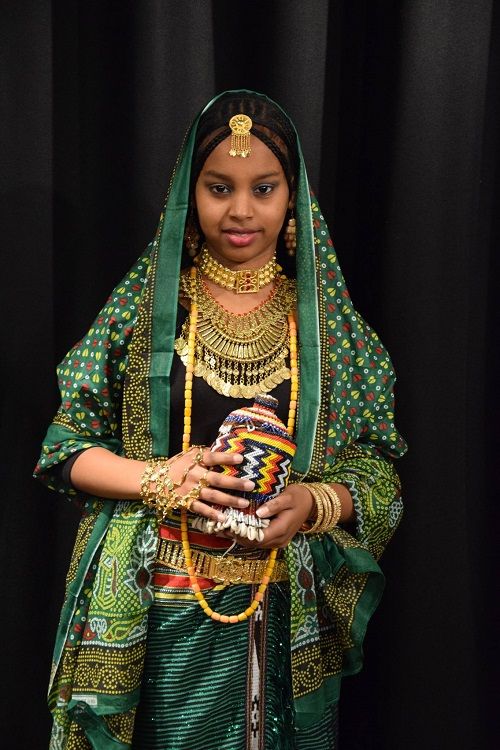
The lowland communities — predominantly Muslim, pastoralist or semi-nomadic, ecologically shaped by the coastal lowlands, the eastern escarpment, the Danakil depression and the western plains — have developed dress traditions whose relationship to the highland Tigrinya system is one of distinction rather than variation. The Tigre, the second-largest ethnic community, wear garments shaped by their specific religious identity, pastoral economy, and connections to the Red Sea trading world. The Saho, organised in patrilineal descent groups along the eastern escarpment, use bright caftan forms with beadwork that reflects a different aesthetic logic from the highland embroidery tradition. The Rashaida, the most recent arrivals among Eritrea’s ethnic communities, carry a dress culture rooted in Arabian Peninsula textiles and a community practice of marriage exclusively within the clan.
The Kunama and Nara of the western lowlands carry Nilo-Saharan cultural affiliations that distinguish them from the country’s Afro-Asiatic majority, and their dress traditions reflect those affiliations in material, colour, and ceremonial function. The Kunama Adalkana, the women’s dress worn at significant cultural festivals, uses vibrant colour combinations that belong to a different aesthetic register from the white-dominant highland palette. The Afar, living across the Danakil depression and the coastal lowlands, have a dress culture shaped by one of the world’s most extreme environments, where managing heat, movement, and social visibility through dress has produced material solutions that no highland community requires.
The Zuria and What It Actually Communicates
The zuria is the most globally recognised Eritrean women’s garment, and one of the most misrepresented, because it is described as a single garment rather than a category whose meaning is carried by the details that distinguish one community’s version from another’s.
At its broadest, the zuria is a long, flowing dress made from lightweight cotton, typically in white or ivory, with embroidered borders at the neckline, sleeve edges and hem. That description covers the category. The embroidery is where the reading begins. Tigrinya highland zuria embroidery uses dense cross-stitch patterns in red, green and yellow, with geometric borders whose specific pattern vocabulary communicates regional and community affiliation. The colour combination of red, green and yellow references the Eritrean national palette, but the specific arrangement of those colours in specific stitch patterns communicates something more specific than national identity: it places the wearer within a particular community tradition of embroidery that women who share the tradition can read precisely.
The Saho version of the equivalent garment uses bolder beadwork and darker base fabrics, reflecting the Saho aesthetic tradition and the specific material resources of the eastern escarpment communities. The Tigre lowland equivalent uses a different silhouette and different textile traditions, shaped by the lowland ecology and the Islamic practice of the Tigre community. What these garments share is the category of women’s ceremonial dress. What distinguishes them is everything the category description leaves out: the specific fabric, the specific embroidery or beadwork vocabulary, the specific colour register and the specific ceremonial context in which each is worn.
The white of the highland zuria is not a neutral choice. It is a specific cultural association with the Orthodox Christian ceremonial context of the highland Tigrinya community: church service, religious festival, wedding ceremony in an Orthodox Christian setting. In this context, white communicates purity, ceremony, and spiritual occasion in a way specific to the Orthodox Christian cultural geography of the Eritrean highlands. It does not communicate the same thing to the Muslim lowland communities for whom white may have a different ceremonial significance or none at all. The dress is not universal. Its colour is an argument, and the argument belongs to a specific community tradition.
Jedid: The New Garment and Why Newness Matters
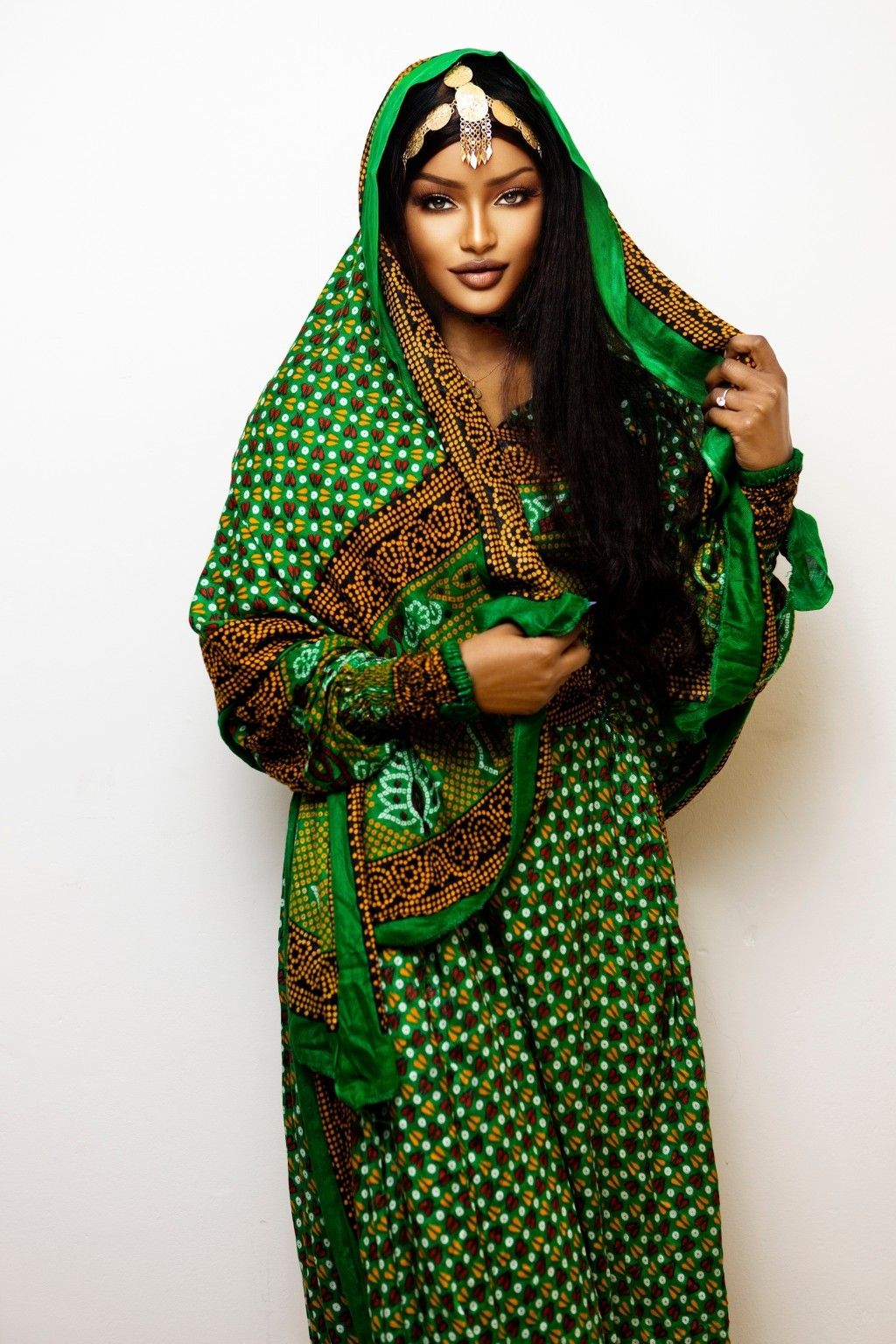
Jedid is an Arabic-rooted word used across several Eritrean communities that means new, and in the dress context it carries a specific ceremonial weight that the English word does not capture.
In the cultural context of Eritrean ceremonial dress, the jedid is not simply a garment that has not been worn before. It is a garment commissioned or purchased for a significant occasion, and its newness is itself a social statement. The woman who arrives at a wedding, a naming ceremony, a religious festival, or a public gathering in a jedid communicates that the occasion is important enough to warrant a new garment. She is communicating investment, respect for the occasion and the financial capacity to dress newly rather than to wear something already in the wardrobe. The jedid is a social gesture as much as it is a clothing choice.
In communities where occasionwear is an active and significant social economy — where the garment worn at an important ceremony is discussed, remembered and evaluated by the community attending it — the distinction between jedid and worn dress is socially meaningful. An older garment worn to a major celebration communicates something different from a new one, and the community reading the room reads both. The jedid is therefore not simply about novelty. It is about the relationship between the wearer and the occasion: the jedid says that this occasion was worth the investment.
In the diaspora context, the jedid carries additional weight. For Eritrean communities in the United Kingdom, the United States, Sweden, Germany, and Australia, commissioning a jedid for a cultural celebration is often an act of cultural reaffirmation as well as a dress-choice decision. The woman who commissions a specific embroidery pattern from a specific regional tradition, or who has a jedid made by a tailor who knows the Tigrinya highland stitch vocabulary, is not simply buying a garment. She connects her body and her occasion to a specific cultural tradition across distance, and wears that connection in a room full of people who can read what it says.
The Rashaida: A Completely Different System
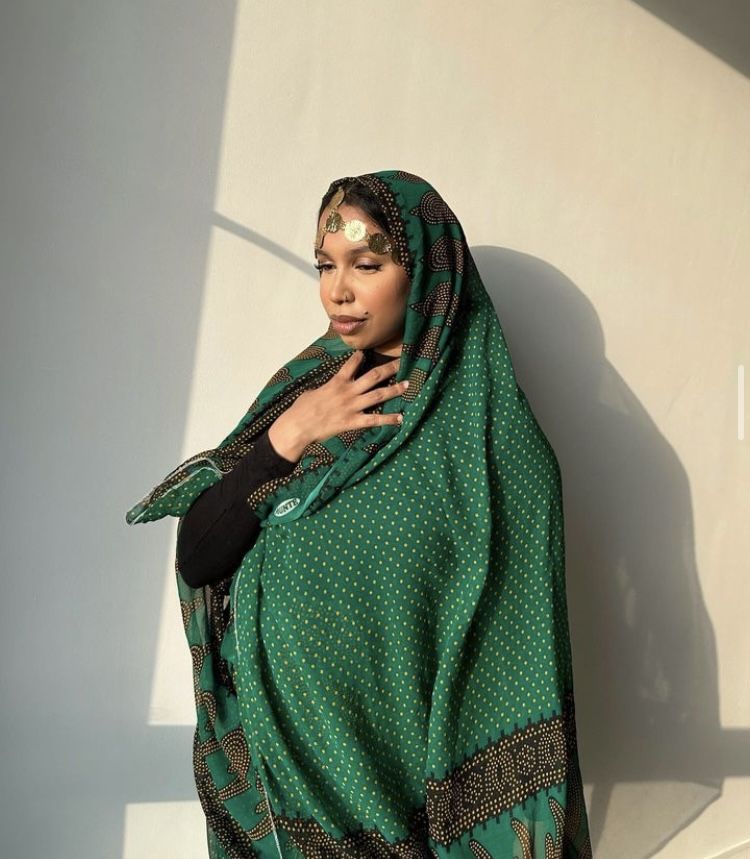
Of all Eritrea’s ethnic communities, the Rashaida carry the dress tradition that is most visually distinct from the highland Tigrinya system that dominates representations of Eritrean dress, and the one most completely absent from those representations.
The Rashaida community, which arrived in Eritrea from the Arabian Peninsula in the mid-19th century, carries a dress culture shaped by its specific cultural origins, conservative social values, and community practice of marrying exclusively within the clan. Rashaida women wear garments that are immediately recognisable: black-and-red geometric patterned dresses whose visual vocabulary belongs to an Arabian Peninsula textile tradition rather than to the highland Habesha aesthetic. The burqa, worn by Rashaida women, is an elaborately embroidered veil of exceptional craft complexity, whose specific embroidery patterns communicate community identity and whose wearing communicates both modesty and the cultural pride of a community that has maintained its distinct identity across two centuries in a new country.
The burqa is not a generic veil. It is a specific craft object whose embroidery is the work of skilled hands and whose specific pattern vocabulary is legible to community members as a record of the maker’s identity and the wearer’s standing. Specific practitioners within the community hold the craft knowledge required to produce an elaborate Rashaida burqa and transmit it through practice. It is not reproducible by someone outside the tradition who has only seen the finished object. The burqa is therefore simultaneously a dress item, a craft object and a community credential, and reducing it to “a veil” misses almost everything that makes it what it is.
The Rashaida dress tradition appears in almost no external documentation of Eritrean traditional dress because of the same visibility bias that reduces all Eritrean dress to the white zuria. The highland Tigrinya community is more urbanised, more globally connected through the diaspora and more represented in the institutional channels through which cultural documentation reaches external audiences. The Rashaida community’s dress tradition is no less sophisticated, no less specifically meaningful, and no less deserving of documentation. It is simply less visible to the people doing the documenting.
Cloth as Ceremony: The Wrapping Traditions
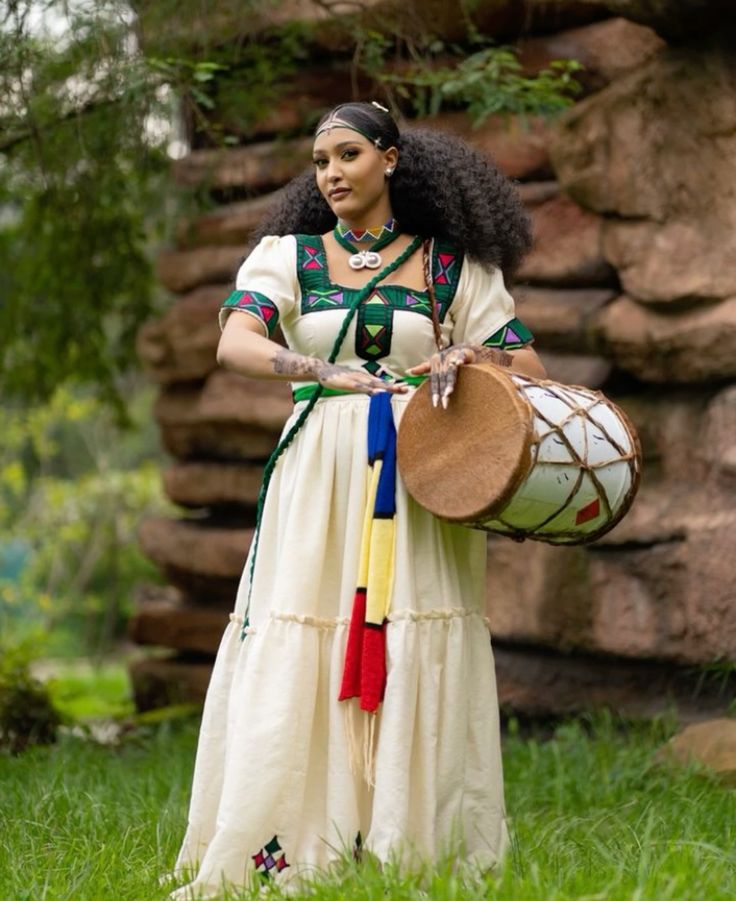
Across several Eritrean communities, the most ceremonially significant dress practice is not the specific garment worn but how cloth is wrapped, draped, and arranged around the body.
The gabi and the netela are large woven cotton wraps used across both the Tigrinya highland and adjacent communities in a range of configurations that communicate different occasions and different social roles. The netela, a lighter wrap, is folded and draped over the shoulders and head for church attendance, religious ceremonies and formal occasions. The specific way the netela is folded, which edge faces outward, how much of the body it covers, and whether it is secured or allowed to fall freely communicates information about the occasion and the wearer’s role within it to those who share the literacy to read these arrangements.
The embroidery at the borders of the netela and the gabi marks quality and ceremonial intent. A border of fine cross-stitch in the traditional colour vocabulary on a well-woven cotton wrap communicates investment and care in a way that a plain or machine-made wrap does not. The handwoven tmailia, with its geometric motifs, represents the highest craft level within this tradition: every pattern carries ancestral significance, some believed to offer protection, others to celebrate fertility or community belonging.
Omiren Styles has documented, in its analysis of Habesha hairstyling traditions in Ethiopian and Eritrean communities, that these dress practices are more than aesthetic choices. They carry social information, community identity and the accumulated knowledge of practitioners who have developed the techniques across generations. The way a wrap is arranged at a church service communicates whether the woman is a regular churchgoer, a celebrant at a specific religious occasion or a visitor from another community. The literacy required to read these arrangements is not acquired through fashion media. It is acquired through participation in the community that carries the tradition.
The Eritrean and Ethiopian Distinction and Why It Matters
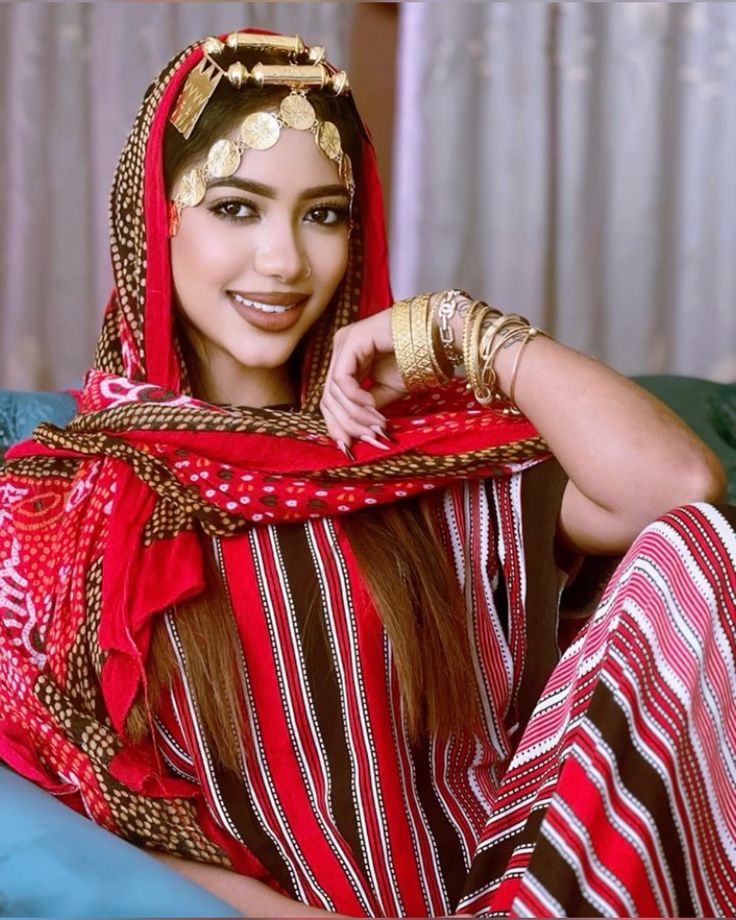
The most consequential misrepresentation in the documentation of Eritrean dress is the consistent conflation with Ethiopian Habesha dress, and it has a specific structural cause that requires naming.
Omiren Styles has established, in its analysis of Eritrean men’s traditional dress, that the global Habesha fashion market is overwhelmingly channelled through Addis Ababa. The standard commercial zuria, the white cotton dress associated with the Habesha kemis, is produced and mass-distributed out of Addis Ababa and sold in Eritrean diaspora markets alongside Ethiopian products under a shared “Habesha” category. What matters here, and what the conflation with Ethiopian dress consistently erases, is that in Eritrea the specific arrangement of wraps, their fabric weight and their border patterns follow conventions developed within the specific cultural geography of the Eritrean highlands, shaped by the Tigrinya communities of Asmara, Mendefera, Dekemhare and the surrounding plateau, and are not identical to the Ethiopian arrangements that have been globally disseminated through the Addis Ababa fashion market.
Eritrea and Ethiopia share the Habesha civilisational heritage, and both carry the Tigrinya language and the Orthodox Christian faith into their highland communities. These are genuine and deep connections. Eritrea’s independence in 1993, after a thirty-year armed struggle, created a political and cultural distinction between Eritrean and Ethiopian national identities that both communities live with great intensity. For Eritreans, conflating their dress tradition with Ethiopian dress is not a minor error. It is the erasure of a specifically Eritrean cultural identity through an external representation that does not know the difference because it has not looked closely enough to see it.
Accurate documentation of Eritrean dress requires knowing which garments are specific to Eritrean Tigrinya tradition and which are shared across the broader Habesha cultural geography. It requires knowing that the Eritrean community’s specific embroidery patterns, wrap arrangements and ceremonial practices are distinct even when the garment category is shared. It also requires the political awareness to understand that naming this distinction is not a pedantic detail, but a recognition of a community’s right to be seen accurately rather than absorbed into a neighbouring country’s cultural representation.
The Omiren Argument
Eritrean cultural dress is nine systems, not one garment.
The white zuria is real. It is beautiful. It carries centuries of highland Tigrinya embroidery knowledge and the specific ceremonial associations of the Orthodox Christian culture of the Eritrean highlands. It deserves documentation at the level of its actual complexity: the specific embroidery vocabulary, the specific occasions at which it is appropriate, the specific community traditions of the communities that produce and wear it.
It is also one chapter in a text that runs for nine. The Rashaida burqa, embroidered with patterns that carry two centuries of Arabian Peninsula textile tradition transformed into a specifically Eritrean community practice, is another chapter. The Kunama Adalkana, worn at significant community festivals in the vibrant colours of a Nilo-Saharan aesthetic tradition, is another. The Saho caftan with its beadwork and bright colours, shaped by the specific material culture of the eastern escarpment, is another. The Tigre lowland dress practices of the Muslim pastoral communities, shaped by a different ecology and a different faith practice, are another.
The jedid that a woman commissions for her daughter’s wedding, embroidered with the specific pattern vocabulary of her family’s regional tradition, and worn in a room full of people who can read exactly what the embroidery says about who she is and where she comes from, is not a white dress. It is a sentence in a language that her community has been writing for centuries.
Omiren Styles has argued, throughout this series on African dress systems, that the standard is not to make African dress legible to external markets on external terms. The standard is to document it accurately enough that the people who engage with it understand what they are engaging with. Eritrean cultural clothing is more than one white dress. The documentation it deserves should be long enough to read all nine chapters.
ALSO READ
- Eritrean Men’s Traditional Dress: Kidan Habesha, Gabi and Why the Habesha Label Misrepresents It
- Habesha Hairstyling Traditions: Ethiopian and Eritrean Hair as More Than Beauty
- Beadwork as Record: Why Zulu Colour Meanings Cannot Be Reduced to a Universal Code
- Indigo, Status and Mobility in Tuareg Dress: Reading Ceremony Without Reducing It to Costume
- When Clothing Becomes Declaration: Dress as Cultural Identity
- The Global South Made Fashion. It Just Never Got Credit.
Frequently Asked Questions
What is the zuria and what does it communicate?
The zuria is a long, flowing cotton dress, typically in white or ivory, worn by women across several Eritrean highland communities. It is most closely associated with the Tigrinya highland tradition, where it is worn with embroidered borders in red, green and yellow cross-stitch patterns whose specific vocabulary communicates community and regional affiliation. The Saho equivalent uses bolder beadwork and darker fabrics. What the dress communicates depends entirely on which community produced it and which embroidery tradition it carries: the white is not neutral but a specific ceremonial association with the Orthodox Christian highland context, communicating purity and formal occasion in that tradition.
What is jedid in Eritrean traditional dress?
Jedid, from the Arabic word for new, refers in the Eritrean dress context to a garment commissioned or purchased specifically for a significant occasion. Its newness is itself a social statement: the woman who arrives at a wedding, naming ceremony or religious festival in a jedid communicates that the occasion was important enough to warrant a new garment, signalling investment, respect and the capacity to dress specially for the occasion. In the diaspora context, commissioning a jedid with specific regional embroidery patterns is often an act of cultural reaffirmation as well as an occasion-dress decision.
How are Eritrean and Ethiopian dress traditions different?
As Omiren Styles has established in its analysis of Eritrean men’s traditional dress, Eritrean Tigrinya ceremonial dress is consistently conflated with Ethiopian Habesha dress in global fashion writing and diaspora retail markets. Both share a Habesha civilisational heritage, the Tigrinya language, and an Orthodox Christian faith in their highland communities. What distinguishes them is specific: the arrangement of wraps, the fabric weight, the border patterns and the embroidery vocabulary follow conventions specific to the Eritrean highland communities of Asmara, Mendefera and Dekemhare, and are not identical to the Ethiopian arrangements disseminated through the Addis Ababa fashion market. The distinction matters because Eritrea’s independence in 1993 produced a national cultural identity that the Eritrean community lives with great intensity, and conflation erases a specifically Eritrean cultural practice.
What are the dress traditions of the Rashaida community?
The Rashaida, who arrived in Eritrea from the Arabian Peninsula in the mid-19th century, carry one of Eritrea’s most visually distinctive dress traditions. Women wear black-and-red geometric-patterned garments rooted in Arabian Peninsula textile traditions, and the burqa, an elaborately embroidered veil whose specific patterns communicate community identity and the maker’s skill. The Rashaida community maintains conservative social values and practices marriage exclusively within the clan. Their dress tradition is almost absent from external representations of Eritrean traditional dress, despite being one of the country’s most technically sophisticated and visually distinctive dress cultures.
What are Eritrea’s nine ethnic communities and how do their dress traditions differ?
Eritrea’s nine recognised ethnic communities are the Tigrinya, Tigre, Saho, Afar, Bilen, Kunama, Nara, Rashaida and Hedareb. The Tigrinya highland community is the largest and most globally visible, carrying the white zuria and kidan habesha traditions associated with Orthodox Christian ceremonial life. The Tigre, the second largest, carry lowland Muslim dress practices shaped by a different ecology and faith tradition. The Saho use bright caftan forms with beadwork. The Danakil depression’s extreme environment shapes the Afar’s dress. The Rashaida carry Arabian Peninsula textile traditions. The Kunama and Nara carry Nilo-Saharan cultural affiliations visible in their use of vibrant colour and festival dress. Each system is distinct and cannot be read through the visual vocabulary of any other.
EXPLORE MORE
Read the full Heritage and Culture sections at Omiren Styles for ongoing documentation of Eritrean dress traditions, Horn of Africa cultural clothing and the nine communities whose dress systems deserve accurate representation. Discover travel and heritage intelligence across the Horn of Africa at Rex Clarke Adventures.