The argument for building a local retail base first is not only strategic. It is also an argument about what kind of commercial evidence is worth creating.
An independent designer who secures a stockist relationship with a well-curated local boutique has something more durable than press coverage: a purchase order, a retail relationship, sales data, customer feedback, and documented commercial delivery. That evidence changes what international conversations are possible. It changes how a buyer in London, Paris or New York reads the brand’s commercial credibility. It changes what a designer can say about their market when they walk into a wholesale meeting.
In Accra, the boutique doing the most serious work to create that kind of evidence for West African independent designers is Elle Lokko.
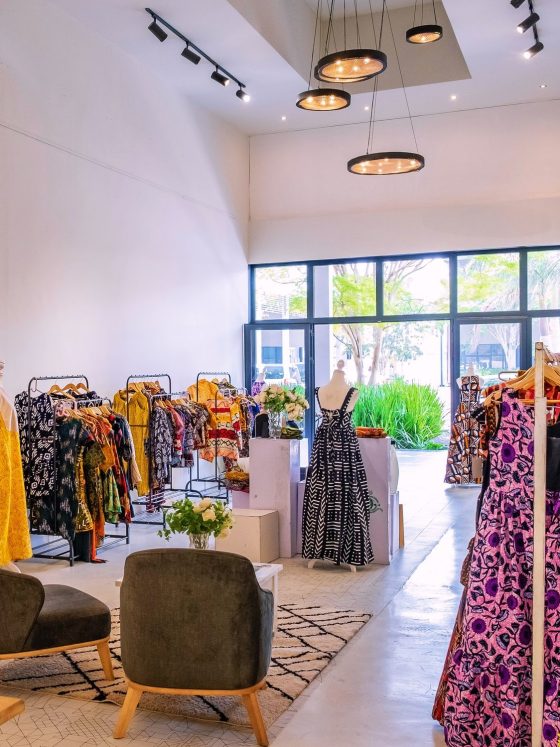
Elle Lokko, founded in 2015 by designer and curator Stefania Manfreda, is Ghana’s first women’s concept store and one of the most significant multi-brand retail spaces for contemporary African design on the continent. Located at 14 Lokko Road in the Osu Klottey district of Accra, it showcases fashion, art, beauty, and lifestyle in a curated environment that has earned a reputation as the place in Ghana where a serious contemporary African label can first test itself in a real commercial market.
Elle Lokko is not simply a place to buy African fashion. It is a place where African fashion demonstrates that it has a customer, a price point, and a repeat-buying relationship. That is what a local retail route looks like when it is functioning properly.
This matters in the context of everything this series has argued. Building Local First established that the most durable commercial foundations are built through repeat stockist relationships before pursuing complex international placement. Visibility Is Not Market Power established that attention alone does not create commercial viability. Elle Lokko is where those arguments become concrete: a physical retail space in Accra where the commercial test happens, where sales data is generated and where the relationship between an African designer and an African customer becomes documented and repeatable.
Founded in 2015, Elle Lokko is the most important multi-brand retail space for contemporary African design in Accra. Omiren documents what it has built and why it matters.
What Elle Lokko Is

The Elle Lokko concept store is a multi-brand retail environment that carries a curated selection of contemporary African labels across fashion, beauty, homeware and lifestyle. Its physical space in Osu Klottey is designed as a destination rather than a transactional retail environment: the curation, the presentation, the atmosphere and the editorial approach all communicate that the brands stocked here have been selected for a reason and deserve to be encountered with attention.
The store functions simultaneously as a retail destination, a cultural space and a curatorial institution. Since its founding in 2015, it has hosted exhibitions, pop-ups and collaborations that bring together designers, artists, stylists, creatives and fashion consumers in a context where commercial activity and cultural engagement are not separated. A customer who comes to buy a dress may encounter a new photographer’s work. A designer featured in a pop-up may meet a buyer who was there for something else entirely.
That integration is not incidental. It is the operating logic of the space. Elle Lokko understands that for a contemporary African design label to build a customer relationship, the customer needs a context in which to encounter the brand: not just a product on a rack, but a story, an aesthetic world, a reason to return. The boutique provides that context.
The Lokko House extension adds a hospitality dimension to the ecosystem: residences and Airbnb properties rated as guest favourites, allowing visitors to experience the Elle Lokko world beyond a retail transaction. For international buyers, press, stylists, and collaborators visiting Accra, Lokko House creates a comprehensive hospitality experience within the brand’s world. A buyer who stays in a Lokko House property spends time in the aesthetic environment Elle Lokko has created, which is a different kind of buyer engagement than a brief retail visit provides.
As the Business and Financial Times documented in its March 2026 analysis of women-led retail spaces in Accra, Elle Lokko represents a shift from traditional boutique retail to a curated cultural space. It is described as one of Accra’s pioneering concept stores, a place where African design and global aesthetics intersect, and a creative hub hosting exhibitions, pop-ups and collaborations that bring together creatives, designers, stylists and fashion enthusiasts.
The Brands Stocking Criteria and What They Reveal

Elle Lokko’s stated stocking criteria are clear: the boutique is home to a carefully curated selection of contemporary African brands, including designers, makers, and creators whose work is rooted in craft, culture, and modern expression. It positions itself as connecting local excellence with a global audience. Stocking with Elle Lokko, according to its own description, means more than shelf space: it means visibility, context and inclusion in a wider cultural ecosystem that celebrates African creativity in all its complexity.
Those criteria contain important commercial information. They tell a prospective brand what kind of buyer it will encounter in this environment and what kind of customer relationship the boutique is building. A brand whose work is rooted in craft and culture can expect to encounter customers who have come specifically to find that kind of work. That is a fundamentally different retail environment from that of a mass-market retailer, where the brand would be competing against unrelated products for undifferentiated consumer attention.
The criteria also reveal what Elle Lokko is not. It is not a quantity retailer. It is not seeking brands that can supply at industrial volume. It is seeking brands that contribute to a coherent curatorial story about what contemporary African design looks, feels and means. That distinction matters for the kind of commercial relationship that results: smaller order sizes, potentially, but a more committed customer, stronger sell-through and a retail context that reinforces the brand’s positioning rather than undermining it.
As the Omiren Index of independent retailers and showrooms has established, the most commercially valuable thing a boutique like Elle Lokko provides is not simply distribution. It is cultural authority: the signal to buyers, the press, and consumers that a brand has been assessed by serious curatorial intelligence and found worthy of presentation in a premium contextual environment. That signal is particularly valuable in Accra’s market, where Elle Lokko’s established reputation means that inclusion in its curation carries credibility.
The Threaded Tribes Model and What Collaborative Retail Produces

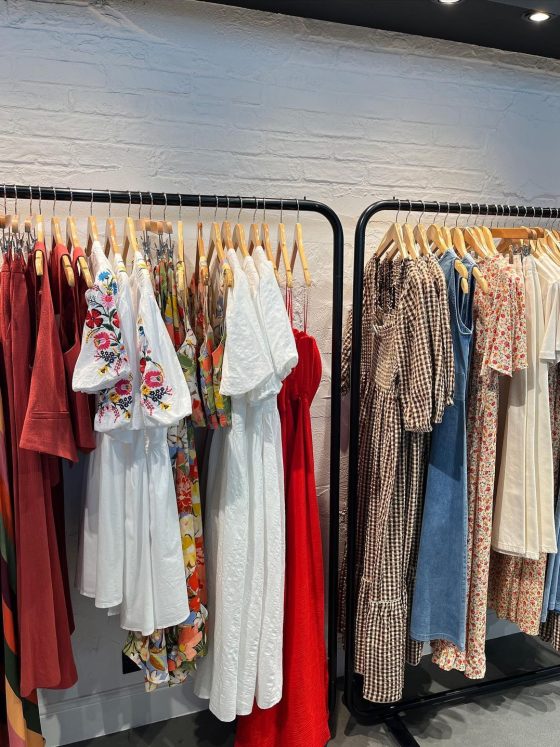
Threaded Tribes’ February 2026 activation at Elle Lokko is documented on the brand’s own platform: a curated Threaded Tribes rack in one of Accra’s most beloved creative spaces, described as a love letter to the boutique. The activation involved photographers, styling, and a genuine editorial investment in the collaboration rather than simply a product placement.
That model is important. A brand that places a rack at Elle Lokko is not simply accessing shelf space. It is participating in the boutique’s cultural ecosystem: its photography, its event programming, its customer relationships, its editorial identity and its position as the place in Accra where creative people encounter new work.
The commercial outcome of that participation is not only sales from the specific activation. It is the data generated about which products sell, at which price points, to which customer profile. It is the social media visibility produced by Elle Lokko’s own documentation. It is the customer relationships initiated that may continue through direct brand channels. And it is the credibility signal that comes from being part of a retail context that has already established what good contemporary African design looks like.
For a brand building its first commercial retail record, that combination of outcomes is more valuable than the activation’s immediate sales figure. It is the evidence that allows the brand to approach the next buyer conversation with documented commercial reality rather than creative promise alone.
The British Council Creative DNA Connection
Elle Lokko’s role as a judge on the British Council’s Creative DNA Fashion Accelerator Programme Ghana is one of the most significant indicators of the boutique’s institutional position in Accra’s fashion ecosystem.
The programme, led by the British Council in partnership with My Runway Group, received over 290 applications from across Ghana. That number is evidence of the scale of the design talent working in the country and of the institutional credibility of a programme that carries the British Council’s name alongside Ghana’s most respected fashion retail voice.
For a boutique to serve as a judge on a programme of this scope is a different kind of institutional signal than hosting a pop-up or stocking an established brand. It places Elle Lokko inside the pipeline through which emerging Ghanaian designers receive structured assessment, commercial development support and market-access preparation. A designer who goes through the Creative DNA programme and receives feedback from Elle Lokko’s curatorial perspective is receiving the kind of commercial intelligence that the boutique has built over eleven years of operating in Accra’s market.
The connection between the boutique and the accelerator programme is also a structural bridge between two things that are often kept separate: retail access and designer development. Most retail conversations assume the designer is already production-ready. Most designer development programmes teach creative development without structuring the retail conversation that should follow. Elle Lokko’s participation in the British Council programme creates a direct line between those two stages.
What Elle Lokko Reveals About the Accra Market
The existence and sustained commercial operation of Elle Lokko since 2015 is itself evidence about the Accra market that fashion coverage rarely produces explicitly.
Accra has a consumer market for premium, curated, contemporary African fashion. That market is willing to pay for design quality, curatorial intelligence and the retail experience of encountering work in a premium context. It is not a market that requires heavy discounting, mass-market volume or European brand validation before it will engage with local and continental design.
This matters because much of the international discourse around African fashion markets treats them primarily as audiences for global brands rather than as sophisticated consumer bases for African design. Elle Lokko’s eleven-year commercial operation directly challenges that assumption. It has been profitable and growing without requiring European validation of its curation or its customer base. The customer base it has built knows what good design is and comes to Elle Lokko specifically because the boutique can be trusted to have found it.
As the Omiren buyer shortlist for 2026 established, some of the most commercially significant conversations for African designers are not with European buyers but with the serious African retail platforms that understand their customer, their design language and their production context better than any international buyer who has encountered the work only once at a trade show.
A brand stocked at Elle Lokko is not simply visible in Accra. It is visible to the specific community of design-literate, quality-conscious consumers in one of West Africa’s most commercially active cities. It is also visible to international visitors, buyers, press and collaborators who come to Accra and discover that Elle Lokko is where serious fashion happens. That combination of local authority and international visibility is precisely the commercial platform that Building Local First argues should precede any international market expansion.
How Elle Lokko Addresses the Retail Readiness Gap

One of the most practically important things a boutique like Elle Lokko does for the independent labels it stocks is give them the operational experience of functioning as a retail supplier.
The first time a brand fulfils a wholesale order, it discovers what it did not know about packaging, lead times, pricing consistency, quality control at volume, compliance documentation and the relationship between what a collection looks like in a studio and what it looks like on a retail floor. These lessons cannot be learned from a manual. They are learned through the experience of actually delivering a commercial relationship.
As established in How Buyers Assess an Independent Label, the five buyer criteria of range, margin, delivery, fit, and retail readiness are not abstract requirements. They are tested in practice through actual wholesale relationships. A brand that has successfully supplied Elle Lokko across multiple seasons has tested itself against all five criteria in a real commercial environment, and has developed the operational knowledge required to present itself to a more demanding buyer from a position of demonstrated capability.
Elle Lokko’s scale as an independent boutique means that its order sizes are appropriate for early-stage independent brands. The brand does not need to produce at the volume required by a department store. But it does need to deliver reliably, consistently and at a quality level that the boutique’s customers expect. That discipline is exactly what prepares a brand for the next stage of commercial development.
The Omiren Argument
Elle Lokko belongs on any serious map of African fashion retail infrastructure because it demonstrates that the local market argument is not theoretical.
The boutique has been operating since 2015 in one of West Africa’s most commercially active cities, curating a premium multi-brand environment for contemporary African design, building a customer base that values design quality and cultural specificity, supporting independent designers with the commercial test that no runway can provide, and contributing to the institutional infrastructure of Ghana’s fashion ecosystem through its participation in programmes like the British Council’s Creative DNA Fashion Accelerator.
As documented in Three African Designers and the Gaps They Reveal, the most serious challenge facing independent African designers is not creative talent but commercial infrastructure. Elle Lokko is commercial infrastructure. It is a retail space that treats African design with the seriousness and curatorial intelligence it deserves, and it has done so consistently for over a decade, while much of the international fashion industry was still asking whether an African luxury consumer market existed.
The answer to that question has always been yes. Elle Lokko is part of the evidence. As concluded in “Credit Is Not Compensation,” the fashion industry owes Global South creative communities a commercial relationship rather than a cultural gesture. Elle Lokko has been building exactly that: a commercial relationship, rooted in Accra, that creates documented commercial reality for the designers who enter it. That is what a local retail route looks like when it is functioning properly. The task for the wider African fashion ecosystem is to build more of them.
ALSO READ
- Building Local First Is How African Fashion Brands Earn the Right to Expand
- Omiren Index: Independent Fashion Retailers and Showrooms to Watch
- Visibility Is Not Market Power: Why Global Attention Still Fails Independent African Fashion Brands
- How Buyers Assess an Independent Label: Range, Margin, Delivery, Fit and Retail Readiness
- What Happens After a Fashion Showcase? The Measures That Prove Market Access
- Three African Designers and the Gaps They Reveal
Frequently Asked Questions
What is Elle Lokko and when was it founded?
Elle Lokko is a concept store founded in 2015 by designer and curator Stefania Manfreda in Accra, Ghana. Located at 14 Lokko Road in the Osu Klottey district, it is Ghana’s first women’s concept store and carries a curated selection of contemporary African fashion, art, beauty and lifestyle brands. Since its founding, it has become one of the most important multi-brand retail spaces for contemporary African design in West Africa, known for championing independent designers and presenting their work in a premium cultural context. The Lokko House hospitality extension adds Airbnb residences, allowing visitors to experience the Elle Lokko world beyond a retail transaction.
What kinds of brands does Elle Lokko stock and how can a designer apply?
Elle Lokko’s stated stocking criteria describe a preference for contemporary African brands, including designers, makers and creators whose work is rooted in craft, culture and modern expression. The boutique states that it connects local excellence with a global audience, and that stocking with Elle Lokko means more than shelf space: it means visibility, context and inclusion in a wider cultural ecosystem. The boutique is open to new brands and invites approaches from labels that champion quality, originality and thoughtful storytelling. Direct contact through the website is the appropriate route for a brand seeking to open a stocking conversation.
What is the commercial value of a stockist relationship with Elle Lokko for an independent designer?
A stockist relationship with Elle Lokko creates several forms of commercial value simultaneously. It generates sales data showing what sells, at which price points and to which customer profile. It provides documented commercial delivery experience: packaging, lead times, pricing consistency and quality at retail. It creates visibility within a design-literate, quality-conscious Accra consumer base and among international visitors, buyers, and the press who come to Elle Lokko specifically to discover contemporary African work. And it provides the curatorial credibility signal that comes from being assessed and selected by a boutique that has built a sustained reputation for identifying excellent contemporary African design since 2015. All of these outcomes contribute to the commercial evidence base a brand needs to approach larger or more demanding retail relationships.
How does Elle Lokko connect to the wider ecosystem of African fashion development?
Elle Lokko’s role as a judge on the British Council’s Creative DNA Fashion Accelerator Programme Ghana, which received over 290 applications from across the country, places it inside the pipeline through which emerging Ghanaian designers receive structured commercial assessment and market-access preparation. The boutique also functions as a creative hub, hosting exhibitions, pop-ups, and collaborations that connect designers with buyers, the press, and consumers in a single environment. Its Lokko House hospitality arm creates extended engagement with international visitors. Together, these dimensions place Elle Lokko at the intersection of retail access, designer development, cultural programming and institutional fashion infrastructure in a way that few boutiques in West Africa have achieved.
Why does a local retail relationship in Accra matter to a brand’s international commercial prospects?
A well-documented local retail relationship is commercial evidence that an international buyer cannot dismiss. It demonstrates that the brand has a customer, that the product has sold at a confirmed price point, that delivery has been executed reliably, and that a serious curatorial institution has assessed the work and found it worth presenting. As established in “How Buyers Assess an Independent Label,” buyers assess labels against range, margin, delivery, fit, and retail readiness. A brand with a sustained Elle Lokko stocking relationship has tested itself against all five criteria in a real commercial environment and can discuss that experience in a buyer meeting rather than projecting commercial promise it has not yet demonstrated.
How does Elle Lokko compare to other major African fashion retail spaces?
Elle Lokko occupies a comparable institutional position in Accra to that which Alára has built in Lagos: a premium multi-brand retail environment where contemporary African design is presented with the cultural authority and commercial seriousness the work deserves. Both spaces challenge the assumption that African luxury consumers need to travel to European cities to access premium design experiences. The key difference is market context: Alára operates at the highest luxury tier in Nigeria’s largest commercial city, while Elle Lokko has built its authority in Accra through a more accessible luxury positioning across fashion, art and lifestyle. Both belong on the Omiren Index of retailers building serious infrastructure for African fashion distribution. Between them, they represent the model that African fashion retail infrastructure needs to scale across Lagos, Accra, Nairobi, Johannesburg, Dakar, Kigali and beyond.
EXPLORE MORE
Read the full Industry and Retail Intelligence sections at Omiren Styles for ongoing documentation of African fashion retail infrastructure across Accra, Lagos, Nairobi, Johannesburg and beyond. Discover travel and heritage intelligence across West Africa at Rex Clarke Adventures.