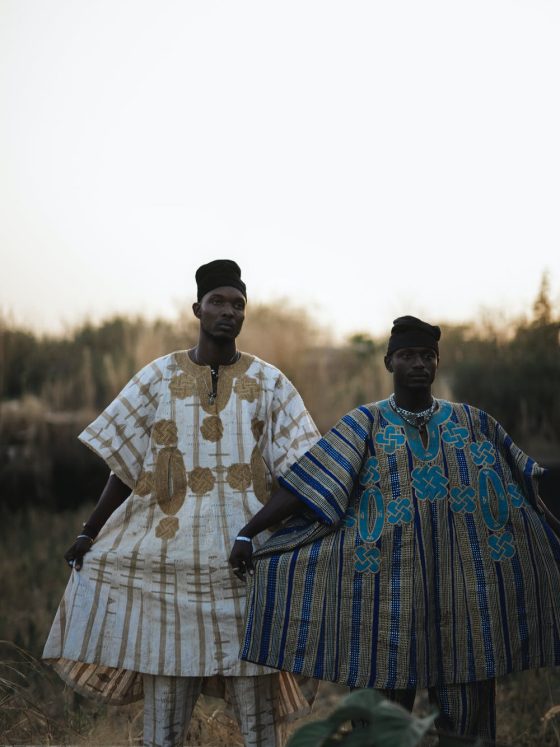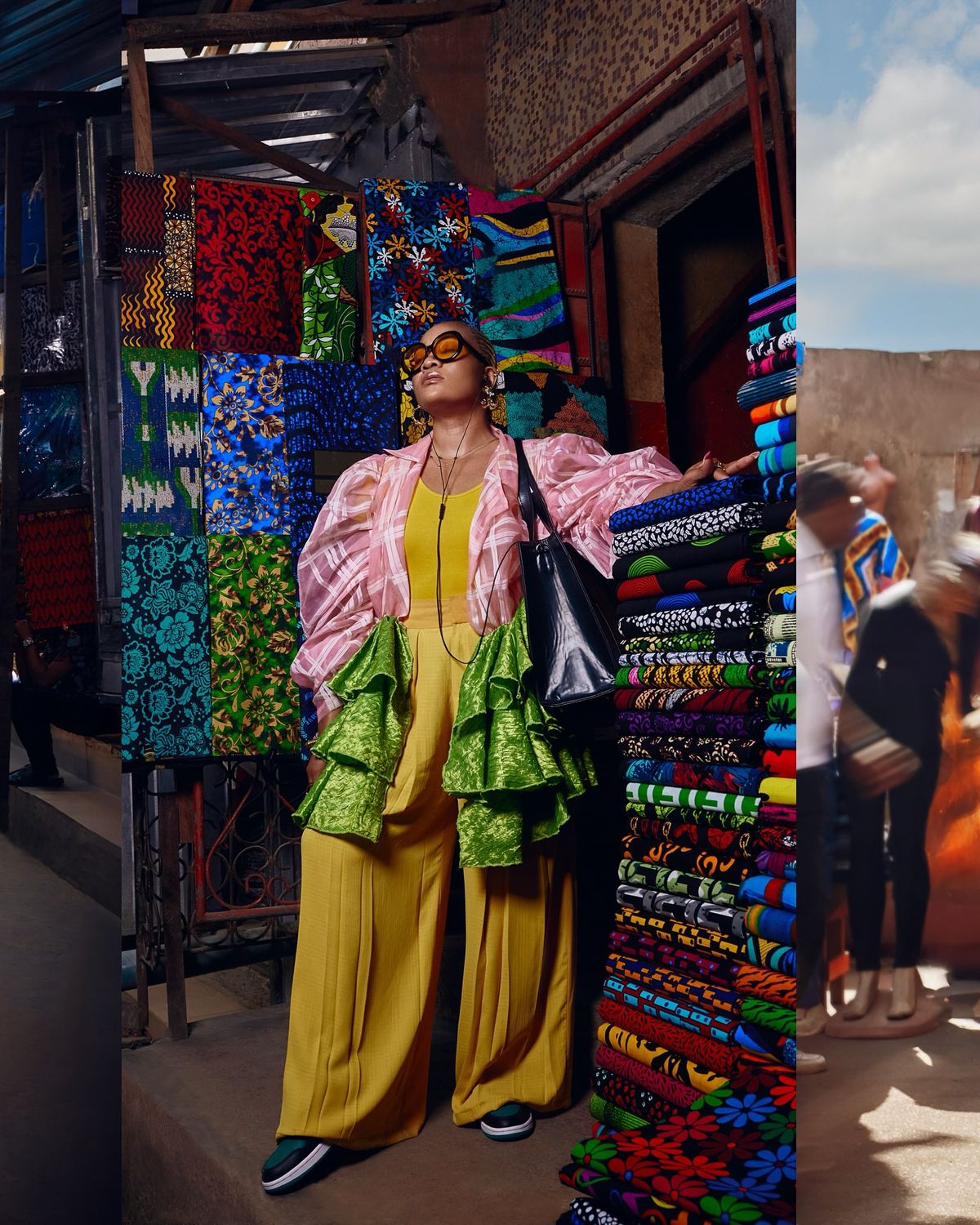
In 2024, Africa’s apparel market was valued at US$70.6 billion. By 2025, that figure had already climbed to US$73.59 billion. Sub-Saharan Africa alone accounts for US$31 billion of that total, with a trajectory pointing firmly toward US$50 billion by 2030. West Africa’s fashion market stood at US$19.25 billion in 2023. Nigeria represents a US$5 billion market for ready-to-wear clothing and fashion accessories. South Africa leads organised retail at US$8 billion. Egypt’s apparel sector reached approximately US$17 billion in 2023 and continues to grow at a 5.53% compound annual growth rate. These are not projections built on hope. These are the numbers the continent’s fashion industry is already generating right now, before the infrastructure improvements, the e-commerce expansion, and the full commercial weight of Africa’s median age under 20 years enters the market.
There is no editorial platform that covers this industry with the depth, rigour, and authority it warrants. That is the argument this piece makes, and it does not make it gently.
Africa’s apparel market reached US$70.6 billion in 2024. Yet no dedicated editorial intelligence platform covers it with authority. This is why the changes are now in place and what Omiren Styles is built to do.
The Gap Is Not an Oversight. It Is a Structural Failure.
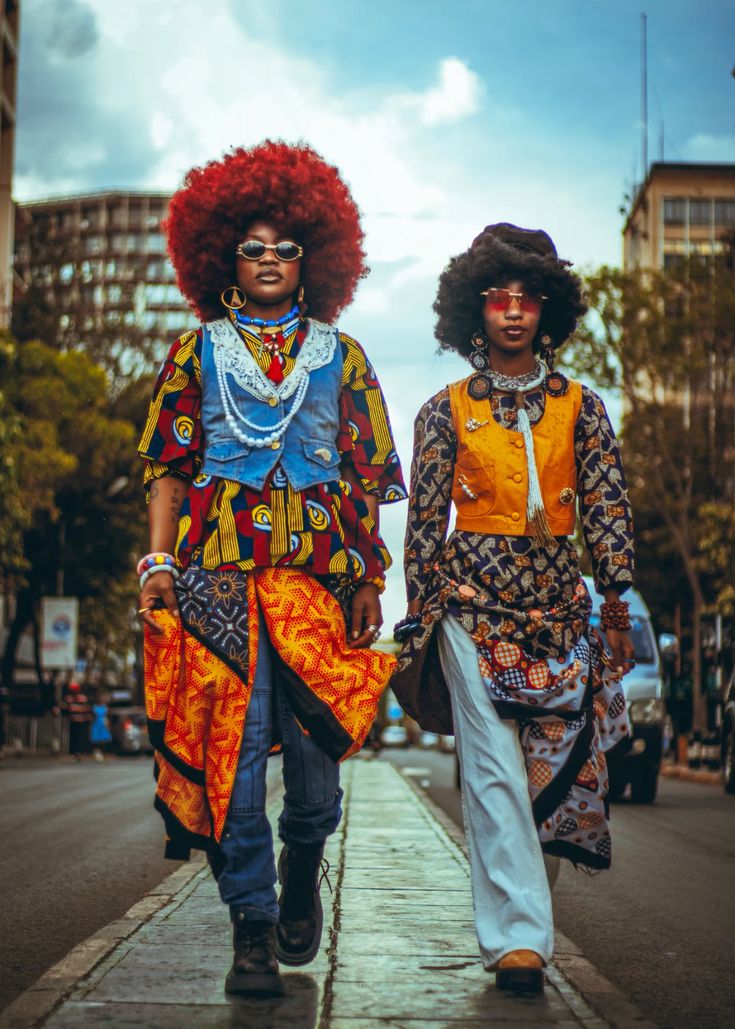
Editorial authority in any industry does one thing: it creates the shared language, benchmarks, and institutional credibility that allow capital, talent, and commerce to move efficiently. When Business of Fashion launched in 2007, its founding argument was that the global fashion industry had commercial mechanics that deserved the same quality of analysis as any other major sector. That argument was correct. What it built on the back of that argument was a subscription intelligence platform, a data consultancy, an annual index of the industry’s most influential people, and a State of Fashion report co-published with McKinsey, collectively becoming the infrastructure of credibility that the industry’s senior leadership now runs on. Brands consult it before entering new markets. Investors read it before deploying capital. Students read it before deciding which careers to pursue.
Africa’s fashion industry has none of this. What it has instead is a collection of partial solutions, each addressing one dimension of the problem without resolving the structural gap at its centre. Industrie Africa, The Folklore, and Raise Fashion connect African designers with global buyers and provide some visibility infrastructure. Lagos Fashion Week, Dakar Fashion Week, AFI Cape Town, and Arise Fashion Week generate event-based media coverage and some commercial activity. Trade associations compile data for their own members. Development institutions run surveys across parts of the continent. None of these platforms does what Business of Fashion does: producing the kind of rigorous, recurring, industry-wide intelligence that forms the foundation on which the whole sector makes decisions.
Africa accounts for just 1.82% of the global fashion industry despite generating US$70.6 billion annually. The gap between market reality and editorial representation is the same. They are one problem.
The Clearly Invincible State of Fashion Data in Africa report, published in March 2026, identified the core constraint with precision: data is generated across African fashion in silos, collected under different mandates, and published on inconsistent timelines. Designers source materials without comparative cost benchmarks. Brands enter global markets without reliable segmentation data. Governments design policy without sector-specific precision. Investors assess growth trajectories without structured revenue baselines. Lagos Fashion Week generated approximately US$1.7 million in media value and 44 million in digital reach during the Lagos fashion season of 2025, figures available only because they were independently researched by one organisation. Every other major continental fashion event lacks equivalent measurement frameworks, making cross-market comparison of economic contribution, policy advocacy value, and tourism impact structurally impossible.
This is not a data quality problem. It is a problem with editorial architecture. The data exists, distributed across platforms, event organisers, e-commerce providers, and development banks. What does not exist is a publication with the editorial mandate and the institutional credibility to aggregate, interrogate, and publish that data as the primary intelligence source for people who need it to make decisions.
What Africa’s Fashion Industry Has Already Built Without That Infrastructure
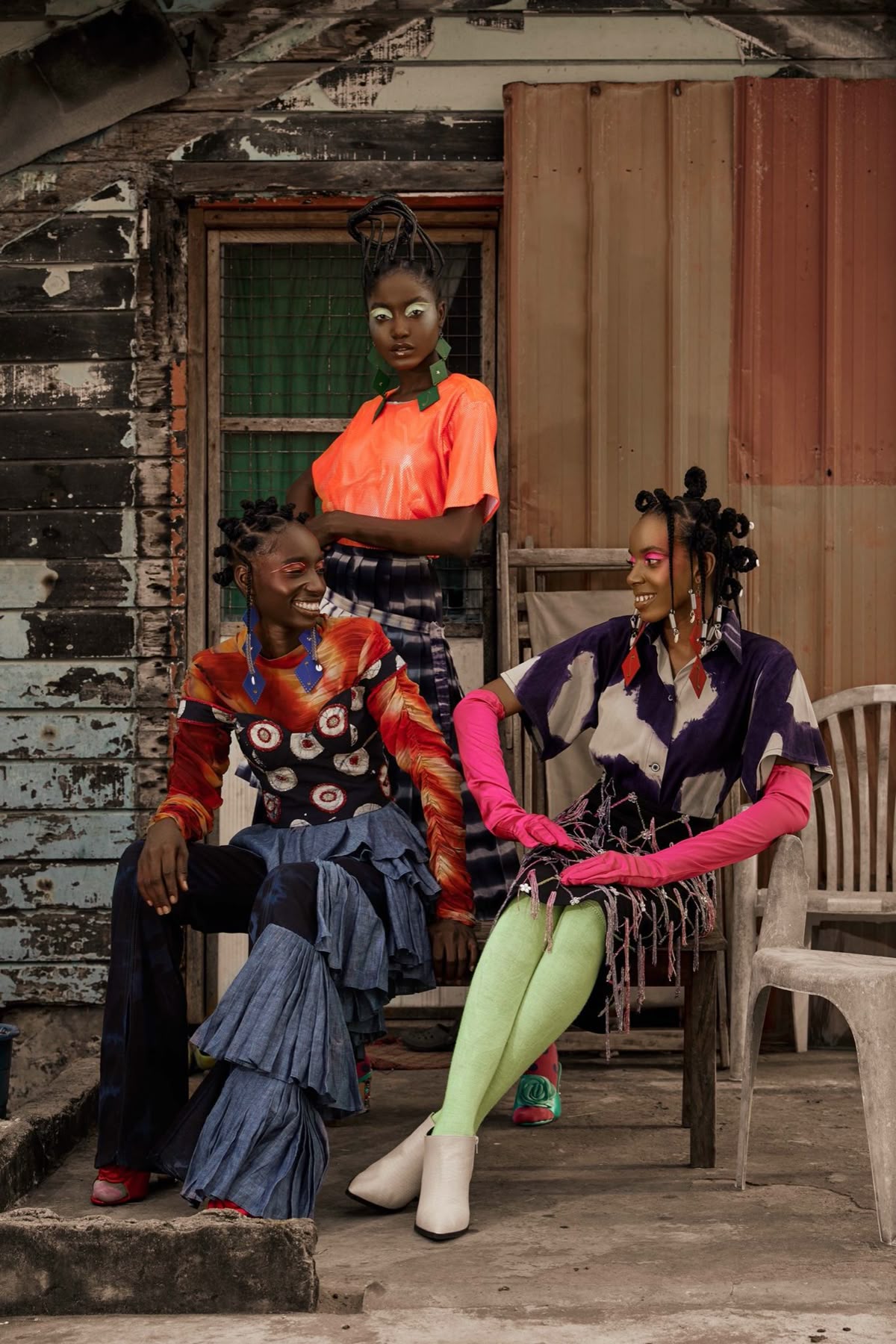
The creative output of African fashion in the current period is extraordinary by any measure. African designers are on the red carpet at the Met Gala, the NAACP Image Awards, and the Golden Globes. Ivy Getty wore Thebe Magugu at the 2025 Met Gala. Tyla wore Tolu Coker at the 2025 pre-Met Gala event. Olandria Carthen wore Sevon Dejana at the 2026 Golden Globes Eve. Names including Anifa Mvuemba of Hanifa, Andrea Iyamah, Diarra Bousso of Diarrablu, and Busayo Olupona of Busayo are stocked at Ssense, Nordstrom, Moda Operandi, and Bloomingdale’s. Africa Fashion Up, the Paris-based initiative dedicated to African fashion, received over 300 applications for its 2025 edition, up from nearly 200 the year before. Lagos has positioned itself as a global creative map node, with the 2025 Announce Digital Fashion Exhibition drawing designers, technologists, and digital artists across Africa and the diaspora to explore fashion as cultural memory and digital heritage.
All of this has been achieved without the editorial infrastructure that typically precedes and sustains commercial scale. In most industries, intelligence platforms precede global expansion. The research reports, the investment intelligence, and the data-driven editorial authority – these create the credibility environment in which brands can grow, in which investors feel confident deploying capital, and in which institutions can measure what the sector is actually worth. African fashion has done something remarkable: it has achieved significant global visibility while operating in an intelligence vacuum. The question is not whether the industry has proved itself. The question is how much further it can go and how much more efficiently it can grow once the editorial infrastructure it needs actually exists.
ALSO READ
- The African Fashion Investment Deficit: $70 Billion in Market Activity With No Dedicated Intelligence Infrastructure
- The Pan-African Fashion Summit Problem: Why Existing Conferences Are Not Building Durable Credibility
- Africa’s Fashion IP Crisis: Cultural Ownership as the First Strategic Priority
The Countries That Are Already Forcing the Issue

Nigeria accounts for 29.1% of Africa’s textile market in 2024 and is growing at a 6.34% compound annual growth rate, the fastest among major countries on the continent. A consortium of Nigerian textile firms collaborated in February 2024 to establish a centralised fabric dyeing and finishing plant to reduce operational costs and improve environmental compliance. A major Moroccan textile exporter opened a regional distribution hub in Kenya in May 2024 to streamline logistics and improve access to East African markets. In January 2025, the IFC extended a US$15 million package to Kenya’s Royal Apparel EPZ to build an EDGE-certified factory, create 3,700 jobs, and adopt renewable energy. In November 2024, the IFC loaned US$8 million to DTRT Apparel in Ghana to expand capacity and pilot recycled-fibre spinning.
These are not isolated investments. They represent the beginning of the kind of institutional capital movement that editorial intelligence is supposed to accelerate. Morocco’s textile and apparel exports totalled about US$4.5 billion in 2024, making it one of Europe’s primary sourcing partners. Egypt’s ready-made garment exports reached US$2.84 billion in 2024, an 18% year-on-year increase, sustained by a fully integrated textile value chain from cotton cultivation to finished garment export. Ethiopia has set an ambition to generate US$30 billion in textile and apparel export revenue by 2030 and is investing in industrial parks to reach it. These are serious industrial targets that generate significant economic activity. The investors, buyers, and policymakers who need to track and respond to these movements have no authoritative platform that covers all of them in one place, at a consistent depth, with an editorial mandate rooted in the African industry’s own priorities.
The Fashion Law Africa Summit, founded by Sana Ahmed specifically to address legal and cultural ownership gaps in African fashion, has become one of the most consequential institutional developments in the sector precisely because it identified a structural failure that no existing publication was covering as a primary beat. Cultural IP protection for African designers, the terms on which international partnerships are structured, the question of who controls the narrative, and the commercial returns when African aesthetics travel globally – these are business intelligence questions that the industry urgently needs answered and has no recurring publication to address them.
Why 1.82% of a Global Market Is Not a Creative Failure
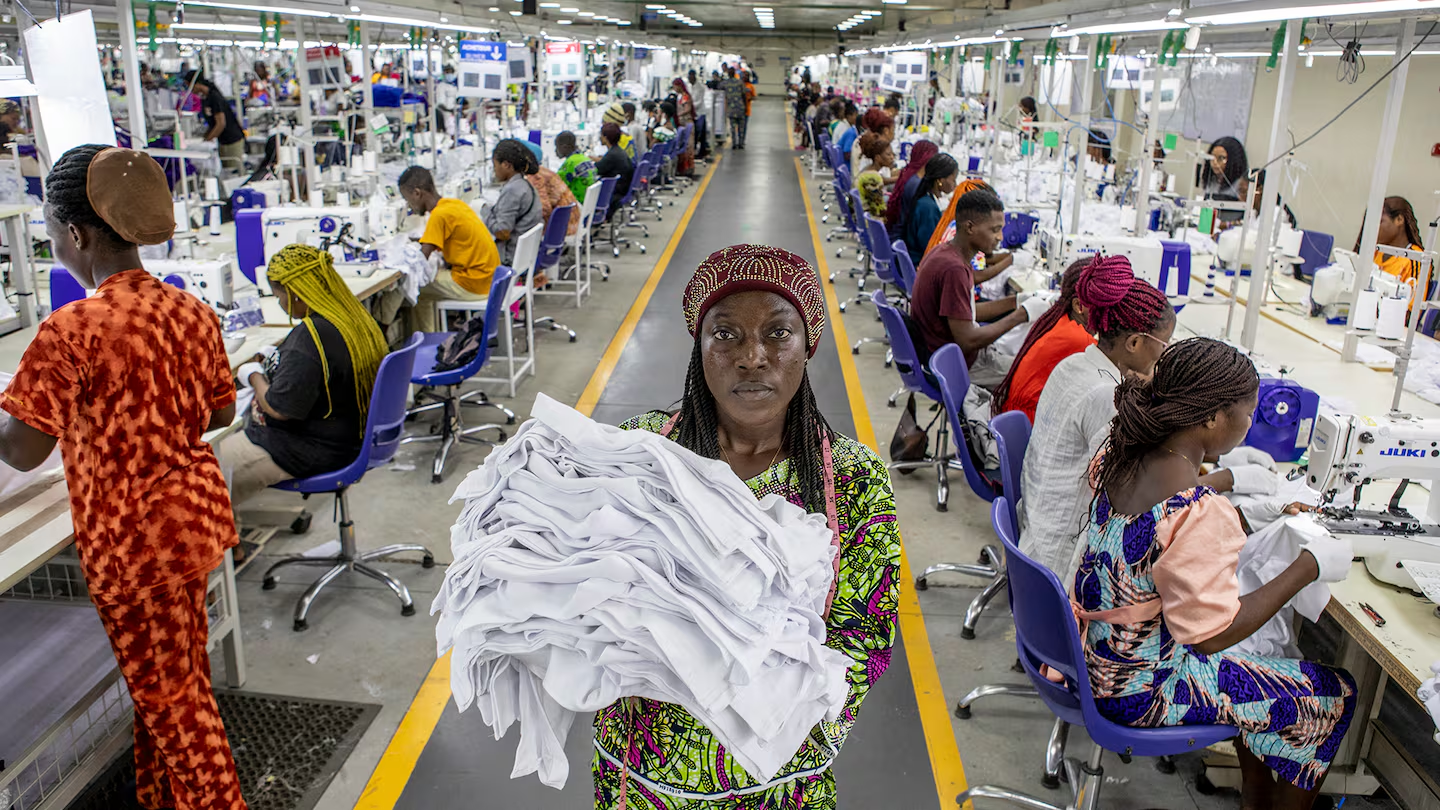
Africa currently accounts for approximately 1.82% of the global fashion industry despite generating US$70.6 billion annually. This figure is frequently cited as evidence of how far the continent has to go. It is more accurately read as evidence of the significance of the structural gap in the industry’s infrastructure. A continent with over 40% of its population under the age of 15, according to the African Development Bank, with urbanisation rates rising in every major economy, with a middle class expanding fastest in Ethiopia, Tanzania, Uganda, and Kenya, and with fashion and apparel claiming 48.1% of the African textile market share in 2024, does not produce that number because of creative or commercial limitations. It produces that number because the systems that convert creative output and consumer demand into globally recognised market power, the editorial intelligence platforms, the investment data infrastructure, and the brand credibility architecture have not been built for it by the people who are inside it.
That distinction matters enormously. A market that is commercially limited needs investment in its fundamental capacity. A market that lacks the intelligence infrastructure to represent its own capacity to the world needs a different intervention: it needs the editorial authority to narrate itself on its own terms, with its own data, for its own decision-makers and the global institutions that want to engage with it.
Omiren Argument
Omiren Styles is built on a single structural claim: the fashion industries of Africa, the Caribbean, and Latin America are not emerging markets waiting for Western editorial validation. They are civilisational traditions with commercial scale, creative authority, and institutional needs that existing global platforms have systematically failed to serve. The gap in African fashion editorial intelligence is not one that Business of Fashion, Vogue, or any platform designed to cover the global industry from London, New York, or Milan can fill, because those platforms begin with the wrong premise. They position Africa as a development story within a Western fashion narrative. Omiren Styles positions the African fashion industry as the primary subject and positions everything else, including the global markets that profit from African aesthetics and African consumer demand, as the context.
The consequence of this shift in premise is not merely editorial. It is institutional. When the intelligence platform that covers African fashion is built from inside African fashion, the data it aggregates, the benchmarks it sets, the investment cases it makes, and the designers it profiles are shaped by the industry’s own priorities rather than the curiosity of external observers. That is what editorial authority does: it creates the institutional framework within which the industry’s most important decisions are made. Africa’s fashion industry has proved, without that framework, that its creative and commercial foundations are real. What Omiren Styles provides is the editorial architecture through which those foundations are converted into durable, measurable, globally recognised market power. That process begins now.
Frequently Asked Questions
How large is Africa’s apparel market in 2024?
Africa’s apparel market reached US$70.6 billion in 2024 and is projected to reach US$73.59 billion in 2025, according to Statista. Sub-Saharan Africa accounts for US$31 billion of this figure and is projected to reach US$50 billion by 2030. West Africa’s fashion market was valued at US$19.25 billion in 2023, with Nigeria representing US$5 billion and South Africa leading organised retail at US$8 billion.
Why does Africa lack a dedicated fashion editorial intelligence platform?
The absence is structural rather than accidental. Fashion data across Africa is generated in silos by different organisations on inconsistent timelines, making aggregation difficult. Existing global platforms, such as Business of Fashion, cover African fashion as a peripheral development story rather than as a primary market with its own intelligence needs. The result is that designers, investors, retailers, and policymakers operating in African fashion have no authoritative, recurring publication that serves their specific information needs.
What is editorial authority, and why does it matter for the fashion industry?
Editorial authority is the institutional credibility that comes from being the platform that industry decision-makers rely on for accurate, consistent, and rigorous intelligence. In practical terms, it means investment capital moves based on what that platform reports, brands calibrate their strategies against its benchmarks, and the industry’s global partners take a market seriously because a credible platform has taken it seriously first. Business of Fashion was founded in London for the global fashion industry. Omiren Styles is building it for Africa, the Caribbean, and Latin America from within those geographies.
What is Omiren Styles’ positioning in relation to African fashion intelligence?
Omiren Styles positions itself as the primary editorial intelligence platform for the fashion industries of Africa, the Caribbean, and Latin America, covering the sector with the depth, rigour, and Afrocentric framing that no existing publication provides. Its INDUSTRY section covers insights, investment, partnerships, retail, and strategy across all three geographies, treating African fashion as the primary subject rather than as a development story within a Western fashion narrative.