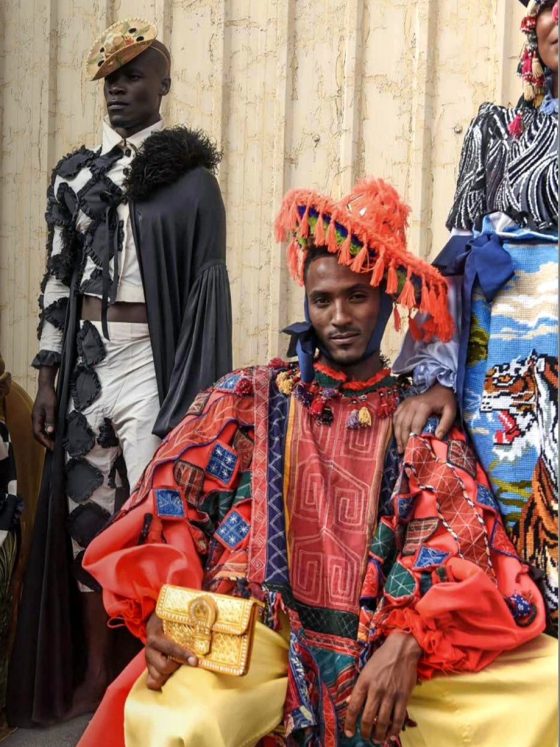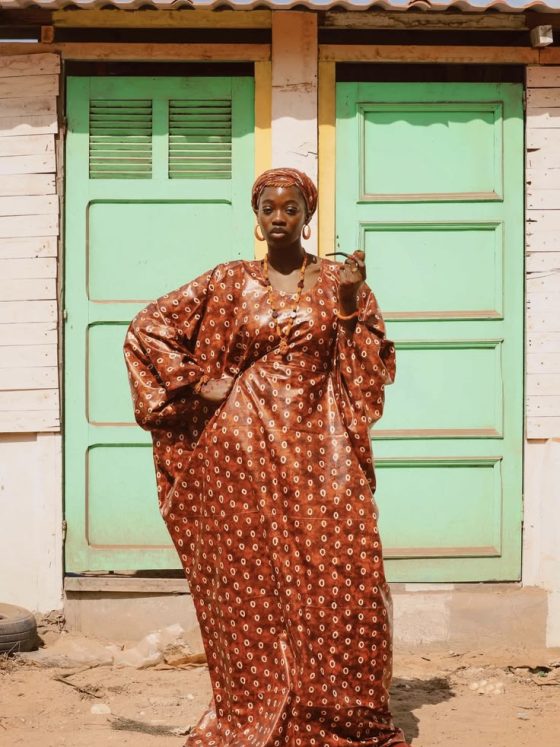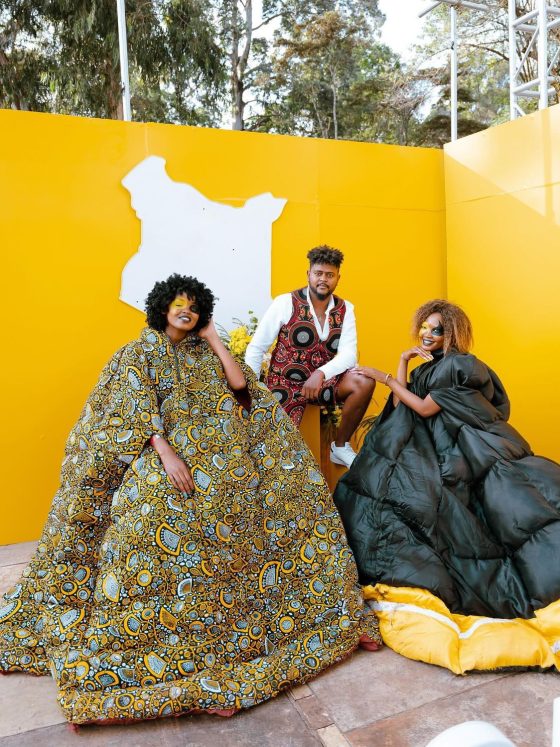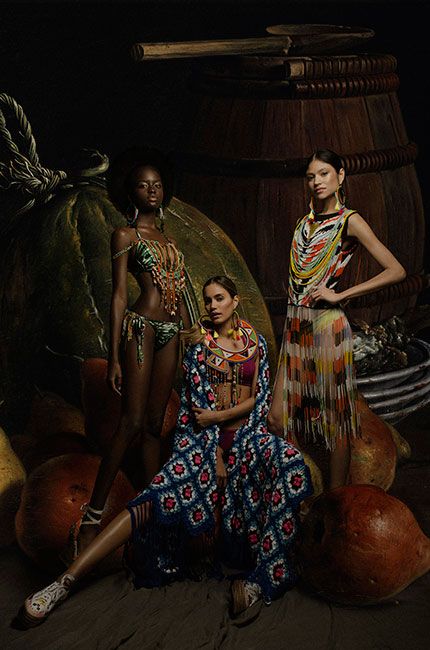
There is a version of Brazilian fashion that the global market instantly recognises. It is light, colourful, patterned, and easy to read. It feels like warmth. It photographs well. It travels easily across borders. And increasingly, it is being treated not as one expression among many, but as the expression.
Farm Rio sits at the centre of that shift.
The brand’s rise has been framed as a success story, and in many ways, it is. It has translated a distinctly Brazilian visual language into something globally legible without losing its commercial edge. Its collections move across international retail spaces with clarity and consistency. Buyers understand it. Consumers recognise it. That kind of coherence is not accidental. It is constructed.
But coherence, when scaled, begins to do something else. It narrows.
The problem is not that Farm Rio presents a version of Brazilian fashion. The problem is that its success has allowed that version to stand in for the whole.
Farm Rio’s global rise reshapes Brazilian fashion into a tropical aesthetic, overlooking deeper cultural, political, and design complexity.
How Farm Rio’s Aesthetic Became a Global Definition of Brazilian Fashion
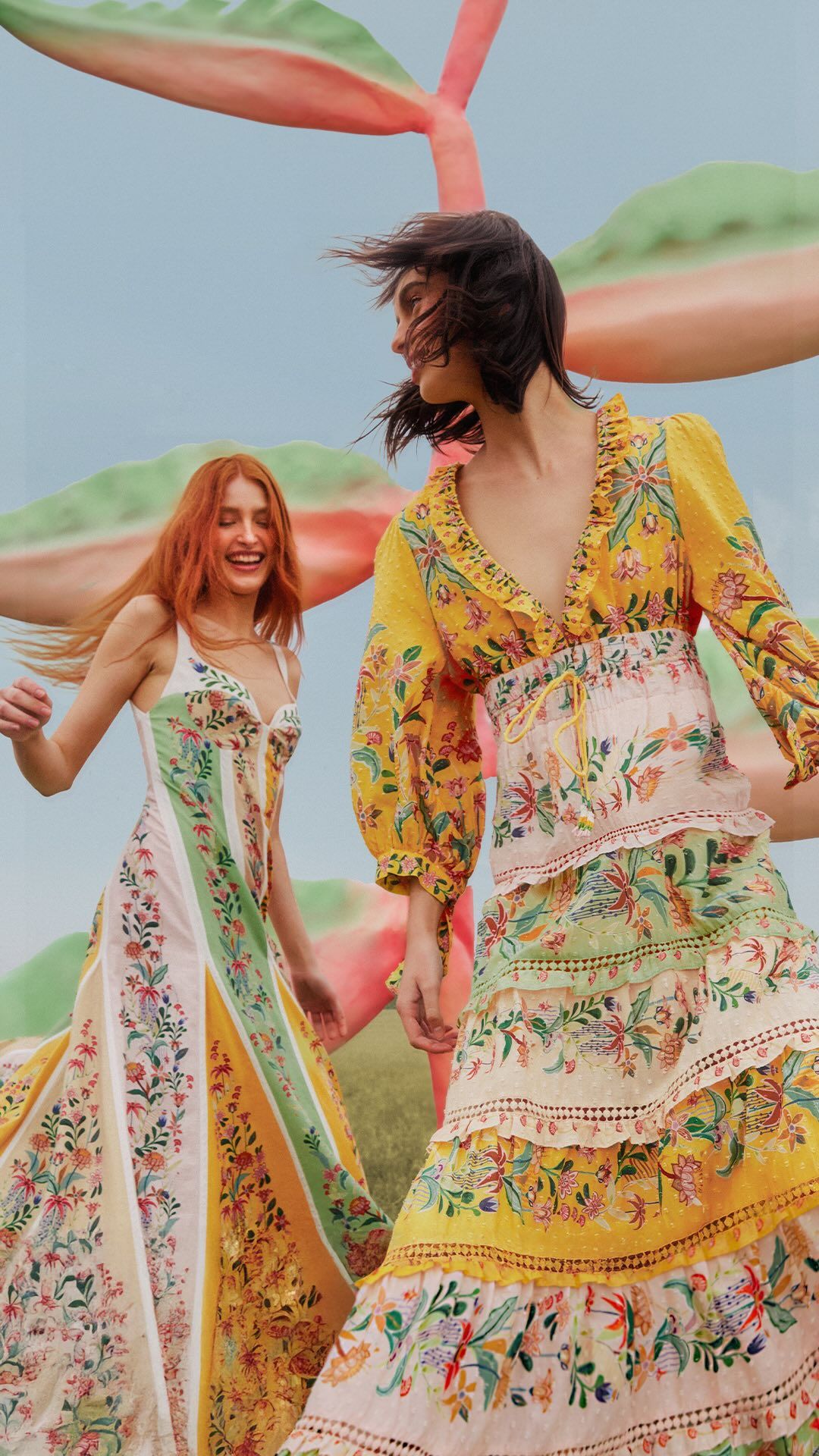
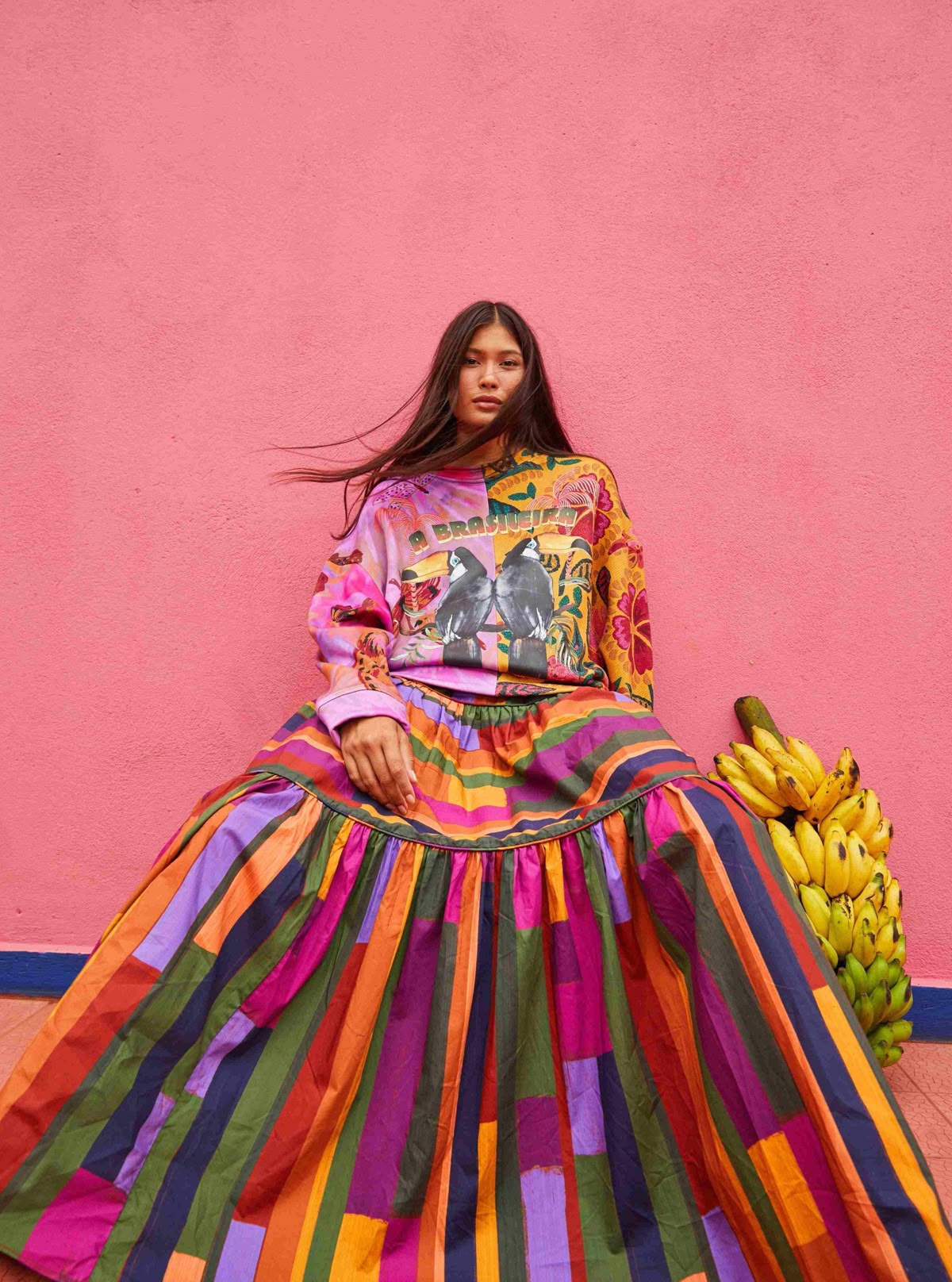
What Farm Rio sells is not just clothing. It sells a mood that has become shorthand for Brazil itself. Tropical prints, saturated colours, fluid silhouettes, and references to nature recur with enough consistency that they begin to feel essential rather than chosen.
This is where the shift happens. A design language becomes an identity.
The global fashion system depends on this kind of compression. It works better with symbols than with complexity. “Paris” can be reduced to tailoring. “Italy” to craftsmanship. “Japan” to minimalism. In the same way, Brazil becomes tropical. Not because that is all it is, but because that is what travels cleanly.
Farm Rio has perfected that translation. Its collections rarely confuse the viewer. They communicate immediately. But that clarity comes at a cost. It requires editing out the elements that do not fit the frame.
And Brazilian fashion, in its full form, does not fit into a single frame.
The Cultural and Historical Layers Missing from the Global Narrative
To understand what is missing, you have to step outside the export version of Brazilian design.
Brazil’s fashion history is deeply shaped by Afro-Brazilian culture, by the visual and material traditions that emerged from communities formed through resistance and survival. The influence of quilombo histories carries not just aesthetic weight but political meaning. These are not surface references. They are embedded in textile practices, in forms of adornment, in the way clothing relates to identity and space.
Then there is the visual language that emerges from urban Brazil, particularly from favelas. Graphic styles shaped by street art, music, and local economies create a very different design energy. It is sharper, sometimes confrontational, and often layered with commentary about class, visibility, and control. It does not resolve into something as easily consumable as a floral print.
None of this is absent because it lacks value. It is absent because it resists simplification.
Farm Rio’s aesthetic does not engage deeply with these layers. It selects instead the elements that can be universalised without friction. Nature. Colour. Joy. These are not false representations, but they are partial. And when repeated at scale, partial representations begin to function as total ones.
Why Global Fashion Markets Reward Simplified Cultural Aesthetics
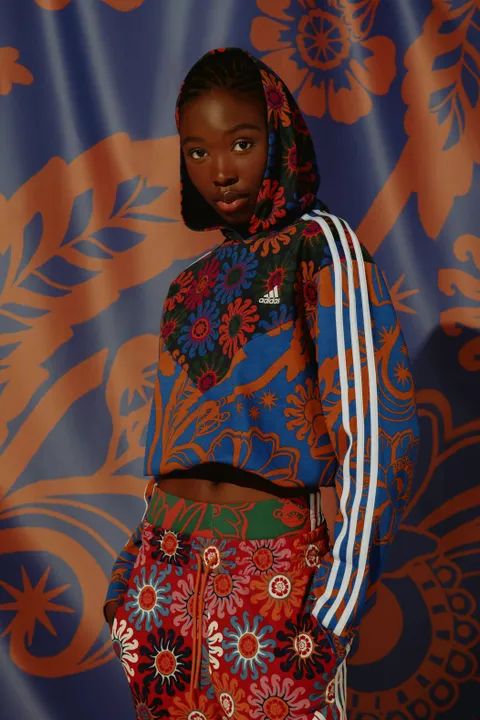
It would be easy to frame this as a failure of the brand, but that would miss the larger structure shaping its decisions.
Global fashion markets reward clarity. Retail environments, especially outside a brand’s country of origin, depend on quick recognition. A customer walking through a department store in New York or London lacks the context to decode complex cultural references. What they respond to is immediate visual impact.
Farm Rio understands this. Its aesthetic is built for that encounter.
There is also a deeper layer to this preference. The global consumer often engages with non-Western fashion out of desire, not understanding. What is being purchased is not just a garment but an imagined proximity to a place. In that context, the “tropical” becomes less about Brazil as a lived reality and more about Brazil as an idea that can be worn.
This is where the mood board takes over.
A mood board does not explain. It arranges. It selects images, colours, and textures that produce a feeling without requiring context. Farm Rio’s global identity operates similarly. It offers a curated, coherent version of Brazil that can be consumed without tension.
But a mood board, by definition, is incomplete.
When One Aesthetic Starts to Define an Entire Fashion Identity
The issue is not visibility. Farm Rio has made Brazilian fashion more visible on a global stage. The issue is what kind of visibility is being produced.
When a single aesthetic becomes dominant, it starts to define expectations. Designers working outside that aesthetic are then read as deviations rather than as equally valid expressions. The industry begins to look for “Brazilian-ness” in a narrow set of visual cues, and anything outside those cues becomes harder to place, harder to market, and often, easier to ignore.
This pattern is not isolated. Across African and Caribbean fashion systems, similar reductions have occurred, in which specific textiles or visual codes are used to represent entire regions. What follows is not just misrepresentation, but imbalance. Certain aesthetics receive global circulation, while others remain structurally underexposed.
What makes the Farm Rio case important is its scale. The brand is not operating on the margins. It is shaping perception at a level where its aesthetic decisions have consequences beyond its own collections.
READ ALSO:
- BUZIGAHILL: The Ugandan Label Shaping Global Upcycling
- Loza Maléombho: Redefining African Fashion for the Global Stage
The Difference Between Making Culture Legible and Making It Smaller
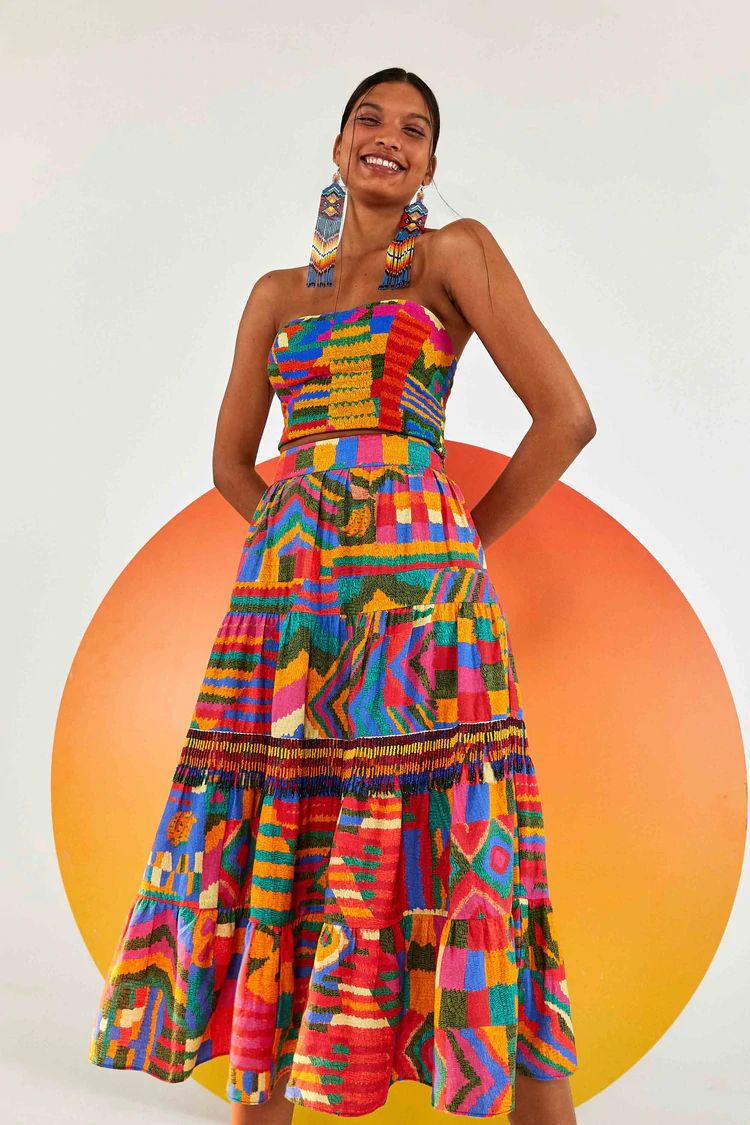
There is a difference between making a culture legible and making it smaller.
Translation requires interpretation. It involves carrying meaning across contexts while preserving its depth. Simplification removes that depth to ensure ease of consumption.
Farm Rio sits between these two processes.
On the one hand, it has developed a strong, identifiable design language that draws on Brazilian references. On the other hand, it has narrowed those references to a point where they can circulate globally without resistance. What is lost in that process is not just variety, but the tension that makes a fashion system intellectually and culturally alive.
Brazilian fashion is not only joyful. It is also political, regional, historical, and often contradictory. It contains multiple narratives that do not resolve neatly into a single visual story.
A mood board cannot hold that.
Repositioning Farm Rio Within the Full Scope of Brazilian Fashion
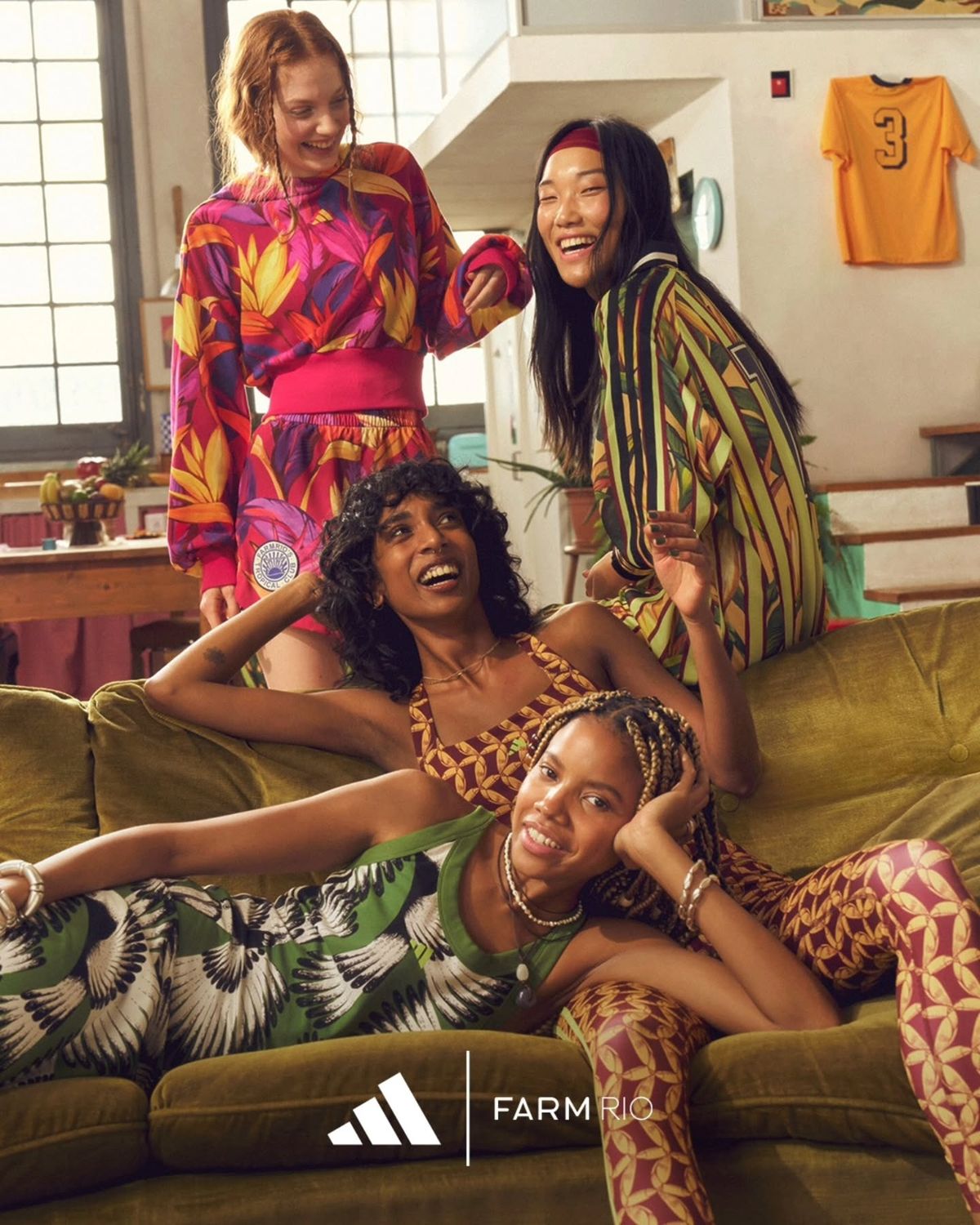
Farm Rio’s success is not the problem. The limit is what that success has come to represent.
When global audiences think of Brazilian fashion and arrive immediately at tropical prints and bright colours, they are not responding to the full field. They are responding to a distilled version that has been made easy to recognise and easier to sell.
The responsibility does not rest with a single brand, but Farm Rio has become the clearest example of how this process works.
It shows how quickly a design language can move from the specific to the symbolic and from the symbolic to the reductive.
If Brazilian fashion is to be understood on its own terms, rather than as a mood board assembled for external consumption, then that reduction has to be named. Not to dismiss what Farm Rio has built, but to place it back in proportion.
Because a single aesthetic, no matter how successful, cannot carry the weight of an entire fashion culture.
FAQs
- Why is Farm Rio associated with tropical fashion?
Farm Rio has built a consistent visual identity around bright colours, nature-inspired prints, and fluid silhouettes, which global audiences now associate with Brazilian fashion.
- Does Farm Rio represent all of Brazilian fashion?
No. While influential, Farm Rio reflects only one aspect of Brazilian design and does not fully capture its cultural, historical, and political diversity.
- What cultural influences are often missing in global Brazilian fashion narratives?
Afro-Brazilian traditions, quilombo histories, and favela-inspired design aesthetics are often overlooked because they are harder to simplify for global markets.
- How does global demand shape fashion from countries like Brazil?
Global markets tend to favour aesthetics that are easy to recognise and sell, which often leads to simplified representations of complex fashion cultures.
- What is the problem with reducing Brazilian fashion to a single aesthetic?
It limits visibility for diverse designers and creates a narrow understanding of Brazilian fashion, making other important design perspectives harder to access globally.