Sometime around 1486, a Portuguese ship dropped anchor at the port the sailors recorded as Oeyre on their charts. They were not the first Europeans to see the Niger Delta. They were, however, the first to dock at Warri, the seat of the Itsekiri. What they found was not a village waiting to be discovered. They found a kingdom with a functioning monarchy, an organised trading economy, and women dressed in imported silks.
That detail matters. The 19th-century traveller John Barbot, documenting the peoples of the West African coast, noted that the Itsekiri wore the most magnificent silks, specially ordered from Europe. These were not people for whom fabric was an afterthought. They were a people who understood cloth as a marker of standing and had been calibrating that register for centuries before colonialism attempted to flatten those distinctions.
The Itsekiri were, as Encyclopaedia Britannica records, among the first people in what is now Nigeria to make contact with the Portuguese in the 15th century. That contact shaped everything: their language, their religion, their economy, and, with quiet but unmistakable force, their dress. To understand Itsekiri women’s traditional styles, you must first understand the Warri Kingdom that produced them.
Five elegant traditional styles for Itsekiri women, rooted in the history of the Warri Kingdom, Portuguese contact, and centuries of ceremonial dress.
The Kingdom Behind the Cloth
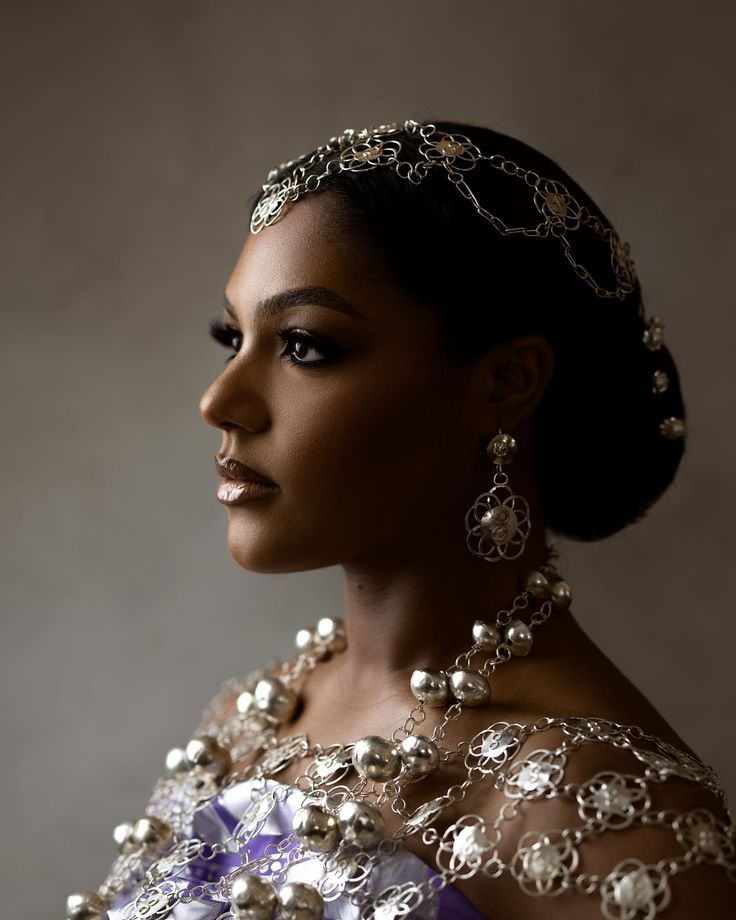
The Warri Kingdom was founded in approximately 1480, when Prince Ginuwa, a son of the Oba of Benin, migrated to the western Niger Delta and consolidated the scattered communities of the area into a single polity. As ThinkAfrica’s history of the Itsekiri Kingdom documents, the Warri Kingdom became one of the most diplomatically sophisticated states in pre-colonial West Africa. In the early 17th century, Olu Atuwatse I studied at the University of Coimbra in Portugal. Their son, Antonio Domingo, became Olu of Warri in the 1640s. This is not a footnote. It is the spine of Itsekiri cultural identity.
The monarchy, known as the Olu, sits at the top of a finely graded social structure. The Olu is the paramount ruler of the Warri Kingdom, addressed with the honorific Ogiame. Below the Olu sit the Ojoyes, the council of chiefs and nobility. The current Olu of Warri is Ogiame Atuwatse III, continuing an unbroken dynasty that has endured for over five centuries. In Itsekiri society, the royal family and its ceremonies set the standard against which all formal dressing is measured. When an Itsekiri woman chooses her outfit for a ceremony, she is consciously orienting herself within that centuries-old standard.
The Itsekiri language itself is a product of this layered history. It belongs to the Yoruboid family but carries loanwords from Bini court terminology, Portuguese trade vocabulary, and English colonial contact. As Wikipedia’s record of the Itsekiri people confirms, the language is uniformly spoken, with little variation in pronunciation across the community. This rare linguistic unity reflects a culture with an unusually strong sense of its own coherence. The language is a palimpsest of encounters. So is the dress.
|
1. The Lace Blouse with George Wrapper: The Architecture of Elegance
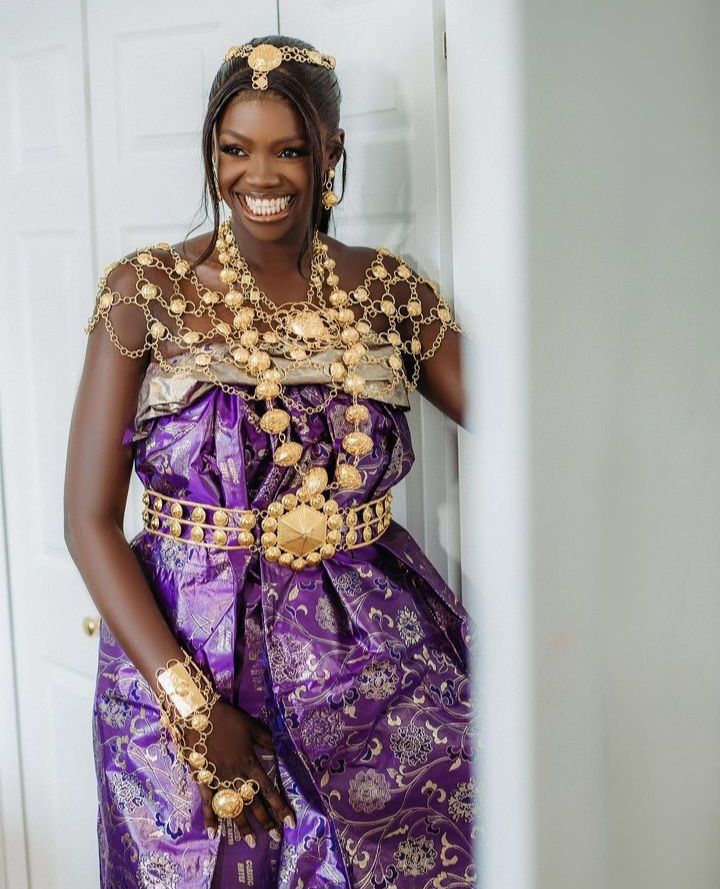
The most recognisable configuration in Itsekiri women’s traditional dress is the lace blouse worn over a George wrapper, finished with a Gele headtie and layered coral beads. This is the dress that appears at weddings, chieftaincy events, church thanksgivings, and formal family gatherings. It is the baseline from which all other ceremonial variation departs.
The George wrapper is the prestige fabric of the Niger Delta. At the highest ceremonial registers, it is selected in premium quality Georges imported from India and East Asia, their silk weight and pattern communicating the standing of the wearer as precisely as any spoken declaration. The Itsekiri relationship with imported prestige fabric is not new. It is a continuation of the same appetite for magnificent silks that Barbot documented in the 17th century.
The Gele headtie is tied in the full Niger Delta style, a generous volume of fabric structured into an architecture above the head that commands space and signals ceremony. The coral beads, worn in multiple strands at the neck and wrist, are the final statement. No Itsekiri woman at a formal event is under-beaded. The beads are not decorations. They are credentials.
2. The Bridal Double George: Three Appearances, Three Declarations
In Itsekiri traditional marriage, the bride makes three separate appearances during the ceremony, each in a different outfit. The tradition reflects the ceremonial seriousness with which the Itsekiri approach marriage as a public institution. Each change of clothing marks a stage in the ceremony’s progression.
The most distinctive of these configurations is the full double George worn without a blouse. The bride wraps both Georges around her body, then adorns herself from crown to wrist in layered coral beads, gold, and silver. As one Itsekiri bride recalled in a report by 21st Century Chronicle, she wore a full set of coral beads on her head and shoulders, the George wrapper with no blouse, the beadwork serving as a top. This style requires both confidence and cultural literacy to execute. It is not a look that can be approximated. It must be known.
The bride’s final appearance often pairs a George wrapper with a matching fabric top and an elaborately tied Gele, the ensemble coordinated with the groom. The matching outfits publicly signal unity, making the couple’s transition into a new household visible to all witnesses, and in Itsekiri ceremonial culture, being seen matters. These are people who traded with Portugal. They understood the power of presentation.
3. The Full Coral Bead Ensemble: When the Jewellery Is the Garment
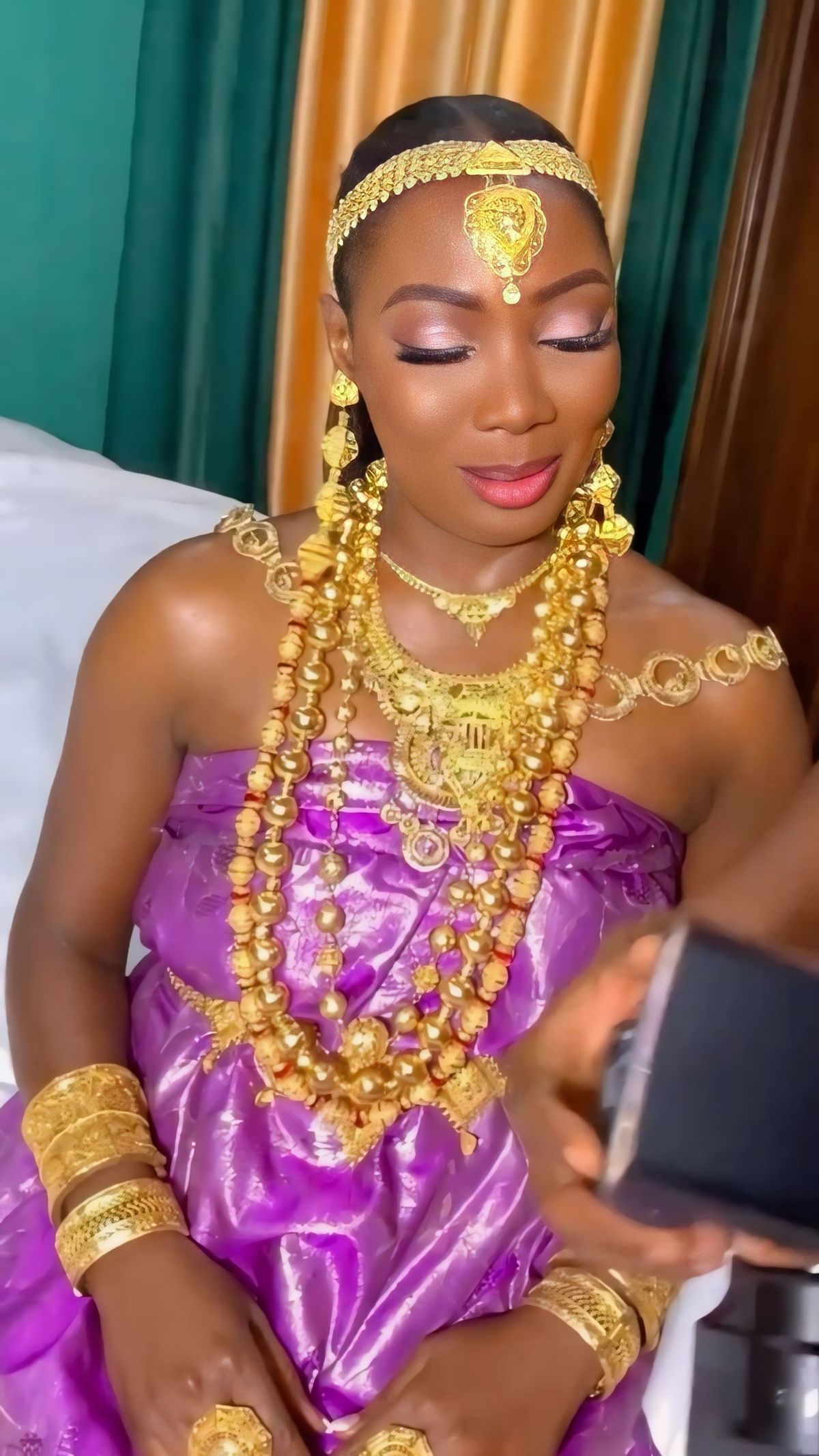
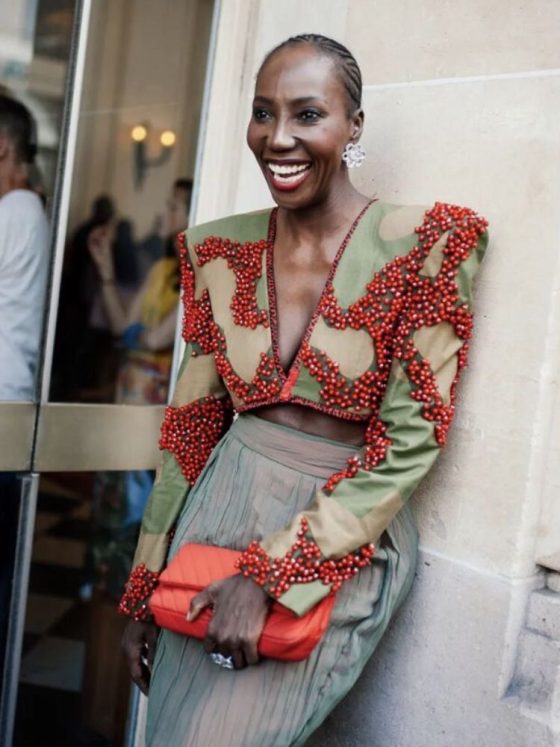
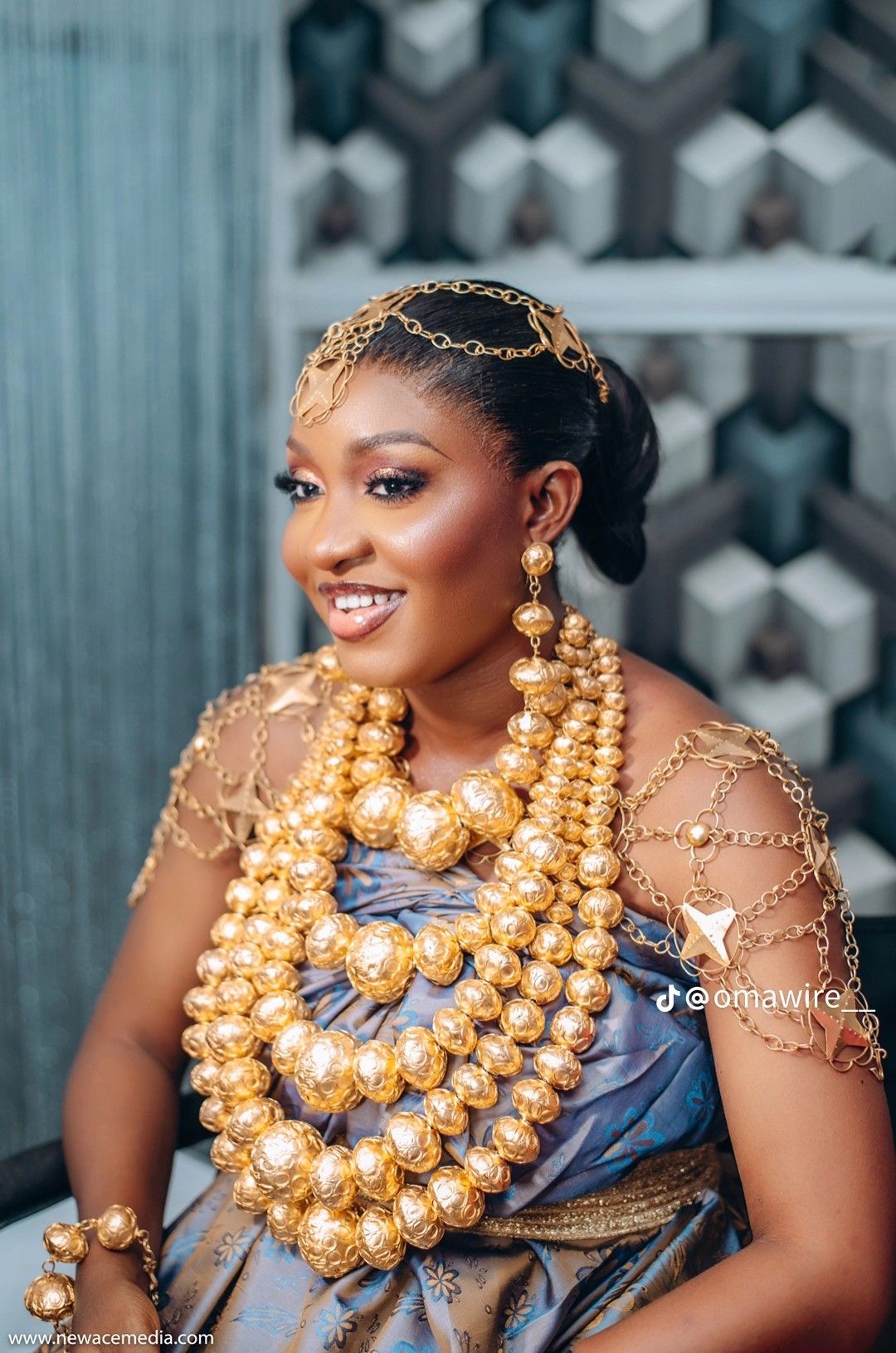
There is a level of Itsekiri ceremonial dressing at which the coral beads move from accessory to primary garment. Women of the highest standing, including those connected to royal or chiefly families, appear at significant ceremonies wearing coral from the crown of the head to the ankle, constructed into headpieces, collar configurations, shoulder drapes, waistbands, and armpieces that transform the body into a formal statement of lineage and standing.
Coral beads in the Niger Delta carry a meaning inseparable from the Warri Kingdom’s history. The Itsekiri aristocracy had access to fine coral through their Atlantic trading networks long before most inland communities. As Omiren Styles has argued in its analysis of adornment and cultural authority, adornment in African cultural contexts is a form of communication, not decoration. When the distinction is lost, the meaning is lost with it. For Itsekiri women of rank, the coral bead ensemble is the most concentrated expression of who they are and what they hold.
This ensemble is worn at royal ceremonies, the Olu’s coronation anniversary, chieftaincy installations, and high-status family occasions. The outfit underneath, a fine wrapper and blouse, is secondary. The beads are the argument.
4. The Nes Headscarf Configuration: Everyday Grace with Ceremonial Roots
Not every Itsekiri occasion demands the full architectural Gele. The Nes, the traditional Itsekiri headscarf, is the more intimate headgear worn in daily cultural life and at smaller gatherings. It is tied with a fluency that communicates the wearer’s familiarity with the culture, a different kind of knowledge from the formal Gele, but no less intentional.
The Nes appears with the blouse-and-wrapper configuration at community meetings, church services, and family gatherings that do not carry the full weight of a traditional ceremony. Its versatility is part of its cultural logic. Itsekiri women move across registers of formality with ease, adjusting the headgear, the quality of the George, and the volume of coral to calibrate their self-presentation precisely to the occasion. This kind of register-reading is itself a form of cultural authority. As Omiren Styles has argued, global style traditions show that the art of dressing well across cultures is shaped by intention and a precise reading of what an occasion requires.
The Nes is the Itsekiri woman’s most personal style gesture. It says, ‘I know where I am.’ I know what this moment calls for. And I have dressed accordingly.
5. The Royal and Festival Dress: Colour as History
At Olu’s coronation anniversary and the great Itsekiri cultural festivals, women of the Warri Kingdom dress in the most elevated version of their traditional wardrobe. White holds a specific ceremonial register at royal events, associated with purity and the sacred authority of the Olu’s court. At other festivals, the palette draws from the full spectrum of George’s available fabrics, with colour selection carrying social meaning that those within the culture read fluently.
The festival dress is the most complete expression of Itsekiri women’s aesthetic vocabulary. It synthesises all five elements of the tradition: the prestige fabric, the structured headgear, the layered beads, the matched accessories, and the precise calibration of formality to occasion. Women who appear at these events in full traditional dress are not performing heritage for an outside audience. They are fulfilling a social function that has been continuous since the first Olu held court at Ode-Itsekiri in the 15th century.
This is the dimension of the Itsekiri dress that fashion media most consistently fails to capture. When a culture has been dressing elegantly since before European nations had factories to produce the fabrics they exported, reducing that dress to ‘colourful traditional attire’ misses everything significant about it. As Omiren Styles has argued in its examination of cultural resistance and style, Itsekiri women at festivals and royal events are not accessorising. They are exercising centuries of aesthetic authority.
|
ALSO READ:
- When Dressing Becomes Declaration: Clothing as Cultural Identity
- Why Culture Is the Foundation of Style in African and Global Fashion
- How Cultural Resistance Shaped the World’s Most Powerful Style Movements
- The Art of Dressing Well Across Cultures: What Global Style Actually Teaches Us
Five Styles. Five Centuries of Authority.
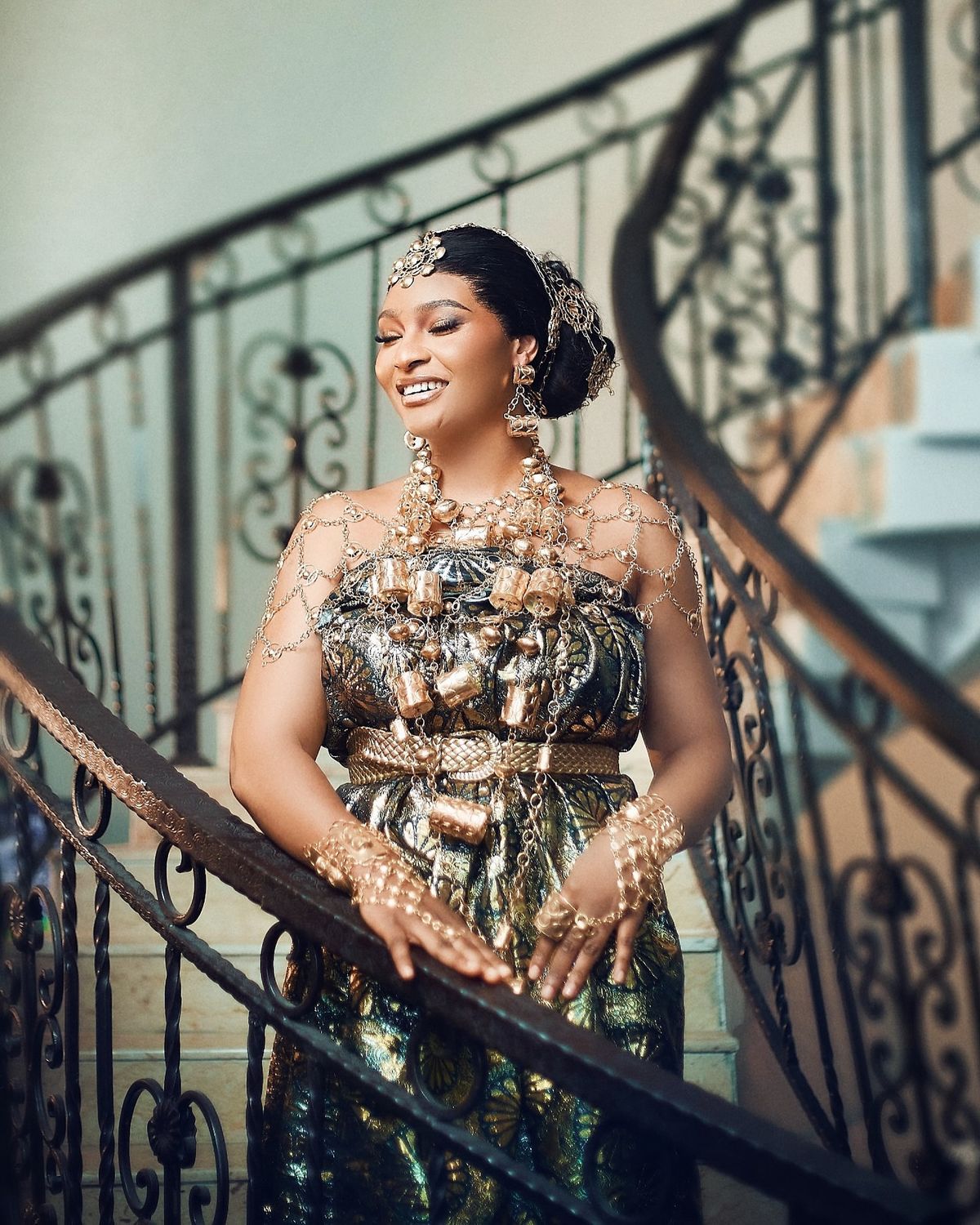
The five traditional styles of Itsekiri women are not a collection of outfits. They are a system of communication that runs from the lace blouse of a formal gathering to the full coral ensemble of a royal occasion, from the bridal George of a young woman making three appearances at her wedding to the festival dress of an elder whose beads have been in her family longer than the nation that now surrounds her kingdom.
The Warri Kingdom has been dressing with intention since 1480. The Portuguese have come and gone. The British colonial administration came and went. The oil industry arrived. Through all of it, Itsekiri women continued to select their George wrappers, tie their Gele, layer their coral, and appear at every ceremony with the precision of people who know exactly who they are. That precision is not accidental. It is a practice. And it is still being performed, with full knowledge of its weight, every time an Itsekiri woman dresses for something that matters.
Frequently Asked Questions
1. What is the traditional dress of Itsekiri women?
Itsekiri women’s traditional dress centres on a lace or embroidered blouse worn with a George wrapper tied at the waist, a Gele headtie or Nes headscarf, and layered coral beads. The configuration is adjusted in formality and quality to match the specific occasion, from everyday gatherings to royal ceremonies.
2. Why is the George wrapper significant in Itsekiri culture?
The George wrapper is the prestige fabric of the Niger Delta and central to Itsekiri ceremonial dress. Its quality conveys the wearer’s social and financial standing. Premium Georges are imported from India and East Asia. The Itsekiri relationship with fine imported fabric dates to their trade contact with the Portuguese in the 15th century.
3. What is the role of coral beads in Itsekiri women’s dress?
Coral beads signal wealth, lineage, and ceremonial authority in Itsekiri culture. The number of strands, the placement on the body, and the quality of the coral all communicate the wearer’s social standing. At the highest ceremonial occasions, the beads become the primary garment, layered from crown to ankle by women of royal and chiefly families.
4. How did Portuguese contact influence Itsekiri dress?
Portugal made contact with the Warri Kingdom from the 15th century onwards. The trade relationship introduced European fabrics, including prestige cloths that became part of the George wrapper tradition. The Itsekiri absorbed these materials and reframed them entirely within their own cultural system. The result is a dress tradition that bears the marks of Atlantic trade yet belongs entirely to the Itsekiri aesthetic authority.
5. What is the significance of the Olu of Warri to the Itsekiri dress?
The Olu is the paramount ruler of the Warri Kingdom and the standard against which all ceremonial dressing is measured. Royal events, including the Olu’s coronation anniversary, require the highest register of traditional dress. The monarchy, continuous since 1480, has maintained dress standards across more than twenty reigns and five centuries of Itsekiri history.
6. What is the Gele in the Itsekiri women’s dress?
The Gele is the formal headtie worn by Itsekiri and wider Niger Delta women at ceremonies. The Itsekiri dress is constructed in an elaborate architectural style that signals formality and occasion. The Nes is a smaller, more intimate headscarf worn at less formal gatherings. Both are worn with the blouse-and-wrapper configuration.