The Kanuri are the heirs of one of the longest-running empires in African history. The Kanem-Bornu Empire, founded around the 9th century near Lake Chad, endured for approximately a thousand years, outlasting most political formations on the continent and establishing Maiduguri as a seat of Islamic scholarship, trans-Saharan trade, and cultural authority, drawing scholars from North Africa and the Middle East to its courts. This is not distant history for Kanuri women today. It is the foundation on which their cultural identity rests. The descendants of an imperial civilisation wear Ankara styles for Kanuri women, and they carry that weight in how they are chosen, tailored, and worn at every occasion, from the daily mosque gathering to the most elaborate Sallah ceremony.
The Kanuri are the dominant ethnic group in Borno State, Nigeria, with approximately 3 million Kanuri speakers in Nigeria alone and further communities of around 500,000 in Niger, 100,000 in Chad, and 60,000 in Cameroon. Their dressing tradition is shaped by over a thousand years of Islamic faith, a deeply stratified social structure with the Shehu of Borno at its ceremonial apex, and a culture that treats completeness of dress not as vanity but as a moral and spiritual obligation. Within that inheritance, Ankara is the fabric of everyday dignity and community celebration, worn alongside traditional garments and always with the full seriousness that Kanuri dress culture demands.
From the embroidered kaftan to the Aso Ebi wrapper set, discover the top 5 Ankara styles for Kanuri women in 2026. History of the Kanem-Bornu Empire, traditional Kanuri dress, and a full ceremonies guide rooted in Borno State culture.
An Empire Dressed for the Court
The Kanem-Bornu Empire sat at the Sudanese terminus of the major trans-Saharan trade route through the Bilma oasis to Libya. This position made Maiduguri, then known as Ngazargamu, one of the wealthiest and most cosmopolitan cities in sub-Saharan Africa during its 16th-century zenith. Silk, cotton, and fine woven cloth arrived along those routes from North Africa and the Arab world, and Kanuri court dress absorbed these influences without surrendering its own visual logic. As Britannica documents, Kanuri society has always been stratified into clear social classes, with the Shehu’s family forming a royal lineage around which considerable pageantry is organised. Dress was, and remains, one of the primary markers of that stratification. The embroidered babban riga robe and the intricately designed cap are the established symbols of Kanuri status dressing, simultaneously communicating social position, piety, and cultural belonging.
The Kanuri have been Muslims since the 11th century, when Mai Umme of the Sayfawa dynasty converted, making the Kanem-Bornu Empire one of the earliest Islamic states in West Africa. That millennium of Islamic practice has shaped Kanuri dress in ways inseparable from its cultural context: modesty, completeness of cover, and the quality of the garment are not merely aesthetic preferences. They are expressions of religious and social identity. A linguistic study of Kanuri garments published in California Linguistic Notes documents the cultural weight of complete dress in Kanuri society, noting that incompleteness of dress carries social and even religious consequences. At mosques in Maiduguri, elders have been observed removing men in incomplete attire from the front row during prayer. The standard applies to women with equal force.
Traditional Kanuri women’s garments include the Dongasho (a flowing outer robe), the Murzan (an inner wrapper), the Asal (a head covering), the Raka (a shawl), and the Bugai (a form-covering outer layer). The bridal garment known as the Chia Amai is described in contemporary Kanuri cultural spaces as a dress that communicates boldness, courage, resilience, and love. The Gambara is the specific traditional attire worn by a Kanuri bride on her wedding day, a garment so significant that it is available for rental in Maiduguri for women who cannot afford to purchase it outright. These are the garments that frame Ankara’s role in everyday and semi-formal Kanuri women’s dress: not as a replacement for tradition, but as its practical, expressive companion.
For Kanuri women, completeness of dress is not a style choice. It is a statement of faith, status, and identity going back a thousand years of court culture.
The 5 Ankara Styles Defining Kanuri Women’s Fashion in 2026
1. The Embroidered Ankara Kaftan
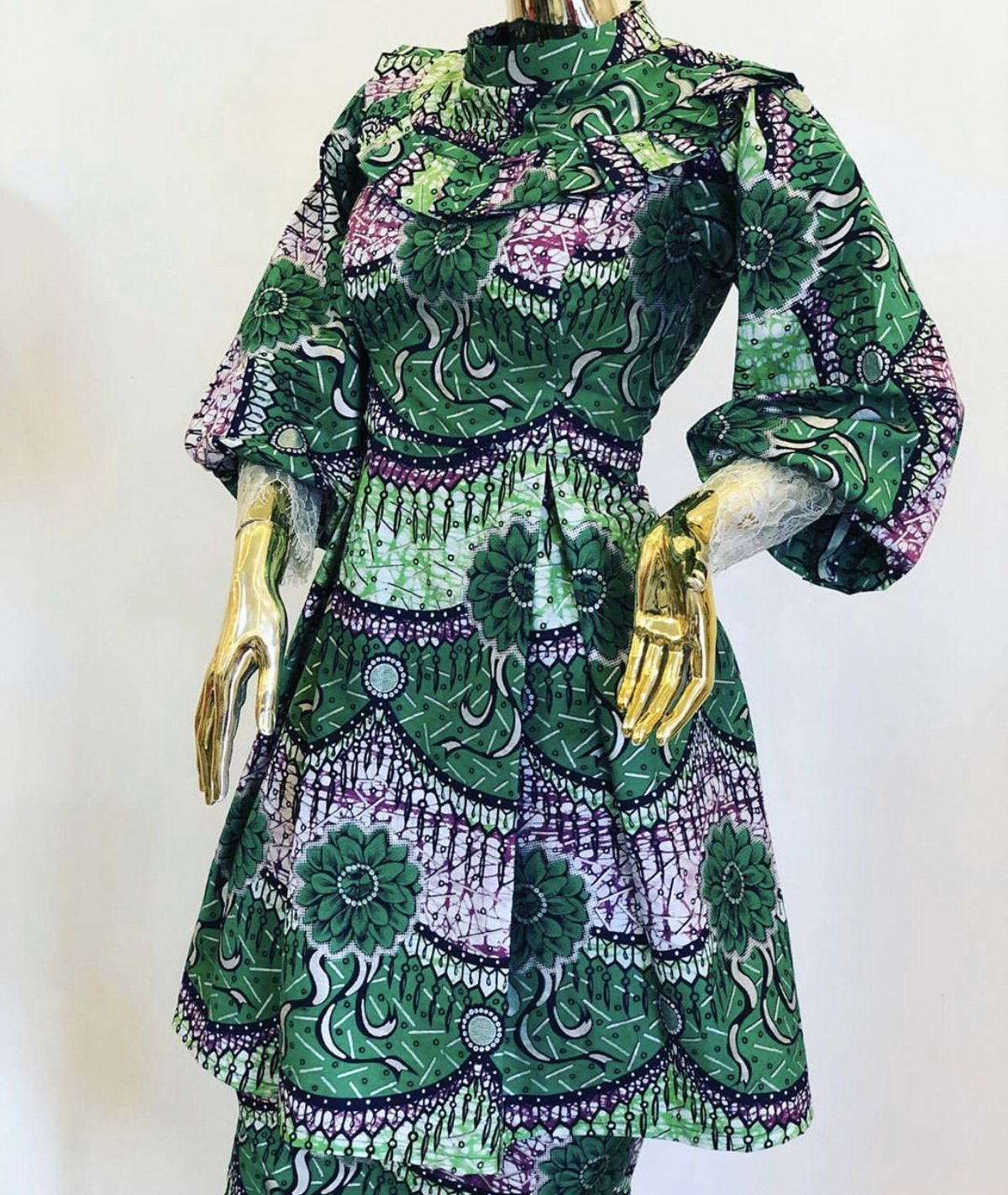
The kaftan is the dominant formal silhouette across northern Nigeria, and among Kanuri women, it is the style that most directly speaks the language of Borno court culture. A floor-length Ankara kaftan with embroidery at the neckline, chest, and cuffs carries the visual grammar of the babban riga tradition into the printed fabric of everyday fashion. The embroidery tradition in Borno and across Nigeria’s northeast is among the most technically accomplished in the country. As Cultures of West Africa notes, Kanuri clothing is both practical and symbolic, with embroidered robes signifying social status, cultural pride, and identity. When a Kanuri woman commissions an embroidered Ankara kaftan from a Maiduguri tailor, she is not simply ordering a garment. She is placing herself within a dress tradition that has communicated rank and belonging in this region since the courts of the Kanem-Bornu Empire.
The Ankara fabric brings a distinct visual energy to the kaftan silhouette: bold, saturated geometric prints that echo the aesthetic values of Kanuri craft culture. In 2026, Kanuri women in Maiduguri, Abuja, and the diaspora are commissioning Ankara kaftans with increasingly elaborate embroidery, the needlework reclaiming its proper weight in a garment that is sometimes worn without it. The combination of a deep indigo or emerald-green Ankara print with gold-thread embroidery at the neckline is one of the strongest formal looks in northeastern Nigerian women’s fashion, and it is distinctly Kanuri in its layering of historical references and contemporary cloth.
2. The Aso Ebi or Wushe Wushe Ankara Wrapper and Blouse
The wrapper and blouse are the customary attire for Kanuri women’s celebrations. At weddings, naming ceremonies, and religious gatherings across Borno State, the Wushe Wushe wrapper and blouse in coordinated Ankara is how Kanuri women mark their collective belonging to an occasion. One fabric, distributed among the invited community, tailored by each woman into a silhouette that expresses her individual taste while declaring her relationship to the gathering. The practice reinforces the social bonds that Kanuri culture has always organised around community rather than the individual household.
The blouse in the Kanuri Wushe Wushe tradition is typically fitted with a modest, high neckline consistent with Islamic dress standards, often finished with embroidery at the collar or sleeves. The wrapper is tied at the waist and falls to the ankle. Daily Trust’s documentation of Kanuri weddings describes these events as known for their flamboyance and show of pride, occasions where the assembled community’s investment in dressing well is itself a form of cultural declaration. The Wushe Wushe wrapper and blouse is the style through which that collective investment becomes visible. As we examined in Culture as Currency, the most significant fashion economies in Africa are not priced in markets. They are expressed through the coordinated dressing of women at community occasions, and few communities do this with more intentionality than the Kanuri.
3. The Ankara Skirt Suit
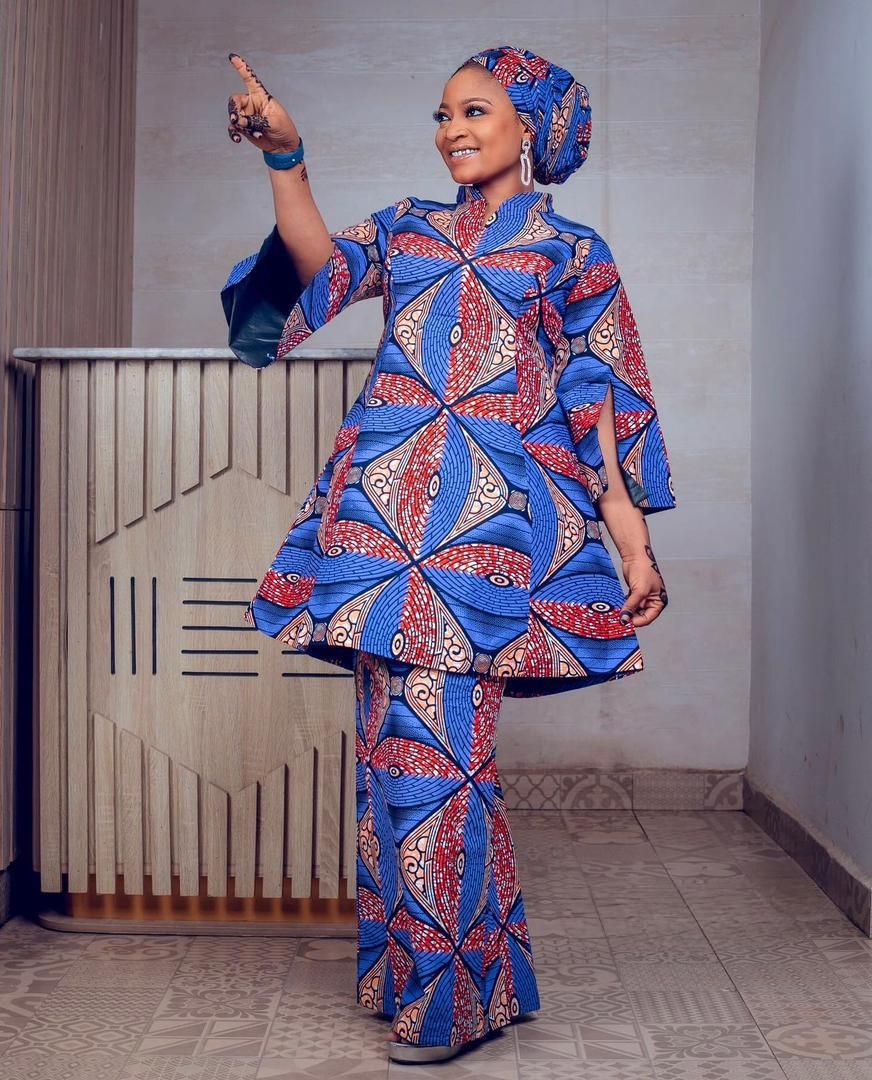
The tailored Ankara skirt suit, a structured, fitted jacket and matching A-line or pencil skirt cut from the same wax-print cloth, is the style that carries Kanuri women’s fashion into formal institutional settings without surrendering cultural identity. It is worn to government offices, university graduations, professional gatherings, and any occasion where a Kanuri woman requires her cultural presence to be legible in a setting that does not automatically read the kaftan or the boubou. The suit silhouette communicates professional authority. The Ankara fabric communicates cultural pride. Together, they argue that the two are not in tension.
Among Kanuri women in Abuja, Lagos, and the wider diaspora, the Ankara skirt suit has become the signature garment for professional environments and formal events outside Borno State. It is commissioned from specialist Ankara tailors in Maiduguri’s Gamboru Market or in Abuja’s fabric districts, where the craft of finishing Ankara to a professional standard is well established. For more on how African cloth carries the full weight of cultural identity into rooms that might not expect it, read Clothing as Declaration.
4. The Ankara Boubou
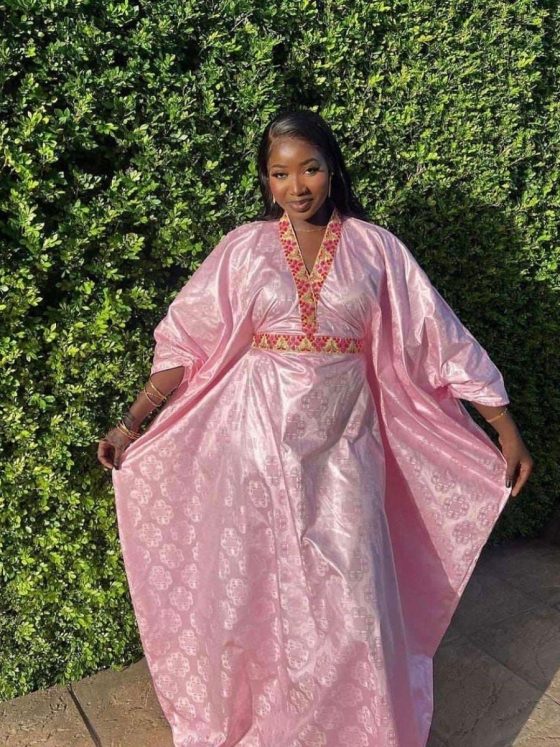
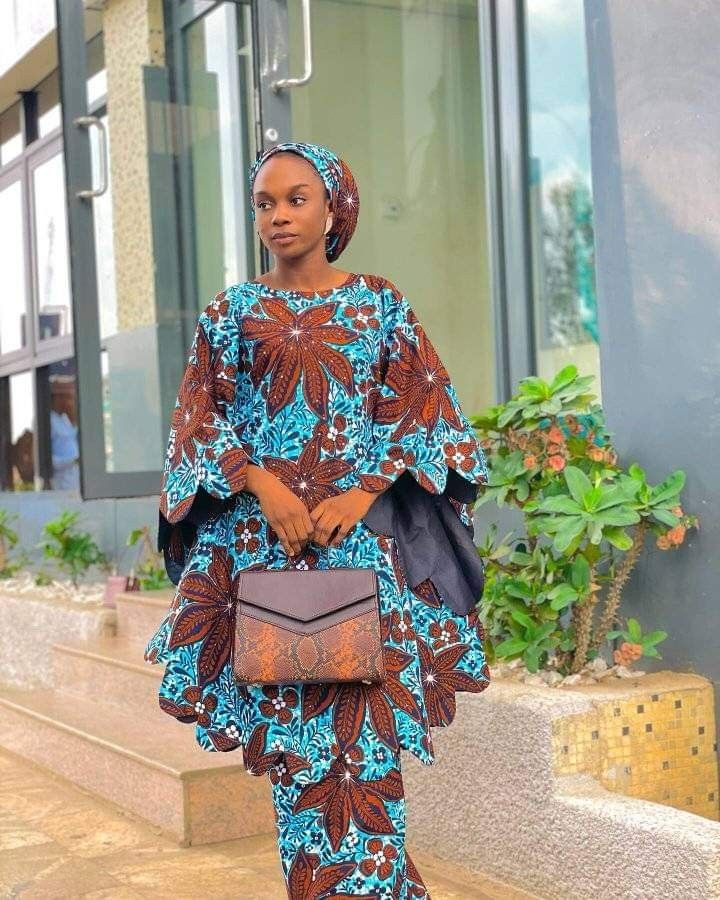
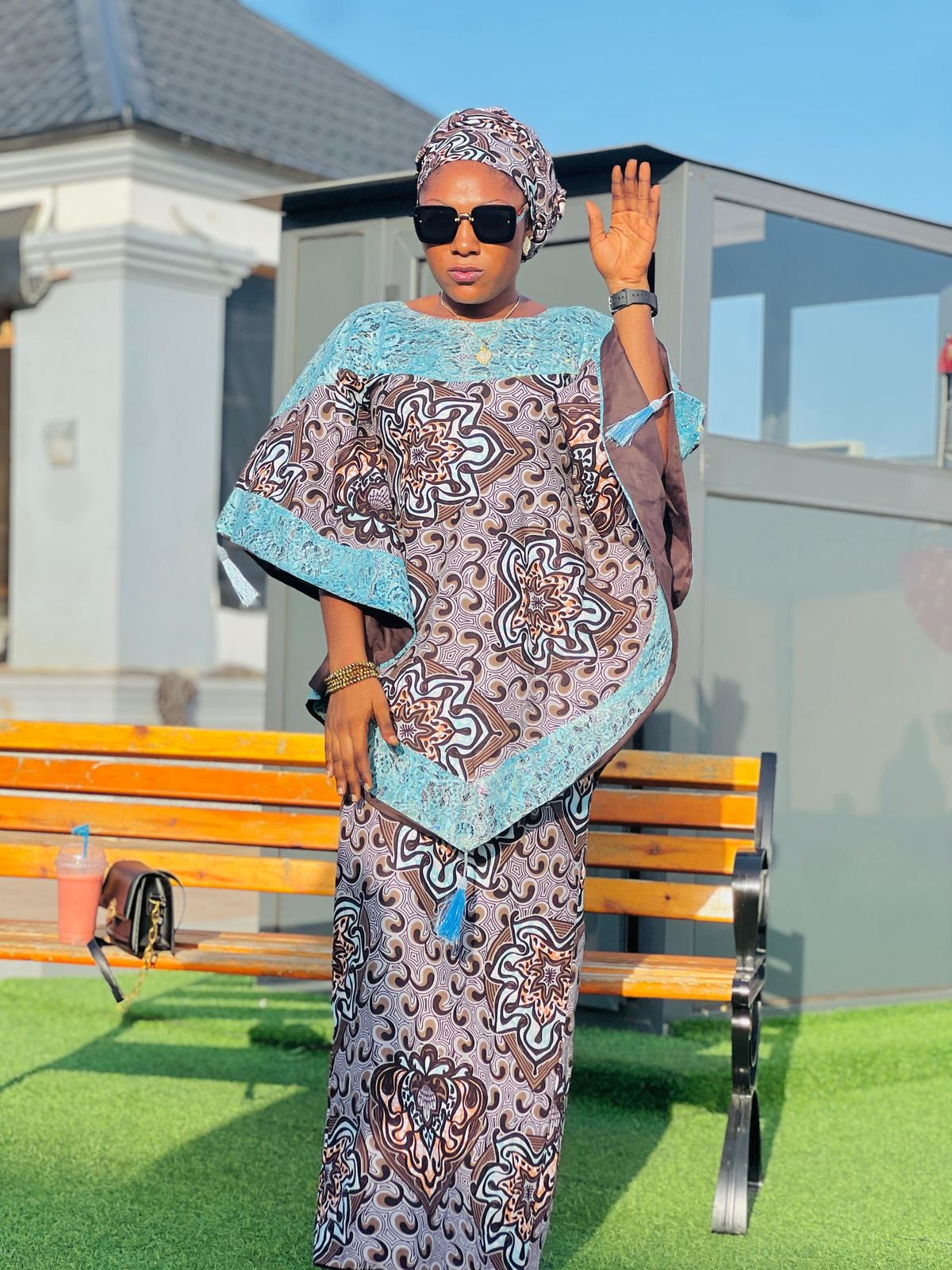
The flowing boubou silhouette is common across northern and north-central Nigeria. Among Kanuri women, the Ankara boubou is the style most directly descended from the Dongasho tradition of the full outer robe. A wide, floor-length garment in Ankara wax print, worn over a matching wrapper with a coordinated headscarf folded at the crown, the Ankara boubou commands space in a way that communicates exactly what Kanuri dress culture has always communicated: that this is a woman who takes the occasion seriously, who has invested in her appearance as an act of respect for the gathering, and who understands that completeness of dress is a form of cultural participation.
The Ankara boubou is particularly prominent at Sallah dressing across Borno State, worn to Eid al-Fitr and Eid al-Adha with the full headscarf arrangement and whatever jewellery marks the occasion’s significance. The Shehu of Borno’s court, whose authority derives from a state founded before 1000 CE, as Wikipedia’s Kanuri article confirms, remains the ceremonial anchor of Kanuri cultural life, and the quality of dress at public occasions connected to the Emirate reflects the community’s continued investment in the visual language of its imperial inheritance.
5. The Contemporary Ankara Co-ord
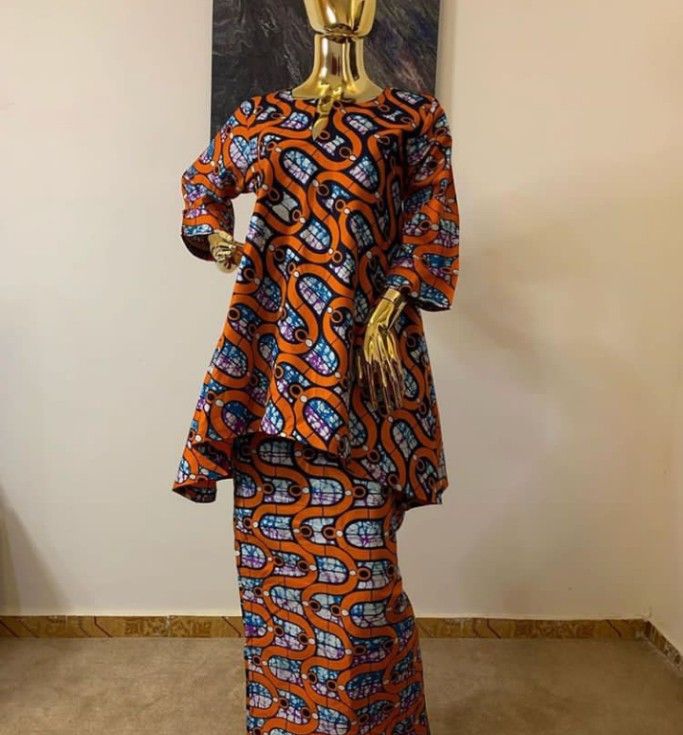
The two-piece Ankara co-ord, a tailored top and matching wide-leg trouser or midi skirt in a contemporary silhouette, is the style through which younger Kanuri women are carrying Ankara into the settings their grandmothers did not occupy: fashion events, creative industry gatherings, social media, and the professional spaces of Abuja and Lagos, where cultural identity and contemporary ambition occupy the same room. It is the most forward-facing of the five styles and the one that most clearly demonstrates that Ankara in Kanuri women’s fashion is a living, evolving tradition rather than a fixed cultural uniform.
A structured top and wide-leg trousers in a rich burgundy-and-gold Ankara print, worn with a simple headscarf and a modest neckline, make a complete cultural statement in a contemporary silhouette. For Kanuri women in the diaspora, the co-ord travels most easily across cultural contexts, carrying the visual argument of heritage without requiring the setting to understand the kaftan or the boubou already. The same principle governs the Ewe Kente co-ord explored in Top 5 Ewe Kente Styles for Ewe Women in 2026: a contemporary silhouette does not diminish a fabric’s cultural authority. It extends the range of rooms in which that authority can be exercised.
When the Cloth Speaks: Ankara Across Kanuri Ceremonies
Ankara moves through Kanuri ceremonial life with the full seriousness that Kanuri culture assigns to dress. Each occasion has its own expectations of completeness, its own weight, and its own way of reading what a woman has chosen to wear.
The Traditional Wedding
The Kanuri traditional wedding is one of the most elaborate ceremonial occasions in northeastern Nigeria, beginning with the Kla Tulta, the washing of the bride’s hair in preparation for plaiting into the traditional Kanuri hairstyle known as Kla Yeska. The bride wears the Gambara, the traditional bridal attire, and the Chia Amai, the cultural dress worn by Kanuri communities to communicate boldness, courage, resilience, and love. The assembled female guests arrive in Aso Ebi Ankara, the coordinated wrapper-and-blouse set marking their belonging to the celebration. As Eucarl Wears documents, the wedding day also includes the Kalawa ceremony, in which the groom’s family brings foodstuffs for the communal meal, and the Kususuram, a collection of gifts from the groom’s sisters and cousins for the bride. The traditional and the contemporary sit together throughout these occasions, with the Gambara and the Aso Ebi Ankara present in the same gathering, each doing its own cultural work.
Sallah: Eid al-Fitr and Eid al-Adha
The Sallah celebrations are the most important occasions in the Kanuri dressing calendar. As a community that has observed Islam for over a thousand years, approximately 95% of Kanuri people are Muslim, and the Eid festivities carry the full weight of that deep religious identity. New attire is essential. The embroidered Ankara kaftan and the Ankara boubou are both prominent at Sallah, worn with full headscarf arrangements to morning prayers at the mosque, followed by family gatherings and social visits. The Kanuri word for Sallah festivities is ‘Ngmur’, and the courtship traditions historically practised around these occasions, including the communal gatherings where young people assessed potential suitors, meant that dressing well at Ngmur carried social as well as religious significance. In 2026, that significance has not diminished.
The Naming Ceremony
The naming ceremony brings together the Kanuri community shortly after a child’s birth, the occasion marking the new person’s formal entry into the family and community. The gathering is predominantly female in its social organisation, and the women’s relationships with each other are structured around the arrival of new life. Aso Ebi Ankara is the dominant dress, the wrapper and blouse ensuring that the bonds of community are made visually legible. The mother receives new attire as gifts from family members, the quality of the fabric communicating the community’s investment in her and in the child she has brought into the world.
The Zuwu: Qur’anic School Graduation
The Zuwu is the graduation ceremony for Qur’anic school, one of the most distinctive ceremonial occasions in Kanuri cultural life and one that has no direct equivalent in most other Nigerian cultural traditions. When a student completes their Qur’anic education, the community assembles to mark the achievement. The female members of the graduating student’s family attend in their finest Ankara attire, the embroidered kaftan and the Ankara boubou, both common at Zuwu ceremonies. The occasion is one of the clearest expressions of the connection among Islamic learning, communal celebration, and the cultural obligation to dress well, which runs through every aspect of Kanuri life.
The Askil and Community Dances
The Askil is the traditional Kanuri dance gathering where girls clap, and young men dance vigorously; historically, it was one of the occasions when courtship was conducted, and suitors were assessed. In contemporary Kanuri life, the Askil and similar community gatherings are occasions when Ankara dress is in its most expressive configurations, with bolder prints and richer colours, and the contemporary co-ord, alongside the wrapper and blouse, is most visible. These are the celebrations where younger Kanuri women’s fashion is most dynamic, where the conversation between tradition and the present moment is most openly conducted.
Funerals and Mourning
Kanuri mourning dress follows Islamic convention, with white and muted tones replacing the full ceremony palette. Ankara appears at funeral gatherings in its quieter configurations: sober wrapper-and-blouse combinations that communicate respect without entirely departing from the cultural language of dress. The gathering of women in appropriate attire at a Kanuri funeral is a collective act of community support, and the completeness of their dress, even in mourning colours, reflects the cultural standard that Kanuri society applies to every occasion where the community assembles.
In Kanuri life, how you dress reflects your faith, your lineage, and the thousand-year inheritance of a community that has never treated cloth as anything less than serious.
ALSO READ:
- Top 5 Ankara Styles for Nupe Women in 2026
- Top 5 Ewe Kente Styles for Ewe Women in 2026
- When Dressing Becomes Declaration: Clothing as Cultural Identity
- Culture As Currency: Africa’s Legacy on the Marketplace
The Omiren Argument
Over 250 ethnic groups across Nigeria wear Ankara. It is, in that sense, a neutral fabric. It belongs to no single culture and is available to all of them. But the neutral fabric becomes a cultural statement the moment a Kanuri woman takes it to a Maiduguri tailor and specifies the embroidery she wants at the neckline, the headscarf she will pair with it, and the occasion she is dressing for. At that point, the Ankara ceases to be generic and becomes Kanuri.
The community wearing these styles is the heir to a thousand years of Islamic court culture, trans-Saharan scholarship, and a dressing tradition in which completeness of dress is a moral and spiritual standard, not merely an aesthetic preference. The Shehu of Borno, whose authority traces directly to a state founded before 1000 CE, continues to hold ceremonial significance in Kanuri life. The women who dress for the occasions that gather around that continuity are not choosing between tradition and the contemporary. They are wearing both, simultaneously, on the same body.
Dress accordingly.
Browse the full African Style collection at Omiren Styles.
Frequently Asked Questions
1. What is the traditional dress of Kanuri women?
Traditional Kanuri women’s dress includes several named garments: the Dongasho (a flowing outer robe), the Murzan (an inner wrapper), the Asal (a head covering), the Raka (a shawl), and the Bugai (a form-covering outer layer). The bridal garment is the Chia Amai, which contemporary Kanuri cultural sources describe as conveying boldness, courage, resilience, and love. The Gambara is the specific traditional attire worn by the bride on her wedding day. Full documentation of Kanuri traditional marriage attire is available at Eucarl Wears.
2. Who are the Kanuri people, and where do they live?
The Kanuri are an African ethnic group descending from the ruling lineages of the medieval Kanem-Bornu Empire, one of Africa’s most enduring political formations. They are the dominant ethnic group in Borno State, northeastern Nigeria, with approximately 3 million Kanuri speakers in Nigeria and further communities in Niger, Chad, and Cameroon. Their cultural and ceremonial life continues to be anchored by the Shehu of Borno, whose authority traces to a state founded before 1000 CE. A comprehensive cultural introduction to the Kanuri people is available at Cultures of West Africa.
3. What is the Gambara?
The Gambara is the traditional attire worn by a Kanuri bride on her wedding day. It is a culturally significant garment associated with the formal ceremonies of the traditional Kanuri wedding, including the Kla Tulta hair-washing ceremony, the Kalawa communal meal, and the Kususuram gift exchange between the families. The Gambara is sufficiently important to Kanuri bridal culture that it is available for rental in Maiduguri for brides who cannot purchase it outright.
4. Why is the completeness of dress important in Kanuri culture?
Kanuri culture treats complete and proper dress as an expression of faith, social standing, and cultural identity rather than a purely aesthetic choice. This standard is rooted in over a thousand years of Islamic practice and court culture within the Kanem-Bornu Empire. Academic research published in California Linguistic Notes on Kanuri garment use documents the social and religious consequences of incomplete dress, noting that elders at mosques in Maiduguri have been observed removing men who are dressed incompletely from the front row of prayer. Women of comparable social standing are held to an equivalent standard, expressed through the full ensemble of outer robe, wrapper, head covering, and appropriate accessories at every public and ceremonial occasion.